20 Capybara Facts for Kids: Habitat, Diet, Size & Fun Facts
Meet the friendly capybara! Learn where it lives, what it eats, how big it gets, and fun facts kids will love.




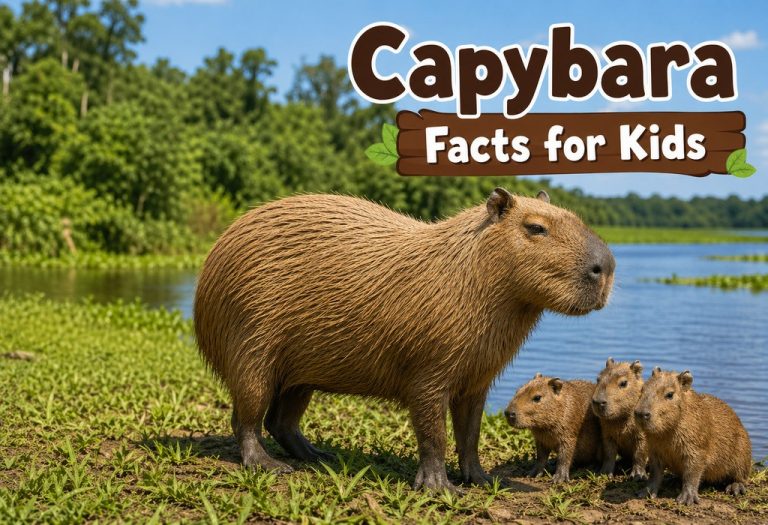
Image Source: AI-Generated Image
Capybaras might just be the chillest animals on the planet—and kids are going to love learning about them! These giant, friendly rodents look a bit like oversized guinea pigs and spend most of their time relaxing near water, munching on plants, or hanging out with their buddies. In this article, we’ll share 20 fun and fascinating capybara facts for kids, from where they live and what they eat to how big they can grow and what makes them so unique. Get ready to learn more about the world of these adorable, easygoing creatures!
What Is a Capybara?
A capybara is a gentle animal that often surprises people with its calm nature and friendly behaviour. It is the largest rodent in the world and looks a bit like a giant guinea pig (1). These animals love being around others and are usually seen resting in groups near water.
How Does a Capybara Look?
A capybara has a round body with short legs and a small head that gives it a calm and gentle look. Its fur is thick and slightly rough, usually in shades of brown that help it blend into nature. The eyes, ears, and nose sit high on its head so it can stay mostly underwater and still see and breathe (2).
Where Do Capybaras Live?
Capybara live in warm places where water is always close by. They are found in countries across South America, especially near rivers, lakes, and wetlands (1). These animals feel safest when they can quickly slip into the water if they sense danger.
What Do Capybaras Eat?
A capybara eats simple plant based food that keeps it healthy and calm (3). Most of its diet comes from grass and soft water plants that grow near rivers and lakes. It spends a lot of time grazing slowly which feels peaceful to watch and almost reminds you of how cows eat.
How Long Do Capybaras Live?
A capybara usually lives for several years depending on where it grows up. In the wild its life is often around 6 to 10 years as it faces natural dangers and changing conditions. When cared for in safe spaces like wildlife parks it can live longer and sometimes reach 12 years or more (3).
Are Capybaras Endangered?
A capybara is not considered endangered at this time. They live in many parts of the wild and their numbers are still stable in most areas. However they can face problems like loss of habitat and hunting in some places (4).
Why Do Capybaras Eat Their Own Poop?
A capybara follows this habit as a natural way to stay healthy. Their plant based food is hard to fully digest the first time so eating it again helps their body take in more nutrients. It may sound strange at first but many plant eating animals do the same thing to survive.
Fun Facts About Capybara for Kids
There is something truly calming about learning these interesting facts about a capybara and how it lives each day. Kids often find them special because they are gentle and seem to get along with almost everyone. Here are some simple and fun things that make capybaras so unique.
- Capybaras are the largest rodents in the world (3).
- They can grow as big as a medium sized dog.
- They are excellent swimmers and love water.
- Their feet are slightly webbed which helps them move easily in water (3).
- They can stay underwater for up to five minutes (5).
- They live in groups and enjoy being around others (4).
- A group of capybaras is sometimes called a herd.
- They often rest together to feel safe and relaxed.
- Birds sometimes sit on them and clean their fur.
- They eat mostly grass and water plants.
- Their teeth keep growing so they need to chew often (6).
- Baby capybaras can walk and swim soon after birth.
- They make soft sounds to communicate with each other.
- They like to stay near water to escape danger.
- They have a very calm and peaceful nature.
- They can run surprisingly fast when they need to.
- They spend a lot of time resting in the shade.
- In some places people see them as symbols of peace.
- They are known to get along with many other animals.
- Watching them can make people feel relaxed and happy.
Now that you’ve learned these capybara facts, you’ve got some cool knowledge to share with friends and family too! Keep your curiosity going, because who knows what other amazing animal facts you’ll discover next?
Also Read:
Amazing Facts About Water That Kids Should Know About
Facts and Information About the Solar System for Kids
Giraffe Facts & Information for Kids
Was This Article Helpful?
Parenting is a huge responsibility, for you as a caregiver, but also for us as a parenting content platform. We understand that and take our responsibility of creating credible content seriously. FirstCry Parenting articles are written and published only after extensive research using factually sound references to deliver quality content that is accurate, validated by experts, and completely reliable. To understand how we go about creating content that is credible, read our editorial policy here.
- Author










.svg)