
20 Amazing Octopus Facts for Kids to Learn & Share
Amazing octopus facts for kids that spark curiosity, reveal ocean wonders, and make learning fun to share with friends and family.




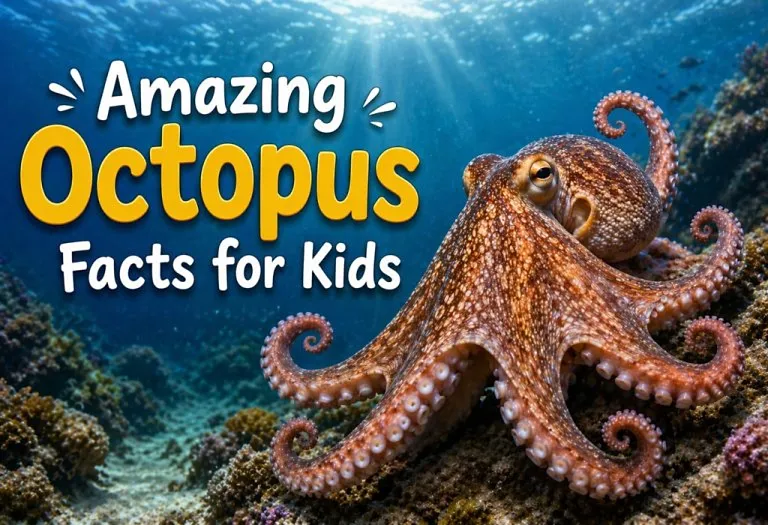
Image Source: AI-Generated Image
Octopuses are some of the most fascinating creatures in the ocean, and they are full of amazing surprises that kids love to learn about. They can change colour in seconds, squeeze through tiny spaces, and even have three hearts, which makes them very different from most animals we know. The more you learn about them, the more interesting they become.
If you are looking for fun and interesting octopus facts for kids, you are in for a treat. Get ready to explore amazing octopus facts that you will love to learn and share with your friends and family.
What Is an Octopus?
An octopus is a soft bodied sea animal that lives in oceans all around the world. It has eight flexible arms and no bones which makes it very different from most creatures kids usually learn about. Many people feel surprised when they first see one because it moves so smoothly and can even change its shape. It is part of a group called mollusks which also includes snails and clams yet it is known as one of the smartest animals in the ocean (1).
Where Do Octopuses Live?
Octopuses live in oceans all over the world from warm, tropical waters to cold deep seas. They usually stay close to the ocean floor where they can hide and feel safe from predators (2). Many make their homes in small spaces like rocks coral reefs or even empty shells which they turn into cosy shelters.
What Do Octopuses Eat?
Octopuses are curious hunters that search for food along the ocean floor. They mostly eat small sea animals and use their arms to explore and catch what they find. Crabs shrimp and small fish are some of their favourite meals which they grab with quick and careful movements (1). Watching how they hunt shows how patient and smart they are as they quietly wait for the right moment to catch their food.
How Do Octopuses Protect Themselves?
Life in the ocean can be risky so octopuses have learned smart ways to stay safe. They can change their colour and texture to blend into rocks sand or coral which helps them hide from danger. If they feel threatened they release a cloud of dark ink that confuses predators and gives them time to escape (2). They can also squeeze into tiny spaces where larger animals cannot reach which shows how clever and quick they are when protecting themselves.
How Intelligent Are Octopuses?
Octopuses are often seen as some of the smartest creatures in the ocean (3). They can solve simple problems remember things and even learn by watching what happens around them. Many people feel amazed when they see an octopus open a jar or find its way out of a tricky space. The more we learn about them the more it feels like they are thinking and exploring the world in their own quiet and curious way.
What Is the Lifespan of an Octopus?
Octopuses do not live very long compared to many other animals in the ocean. Most species live for about one to three years depending on their size and type. Their life is short but it is full of growth learning and constant movement in their underwater world. Knowing this often makes people appreciate them more because they experience so much in such a brief time.
Interesting Octopus Facts for Kids
Octopuses are some of the most interesting creatures you will ever learn about, and they have abilities that almost feel like magic. Here are some fun and easy octopus facts for preschool and kindergarten children. Take a look below and see just how amazing octopuses really are.
1. Octopuses have eight flexible arms that help them crawl along the ocean floor and gently hold objects while exploring their surroundings.
2. Each arm is covered with small suckers that can grip strongly and even taste things which helps them understand what they touch (4).
3. They do not have bones which allows them to squeeze into tiny spaces like cracks in rocks where other animals cannot reach.
4. Octopuses can change their colour quickly to blend into their surroundings and hide from predators in a very clever way (3).
5. Some octopuses can also change the texture of their skin making it look rough like rocks or smooth like sand (3).
6. They move very quietly in water using a gentle gliding motion which helps them sneak up on prey without being noticed.
7. Octopuses are excellent at hiding and can stay very still for long periods until danger passes or food comes closer.
8. When they feel threatened they release a cloud of dark ink into the water to confuse predators and escape safely (4).
9. Their eyes are very sharp and can see clearly even in dim light which helps them find food and stay alert.
10. Octopuses are curious animals and often explore their surroundings by touching and examining objects with their arms.
11. They are quite intelligent and can solve simple problems like opening jars or finding hidden food using memory and observation (3).
12. Some octopuses collect shells and arrange them to create small shelters where they can rest and stay protected (3).
13. They use their strong arms to catch food like crabs and then carefully open shells to eat what is inside.
14. Octopuses usually live alone and prefer having their own space where they can move and explore freely without disturbance.
15. Baby octopuses are very tiny when they hatch and must quickly learn to survive on their own in the ocean.
16. They grow quickly in a short time and spend their life constantly learning and adapting to their underwater environment.
17. Octopuses have three hearts working together to pump blood through their bodies which is quite unusual compared to most animals (1).
18. Their blood is blue because it carries oxygen differently which helps them survive in cold and low oxygen ocean waters.
19. If an octopus loses an arm, it can slowly grow it back (5).
20. Each octopus has its own unique way of moving exploring and reacting which makes every one of them special and interesting.
Learning about octopuses often leaves both kids and adults feeling amazed by how unique these creatures are. For children, these facts are not just fun to remember but also a great way to build curiosity about nature and science. It helps them see that even the smallest or strangest animals have important roles in the world. When kids share these facts with friends or family, it builds confidence and keeps their love for learning alive.
Also Read:
Interesting Moon Facts for Kids
Giraffe Facts & Information for Kids
Interesting Sun Facts for Kids
Was This Article Helpful?
- Author


Related Articles
-

Essay on Onam for Students & Children in English
-
20 Fascinating Snake Facts and Information for Kids
-
Essay On Wild Animals - 10 Lines, Short and Long Essay for Children and Students
-
Verbs That Start With A in English (With Meanings & Examples)
-
130 Easy Trivia Questions and Answers for Kids
-
Diwali Facts - History, Significance, Celebration and Safety Tips






.svg)