
Frequent Urination (Pollakiuria) in Kids – Causes, Signs, and Treatment




Key Takeaways
- Frequent urination in children can catch parents off guard when they need to use the bathroom repeatedly.
- Frequent urination in children may result from increased fluid intake, a urinary tract infection (UTI), constipation, or an overactive bladder.
- Consult a pediatrician if frequent urination develops suddenly, persists, or occurs alongside pain or burning during urination, fever, blood in the urine, or new bedwetting.
- Encourage your child to drink water regularly, use the bathroom when needed, and avoid holding urine for long periods.
- Keep track of your child’s bathroom visits, fluid intake, and any accompanying symptoms.
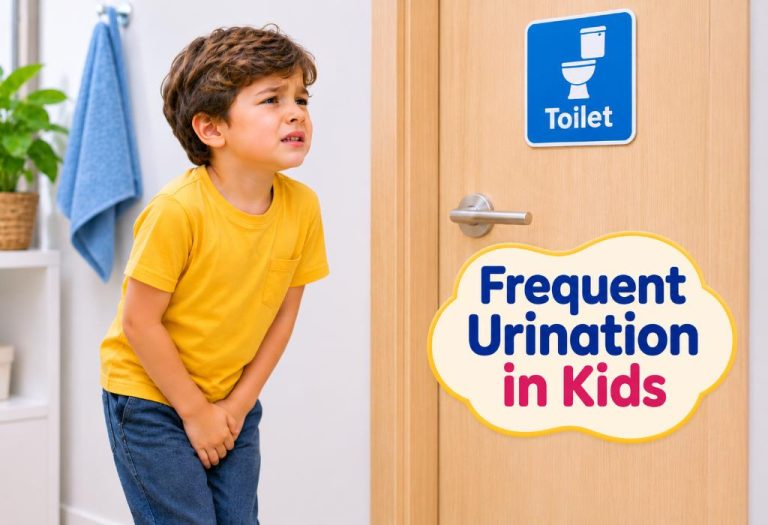
Frequent urination in children can become problematic for parents when their child needs to use the bathroom repeatedly during outings, playtime, or even shortly after peeing. While scolding your child for not going to the washroom before he/she leaves home is one approach that every parent has taken, a better understanding of why they do what they do will help parents understand where they are coming from. Drinking more fluids or developing new bathroom habits may explain these frequent trips, but a sudden change in urination patterns can sometimes indicate an underlying health problem. Urinary tract infections, constipation, and bladder control issues are among the possible causes. Frequent urination accompanied by excessive thirst, unexplained weight loss, pain, or fever needs medical attention.
What Is an Overactive Bladder (OAB)?
Overactive bladder (OAB) is a type of urinary incontinence where urine is involuntarily released, and is common in children. A child may need to urinate frequently, and since it’s uncontrollable, he or she may not be able to reach a restroom in time to urinate (1).
OAB shouldn’t be mistaken for bed-wetting, which is caused entirely due to different factors. Frequent urination or sudden frequent urination in children in large volumes is scientifically known as polyuria (2). When it happens in frequent small amounts, it is called pollakiuria in kids, according to the Indian Pediatrics (3). It is different from dysuria, which is painful urination and is usually a sign of infection. Frequent urination in a child at night is called nocturia (6).
What Causes Frequent Urination in Kids?
Some of the known causes of frequent urination in children are:
- Urinary Tract Infection: One of the causes of frequent urination can be a urinary tract infection or UTI. Frequent urination, accompanied by pain and a burning sensation while peeing, are a few symptoms of UTI (7). Washing your child after bowel movement has to be done the right way, i.e. from front to back, is important to avoid UTIs, especially in girls. This prevents the germs from entering the urinary tract from the rectal cavity.
- Diabetes Insipidus: Insufficient levels of the anti-diuretic hormone, which controls urine output, can cause diabetes insipidus. Apart from frequent urination, the child will also suffer from an insatiable thirst and may show signs of dehydration, poor growth, and loss of appetite.
- Lifestyle: Consuming a lot of fizzy drinks and caffeinated beverages can lead to frequent urination or an overactive bladder. Overeating foods like chocolates, spicy foods, and fruits rich in citric acid should also be avoided.
- Avoiding Urination: Some children get into a habit of not going to the restroom, and in turn, their frequency of urinating reduces but the quantity of urine in the bladder increases. To relieve the pressure on their bladders, the sphincter muscle that controls urine tends to be overactive and triggers frequent urination.
- Stress: The main symptom of polyuria in children is that they need to urinate almost 10 to 30 times a day, but only small amounts of urine (4). This affects children between the ages 3 and 8 years old. Though there is no concrete evidence to support this theory, many experts feel it is a psychological problem where stress plays a major role.
Symptoms of Frequent Urination in Kids
Dysuria symptoms due to urinary tract infections in children include:










- Pain and burning sensation while urinating
- Excessive thirst
- Fever and abdominal pain
- Change in colour of the urine from transparent to cloudy and may have an odour
- Sudden weight loss
- Frequent UTIs

Diagnosis of Overactive Bladder in Children
Once any of the above symptoms are observed in a child, the doctor will run a few tests to diagnose whether the child is indeed suffering from overactive bladder (OAB). The results will help them determine what the causes might be. A few of the tests done are:
- Urine Culture: If the symptoms look like a UTI, then a urine culture will be done to identify the bacteria causing the infection.
- Urine Analysis: A urine test or analysis will be done to determine the cause of frequent urination.
- Blood test: To rule out if the child has diabetes, a blood test will be conducted.
Treatment for Frequent Urination in Children
There are several treatments for frequent urination in children. The frequency reduces in time as the child grows up and can hold his/her bladder for a longer time. The doctor may sometimes prescribe antibiotics if the cause is a UTI. The doctor would encourage proper bathroom habits like going to the restroom every few hours and controlling the urge to go in between. This technique is used for kids worldwide and is called “bladder retraining”. If the child is suffering from anxiety-related issues or stress, encouraging the child to talk to someone they trust or a psychologist may help understand what is worrying him/her. If the child’s frequent urination is because of diabetes, the doctor will prescribe appropriate insulin medication to keep the high blood sugar levels in control.
If your child is frequently urinating without being able to control the urge to pee, then talking to your doctor would be a good step to determine the cause.
Preventive Measures
Prevention is always the best option, and in this case, there are various measures one can take to prevent your child from developing OAB. Here are a few tips:
- Proper hygiene is very important not only in the case of OAB but in many other urinary infections.
- For nightime urination, avoid giving your child too much fluid to drink before they go to bed (5).
- Educating children on the right way to wash after a bowel movement is essential.
- Teaching girls how to squat while urinating may help prevent getting infected by UTIs while using public restrooms.
- Use of chemicals and strong soaps on the genitals is not advisable.
- Kegel exercises can help improve muscle strength and improve the urge of frequent urination.
- Motivational therapy is a good option to encourage your child to maintain a proper toilet schedule and adhere to it. Rewarding good behaviour will reinforce it and help the child to follow the schedule.
- Reassure your child that he/she is healthy, that this condition will pass, and that they need not worry. Help your child relax if you feel he or she is suffering from some form of stress or tension. Make sure your child has enough free time and structured playtime.
Are There Any Home Remedies to Treat Frequent Urination in Kids?
At times, a simple home remedy for frequent urination in a child may prove beneficial in helping the child treat the condition.
- Keep your child hydrated by giving them plain water instead of restricting fluids entirely.
- Reduce the intake of fluids slightly to avoid late-night wakings for urination.
- Remind your kid to urinate every 2 to 3 hours during the day and avoid holding up peeing for too long.
- Teach them not to hold the urge to pee.
- Provide bladder-friendly foods and drinks like curds, water, and fibre while avoiding foods that cause irritation, such as chocolate and caffeinated beverages.
- Create a positive environment regarding their need to pee frequently instead of mocking or treating it as a taboo.
- If they have cramps, use a warm (not hot) water bottle or compress on your child’s lower abdomen for 10 to 15 minutes.
When to Consult a Doctor?
If you notice any of the following signs, consult a paediatrician without delay (9).
- Blood in your child’s urine
- Red or dark brown urine
- Pain while passing urine
- Trouble passing urine
- Pain in the side, lower belly or groin
- Always having a strong urge to pass urine
- Frequent episodes of a toddler peeing a lot all of a sudden
FAQs
1. What is considered normal concerning bladder control?
Every child learns this at their own pace, so some might take longer than others. Most kids can stay dry during the day by the time they’re five. But it’s okay if it takes a little longer for some. In fact, nighttime bladder control could take more time than daytime control, but it all depends on the child and the environment they are in (8).
2. What are the causes of bladder control issues in kids?
According to NIH, many children experience bladder control issues because they hold their urine for too long or develop slowly physically. Sometimes, a medical condition can also be the cause of wetting, although this is less common (9).
3. Why is my toddler peeing so much?
A toddler peeing more often than usual could be because of simple habits like drinking too much fluid or an underlying medical condition like pollakiuria, which is an urge to pee every 10 to 30 minutes, often caused by routine changes, mild stress, or excitement.
Overall, frequent urination in children can be exhausting to both child and parent. The condition itself is treatable and harmless. Following preventive measures can also help children to avoid developing an overactive bladder resulting in frequent urination. As the child grows up and has better control of his/her bowel muscles, this condition will be reduced and phased away. It is essential that you know that this is temporary and assures your child of the same. Be a source of support to your child, and be positive.
References/Resources:
1. Children’s Hospital of Philadelphia – Urinary Frequency
3. Indian Pediatrics – Daytime Urinary Frequency Managed with Bladder Stretch Exercises
5. MedlinePlus – Frequent or urgent urination
6. Mayo Clinic – Frequent urination
7. Nemours KidsHealth – Urinary Tract Infections (UTIs)
8. NHS Foundation Trust Cambridge University Hospitals – Bladder and voiding problems in children
9. NIDDK – Symptoms & Causes of Bladder Control Problems & Bedwetting in Children
Also Read:
Proteinuria in Children
Blood in Urine (Hematuria) in Kids
How to Deal With Nephrotic Syndrome in Children?
Was This Article Helpful?
Parenting is a huge responsibility, for you as a caregiver, but also for us as a parenting content platform. We understand that and take our responsibility of creating credible content seriously. FirstCry Parenting articles are written and published only after extensive research using factually sound references to deliver quality content that is accurate, validated by experts, and completely reliable. To understand how we go about creating content that is credible, read our editorial policy here.
- Author


Related Articles
-
If Your Baby Craves Non-Food Items Like Chalk, Here's What You Should Do!
-

Shaken Baby Syndrome (Abusive Head Trauma) - Causes, Symptoms & Prevention
-
When to Schedule Your Child's First Dental Visit
-
Edwards Syndrome in Babies
-
Congenital Heart Disease in Babies
-

Prune Juice for Infant Constipation Relief