

















.svg)
.svg)
.png)


Food & Nutrition
Suggested articles for you
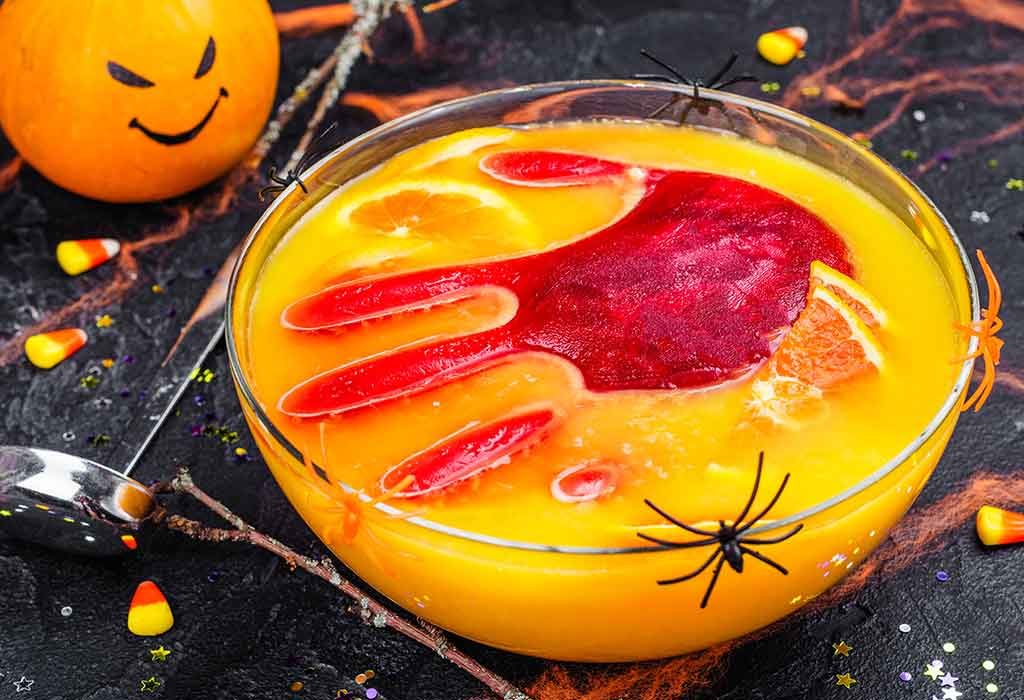
15+ Halloween Drinks For Kids That Are Dreadfully Delicious
If you’re looking for fun Halloween drinks for kids that will make the party unforgettable, you’ve come to the right place! Kids love Halloween and Halloween parties. But, the party becomes boring if the drinks are plain and regular. A Halloween party needs drinks in the same theme. We’ve gathered some Halloween drink recipes for kids that are not only spooky but also bursting with flavor and creativity. From creepy concoctions to colorful potions, these kid-friendly drinks will be the talk of the party. Let’s get started then!
Fun Halloween Drink Ideas With Their Recipes for Kids
Kids love Halloween and call their friends for Halloween parties. They dress up in scary costumes and decorate their houses with spooky decorations to create the right ambience for the party. But, if the drinks are plain, the party becomes somewhat incomplete. The drinks should match the theme and, at the same time, be spooky-a-licious to entice the kids. You can choose from the recipes given below to make mouth-watering Halloween-themed drinks.
1. Green Worm Punch
Ingredients:
Lemon Lime soda – 3 litres
Green food colouring – 12 drops
Rainbow sherbet – 1 quart
Gummy worms – 30
Prep Time: 10 minutes
Methods:
Take a big bowl and mix lemon-lime soda and food colouring. Stir until the colouring is completely dissolved.
To this mixture, add the sherbet in scoops and mix well.
Then, add some gummy worms.
While serving, put a gummy bear in each glasses, and then pour the drink along with some gummy worms.
2. Melting Ghost Halloween Drink
This easy to make drink is a show-stopper among all drinks. The cool fizzy drink with a taste of lemon is always refreshing and healthy for kids.
Ingredients:
Lemon soda – 2 cups
Lemonade (homemade or store-bought)
Green edible colour or about 10 scoops of lime sherbet
Candy eyeballs
Prep Time: 10 minutes
Methods:
Take a large pitcher and into it pour lemon soda and lemonade.
Add in ice cubes to chill them, and you can put the mixture in the fridge for one hour.
You can either add the lime sherbet directly to the glasses or add 2-3 drops of green food colour in the pitcher for the green colour.
Take the cool soda and delicately add candy eyeballs.
Candy eyeballs will begin to sink in the punch, so make sure you serve right after adding the eyeballs.
3. Witch’s Brew
Ingredients:
Lime sherbet – 1 quart
Ginger ale (chilled) – 2 litres
Pineapple juice – 1 cup
Green food colouring
Lime slices
Gummy worms
Prep Time: 10 minutes
Methods:
Take a big bowl and add pineapple juice and ginger ale. Mix well.
Add food colouring and mix.
Pour the lime sherbet into the bowl just before serving. Slowly mix it as it starts foaming.
Serve in glasses and garnish them with gummy worms.
4. Orange Gems Halloween Punch
This 2-minute drink is a trusted Halloween punch of all times. You can also include your toddlers or kids in making this tasty punch.
Ingredients:
Orange soda – 2 cups
Pineapple pieces (cooled) – 1/2 cup
Whipped cream
Orange coloured gems/MnM/ orange candies
Prep Time: 2 minutes
Methods:
In a large pitcher, pour orange soda (like Fanta) or orange juice and add chilled pieces of pineapple.
Do not fill the glass with soda to the brim. Keep some space left for the cream.
Now add whipped cream on top.
And sprinkle some solid or crushed orange gems or orange candies.
5. Spooky Hot Chocolate
Ingredients:
Milk – 4 cups
Vanilla extract/essence – 1 tsp
White chocolate chips – 8 oz
Green food colouring – 2 drops
Whipped cream
Green sprinkles
Candy eyes – 2 per glass
Prep Time: 15 minutes
Methods:
Dip each serving glass first in water and then in the green sprinkles. The glasses are ready.
Take a saucepan to mix the milk, food colouring, white chocolate and vanilla essence.
Cook the ingredients over medium heat, stirring regularly until the white chocolate melts and comes to a simmer. Remember not to boil.
Remove from heat and pour in the serving glasses immediately. Top with whipped cream.
Garnish with green sprinkles and add two candy eyes to each glass.
6. Hawaiian Worm Punch
Ingredients:
Lemon Hawaiian punch – 3 litre
Lemon-Lime soda – 1 litre
Gummy worms
Muffin tin
Prep Time: 3 hours 10 minutes
Methods:
Take the muffin tray. Keep two gummy worms in each muffin tin.
Fill the tin with Hawaiian punch till the worms are just covered. Don’t fill the muffin tin completely.
Freeze the muffin tray for 2-3 hours.
Take a big bowl. Fill 3/4th of the bowl with the Hawaiian punch.
Add the Lemon-lime soda.
Take out the frozen worms.
While serving, drop one frozen worm in each glass before pouring the punch.
7. Vampire Punch
Ingredients:
V8 Splash (Acai Berry flavour) – 5 cups
Grenadine – 20 ounces
Club soda – 5 cups
Liquorice whip (straw)
Gummy worms
Prep Time: 10 minutes
Methods:
Take a big bowl. Combine all the ingredients.
Keep in the refrigerator to chill.
Serve in glasses with a Licorice whip and a gummy worm.
8. Halloween Oreo Milkshake
Ingredients:
Vanilla ice cream – 2 cups
Candy corn Oreos – 6
Milk – 2/3rd cup
Whipped cream
Halloween sprinkles
Candy eyes
Prep Time: 5 minutes
Methods:
Take the pitcher of a blender. Scoop some ice cream in it.
Add the milk and the Oreos. Blend them till you get a smooth shake.
Pour the shake into serving glasses.
Add whipped cream on the top.
Garnish with candy eyes and Halloween sprinkles.
9. Halloween Fizzy Pumpkin Drink
Ingredients:
Small canning jars
Decorative green straws
Paper pumpkin cutouts or vinyl pumpkin face decals
Glue
Orange juice – 2 cups
Lemon-lime soda- 2 cups
Pineapple juice – 1 cup
Orange sherbet – 2 litres
Prep Time: 10 minutes
Methods:
Take the canning jars and paste the pumpkin face cutouts or vinyl on them.
You can also paste the pumpkin cutout on the lids.
Take a pitcher and mix the orange juice and pineapple juice in it.
Fill 3/4th of each jar with orange sherbet.
Pour some orange and pineapple mixture. Ensure the jars still have some space.
Top the drink up with some lemon-lime soda.
Cover the jars with the lids and add a green straw to make the stem of the pumpkin.
10. Tricolour Halloween Hot Chocolate
Ingredients:
White chocolate or white chocolate chips – 12 ounces
Milk (8C) – 1 litre
Vanilla essence – 1 tsp
Food colouring (soft gel) – orange, green and purple
Candy googly eyes
Halloween sprinkles
Mini marshmallows
Whipped cream
Edible food marker
Prep Time: 30 minutes
Methods:
Chop the white chocolate into small pieces and put them in a large bowl. You may use white chocolate chips instead of chocolate bars.
Take a pan and warm the milk till it starts simmering.
Pour the warm milk into the white chocolate.
Mix the melted chocolate in the milk and make sure it has no lumps.
Add the vanilla to the milk.
Pour the milk into three different bowls. Add different food colouring to the bowls, and mix.
Now, pour the coloured milk, one over the other, into each glass to make a tri-colour drink.
Draw cute little ghost faces on the mini marshmallows with some food colouring and drop them into the hot chocolate drink.
Garnish with whipped cream, candy eyes and sprinkles.
11. Mad Scientist Punch
Ingredients:
Large glass jars or tall glasses
Coloured drink or any other juice – 1 gallon
Dry Ice – 1 pound
Oven mitts or heavy-duty gloves
Safety eye goggles
Tongs
Prep Time: 15 minutes
Methods:
Pour the drink into a large bowl.
Wear a pair of gloves and safety eye goggles.
Carefully break the dry ice into 4-5 inches pieces with a hammer or mallet.
Add one piece of dry ice to the glass bowl using the tongs.
Serve the drink in the tall glasses leaving the dry ice in the bowl.
Replenish the ice when it melts.
12. Vampire Ice Cream Punch
Ingredients:
Red soda – 1 cup
Vanilla ice cream – 2 cups
Strawberry syrup – 1/2 cup
Vampire fangs (plastic)
Whipped cream – 1 can
Red decorative gel
Colourful straws
Prep Time: 10 minutes
Methods:
Take serving glasses or cups and fill 3/4th of each glass/cup with vanilla ice cream.
Pour red soda slowly over the ice cream.
Top the glass/cup with whipped cream and then drizzle some strawberry syrup.
Add the plastic vampire teeth and straw to the ice cream.
Garnish the teeth with red gel for the vampire effect.
13. Radioactive Orange Halloween Punch
Ingredients:
(Orange punch)
Orange juice – 2 cups
Mango juice – 1 cup
Pineapple juice – 1 cup
Plain soda (optional) – 1 cup
Ice cubes – 1-2 ice trays
(Frosting)
White frosting – 1 cup
Green colouring
Halloween sprinkles – 4-5 tbsp
Prep Time: 10 minutes
Methods:
For the punch, take a large pitcher and add in all fruit juices. Let the mixture chill for one hour.
If you want a fizzy punch, then you can add a soda as well.
For the frosting, microwave the white frosting for about 30 seconds until it is melted and not too hot. Add a few drops of green colour until you get a desired green colour.
Dip the outer edge of the serving glasses from the brim and add some sprinkles. Stand the glasses so that frosting get the dripping shape.
Put the glasses in the fridge for the frosting to cool.
Once everything is set, you can pour the mixture of fruit juices into frosted glasses and add ice cubes, accordingly.
14. Eerie Eyeball Lemonade
Ingredients:
Lemonade – 4 cups
Lychee fruit (canned or fresh) – 8 whole lychees
Blueberries – 8
Green grapes – 8
Drinking straws – 8
Prep Time: 15 minutes
Methods:
Pour the lemonade into glasses.
Take one whole lychee and place a blueberry inside each lychee, creating an “eyeball” effect.
Skewer a green grape onto a drinking straw, creating the “eyeball stem.”
Float the “eyeball” on top of each glass of lemonade.
Serve chilled and watch as the eerie eyeballs stare back!
15. Ghoulish Green Slime Smoothie
Ingredients:
Vanilla yogurt – 1 cup
Green apple – 1, peeled and chopped
Banana – 1, frozen
Spinach leaves – 1 cup, fresh or frozen
Honey – 2 tablespoons (optional for sweetness)
Gummy worms – for garnish
Prep Time: 10 minutes
Methods:
In a blender, combine vanilla yogurt, chopped green apple, frozen banana, spinach leaves, and honey (if desired).
Blend until smooth, creating a ghoulish green slime texture.
Pour the green slime smoothie into glasses.
Garnish with gummy worms for that extra spooky touch.
Serve these slime-tastic smoothies for a healthy Halloween treat!
16. Monster Mash Smoothie
Ingredients:
Frozen strawberries – 1 cup
Frozen blueberries – 1/2 cup
Banana – 1
Milk – 1 cup
Honey – 2 tbsp
Green food coloring – 2 drops
Candy eyes
Prep Time: 10 minutes
Methods:
In a blender, combine strawberries, blueberries, banana, milk, and honey. Blend until smooth.
Add the green food coloring and blend again to create a “monster” effect.
Pour the smoothie into serving glasses.
Garnish with candy eyes to give your drink a fun, spooky look.
17. Bloody Shirley Temple
Ingredients:
Lemon-lime soda – 1 cup
Grenadine syrup – 2 tbsp
Maraschino cherries – 4
Black licorice straws
Prep Time: 5 minutes
Methods:
Fill each glass with lemon-lime soda.
Add grenadine to create a “bloody” effect.
Drop a few maraschino cherries into the drink.
Serve with black licorice straws for a spooky twist.
Make these delicious and spooky drinks for your Halloween party this year. These tasty drinks will make your Halloween party a big hit! They are simple to make, and most can be whipped up in a few easy steps. Surprise your kid with one of the delicious drinks given above this Halloween.
Also Read:
Halloween Treat Ideas For Kids
Simple Halloween Crafts for Children
Amazing Halloween Costume Ideas for Kids
Spooky Ideas To Enjoy Halloween With Your Kids
Kid-Friendly Halloween Party Games for a Spooktacular Time
Read more




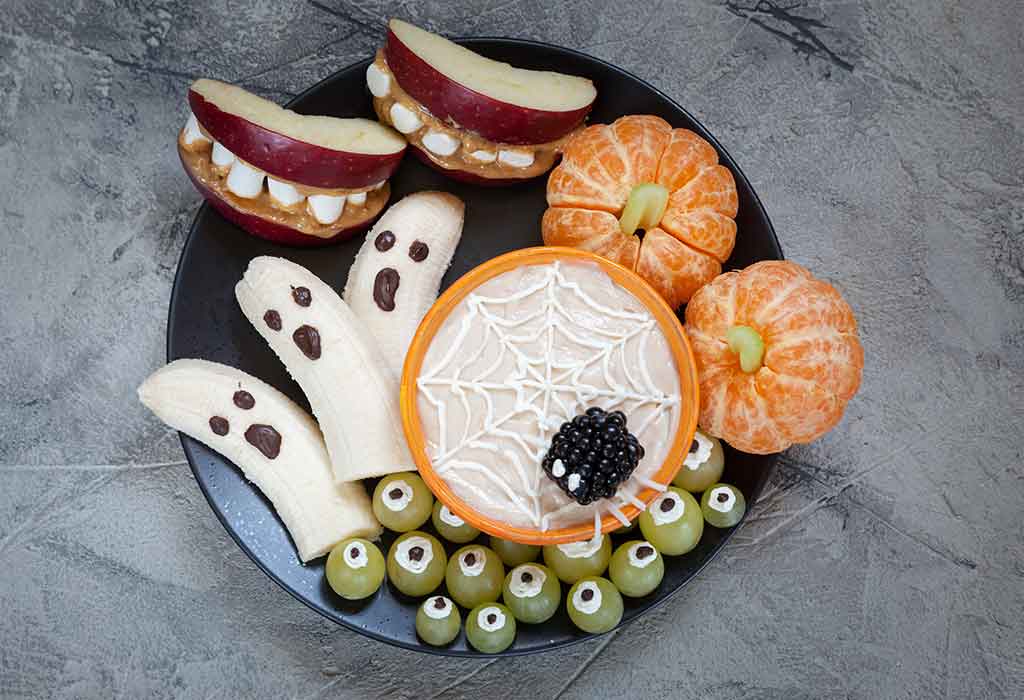
15 Delicious Halloween Food Ideas For Kids
Halloween is loved by all, especially by kids, because it’s time to party and go trick or treating. This time of the year, kids love to play ghouls and goblins, wear spooky clothes, and enjoy their tasty treats. Halloween party snacks, therefore, need to be inspired by Halloween or associated with Halloween. Parents know their kids love creativity in their snacks, so treats with a little imagination can pique their interests immediately. In this article, we have some interesting, fun, and healthy Halloween foods, your kid is sure to love.
Fun and Healthy Halloween Food for Kids
Kids wait the whole year for Halloween to dress as their favourite scary character, go trick and treating and attend Halloween parties. Therefore, the food too has to match the mood of the party.
Halloween party food has to be innovative and dressed up like everyone else. This can really stress parents out when they are planning a party for their kids. If you’ve been looking for ideas, stress no more. Here are some delicious Halloween treat ideas for kids. These are not only scary but also tempting and healthy.
1. Hats and Bats Chocolate Tarts
Serve these perfect Halloween-themed tarts at your Halloween party and see the kids go crazy over them.
Ingredients:
Peanut butter – 1/2 cup
Confectioners’ sugar – 1/2 cup
Mini chocolate chips – 1/3 cup
All-purpose flour – 2 cup
Cocoa powder (unsweetened) – 1/4th cup
Granulated sugar – 3 tbsp
Salt (preferably kosher) – ½ tsp
Unsalted butter (cold) – 1/2 cups
Cold cream cheese – 1 package/ 8 ounce
White frosting
White sanding sugar
Cookie-cutter in the shape of a bat and a witch hat
Servings: 20 servings
Total Time: 3 hours
Directions:
Stir the peanut butter and confectioners’ sugar in a bowl till it is smooth to form a dough.
Mix in the chocolate chips in it.
Put the cocoa powder, flour, salt and granulated sugar in a food processor. Pulse 3-4 times.
Add butter to the mix and pulse 2 to 3 times.
To this, add cream cheese and pulse till you get a dough. Add some water if required.
Divide this dough into two halves. Wrap each in plastic wrap and refrigerate for at least 1 hour.
Preheat the oven to 350 degrees F.
Line baking trays (tow) with parchment paper.
Roll the dough to about 1/8 inch thick.
Then cut the dough with cookie cutters.
If you do not have the cutters, you can use a knife and cut the cookies in the shapes you can.
Place half of the shapes on the baking sheet with some distance between them.
Spoon some peanut butter filling in the centre of the shapes. Brush the edges with a bit of water.
Then place the matching cookie on top of them. Then crimp the edges with the help of a fork.
Bake for 9-10 minutes. Then transfer to wire racks to cool.
Fill a ziptop bag with white frosting. Cut a small hole at the end and with this make eyes on the bat cookies and lines on the witch hat.
Sprinkle the cookies with sanding sugar.
2. Halloween Oreo Eyeball Treat
Enjoy making these Oreo eyeball treats, which are both fun and tasty. This Halloween treat for toddlers is easy to make and super delicious.
Ingredients:
Oreo chocolate sandwich cookies – 2 packets
Decorating gel – blue or green
Red food colouring
Black or brown M&Ms
Small paintbrush
Servings: 5 servings
Total Time: 15 minutes
Directions:
Carefully remove one cookie from each Oreo sandwich cookie, leaving the base cookie and the cream. Let the chocolate smudges be there.
Add a glob of gel icing to the cookie that has been removed to make the eye.
In the centre, place 1 M&M. Your eyes are done.
Now, take a bit of red food colouring on a plate. With the small paintbrush, make some scary-looking veins on the white frosting on the base cookie.
Repeat with all the cookies.
There you have it! Two types of scary eyes for Halloween.
3. Halloween Monster Mouth Treat
These monster mouths are easy to make and are healthy, too. And, the best part is that kids love eating them.
Ingredients:
Apples – 2, medium-sized
Peanut butter Spread
Lemon juice – 2 to 3 tsp
Peeled almonds – 15 to 20
Jelly beans – 15 to 20
Servings: 8 servings
Total Time: 15 minutes
Directions:
Cut each apple into 8 slices.
Place the apples in a bowl filled with water.
Add some lemon juice to the water to them. This will ensure the apples do not turn brown.
Take out the slices after 10-15 minutes.
Spread the peanut butter generously on each of the slices.
Make teeth with peeled almonds on 4 of the slices.
Repeat the same procedure to make teeth with jelly beans on 4 more slices.
Now, gently top each slice with almond/jelly bean teeth with a slice of apple that already has some peanut butter spread on it.
There, your Halloween monster mouth treat is ready.
4. Ghost Twinkies
Have fun making these easy Ghost Twinkies. This Halloween snack is a favourite among preschoolers. You can also include your kids to make this simple recipe.
Ingredients:
Twinkies -10
White melting chocolate
Googly eyes – 10
Wax paper
Servings: 7 to 8 servings
Total Time: 20 minutes
Directions:
Take the Twinkies and cut their bottom.
Take a cookie sheet and line it with wax paper.
Take a bowl and put the melting chocolate in it. Microwave it till it melts. Make sure not to overdo it.
Take a spoon and drizzle the melted chocolate on the cut Twinkies to make the ghosts. Let the chocolate pool at the bottom. After it solidifies, drizzle the white chocolate at the back of the Twinkie too.
Add the googly eyes by using white chocolate as the glue.
Put the Twinkies in the refrigerator for 10 minutes to set them. Ghost Twinkies are ready.
5. Witch Hat Cookies
Make these super easy and delicious cookies with chocolate wafers. Your kids are sure to love the cute little witch hats.
Ingredients:
Oreo ice cream cones or any other chocolate cones – 10
Chocolate wafers – 10
Green frosting
Flat tip
Sandwich bags/ zip lock bags – 3 to 4
Chocolate chips
Butterscotch chips
Small candies – 1 packet
Servings: 10 servings
Total Time: 30 minutes
Directions:
Take a chocolate cone and fill it with candy.
Melt some chocolate chips in a double boiler or in an oven.
Take a sandwich bag and melt a cup of chocolate chips in it.
Snip a corner of the bag and use it to pipe the melted chocolate at the edge of the chocolate cone.
Top the chocolate with a chocolate wafer.
Place the cone in the refrigerator for 5-10 minutes to harden the chocolate.
Take out the cones.
Pipe the green frosting to make flat ribbons around the cone.
Melt some butterscotch chips. Let it cool for a bit.
Take another sandwich bag and pour the molten butterscotch chips into it. Make a buckle on the hat with this melted butterscotch.
Place the cone in the refrigerator for another 5-10 minutes to harden the butterscotch.
The Witch hats are ready.
6. Frankenstein Cookie Delight
These Frankenstein Cookies are one of the best ways to treat your kids this time of the year. These are super easy to bake and look ravishing.
Ingredients:
Sugar cookie dough (ready to bake) – 16-ounce package
Green food colouring
Chocolate sprinkles
Candy eyes – 45 to 50
Candy corn
Black icing pen – 1
Parchment paper
Servings: 18 to 24 cookies
Total Time: 50 minutes
Directions:
Take the cookie dough in a bowl and add a few drops of green food colouring. Add the colour till you get the desired green colour.
Roll the dough to make cookies in even portions and refrigerate for 30 minutes.
Preheat the oven to 350 degrees F.
Take a baking tray and line it with parchment paper.
Place the cookies keeping a 2-inch distance between them.
Bake the cookies at 350 degrees F for 6 minutes.
Take out the cookies and sprinkle them with chocolate sprinkles, to make the hair.
Now, return the cookies to the oven and bake for 7-9 minutes.
Remove the cookies from the oven and immediately place candy eyes and candy corns on the cookies to make the eyes and bolts when the cookies are warm.
Cool the cookies.
Draw a mouth on the cookies using the black icing pen.
7. Spider Cookies
How about some scary spider cookies, everyone? Try this easy recipe right now.
Ingredients:
Butter – 1 ½ cup
Sugar – 1 ½ cup
Eggs – 2 large
Vanilla extract – 1 tablespoon
All-purpose flour – 4 ½ cup
Salt – ½ teaspoon
Black gel icing – 1 tube
Halloween sprinkles
Spider shape cookie cutter
Royal icing
Parchment paper
Servings: 8 to 12 servings
Total Time: 3 hours 5 minutes
Directions:
Take butter in an electric mixer and beat it till it’s creamy.
Add sugar to it gradually while beating.
Add eggs and vanilla extract and beat well.
Take a large bowl and mix flour and salt. Add it to the butter mixture gradually to make a dough.
Divide the dough into four parts and flatten it into disks.
Wrap the disks in plastic wrap and refrigerate for 1 hour.
Preheat the oven to 350 degrees F.
Line a baking tray with parchment paper.
Roll each dough disk in ½ inch thickness. Then cut into spider shape using the cookie cutter.
Place them on the baking sheets.
Bake them for 8-10 minutes till they are light brown in colour on the edges.
Let them cool for about 3-4 minutes.
Take royal icing and pipe the cookies. Garnish the edges of the cookies using the black gel.
Let the icing set.
Serve immediately or store the cookies in an airtight container for up to 2 days.
8. Jack-O-Lantern Cookies
Many must not have heard of this style of cookies, but these are easy and fun to make.
Ingredients:
All-purpose flour – 2 cups
Baking powder – 1 teaspoon
Salt – ¼ teaspoon
Unsalted butter – 1/3rd cup
Vegetable shortening – 1/3rd cup
Sugar – 1 cup
Egg – 1 large
Vanilla extract – 2 1/2 teaspoon
Milk – 4 tablespoon
Confectioners’ sugar – 2 cups
Orange and green food colouring
Candy corn
Black and red liquorice laces
Pumpkin shape cookie cutter
Servings: 8 to 10 cookies
Total Time: 9 hours 30 minutes
Directions:
Take the flour, baking powder and salt in a bowl and whisk together.
Take another bowl, add butter and shortenings and beat them using an electric beater.
Add sugar to it and beat it till it’s light.
Add egg, 1 teaspoon vanilla extract and beat some more.
Add flour gradually and mix till the dough is formed.
Take a zip-lock bag and place the dough in it.
Roll the dough in the bag in quarter-inch thickness.
Refrigerate for 3 hours at least.
Preheat the oven to 375 degrees.
Open the zip lock bag by cutting the sides and peeling the plastic away.
Cut the dough with pumpkin shape cookie cutter.
Place the cookies on baking trays.
Bake till they are golden brown for about 12-14 minutes.
Let them cool.
To make the icing, take a bowl and add some butter, milk and 1½ teaspoon vanilla extract. Add confectioners’ sugar and whisk.
Transfer 1/4th of the icing to a bowl.
Add some green colour to it. Mix well.
Add orange colour to the remaining icing and mix.
Make the pumpkin stem with green icing with the help of a spoon.
Spoon orange icing in the body of the pumpkin.
Make eyes with candy corn and mouth with liquorice.
Let the icing harden at room temperature for about 5 to 6 hours.
9. Monster Halloween Punch
Enjoy this simple punch at your Halloween party. It is a perfect beverage for kids’ Halloween parties.
Ingredients:
Lemonade – 4 oz
Lemon-lime soda – 4 oz
Lime sherbet – 1 cup
Candy eyeballs
Servings: 4 servings
Total Time: 15 minutes
Directions:
Mix lemonade and 2 oz of lemon-lime soda in the jug.
Pour the punch into glasses.
Add a small scoop of lime sherbet to the glasses.
Decorate the sherbet with candy eyeballs.
Pour in a bit of lemon-lime over the sherbet before serving.
10. Spider Deviled Eggs
Enjoy the Halloween party with these Spooky Deviled eggs. These are some of the best Halloween finger foods.
Ingredients:
Eggs – 6
Avocado- ¼ cup
Salt- 1/2 tsp
Dry mustard – ¼ tsp
Pepper – ¼ tsp
Light mayonnaise – 1 tsp
Black olives
Servings: 12 servings
Total Time: 15 minutes
Directions:
Hard boil the eggs.
Let them cool. Peel off the shells.
Cut them in halves, lengthwise.
Take out the egg yolk and put it in a food processor.
Add avocado, mustard, salt, mayonnaise and pepper. Beat till creamy.
Fill each egg half with this puree.
Cut a few olives in half. Place the cut olive to make the spider’s body.
Cut more olives in slices to make the legs. Push these slices to the spider’s body.
Repeat these two steps for each egg.
Your spiders are ready.
11. Halloween Soda Float
All eat and no drink? How is this possible! Try this easy and super fun beverage recipe to enjoy this Halloween with your kids.
Ingredients:
A Soda of your choice – 1 litre
Vanilla ice cream – 1 tub
Halloween sprinkles
Mason Jar – 4 to 5
Large Googly eyes
Scissors
Medical gauze – 2 to 3 small rolls.
Servings: 4 to 5 servings
Total Time: 10 minutes
Directions:
Cover the Mason jar with medicinal gauze.
Paste eyes on it.
Pour the soda into the jar.
Add a scoop of ice cream.
Garnish with Halloween sprinkles.
12. Triscuit Delight
Kids love cheese and crackers. What if we combine these two? Try this amazing recipe of Triscuit Delight and savour this at this year’s Halloween party.
Ingredients:
Triscuit Crackers – 1 packet
Cheddar cheese
Edible eyeballs
Servings: 8 to 10 servings
Total Time: 15 minutes
Directions:
Cut the cheese into thin strips.
Lay the cheese stripes on the crackers in a way that makes them look like bandages.
Place the edible eyeballs to complete the mummy.
Enjoy these fun and tasty treats for your Halloween party. These delicious foods are perfect for any party or to give to kids as treats. They are simple to make and can bring life to the party. Most of these treats/snacks can be made by kids, so be sure you include your child while making these temptingly haunting Halloween snacks.
13. Pumpkin Cheesecake
Pumpkin cheesecakes never cease to remind us of Halloween and coming winters.
Ingredients:
(for the crust)
Digestive cookies – 25
Nuts (of your choice) – 1/2 can
Sugar – 2 tbsp.
Melted butter – 3 tbsp.
(for the filling)
All-purpose flour – 3 tbsp.
Eggs – 3
Sugar – 3/4 cup
Cream cheese, room temperature -27.5 oz
Pumpkin pie spice
Pumpkin puree – 11/2 cup
Salt (preferably kosher) – 1/2 tbsp.
Servings: 10 to 12 servings
Total Time: 1 hour
Directions:
Preheat the oven to 350°F, put the 9-inch square baking pan, lined with parchment paper.
For the crust, take a bowl, and add finely crumbled cookies, nuts, and sugar. Mix together and then add butter. After mixing the butter, press the batter evenly into the preheated pan.
Bake the crust for 12 minutes, then transfer the pan to a wire rack.
For the filling, you can combine cream cheese, eggs, and sugar per quantity.
Add flour and salt to it. Take 1/4th of the mixture aside and add pumpkin puree and pumpkin pie spice to the remaining mixture.
Pour the mixture with the pumpkin spice and puree onto the cooled crust.
Pour the cream cheese mixture you set aside earlier on top of the pumpkin mixture, and then swirl the mixture with a spoon or knife to give it a marble-like look.
Bake the batter for the next 30-34 minutes, transfer the baked one to the wire rack and let it cool. You can refrigerate the cake for two hours and cut the cake into rectangular slices.
14. Spooky Mummy Hot Dogs
Serve up these adorable mummy hot dogs at your Halloween gathering and watch the kids delight in their ghoulishly tasty treats.
Ingredients:
Hot dogs – 8
Crescent roll dough – 1 can
Mustard or ketchup (optional)
Candy eyeballs
Servings: 8 servings
Total Time: 30 minutes
Directions:
Preheat your oven to 375 degrees F.
Take the crescent roll dough and roll it out. Using a knife, cut thin strips from the dough.
Wrap the strips of dough around the hot dogs, leaving a small gap near the top for the mummy’s “face.”
Place the wrapped hot dogs on a baking sheet and bake for 12-15 minutes or until the dough is golden brown.
Once out of the oven, let them cool for a few minutes. Add dots of mustard or ketchup as “eyes” and gently press on candy eyeballs.
Serve these spooky mummy hot dogs with a side of your favorite dipping sauce.
15. Mini Pumpkin Cheese Balls
Create these delightful mini pumpkin cheese balls that are not only cute but delicious too. Perfect for little goblins and ghouls.
Ingredients:
Cream cheese – 8 ounces, softened
Cheddar cheese – 2 cups, shredded
Paprika – 1/2 teaspoon
Black pepper – 1/4 teaspoon
Pretzel sticks – for stems
Chives or green bell pepper – for vines
Servings: 20 servings
Total Time: 30 minutes
Directions:
In a mixing bowl, combine softened cream cheese, cheddar cheese, garlic powder, paprika, and black pepper. Mix until well combined.
Take the crescent roll dough and roll it out. Using a knife, cut thin strips from the dough.
Insert a pretzel stick into the top of each cheese ball to create the stem of the pumpkin.
Using chives or thin strips of green bell pepper, create little vines around the stem.
Refrigerate the cheese balls for at least 30 minutes to allow them to firm up.
Serve these adorable mini pumpkin cheese balls with crackers or vegetable sticks for dipping.
All the above-mentioned recipes are fun to make and do not require any fussy ingredients, so you do not have to worry about gathering ingredients across the ocean. You can always use the substitutes to ingredients, if you are intolerant to any product and use your creative side to tweak the design and flavouring.
So, what are you waiting for? Heads up, put your hands to use, and cook delicious delights for your kids this Halloween.
Also Read:
Halloween Gift Ideas for Kids
Halloween Drinks for Children
Amazing Halloween Costume Ideas for Kids
Halloween Party Games for a Spooktacular Time
Spooky Ideas To Enjoy Halloween With Your Kids
Read more
Latest US Dietary Guidelines for Children
The latest US dietary guidelines for 2020 to 2025 suggest feeding kids their natural sources of nutrition. It aims to eliminate any allergens from the diet and ensure the child’s micronutrient and caloric needs are met. The guidelines are released to the public on the 29th of December every year and are often updated. It uses evidence-based nutrition practices and gives caregivers a set of guidelines that they can rely on for feeding toddlers their most age-appropriate diet.
Dietary Guidelines for Babies and Toddlers
The Departments of Agriculture (USDA) and Health and Human Services (HHS) sets the standards for these guidelines and ensures that families do not end up malnourished their kids. Healthcare professionals create these benchmarks for nutrition by understanding the overall requirements of the population as a whole.
Experts have stated previously that the first 1000 days of a baby’s development are crucial and considered key milestones. The risk of developing obesity, weak bones, and chronic illnesses can be minimized or lowered by following the recommendations outlined by these organizations. It is clear that eating patterns can impact the growth and development of a young child. And research has made it easy to access all this information from one’s fingertips thanks to technology and mobile devices.
The USDA recommends parents feed their kids breast milk since it is a natural source of nutrition. Foods like vegetable purees and infant formulae should be fed to children from a cup. Where breast milk is not available, fortified milk and supplemental Vitamin D3 may be used.
Other essential nutrients like choline, long-chain polyunsaturated fatty acids, Omega-3s, zinc, and iron should be added to the diet through foods like eggs, salmon, meats, etc. Bioavailable and nutritionally-dense meals should be included in the diet at around the age of 6 months and continued until the first two years of their lives. Sugar, honey, maple syrup, and artificial sweeteners should be completely avoided and not added to the diet.
Avoid Giving Plant-Based Milk Alternatives Up to 12 Months of Age
Plant-based milk does not contain the essential animal proteins, fatty acids, and dairy compounds required for the proper nourishment and development of infants. This is why experts don’t recommend using these vegan alternatives for the first two years of children’s lives.
Soy milk, rice milk, oat milk, cashew milk, and unsweetened almond milk may be given to kids in minimal amounts after 12 months, provided the bulk of their diet consists of dairy and animal products. The nutrients in these plant-based milk aren’t bioavailable, and high phytic acid content inhibits proper nutrient absorption and assimilation.
About 20 to 25% of an infant’s calories should come from fats during the first 2 years, and this number can go up to 30% after that. Fat sources should include foods like olive oil, animal dairy, pureed avocados, and macadamia nuts. Plant-based milk beverages do not contain essential nutrients required to meet a child’s growing needs and are generally not recommended under the USDA guidelines.
Exposing Kids to Allergenic Foods
Being aware of food allergies and taking the necessary steps to avoid exposing kids to allergenic foods is crucial for parents. Children are generally allergic to:
Tree nuts
Pasteurized cow’s milk
Crustacean shellfish
Soybeans
Refined wheat, grains, cereals, and flours
Feedlot eggs
Most experts suggest adding these foods in after the first two years because they can then develop a resistance to various allergies. Late exposure is not recommended according to dietary guidelines for children, and the same goes for early exposure before the age of 2 years. Complementary foods like pureed organic vegetables may be added along with these foods to help their bodies adapt to these allergens and not react negatively in the future.
Avoid Giving Foods and Beverages With Added Sugars During the Child’s First Two Years
Too much sugar in the diet can rot a baby’s teeth, while too much salt can put stress on their kidneys. This is why doctors recommend putting babies on a low-sugar diet. Carbs turn to sugar, which means avoiding processed carbs is a good idea. Use whole grains and limit their daily intake to no more than 2 to 3 ounces a day.
The rest of their diet should consist of vegetables, fruits, and animal products brought from the farm. Commercial fried fish and dairy may be added for parents who cannot procure farm-fresh meals. Nutritional guidelines for children state that too much sugar may make babies develop an aversion towards healthier foods such as unrefined whole grains, fruits, vegetables, and animal products.
Dietary Guidelines for Moms and Moms-to-Be
Most nutritionists recommend moms and moms-to-be to follow a nutritionally balanced diet. Here’s what experts suggest:
Add a mix of healthy carbohydrates, proteins, and fats to your diet. Fruits and leafy green vegetables should be added to every meal, with fruit portions being limited to each piece. Dark leafy greens like spinach, kale, and swiss chard are perfect options.
Animal products require all the nutrients and essential amino acids for proper nourishment. They should be a staple as well, and healthy dietary fats should come from there. Meat, milk products, and seafood are the best options.
For moms who have a dairy allergy, low-fat and low-lactose foods like camel milk, low-fat yogurt and cheeses, and certain legumes like pine nuts may be a good choice.
Avoid using PUFA and refined seed oils for cooking. Using butter, tallows, and coconut or olive oils are better when prepping your meals since they lower the Omega-6 markers in your body and reduce inflammation.
Women are recommended to take up to 800 mcg of folic acid/day if they’re pregnant or expecting.
Pregnant and expecting moms should stick to fish with lower mercury levels when looking forward to their kids. Mercury can impair delivery and affect a child’s brain development. Anchovies are the safest options, along with wild-caught fish raised in clear waters not exposed to any industrial pollutants.
Tips for Feeding Kids as Per the Issued Dietary Guidelines
Based on the dietary guidelines for toddlers set by the USDA, here is a list of tips for feeding kids and how to ensure they grow properly:
Do not force-feed your kids if they’re not in the mood. Smaller portions but frequent meals are a lot better than giving them 2 to 3 big meals a day. Spread out your meals up to five to six times a day, and you will notice a huge difference in their appetite, mood, and overall well being
Children require B vitamins, folic acid, and high-quality animal nutrition for their proper nourishment. You can get a mix of these from foods like berries, legumes, dairy, meats, whole grains, citrus fruits, and dark leafy greens.
Avoid GMO and inorganic produce whenever possible because of pesticide and chemical contamination concerns. If you’re on a budget, stick to the least contaminated foods by looking at the dirty dozen list online.
Recommended Eating Pattern for Families With Kids
Healthy eating patterns established early on in the family can help a child stick to their diet. When a child watches a parent enjoying healthy and wholesome meals at the dinner table, he/she is likely to want to eat that and emulate them. Research shows that meal times together can impact how a child does in school, behaves, and plays a key component to their overall well being. Here is some recommended eating pattern for families with kids in accordance with nutritional guidelines for preschoolers:
Sit down for family dinners or at least evening snacks three to four times a week. This will ensure you get enough time to bond over the dinner table and interact with the kids.
Avoid alcohol and sugar intake in front of the kids. This can establish curiosity and bad habits later on. If you are a parent and not drinking in front of the kids, limit yourself to just 1 drink a day as a mom and a maximum of up to two drinks a day for dads. Pregnant and expecting mothers are not advised to drink at all.
Use a variety of colors and textures for your meals. Put some thought into your meal prep and make the meals look appealing. This will encourage children to dig in and start eating. If the food is good, but the way it’s presented is bad, they may develop an aversion towards eating it, at least at the beginning.
Avoid adding processed foods in your meals since these contain chemicals, carcinogens, and various substances that make them addictive to kids. Stick to clean, unrefined, and nutritious foods that are naturally occurring in nature and ensure optimal health and development
If you can afford to eat organic and support farmers who practise regenerative agriculture, then even better. You can still eat on a budget and ensure your meals are clean. Add eggs, meat, milk, and seafood to the diet, and you won’t run into any problems with your nutrition.
Avoid vegan diets and the use of multiple nutritional supplements without a doctor’s recommendation. Vegan diets lack the essential fatty acids and impair proper cognitive development in both kids and adults. There’s a lot of evidence backing this up by experts, which is why we’re mentioning it.
You don’t have to eat too healthily all the time. Have snacks like nuts and use cacao powder for making homemade chocolates without the added sugars. There are ways you can make delicious treats at home and let your kids enjoy them from time to time without compromising on their health. This will also encourage healthy eating habits and develop a good relationship with their nutrition and diet.
If you have a picky eater in the family who doesn’t feel like eating his/her fruits, fats, and vegetables, then the chances are that the diet you’re putting them on is not that good. Toddlers and infants know instinctively what they want to eat and when you give them proper nutrition, they will be more than happy to dig in.
Now that you’re aware of what to watch out for and how to ensure they’re getting the right kind of nutrition, you can get to work on cleaning up the overall diet. Always consult with a pediatrician or nutritionist before adding new nutritional supplements or making drastic changes to the diet. If they have food allergens that aren’t going away by reintroducing certain foods, then there could be a root problem that requires further clinical investigation. Keep these points in mind, and happy parenting!
Also Read:
Grains That Should Be a Part of Your Growing Child’s Diet
Nutrition for Children
Healthy Foods for Children
Read more
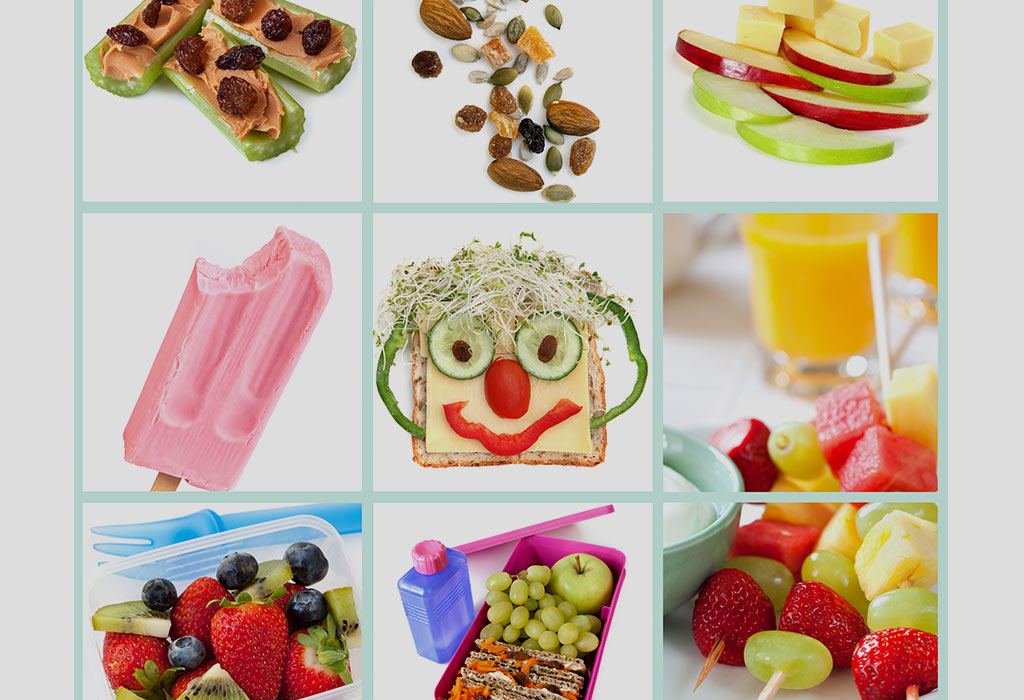
8 Healthy and Yummy After School Snacks for Kids
After spending hours studying, playing, running around, and doing other activities at school, most kids come home feeling hungry. They would love to gorge on some yummy and appetising snacks to satisfy their hunger pangs. As a parent, you might like to offer something that is not only easy-to-make but also healthy and appealing. Foods that can be put together before the kids get home are an ideal choice for after school snacks.
Video: 7 Healthy and Yummy After School Snacks for Kids with Recipes
Easy After School Snacks for Children
Your kids can get bored eating the usual snacks every day and may want some variety. The regular roti-vegetable may not seem tempting to them. Packaged food can be an option, but it’s not the healthiest one. It may not be feasible to cook interesting kid-friendly after-school snacks each day. Some imagination and ingenuity in preparing and presenting the food items may prove very helpful. So, here are a few simple and healthy after-school snacks for kids. These Indian recipes are not only likely to get your kid’s attention, but may also tempt him to eat them.
1. Fruit Kebabs
Put together your kid’s favourite fruits in kebab sticks and see them disappear in minutes!
What You Need
Cheese cubes
Seedless grapes
Watermelon
Any other seasonal fruit like apple or mango
Flavoured yoghurt
Honey (optional)
Kebab sticks
How to Make
Chop all fruits in cube-sized bites.
Arrange them on the kebab sticks as per your choice. Don’t forget to add the cheese cubes.
Drizzle some honey over the flavoured yoghurt, and it can be served along with the fruit kebabs.
2. Rainbow Smoothies
These colourful and healthy pops made from fresh fruits can be a terrific after-school snack for your kid.
What You Need
1 cup each of 5 different fruits (preferably of different colours) like kiwi, watermelon, mango, black grapes, pineapple.
1 cup of milk
1 cup of yoghurt
Ice-pops bags
Pastry bags
How to Make
Churn each fruit in a blender by adding a little milk and yoghurt. Keep the consistency fairly thick to prevent them from mixing into each other when you pour them in the ice-pop bags.
If required, you can chill the mixtures in the freezer for some time to stiffen them.
Transfer each blended fruit into a pastry bag and seal the tops with a rubber band.
Slightly cut the tip of each pastry bag and start squeezing a little mixture of the different fruits into the ice-pop bags. You may begin with black grapes smoothie then add kiwi mixture, next can be mango followed by watermelon and pineapple smoothie.
Seal the bags and freeze them for a few hours before serving.
3. Oats Energy Balls
These no-bake energy bites with the goodness of oats might be just the thing your kid needs after school.
What You Need
1½ cup cooking oats
1/3 cup honey
1 cup of coconut powder
2/3 cup butter
¼ tsp cinnamon powder
¾ cup of chocolate chips
How to Make
Add the oats to a bowl and crush them slightly with a potato masher.
Add the honey, butter, coconut powder, cinnamon powder, and mix well.
Sprinkle chocolate chips all over the mixture.
Put it in the fridge for sixty minutes or so.
Then shape them into small balls.
4. Cracker Pizzas
These tasty mini pizzas may soon become your kid’s absolute favourite snacks.
What You Need
A pack of cracker biscuit
Cheese spread
1 onion (finely chopped)
1 tomato (finely chopped)
Bell peppers (finely chopped)
Pepper
Oregano
How to Make
Put the cheese spread in a bowl.
Add the onions, tomatoes, bell peppers, pepper, and mix well.
Spread this topping over the cracker biscuits.
Sprinkle some oregano before serving.
You can also give the cracker pizzas a sweet twist by making a topping of flavoured cream cheese spreads and some sliced fresh fruits that are your kid’s favourite.
5. Cheesy Broccoli Pancakes
The cheesy pancakes packed with the nutrition of broccoli may make for a super healthy snack.
What You Need
2 cups broccoli florets
2 eggs
1 cup breadcrumbs
½ cup grated cheese
Salt
Oil
How to Make
Steam the broccoli florets
Add the florets, breadcrumbs, eggs, cheese, salt in a blender and churn till they appear finely chopped.
Transfer the mix to a plate and roll small balls out of it.
Heat some oil in a pan. Drop the balls and flatten them gently with a spatula.
Cook both sides till they turn crispy brown.
Serve warm.
6. Whole Wheat Dates Doughnuts
These irresistible doughnuts may be the perfect snack to recharge your kid after school.
What You Need
1 ½ cups whole-wheat flour
A teaspoon of baking powder
½ cup of sugar
1 egg
½ cup buttermilk
1 cup seedless dates (chopped)
A teaspoon of vanilla extract
Salt
Butter (softened)
How to Make
Preheat the oven to 180°C. Grease and lightly dust the doughnut pan with flour.
Add the flour, salt, and baking powder in a bowl.
In another bowl, whisk the sugar and butter together, and add the buttermilk, egg, vanilla extract. Combine it all together.
Mix all the ingredients.
Add the dates and thoroughly combine.
Pour the batter into the doughnut pan.
Bake for 15 minutes
To check if it is baked, insert a knife or a skewer and see if it comes out clean.
7. Apple Muffins
These amazingly delightful muffins are ideal for getting your child’s power up after school.
What You Need
Half a cup of milk
1 ½ cup all-purpose flour
1 cup oats
1 ¼ cup cereal (crushed)
2 eggs
2/3 cup oil
¼ cup yoghurt
2/3 cup honey
Half teaspoon vanilla extract
A teaspoon of baking powder
A teaspoon of baking soda
A teaspoon of cinnamon powder
An apple (peeled and grated)
A pinch of salt
How to Make
Place paper liners along the muffin tray and preheat your oven to 180°C.
Whisk together the eggs, milk, yoghurt, honey, oil, and vanilla extract until well blended.
Add the crushed cereals and oats to the mixture. Keep it aside for 10 minutes.
Mix the baking soda, baking powder, flour, cinnamon powder, and salt separately.
Mix the wet ingredients along with the dry ingredients and combine well.
Add the grated apples to the mixture.
Scoop the mixture into the muffin tray. You can fill up till the top as the batter rises very little.
Bake for twenty minutes or until an inserted toothpick comes out clean.
Serve warm with jam or maple syrup.
8. Crunchy Potato Chips
You can make your kid’s snack time ultimate fun time with these delicious and yummy potato chips.
What You Need
2 sweet potatoes (large)
A tablespoon of onion powder
Half tablespoon brown sugar
Smoked paprika (optional)
Salt
Pepper
Red chilli powder (optional)
Chat masala
Oil for frying
How to Make
Wash the sweet potatoes properly and pat them dry with paper towels.
Slice them as thinly as possible.
In a bowl, mix the onion powder, paprika, brown sugar, salt, pepper, chat masala, and chilli powder.
Heat oil in a frying pan over medium heat. Add the sliced potatoes in batches into the pan, and fry them for 3 to 5 minutes. Using a frying spoon, keep turning the chips over until they are crispy golden on both sides.
Once complete, transfer them on a paper towel to drain the extra oil.
Sprinkle the mixture of seasoning over them and toss well.
The best snacks for your kid are the ones that taste great and fill them up without weighing them down. A little bit of creativity can spin the most usual foods into perfect treats for your kid. Try out these delicious and healthy snack recipes for your little one and watch him savour every bite of it!
Also Read: Eating Disorders in Children
Read more
25+ Healthy Indian Breakfast Recipes for Kids
Children who eat breakfast tend to make healthier choices overall and have more energy, making them more likely to participate in a wider range of activities. Not eating breakfast leaves children hungry by mid-morning, leading to snacking or overeating. We also understand that making kids eat on time can be very difficult. The trick is to entice them with some drool-worthy kid-friendly breakfast ideas that are simple yet innovative and keep them excited about breakfast every morning. There are a plethora of kids’ Indian breakfast ideas for you to choose from. If you are looking for tasty, simple, and easy-to-make breakfast recipes for kids, this is going to be your go-to guide for hustled mornings!
Here we have a list of nutritious breakfast recipes for kids, ranging from delicious breakfast recipes for kids to breakfast ideas for toddlers. You’re sure to love these healthy Indian breakfasts for kids.
South Indian Breakfast Recipes
Indulge in the rich culinary heritage of South India with these vibrant and flavorful breakfast recipes.
1. Carrot Uttapam
Carrots are high in fibre and are very good for the eyes. Plus, they have that added bonus of being a very pretty orange colour and a sweet taste. This is one of the best breakfast ideas for toddlers Indian if they want savoury foods.
Ingredients
Dosa batter
2 finely chopped onions
3 grated carrots
A few finely chopped coriander leaves
Oil
Salt to taste
How to Prepare
Except for the dosa batter, mix all the ingredients together and keep overnight to save time in the morning.
Heat up a non-stick pan. Once it is hot enough, reduce the flame to medium heat.
Pour in the dosa batter and spread it around, but not too much as it needs to be spongy.
Once it starts cooking a little, sprinkle the vegetable mixture on top. Cover and cook for a few minutes.
Once the corners start to come loose, flip the uttapam over, sprinkling oil around it.
Take the pan off the flame once the uttapam is cooked, and serve with chutney or sambar.
2. Chopped Dosa Masala
Dosas are made with rice and urad dal, making it a complete meal for vegetarians. Giving your children dosas for breakfast is a great idea, but what if your kid gets fed up with the same old? Give her this chopped-up dosa masala mix for a change and see how she likes it.
Ingredients
2-3 thick, spongy dosas, chopped
2 finely chopped onions and tomatoes, and 1 green capsicum
3 teaspoons of oil
Half a teaspoon of red chilli powder
Half a teaspoon of garam masala
Salt to taste
How to Prepare
Fry the onions in the oil till they turn golden.
Add the tomatoes, chilli powder, garam masala, and salt.
Once the mixture turns soft and mushy, add the capsicum. Make sure to not cook the capsicum completely so that it remains crunchy.
Add the chopped dosa pieces and mix until everything is completely coated with the masala.
3. Instant Oats Dosa
Oats are extremely strengthening, but sadly, most children do not enjoy eating them when prepared in the same boring way. With this Instant oats dosa, your child will be gobbling it down, all complaints forgotten.
Ingredients
½ cup oats flour
2 teaspoons rice flour
¼ cup semolina
½ cup curd
¼ cup finely chopped onions
1 ½ teaspoon finely chopped green chilli
2 tablespoon finely chopped coriander
Salt and pepper to taste
Oil for cooking
How to Prepare
Mix all the ingredients well with 1 cup of water.
Heat a non-stick tawa and pour a ladle of batter into the pan. Spread it around the pan. Cook until golden brown on both sides.
Serve with green chutney.
4. Idli Upma
Idlis are one of the most popular South Indian breakfast recipes for kids, as they are easy to eat and are great with chutney on the side. Sadly, the leftovers are not appreciated as much because they can get pretty dry. Well, not anymore – recycle your leftover idlis for this delicious recipe! Leftover idlis are best as they crumble better, not to mention that they are a great way to finish off leftovers!
Ingredients
6 to 8 idlis
1 onion, chopped
Grated carrots
Green peas
1 green chilli, slit
Salt to taste
1 tablespoon of oil
1 teaspoon mustard seeds
2 teaspoon chana dal
1 teaspoon urad dal
1 sprig of curry leaves
Turmeric powder
How to Prepare
Heat oil in a pan and add the mustard seeds. Once they start popping, add the chana dal and urad dal and fry until golden.
Add curry leaves.
Add the onion, green chilli, grated carrots, peas and turmeric powder, and sauté until the mixture begins to sweat. Do not let it brown.
Add the crumbled idlis. Mix well and add water if you feel it is too dry. Check for salt.
Serve hot.
5. Whole Wheat Dosa
Whole wheat contains complex carbohydrates and proteins that help boost metabolism. We all know about making parathas with whole wheat flour, but have you ever tried a dosa made from the same?
Ingredients
1 cup of whole wheat flour
2 tablespoons of fine sooji
½ teaspoon salt
1 teaspoon sugar
1 tablespoon oil
¼ teaspoon black pepper
½ teaspoon ajwain
½ teaspoon baking soda
1 ¼ cups of water
4 tablespoons of oil
How to Prepare
Mix all the dry ingredients (flour, sooji, salt, sugar, black pepper, baking soda, ajwain) together. Add water and mix until you get a smooth batter. The batter should not be too watery but of pouring consistency.
Use a non-stick pan over medium heat.
Pour a ladleful of the batter into the pan and spread evenly.
When the batter starts to dry, smear a teaspoon of oil over it and cook it until it is golden brown. Flip it over and cook until golden brown.
Wipe the pan down after every dosa as this ensures that the others cook evenly.
Dosa is ready to be served with sambar or chutney.
6. Tumbler Idli
A type of idli that has its origins in Karnataka, the change in shape from the normal idli will have your child reaching for it out of curiosity. Enhance the nutritional content of idli batter by incorporating ground sesame seeds, which are packed with vitamins, minerals, fibre, healthy fats, and protein (1).
Source: Pinterest
Ingredients
Idli batter
Cylindrical tumblers
How to Prepare
Take a large, flat-bottomed vessel and fill 3/4th of it with water.
Grease the tumblers with some oil. Fill them with the idli batter.
Place the tumblers in the vessel for around 15 – 20 minutes. Serve hot with chutney and sambar.
7. Appam (Rice and Coconut Pancakes)
This dish is very popular in Kerala as a healthy breakfast meal. It can be seen as a healthy version of pancakes.
Ingredients
1 cup of rice
2 cups of grated coconut
3 tablespoons sugar
½ teaspoon yeast
Salt to taste
How to Prepare
Soak the rice for a few hours. Add the soaked rice to the mixer along with the coconut, and grind into a smooth paste. Add some water to the mixture if needed.
Add salt and sugar to the mix. Then, add the yeast and blend for a while longer till you get a dosa consistency batter.
Refrigerate overnight, but leave it out in the morning as the batter should be at room temperature for the appams to get ready.
Heat a non-stick pan and add oil.
Pour the batter and spread it across the pan.
Let it cook on both sides, and serve hot.
8. Sooji Upma
Sooji is made up of durum wheat, which keeps you full for a longer period of time. It is a great energy booster and makes a great breakfast dish to give your children before sending them off to school. What’s best? It’s one of the best breakfast ideas for 1-year-old tots who are learning new tastes and textures. Upma is mild, soft, and fulfilling!
Ingredients
1 cup of sooji
3.5 cups of water
A few tablespoons of ghee
A tsp of mustard seeds
2 tsp of urad dal
2 tsp of chana dal
1/2 a cup of onions, sliced
1 small green chilli, slit
A few cashew nuts
A sprig of curry leaves
Salt to taste
To garnish: coriander leaves, freshly grated coconut
How to Prepare
Boil some water. Heat a saucepan with some ghee and add mustard seeds. Once they start to splutter, add the dals and mix until golden.
Add the onions, curry leaves, cashew nuts, and green chillies.
When the onions are translucent, add the sooji and sauté
Boil some water in a separate saucepan. Once done, add the salt and the boiling water to the sooji mix and stir quickly. You know the upma is cooked when all the water gets absorbed.
Mix well and garnish with coconut and coriander leaves. Serve hot.
9. Ragi (Finger Millet) Porridge
Ragi porridge is a wholesome and nutritious breakfast option for children, packed with calcium, iron, and other essential nutrients. It’s easy to digest and keeps kids full for longer.
Ingredients
1/4 cup ragi flour (finger millet flour)
2 cups water
1/2 cup milk
Jaggery or sugar to taste
A pinch of cardamom powder (optional)
Chopped nuts and dried fruits for garnish (optional)
How to Prepare
In a bowl, mix ragi flour with a little water to form a smooth paste, ensuring there are no lumps.
Boil the remaining water in a saucepan and gradually add the ragi paste, stirring continuously to prevent lumps.
Cook the mixture on low heat, stirring continuously, until it thickens to a porridge-like consistency.
Add milk, jaggery or sugar, and cardamom powder (if using). Mix well and simmer for a few minutes.
Remove from heat and garnish with chopped nuts and dried fruits if desired.
Serve warm.
10. Vegetable Appe
This quick and easy-to-prepare appe recipe for kids is not only healthy but nutritious. Plus, kids love finger foods.
Image Credit: Pinterest
Ingredients:
2 cups of idli batter
4 tbsp grated cabbage
4 tbsp grated carrot
1 tsp green chilli paste
Idli podi
salt to taste
oil
How to Prepare:
In a bowl, add the idli batter. To the batter, add finely chopped vegetables of your choice, such as cabbage and carrot. Add a little bit of salt to taste and green chilli paste (it’s optional; you can skip chilli if you want).
Heat the appe mould on a medium flame and grease it with a little bit of oil.
Once the moulds are hot and ready, pour a spoonful of batter into each mould and top it with a drizzle of til oil until golden brown.
Turn the appe upside down using a fork until they cook to a golden colour on each side.
Repeat the process for all appes. Voila! Your appes are ready!
North Indian Breakfast Recipes
Experience the hearty and aromatic flavours of North India with these wholesome breakfast recipes.
1. Veggie-Stuffed Paratha
Parathas are loved by everyone, old and young. Even so, if you try giving it to your child with a plain old sabzi, it is probably not going to go down well. Instead, stuffing the sabzi into the roti makes it delicious and more inviting.
Ingredients
Cooked vegetable sabzi (dry)
1 cup atta/whole wheat flour
Oil/ghee/butter
Dry flour for dusting
Salt to taste
How to Prepare
Add water to the flour and knead it into a soft dough.
Cover the dough and set it aside.
Take the cooked sabzi of choice and mash it with a potato masher or a fork.
Make smaller balls out of the dough, and make smaller portions of the mashed sabzi to match the number of dough balls.
Roll out the balls into flat circular disks with a rolling pin. Use dusting flour to prevent the dough from sticking to the surface.
Place the sabzi portion in the centre of the circle and cover it from all sides.
Prepare all the portions in the same way.
Take the prepared balls and gently roll them out, making sure to spread the filling around without ripping the dough.
Cook well on both sides on a hot non-stick tawa using oil/ghee/butter. Serve hot.
2. Bread Chaat
This is a fun way to get your kids to eat that pea dish you made that they didn’t really like. Turn it into a homemade version of a beloved street food, chaat. Not only is this different, but it’s also fun for your kids.
Ingredients
½ cup of peas, ¼ cup of pomegranate pearls
½ cup of yoghurt
Tamarind chutney
Green chutney
To sprinkle: roasted cumin powder, red chilli powder, chaat masala
A chopped handful of onions, tomatoes and cilantro
½ cup sev or boondi
Bread
How to Prepare
Pressure cook the peas with turmeric powder, salt, chilli powder, and garam masala.
Prepare the green and tamarind chutney, beat the yoghurt with salt and sugar, and toast the bread pieces.
Arrange the bread pieces on a plate and pour the pressure-cooked gravy on top of it. Add the onions, tomatoes, and cilantro. Pour a little tamarind and green chutney over it, and the yoghurt over that.
Top it off with pomegranate seeds, chaat masala, chilli powder, cumin powder, and sev or boondi.
3. Jalapeno-Cheese Paratha
Another scrumptious recipe and a favourite among the many North Indian breakfast recipes for kids, this stuffed paratha recipe is a delightful mix of tangy jalapenos and a lot of cheesy goodness.
Ingredients
1 cup whole wheat flour
½ teaspoon salt
½ cup of water
2 cups grated cheese
¼ cup jalapeno
How to Prepare
Mix the flour, salt and water until it forms a soft dough.
For the filling, mix the jalapenos and the cheese together and roll the mix into six small balls.
Divide the dough into six equal parts and roll into small balls. Roll them out.
Place a cheese and jalapeno ball in the centre of the dough and pull the dough around to cover. Do this with all six and set aside for ten minutes.
Gently roll out the balls into flat discs, just like a regular paratha.
Fry on a tawa until cooked on both sides.
Serve with butter or cream cheese.
4. Palak Puri
Most children dislike green, leafy vegetables, so try sneaking some into their food using this delicious recipe. Feed your child spinach as often as you can, as it is a rich source of minerals and vitamins. What’s more, there is also an added benefit of your child getting excited over a green-looking puri. You can use beetroots to make them red or pink, and carrots to make them orange!
Ingredients
2 cups of whole wheat flour
500 g washed and blanched spinach
2-3 teaspoons ghee/olive oil
1 teaspoon ginger paste
1 teaspoon green chilli paste
½ teaspoon cumin seeds
Oil
Salt to taste
Water
How to Prepare
Chop the blanched spinach and blend it into a paste.
In a large bowl, mix together the flour, spinach paste, ginger paste, salt and green chilli paste. Add water and mix well.
Add the olive oil or ghee and knead thoroughly. Cover and set the dough and aside for ten minutes.
After ten minutes, knead the dough and make small balls out of it.
On a floured surface, roll out the balls into small discs.
In a deep pan, fry the puris and serve with chutney.
5. Poha
Poha is prepared differently in different states, but it is certainly considered a breakfast staple in most households as it is high in iron and carbohydrates. Adding vegetables to it turns it into a complete meal.
Ingredients
1.5 cups poha (flattened rice)
1 finely chopped onion
1 diced potato
1 finely chopped carrot
1 green chilli
8-10 curry leaves
A handful of peanuts
½ teaspoon chana dal, ½ teaspoon urad dal, ½ teaspoon mustard seeds, ½ teaspoon cumin seeds, ¼ teaspoon turmeric
Salt to taste
2 tablespoons of oil
1 tablespoon lime juice
How to Prepare
After washing the poha, let it sit for some time as it softens the poha a bit.
Heat the oil and add some peanuts. Once they are slightly fried, add the chana dal, urad dal, mustard seeds and cumin seeds.
Once they start to pop, add the green chillies and fry lightly. Add the onions and curry leaves and cook till the onions start to sweat.
Add the vegetables, salt and turmeric and sauté well for a minute.
Cover and let it cook for 8-10 minutes.
Once the veggies are soft, add the drained poha to it and mix well. Let it simmer for a few minutes. Add the lime juice and mix. Serve hot.
6. Methi Thepla
Methi Thepla is a Gujarati flatbread made from fenugreek leaves, whole wheat flour, and spices. It’s flavorful, nutritious, and ideal for breakfast or snacks.
Ingredients
1 cup fenugreek leaves (methi), washed and chopped
1 cup whole wheat flour
2 tablespoons besan (gram flour)
1/2 teaspoon turmeric powder
1 teaspoon red chilli powder
1/2 teaspoon cumin powder
1/2 teaspoon coriander powder
Salt to taste
1 tablespoon oil
Water as needed
Ghee for cooking
How to Prepare
In a mixing bowl, combine chopped fenugreek leaves, whole wheat flour, besan, turmeric powder, red chilli powder, cumin powder, coriander powder, salt, and oil.
Knead the mixture into a smooth dough using water as needed.
Divide the dough into small balls and roll each ball into a thin circle.
Heat a tawa or skillet and cook the thepla on both sides, applying ghee, until golden brown spots appear.
Serve hot with yoghurt or pickle.
7. Mung Bean (Moong Dal) Cheela
Moong dal cheela is a nutritious and protein-rich pancake made from ground mung beans and spices. It’s crispy on the outside and soft on the inside, perfect for a wholesome breakfast.
Ingredients
1 cup split yellow mung beans (moong dal), soaked for 4-6 hours
1 green chilli, chopped
1/2 inch ginger, grated
2 tablespoons finely chopped coriander leaves
1/4 teaspoon turmeric powder
Salt to taste
Oil for cooking
How to Prepare
Drain the soaked mung beans and grind them into a smooth batter along with green chilli, ginger, turmeric powder, and salt. Add a little water if needed to make a thick batter.
Heat a non-stick skillet or tawa and grease it lightly with oil.
Pour a ladleful of batter onto the centre of the tawa and spread it in a circular motion to form a thin pancake.
Sprinkle chopped coriander leaves over the cheela.
Drizzle a little oil around the edges and cook on medium heat until golden brown and crispy.
Flip the cheela and cook the other side until cooked through.
Serve hot with green chutney or yoghurt.
8. Corn and Capsicum Tikki
Your kiddo will love this crispy corn and capsicum tikki in their breakfast for a change. If you feel there’s a health issue with deep frying, choose air frying instead. It’s healthy and tasty.
Image Credit: Pinterest
Ingredients:
1 cup sweet corn kernels
1/2 cup finely chopped capsicum
2 tsp finely chopped green chillies
4 tbsp rice flour
Salt to taste
Green chutney
How to Make:
In a mixer, blend corn into a coarse paste. Do not add any water.
Transfer the mixture into a bowl and add finely chopped capsicum, chopped green chillies, rice flour, and salt to taste. Mix everything well.
Once the mixture is mixed well, divide it into 8-9 equal portions. Roll the portions into round flat tikki.
Deep fry the tikkies and turn them into a golden brown colour from all sides. You can air fry them if you have an air fryer or a microwave convection with an air frying facility.
Serve it hot and crispy with freshly made green chutney!
Other Indian Breakfast Recipes
Explore the diverse and eclectic world of Indian breakfasts with these unique and flavorful recipes.
1. Eggy Veggie Bread Strips
Easy and healthy, this recipe requires minimal effort. Just prepare it and allow your toddler to practice eating on her own.
Source: Pinterest
Ingredients
2 slices of brown bread
1 egg
1 cup grated carrots, capsicum, onions and finely chopped tomatoes
1 tablespoon of milk
Oil/ghee
Salt and pepper to taste
How to Prepare
Mix together the vegetables, egg and milk until you get a runny consistency.
Cut the bread into long, thin strips.
Heat up the oil or ghee in a pan. Dip the bread strips into the egg and vegetable mixture, and fry.
Once it is ready, cool, and serve it to your toddler to feed herself.
2. Broken Wheat, Oats and Apple Porridge
Another delicious way to get your child to eat oats is to turn them into something that makes her think of dessert. Try out this broken wheat, oats and apple porridge for a nutrition-packed breakfast.
Ingredients
¼ up dalia (broken wheat)
¼ cup quick-cooking rolled oats
1 cup unpeeled apple cubes
2 tablespoons of butter
1 cup milk
¼ teaspoon sugar
How to Prepare
Heat the butter in a pressure cooker and add the dalia.
Sauté on medium heat for 3 minutes.
Add the oats and sauté for another two minutes, stirring continuously.
Add the milk along with one cup of water and pressure cook for about 2 whistles.
Let the steam escape first before opening.
Add the sugar and the apples while the mixture is still hot. Mix well until the sugar is dissolved.
Serve warm.
3. Banana Walnut Pancakes
Pancakes are good, but banana pancakes are even better! Children love pancakes, and utilising them as a way of getting your kids to eat fruits is not only smart but also scrumptious. You can always use different fruits to make it different for your kids every time.
Ingredients
¼ cup mashed banana
½ cup finely chopped walnuts
1 cup whole wheat flour
2 tablespoons wheat bran
½ cup milk
4 tablespoons of sugar
½ teaspoon of vanilla essence
½ teaspoon of baking powder
1 tablespoon of melted butter
3 teaspoons of butter to cook
How to Prepare
Mix all the ingredients in a bowl.
Add in ½ a cup of water and mix until there are no lumps in the mixture.
Divide the batter into six portions.
Heat a non-stick pan and pour in the batter into a circle.
Add ½ a teaspoon of butter to the edges and cook each pancake until it is golden brown on each side.
Serve with bananas and drizzled honey while still hot.
4. Almond Banana Smoothie
Smoothies are great for those rushed mornings when you don’t have enough time to prepare anything healthy for your child. Milk is a source of calcium that will help your child have a strong body. Here’s how you can make a delicious smoothie using milk.
Ingredients
4 tablespoons de-skinned and blanched almonds
1 cup roughly chopped bananas
1 ½ cup chilled milk
2 tablespoons sugar
½ teaspoon vanilla essence
8 ice cubes (optional)
How to Prepare
Combine ½ a cup of milk, bananas and almonds, and blend well.
Add the remaining milk, sugar, vanilla essence and ice cubes.
Serve and enjoy!
5. Papaya Mango Smoothie
Another delicious smoothie for the books! Mangoes are fibrous fruits that aid digestion and papayas are packed with vitamins A and C.
Ingredients
2 cups of papaya pieces
2 cups of mango pieces
1 tablespoon of sugar
1 tablespoon of lime juice
How to Prepare
Put everything in a blender and blend until smooth.
Serve with ice, or just as is.
6. Grilled Banana Chocolate Sandwich
Bananas are good for the heart, the eyes, and overall health. Combine bananas with chocolate, and you have a winner in the eyes of your child!
Ingredients
2 slices of whole wheat bread
1-2 tablespoons of oil/butter
3-4 tablespoons of chocolate spread
1 ripe banana
How to Prepare
Heat a skillet over medium heat.
Spread butter on one side of the bread slice and chocolate spread on the other.
Arrange the bananas on the chocolate spread side and close.
Once the skillet is nice and hot, place the sandwich and press down. Grill on both sides until golden and crispy.
Slice and serve hot.
7. Curd Oats
A variation of the popular curd rice, this recipe uses oats instead, making it a healthier breakfast option for your child.
Ingredients
1 cup of oats
Water and salt as needed
Pinch of hing
1 ½ cup of curd
1 tablespoon oil
½ teaspoon mustard seeds, ¼ teaspoon jeera seeds, 1 teaspoon urad dal
1 sprig of curry leaves
Coriander leaves
2 tablespoons each of grated carrots and cucumbers
2 to 3 green chillies, sliced
How to Prepare
Cook the oats with plenty of water and let it cool completely.
Add the beaten curd, vegetables and salt, and mix well.
Heat some oil in a pan and add the mustard and cumin seeds. Once they begin to sizzle, add the urad dal and fry until the mix turns golden.
Add the curry leaves and chillies and sauté well. Take them off the flame and add the hing.
Pour this into the bowl of curd oats, and mix well.
8. Vegetable Sandwich
Vegetable sandwich is a quick and nutritious breakfast option that can be customized with various veggies and spreads, making it appealing to children.
Ingredients
Bread slices
1 boiled potato, thinly sliced
1 cucumber, thinly sliced
1 tomato, thinly sliced
1/2 onion, thinly sliced
Green chutney or mayonnaise
Butter or ghee
Salt and pepper to taste
How to Prepare
Apply green chutney or mayonnaise on one side of each bread slice.
Arrange potato slices, cucumber slices, tomato slices, and onion slices on one bread slice.
Sprinkle salt and pepper according to taste.
Cover with another bread slice, chutney side down.
Heat a pan and spread butter or ghee on it.
Place the sandwich on the pan and cook until both sides turn golden brown and crispy.
Cut the sandwich into halves or quarters and serve hot with ketchup or chutney.
9. Khaman Dhokla
This very easy and popular Gujarati recipe is a beloved thing in every household. Make it your kiddo’s favourite today!
Image Credit: Pinterest
Ingredients:
1 1/2 cup gram flour (besan)
1 1/2 tbsp semolina (sooji/rava)
4 tsp sugar
1 tsp ginger-chilli paste
1 tsp lemon juice
1 tsp fruit salt/ 1 tsp unflavored Eno
1 tsp mustard seeds
1 tsp sesame seeds
Pinch of hing/asafoetida
5-6 curry leaves and a few chopped green chillies
salt to taste
For Garnishing:
chopped coriander
How to Make:
In a bowl, combine semolina (rava), gram flour (besan), lemon juice, sugar, ginger-chilli paste, and some salt (to taste). Mix everything well.
In the dry mixture, pour 3/4 cup of water and whisk it well to make a smooth batter.
Once your batter’s ready, keep it aside and prepare your vessel for steaming Khaman. Right before the steaming, add Eno or any fruit salt to the batter and mix it gently. Do not overmix the batter; otherwise, the batter will lose its air.
Now, pour the batter into the greased tin and set it in the steaming vessel.
Steam the batter for 10 to 15 minutes. Keep checking in between with a clean toothpick if the batter is cooked all the way through the bottom.
Once your batter is cooked well, keep it aside.
Now, for the tempering, heat some oil in a pan. Add mustard seeds, curry leaves, sesame seeds, hing, and half-slit green chillies. Sauté everything nicely and then add half a cup of water to it.
To the water, add sugar, squeeze one lemon, and let everything simmer over low heat until the sugar dissolves.
let the tempering as well as the Dkhola cool down. When everything is cooled and ready, spread the liquid mixture over the khaman equally, on all sides. Wait for 4-5 minutes for the dhokla cake to absorb the liquid mixture.
You can garnish the top with coriander, grated fresh coconut, or white sesame seeds. Grated coconut is optional. You may skip it if you want.
Cut the dhokla cake into square pieces.
Voila! Your Khaman Dhokla is ready!
FAQs
1. How can I make Indian breakfast recipes more appealing to picky eaters?
You can make Indian breakfast recipes more appealing to picky eaters by incorporating familiar flavours and textures, such as adding vegetables to dosas or parathas, or serving dishes with their favourite condiments like yoghurt or chutney.
2. Can I prepare Indian breakfast recipes in advance for busy mornings?
Yes, many Indian breakfast recipes can be prepared in advance to save time on busy mornings. Dishes like idli, dosa batter, or paratha dough can be made ahead and stored in the refrigerator. You can also pre-cut vegetables for recipes like upma or poha to streamline the cooking process.
3. Are there any healthy Indian breakfast options for kids?
Yes, there are plenty of healthy Indian breakfast options for kids. Dishes like poha, upma, vegetable sandwiches, and cheelas made from whole grains and fresh vegetables provide essential nutrients like carbohydrates, protein, and vitamins necessary for growing children.
4. How can I involve my kids in the cooking process of Indian breakfast recipes?
You can involve your kids in the cooking process of Indian breakfast recipes by assigning them age-appropriate tasks such as washing vegetables, stirring the batter, or shaping dough for parathas. This not only helps them learn valuable cooking skills but also encourages them to try new foods they helped prepare.
So, these were some kids breakfast ideas in an Indian household. While children can be very fussy eaters, there are always ways to get them to become more interested in food. Using fruits and vegetables in a smart way can make a big difference when it comes to your child’s diet. Children love colours, and so making use of the different colours that fruits and vegetables come in can really help your children eat better. Which one of these recipes is your child’s favourite? Tell us!
Also Read:
South Indian Dishes for Kids
Lunch Box Ideas for Children
Indian Food Recipe for Kids and Toddler
Read more
Honey for Kids – Health Benefits and Precautions
With loads of refined sugar sold in supermarkets as sweeteners, they are only jeopardising your child’s future. As a better and healthier alternative, honey for kids stands out the best. Honey – everyone knows how yummy and beneficial this natural ingredient is. Extracted from flower nectars by hardworking bees, honey is one of nature’s best gifts and can enhance a child’s health in many amazing ways. It not only acts as a sweetening agent but can also be used in healing plenty of ailments like cough, cold, and gastric ulcer, all thanks to flavonoids, polyphenols, and organic acids present in it (1). Stay with us as we discover honey’s benefits, when it should be given, and the unique ways to introduce honey in kids’ diets.
Can You Give Honey to Children?
‘Is honey good for kids?’ Although honey has amazing medicinal properties that can really help us, it is not meant for babies who are less than a year old. Of course, it is natural and full of good things, but your baby is not yet ready for it. As per the American Academy of Pediatrics, honey has something called dormant endospores of a bacterial species known as Clostridium botulism, which can be toxic and cause problems to an infant (2). However, it is safe for children above one year old to consume as by one year of age, the digestive system matures enough to fight against the bacteria (3).
There are different varieties of honey, such as manuka honey, which is found in New Zealand. Although it has many benefits, it is best to keep all kinds of honey away from children below one year of age.
Nutritional Value of Honey
The nutritional value of honey is high. It has many amazing values, and some of them are listed below.
This list shows all the highly nutritional elements that are found in 339 gm of honey.
Nutrition Component
Value
Protein
1 gm
Water
58 gm
Calcium
20.3 mg
Magnesium
6.8 mg
Potassium
176 mg
Zinc
0.7 mg
Dietary Fibre
.7 gm
Energy
304 kcal
Sugar
278 gms
Vitamin C
1.7 mg
Niacin
0.4 mg
Folate
6.8 mcg
Health Benefits of Honey for Kids
Honey has many amazing benefits for the growth and development of kids. Let’s check some honey benefits for kids that can help them become a sharper and stronger person.
1. Vitamins and Minerals
Honey has quite a few minerals that are extremely helpful for children. It can be used in various recipes or also be given to children directly.
2. Protects Liver
Honey has properties that actually help the liver control blood sugar levels. (it is good for the liver but doesn’t help in controlling sugar levels)
3. Healing Properties
Honey has many amazing healing properties as it helps with coughs and colds, blood sugar, and even healing wounds and burns like canker sores (4).
4. Helps Sore Throat
Honey is one of the most common natural medicines for a sore throat. It has been used in Ayurveda and other natural medicines in different forms to heal a sore throat (4). Honey for kids’ cough is something that is followed in many Indian homes, as it works wonders.
5. Medicine for Stomach Upset
Honey is a great medicine when children suffer from stomach pain or stomach upset. It helps heal the pain and also increases the child’s metabolism during this time.
6. Heals Toothache
Honey, along with a little cinnamon, is a good medicine to heal a toothache. You can make a paste with one tsp cinnamon and 5 tsp honey, and apply the paste directly to the aching teeth. This is a great pain relief when you have a bad toothache.
7. Helps in Digestion
Honey is said to be a natural medicine that helps in digestion. You can make tea with honey when you have indigestion. This will help you instantly, and you will feel a lot more relaxed.
8. Helps Heal Dry Skin
Honey is one of the best moisturisers for the skin. It can even treat dermatitis and psoriasis vulgaris, sores, insect bites, boils, and burns. A 2004 study confirmed that honey, when mixed with beeswax and olive oil, can effectively treat dermatitis and psoriasis vulgaris (5). You can make your own moisturiser with honey and lemon, honey and Aloe Vera or just little-diluted honey and apply it on your child’s skin. You will notice how the dry skin is transforming faster than ever.
9. Helps Soothe Muscle Pain
Honey helps soothe muscle pain and even growing pains in children. A teaspoon of honey in a glass of warm water will do wonders.
10. Heals Mouth Ulcers
Mouth ulcers can be painful, especially for kids. Apply a little honey with turmeric to the mouth ulcer, as it will help heal the wound faster.
11. Helps Treat Asthma
Honey is a great help when children suffer from asthma, especially when they have an asthmatic attack during the night. Honey has the property to suppress congestion and provides a way for easier breathing. In a 2014 study, the aerosolised honey was able to reduce airway tissue inflammation and effectively treat and manage asthma in rabbits (6).
12. Useful During Chronic Inflammation
Honey has the ability to heal inflammation as well. In fact, it has been used as an anti-inflammatory for many years now. It can work wonderfully in reducing the complications of oral mucositis which causes the inflammation and ulceration of the oral cavity mucosa due to cancer therapy (7).
Ways to Use Honey for Cough and Cold in Children
When children are struggling with a bad cold, cough or fever, pasteurised honey can help to a great extent instead of running towards OTC (over-the-counter) medicines (8). Honey is used in different ways during sickness.
One way that has really worked and is the most common way of using it is to add honey to warm water and a little tulsi. This mix will soothe the throat and also increase the metabolism of the child.
Taking a tablespoon of honey before bedtime as it is can also soothe the throat and help in the healing process (9).
Tips To Make Kids Consume Honey Easily
Honey is loved by almost everyone. It is sweet, and children usually enjoy it. However, you can still find children and adults who do not enjoy the taste of honey. If your child is of the latter category, you could use honey in different food items like cookies or tea, or you can even add it to milk. By adding honey to different food items, you can reduce its sweetness. This way, your child will eat honey easily.
Precautions to Take While Giving Honey to Your Child
Here are some precautions to take while consuming honey in your childs diet.
1. Not for Infants
Keep it away from children less than one year old, as honey is a toxic food item for babies.
2. Be Aware of Infant Botulism
Clostridium bacteria that can survive in honey can cause infant botulism. It is a bacteria that resides in the soil but can get into food items like honey (2). This is the reason it is not given to babies less than one year old.
3. Avoid Keeping it Open
Honey should be closed and kept in a cool place. Because of the sticky texture and the sweetness of honey, it can attract dust and ants. Hence, it must always be closed and kept.
4. Avoid Food With Honey for Babies Under a Year Old
Sometimes parents forget to identify food that contains honey, and accidentally feed it to their infants. Always be aware of cookies and other items that contain honey when you have an infant around you.
5. Breathing Problems
Honey can cause breathing difficulty in infants and even children. This could be because of allergic reactions. So, if you identify any such problem, it is important to visit a doctor immediately.
6. Muscle Weakness
If you notice that your child is struggling with muscle weakness, then this could be a reaction to honey. Again, it is important to meet the doctor immediately.
FAQs
1. How much honey is safe to give to children in a day?
According to the American Academy of Pediatrics, children aged over 2 should receive less than 25 grams of added sugar daily (10). Since children consume packaged food that already has plenty of sugar, it is advised to monitor their daily sugar intake and adjust the honey quantity accordingly.
2. What type of honey should I give to my child?
You can give manuka honey and buckwheat honey to your child as these are effective in treating nocturnal coughs, respiratory tract infections, constipation, chronic bronchitis, and sleep difficulties (11). Manuka honey is even approved by the FDA (Food and Drug Administration) for treating burns and ulcers (12).
3. Can flu be cured by honey?
Although honey is a wonder product in treating coughs and cold, it, unfortunately, cannot treat flu or viral infections.
Honey is an amazing natural food that has numerous benefits to it. You can use honey instead of sugar as it is so much healthier and also comes with multiple benefits. Giving honey to your child is a great way to start living healthy.
References/Resources:
1. Pasupuleti. V. R, Sammugam. L, et al.; Honey, Propolis, and Royal Jelly: A Comprehensive Review of Their Biological Actions and Health Benefits; Oxid Med Cell Longev.; PubMed Central; https://www.ncbi.nlm.nih.gov/pmc/articles/PMC5549483/; 2017
2. Botulism; American Academy of Pediatrics; https://www.healthychildren.org/English/health-issues/conditions/infections/Pages/Botulism.aspx
3. Why Should Babies Not Have Honey?; Nemours KidsHealth; https://kidshealth.org/en/parents/honey-botulism.html
4. Meo. S. A, Al-Asiri. S. A, et al.; Role of honey in modern medicine. Saudi J Biol Sci.; PubMed Central; https://www.ncbi.nlm.nih.gov/pmc/articles/PMC5478293/; July 2017
5. Al-Waili. N. S; Topical application of natural honey, beeswax and olive oil mixture for atopic dermatitis or psoriasis: Partially controlled, single-blinded study; Complementary Therapies in Medicine; ResearchGate https://www.researchgate.net/publication/5264916_Topical_application_of_natural_honey_beeswax_and_olive_oil_mixture_for_atopic_dermatitis_or_psoriasis_Partially_controlled_single-blinded_study; January 2004
6. Kamaruzaman. N. A, Sulaiman. S. A, et al.; Inhalation of honey reduces airway inflammation and histopathological changes in a rabbit model of ovalbumin-induced chronic asthma; BMC Complement Altern Med.; PubMed Central; https://www.ncbi.nlm.nih.gov/pmc/articles/PMC4048365/; May 2014
7. Al Jaouni. S. K, Al Muhayawi. M. S, et al.; Effects of Honey on Oral Mucositis among Pediatric Cancer Patients Undergoing Chemo/Radiotherapy Treatment at King Abdulaziz University Hospital in Jeddah, Kingdom of Saudi Arabia; Evid Based Complement Alternat Med.; PubMed Central; https://www.ncbi.nlm.nih.gov/pmc/articles/PMC5320070/; February 2017
8. Goldman. R. D; Canadian Paediatric Society, Drug Therapy and Hazardous Substances Committee. Treating cough and cold: Guidance for caregivers of children and youth; Paediatr Child Health.; PubMed Central; https://www.ncbi.nlm.nih.gov/pmc/articles/PMC3223897/; November 2011
9. Goldman. R. D; Honey for treatment of cough in children; Can Fam Physician.; PubMed Central; https://www.ncbi.nlm.nih.gov/pmc/articles/PMC4264806/; 2014
10. Korioth. T; Added sugar in kids’ diets: How much is too much?; American Academy of Pediatrics; https://publications.aap.org/aapnews/news/7331?autologincheck=redirected; March 2019
11. Paul. I. M, Beiler. J, et al.’ Effect of honey, dextromethorphan, and no treatment on nocturnal cough and sleep quality for coughing children and their parents; Arch Pediatr Adolesc Med.; PubMed; https://pubmed.ncbi.nlm.nih.gov/18056558/; December 2007
12. Marra. P. M, Santoro. R, et al.; Manuka Honey and Pediatric Patients: A Review; Journal of
Dermatology Research and Therapy; https://clinmedjournals.org/articles/ijdrt/journal-of-dermatology-research-and-therapy-ijdrt-6-085.php?jid=ijdrt; June 2020
Also Read:
Yoghurt for Kids
Tea and Coffee for Kids
Protein Shakes for Children
Green Tea for Kids
Read more
Top 10 Calcium-rich Foods for Kids
It is very important for a parent to be careful about their kid’s diet as the right amount of nutrition in the growing years ensures good health and fitness later in life. Calcium is among the most important nutrients for growing kids. It aids the formation and development of bones and teeth and helps maintain bone density and bone mass during adolescence. To ensure your child receives enough calcium, incorporate calcium-rich foods for kids in their diet. These foods provide essential calcium that supports overall growth and development, contributing to their long-term well-being and strong, healthy bones. Read on to learn more about calcium for children.
So, if you are wondering which calcium-rich foods you can feed your kid, you are at the right place. Here, we’ll explain why calcium is required for your child, and also provide information on the foods that have a considerable amount of calcium. We have also provided some delicious recipes you can prepare for your little one and give him his required dose of calcium. Let’s first dive deep into why calcium-rich foods are important for kids.
Why Calcium-rich Foods Are Important for Kids?
Calcium is important for the formation of healthy teeth in babies and young children. It is useful for building muscles and helps in improving metabolism too. Maintaining adequate levels of calcium in the body during the formative years of your little one protects him against bone deformation, kidney disorders, and osteoporosis.
So, which foods are good sources of calcium for kids? Read on to know more.
10 Best Calcium-rich Foods for Children
There are several calcium-rich foods available. We have provided a list of some of these calcium foods for kids:
1. Dairy Products
Dairy products such as cow’s milk, yoghurt, and cheese are excellent sources of calcium (1). If your kid does not like milk, you may substitute it with yoghurt and cheese. It is recommended that you include at least one serving of dairy product every day in your little one’s diet.
2. Oranges
You may give an orange fruit or orange juice to your kid as it is not only rich in calcium but also contains Vitamin C, Potassium, Magnesium, and Folate (2). A medium-sized orange can provide 50 mg of calcium to your little one. It is recommended that you give fresh orange juice instead of fortified juices. This way, you will be providing unprocessed food made from fresh ingredients.
3. Soy
Soy is another food rich in calcium that can be added to your kid’s daily diet. You can use soy products like soy milk, soy yoghurt, and tofu to prepare delicious recipes suitable for your kid’s age (3). Soy milk is also a good alternative for children who are lactose intolerant. Adding soy to your little one’s diet also ensures you provide him with a healthy dose of iron, fibre, and minerals like phosphorus, magnesium and thiamin.
4. Almonds
Almonds are said to boost brain power and memory, but they are also a very good source of calcium (4). Around 110 mg of calcium can be obtained from one-third cup of almonds. If your little one can chew nuts, you may feed him a handful or so; however, if he cannot chew yet, you can feed almonds in the form of almond butter, almond milk, or milkshake.
5. Green Vegetables
Many green vegetables such as spinach, okra, broccoli, amaranth, French beans, cluster beans, green peas, etc. are also an excellent source of calcium. Moreover, these green vegetables provide fibre and other minerals required for your little one’s growth. Some kids may develop an aversion to some vegetables like broccoli. In that case, you can disguise the vegetables and prepare interesting recipes like mixed stir-fried vegetables, curries, vegetable cutlets, baked vegetable patties, pizzas, wraps, etc. You can chop the vegetables fine enough to ensure your kid does not remove them.
6. Beans and Lentils
Beans and Lentils like white kidney beans, navy beans, chickpeas, and soybeans are excellent sources of calcium. They are easily available and can be cooked in different ways to provide the required nutrition to your little one. You may cook them in the form of curries or make interesting recipes like patties, cheesy bean quesadillas, hummus, black beans with rice, etc.
7. Cereals
Cereals are a good way of adding calcium to your child’s diet. Ragi, bajra, brown rice, etc. contain high amounts of calcium. You can try different recipes like no-bake health bars or cookies for a crunchy treat for snack time.
8. Fish and Meat
Fish such as Tuna, Trout, Shrimp, Cod, Salmon, and Sardines are excellent sources of calcium too. Red meat and chicken also provide ample quantities of calcium necessary in the growth years of your child. You can prepare fish and meat curries or feed them to your little one in the form of wraps or nuggets.
9. Sesame Seeds
This is another superfood rich in calcium. Sesame seeds are quite famous for their nutty taste and can be added to salads, pasta, soups, bread, etc. They can be used as the main ingredient in the recipe or as garnishing for your little one to enjoy with another nutritious recipe.
10. Eggs
Eggs are usually introduced to babies when they turn 6 months old. They provide high amounts of protein and vitamins, but they also have a considerable amount of calcium, which helps strengthen their bones and teeth (5). Having said that, every kid might not be able to eat eggs; some may develop allergies, while some might not like the taste. If the taste is a concern, you may prepare different recipes, but if your little one develops an allergy, it is better to avoid eggs. If you are still unsure about feeding eggs to your child, you may speak to a paediatrician.
Calcium Content in Foods
The following chart shows the approximate amounts of calcium in various food items:
Food Item
Serving Size
Calcium Content
Whole milk
1 cup
276 mg
Low-fat yogurt
1 cup
311 mg
Cottage cheese
1/2 cup
125 mg
Soybean
1 cup
515 mg
Almond
¼ cup
115 mg
Cooked Spinach
1 cup
245 mg
Dried Figs
1 cup
241 mg
White wheat bread
1 slice
192 mg
Sesame seeds
1 ounce
280 mg
Cooked green mustard
1 cup
165 mg
Cooked green turnip
1 cup
249 mg
Chia seeds
1 ounce
179 mg
*mg = milligrams
Now that you know which foods have the most amount of calcium, you must also know much of this nutrient your child needs.
Amount of Calcium Required for Different Age Groups
Your kid will require different amounts of calcium at different stages of his age. The ideal way of consuming it is in the form of food; however, if your child’s calcium requirements are not getting met from food, then your paediatrician may prescribe calcium supplements to your child.
Following are the estimated amounts of calcium required by different age groups:
Babies less than six months require 200 milligrams of calcium per day. It is recommended that babies below six months of age be exclusively breastfed even for their calcium requirement.
Kids from 1 to 3 years of age require 700 milligrams of calcium per day.
Kids from 4 to 8 years of age require 1000 milligrams of calcium per day.
Kids from 9 to 18 years of age require a daily intake of 1300 milligrams of calcium.
Our bodies need Vitamin D for better absorption of calcium, so it is important that there is an adequate amount of Vitamin D in the body. Sunlight aids the conversion of cholesterol in the body into Vitamin D. Therefore, it is essential to expose your baby to sunlight. Foods like fish and eggs are also good sources of Vitamin D. If your kid lacks adequate amounts of the vitamin, a paediatrician may prescribe supplements for the same.
Now, let’s check out some recipes that you can make to meet your little one’s calcium requirement in his meals.
Calcium-Rich Food Recipes
Here are some yummy calcium-rich food recipes to tickle the taste buds of your kids:
1. Creamy Broccoli Soup
Ingredients:
1 cup of grated Broccoli.
1/2 cup of cashew nuts.
Herbs and spices as required.
Method:
Take some broccoli florets along with the stem and grate them.
Sprinkle some herbs and spices of your choice over the grated broccoli and give it a good mix.
Soak cashew nuts in warm water for 15 minutes and blend them into a smooth paste.
Boil the broccoli and cashew milk together.
Add some water and spices if needed to balance its consistency and taste.
Serve the soup with some garlic bread or cheese crackers.
For variation, you can add some more vegetables to the soup.
2. Cottage Cheese Wraps
Ingredients:
1 cup shredded cottage cheese
1 medium-sized tomato, chopped
I medium-sized onion, chopped
1 green chilly, finely chopped (optional)
Spices as per choice
Chapati for the wrap
Coriander chutney or sauces as per preference
1 to 2 teaspoon oil
Method:
Sauté the finely chopped onions, green chillies, and tomatoes in the oil.
Stir them and let them cook for a while or till they start leaving oil.
Sprinkle the spices of your choice, and mix again.
Add the shredded cottage cheese, and give it a mix.
Let the cheese melt. Stir it for a minute or so, and then turn off the gas stove.
Take a thin chapati and spread some green chutney or your kid’s favourite sauce over it.
Keep the cottage cheese mixture in the centre of the chapati and carefully make wrap it.
This is an ideal lunch box option for your child. You may also sneak in some veggies along with the cottage cheese in the wrap.
3. Spinach in Roasted Sesame Seeds
Ingredients:
3 to 4 cups of clean and finely chopped spinach leaves
About 1.5 tablespoons of sesame seeds
1/2 tablespoon of ginger-garlic paste
1 tablespoon of sesame oil or refined oil
Method:
Take some oil in a pan and heat it.
Add the ginger-garlic paste. Fry it till it turns golden.
Add the sesame seeds and roast them for about 20 seconds. Keep stirring continuously.
Then, add the spinach and give it a good mix.
Cook the spinach on medium heat for another 5 to 8 minutes.
Serve this dish warm all by itself or with a slice of bread toasted in some butter.
FAQs
1. Can non-dairy foods provide enough calcium for kids?
Yes, non-dairy foods can provide sufficient calcium for kids. Foods such as tofu, almonds, chia seeds, and fortified cereals and juices are excellent sources of calcium. These alternatives are particularly beneficial for children who are lactose intolerant or have a dairy allergy.
2. Are there any symptoms of calcium deficiency parents should watch for in kids?
Yes, symptoms of calcium deficiency in kids can include muscle cramps, brittle nails, dry skin, and dental issues. Severe deficiency may lead to more serious health concerns such as rickets, characterized by weakened bones and skeletal deformities. If you notice any of these symptoms, it is important to consult with a healthcare provider.
Since there are lots of natural sources of calcium, you can keep experimenting with the ingredients and cook delicious recipes for your kid to fulfil his calcium requirements. Giving a twist to a boring recipe is an interesting way to make your child eat a particular food item. However, if you feel your child is eating poorly or is not getting enough calcium, you should consult your doctor and get supplements prescribed for him. Therefore, it is recommended not to go overboard when it comes to feeding calcium-rich foods to your kid.
References/Resources:
1. Milk; The Nutrition Source; Harvard T.H. Chan School of Public Health; https://nutritionsource.hsph.harvard.edu/milk/
2. Oranges, raw, navels; Food Data Central; U.S. Food Department of Agriculture; https://fdc.nal.usda.gov/fdc-app.html#/food-details/746771/nutrients
3. Calcium; National Institutes of Health; https://ods.od.nih.gov/factsheets/Calcium-HealthProfessional/
4. Almonds; Harvard T.H. Chan School of Public Health; https://nutritionsource.hsph.harvard.edu/food-features/almonds/
5. Calcium content of common foods; International Osteoporosis Foundation; https://www.osteoporosis.foundation/patients/prevention/calcium-content-of-common-foods
6. Cheese, cottage, creamed, large or small curd; Food Data Central; U.S. Department of Agriculture; https://fdc.nal.usda.gov/fdc-app.html#/food-details/172179/nutrients
7. Calcium; Nemours Kids Health; https://kidshealth.org/en/parents/calcium.html
Also Read:
Best Healthy Foods for Kids
Delicious Iron Rich Foods for Kids
Top Fiber Rich Foods for Children
Healthy Weight Gain Foods for Babies & Kids
Antioxidant Rich Foods Your Kids Must Start Eating Today
Read more
Nutrition for Kids – Importance, Chart and Age-wise Food Plan
Every parent plans meticulously for the healthy growth and development of their child; this starts with healthy meals packed with nutrients, minerals, and vitamins that are essential to their development (1). Proper nutrition for kids ensures they have the energy and building blocks needed for physical and cognitive growth. Planning a diet for children is never easy, as their metabolism is faster, and they can process food more efficiently than an average adult. By focusing on nutrition for kids, parents can support their immune systems, brain development, and overall well-being. Understanding the nutritional requirements for children is key to raising healthy, happy, and active individuals.
Importance of Nutrition for Children
The right nutrition for children can result in many benefits for your child, apart from not having any nutritional deficiencies (2).
A good nutritional plan will ensure the right kind of growth and development.
Healthy food habits learnt during childhood will ensure that your child will have a healthier life as an adult. Studies have shown that adults who had a nutritionally balanced childhood have lesser instances of high cholesterol or high blood pressure. These individuals also have lesser chances of developing diabetes, heart disease, and cancer.
With good nutrition, many diseases can be kept at bay. Conditions like iron deficiency, dental cavities, and osteoporosis can be avoided to a large extent.
Good nutrition will provide your child with the right balance of energy as he grows up. He will be able to participate in activities that will keep him active and healthy.
A healthy nutrition plan will help prevent obesity. Obesity amongst children is fast becoming one of the biggest health concerns of our times. Diseases caused by obesity like type two diabetes and high cholesterol are now commonly seen in children. Ensuring that a diet rich in fruits, vegetables and fibre will help stave off obesity.
Creating valuable and good eating habits is a natural by-product of good nutrition during childhood. Learning when and how much to snack while balancing meals are important lessons that must be learnt early in life.
Breakfast is one of the most skipped meals of the day. It is one of the most harmful meals to miss as it helps regulate blood sugar levels and improves brain function. It refuels the body after a gap of almost 10 hours, so it is important to eat a proper breakfast in the morning.
Eating healthy at an early age will ensure that your child hits puberty at the correct age. Girls will find that their menstrual cycle is more regular with far lesser complications.
A well-balanced diet from an early age helps improve physical and mental development. Many doctors argue that a healthy diet can help a child grow taller, have a better metabolism and can even improve their skin health.
Eating healthy from an early age will assist in building your child’s self-esteem and help regulate brain chemicals to fight off anxiety and depression.
Age-wise Child Nutrition Chart
You must change the kind of food you give your child according to his age and gender. Different ages require different ratios of nutrients and quantities of calories. You can follow the nutrition chart for kids below to understand the same and develop food plans accordingly (3).
Age Group
Name of Food Group
Daily Requirement for Boys
Daily Requirement for Girls
Sources
2-3 years
Protein
20 gm
20 gm
Pulses, chicken breast, soya nuggets, egg whites
Fruits
1-1.5 cups
1-1.5 cups
Apples, bananas, seasonal fruits, papaya, watermelon
Vegetables
1-1.5 cups
1-1.5 cups
Potato, eggplant, ladies finger, radish, carrots, beets, yams, sweet potato, seasonal fresh vegetables
Grains
100gm
100gm
Rice, whole wheat, millets like jowar and bajra
Dairy
2 cups
2 cups
Milk, curds, fresh cheese
4-8 years
Protein
30-40 gm
30-40 gm
Pulses, chicken breast, soya nuggets, egg whites
Fruits
1-1.5 cups
1-2 cups
Apples, bananas, seasonal fruits, papaya, watermelon
Vegetables
1.5-2.5 cups
1.5-2.5 cups
Potato, eggplant, ladies finger, radish, carrots, beets, yams, sweet potato, seasonal fresh vegetables
Grains
250 gm
250 gm
Rice, whole wheat, millets like jowar and bajra
Dairy
2.5 cups
2.5 cups
Milk, curds, fresh cheese
9-13 years
Protein
55 gm
55 gm
Pulses, chicken breast, soya nuggets, egg whites
Fruits
1.5-2 cups
1.5-2 cups
Apples, bananas, seasonal fruits, papaya, watermelon
Vegetables
1.5-2.5 cups
1.5-2.5 cups
Potato, eggplant, ladies finger, radish, carrots, beets, yams, sweet potato, seasonal fresh vegetables
Grains
300 gm
300 gm
Rice, whole wheat, millets like jowar and bajra
Dairy
3 cups
3 cups
Milk, curds, fresh cheese
14-18 years
Protein
70-80 gm
65-70 gm
Pulses, chicken breast, soya nuggets, egg whites
Fruits
2-2.5 cups
1.5-2 cups
Apples, bananas, seasonal fruits, papaya, watermelon
Vegetables
2.5-4 cups
2.5-3 cups
Potato, eggplant, ladies finger, radish, carrots, beets, yams, sweet potato, seasonal fresh vegetables
Grains
400 gm
300 gm
Rice, whole wheat, millets like jowar and bajra
Dairy
3 cups
3 cups
Milk, curds, fresh cheese
What About Nutritional Supplements?
There are many nutritional supplements out there that could affect your child’s health. Not all the ingredients in these supplements are tested on children, and one cannot rule out side effects. Pre-adolescent and adolescent children might be interested in taking supplements for weight loss or muscle building. However, here are some things you must know (4):
Products advertised as ‘natural’ do not necessarily mean safe. Find out from your paediatrician if your child can consume the same.
Dietary supplements aren’t tested as rigorously as medicines are and are most likely not tested for children. This means that it could affect their health adversely.
Studies have shown that many dietary supplements contain harmful substances like chemicals and fillers. Be sure to read the label carefully before buying the same
There are a significant number of children who need emergency care every year due to dietary supplements.
Before giving your child any nutritional supplements, it is best that you get clearance for the same from your child’s doctor.
Consequences of Poor Nutrition in Children
It is important not just for you to understand kids nutrition, but for your child as well. While there are many ‘quick fix’ diets out on the internet today, remember that there can be dire consequences to poor nutrition in children. In fact, poor nutrition is considered a form of malnutrition. If not monitored carefully these consequences can lead to numerous illnesses like:
Diabetes
Stress
Skin conditions
Respiratory disorders
Gastrointestinal disorders
Renal failure
Fatty liver
Urinary tract infections
Excretory tract infections
Talk to your doctor to keep yourself updated about the side effects of a poor diet and lacklustre nutrition.
Nutrition Tips for Children
Providing the right nutrition for kids is essential for their growth, development, and overall well-being. A balanced diet helps support their immune system, brain function, and energy levels. Here are some key tips to ensure children meet their nutritional requirements for children:
1. Include a Variety of Food Groups
Children need diverse nutrients for proper growth, so meals should include fruits, vegetables, whole grains, lean proteins (like chicken, fish, beans), and dairy (or fortified alternatives). Different colored fruits and vegetables provide various vitamins and antioxidants, while whole grains offer fiber for digestion. Rotating food choices prevents boredom and ensures a broad nutrient intake.
2. Limit Sugary and Processed Foods
Excess sugar can lead to energy crashes, weight gain, and tooth decay, so sweets, sodas, and packaged snacks should be occasional treats. Processed foods often contain unhealthy fats, salt, and additives that aren’t ideal for growing bodies. Instead, opt for whole-food snacks like sliced apples with nut butter or homemade oatmeal bars.
3. Encourage Healthy Hydration
Water is crucial for digestion, concentration, and physical activity, so kids should drink it throughout the day. Flavored waters or infused fruit slices can make hydration fun, while sugary drinks (like soda or juice boxes) should be limited. Milk or fortified plant-based milk also provides calcium and vitamin D for bone health.
4. Set Regular Meal and Snack Times
A consistent eating schedule stabilizes energy levels and prevents overeating or excessive hunger. Offer three balanced meals and 1–2 nutritious snacks (e.g., yogurt, whole-grain crackers with cheese) daily. Avoid skipping breakfast, as it fuels focus and metabolism for the day.
5. Be a Role Model
Kids learn eating habits by observing adults, so parents should prioritize nutritious meals and mindful eating. Family meals without screens encourage conversation and healthy portion control. Involving kids in grocery shopping or cooking can also spark their interest in nutritious foods.
Nutrition Activities for Children
Teaching kids about nutrition for kids can be fun and interactive through engaging activities. Hands-on learning helps them understand the importance of healthy eating while making it enjoyable. Here are some creative ways to educate children about nutritional requirements for children:
1. Cooking Together
Preparing meals as a family teaches kids about ingredients and healthy cooking methods. Simple tasks like washing veggies, stirring, or assembling wraps make them feel involved. Discuss how each ingredient benefits their body (e.g., “Carrots help your eyes see better!”).
2. Grow a Small Garden
Planting seeds for herbs, tomatoes, or lettuce teaches kids where food comes from. Tending to plants fosters responsibility, and harvesting encourages them to try what they’ve grown. Even a small windowsill garden with basil or sprouts can be educational.
3. Food Group Sorting Games
Use flashcards, toy food, or grocery ads to sort items into categories (fruits, grains, proteins, etc.). Turn it into a game—ask kids to “shop” for a balanced meal or guess which group a food belongs to. This reinforces their understanding of a varied diet.
4. Healthy Snack Challenges
Challenge kids to create their own snacks using wholesome ingredients (e.g., “Make a rainbow fruit kabob” or “Build a yogurt parfait with granola”). Praise creativity and explain how their choices give them energy (“Protein in yogurt helps your muscles!”).
5. Read Nutrition-Themed Books
Books like The Very Hungry Caterpillar introduce nutrition concepts in a playful way. After reading, discuss how the characters’ food choices affect their health or try recreating a healthy meal from the story.
How to Teach Your Child About Nutrition?
Teaching children about nutrition for kids doesn’t have to be complicated—it can be fun, interactive, and woven into daily routines. Here are five effective ways to help your child understand nutritional requirements for children while making learning enjoyable (5):
Make meals a learning experience
Grocery shop together
Cook as a family
Grow your own food
Lead by example
Questions to Ask Your Doctor
Getting professional guidance about your child’s nutrition for kids can help address specific needs and concerns. Here are key questions to ask your pediatrician or dietitian about daily nutrition for kids (6):
What are the most important nutrients my child needs at their current age?
Is my child’s growth on track, and are there any dietary adjustments needed?
How can I handle picky eating or food aversions?
Are there any foods or supplements my child should avoid?
What are healthy snack alternatives for busy schedules?
How can I tell if my child has a nutritional deficiency?
FAQs
1. Can spices and herbs benefit my child’s health?
Many parents avoid spices, but mild amounts of turmeric (anti-inflammatory), cinnamon (blood sugar balance), and ginger (digestion) can boost immunity and flavor. Introduce gradually and watch for reactions.
2. Does my child need probiotics, and what are the best sources?
Gut health impacts immunity and mood—probiotics (yogurt, kefir, fermented foods) can help, especially after antibiotics. Ask your doctor about child-safe probiotic supplements if needed.
3. Are “healthy” packaged snacks (like veggie chips or granola bars) actually nutritious?
Many marketed as “healthy” are high in sugar, salt, or processed oils. Teach kids to read labels and opt for whole-food snacks (e.g., roasted chickpeas, homemade trail mix).
4. How does sleep affect my child’s nutritional needs?
Poor sleep increases cravings for sugary/carb-heavy foods and disrupts hunger hormones. Prioritize consistent bedtimes and discuss sleep’s role in nutrition with your pediatrician.
This was all about the nutrition for kids, and we have also included a sample food chart for kids. The most efficient way to build healthy habits while helping your child in physical development is by planning a well-balanced meal that is high in nutritional value. A good diet for children can do wonders to their development, but a bad one can have dire consequences. It is important to plan a child’s diet based on the factors mentioned above as well as their own needs. Consult a dietician for a comprehensive understanding of your child’s nutritional requirements.
References/Resources:
1. Britannica Kids – Food and Nutrition
2. British Nutrition Foundation – Nutrition for Children
3. Mayo Clinic – Nutrition for kids: Guidelines for a healthy diet
4. German Federal Institute for Risk Assessment – Food supplements for children – (not) a good idea?!
5. Nationwide Children’s Hospital – The Importance of Good Nutrition for Kids
6. FamilyDoctor.org – Healthy Eating for Kids
Also Read:
High Fiber Foods for Kids
Healthy Food Pyramid for Kids
How to Develop Good Food Habits in Kids
Read more
15 Easy Lunch Box Ideas & Recipes for Kids
Feeding your little ones something they like, which is also healthy, is a tough task indeed. Kids tend to prefer foods that are unhealthy for them, like biscuits, noodles, pizzas, bakery foods and ready-to-make mixes. Another problem you might be facing is that of time: as busy or working parents, it might be hard for you to pack a nutritious meal into their lunch boxes before they head off to school. Luckily for you, this article provides children’s lunch box ideas that are unique, delicious and healthy, including easy lunch box ideas & recipes for kids and focusing on healthy Indian lunch box ideas for school.
Healthy Kids Lunch Box Ideas & Recipes
1. Fruit Smoothie
This is a refreshing drink for anyone, especially if the weather is warm. However, make sure you do not replace water with smoothies or fruit juices. The easiest recipe to make a fruit smoothie is by combining fruits of your choice (ideally bananas, apples, mangoes, custard apples, strawberries, etc.) with milk, nuts, cinnamon and vanilla essence in a blender. Adjust the amounts to get the consistency you desire. It is preferable that you sweeten the drink with jaggery or honey rather than refined white sugar if required, as most of the fruits have natural sweetness in them.
2. Uttapam
Uttapam or savoury bread pancakes have been a staple South Indian dish for hundreds of years. To make uttapam, you will need bread or idli or dosa batter, milk, onions, tomatoes, capsicum, potatoes, red chilli powder, garam masala, and salt. Add all the ingredients together and mix to make a thick glutinous batter. Spread some groundnut or rice bran oil in a heated pan, and pour some of the batter over it. Let the batter take a roughly round shape, then let it fry over a low flame until both sides are honey brown in colour. Uttapams can be served with chutney, sambar or ketchup.
3. Beaten Rice Tikki
One of the most commonly used ingredients in Indian cuisine is beaten or flattened rice; it is used to make several dishes, such as Poha, Pulao, Dahi Chura, etc. This recipe will make use of any leftover poha at home to create a tasty snack. Grind the leftover poha you have in a blender. Combine it with cooked potatoes, garam masala powder, ginger, garlic, red or green chillies, onions, and salt. Shape the mixture into flattened disks or tikkis, then fry them in oil over a medium flame until they are brown.
4. Bread Sushi
One of the easiest snacks to make at home is the vegetarian sushi roll. It is incredibly delicious and will have your kids asking for more. To make it, cut the edges of whole-grain bread slices, then flatten the bread with the help of a rolling pin. Layer the upper side of the flattened slice with peanut butter, jam, mustard sauce or any condiment in powder or sauce form that your child would enjoy. Finally, roll the bread from one end to another, and cut it in half. Voila! Bread Sushi!
5. Vegetable Toast
This dish is one of the effective ways of delivering vegetables to your child’s diet. Pick a selection of vegetables such as brinjal, tomatoes, capsicum, onions, and carrots. Cut them into small pieces and fry them in oil with salt, ginger and garlic paste. Toss bread slices in a separate pan until golden brown. Garnish the toast with a helping of the veggies in different ways. Add cheese, chaat masala and other flavours to enhance the taste.
6. Bread Rolls
Bread rolls are amazing appetisers your child can take to school. Combine cooked potatoes, green chillies, garam masala, coriander leaves and chopped garlic and fry them together in groundnut oil or any other cooking oil. After a couple of minutes, take them off the stove and add finely chopped ginger and mint leaves. Now, soak bread slices in water, squeeze out excess moisture, place the mixture on top of the slice and roll the bread so it covers the potato filling. Fry the rolls until they are completely brown. This dish can be served with ketchup or chutney.
7. Vegetable Idli
A wonderful variation on the standard idli, the veggie idli is a yummy way of incorporating vegetables into your child’s meals. To prepare the filling, combine the vegetables and spices of your choice in the oil and saute until they are cooked. Add the veggie filling to your pre-prepared idli batter and prepare as usual. You can serve this dish with sambar and chutney.
8. Rava Dhokla
Dhoklas are a beloved treat in West India. Making them from suji or semolina makes them even healthier. To prepare the dhokla, combine rava with curd, turmeric, chilli powder, salt, finely chopped green chillies, coriander leaves and sugar to make a dropping consistency batter. Boil water in a steamer and place the batter in a dhokla stand, allowing it to steam for about ten minutes. You can fry the dhoklas in mustard oil and curry leaves for a unique taste. Adding veggies and nuts will enhance their nutritional quality.
9. Bread Cup Pizza
This is a great recipe to get your kids excited about lunchtime. For this, you need a muffin tray. Cut circles out of bread slices and place them in the tray. Mix a variety of assorted chopped veggies with spices like thyme, salt, mustard and garlic and add them to the bread cups. Top it with some grated cheese and bake for 10 minutes, until the bread is browned. You can serve them with mayonnaise or tomato sauce.
10. Indian Pasta
This dish sounds complicated, doesn’t it? In fact, it is as easy to make as it is delicious. To prepare, cook pasta of your choice in the usual way. To prepare the sauce, combine mustard seeds, black gram, onions and coriander leaves and fry in coconut oil until cooked. Then mix tomato puree with salt, garam masala, ginger, garlic, and fenugreek leaves, boil it for a few minutes and combine it with the previous concoction. Toss the pasta in the sauce, add a few drops of lime or lemon juice and serve the dish!
11. Sprouted Moong Chaat
This protein-packed snack is both nutritious and flavorful. Use pre-sprouted moong beans and combine them with finely chopped onions, tomatoes, and cucumber. A squeeze of lemon juice, a pinch of chaat masala, and a sprinkle of roasted cumin powder are all you need for seasoning. It’s a fresh, no-cook option that holds up well in a lunch box.
Image Source : AI Generated Image
12. Paneer Kathi Roll
A sure-shot kid favourite, this roll is easy to eat and delicious. Sauté paneer cubes with colourful bell peppers and a mild marinade of yoghurt and spices. Warm a whole wheat roti, place the filling in the centre, add a drizzle of mild mint chutney or ketchup, and roll it up tightly. Wrap the base in foil or parchment paper for a mess-free meal.
Image Source : AI Generated Image
13. Rava Appe
These savoury, bite-sized dumplings are fun to eat. Make a batter with semolina (rava), curd, and water. Add finely grated carrots, corn, and peas for colour and nutrition. Cook the batter in a special appe pan with little oil until they are golden brown and crispy on the outside. They are perfect for dipping in ketchup.
Image Source : AI Generated Image
14. Chana Salad Sandwich
A healthy twist on the classic sandwich. Mash boiled chickpeas (kabuli chana) with a fork and mix them with grated carrots, finely chopped celery, mayonnaise (or hung curd), salt, and pepper. Use this filling between two slices of whole wheat bread for a fibre-rich sandwich that will keep your child full and energised.
Image Source : AI Generated Image
15. Cucumber & Boondi Raita
A cooling and hydrating side dish that pairs perfectly with parathas, pulao, or sandwiches. In a bowl, combine fresh, thick curd (yoghurt) with a handful of crispy boondi. Add finely chopped or grated cucumber, a pinch of roasted cumin powder, a dash of black salt, and a sprinkle of fresh chopped coriander. Mix well and pack it in a small, leak-proof container. It’s a simple way to add probiotics and freshness to any lunch.
Image Source : AI Generated Image
Tips for Preparing a Healthy School Lunch Box for Children
Packing a nutritious and appealing lunch box is key to ensuring your child has the energy to learn and play throughout the school day. Here are a few simple tips to make the process easier and healthier.
Focus on a Balanced Mix: Combine carbs, protein, healthy fats, and fruits/veggies in every meal for sustained energy.
Make It Bite-Sized and Easy to Eat: Chop foods into small, manageable pieces to make them less messy and more appealing.
Involve Your Child in the Process: Let kids choose healthy options and help with prep to increase their excitement about eating their lunch.
Get Creative with Presentation: Use fun shapes, colourful foods, and compartmentalised containers to make the meal visually enticing.
Ways to Pack Kids Lunch Box
Packing a lunch that is both nutritious and exciting can encourage your child to eat well at school. Here are some ways to pack your child’s tiffin:
Use compartmentalised bento boxes to keep foods separated and visually appealing.
Pack warm foods like pasta or soup in an insulated thermos to keep them hot.
Create fun shapes from sandwiches and fruits using cookie cutters.
Always pack sauces and dips in separate, small, leak-proof containers.
Use a frozen juice box or yoghurt tube to act as a freezable ice pack.
Opt for easy-to-eat foods like wraps, pinwheels, or bite-sized pieces.
Tuck a small, handwritten note inside to create a positive surprise.
Ensure all containers and lids are easy for your child to open independently.
FAQs
1. What are strategies for introducing new foods to a picky eater via their lunch box without wasting food?
Start by including a very small “taste test” portion of the new food alongside familiar favourites, and avoid pressuring the child to eat it. Some parents find that children are more willing to try new foods at school than at home, as they are away from sibling influences or household distractions.
2. How can I accommodate my child’s lunch preferences if their school has strict nut-free policies?
Sunflower seed butter or soy nut butter can serve as safe and nutritious alternatives to nut butters in sandwiches or dips. Always verify school policies and consider using allergen-free packaged snacks, such as meat sticks or seed-based bars, to add variety without risks.
These were some amazing children’s lunch box ideas. There are several ways to innovate in the kitchen. Play around with the kids’ tiffin box ideas mentioned in this article, change ingredients, quantities or even methods of cooking to create unique variations that will keep your child happy, healthy and excited for their next meal.
Also Read:
Indian Breakfast Recipes for Kids
Simple Recipes That Kids Can Make
Weight Gain Foods for Babies & Kids
Picnic Food Ideas for Kids That Will Make Them Happy
Read more
Fruits and Vegetables for Kids – Health Benefits and Other Facts
Fruits and vegetables hold immense health benefits for children but as a parent, you sure know what a task it is at times to feed them these. They mostly eat unhealthy junk foods and despise eating fruits and vegetables. But the importance of healthy eating cannot be undermined; therefore it is very important that you include more and more fruits and vegetables in your child’s diet. In the following article, we shall be discussing the various health benefits of eating fruits and vegetables for your kids and also share other important facts too.
Importance of Fruits and Vegetables for Children
If your kid is guzzling on sugary drinks and gorging junk food, he may appear healthy but is only consuming empty calories that are adding bulk to his body and not any nutrition. On the other hand, consuming more fruits and vegetables will make him more agile, healthy and fit. Fruits and vegetables are power-packed with various vital nutrients, which are of great importance for your kid’s growth and development. Let us discuss the benefits of fruits and vegetables in detail.
Benefits of Fruits
Your child needs essential nutrients for proper growth and development because these essential nutrients cannot be synthesized or made by the body on its own. Fruits such as mango, banana, strawberry, apple, watermelon, pear and others are rich in various essential nutrients like folate, iron, calcium, fibre, vitamin A, vitamin B, Vitamin C, etc. which are very important for your kid’s health and overall well-being.
Here is how fruits help kids:
Boost Immunity: Fruits contain important minerals and vitamins like vitamin C and E that help boost immunity. Consumption of fruits on a regular basis can boost the immunity of your child which enables his body to fight various health ailments and diseases.
Keep Obesity at Bay: Fruits have fewer calories as compared to processed, junk food. Eating fresh fruits during the day can give your child essential nutrients and prevent him from eating unhealthy foods. This ultimately means his weight will be in check.
Keep Diseases Away: The various essential nutrients present in fruits keep certain health conditions like vision problems, diabetes, digestion problem, etc. at bay.
Cleanse the Body: Some fruits such as avocados, blueberries, apples, etc. are very effective in removing the toxins from the body and thus cleanse the body.
Better Energy and Performance: Consuming fruits on a regular basis can help in keeping your kid’s energy levels high. Better energy levels mean better concentration which in turn helps in better performance in academics, sports, and other spheres.
Benefits of Vegetables
Similar to fruits, vegetables are also the power-house of nutrition. Therefore, it is very important to add vegetables to your kid’s daily diet.
Here is how vegetables benefit your kids:
Provide More Energy: Vegetables are loaded with nutrition and thus provide more sustainable energy in comparison to refined or processed foods.
Boost Immunity: Consuming various kinds of vegetables on a regular basis builds the immune strength of children and reduce the risk of various diseases.
Keep Diabetes at Bay: Regular intake of certain veggies can also keep diabetes at bay.
Keep Diseases at Bay: Regular consumption of vegetables keeps various kinds of chronic diseases and cancers at bay.
Nutritional Value of Fruits
As discussed above, fruits are essential for your kid’s overall health. However, one variety of fruit does not solve the purpose. Therefore, you need to add a variety of fruits to your kid’s diet to ensure he gets all the required nutrition for his optimal growth and development. We shall now be discussing what nutrition your child may get from eating various kinds of fruits:
Fruits are a good source of pepping up your child’s potassium intake. You can add banana, oranges, melons, cantaloupe, etc. to your kid’s diet.
Fruits have fewer calories fat, and no cholesterol. So they don’t compromise with your kid’s health.
Fruits are high in fibre, which keeps your kid’s digestive system function properly.
Fruits also provide ample amounts of vitamins and minerals to your kid’s body.
Nutritional Value of Vegetables
Vegetables are an important source of nutrition for your kid and help your child in his growing years. Just like you need to add a variety of fruits to your kid’s diet, you should also include a variety of vegetables. Let us see what all nutrition your child may get by eating various vegetables:
Vegetables such as cabbage, broccoli, brussels sprouts, etc. are loaded with potassium.
Vegetables are loaded with essential minerals such as magnesium, calcium, sodium, zinc, iron, etc.
Vegetables such as spinach, kale and other dark green vegetables have good amounts of vitamin A, B7, B9, etc.
In comparison to dairy products, vegetables have better and higher calcium absorption by the body.
Fruits Your Child Should Eat
Until or unless your child is allergic to any specific kind of fruit, you should include all kinds of fruits in your kid’s diet. This is because different fruits have different vitamins and minerals and your kids require all of them. Here are some fruits that you may include in your kid’s diet:
Giving fruits that are yellow and orange in colour are good for the eyes of your child. So, feed him oranges.
Fruits that are red in colour like apples and strawberries are good for the health of the heart of your child.
Green-coloured fruits like pears and guavas are loaded with calcium and thus promote the health of the bones and teeth.
All fruits are good but seasonal fruits are particularly suggested because of their immense health benefits.
Try to give a different fruit every day instead of giving one same fruit every day.
Vegetables Your Kids Should Eat
The same rule applies to vegetables also and that is, unless your kid is allergic to any specific vegetable, you should include all the vegetables in his diet. Following are some of the vegetables that you should add in your kid’s diet:
Add root vegetables such as turnip, carrots, beetroots, etc. in your child’s diet as they are high in nutrients.
Add red-coloured vegetables such as tomato, red bell pepper, etc to help your kid’s body fight with disease-causing free radicals.
Add green-coloured vegetables like spinach, broccoli, etc as it gets rid of the excess toxins from your kid’s body.
Purple or deep red-coloured vegetables ensure better heart and brain health.
Giving white-coloured vegetables like garlic, cauliflower, etc. to maintain a good hormonal balance in the body. It helps with building the immunity too.
Facts About Fruits for Children
Fruits are not only highly nutritious but also extremely convenient to eat because there is no cooking involved. Your kid can eat the fruit in its original form or in various other forms too like smoothies, shakes, salads, etc. You may like to share some of the following fruit facts with your kid to encourage him to eat more fruits:
Is your kid a big fan of eating mangoes? Well, he is not the only one, as mango is one of the most loved fruits in the world.
There are more than 7000 varieties of apples available in the world and this wondrous fruit can even float on water because one-fourth of an apple is filled with air.
Tomatoes, avocados and pumpkins are not vegetables but fruits. Also, eggplants are classified into berries too.
Bananas provide instant energy; this is perhaps the reason why most athletes eat bananas before working out.
Pineapples have pine in their name because their shape and appearance is like a pine cone.
Strawberry is not a berry and each strawberry has roughly 200 seeds.
Vegetable Facts for Children
Vegetables can be consumed in their original raw form, cooked form or in the form of soup or it can be used to make various culinary dishes. Here are some interesting facts about vegetables for your kiddo:
Cucumbers and cabbage are among the first few vegetables known to mankind.
Most vegetables need a warm climate to grow. However, vegetables such as carrots, kale, spinach, leaks, etc. need cold weather conditions to grow.
The carrots we see now are orange or red in colour but originally they were purple in colour.
We should not cook vegetables for longer durations because they tend to lose their nutritional content.
Apart from having antibacterial and antifungal properties, garlic can keep mosquitoes away too.
The maximum amounts of nutrients are available just under the skin of the most vegetables.
Why Is Your Child Not Eating Vegetables or Fruits?
You must have tried every possible way to feed fruits and vegetable to your kid but to no avail. This is because when kids are young, they may suffer from a condition called food neophobia, which is the fear or scepticism towards new food items. This condition is more potent when kids are between the ages of one and six. If your kid is younger than six years of age, he may refuse to eat some fruits or vegetables because of their strong taste. Children have more taste buds than adults and thus they find simpler and sweeter foods more palatable in comparison to vegetables or other pungent fruits.
What If Your Child Prefers Eating Fruits and Not Vegetables?
We have discussed in the above sections that it is important for a child to consume both fruits and vegetables. In case your child is only eating fruits then he may be losing out on various essential nutrients that he may only get by eating vegetables. Also, most fruits are high in sugar and thus more in calories too. In case your child has weight issues or your kid is obese, eating more amounts of fruits than vegetables may further aggravate the problem. Also, your kid’s present food habits are going to affect his future food preferences and thus it is important to include both fruits and vegetables in your child’s diet.
What If Your Child Prefers to Eat Only One Vegetable for a Long Time?
Just the way eating only fruits is not good, in the same way eating only one vegetable is not good for your child. Your child will not be getting all the other nutrients present in various other vegetables. For example, if your child only eats potato, then he is not getting the goodness of spinach, carrots, cauliflower, broccoli and various other vegetables. Also, because the eating preferences and habits are made early in childhood, it is important that you add all the vegetables in your child’s diet.
Tips on How to Encourage a Child to Eat Vegetables and Fruits
Here are some ways to get kids to eat vegetables and fruits:
Make the fruits and vegetables accessible. Keep washed apples, carrots and other such fruits handy.
Lead by example; include more fruits and vegetables in your diet.
The presentation is important; no matter what you give to your kid, it should be presented beautifully.
Make more fruit-based desserts.
Try and include fruits and vegetables in all three meals.
Be more innovative in making various recipes and thus add more fruits and vegetables.
Take your kid vegetable shopping and let him pick his favourite vegetable and fruits.
Say no to fruit juices, give the whole fruit instead.
Switch to healthy snacking and give your child a fruit instead.
Make a small vegetable garden, kids would love to eat what they grow.
Give an array of colours on your kid’s plate.
Make fruit and vegetable eating a fun experience.
Involve your kids in cooking various dishes.
Freeze various fruits for some frozen smoothie or dessert fun.
Appreciate your kid for his efforts, whenever he tries to eat some new fruit or vegetable.
Fruits & Vegetable Serving Chart for Kids
Here’s a daily fruit chart for kids :
Age/Gender
Quantity of Fruit
2 to 3 years old kids
1 cup
4 to 8 years old kids
1 and a half cup
9 to 13 years old girls/boys
1 and a half cup
14 to 18 years old girls
1 and a half cup
14 to 18 years old boys
2 cups
Here’s a daily vegetable chart for kids :
Age/Gender
Quantity of Vegetable
2 to 3 years old kids
1 cup
4 to 8 years old kids
1 and a half cup
9-13 years old girls
2 cups
9-13 years old boys
2 and a half cups
14-18 years old girls
2 and a half cups
14-18 years old boys
3 cups
The above-mentioned are approx values.
The mantra of making your kid all the fruits and vegetables is to introduce them from a young age only. Introduce fruits and vegetables as soon as your baby is ready to eat solid foods, however, consult your doctor before giving any fruit or vegetable to your baby.
Also Read:
How to Develop Healthy Food Habits in Children?
Salad Recipes for Your Child
Fruit Salad Recipes Your Kid Will Love
Read more
10 Hazardous Effects of Junk Food on Children
As a parent, one of your biggest responsibilities towards your children is to get them to eat healthy foods. If you’ve got a picky eater at hands, getting him to eat nutritious foods is going to be a task, and if he throws tantrums, one day or the other (when your patience goes for a toss), you’re going to give in and let him have what he desires: junk food! The almost pervading presence of fast food at every corner of the neighbourhood won’t make it any easier. Junk food looks delicious and tastes good too, no doubt, your child finds it irresistible. But the more you give in to his demands and let him have his way, the more his health will be affected! Let’s try to understand what attracts children to junk food and the effects of junk food on children’s health in the long run. Bonus: we also have some tips that will help you convince your child to start eating healthy!
What Attracts Kids to Junk Food?
Most of the times, the fast-food establishments are located in such a setting that promises fun and exciting moments when you visit them. Initially, this is what attracts kids to enter the joint. The barrage of advertisements, large billboards showing delicious food items, the various events that are organized by the joints, etc., play a vital role in getting the child excited to visit the place.
Many restaurants make it even more enticing for kids by bundling the meal with a toy. These are either based on any cartoon characters that are currently popular with the kids or related to an upcoming movie as a promotional campaign. Combined with a known celebrity to invite children, these strategies work in bringing a large number of children to the restaurants and gorge on fast food items.
What Contents of the Food Makes it Junk
When comparing healthy food and junk food for kids, fast food barely has any nutrition but there are some specific ingredients that end up making it junk.
1. Additional Sugar
Various junk food items contain artificially added colours, flavours, and sugars that make them look attractive and taste delicious. Furthermore, these are usually paired with aerated beverages which also have the same constituents in them. These altogether combine to form a large quantity of added sugar that is not good for the body. They use different names of sugar in beverages such as HCFS, fructose, glucose etc., to get people to buy it.
2. Unhealthy Fats
To make their food items drool-worthy, all the food items that fast food restaurants offer, including burgers, hot dogs, sandwiches and so on, usually have multiple layers of cheese in them. Some of the items come with mayonnaise or have it as a separate dip for flavouring. Many of them are fried in oil. All of these aspects add to the fat content in the food item, most of which are not suitable for children for regular consumption or overconsumption.
3. Processed Substances
Fast food barely contains any fibrous elements and none of the other nutrients that are essential to give the body the necessary energy. And due to the lack of fibre element in the food, kids are able to consume them in large amounts. All fast food does is make a child feel full, without offering any nutrition. It’s best that you get your child to eat fibre-and-protein-rich items.
4. Food Toppings
Many toppings that various burgers and salads have or the sauces and dips that accompany them are usually mayonnaise in generous quantities, ketchup, or other flavours. All these ingredients have a lot of sodium, sugar, or oil in them, which isn’t good for health if consumed regularly.
Harmful Effects of Junk Food on Children
Why is junk food bad for kids? Consumption of junk food can be quite harmful to children and result in adverse effects as below:
1. Reduction in Comprehension Speed
Where today’s age is all about getting there first and faster, all of this can be achieved only when the brain has had the right nutrition to develop itself. Junk food works only to fill the stomach for a while and barely provides anything to help develop alertness. This results in kids generally lacking concentration when engaged in tasks, failure to remember things for a long time, and generally be weak at learning.
2. Issues With Heart Later in Life
The substantial portions of cheese and other fatty ingredients is inseparable from junk food. These play a key role in increasing the presence of cholesterol in the body, which begins to deposit along the lines of the arteries. Habitual consumption of junk food can cause heart-related problems later in life.
3. Growth Retardation
A child’s body undergoes quite some growth and development while the dental region and the bone structure take a while to reach their full maturity. Eating junk food begins to result in fatty deposits in various regions of the body, especially the hips and the thighs, as well as the additional sugar, gets exposed to the teeth. This can set in bone-related issues early in life and lead to dental decay as well.
4. Digestion Issues
Junk food is junk primarily due to the high presence of processed food items that lack any necessary nutrients, primarily fibre. This makes it difficult to digest as well as restricts proper bowel movement. All of these are responsible for the onset of constipation or any other intestine related disorders too.
5. Risk of Obesity
The irresistible flavour and delicious taste of junk food are due to the presence of fatty substances used in it. These fats simply get stored in the body but do not provide quick energy, making children lethargic. Inactivity of the body in the early stages of life sets the very foundation for a child becoming obese and causing body image issues later on.
6. Risk of Diabetes
Sugar levels are the highest in junk foods and the beverages that accompany them. And since sugar begets consumption of more sugar, colas and sodas get consumed in large quantities. This directly impacts the liver, causing insulin secretion issues and could even result in type 2 diabetes very early in life.
7. Kidney Problems
The increase in fats and cholesterol puts pressure on the heart, leading to increased blood pressure, too. This consequently brings about an impact on the function of the kidney, resulting in water retention within the body due to high levels of sodium. Doctors look for such signs to diagnose a kidney that doesn’t function properly.
8. Lower EQ
The presence of sugar and many other flavouring agents begins to affect the hormones that are thriving in a young child. This results in children having extreme mood swings, sometimes resulting in tantrums or even depression.
9. Risk of Fatigue
The feeling of fullness that comes immediately after consuming junk food may satisfy the stomach but provides no energy source for the body in any forms of proteins or carbohydrates. This causes children to be tired and lethargic all the time.
10. Weak Circulation
High levels of salts present in junk foods provide a boost to the blood pressure but not in a good way. Salt contains sodium which is what results in blood pressure problems later in life since it ends up in not developing the circulation system properly.
When to Worry About Your Child’s Junk Food Eating Habits
As a parent, you know that junk food is not good for children or for anyone. But it’s hard to convince kids to not eat it. The presence of burger and pizza outlets in every neighbourhood and the oh-so-convenient option of home delivery makes our resolve weak, and we give in to our kids’ demands once or twice every week. While occasional consumption of junk food is fine, but if that starts falling into a pattern or reaches to a point where your child refuses to eat anything but junk food, then that’s a serious problem.
How to Encourage Your Child to Eat Healthy Food
Junk food gets kids excited and interested. That’s the core that needs to be targeted and it can be addressed using healthy home-cooked food as well.
1. Have Happy Meals at Home
Make sure your family enjoys lunch or dinner together in a fashion where food is the focus. If you have any party or event at home, avoid bringing junk food.
2. Adhere to a Plan
Stick the day’s or week’s menu on the refrigerator or someplace. This will let your child know in advance what to expect.
3. Reduce Television Time
Restrict television to only those moments for the cartoons they enjoy. Opt for recorded episodes or internet streaming to avoid ads altogether.
4. Make ‘Healthy’ a Habit
The more healthy the environment is, the lesser the chances of junk food cravings. Let your fridge have the necessary options, too.
5. No Fast Food with Grocery
Keep the usual grocery items as ‘needs’ and fast food as ‘luxuries’. The frequency of consuming junk food will drop down almost immediately.
6. Avoid Lectures
Constantly telling kids to eat healthy foods will make it unattractive in their heads. Present them with healthy and tasty options instead.
7. Cook Together
Let your child enjoy the feeling of cooking a meal. He will be more attached to healthy food emotionally, too.
8. Start Gardening
Begin from the roots and let your child grow his own veggies in a small patch. Make a side dish using it to instil a feeling of pride in your child.
Healthy Alternatives to Junk Food
Here are some healthy alternatives to your child’s favourite junk food that you can make at home.
1. Homemade Jelly
Satiate the sweet taste buds with a healthy and tasty option. Learn to make homemade jelly and let your child indulge.
2. Brown Bread Snacks
Combine these with corn to make a wonderful snack for the evening.
3. Grilled Fish Sticks
Push the burger aside and grill your child’s favourite fish at home.
4. Granola Bar
These are not only filling but quite nutritious and a good source of energy too.
5. Homemade Potato Chips
Rather than buying commercial ones, make potato chips at home in healthy oil to make them tasty and fit for your little one.
FAQs
1. How does junk food affect a child’s sleep patterns?
Junk food high in sugar and artificial additives can disrupt a child’s sleep patterns. These foods may lead to restlessness and difficulty falling asleep, as they can cause spikes and crashes in energy levels, affecting the body’s natural sleep cycle.
2. Can regular junk food intake reduce a child’s sensitivity to natural flavours?
Yes, frequent consumption of junk food, which is often high in artificial flavours and additives, can dull a child’s sensitivity to natural flavours. Over time, their taste buds may become accustomed to overly sweet, salty, or processed foods, making healthier, natural foods like fruits and vegetables taste bland in comparison.
Fast food for kids can easily get addictive and then become a tough problem to tackle. Take measures to nip the problem in the bud from early on by inculcating healthy eating habits in your, and let your child be a model for other kids as well.
References/Resources:
1. Singh. S, Pandey. A; The Impact of Junk Food on Our Lives: A Study on Adolescent; ResearchGate; https://www.researchgate.net/publication/365701290_The_Impact_of_Junk_Food_on_Our_Lives_A_Study_on_Adolescent; November 2022
2. Mititelu. M, Oancea. C, Neacșu. S, Musuc. A, Gheonea .T, et al.; Evaluation of Junk Food Consumption and the Risk Related to Consumer Health among the Romanian Population (Nutrients); National Library of Medicine; https://pmc.ncbi.nlm.nih.gov/articles/PMC10459196/; August 2023
3. Malmir. H, Mahdavi. F, Ejtahed. H, Kazemian. E, et al.; Junk food consumption and psychological distress in children and adolescents: a systematic review and meta-analysis (Nutritional Neuroscience); National Library of Medicine; https://pubmed.ncbi.nlm.nih.gov/35816403/; September 2023
4. Choose This, Not That: Healthy & Unhealthy Choices at Fast Food Restaurants; American Academy of Pediatrics; https://www.healthychildren.org/English/ages-stages/teen/nutrition/Pages/Healthy-and-Unhealthy-Choices-at-Fast-Food-Restaurants.aspx
5. How Much Sugar Is Too Much?; American Heart Association; https://www.heart.org/en/healthy-living/healthy-eating/eat-smart/sugar/how-much-sugar-is-too-much
6. Are highly processed foods bad for children?; American Society for Nutrition; https://nutrition.org/are-highly-processed-foods-bad-for-children/
7. Get the Facts: Sugar-Sweetened Beverages and Consumption; CDC Nutrition; https://www.cdc.gov/nutrition/data-statistics/sugar-sweetened-beverages-intake.html
Also Read:
Iron Rich Foods for Kids
Brain Development Foods for Kids
Antioxidant Rich Foods Your Kids Must Start Eating Today
Ways To Develop Healthy Eating Habits In Kids
Read more

Best Foods to Increase Height in Children
Helping children grow to attain their optimum height is often a big concern for parents. Of course, there’s nothing wrong with your child being short for his age or growing at a slower rate than his peers. However, sometimes, comparatively shorter kids are made fun of, which may make them fearful and impact their self-confidence. Inadequate nutrition can stunt the growth of a child, no matter how strong his genes are (2). In this article, we’ll provide you with the top foods to increase height for a child.
The Relationship Between Food and the Height of Children
If you and your partner are tall, the chances of your child being tall are very high. Similarly, if both parents are short, the child will also mostly be on the shorter side. But what a lot of parents are unaware of is that it is in their hands to enable their kids to grow to their full height, which might be more than their genetically determined height, if the recommended diet to increase height in children is followed. It might not make a dramatic difference, but it can boost the predetermined height of the child by a couple of inches.
A child starts growing almost instantly after birth. It is important to know that women reach their full height approximately by age 19, and men can grow up until age 25. In our bodies, the pituitary gland plays the biggest role in determining our height. The pituitary gland secretes the Human Growth Hormone (HGH), which is responsible for an increase in height. A number of foods can help stimulate the function of the human growth hormone so that one can achieve the maximum possible height in their growing years.
When it comes to the relation between food and child growth, you should understand what nutrients help the child and how. Read on for a list of foods that can help your child grow tall.
So, which are the foods that can help children grow taller naturally? To understand this, let us look at the nutrients that help your child grow and the foods that contain those nutrients.
Nutrients Essential to Achieve Optimum Height
Here are some essential nutrients to achieve height in kids.
1. Proteins
This is one of the most important dietary factors when it comes to boosting height in kids. Protein is essential for building, developing and maintaining muscles and tissues in the body. In a 2013 study, it was stated that higher protein consumption during infancy and early childhood is strongly linked to heightened growth and an elevated body mass index in childhood (1). Protein deficiency can lead to stunted or abnormal growth as well as low muscle mass. Hence, you should ensure that your child’s diet is balanced with enough proteins.
2. Minerals
Certain minerals in food are essential for supporting a child’s growth in terms of height. Foods rich in iron, magnesium, phosphorus, iodine, manganese, and fluoride are known to enhance growth in children and teenagers. Calcium is crucial as well, as it not only supports growth but also makes the bones strong.
3. Vitamins
When it comes to bone health and height, Vitamin D plays a crucial role. This is because it helps in the absorption of calcium in the body. A deficiency in Vitamin D can lead to not only weak bones and stunted growth but can also have a negative effect on height. Apart from this, the other vitamins essential for proper growth in kids include Vitamin A, Vitamin B1, Vitamin B2, Vitamin C, riboflavin, ascorbic acid and Vitamin F. Vegetables and fruits rich in vitamins are essential in a healthy, balanced diet.
4. Carbohydrates
Carbs are usually considered harmful, but they are actually essential in a diet for kids to increase their height. Carbohydrates give energy to the body, especially in the case of kids. Having said that, you obviously need to ensure that your child’s diet comprises healthy carbohydrates. The carbohydrates he consumes should be from whole-grain foods like wheat and cereals. Food comprising refined flour, such as pizza, burgers, and white bread, is rich in carbohydrates that can be harmful.
Besides carbohydrates, proteins, vitamins and minerals, your child also needs the recommended amount of omega-3 and omega-6 fatty acids in his diet to ensure good health and optimum height. Encourage your child to pick foods which contain these nutrients when making meal choices.
Foods That Help to Increase Height
There are plenty of natural ways to help children grow taller. One of them is the essential diet. Your child can get the above-mentioned nutrients from a variety of foods. Here are some foods that help kids grow:
:
1. Dairy Products
Dairy products like milk, cottage cheese, and curd are all high in essential minerals like calcium and vitamins like A, B, D, and E. Milk is also a good source of protein and calcium, which helps in the cell growth and bone development of the baby (8). No child’s diet is complete without a big glass of milk every day. Yoghurt is a great option, too!
2. Eggs
Boasting 13 essential micronutrients (i.e. biotin, choline, riboflavin, pantothenic acid, vitamin B12, vitamin A, vitamin E, folate, vitamin D, magnesium, calcium, sodium, potassium, phosphorus, and zinc), eggs are essential additions to your child’s diet if you want to boost his height (7). The white in the egg (or albumin) is 100% protein. in fact, there are nine deemed essential amino acids that a human body cannot produce on its own and needs to source from outside food (5). Surprisingly, eggs are a powerhouse of all these essential amino acids, while plant-based food sources may lack one or two amino acids (3) (4). So, if you want to keep the fat away, you can feed him only egg white and not the yolk. The best part about eggs is that they can be prepared in so many ways that your child could have them every day and not get bored! From the humble boiled egg to tasty omelettes, there are a variety of ways to cook eggs!
Caution:- Do not eat raw, half-boiled, or refrigerated eggs during pregnancy to keep yourself away from bacterial infection (6).
3. Chicken
Chicken is also high in protein, just like eggs; in fact, it is one of the highest protein-content items among animal-based foods. Chicken helps build your child’s tissues and muscles, which, in turn, helps him grow taller.
4. Soybean
This is another underrated nutritious food that helps boost your child’s health and height! It is rich in proteins, folate, vitamins, carbohydrates and fibre and is a good alternative for those looking for vegetarian protein options as it is equivalent to animal protein (10). It has even been researched that women who consume soy have less chance of contracting breast cancer (9). Tofu made from soybeans is beneficial for health, too!
5. Banana
Rich in potassium, manganese, and calcium, the humble banana is a simple fruit which can really help in boosting your child’s health.
6. Nuts and Seeds
Nuts and seeds are also great foods to give your kid when he is growing. Nuts and seeds are rich in essential minerals and vitamins as well as healthy fats and amino acids, which are vital for growth. You can add them to breakfast cereals or other breakfast preparations or give them to your child as a snack.
7. Leafy Green Vegetables
Your kid might make a face when he sees green veggies, but you know how good they are for him! Green veggies like broccoli, spinach, peas, okra and brussels sprouts are rich in essential minerals, vitamins, calcium, and fibre. All these elements are imperative for good overall growth and development. Green veggies should be included in his diet, no matter how many excuses he makes not to eat them! If your little one is lactose intolerant, then green leafy vegetables are the best alternatives as the calcium and vitamin K content in these are super high and enough for healthy bone development (11) (12).
8. Fruits
The intake of fresh seasonal fruits is also good for your child. They are so rich in vitamins, minerals and fibre that any child’s diet would be incomplete without them. So, make sure you feed your child all types of fruits, especially those rich in calcium and Vitamin C and A, like figs, papayas, kiwis, oranges, watermelons, mangoes, apples, and apricots (13).
9. Fish
Another non-vegetarian option, fish is rich in proteins and Vitamin D, which are necessary for bone and muscle development.
10. Carrots
It’s no secret that carrots are rich in vitamins A and C. These vitamins are essential for preserving calcium in the bones and keeping them healthy.
11. Whole Grains
Whole grains are very healthy and are essential for kids. They are a storehouse of energy, being very rich in fibre, vitamins, iron, magnesium and selenium. Whole-grain bread and pasta are great options to include in your child’s diet to boost his height!
12. Red Meat
Meant to be given in moderation, red meat is another non-vegetarian food option which is super rich in protein. However, since too much red meat is not good for the body, its consumption should be moderate.
13. Beans
Beans are another food that’s known to stimulate the growth hormone in the body. Whether they’re boiled, baked or cooked, they are great for your child! Plus, beans come loaded with fibre. proteins, and other nutrients as well.
Foods to Avoid
While the above foods help increase height in children, there are some which are detrimental to growth as well. The intake of excessive sugar, salts, coffee, fat and aerated drinks should be curbed. This is because these foods, known as calcium inhibitors, can impact the absorption of calcium in the body in a negative way. Smoking and consumption of drugs in your child’s growing years can also stunt growth and take a negative toll on health. Children with poor eating habits can also develop health complications like obesity, heart disease, type 1 diabetes, arthritis, and osteoporosis in the long run!
Here are some more tips that you can follow in addition to providing your child with a healthy diet that can help boost his growth:
Make sure your child has a regular sleep routine. The body releases the growth hormone while we rest, so it’s imperative that your child doesn’t skimp on sleep at all. Depending on the age of the child, the hours of sleep required can vary; newborn babies need at least 14-17 hours of sleep every night, while 3- to 11-month-olds need 12-17 hours of sleep per night. As the child grows older, the duration tends to decrease and comes down to 10-13 hours of sleep for ages 3 to 5. Sleeping and waking up at the same time every day not only has health benefits but instils discipline, too.
Encourage your child to exercise and play every day instead of being sedentary. Some activity or sports outdoors every day is bound to do him good, not only in terms of helping him get essential Vitamin D from the sun but also by exercising his muscles in the process. If possible, engage in some fun outdoor activities with your child that both of you can enjoy and bond over.
Ensure that your child maintains a good posture. This will not only help keep the muscles in his back and neck healthy, but it will also help him look taller. Slumping, hunching over, and slouching can make your child look shorter than he is and lead to pain in his back and neck, too.
Exercises like swimming, those that involve jumping (like basketball), certain yoga poses like Surya Namaskar, stretches, skipping, and jogging can also go a long way in boosting your child’s height during his growing years. Do remember that this works best when supplemented with a balanced diet and lifestyle.
Make sure your child has a healthy lifestyle. The type of lifestyle you lead as a family can really help in boosting your child’s health and height as well. Keep your child off junk food and make sure he enjoys home-cooked meals, which is how you can also make sure that the diet is balanced in every aspect.
Ask your doctor to recommend some good supplements to boost your child’s health and immunity. Vitamin and mineral supplements can help your child get a good balance of nutrients in the body. But this should be done only on a doctor’s recommendation. Over-the-counter products marketed as ‘height enhancers’ for children may not work. Avoid giving them to your child without consulting your doctor first.
What Causes a Child Not to Grow in Height?
Your child’s height serves as a crucial indicator of nutritional well-being and physical development (14). In addition to genetic factors and diet, delayed growth may have various causes that warrant consideration:
1. Growth Hormone Deficiency
Partial or complete Growth Hormone (GH) deficiency can result in stunted growth. This deficiency, whether congenital or acquired, may manifest during infancy or later in childhood (15).
2. Congenital Growth Delay
Children with this condition exhibit normal growth rates but are shorter than average. Delayed bone growth is common, leading to below-average height in adolescence. However, these individuals often catch up with their peers in adulthood (16).
3. Turner Syndrome
Found in girls, Turner syndrome results from a complete or partial absence of the X chromosome during embryonic development. The primary features include short stature and premature ovarian failure (17).
4. Hypothyroidism
A prevalent endocrine disorder arising from an underactive thyroid gland. In hypothyroidism, insufficient thyroid hormone production can lead to symptoms such as fatigue, weight gain, and decreased growth (18).
FAQs
1. Can medicine help to increase a child’s height?
If the case is of a stunted growth due to any medical disorder like endocrine disorders or growth hormone deficiency, then medicines can help increase a child’s height. Doctors may prescribe hormone replacement therapy to boost height in children (19).
2. How long does it take for dietary changes to show an impact on a child’s height?
It is not certain to map the efficiency of dietary changes in the increase of a child’s height. If you put your child through the consumption of extra food or vitamins, it’s only going to excessive weight issues (20).
3. Can physical activity and exercise contribute to a child’s height growth?
Physical activity and exercises are one way to keep the body fit and toned. If the stunted growth of a child is genetic, then, unfortunately, exercise may not help. However, that should not discourage a child to keep away from exercise as it has many other benefits and is necessary for overall growth.
Your child’s height is majorly determined by the genes. And while there is no magic potion which can boost your child’s height overnight, a good diet and lifestyle can go a long way in making your child taller. Plus, a healthy and balanced diet has other advantages too, such as helping your child maintain his overall health and boosting his development.
Infographics: 10 Best Foods to Increase Height in Children
References/Resources:
1. Hörnell. A, Lagström. H, Lande. B, Thorsdottir. I; Protein intake from 0 to 18 years of age and its relation to health: a systematic literature review for the 5th Nordic Nutrition Recommendations; Food & Nutrition Research; PubMed Central; https://www.ncbi.nlm.nih.gov/pmc/articles/PMC3664059/; May 2013
2. Short stature; MedlinePlus; https://medlineplus.gov/ency/article/003271.htm
3. Yes, It Really Is Incredible – The Indisputably Potent Protein Eggs Supply; American Egg Board; https://www.incredibleegg.org/professionals/manufacturers/product-development/market-trends/white-papers/real-eggs-not-all-proteins-are-created-equal?site=a
4. Protein; Harvard T.H. Chan; https://www.hsph.harvard.edu/nutritionsource/what-should-you-eat/protein/
5. Amino Acids; MedlinePlus; https://medlineplus.gov/ency/article/002222.htm
6. FOUR REASONS TO ADD EGGS TO THE MENU; University of Utah; https://healthcare.utah.edu/healthfeed/2015/04/5-reasons-add-eggs-menu; April 2023
7. Baum. J. I, Miller. J. D, Gaines. B. L; The effect of egg supplementation on growth parameters in children participating in a school feeding program in rural Uganda: a pilot study; Food Nutr Res.; PubMed Central; https://www.ncbi.nlm.nih.gov/pmc/articles/PMC5475308/; June 2017
8. Rozenberg. S, Body. J. J, Bruyère. O, Bergmann. P, Brandi. M. L, et al.; Effects of Dairy Products Consumption on Health: Benefits and Beliefs–A Commentary from the Belgian Bone Club and the European Society for Clinical and Economic Aspects of Osteoporosis, Osteoarthritis and Musculoskeletal Diseases; Calcif Tissue Int.; https://www.ncbi.nlm.nih.gov/pmc/articles/PMC4703621/; January 2016
9. Soy and Health; Physicians Committee for Responsible Medicine; https://www.pcrm.org/good-nutrition/nutrition-information/soy-and-health
10. Soy; MedlinePlus; https://cybercemetery.unt.edu/archive/oilspill/20120925011234/http:/www.nlm.nih.gov/medlineplus/ency/article/007204.htm
11. Hip Fractures and Leafy Vegetables; Tufts Journal; https://tuftsjournal.tufts.edu/2008/06/briefs/04/
12. Calcium; Harvrd T.H. Chan; https://www.hsph.harvard.edu/nutritionsource/calcium/
13. Calcium Content Of Common Foods; International Osteoporosis Foundation; https://www.osteoporosis.foundation/patients/prevention/calcium-content-of-common-foods
14. Fafard St-Germain. A. A, Siddiqi. A; The Relation Between Household Food Insecurity and Children’s Height in Canada and the United States: A Scoping Review; Adv Nutr.; PubMed; https://pubmed.ncbi.nlm.nih.gov/31075160/; November 2019
15. Growth Hormone Deficiency; Boston Children’s Hospital; https://www.childrenshospital.org/conditions/growth-hormone-deficiency#symptoms-and-causes
16. Aguilar. D, Castano. G; Constitutional Growth Delay; StarPearls; NCBI; https://www.ncbi.nlm.nih.gov/books/NBK539780/
17. McCarthy. K, Bondy. C. A; Turner syndrome in childhood and adolescence; Expert Rev Endocrinol Metab.; PubMed Central; ncbi.nlm.nih.gov/pmc/articles/PMC2752892/; 2008
18. Hypothyroidism in Children; CHOC; https://www.chop.edu/conditions-diseases/hypothyroidism
19. Growth Problems; Boston Children’s Hospital; https://www.childrenshospital.org/conditions/growth-problems
20. Growth and Your 6- to 12-Year-Old; Nemours KidsHealth; https://kidshealth.org/en/parents/growth-6-12.html
Also Read:
Ways to Increase Height in Kids
How to Calculate Height in Children?
Healthy Foods for Brain Development in Kids
Read more

Foods to Eat & Avoid During Cold and Cough for Babies, Toddlers and Kids
If your bundle of joy has a cold and cough, it must be really hard for you to see him suffer. Your child may have a poor appetite during this time and he may even refuse to eat. But not getting adequate nutrition can slow down his body’s natural response to fight infection. You must make sure that he eats the right food to get him immune system back on track. Read this article to find out which foods you can give (and avoid) to your child when he has a cold or cough.
Video: Foods to Eat or Avoid During Cold and Cough for Babies and Kids
Recommended Foods for Cough and Cold for Infants, Toddlers and Children
Giving nutritious foods to a baby which can be digested easily by him would be the best option. Here are some foods you should include in your child’s diet if he has a cough or cold:
1. Breast Milk
If you have a newborn or a baby below six months of age, breast milk will be the only source of nutrition for him. Breast milk, being a good source of antibodies, can strengthen the immune system of a child. Check to see if your baby is congested before you start feeding your child, as congestion can prevent your infant from feeding adequately.
2. Barley Water
Suitable for infants who are at least six months old, barley water is a great remedy for fever, cold, and cough. However, it is not suitable for children with gluten allergy and caution must be exercised if a family member has such an allergy. This is because the allergy might have been passed on to your child and you could be still unaware of this fact.
3. Applesauce
Also known as stewed apples, these are easy-to-digest and can help a baby stay hydrated. They come in handy during a cough and cold as they replenish the body’s fluid supply.
4. Rice Water or Gruel
Recommended for babies who are above six months of age, rice gruel is a soothing home remedy for a cough and cold. Rice water boosts the immunity of a child thereby helping him combat any infection.
5. Sweet Potatoes
Sweet potatoes are a rich source of nutrients and strengthen the immune system. They also help the body in producing white blood cells. Sweet potatoes can be consumed in the form of porridge or you can mash and puree them for your little one aged six months and above.
6. Carrots
Carrots have medicinal properties and eating carrots can enhance the immune system and keep away bacteria and viruses. You can steam and mash the carrots to give it to your baby. You can also puree them or make carrot soup. However, give it your baby only if he is above six months of age.
7. Pomegranate Juice
The antioxidants in pomegranate juice can help subdue your child’s cold. Make pomegranate juice and add a bit of pepper powder and dry ginger powder to it. Give it to your baby if he is 6 months or older. This juice will help provide him relief from a cold and cough.
8. Moong Dal Porridge
Moong dal porridge is a wholesome and filling food for babies suffering from cold. It can be given during lunch or dinner. Suitable for children seven months and older, it is a soothing dish that you little one will enjoy.
9. Curd Rice
If your child is over eight months of age, you can feed him curd rice with a little seasoning of ginger and cumin seeds any time he is unwell. If your child has a cough or a cold, ensure that the curd you serve him is at room temperature and not too cold or sour.
10. Idli and Dosa
Steamed idli and dosa make great comfort food and can be given to kids when they are unwell and don’t feel like eating. You can give idli or dosa at any time of the day to your child if he is eight months or older. You can also offer chutney or some homemade jam as a dip.
11. Sabudana Porridge
Sabudana is also known as sago; it is a good source of starch and can give your child a dose of energy. As it easy to digest, it is a preferred choice for children when they are sick. You can make sabudana porridge, serve it with vegetables, or you can simply give the water. It is good for babies aged seven months or older.
12. Broccoli
Rich in antioxidants, broccoli is a good pick for combating infections. It energizes the body’s immune system and is suitable for children over eight months of age. You can make broccoli soup or puree for your little one. He will soon feel better.
13. Tomato Soup
Almost all of us like tomato soup; it is tasty and healthy. And the good thing is that it can be even given to children older than eight months of age. It constitutes a healthy dose of Vitamin C – you can mix some mashed rice in it before offering it to your baby.
14. Mashed Potatoes
Mashed potatoes taste delicious and can be quite filling for a baby. Made from boiled potatoes, they usually appeal to children of all ages and can be introduced from eight months onwards.
15. Dalia
Being soft food, it can be swallowed easily, especially if a child has a throat irritation or pain. It can be made without milk to speed up the digestion process when a baby is sick. Dalia can be given to babies who are eight months and older.
16. Citrus Fruits
Drinking orange juice or lemon juice can help prevent cell damage while easing congestion and thinning out mucus. Make the juice with lukewarm water and add a dash of honey. It is generally recommended for children who are one year or above.
17. Turmeric Milk
A little turmeric powder mixed in warm milk with a dash of pepper acts as a natural antibiotic and can cure a cold as well as throat infection in babies who are one year or above.
18. Mushroom Soup
The health benefits of mushrooms are plenty, and their ability to keep infections away is well known. You can give warm mushroom soup to your baby; it is great comfort food for toddlers with a cold and cough. It is usually given to children who have attained the age of one.
19. Poha or Beaten Rice
It is soft and can be chewed by babies easily. Poha is also easy-to-digest and makes for a filling meal, especially for a child who is unwell. You can give poha to your child if he is 1 year or older.
20. Tulsi Water
Tulsi or Indian basil can provide relief from a cold and cough. Boil a few leaves of tulsi in half a litre of water for about 5 minutes. Strain and give it to your child. You can give it to babies above 6 months of age.
21. Garlic Lentil Soup
Just like rice water, dal ka pani is good for babies. But if your baby has a cold and cough, you can give him garlic and lentil soup. Garlic has antiviral properties and can boost the immune system. Its antiviral properties can prevent infections and speed up the healing process.
22. Ajwain Water
Giving ajwain water can also relieve cough and clear chest congestion. Boil a tablespoon of carom seeds in water for some time. Let it cool then strain the liquid, then give it to your baby at regular intervals.
23. Bone Broth
Bone broth is made by simmering bones and connective tissue for several hours. It is rich in nutrients like collagen, which can help to support a healthy immune system. Bone broth can be served independently or used as a base for soups and stews.
24. Soup With Turmeric
Turmeric contains a compound called curcumin, which has anti-inflammatory and immune-boosting properties. For flavour and health benefits, you can add turmeric to soups, stews, and other dishes.
25. Oats
Oats are a good source of fibre, which can help to boost the immune system and reduce inflammation. They are also a good source of zinc, which is important for immune function. Serve warm oatmeal with cinnamon and honey for added flavour.
26. Chicken Soup
Chicken soup is a time-tested remedy for coughs and colds in adults and children. It is believed to reduce inflammation, soothe the throat, and provide essential nutrients that can help the body fight off infections. Chicken soup is easy to digest and provides much-needed hydration.
27. Ginger Tea
Ginger is known for its anti-inflammatory and immune-boosting properties. Ginger tea can help to soothe a sore throat, reduce coughing and congestion, and ease nausea. Simply steep fresh ginger in hot water and add honey to taste.
28. Honey
Honey is a natural cough suppressant that can help to soothe irritated throats and reduce coughing. It also has antimicrobial properties that can help to fight off infections. Add a teaspoon of honey to warm water or tea for children over one.
29. Yoghurt
Yoghurt contains live cultures that can help boost the immune system and fight infections. It is also a good source of protein, which is essential for building and repairing tissues. Choose plain yoghurt and add fresh fruit for flavour.
30. Berries
Berries such as strawberries, raspberries, and blueberries are rich in antioxidants that can help to reduce inflammation and boost the immune system. They are also a good source of vitamin C, which is important for a healthy immune system.
31. Cherry
Cherries are important for a healthy immune system. They are also a good source of fibre, which can help to reduce inflammation. Include cherry in your diet for good immunity.
32. Quinoa
Quinoa is a good source of protein, which is important for building and repairing tissues. It also contains fibre and vitamins that can help to support a healthy immune system. Serve quinoa as a side dish for dinner.
These are some recommended food for kids during cold and cough, which you can give and relieve.
Foods to Avoid During Cold and Cough
You should avoid including certain foods in your child’s diet if he has a cold and cough. This is because some fruits and vegetables are likely to have a cooling effect and can lead to respiratory infections. These include:
1. Refined Sugar and Sweets
Too much sugar is not good for anyone, especially for babies and toddlers. Hence, sugar and sweets laden with sugar should not be given to a child with a cold or cough.
2. Dry Fruits and Nuts
Your child may find it hard to chew or swallow dry fruits and nuts if he has a cold or cough. There is also a risk of sticking pieces in his throat if he coughs while eating. So it’s best not to give dry fruits and nuts. However, you can give them in powdered form – add the powder to his milk and porridge when he is sick.
3. Spicy and Oily Foods
Spicy or oily food can irritate the throat and worsen your child’s cough and cold. Thus, it is best not to give them to your kiddo.
4. Dairy Products
Dairy products like milk, cheese, and yoghurt can thicken mucus and worsen cough and cold symptoms. Avoid giving dairy products to children who are experiencing cold and cough.
5. Processed Foods
Processed foods like chips, crackers, and pre-packaged snacks are often high in salt and preservatives, dehydrating the body and worsening cough and cold symptoms. Choose whole, unprocessed foods instead.
6. Fried Foods
Fried foods are high in fat and can be difficult to digest, worsening cough and cold symptoms. Avoid fried foods instead of baked, grilled, or steamed foods.
7. Sugary Drinks
Sugary drinks like soda and juice can dehydrate the body and weaken the immune system, making it harder for the body to fight off infections. Avoid sugary drinks and, instead, opt for water or herbal tea.
The above-mentioned food for babies in cold and cough should be avoided, and you will be good to go!
Tips to Feed a Child Suffering From a Cough and Cold
If your munchkin is unwell, he is bound to get cranky and may fuss while eating. Here are a few things you should keep in mind to make sure he gets the required nourishment:
Babies six months and younger should be breastfed or given formula if they have a cold and cough.
Babies 6 months and above should have frequent small meals instead of big meals thrice a day.
If your baby’s doctor prescribes oral rehydration solution (ORS) to your toddler, give it to your child as and when required.
If your baby does not want to eat something, give him what he wants. Do not force-feed your sick child.
If your baby is above six months old, ensure he stays hydrated. Offer him different types of fluids. These can include water, milk, broth, and fresh fruit juice made with slightly warm water.
You should follow these general guidelines if your child is down with a cold or cough. However, if there are symptoms like wheezing or ear pain, it is best to consult a doctor immediately, as it can be an ear infection or something more serious. Also, do not introduce new foods when your baby is ill, as these can aggravate the symptoms or cause allergies, worsening the matter. Consult your doctor if your child’s condition doesn’t improve over a few days. Since dehydration is possible because of infections, keep an eye on your child; note these early signs to ensure you can get your child the help he needs immediately.
References/Resources:
1. Colds in children; PubMed Central; https://www.ncbi.nlm.nih.gov/pmc/articles/PMC2722603/; October 2005
2. Foods and Drinks to Avoid or Limit; Centers for Disease Control and Prevention; https://www.cdc.gov/nutrition/infantandtoddlernutrition/foods-and-drinks/foods-and-drinks-to-limit.html; May 2022
3. Mayo Clinic Staff; Cold remedies: What works, what doesn’t, what can’t hurt; Mayo Clinic; https://www.mayoclinic.org/diseases-conditions/common-cold/in-depth/cold-remedies/art-20046403; June 2022
4. Sanu. A, Eccles. R; The effects of a hot drink on nasal airflow and symptoms of common cold and flu; Rhinology; PubMed; https://pubmed.ncbi.nlm.nih.gov/19145994/; December 2008
5. Rennard. BO, Ertl. RF, Gossman. GL, et al.; Chicken soup inhibits neutrophil chemotaxis in vitro; Chest; PubMed; https://pubmed.ncbi.nlm.nih.gov/11035691/; October 2000
Also Read:
How to Deal with Dry Cough in Babies
Home Remedies for Children’s Colds and Flu
Cold and Cough Medicine for Infants and Children
Read more
Apples for Kids – Health Benefits & Interesting Facts
Apples are a beloved fruit, cherished by many for their crisp texture and sweet, tangy flavor. They hold a special appeal for youngsters, making them an excellent choice for kids’ snacks. Rich in essential minerals and vitamins, apples offer a wealth of nutritional benefits. They are low in calories, yet high in antioxidants, which are renowned for their healing properties. Incorporating apples into a child’s diet not only provides a tasty treat but also supports overall health and well-being. Whether enjoyed fresh, in slices, or as part of a recipe, apples for kids are a versatile and beneficial addition to any meal plan, promoting a healthy lifestyle from an early age.
Health Benefits of Apples for Children
Apples are more than just a delicious snack; they offer a variety of health benefits that can support your child’s overall well-being. Here are some advantages of including apples in your child’s daily diet.
1. Energy Boost
This is a major benefit of apples for kids. Apples are a rich source of carbohydrates, which provide a steady release of energy. This makes them an ideal snack for active children, helping to fuel their play and learning throughout the day.
2. Rich in Nutrients
Apples are abundant in Vitamin C, dietary fiber, and a range of phytochemicals. Vitamin C supports immune function and skin health, fiber aids in digestion, and phytochemicals offer various health benefits, including anti-inflammatory and antioxidant properties.
3. Supports Heart Health
The dietary fiber found in apples helps reduce levels of bad cholesterol (LDL) in the blood. By lowering cholesterol, apples contribute to heart health and can decrease the risk of cardiovascular diseases over time.
4. Promotes Digestive Health
Apples contain pectin, a type of soluble fiber that supports digestive health. Pectin helps to manage diarrhea by absorbing excess water in the intestines and promotes regular bowel movements to prevent constipation.
5. Regulates Blood Sugar
The natural sugars in apples are balanced by their fiber content, which helps to stabilize blood sugar levels. This makes apples a smart choice for children, as they can help maintain steady energy levels and reduce the risk of developing diabetes.
6. Strengthens Immunity and Repairs Tissues
Vitamin C in apples is crucial for tissue repair and the production of collagen, which is vital for healthy skin and bones. Additionally, it supports the immune system, helping to ward off illnesses and aid in the recovery from injuries.
7. Boosts Vision and Respiratory Health
Apples are rich in antioxidants and phytonutrients that support eye health and can help alleviate symptoms of asthma. These compounds contribute to maintaining good vision and respiratory function, which are important for overall health.
8. Protects Brain Health
Quercetin, found in the skin of apples, has potent antioxidant and anti-inflammatory effects. This helps protect brain cells from oxidative stress and inflammation, potentially supporting cognitive function and reducing the risk of neurodegenerative conditions.
Nutritional Value of Apples
A medium-sized apple has less than 100 calories and no fat, sodium, or cholesterol content. Take a look at the following chart for detailed information about the nutritive values of apples.
Amount per serving
Daily value % based on 2,000 calorie diet
Total carbohydrates – 25 g
8 %
Dietary fibre – 4 g
17%
Sugars – 19 g
3.8%
Vitamin A
2%
Vitamin C
14%
Calcium
13.68mg
Iron
1%
Protein – 0 g
0%
Cholesterol – 0 mg
0%
Sodium – 0 mg
0%
Total fat – 0 g
0%
Are There Any Health Risks of Eating Apples for Kids?
While apples are generally a healthy and nutritious choice for children, it’s important to be aware of potential risks associated with their consumption. Understanding these risks can help parents make informed decisions about their child’s diet.
1. Choking Hazard
Apples, especially whole or large pieces, can pose a choking hazard for young children. It’s important to cut apples into small, manageable pieces and supervise eating to prevent choking.
2. Pesticide Residue
Apples may carry pesticide residues, which can be a concern for children. To minimize exposure, consider washing apples thoroughly or choosing organic options when possible.
3. High Sugar Content
While apples contain natural sugars, excessive consumption can contribute to high sugar intake. Moderation is key to prevent any potential impact on dental health or blood sugar levels.
4. Digestive Issues
Eating too many apples can lead to digestive discomfort due to their high fiber content. This might include symptoms like bloating or gas. Introducing apples gradually into a child’s diet can help mitigate these issues.
5. Tooth Decay
The natural sugars in apples, if left on the teeth, can contribute to tooth decay. Encourage children to brush their teeth after eating apples to maintain good oral hygiene and prevent cavities.
Easy Apple Recipes for Kids
Apples have a host of benefits (1). Besides eating apples raw, there are plenty of ways in which apples can be used to keep children interested in consuming at least a couple of servings of this fruit each day. Instead of just apple juice for kids, here are some recipes for you to try out:
1. Apple Crumble With Vanilla Ice Cream
Ingredients
Six crumbled oatmeal cookies
½ cup whipped cream
½ cup vanilla ice cream
¼ tsp cinnamon powder
¼ cup stewed apples
Method
Take all the ingredients except two of the cookies in a blender and make it into a smoothie. Pour it into serving bowls and top off with remaining cookies. You can change the recipe to include your favourite flavour of ice cream and more cookies or apples depending on the child’s preference
2. Individual Baked Apples
Ingredients
Four firm apples
8 tbsp( Teaspoon) jam
4 tbsp apple juice or water
Microwave-safe baking dish
Method
Core each of the apples and peel them about one-third of the way. Pour the apple juice or water into the bottom of the baking dish and then place each of the apples in this with the peeled side up. Pour about two tablespoons of jam into the centre of each apple. Cover the dish with plastic that has been pierced for vents or waxed paper. Bake in a microwave on high for about five minutes or till the apples become tender.
3. Yummy Apple Crisps
Ingredients
Four green apples; peeled and sliced into thin pieces
½ cup brown sugar
½ cup oats
½ cup flour
¾ teaspoon cinnamon powder
¾ teaspoon nutmeg powder
6 tbsp butter
Baking dish
Mixing bowl
Method
Preheat the oven to 375° and grease the baking dish. Then place the apples in the baking dish. Mix rest of the ingredients well in a bowl and then sprinkle this mixture over the apples. Bake it for 40 minutes or till the topping turns golden brown.
4. Savoury Apple and Squash Soup
Ingredients
1 ½ kg butternut squash
2 Granny Smith apples
3 cups chicken stock (or vegetable stock)
2 cups chopped onions
Three tsp garam masala powder/
2 tbsp butter
One tsp salt
Pepper to taste
Method
Peel the squash and de-seed it before cutting into cubes. Core the apples, peel them, and cube. Place a large pot on the stove and melt the butter. Then add the chopped onions and sauté until translucent. Put in the curry powder and stir. Next, add squash, apples, stock, salt, and stir till it comes to a boil. Reduce the heat and simmer for around two minutes. Check to see if the squash and apples are tender. If not, boil for some more time. Puree this and then simmer again before adding pepper. Serve hot.
5. Apple and Peanut Butter Sandwiches
Ingredients
2 apples
¼ cup peanut butter
1 tbsp honey (optional)
A handful of raisins or granola (optional)
Method
Core and slice the apples into thin rings. Spread peanut butter evenly on one side of each apple slice. If desired, drizzle a bit of honey on top of the peanut butter, and sprinkle with raisins or granola. Top with another apple slice to make a sandwich. Serve immediately.
Some Interesting Facts About Apples
Aside from the health benefits of apples, here are some interesting apple tree and apple fruit facts for kids.
There are over 7,500 different types of apples found across the world.
There are five carpels or seed pockets in every apple.
Apple trees can live to be a hundred and touch heights of 40 feet or more.
The world’s top apple producers are China, United States, Turkey, Poland and Italy.
When it’s time to harvest apples, they have to be picked by hand.
The science of cultivation of apples is called pomology.
One of the oldest varieties of apples is the Lady or Api apple.
Apples are part of the rose family.
It is said that the apple tree originated in the region between the Caspian Sea and the Black Sea.
Around one-fourth of an apple is made of air which is why they float in water.
There is archaeological evidence to prove that humans have been relishing apples since 6500 BC.
The largest apple on record weighed 1.4 kg.
FAQs
1. Can apples contribute to iron deficiency in kids?
While apples are not a significant source of iron, they can be part of a balanced diet. It’s essential to include iron-rich foods, such as lean meats and fortified cereals, to prevent iron deficiency.
2. Are there any long-term effects of consuming apple juice versus whole apples?
Regularly consuming apple juice instead of whole apples can lead to excessive sugar intake and a lack of dietary fiber. Whole apples provide more nutritional benefits, including fiber, which aids digestion and helps maintain stable blood sugar levels.
3. Can apple seeds be harmful to children?
Apple seeds contain amygdalin, which can release cyanide when metabolized. While the amount in a few seeds is unlikely to cause harm, it’s best to ensure children do not eat the seeds to avoid any potential risk.
Usually available all year round, there are numerous varieties in the market, and each has a distinctive taste of its own. So, choose the ones that are a favourite with your children and encourage them to munch on one regularly. Apples that are eaten raw with the skin offer the most nutritive benefits, but for younger kids peeling is a good idea since pesticides might have been used and washing will not help clean it fully.
References/Resources:
1. Apples; Harvard T.H. Chan; https://nutritionsource.hsph.harvard.edu/food-features/apples/
2. Apple, raw; Food Data Central; U.S. Department of Agriculture; https://fdc.nal.usda.gov/fdc-app.html#/food-details/1102644/nutrients
3. O’Neil. C, Nicklas. T, Fulgoni, III. V; Consumption of apples is associated with a better diet quality and reduced risk of obesity in children: National Health and Nutrition Examination Survey (NHANES) 2003–2010 (Nutrition Journal); National Library of Medicine; https://www.ncbi.nlm.nih.gov/pmc/articles/PMC4443546/; May 2015
4. Feeding Guide for the First Year; Stanford Medicine; https://www.stanfordchildrens.org/en/topic/default%3Fid%3Dfeeding-guide-for-the-first-year-90-P02209
5. Progress on Children Eating More Fruit, Not Vegetables; CDC; https://archive.cdc.gov/www_cdc_gov/vitalsigns/fruit-vegetables/index.html
6. Which Apples Are Healthiest?; Cleveland Clinic; https://health.clevelandclinic.org/which-apples-are-healthiest
7. Grobler. S, Senekal. P, Kotze. T; The degree of enamel erosion by five different kinds of fruit (Clinical preventive dentistry); National Library of Medicine; https://pubmed.ncbi.nlm.nih.gov/2638951/
Also Read:
Mango for Kids
Soup Recipes for Kids
Food Pyramid for Children
Fruits and Vegetables for Kids
Delicious Fruit Salad Recipes for Kids
Read more

Loss of Appetite in Kids – Causes and Remedies
If your child’s appetite has recently dwindled, it’s natural to feel concerned about their well-being. Understanding the reasons behind a loss of appetite in children can help you address the issue effectively. Factors such as illness, stress, or changes in routine can contribute to this temporary change in eating habits. To support your child’s digestive system, consider offering nutrient-rich foods that are appealing to them. Additionally, maintaining a positive and relaxed mealtime environment can encourage healthy eating habits. In this article, we’ll take a look at everything you need to know about the loss of appetite in children.
Causes of Loss of Appetite in Children
What causes a loss of appetite in children? Your child may lose his appetite for food due to:
1. Illness
If your child is suffering from stomach flu, diarrhoea or a fever, he may not feel like eating much (1).
2. Stress
Arguments and fights with siblings, bullying and unfortunate events like the death of a loved one can stress your child out and lead to a loss of appetite (2).
3. Depression
Did your little munchkin suddenly stop drawing and no longer want to touch a pencil or play her favourite game? You may mistake it for temporary sadness, but if this goes on for a prolonged period of time, it’s definitely depression (3).
4. Tapered Growth Rate
Your child’s growth and appetite will vary based on their age, energy levels, nutritional diet, and environment (4).
5. Anorexia Nervosa
Anorexia nervosa is a psychological disorder where your child gets obsessed with losing weight and goes for long periods of time without eating (5).
6. Prescription Drugs
If your child is on antibiotics or prescription drugs, their side effects may make his appetite go down.
7. Constipation
Constipation is another factor that causes a loss of appetite. You may need to tweak your child’s diet and modify his lifestyle.
8. Lack of Exercise
If your munchkin hesitates to go outside and play and wishes to be sedentary most of the time, he isn’t going to be very hungry at mealtime.
9. Snacking Between Meals
We’re sure you can’t see your child hungry and may give him a quick snack or two! But snacking between meals leaves kids feeling fuller for longer. The result – your child doesn’t finish the food on his plate.
10. Drinking Fluids and Juices
Sweetened (and natural) beverages are chock-full of calories. Drinking these beverages leads to a loss of appetite.
11. Distractions
If your child watches TV or a smartphone while eating, he may be less interested in the food on his plate.
12. Punishments
If you tell your child to finish the food even if he’s not hungry, he may begin hating food altogether. This, gradually, lowers the appetite.
13. Anaemia
Anaemia may be another reason for the loss of appetite in your child (6). Children suffering from anaemia look weaker, tired and more irritable than others.
14. Intestinal Worms
The presence of worms in your kid’s intestines can also make him eat lesser than usual. These worms can also lead to intestinal bleeding, dysentery, etc.
Ways to Cure and Prevent Loss of Appetite in Kids
You can treat as well as prevent a loss of appetite with these tips-
1. Give Many Small Meals
If your child can’t eat a lot in one go, split up three big meals into five to six small meals.
2. Change the Menu
Serve vitamin-B-rich fortified foods and whole-grain products enriched with iron, folic acid and other nutrients. Serve fruit bowls for dessert and vegetable soups for the finale. Parents can offer colourful and attractive dishes like beetroot halwa or gajar halwa as well as stuffed paratha with carrot, cabbage, and capsicum. They can make tikki or even make paneer or cheese vegetable stuffed pancakes. This way, parents can use different vegetables with a lot of variety.
3. Avoid Force-Feeding
Allow your child to eat just as much as he wants. Don’t compel him to take a second or third helping.
4. Let Him Help Out in the Kitchen
When you teach your child about nutrition, and allow him to help with cooking, he will automatically start taking more interest in food.
5. Keep the Devices Away
Be strict and say no to TV and video games during mealtime. It’s a good practice for all the family members to eat together.
6. Serve Beverages After (and Not Before) Meals
Juices and drinks are loaded with calories. So. it’s better to give them after your child has had his meal. YES, but this if made at home and without any sugar, it is healthy and can be added in between meals.
7. Have Fun With Food
If he likes it, he’ll eat it! Play around with the arrangement of food. Arrange the food so that it’s visually appealing to your kid.
8. Encourage an Active Lifestyle
If your child has become a couch potato, enrol him in swimming classes or encourage him to go play with his friends in the park.
9. Don’t Allow Your Child to Skip Breakfast
Under no circumstances should you allow your child to go to school on an empty stomach. A hearty breakfast boosts the body’s metabolism and increases appetite.
10. Make Him Drink Water 30 Minutes Before Mealtime
Encourage them to drink water or offer them a glass (or two) of it before mealtimes. Make it a habit to make them drink water as soon as they wake up and before mealtimes and they’ll be feeling hungry in no time.
11. Replace Junk Food With Healthy Alternatives
Junk foods are high in sugar and calories. They reduce the appetite. Replace unhealthy foods with healthy alternatives for snacking.
12. Incorporate Spices
Spices like oregano, Italian herbs, coriander and cinnamon add aroma and flavour to meals. This makes the dishes more appealing to kids.
Some kids don’t like having foods with a strong smell or taste, for example, garlic. Try eliminating such ingredients from your child’s meals. Instead, you can use appetising spices like oregano, cinnamon and fennel seeds.
13. Keep Your Home Cool
Appetite decreases when the environment is too hot, sweaty or uncomfortable. Turn on the air conditioner or open up the windows and the mood to eat will naturally return.
14. Destress
During mealtime, don’t ask your child about homework or the things that happened at school. Instead, put on some music and lighten the mood.
15. Consider Doing Away With Milk
If your child is facing a loss of appetite, it may be the ‘too much milk’ problem. When kids have milk as an appetiser or snack, there’s no space left in their tummy for food.
Foods to Increase Appetite in Your Child
It’s time to get to the foods that will skyrocket their appetite and keep them craving more. Here’s how to increase appetite in kids with these superfoods-
1. Peanuts
Boosts metabolism, increases appetite and keeps them munching constantly. Need we say more?
2. Yoghurt
Yoghurt keeps the digestive system running and boosts appetite as a healthy probiotic. It contains B vitamins, calcium and gut-healthy bacteria in the stomach.
3. Green Tea
For tea drinkers here, green tea increases metabolism and boosts appetite. Plus, it’s zero calories!
4. Avocados and Nut Butters
Fruits like avocados, pomegranates and nut butter like almond butter or peanut butter increase appetite and are calorie-dense. Perfect for bite-sized meals.
5. Chicken and Pumpkin Seeds
You can reverse the loss of appetite in children by giving them foods rich in zinc like pumpkin seeds, cashew nuts, wheat bran and chicken.
6. Ajwain
Ajwain is excellent for boosting appetite and promoting proper digestion. You can add it to parathas, make infused ajwain water or incorporate it in salads too.
7. Basil
Basil leaves are known to promote regular digestion and is the perfect remedy if you’re wondering how to increase appetite in toddlers.
8. Chyawanprash
Going old school helps where Ayurveda is concerned, and chyawanprash is frequently used for treating appetite loss in kids.
9. Ginger
Add crushed ginger to sandwiches, salads or soups for boosting appetite.
10. Thyme
Thyme is best used in salads, soups and sandwiches. Add it to eradicate appetite loss in kids.
11. Fenugreek Water
Having a glass of fenugreek-infused water helps to boost appetite in kids.
12. Mint Curd
Add some mint leaves to your curd before serving it to the kids. Perfect for 8 months to 9 months old children.
13. Peaches
If your kid enjoys fruits, adding some peaches to their diet will help boost their appetite.
14. Plums
Did you know that plums boost one’s appetite? Kids crave them so be sure to add them to their diet.
When to Consult a Doctor
Consulting a doctor for loss of appetite in kids is advisable under certain circumstances. If your child’s reduced appetite persists for an extended period, typically longer than a week, and is accompanied by other concerning symptoms such as weight loss, lethargy, persistent fever, or signs of dehydration, it’s essential to seek medical advice promptly. Additionally, if your child has a pre-existing medical condition or if you suspect they may have an underlying health issue contributing to their decreased appetite, consulting a healthcare professional is recommended for proper evaluation and management.
FAQs
1. Can dehydration cause loss of appetite in kids?
Yes, dehydration can contribute to a loss of appetite in kids. When children are dehydrated, they may feel less hungry. It’s important to ensure they stay adequately hydrated for overall health.
2. Are there certain age groups which are more prone to experience loss of appetite?
Loss of appetite can affect children of any age, but it might be more common during certain developmental stages, such as during illness or growth spurts. Various factors contribute, and individual differences exist.
3. Is losing appetite normal for children?
Temporary loss of appetite is normal in children and can be influenced by factors like illness, stress, or changes in routine. However, if persistent or accompanied by concerning symptoms, it’s advisable to consult a healthcare professional for proper evaluation.
Now, you know why your kid may have a loss of appetite and what you can do about it! It is essential for kids to get enough nutrition during their developing years, which is mainly through the food they eat. Use these remedies and help your child regain his appetite in no time!
References/Resources:
1. Al-Nouri. L, Basheer. K; Mothers’ Perceptions of Fever in Children (Journal of Tropical Pediatrics); Oxford Academic; https://academic.oup.com/tropej/article/52/2/113/1652063; April 2006
2. Helping Children Handle Stress; American Academy of Pediatrics; https://www.healthychildren.org/English/healthy-living/emotional-wellness/Pages/Helping-Children-Handle-Stress.aspx
3. Luby. J; Early Childhood Depression (American Journal of Psychiatry); National Library of Medicine; https://www.ncbi.nlm.nih.gov/pmc/articles/PMC3184299/; September 2009
4. Leung. A, Marchand. V, Sauve. R; The ‘picky eater’: The toddler or preschooler who does not eat (Paediatrics Child Health); National Library of Medicine; https://www.ncbi.nlm.nih.gov/pmc/articles/PMC3474391/; October 2012
5. Anorexia Nervosa in Children; Johns Hopkins Medicine; https://www.hopkinsmedicine.org/health/conditions-and-diseases/eating-disorders/anorexia-nervosa-in-children
6. Andrews. N; Hungry irony (The Journal of Clinical Investigation); National Library of Medicine; https://www.ncbi.nlm.nih.gov/pmc/articles/PMC4588277/; September 2015
7. Why is my child suddenly not eating?; Health University of Utah; https://healthcare.utah.edu/the-scope/kids-zone/all/2019/02/why-my-child-suddenly-not-eating
Also Read:
Short Term Memory Loss in Kids
Causes of Hearing Loss in Children
Causes and Signs of Blindness in Kids
Read more
Best Foods to Support Healthy Iron Levels in Children
This health content has been medically reviewed by qualified experts and follows the FirstCry Parenting editorial policy to ensure accuracy and reliability.
As parents, we often focus on whether our children are eating enough. But what matters just as much is what they are eating. One nutrient that deserves special attention during the growing years is iron.
Iron plays a major role in a child’s growth, energy levels, and brain development. Yet, many children do not get enough of it through their daily diet, especially during phases of picky eating.
Why Iron Is Important for Children
Iron helps the body produce haemoglobin, a protein in red blood cells that carries oxygen throughout the body (1). It helps children stay active, energetic, and healthy.
Iron also supports (2):
Brain development and concentration.
Healthy growth.
Strong immunity.
Better energy levels.
Muscle function.
When children do not get enough iron, they may appear tired often, become irritable, lose appetite, or struggle with focus and attention.
Types of Iron
Not all iron is the same. Iron found in food comes in two forms: heme iron and non-heme iron.
1. Heme Iron
Heme iron is found in animal-based foods and is absorbed more easily by the body (3).
Sources of heme iron include (4):
Meat
Fish
Poultry
Eggs
Since this type is easier to absorb, even small portions can contribute well to a child’s iron intake.
2. Non-Heme Iron
Non-heme iron is found mainly in plant-based foods. In fact, nearly 95% of the iron in our diet comes from non-heme sources (5).
Foods rich in non-heme iron include (4):
Lentils and beans
Spinach and green leafy vegetables
Nuts and seeds
Whole grains
Iron-fortified foods
Although non-heme iron is very nutritious, the body does not absorb it as efficiently as heme iron. That is why pairing it with the right foods becomes important.
Vitamin C: Iron’s Best Friend
One of the easiest ways to improve iron absorption is by including Vitamin C-rich foods with meals (4). Vitamin C helps the body absorb iron more effectively, especially non-heme iron from plant-based foods (6).
Simple food combinations can make a noticeable difference. For example:
Dal with lemon juice
Spinach with tomatoes
Poha with peanuts and lemon
These pairings help the body use iron more efficiently.
Vitamin C-Rich Foods to Include in Your Child’s Diet
Some excellent Vitamin C-rich foods include (7):
Amla
Lemon
Tomato
Orange
Guava
Easy Ways to Add More Iron to Everyday Meals
Parents do not need complicated recipes to improve their child’s iron intake. Small changes in everyday meals can work very well.
Here are a few simple ideas:
Add spinach to parathas or dosa batter.
Mix lentils into soups or pasta sauces.
Use jaggery in homemade snacks.
Blend dates and bananas into smoothies.
Offer roasted chana or nuts as snacks.
Add lemon juice to meals whenever possible.
Children do not need perfectly planned meals every single time. A little creativity, a little patience, and a few smart food pairings can make everyday meals far more nourishing without making them complicated.
Also Read:
Vitamin B for Kids
Vitamin A for Kids
Vitamin C Dosage for Children
Best Vitamins and Minerals for Kids
Read more
Ways to Improve Your Child’s Iron Intake
Iron is essential at every stage of development, especially for children, as it plays a crucial role in their growth. Since the body regulates iron levels through absorption and transport, getting the right amount through diet is important.1
Heme vs. Non-Heme Iron: What Moms Need to Know
Iron in food comes in two types: heme and non-heme. 1,2
✔ Heme iron – Found only in animal foods like meat, fish, and poultry. It is absorbed more easily by the body.
✔ Non-heme iron – Found in plant-based foods like fruits, vegetables, beans, nuts, grains, and also in meat. However, it is not absorbed as efficiently as heme iron.
Ensuring including enough iron-rich foods in the daily diet is key to preventing deficiency.
How the Body Absorbs Iron
You will be surprised to know that most of the iron in food (about 90%) is non-heme iron, found in plant-based foods. However, the body doesn’t absorb it easily, and its absorption depends on other foods eaten at the same time and the body’s iron levels.2
On the other hand, heme iron, found in animal foods like meat and fish, makes up only 10% of dietary iron but is absorbed much more easily and is less affected by other foods.2
It is important to know that an unavoidable effect of the poor absorption of dietary iron is that it mostly remains unabsorbed and so passes into the lower gut where it is possibly available to the gut microbiota.3 This leads to an increase in the bad bacteria or pathogens in the gut.
Prebiotics, when provided through fortified milk improves iron absorption in infants.3 Prebiotics are dietary fibre that help good bacteria grow and thrive in the gut, supporting digestion, better absorption of minerals and in overall health.4,5
Balancing both types of iron in your child’s diet can help ensure they get enough for healthy growth!
Helping Your Child Get the Most Out of Iron
As a mother, you want to make sure your child gets enough iron for healthy growth and development. But did you know that some nutrients help iron absorption while others block it?
Let’s take a look at how you can make the most of iron in your child’s diet.
✔ Iron boosters: Vitamin C improves iron absorption, helping the body use it more efficiently. Pairing iron-rich foods with vitamin C can make a big difference.2
✖ Iron blockers: Calcium, phytates, and polyphenols can reduce iron absorption, so it’s important to be mindful of food combinations.2
Simple Tips to Help Your Baby Absorb More Iron from Food
Vitamin C rich foods (amla, lemon, tomato,) are necessary for iron absorption.6
Avoid giving iron and calcium together as calcium is known to inhibit iron absorption.2
Use iron rich and/or iron fortified foods.6
Green leafy vegetables, carrots, pumpkin, and seasonal fruits such as papaya, mango, chikoo, and banana are important sources of vitamin s and iron.6
Also Read:
Vitamin B for Kids
Protein for Kids
Vitamin A for Kids
Gummy Vitamins for Kids
Vitamin C Dosage for Children
Best Vitamins and Minerals for Kids
Read more

Understanding Baby Food Labels – Easy Guide for Parents on How to Read & Use
Are you an informed parent who makes their food choices by reading the ingredients and nutrition facts label at the back or the one who picks items from the shelves influenced by the front claims and discounts? Our point is that if you are being the latter, you are missing a load on your family’s health and safety by not reading food labels. With more and more consumers becoming health-conscious, manufacturers are getting one step ahead by tweaking information and convincing people to buy their ultra-processed products. This is where knowing how to correctly read food labels help so you can make an informed choice for your sunshine’s health and safety.
What Are Food Labels?
A food label or nutrition label is an important piece of information printed on the packaging of the product. It provides consumers with useful information about the product, from what it contains to how long it is safe for consumption so that consumers can make the right choice and safeguard their health. Almost all FMCG products are required to have labels, but the information and format may vary depending on the type.
Food labels at the front, side, or back of the packaging boast information, including:
The type of food
Manufacturers’ and marketer’s details and address
Ingredients
Nutrition information
Allergens and additives
Weights and measures of product
Manufacturing date
Validity for consumption
Directions for use and storage
Any nutrition and health claims
Things to Look Out on Nutrition Facts Label
Centers for Disease Control and Prevention (CDC) says that a nutrition facts label helps anatomise information about the vitamins, fats, calories, etc., per serving, making it easier for parents to compare the nutrition provided by similar products. For instance, if you are looking to buy tomato ketchup, you may compare the food ingredient list on food label, such as sugar content and calories, to make the right choice.
However, decoding nutrition facts labels can be tricky. Here’s what you should check in the nutrition labels for food. (1) (2) (3) (4) (5) (6).
1. Serving Size and Calories
It’s important to pay attention to the serving size and the number of calories listed. These values are usually highlighted to show their significance and prevent unintentional calorie consumption.
For example, if a small bag of potato chips says it has 100 calories per serving, which may be 10 grams or 100 grams, you might think the whole bag is one serving. But sometimes, the bag actually contains more servings than you might expect. So, if you eat the entire bag, you’re actually consuming more calories than you realise.
2. Total Carbohydrates
Carbohydrates provide energy. The total carbohydrates include total sugars, added sugars, and fibre. Look for products with sugars, especially added sugars. If the quantity of added sugars is more, avoid that product.
3. Added Sugars Underneath the Section of Total Sugars
Many processed foods these days have added sugars in addition to natural sugar. Knowing the existence and amount of added sugar when you are concerned about your child’s health can help a lot when buying.
For instance, plain yogurt may contain 10 grams of Total Sugar per cup with zero Added Sugars. At the same time, a blueberry-flavoured yogurt may contain 20 grams of Total Sugar with 10 grams of Added Sugar.
4. Fats
Fats provide energy. In a label, the Total Fats indicate the amount of fat in a single serving of food. Total Fats are categorised under trans fats (bad for health), saturated fats (bad for health), and unsaturated fats (good for health). Avoid products with high trans fats or saturated fats.
5. Sodium
Sodium is an element found in salt. It helps with fluid balance is the body, but the excess can cause high blood pressure. Since foods also have naturally occurring sodium in them, look for foods with less sodium content.
6. Dietary Fibre
Dietary fibre plays a huge rule in maintaining gut health and bowel movement. It also helps lower cholesterol and the risk of colon cancer. Select foods that are rich in fibre.
7. Protein
From muscle and organ building to keeping the immune system intact, protein makes up most of the body. Select foods rich in protein.
8. The % Daily Value
The Daily Value (DV) tells how much of a certain nutrient you should consume daily. When you see a Percent Daily Value (%DV) listed on food packaging, it shows you the proportion of that nutrient present in one serving of the food compared to your daily requirement.
For example, if a food item has a Daily Value of 20% for iron, it means that one serving of that food provides 20% of the iron you need in a day. So, checking the %DV can help you understand how much of a nutrient you’re getting from the food you eat.
9. What to Limit and What to Take
Total Carbohydrate uncovers sugar and fibre content. You should buy food that has more fibre, vitamins, and minerals in its nutrition facts label and avoid that is low in calories and high in sodium, saturated fat, trans fat, and added sugars.
The expert Dr. Minal Acharya says, “Consciously reading the food labels before making food purchases is an important aspect of healthy eating. As per the findings of the survey by the National Institute of Nutrition, most consumers prioritise brand name over nutritional value when making food purchasing decisions. This highlights the need for increased education and awareness regarding the significance of reading and comprehending food labels to make informed dietary choices.”
Manufacturing, Expiration, Best-Before & Use-by Dates on Food Labels
Ever felt confused when sometimes it is ‘Best Before’ and sometimes it is ‘Use By?’ We’ve been there, too. Food safety labelling requires manufacturers to provide date for foods with a shelf life of less than 2 years to help consumers know when the food is safe and unsafe. Let’s break down the terminology.
1. Use By
Use by date on food labels refers to the date till which the food is safe to consume. Foods cannot be sold once the use by date passes. This type is usually used for perishable goods, like meat, fish, and dairy.
2. Best Before
According to Harvard, the ‘best before’ date tells you the date by which food is at its good quality if stored in the recommended way (3). Even after the best-before date, the food might still be okay to eat, but it might not taste as good or have all its nutrients.
Stores can sell products after the best-before date if they’re still safe to eat (7).
3. Packaged On
‘Packaged on’ or ‘Baked on’ is typically used for highly perishable goods like bread to indicate its freshness.
What Do Food Labels Claim?
Manufacturers often lure customers by making the front packaging attractive and adding claims like ‘100% cholesterol–free,’ ‘organic,’ ‘fat-free,’ ‘high fibre,’ ‘low sodium,’ ‘reduced fat,’ and more. Food and Drug Administration controls some of the common claims, and manufacturers must abide by the guidelines to make attractive claims (8) (9) (4).
‘Cholesterol-free’ means there’s no cholesterol in the product, but it could still have fat.
‘Fat-free’ means there’s very little fat, less than 0.15%.
‘Lite or light’ might just mean it’s light in flavour or texture, so it’s important to check the fat content.
‘Organic or certified organic’ means different groups check and approve it as organic, but their rules might vary.
‘Oven baked, not fried’ could still have fat from spraying or coating of oil.
‘Reduced fat or salt’ means it has at least 25% less fat or salt than the original, but it might still be high in those.
‘Sugar-free or no added sugar’ means it doesn’t have table sugar but could still have other sugars like stevia or be high in calories, salt, or fat.
How to Avoid Allergies By Reading Food Labels?
The authorities require manufacturers to mention food allergens that have been used or exposed in their products’ food allergy labels, even if the amount is minimal. Many children develop intolerance or allergies toward certain products. Reading this will help mitigate the instances.
Common food allergens as per the FDA include (10):
Milk
Wheat
Fish
Peanuts
Tree nuts
Shellfish
Eggs
Soybeans
Lupin
Sesame
The information can be presented in different ways, like:
Contains egg
Albumin (egg)
Whey protein
Contains casein – refers to the milk protein
May contain traces of – a warning if the food is prepared in the same equipment as with food allergens
May contain milk
If your child is allergic or intolerant to any of the food allergens or you have a family history of allergies, it is always better to consult your paediatrician or dietician to find out about the hidden ingredients and what foods to watch out for while label reading.
How to Use the Percentage % Daily Value on Food Labels?
As we mentioned before, the per cent Daily Value (%DV) shows you how much of that nutrient you’re getting from that food compared to what you need for the whole day. So, if you see something with a ‘20% DV’ for calcium, it means that serving gives you about a fifth of the calcium you need for the day.
Remember to check the percentage labelling of the characterising ingredient(s) or component(s) on the back of the product when comparing food labels. For example, a packet of cupcakes might say 45% milk solids, while another might say 75% milk solids.
Here’s the trick according to the Food Safety and Standards Authority of India (FSSAI) and Harvard (3) (2):
If a food has 5% or less of the Daily Value for a nutrient, it’s not giving you much of that nutrient. In this, all the baddies like trans fats and sodium should come.
If it has 20% or more, it means it is high in that nutrient. Look for calcium and vitamins in this percentage.
Compare the % Daily Value for similar foods, and decide.
5% Daily Value or less
20% Daily Value or more
Aim for this percentage if planning a heart-healthy diet
Aim for this percentage if planning for good bone health and structure
Saturated fats
Calcium
Trans fats
Fibre
Sodium
Iron
Cholesterol
Vitamins A and C
Potassium
Guide to Reading Ingredient Lists for Healthier Food Choices
Manufacturers may play wisely when marketing products as ‘healthier’ and ‘less sugar’, all the while including a different form, like dextrose or monosaccharides, that may contribute to fats and sugars in products. Screenshot the chart below, keep this handy while shopping, and become a labelling wizard (7).
Saturated and other added fats
Sugars
Salt
(terms like ‘oven fried,’ ‘baked,’ or ‘toasted’ imply that fat is used in the food preparation)
(Look for ingredients ending in ‘-ose’ or ‘-tol’)
Beef fat
Sucrose
Sodium
Butter
Sorbitol
Rock Salt
Mayonnaise
Dextrose
Sea salt
Coconut
Fructose
Seasoning
Coconut oil or palm oil
Glucose
sodium bicarbonate
Cream
Brown sugar
monosodium glutamate (MSG)
Vegetable oils and fats
Corn syrup
Garlic salt
Hydrogenated oils
Fruit juice concentrate/fruit paste
Onion salt
Egg
Deionised fruit juice
sodium metabisulphate
Mono-, di- or triglycerides
Disaccharides
sodium nitrate/nitrite
Full-cream milk powder
Honey
Stock cubes
Sour cream
Lactose
Celery salt
Lard
Malt
Meat or yeast extract
Dipping
Molasses
Baking powder
Shortening
Maple syrup
Booster
Copha
Monosaccharides
Xylitol
Golden syrup
Maltose
Mannitol
Raw sugar
Maltodextrin
Crystalline fructose
Galactose
Which Food Additives Can Affect Your Child?
Food additives are extra ingredients put into food to improve their taste, quality, or shelf life. Additives added directly to products come under the ingredients, often with their chemical names, like sodium chloride for salt, ascorbic acid for vitamin C, or Blue #2 or Yellow #5 for artificial colours. Indirect additives used in processing or packaging, like plastic, dyes, and different types of coatings, can severely impact a child’s health.
The American Academy of Pediatrics (AAP) policy, ‘Food Additives and Child Health,’ has identified that many food additives may interfere with children’s hormones, growth, and development (11) (12).
Chemical
Food-related Use
Health Issues
Synthetic artificial food colours (AFCs)
Food colour commonly used in children’s processed foods and beverages
Impacts children’s behaviour and attention
Nitrates and nitrites
Preservative and colour enhancer for meats, fish, and cheese
Carcinogenicity, thyroid hormone disruption
Bisphenol A (BPA)
Plastic containers and beverage cans
Imbalances nervous and immune systems, changes puberty timing, increases body fat
Phthalates
Clear plastic food wrap
Increases obesity, affects cardiovascular function, affects male genital development
Perfluoroalkyl chemicals (PFCs
Grease-proof paper and paperboard
Decreased birth weight, supresses immune system, increases obesity
Perchlorate
Food packaging
Thyroid hormone disruption
Nutrition Labels on Front and Side or Back-of-Package
Before you get to reading food labels, you must know how the packaging of the product works.
1. Front of Packaging (FOP)
The front of the packaging is the influencing side of the product that prompts a purchase. Food manufacturers use eye-catching graphics and symbols to highlight their products’ health USPs, like ‘fewer calories’ and ‘low sugar’ to effectively target their customers.
2. Side and Back-of-Packaging
The side and back of packaging contains all sorts of information from ingredients and nutritional value label to allergy information, food license number, authority logo, and dates.
Nutrition Information Panels (NIP)
The nutrition information panel (NIP) is the tabular panel that includes food components — energy (kilojoules), total fat, saturated fat, protein, total carbohydrates, sugar, sodium, and sometimes fibre and calcium—in a standard per 100 grams or 100 ml weight or serving sizes. Please remember that serving sizes may vary with brands when comparing labels. The best choices generally have less bad stuff like saturated fat, sodium, and sugar, and more good stuff like fibre.
Shopping Tips for Food Products
Understanding nutrition labels is not rocket-science. We have simplified some wise shopping tips to ensure a healthier you:
Don’t get fazed by the front packaging and make decisions based on the food tags or claims at the front.
Take a quick look at the nutrition labels. Look out for details about energy, fat, saturated fat, sugars, and salt.
Many labels use colours like red, amber, and green: green means good to go, amber means okay, and red means stop or be cautious. So, aim for more greens and ambers and fewer reds for a healthier choice.
Be sceptical of products with a long list of ingredients, as they may contain many additives.
FAQs
1. What are compound ingredients?
Compound ingredients are those ingredients that are made up by a mixture of other ingredients. For instance, in a chocolate chip ice cream, ingredients may include milk, sugar, chocolate, and so on. If the chocolate is sourced directly, it will be listed as it is; if it is made by mixing ingredients, then it could be listed as Ingredients: milk, sugar, chocolate (cocoa powder, cocoa butter, sugar).
2. How does the ordering of the ingredients list work?
Ingredients are always listed in descending order of weight, so the most used ingredient comes first. If sugar and butter come first before flour in a brownie’s ingredient list, it means it is likely to be a high-fat brownie (13).
Disclaimer:
The content provided in the article is for educational purposes only and does not intend to provide personal medical advice. The information is sourced from several food authorities in different nations. The nutritional advice for food preparation and packaging may vary with different safety standards and statutory bodies. It is requested to take the above information for broader educational purposes and consult the authority or a doctor for any doubts you may have regarding a medical condition. Refrain from replacing or disregarding professional medical advice with the information provided here.
The nutrition label on food packages is designed to help us make informed choices about what we eat and drink. By paying close attention to the ingredients and staying up to date and open-eyed on food claims, food label nutrition facts, and allergen information, you can save a lot of trouble and ensure a healthier version of you and your family.
References/Resources:
1. Food Labels; CDC; https://www.cdc.gov/diabetes/managing/eat-well/food-labels.html
2. How to Read Labels; FSSAI; https://eatrightindia.gov.in/how-to-read-label.jsp
3. Understanding Food Labels; Harvard T.H. Chan; https://www.hsph.harvard.edu/nutritionsource/food-label-guide/
4. Reading Food Labels; Humana; https://kidshealth.org/HumanaLouisiana/en/parents/food-labels.html
5. Parent Tips: How to Use the Nutrition Facts Label; NIH; https://www.nhlbi.nih.gov/health/educational/wecan/downloads/nutritionlabel.pdf
6. Do You Eat Right; FSSAI; https://fssai.gov.in/upload/knowledge_hub/852185f89a7fc009c5Book_Do_You_Eat_Right_16_10_2020.pdf
7. Food labels; BetterHealth Channel; https://www.betterhealth.vic.gov.au/health/healthyliving/food-labels#what-are-compound-ingredients
8. Nutrient Content Claims; FDA Reader; https://www.fdareader.com/blog/2018/12/13/product-claims
9. Title 21; Code of Federal Regulations; https://www.ecfr.gov/current/title-21/chapter-I/subchapter-B/part-101/subpart-A#101.13
10. Food Allergies: What You Need to Know; FDA; https://www.fda.gov/food/buy-store-serve-safe-food/food-allergies-what-you-need-know
11. Food Additives: What Parents Should Know; American Academy of Pediatrics; https://www.healthychildren.org/English/healthy-living/nutrition/Pages/Food-Additives.aspx
12. Trasande. L, Shaffer. R. M, et al.; Food Additives and Child Health; AAP Publications; https://publications.aap.org/pediatrics/article/142/2/e20181408/37584/Food-Additives-and-Child-Health?autologincheck=redirected; August 2018
13. Food labels; NHS; https://www.nhs.uk/live-well/eat-well/food-guidelines-and-food-labels/how-to-read-food-labels/
Also Read:
Best Healthy Foods for Kids
Essential Nutrients Your Baby Needs
Baby Foods You Should Give Your Child
Read more
Autism Diet for Kids – Foods to Eat & Avoid
Autism and diet are connected—certain foods can affect mood and behavior. Children diagnosed with ASD are known to have feeding problems when compared to other children. In regard to diet for autistic children, studies suggest that children not only have additional feeding issues but also eat a narrower range of given foods (1). This pickiness may further become restrictive and carry on well beyond early childhood timeframes. Several parents with children on the Autistic Spectrum tend to struggle with their child’s food intake and have little or no professional help. This article attempts to talk about an Autism diet, to present foods that are safe for such children and also helps parents understand what to avoid if they have a sensitive eater at home.
Common Diet Concerns of Autistic Kids
Children with ASD have narrow and obsessive interests with repetitive behaviour that, when shown towards food, could lead to some health concerns (2):
Strong Dislikes and Limited Preferences of Foods: Children with ASD could be very sensitive to textures, colours, smells, and tastes of food. This makes them reject several foods and food groups. They take special offence to soft, slimy foods, fruits, and certain vegetables.
Constipation: A common problem with children having ASD is that their limited food choices do not provide sufficient dietary fibre. This causes mild to severe constipation in autistic children.
Not Consuming a Sufficient Quantity of Food: Children with ASD end up having a very small intake of food because of their inability to focus on the same task for long time periods. Also, their dislike of several foods leaves very little that they want to eat.
The Medication Caused Appetite Loss: Certain drugs used for autistic intervention may cause a loss of appetite and impact growth. Others may impact the absorption of micronutrients or increase the appetite. Consult a physician or dietician to understand the side effects of medication that your child might be taking.
Tips to Deal With Selective Eating in Children With Autism
The care given to a child with ASD has to be exceptional with regard to their food intake. It can be challenging when their options are limited. Making your child try new options can be difficult, and some workarounds need to be incorporated (3):
Maintain a food diary by keeping notes on everything your child eats, along with the symptoms he is displaying and the behaviour that he is exhibiting. You will see an emerging pattern after he eats certain foods like bread, milk, or cheese.
Make sure that meals are given in the same place and at the same time on all days. Sensory additions can be tried away from the dining table. For example, take your child to the market and allow them to choose colours, textures, and fragrances that appeal to them before presenting them with the food at the table.
Reduce their anxiety by providing visual charts about what will be eaten, when it is to be eaten, and what behaviour is acceptable at mealtimes.
Remember that if you are making your child try out new foods, be patient and caring, not controlling.
Ensure comfort and safety in the eating environment to encourage sitting through the meal.
Playing videos, music, or television works for some children, while it is a deterrent for other kids. Understand your child’s psyche and work accordingly.
Never assume things about your child (that he will surely fuss in a new environment, he will certainly refuse new foods, or he will automatically reject certain textures. Trying at every level is important if you want to expand the foods your child includes in his ‘will eat’ list.
Introduce foods that can be adapted to your child’s liking in terms of texture and taste.
Diet Tips for Autism
Data suggest that children with ASD have a ‘leaky’ gut where their intestines are more porous than other people. This can lead to difficulty in digesting casein or gluten leaking into the intestines, thereby causing cognitive and behavioural challenges. Some autism nutrition diet tips to help autistic children are (4):
1. GFCF or Gluten-Free/Casein-Free Diet
This is a popular dietary intervention because a leaky gut mainly leaks undigested gluten and casein. The gluten-free diet for children with autism involves avoiding wheat products, dairy products and any processed food that contains either casein or gluten (5).
2. Excluding Phenolic Compounds
It is theorized that certain children with autism or ASD may have impaired levels of certain enzymes that are essential to breaking down phenolic compounds and salicylates. Salicylates cannot, however, be completely avoided as vegetables are rich in this compound, and completely cutting down on fruits and vegetables can reduce fibre content and micronutrients, leading to malnourishment and constipation. However, you could consider a diet plan for an autistic child that limits the intake of phenolic compounds and salicylates.
3. Supplement With Omega-3 and Probiotics/Enzymes
Non-dairy yoghurt, enzyme supplements, cod-liver oil, etc., are said to help the gut digest foods better and improve behavioural patterns. Omega-3 fatty acids are essential for neurological and cognitive functions, and taking these supplements may be beneficial for children with autism.
4. Yeast Free Food
It is believed that excessive yeast in the intestines could be the cause of a ‘leaky’ gut. It is suggested that a reduction in yeast-related products can reduce symptoms of ASD and reduce susceptibility to allergies too.
Food Options for Children With Autism
Creating a diet chart for an autistic child is key to reducing some of the aggressive refusal of foods by your child. Certain foods that need to be avoided can be replaced with these Autism-safe foods as follows:
1. Milk Substitutes
Milk contains casein and should be avoided if you intend to follow the GFCF diet. It can be substituted with-
Rice milk
Almond milk
Soy Milk
Potato Milk is available as Vance’s Dari-Free™.
Hemp Milk
2. Gluten-Free Flour
There are several flours that are available in local supermarkets today, specifically to meet the rising requirements of gluten-free food. You can try the following flour to make your rotis, naans, and homemade bread-
Amaranth flour
Almond flour
Coconut flour
Corn meal flour
Garbanzo beans flour
Rice flour from white rice and brown rice
Sorghum (Jowar) flour
Sweet potato flour
Millet flour
Lentil flour
Potato starch flour
Cassava flour
Tapioca flour
Quinoa flour
3. Cheese Substitutes
Cheese is a food that is most liked by almost all children. If you need to give your child cheese, find the following substitutes which are made from soy or nuts:
Vegan mozzarella
Non-GMO, Gluten-free cheese
4. Other Foods That an Autistic Child Can Eat
There are plenty of foods that your child can eat if he has autism. Here is a list of foods that are safe for consumption:
Potato
Rice
Fruits and vegetables
Meats like chicken, fish, and mutton that are fresh and not processed meat
Gluten-free bread
Any foods that are specifically labelled as GF/CF
Finding healthy packaged food for autistic kids can be easier with options that meet sensory needs while prioritizing nutrition
Foods That Kids With Autism Should Avoid
There is an extensive list of foods that an autistic child should avoid:
Processed meats like hot dogs, sausages, and chorizos.
Dairy-based products like sour cream, puddings, whey, yoghurt, butter, certain oils, cottage cheese, lactose, rennet casein, cheese, and milk solids.
Gluten-based products, like alcoholic beverages, bouillon cubes, soups, edible starch, gravy cubes or mixes, oats, barley, teriyaki sauce, udon noodles, etc.
Certain other additives or cooking ingredients, such as baking powder and soda, ground spices, rice malt, monosodium-glutamate, caramel colouring, etc.
Several other ingredients may contain gluten, and it is wise to exercise caution by reading all ingredients listed before you buy a product for your autistic child.
How to Help Your Autistic Child Eat?
Helping an autistic child eat well can be challenging, but with patience and the right strategies, you can make mealtimes more positive and nutritious.
Follow Their Sensory Preferences: Serve foods with familiar textures, temperatures, and flavors. Gradually introduce new foods alongside preferred ones.
Create a Calm Mealtime Routine: Reduce distractions (dim lights, quiet space). Keep meal schedules consistent for predictability.
Make Food Visually Appealing: Use colorful plates or arrange food in fun shapes. Separate foods to avoid overwhelming touching/mixing.
Encourage Without Pressure: Let them explore food at their own pace (touching, smelling first). Praise small wins (e.g., one bite of a new food).
Address Underlying Issues: Check for allergies, acid reflux, or chewing/swallowing difficulties. Consult a feeding therapist if needed.
FAQs
1. Can an autism diet help with sleep or digestion issues?
Some parents report improved sleep or reduced GI discomfort when adjusting their child’s diet, but individual responses vary. Tracking patterns (food logs, sleep journals) can help identify triggers.
2. Should we try an elimination diet without professional guidance?
Sudden restrictive diets (e.g., cutting gluten/dairy) may lead to nutrient gaps—always consult a dietitian or doctor first to ensure balanced nutrition.
3. How do food rituals or brand loyalty affect diet choices?
Many autistic children insist on specific brands or packaging due to sensory safety. Work within these preferences (e.g., slowly introducing similar options) rather than forcing abrupt changes.
Having to raise a child with special needs is always a task that requires patience and an abundance of love. Do as much reading as possible and speak to your child’s medical professional before you embark on a new diet for Autism for your child. Let the love show through the effort you make for your little one.
References/Resources:
1. National Library of Medicine – Food selectivity and sensory sensitivity in children with autism spectrum disorders
2. EatRight.org. – Nutrition for your Child with Autism Spectrum Disorder (ASD)
3. Indiana Institute on Disability and Community (Indiana Resource Center for Autism) – Mealtime and Children on the Autism Spectrum: Beyond Picky, Fussy, and Fads
4. Food for the Brain Foundation – Diet for Autism
5. National Library of Medicine – Gluten-Free Casein-Free Diet for Autism Spectrum Disorders: Can It Be Effective in Solving Behavioural and Gastrointestinal Problems?
Also Read:
Autism in Children
Tips for Parenting a Child with Autism
Educational Options for Children With Autism
Interesting Games and Activities for an Autistic Child
Read more
8 Delicious Quinoa Recipes That Kids Will Love to Eat
Quinoa, a super grain, is well-loved by kids and health enthusiasts of all ages due to the many ways it can be cooked and made delicious. Quinoa is awesomely packed with proteins, fibre, vitamins and essential minerals, but its taste is so good that kids may not even realise they’re eating something so nutritious! Yes, so when feeding your little one becomes challenging, you can try some of these delicious quinoa recipes and keep them away from trans-fatty fast food!
8 Healthy Quinoa Dishes for Children You Must Try Making at Home
Preparing quinoa dishes for children at home is not a big feat. All you need is some creativity and kitchen tools to get that kitchen drama going. Here we have for you some easy quinoa recipes for kids:
1. Garlic Butter Quinoa
Source: Pinterest
This healthy recipe is well-liked by kids.
Ingredients
Quinoa – 1 cup
Butter – 1 tablespoon
Garlic powder – 3-4 teaspoon
Vegetable broth – 2 cups
Directions
Put all ingredients in a saucepan.
Bring them to a boil and melt the butter in the saucepan.
Simmer with the lid on for 15 minutes.
Fluff with a fork after removing the lid.
Serve after 5 minutes.
2. Quinoa Granola
Source: Pinterest
Nutrition and taste are ensured together in this yummy recipe!
Ingredients
Oats – 1 cup
Maple syrup – ¼ cup
Coconut oil – 3 ½ tablespoon
Sea salt – 1 pinch
Cane sugar – 1 tablespoon
White quinoa – ½ cup
Almonds – 2 cups
Directions
Preheat the oven to 340 degrees F (171 C)
Stir to mix cane sugar, quinoa, salt, almonds and oats.
Add maple syrup and coconut oil and warm over medium heat until the two mix together.
Pour the dry ingredients you mixed earlier into the syrup-oil mixture, ensuring that all the nuts and oats are evenly coated with the syrup-oil mixture.
Bake for 20 minutes. The granola turns deep golden brown and fragrant.
Let the mixture cool. You can give it to your kids to eat as a healthy snack between meals. You can also seal and store the surplus mixture in the freezer for almost a month.
3. Fried Quinoa
Source: Pinterest
A simple and easy recipe enjoyed by children.
Ingredients
Carrot – 2
Onion – 1
Garlic – 2 cloves
Butter – 3 tablespoon
Eggs – 3
Green peas – ½ cup frozen
Quinoa – 4 cups, cooked
Soya sauce – 4 tablespoon
Oyster sauce – 1 tablespoon
Green onion – 2 stalks
Directions
Set aside chopped carrots, garlic, and onion.
In a pan, put one tablespoon of butter. Crack the eggs into the heated pan and scramble them with a spatula.
In the pan, add one tablespoon of butter and add chopped carrots, peas, garlic and onion and cook until it turns soft.
Add one tablespoon of butter and stir in the cooked quinoa and scrambled eggs. Sprinkle soya sauce and oyster sauce as required.
Add chopped green onions and serve after giving it a final stir.
4. Slow Cooker Quinoa and Oats Overnight
Source: Pinterest
A delicious and simple recipe that is sure to be a hit.
Ingredients
Oats – 1 ½ cups
Quinoa – ½ cup
Almond milk – 4 ½ cups
Brown sugar – 4 tablespoon
Maple syrup – 2 tablespoon
Salt – ¼ teaspoon
Vanilla extract – 1 ½ teaspoons
Ground cinnamon, a splash of milk, additional sugar, fresh berries – optional
Directions
Rinse the quinoa in a mesh strainer.
Combine the steel-cut oats, milk, sugar, vanilla, maple syrup, and salt in the slow cooker.
A programmable slow cooker can be set to cook slowly until you wake up.
The cooker should be programmed to cook 6 to 7 hours before you sleep, which makes it taste delicious.
After 6-7 hours, turn off the cooker and transfer the preparation into a bowl.
Serve with a splash of milk, additional sugar or fresh berries.
5. Roasted Blueberry Quinoa
Source: Pinterest
A delectable recipe for kids of all age groups.
Ingredients
Quinoa – ½ cup rinsed, drained, roasted
Light Vanilla Soymilk – 1 ¼ cups
Vanilla extract – 1 teaspoon
Fresh blueberries – ½ pint
Unsweetened coconut – 2 tablespoons
Almonds – 2 tablespoons
Agave nectar – 2 teaspoons
Directions
A baking sheet to be lined with foil and blueberries spread on it in a single layer.
Toss the blueberries in nectar until coated properly.
Place them in the middle rack of a preheated oven at 450 degrees.
Keep for 8 to 10 minutes until the berries give out juices.
Cook the quinoa on low heat after bringing it to a boil for 15 – 20 minutes until the soymilk is absorbed.
Add the vanilla extract and top it with berries, sliced almonds or coconut.
6. Savoury Vegetable Quinoa
Source: Pinterest
An easy to make recipe and a solution to satiate the hunger of kids.
Ingredients
Cooked quinoa – 1 cup
Sweet potato – 1
Green onion -1
Olive oil – 2 tbsp
Dried, chopped apricots – 1 tablespoon
Raisins – 1 tablespoon
Directions
Heat oil in a pan.
Add sweet potato and onion and saute till golden.
Add soaked, soft apricots, raisins and quinoa and stir well.
It is one of the quinoa recipes for toddlers, well enjoyed.
7. Apple, Beet and Quinoa Blend
Source: Pinterest
A kids’ cuisine for joyful eating.
Ingredients
Apple – 1 peeled, diced
Beetroot – 1 peeled, diced
Cooked quinoa – ½ cup
Directions
Cook cut apple and beet pieces until tender.
Once tender, puree them in a processor.
Add cooked quinoa to the puree and serve fresh!
8. Tomato, Spinach and Quinoa Salad
Source: Pinterest
A quinoa salad for kids can be the secret formula for optimal nutrition!
Ingredients
Rinsed quinoa – 1 cup
Packed, sun-dried tomatoes – ¼ cup
Freshly chopped spinach – 2 cups
Almonds – ¼ cup
Olive oil – ¼ teaspoon
Salt to taste
Directions
Mix quinoa and 2 cups water in a saucepan.
Bring the mixture to a boil and then simmer
Let the quinoa absorb all the water. Rest it to give it time to fluff up.
Drizzle the dressing and toss to add salt and pepper.
Quinoa is a superfood that is high in protein, fibre, minerals, antioxidants, and vitamins. It also has a low glycaemic index which helps regulates blood sugar. Thus, quinoa preparations can be a healthy, balanced meal, all in a single bowl.
Also Read:
Healthy Carrot Recipes for Kids
Easy & Quick Paneer Recipes for Kids
Nutritious & Delicious Ragi Recipes for Children
Read more
Sort By
 Latest
 Most Popular
 Trending
Please select atleast one Filter