
















.svg)
.svg)
.png)


Development Month By Month
Suggested articles for you

Role of Parents in Child Development
Parents play the most important role in the overall development of their child. It is the right guidance of parents that develops the character of the child. Parenting is an ongoing job. It is not something you can get away from once the time comes because children need their parents, from time to time, to stay on the right track. Here’s all that you need to know about the role of parents in the development of their child. We have covered information on how parenting influences child development and some tips on parent’s role in development of child below. Let’s read!
Importance of the Role of Parents in Child Development
Parenting and child development go hand in hand. The proverbs that the apple does not fall far from the tree and that the branch grows as the twig grows can well-describe the effects of parenting styles on child growth and development.
All development is interrelated and cannot be defined under water-tight categories. So let us focus on how parents can actively participate to ensure that the child’s growing years are worthy. The role of parents in child development is responsive, responsible and never-ending. It governs responses, actions, thinking and decision making of a child in the following areas.
1. Cognitive Development
When children are growing up, positive parenting improves their cognitive, social and problem-solving skills. Positive parenting also affects their responses and helps them grow up to be better humans. Interaction and stimulation are very important in the early years. It is all about recognising problems, handling all situations well and picking up the traits of discipline, time management and effective problem-solving through simple routines at home.
2. Socio-Cultural Development
Children observe spousal interaction and how arguments are settled in the family. It teaches them a variety of good values that are imbibed and crucial to growing up. The child learns how to behave with others, playing to a common goal, team spirit, picking the right friends and a lot more.
3. Physical Development
Reaching age-related milestones is not the only goal. Children learn about being healthy, exercising regularly, being a team player, having the right diet and growing in a conducive environment through play-and-learn. The right guidance from parents can inculcate in children a good regimen of exercise and diet to achieve ideal physical development. Parents should remember that children lead by example.
4. Mental Development
Parenting styles help the child learn innovatively, accepting failures and overcoming them, understanding discipline, accepting feedback and the award-and-punishment concept. It governs their response to stimuli, thus moulding their minds.
5. Spiritual Development
Understanding religion, prayer, knowing right from wrong, being empathetic, having the right ethical values, valuing your parents and strengthening goal-setting liberates the free spirit in children. Teaching your children to be more accepting and believing in the greater good can help them gain a sense of purpose. Try not to conform them to any particular religion and let them explore spirituality on their own.
Some Useful Parenting Tips to Make Your Child’s Growing Years Worthy
Children naturally turn to the father to play and to the mother if they sense stress, fear, etc. But, gone are the days when fathers were bread providers, and mothers did all the nurturing and interaction.
The role of a father in child development is very important. Children will always look up to their father for motivation. Similarly, the role of a mother in child development has moved on and is not restricted to nurturing and caretaking alone. From that first touch and look, to later years, a parent is responsible for making the tiny infant into a well-grown, responsible and caring adult. This list of child development tips is not gender-specific and is equally applicable to both parents.
1. Be Positive
Children can easily sense negativity. No matter how young your child is, discuss your problems with him and how you handle them. Encourage your child to participate with you in different small household tasks. Teach him how to be creative and how to solve problems with a positive attitude.
2. Be Sensitive to Your Child’s Needs
Irrespective of how small your child’s needs are, understanding and fulfilling them is very important to help your child realise that you are there for him at all times and that his needs never go unheard.
3. Be Emotionally Present
Encouragement and love yield good fruit only when they are cultivated, worked on, nurtured & pruned. Show your child that he is loved all the time and that you are always there for him, no matter what.
4. Communicate Effectively
Talk to the child and hear what he has to say before jumping to conclusions. In every conversation, make sure you think from your child’s perspective and let him express himself. Remember, positive feedback is always better than negative punishment or blames.
5. Be Affectionate to All
Children pick up what they see/hear at home. To a child, using harsh words, quarrelling loudly, constantly fighting, incorporating bad habits, and swearing feels absolutely normal if he sees the same at home.
6. Set Routines for Play, Eating and Sleep
A good routine can help set good habits for the future. If you stick to a fixed routine, eat and sleep on time, refrain from watching the television during meals, then your child too will pick up these lessons and follow a routine.
7. Make Family Outings a Part of Your Routine
Remember, the family that eats and prays together stays together! Encourage your child to have family meals together and teach him the importance of spending quality time with family members.
8. Talk to the Child Even When Tired
Hard work gives immense satisfaction, and the reward for you is watching your child learn how to deal with problems, how to deal with financial insecurities, how to interact with others and how to be a little like you. So talk to your child no matter how tired you are at the end of the day. He will learn the same and be there for his family, just like you.
9. Build Trust, Love and Fair-Play in Relationships
Best examples are between the parents, in dealing with siblings and especially in quarrels. If you behave rationally with all the family members, then your children will learn the same and will end up loving and caring for all without discriminating.
10. Help Your Child Understand The Importance of Speaking Right and Honestly
Make sure your child values honesty, especially when it comes to matters that involve relationships and money. Teach him that no matter what, he should speak the truth and stick to what he says. Also, inculcate in your child a sense of responsibility.
11. Assure Your Unconditional Love and Support
If your child fails at something, make an effort to understand why and what to do before you criticise him. But over that, tell him that mistakes do not reduce the love between people.
12. Respect Your Child’s Feelings
Accept your child’s feelings, whether good or bad—and let them come out of them in their own way. It is the emotions in a person that guide them to take either the right or the wrong actions. But, as a parent, you should be there for your child to listen to them calmly and let them vent out their feelings.
Parents must remember that supportive families encourage each other to learn and offer the possibility to be better. Therefore, you must create an environment that motivates your child to participate, educate, and practise all the good habits you want him to inculcate.
Also Read:
Important Tips on How to Be a Good Father
Impact of Working Parents on Child Development
Parents Role in Child’s Education at Home and School
Read more




Baby Girl Height and Weight Growth Chart: 0 to 12 Months
If you’re parents to a baby girl and are anxious about understanding her growth in the first year, here’s something to help you. Read on to learn more about the growth chart of a baby girl, right from one year to 12 months. Your little girl’s pediatrician usually tracks her height and weight changes in the form of a growth chart, meticulously plotting each milestone. This serves as an ultimate guide to determine her growth, as well as rule out any developmental delay, providing reassurance and insights into her overall health and well-being. In this article, we’ll take a look at the baby girl height and weight chart to help you measure and keep track your little one’s growth.
Baby Girl Growth Chart (0-12 Months)
A growth chart for a baby girl is created based on her height, weight and head circumference measurements taken from time to time. The first set of measurements is taken at the time of birth. The doctor usually weighs the girl by placing her on a weighing scale meant for babies. The height is measured by making her lie down on her back and measuring her length from head to toe. Head circumference is measured using a measuring tape around her head, at the level of the eyebrows. Subsequent measurements are taken during regular visits to the doctor or at the time of vaccinations. These values are joined to get a growth curve, which is helpful in characterising the pattern of growth. The percentile growth of the girl baby is calculated by comparing it to a standard growth chart from the World Health Organisation (WHO). The WHO chart is devised based on the data collected from several thousand healthy baby girls to derive a percentile calculation. The minimum value corresponds to 3 percentile, while the maximum to 97 percentile. Typically a baby’s growth parameters can fall anywhere in this minimum to maximum range.
Age (In Months)
Weight (In kgs)
Height (In Cms)
Head circumference (In Cms)
0
2.4 – 4.2
45.6 – 52.7
31.7 – 36.1
1
3.2 – 5.4
50.0 – 57.4
34.3 – 38.8
2
4.0 – 6.5
53.2 – 60.9
36.0 – 40.5
3
4.6-7.4
55.8 – 63.8
37.2 – 41.9
4
5.1-8.1
58.0 – 66.2
38.2 – 43.0
5
5.5-8.7
59.9 – 68.2
39.0 – 43.9
6
5.8-9.2
61.5 – 70.0
39.7 – 44.6
7
6.1-9.6
62.9 – 71.6
40.4 – 45.3
8
6.3-10.00
64.3 – 73.2
40.9 – 45.9
9
6.6-10.4
65.6 – 74.7
41.3 – 46.3
10
6.8-10.7
66.8 – 76.1
41.7 – 46.8
11
7.0-11.0
68.0 – 77.5
42.0 – 47.1
12
7.1-11.3
69.2 – 78.9
42.3 – 47.5
Understanding Baby Girl Growth Chart Percentile
The percentile method of quantifying growth can be a little confusing to understand. However, it is a simple way of quantifying the growth of a baby girl. This percentile calculation is derived from the standard values provided by the WHO growth chart.
Suppose a baby’s weight is in the 75th percentile, it means that in a general set of girl babies, 74% of them weigh less than their weight and 25% above it. This gives a fair idea about the health and development of the child in comparison to the general standards. Each of the parameters, namely weight, height, and head circumference have individual percentile values and almost always differ from each other. An overall assessment of growth includes all the three parameters.
How to Read a Baby Girl’s Height and Weight Growth Chart?
As parents, it is essential for you to have an awareness of how to interpret a weight and height growth chart. You can request the assistance of your baby’s doctor to understand the infant girl growth chart better. There are many online tools available that help with percentile calculations of weight, height, or head circumference measurements. You can use one of them to arrive at individual percentiles, apart from plotting them as a graph to observe overall growth. Some points to remember while reading a growth chart are:
Always make sure that the comparison is made between the respective genders. There are slight differences in the minimum and maximum range between the growth values for a boy and a girl baby.
Measurements taken during a period of sickness do not reflect the actual healthy value, especially for weight. Therefore, a dip in the graph in such situations can be overlooked if there is a steady improvement in weight after recovery.
Fluctuations in weight due to reasons like teething, loss of appetite, sickness, etc. can sway the graph mildly in a baby’s weight chart. Known causes of weight loss need not be taken as a setback in growth.
Optimal percentile values are considered a good growth rate, but it is not necessary that babies should always be close to the maximum percentile range.
The baby’s height and weight are important points that need to be kept in mind while assessing growth. Babies who have started with low values, tend to catch up with expected height and weight during the growth years. Therefore, the growth of each baby should be evaluated over a period of time, keeping in mind the birth values.
Errors while taking the reading of height, weight and head circumference are possible during babies’ first year, due to their nature of constant movement. It can cause variations in the baby girl’s height chart. You can request the doctor to re-take measurements if you suspect an erroneous reading.
Factors Influencing a Baby Girl’s Growth
A number of factors influence the growth of a baby girl, which are a mix of genetics, health, and the outside environment. Here are some of them.
1. Genetics
Genes play a huge role in the growth of a baby. Parents who are taller than the average height or are well-built are likely to pass on the same genes to their baby.
2. Nutrition
Babies require a certain amount of calories and nutrients in order to grow. Babies this age usually get their nutrients from breast milk or formula, with growth affected by the quality of milk, duration, and number of feeds.
3. Ailments
Common ailments such as a cold, ear infection, etc., are minor hiccups in the growth of a baby, as he/she may feed less and be fussy. Once the baby girl recovers, growth is likely to go back to normal.
4, Pregnancy Health
Your baby is more likely to have normal growth if you have had a healthy pregnancy. Since the baby primarily gains nourishment from you during pregnancy, your body must produce enough nutrients to support both you and the baby.
When Should You Be Concerned?
A sudden drop in any of the parameters when examining growth can indicate a problem. In case the graph drops downwards, consistently, it probably indicates a developmental issue. Also, if any of the parameters are in the lowermost percentile, you can discuss it with the doctor. There could be a chance of malnourishment, and hence, you could ask your doctor about ways to supplement growth.
FAQs
1. Is there any different growth chart for preterm baby girls?
Yes, there are specialized growth charts designed specifically for preterm infants to account for their unique growth patterns and needs.
2. Can you track other developmental milestones alongside the height and weight growth of your baby girl?
Absolutely, in addition to height and weight, you can track various developmental milestones such as motor skills, cognitive development, social interactions, and language development. These milestones provide a comprehensive view of your baby girl’s overall development and well-being.
3. How often should I consult the paediatrician to monitor my baby girl’s growth?
It’s recommended to follow the paediatrician’s schedule for well-baby visits, typically at 1, 2, 4, 6, 9, and 12 months of age, or as advised based on your baby’s specific needs.
4. What should I do if I notice any concerns or deviations from the growth chart?
If you notice any concerns such as significant deviations from the growth chart, developmental delays, or unusual behaviors, it’s crucial to discuss them with your paediatrician promptly. Early intervention can often address issues effectively and ensure your baby girl receives appropriate support and care.
Tracking the growth of your baby girl with the help of a baby girl weight chart in kg, especially in the first year of birth, is very important to ensure good health and also to rule out any developmental issues.
Check and track your baby girl’s height, weight, and overall growth with our child growth tracker.
References/Resources:
1. z-scores: girls: Girls chart- Weight-for-age: Birth to 6 months (z-scores); WHO; https://cdn.who.int/media/docs/default-source/child-growth/child-growth-standards/indicators/weight-for-age/cht-wfa-girls-z-0-6.pdf
2. z-scores: girls: Girls chart- Weight-for-age: Birth to 2 years (z-scores); WHO; https://cdn.who.int/media/docs/default-source/child-growth/child-growth-standards/indicators/weight-for-age/cht-wfa-girls-z-0-2.pdf
3. Understanding baby growth charts; Pregnancy, Birth & Baby; https://www.pregnancybirthbaby.org.au/understanding-baby-growth-charts
4. Growth Charts; Nemours Kids Health; https://kidshealth.org/en/parents/growth-charts.html
5. Slow Weight Gain in Infants and Children; Boston Children’s Hospital; https://www.childrenshospital.org/conditions/slow-weight-gain-infants-and-children
6. Rowland. M; Rowland. S, Cole. T; Impact of infection on the growth of children from 0 to 2 years in an urban West African community (The American Journal of Clinical Nutrition); National Library of Medicine; https://pubmed.ncbi.nlm.nih.gov/3337031/; January 1998
7. Low Birth Weight; University of Rochester Medical Center; https://www.urmc.rochester.edu/encyclopedia/content.aspx?contenttypeid=90&contentid=p02382
Also Read:
Baby Developmental Milestones Chart
Baby Boy Height & Weight Growth Chart
Your Newborn Baby’s Growth and Development
Read more
Learning and Development Activities for 3 Month Old Baby
Three months might not seem to be too long, but it is definitely long enough for your newborn to grow into a bigger, more alert child. By this time, your child might be settling into a sleep pattern and developing in terms of her interaction with the world. This is sure to give you a much-needed respite from the constant fussing and fretting over the child. It is also important to remember that every child is unique and has a unique pattern of development. Therefore, comparing the milestones of two children might not seem feasible. Nevertheless, to help with every tot’s optimal development, we present activities for 3-month-old infant in the following article.
Games can help your baby develop skills further, and improve the way she interacts with the world. 3 months might seem too young an age to start playing games but it is never too early for development. Let us take a look at a few 3-month-old baby development activities which can help in the growth and development of your child.
What Skills Are Expected to Develop in a 3-Month-Old Child?
As a parent, there are a few things you can expect from your child at the age of 3 months. Some of these are given below.
Your child will be able to reach out and grasp things, but for a brief amount of time (1).
The neck and back muscles of the baby start to strengthen around this time. It would, therefore, be a great period to start laying the child on her tummy.
Your child will be able to communicate in babble and baby talk, and also laugh and smile at your actions.
Learning takes place, and your child follows toys and people when they move around (2). They will also be able to understand if their mother has left the room.
Your baby will move their hands and if they have a toy in their hand, they may try to mouth their hands or toy in their mouth (3).
You can start laying the groundwork for the vocabulary of the child by talking to them as much as possible.
Fine Motor Activities for 3-Month-Old Babies
These games and activities for 3-month-old infants help your child develop her motor skills in a fun manner (4).
Make your baby lie on her back and place or hold toys at a position out of her reach. Move or shake the toy to encourage her to reach out for the toy.
Try action songs with your child, and make her do the actions as much as possible. Clapping and pat-a-cake are great alternatives, too.
Give your child clean toys which she can hold and mouth as she pleases. This increases her grip strength and improves her motor skills, too. However, remember to give her something that is large enough so that she doesn’t choke.
Gross Motor Activities for 3-Month-Old Babies
Gross motor activities at this age help the child strengthen the muscles of her neck and back. Tummy time should be started now, under the supervision of the mother. Here are some gross motor activities to do with 3-month-old babies (4).
You can encourage her to support her own head at this age. Place the child on your lap with her back and neck supported well, and encourage your child to look at you by making funny noises.
Tummy time can be carried out by placing the baby on her tummy and keeping toys just out of her reach. You can even lie down face-to-face with your child and encourage her to lift her face and look up at you.
Change her positions as much as you can, frequently. You can place her on her belly for some time, then make her lie on her back or sit well-supported for a few minutes. This will pique her curiosity, as she has a different view of the world around her always. Also, remember to talk to her about this as much as possible.
Communicating and Imitating Activities for 3-Month-Old Infants
After motor skills, you must also set aside time to improve your 3-month-old’s communication skills. Try these communication activities with a 3-month-old baby (4).
Help your child look around the room by calling out her name from different positions around the room. Remember to praise her or snuggle her if she looks at you after you have called.
Try to make your child imitate the sounds you make. You can start this game by imitating the child yourself and smiling when she looks up curiously at you. This will help her understand she can communicate with her mother using her voice.
At this age, your child has already started to develop her language skills. Therefore, always talk to her and paint a picture with words, so that she hears a range of words and tries to place those sounds with what they are seeing. You can talk loud but in a calm manner (5).
Learning Activities for 3-Month-Old Babies
Learning activities at this age stimulate the brain of your child and help her develop well over time. These 3-month-old activities for babies are just perfect for learning and a fun time together with your tot (6) .
Encourage her to follow something she sees as it moves using toys. You can place the child on her tummy on the floor and roll a ball to see if she follows its track with her eyes. You can always use a rattle to interest her if she does not seem to mind you initially.
To help your child understand her name, say it as much as possible around her. You can even sing songs with her name so that she understands that it has some meaning. Her name will be one of the first words she understands.
Change your tone as much as possible so that emotions are communicated using the tone of your voice. You can modulate your voice while you sing lullabies to her.
Let her learn her surroundings through touch, and provide lots of different textures for your child to explore. Everyday surfaces inside the home are good enough to start with, so encourage her to feel cushions, wood floors, and carpets first.
Cognitive Development Activities for 3-Months-Old Babies
Cognitive Development activities for your child also help improve her cognitive skills and directly impact her intelligence and personality as she grows up. Let’s start with easy and practical three-month-old activities for babies (7) (4):
Read as much as possible to your child. Start with picture books so that she can see what you are trying to convey to her. She will love looking at the colourful images in front of them while hearing your contrasting voice.
Talk to her about anything and everything. You can start by telling your child about how your day was. Make sure to vary your tone a lot and maintain a lot of eye contact with her while you speak to her.
Place mirrors around her in which she can see an image of herself. She might be too young to understand that the images are a reflection of herself, but she is sure to love the person in the mirror who is constantly moving and waving her arms.
Give your child toys that make lots of varying noises. This will help her understand the cause and effect of hitting particular noises, and she is sure to love the pleasant sounds that come out of the toys as she plays with them.
Show your child that different items make different noises when you touch or hit them. You can use items which have contrasting sounds, like a rattle or a bell and a drum. Your child will be able to understand the differences between various objects and their sounds soon enough.
Provide new textures for him that she can not only touch but can also mouth. This also helps her understand some of the differences between various objects when she sees them.
Sensory Activities for 3-Months-Old Babies
Sensory activities for your child aim to improve her five senses and the ways in which she uses them.
To start with, you can hang something very colourful above her crib. It should also move around with the wind so that your child can follow the colours easily with her eyes. This does a great job of providing visual stimulation.
Get your child used to the sense of touch by gently touching and tickling her. She will soon understand the importance of touch as she giggles because of your gentle, caring touch.
To improve her sense of skin, there must be a lot of skin-to-skin contact between the child and her parent.
Sing lots of songs to the baby to help her develop her listening skills. Talk to her constantly and call her name out as much as possible. This will also help her develop her vocabulary skills as time passes.
In the mirrors around her, tap the image and say the baby’s name aloud. As time passes, she will be able to understand that the girl in the mirror is herself.
Touch the child’s nose, forehead, or ears and say ‘beep’ out loud. Your baby might start watching the movement of your hand and begin to anticipate your touch before it happens.
FAQs
1. What my 3 months old baby can learn at this stage?
Around three months old, your baby starts making cute sounds like coos and gurgles when they hear your voice. You can chat with them and encourage them to keep babbling, which helps them learn how to talk and have little conversations. Show toys to your baby and talk about them. This way, they start recognising colours and shapes while having fun (8). Babies like knowing what to expect, so having a regular order to their day makes them feel safe and happy. You can also take your baby for a walk outside and point out things you see, like trees, birds, and flowers (5).
2. What can I do to strengthen my baby’s brain development?
To help your baby’s brain grow strong, you can create a happy and loving home, talk to them kindly, and enjoy activities like reading, singing, and chatting together. Playing games like peek-a-boo and smiling at them are great too! Breastfeeding for at least six months is super important, and it’s good for them to meet lots of different people (9). Let them explore their surroundings both indoors and outdoors, and make sure they see the doctor regularly for check-ups. And remember, it’s best to avoid screen time for now.
3. What foods are best for my 3 month bay’s development?
The American Academy of Pediatrics and WHO suggest breastfeeding only for the first six months of a baby’s life as it is a superfood that contains vital nutrients for their initial development (9) (10).
Contrary to popular belief, you should not encourage your child to sleep as much as possible. Even at an age as young as 3 months, your baby might be starting to understand the world around her in a limited manner. This is the time when her brain and muscles start to develop quicker, so it is extremely important that you stimulate both her senses and her motor skills. The activities of 3-month-old baby boys and girls might seem extremely incoherent to you, but that is just your baby trying to explore the world around her using her senses. It has been found that such games and activities have a direct impact on the intelligence of your child when she grows up. Therefore, it is never too early to start playing development games!
References/Resources:
1. Your baby’s growth and development – 3 months old; Pregnancy Birth & Baby; https://www.pregnancybirthbaby.org.au/babys-growth-and-development-3-months-old
2. Developmental Milestones: 3 Months; American Academy of Pediatrician; https://www.healthychildren.org/English/ages-stages/baby/Pages/Developmental-Milestones-3-Months.aspx
3. 1-3 Months Old Baby Development; CHOC; https://www.choc.org/primary-care/ages-stages/1-to-3-months/
4. Encouraging Healthy Development – Healthy Development Ideas – 3 Months; Help Me Grow; https://helpmegrowmn.org/HMG/HelpfulRes/EncourageHealthDev/3Months/index.html
5. Every Day I Learn Through Play!; Government of Newfoundland and Labrador; https://www.gov.nl.ca/education/files/earlychildhood_everyday_i_learn_through_play.pdf
6. Supporting Thinking Skills From 0-12 Months; Zero To Three; https://www.zerotothree.org/resource/supporting-thinking-skills-from-0-12-months/
7. 18 Cognitive Activities for Infants to Help Development; WonderBaby.org; https://www.wonderbaby.org/articles/cognitive-activities-for-infants
8. Learning, Play, and Your 1- to 3-Month-Old; Nemours KidsHealth; https://kidshealth.org/en/parents/learn13m.html
9. Exclusively breastfeed for 6 months; WHO; https://www.emro.who.int/nutrition/breastfeeding/exclusively-breastfeed-for-6-months.html
10. Updated AAP guidance recommends longer breastfeeding due to benefits; AAP Publications; https://publications.aap.org/aapnews/news/20528/Updated-AAP-guidance-recommends-longer?autologincheck=redirected
Also Read:
3 Months Old Baby Milestones
How to Take Care of 3 Months Old Baby?
3 Months Old Baby Growth and Development
Read more
How to Make Sure You Don't Miss Key Stages of Your Baby’s Brain Development
Ever wonder if you’re doing enough to support your child’s brain development or accidentally skipping the important parts? Parenting is quite overwhelming and even though you’re doing your best to keep your baby happy and healthy, sometimes a little guidance can make sure you don’t miss time-sensitive opportunities to help your little one more.
From the moment a baby is born, their brain begins a journey of incredible growth. In fact, 90% of a child’s brain develops by the age of 5 (1). That’s why the early years are often called the “golden window” of brain development. During this time, every experience, every nutrient, and every moment matters.
So how can parents make sure they’re supporting their child’s brain development in the best way possible?
Stages of Brain Development
Behind every new word spoken or skill learned, the brain is hard at work, growing and making connections. Let’s take a look at the different stages of brain development from birth to age six.
0-1 Year : In the first year, babies begin to recognise voices, respond to sounds, and show emotions like smiling. They start to babble, reach for objects, and explore the world through their senses (2).
1-2 Years : During this stage, toddlers become more active and curious. They begin to walk, say simple words, and follow basic instructions. They show interest in objects and people around them and often copy what they see (3).
2-3 Years : They start forming short sentences and asking questions. Their thinking becomes more active, and they enjoy pretend play and simple problem-solving (4).
3-4 Years : At this age, children become more social and enjoy playing with others. They can speak in full sentences and express their emotions more clearly. They begin to understand rules, take turns, and show empathy (5).
4-6 Years : Between four and six, children develop stronger memory, focus, and reasoning skills. They start to understand numbers, ask many questions, and solve simple problems (6).
Why Nutrition Is Crucial for Brain Growth?
Just like a plant needs sunlight and water to grow, our brain needs the right nutrients to develop and function well, especially during childhood, when the brain is growing the fastest. What we eat doesn’t just fill our stomachs; it fuels our minds. Among the most important nutrients for brain development are iron and vitamin C.
1. Iron
Iron plays a central role in helping oxygen reach the brain (7). The developing brain needs a steady supply of oxygen to form connections, support learning, and keep energy levels up. Without enough iron, a child’s brain doesn’t get the fuel it needs, and they may (8):
Struggle with attention and memory.
Show delayed development.
Be less active or alert.
Have behavioural issues such as irritability or restlessness.
Foods Rich in Iron (9):
Spinach and other dark leafy greens
Lentils and beans
Eggs
Meats like chicken
Animal liver
Iron fortified food products
2. Vitamin C
While iron is powerful, it needs a little help. Vitamin C helps the body absorb iron more effectively. Think of it as iron’s partner in brain-building.
Benefits of Vitamin C for Brain Health
Enhances iron absorption, especially from plant sources (10).
Acts as an antioxidant to protect brain cells.
Foods Rich in Vitamin C (11):
Oranges, lemons, and citrus fruits
Strawberries
Bell peppers (especially red and yellow)
Kiwi
But let’s face it, daily routines can get hectic. Between school runs, packed workdays, and everything else, preparing perfectly balanced meals every single time isn’t always realistic. That’s where a smart nutritional supplement can help support your child’s brain development.
How Can I Choose the Best Nutritional Supplement for My Child’s Brain Health?
Choosing the right nutritional support means finding something that complements a child’s daily diet while addressing common nutritional gaps.
Danone’s Dexogrow has been specially developed with these needs in mind for children aged 2 to 6 years. It’s a scientifically designed supplement with nutrients to support both brain function and overall physical growth in children.
What Makes it Stand Out?
36 vital nutrients to support overall physical development and cognitive function (12).
DHA and ARA to fuel brain development.
Iron and Vitamin C work together to support mental alertness and better absorption (12) (13).
Prebiotic fibre to support gut health and digestion (14).
It’s designed not just to nourish but to support the kind of active, curious, energetic childhood every parent hopes for. Because when a child is well-nourished and supported from the inside out, Dimaag Daudega!
Tips for Parents to Support Brain Development
You play a powerful role in shaping your child’s growing brain, often through simple, everyday moments. Below are some tips to help you support your child’s brain development in these early years.
1. Start Early: Even during pregnancy and infancy, brain development is in full swing. Breast milk is important in the early months.
2. Offer Balanced Meals: Include a mix of proteins, healthy fats, and iron and vitamin C-rich foods.
3. Talk and Listen Often: Nutrition is key, but so is stimulation. Talk, sing, play, and read with your child every day.
4. Limit Screen Time: Interactive play and real-world experiences are better for brain growth than passive screen time, especially in the early years (15).
5. Regular Check-ups: Speak with your paediatrician to monitor your child’s growth and ensure their nutritional needs are being met.
As parents, we all want the best for our children, especially when it comes to their development. While no one expects perfection, we can all take steps to ensure they’re getting the right nutrition at the right time. So, let’s give them what they need to succeed today and in the future.
Also Read:
Baby Brain Development
Foetal Brain Development
Tricks to make Baby Brain Sharp and Strong
Foods that are Bad for Baby Brain Development
Read more
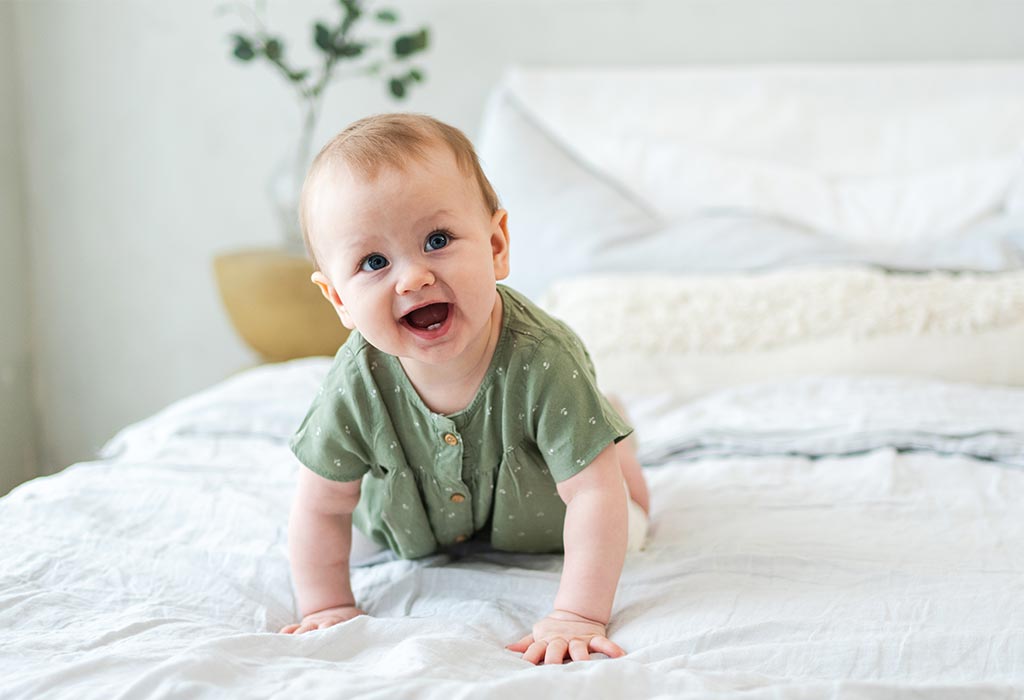
When Do Babies Start Laughing and How to Make Them Giggle
From saying their word to taking their first step, there are several memorable milestones that a child covers, and laughing for the first time is another gem of a milestone that does nothing but swell up our hearts after seeing that magical smile. But when do babies start laughing? Most babies have their first laugh around four months, but it is different for every child, which is totally normal. A baby’s first laugh is a mesmerising milestone parents await patiently. Each milestone covered is a check that confirms your baby is growing and developing healthily. A newborn laugh is infectious and is a sign that your baby is communicating, alert, and responsive. If your child has yet to cover this milestone or has skipped it, read the article to learn more about when babies giggle and laugh and what you can do to make them laugh.
When Do Babies Start to Laugh?
Laughter is a form of self-expression and communication that babies learn early in their infancy. ‘What age do babies laugh?’ is a frequent question among parents. Most babies typically start laughing around the age of 4 months, but it is important to keep in mind that each baby has a unique growth rate. So, if your baby is 4 months old and has yet to have their first laugh, it is totally fine (1). By the time they are six months old, their cooing and chuckling will have evolved into fuller laughs (2).
Before your baby’s first laugh, they will learn to coo and smile. Although different milestones, smiling and laughing are related. Your little peanut will learn to smile around 6 to 8 weeks or by the end of their second month, much earlier than they begin laughing (3). Smiling is also a form of self-expression and will put the foundation of the bond you create with your baby. After the smiles and coos become regular, you can keep an eye out for giggles and laughs.
You may expect your baby’s first laugh around one month after their first smile, but it could also be two or three months later. So, dear parents, be patient and keep your camera ready to capture magical moments from the moment they start smiling and chuckling to laughing.
What Makes Infants Laugh?
Infants are in the stage of discovering how the world works and how sounds feel, and hence, lack a sense of humour at such an early age. Their laughter in the early stages does not mean they are having a good time, but it is often their reaction to stimuli. They will develop a sense of humour over the next six months as their cognitive ability develops (4).
For instance, bouncing on a knee will bring laughs and giggles because it provides physical excitement (5).
In later months, around 6 months of age, babies will start understanding their surroundings and slowly learn various emotions, such as surprise and delight, and process laughter based on that.
Games like peekaboo and pat-a-cake bring the surprise factor that will make babies giggle and laugh out loud.
How to Make an Infant Laugh?
Making a baby laugh is no rocket science. Here are some tips to make a baby laugh:
1. Make Silly Sounds
Babies love silly sounds and expressions. Become goofy and make as many popping or kissing sounds as you can, and see their face light up with glee. You can also make squeaky sounds or blow your lips together.
2. Blow Raspberries
Blowing raspberries on your little peanut’s tummy is hands-down the classiest and one of the best ways to make your baby laugh. The combination of funny sounds and tickling on the belly is sure to elicit a laugh from anyone. Keep in mind that you are blowing raspberries on your baby, so be gentle and make sure they are comfortable and you’re not too extreme.
3. Play Social Games
Social games like peekaboo are a great way of making babies laugh. Babies usually respond to games like peekaboo around the age of four to six months. Even if the action doesn’t elicit any reaction, repetition of words and funny faces can lay the foundation for communication.
4. Noisemakers
Noisy baby toys, such as those with zippers or bells, are also a good way to catch your baby’s attention. Try different noise makers to learn what makes your little one laugh.
5. Mimicking Baby Sounds
Babies are like sponges; they try to mimic everything they see. Make them laugh by mimicking them. When they babble, you babble the same, or when they blow a raspberry, you also blow a funny raspberry.
What Should You Do If Your Baby Doesn’t Laugh?
If your little pocket of sunshine is between 4 and 6 months of age and hasn’t started chuckling or laughing by now, don’t panic. The growth and development of all babies are unique, and each baby develops at their own pace. Your little one needs some more time to meet their milestones. However, if you still feel something is off and have concerns about their development, don’t hesitate to consult your paediatrician.
In some cases, some babies may be more serious and prefer not to crackle every now and then. This might be considered fine if they happily meet all other milestone criteria.
Lack of response to sounds or laughter could indicate hearing issues. Thus, it is essential to be aware of the signs and have your child diagnosed around 6 months of age to rule out any potential possibilities.
FAQs
1. When do babies laugh out loud?
You may expect your little munchkin to unload their first big laugh around 6 months of age (2).
2. When do babies laugh in response to social activity?
Babies may start responding to social games like peekaboo with a smile or laugh around the age of 9 months. So, keep your camera ready to capture those picturesque moments and cherish them forever.
3. Why do babies laugh?
Babies smiling, chuckling, and laughing are all integral to their social and emotional development. These are early forms of communication that convey contentment, just as they express resentment or dislike through crying. Initially, laughter or smiles are most likely a content reaction, but as they understand your response to their giggles and laughs, they may simply do that again to capture your attention, or they might love the sound or feel of laughing.
4. Why do babies smile or laugh in their sleep?
Have you ever seen a baby smiling in their sleep? Well, it’s common for babies to smile or twitch in their sleep. Most likely, it’s because your baby is transitioning to an active sleep cycle, which can cause involuntary movements like twitching or smiling. However, there’s no clear explanation as to why babies smile or twitch while sleeping.
Babies’ laughter is infectious and heartwarming, and parents patiently wait for the moment to hear their little one’s sweet giggles. Laughter is also a wonderful milestone babies achieve. However, it is essential to remember that each child develops and grows at their unique pace. Therefore, it is possible that some babies achieve the milestone early or on time, while others reach that phase a little later. Every case is OK. Resist comparing your little one to other children, and instead, enjoy their milestones with them, strengthening the bond.
References/Resources:
1. CDC – Important Milestones: Your Baby By Four Months
2. CDC – Important Milestones: Your Baby By Six Months
3. American Academy of Pediatrics – When do babies first smile?
4. American Academy of Pediatrics – Emotional and Social Development: 4 to 7 Months
5. American Academy of Pediatrics – Emotional & Social Development in Babies: Birth to 3 Months
Also Read:
When Do Babies Start Sitting?
Babies Start Rolling Over
When do Babies Start Standing
When Do Babies Start Smiling?
Help your Baby to Sit Up on His Own
Read more
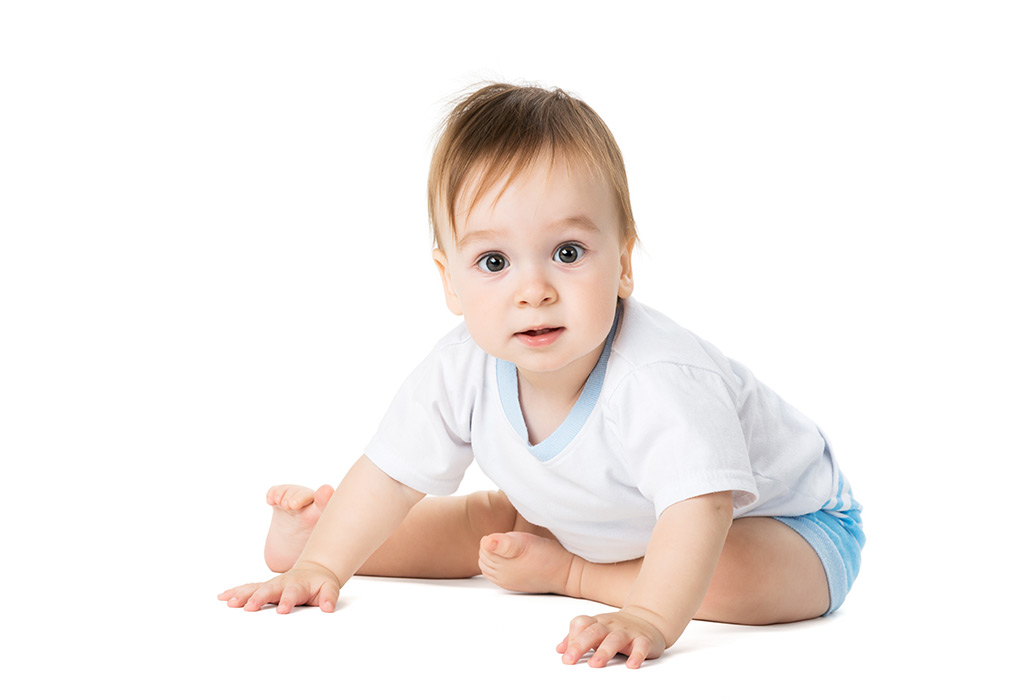
Baby Bottom Shuffling – Is it Common?
As parents, your baby will cross numerous milestones while growing up, and one such milestone can be baby bottom shuffling. Well, if this term is new to you and you wish to know more about bottom shuffling in babies, we suggest that you take a look at this post. In this post, we shall be talking about bum shuffling, how you can manage this condition in your baby, what causes it, and many other important aspects related to the topic! We aim to provide comprehensive information to help you understand and support your baby through this unique phase of their development.
What Is Bottom Shuffling?
When your baby is all set to move around, he will make efforts to crawl, but some babies may prefer to move while sitting on their bums. When babies move on their bums, they make use of their arms and legs to propel their movement. It is often seen that babies who begin bottom shuffling usually skip crawling. Also, bum shuffling and late walking are closely related, which means if your baby is scooting on the bottom, then there can be a delay in walking. Usually, such babies begin walking around 18 months to 24 months.
Is Bum Shuffling Normal Among Babies?
Where some babies are fast in achieving various developmental milestones, others may skip them altogether or opt for variants, and bum shuffling may be one such variant. If you are thinking about how common bum shuffling is in babies, well, it is fairly common in babies. Though crawling is something that most parents expect their babies to begin with, as far as movement is concerned. However, it is surprisingly common for babies to opt for this alternative instead.
Why Do Some Infants Bottom Shuffle?
Though it is common for babies to scoot and not crawl, however, it is important to understand that there may be underlying reasons for the same. Following are some factors that may make babies do this:
1. Neurological Development
Here are some neurological factors:
Infants or babies with low muscle tone may prefer bottom shuffling to crawling if they were not given ample tummy time.
Sometimes traumatic births can hamper the primitive reflexes of the babies, which may put them at risk of impeded or delayed maturation. This may lead to bottom shuffling too.
If your baby is born preterm, it may become difficult for the baby to come into the crawling position because he may have tighter hip muscles. Tighter hip muscles make it tricky to get the baby into the crawling position.
2. Environmental Causes
Sometimes, environmental factors may lead to bottom shuffling and the following are some environmental causes:
If your baby spends more time on his back, he may find it difficult to creep or crawl.
If there are carpets on the floor or there is a hard wooden floor, babies may find it difficult to crawl and may opt for bum shuffling.
If your baby didn’t get ample tummy time and was assisted to sit instead, then he may find it difficult to crawl or creep and may opt for bottom shuffling.
What Are the Possible Complications of Bottom Shuffling?
Though there are no major complications that may affect your baby, the following are some drawbacks that you may notice:
The baby misses out on the crawling experience, which is not only required for the strengthening of the arms and legs muscles but also helps the baby to move around on different kinds of surfaces such as grass, slopes, sand, slippery floors, etc.
Usually, the bottom shuffling movement is very asymmetrical, more so if the infant sits with his leg twisted or with his one knee flexed. This may lead to tightness of the lower back muscles that can make the baby’s pelvis tilt on one side. Sometimes when the baby is resting, the leg may appear either turned outwards or look shorter than the other leg.
How Can Parents Help Their Children?
Before you begin helping your kid, it is important to understand that bum shuffling is very normal, and you can adopt various measures to help overcome the habit of your munchkin. Here are some ways in which parents can help their children:
If the floor is hard or carpeted and the baby finds it difficult to walk, use knee pads for the baby. This will help the baby to be on his four without any discomfort and thus encourage him to crawl and creep.
Help your baby to kneel using a step, as this will help strengthen the baby’s arms.
Assist your baby in coming to a kneeling or crawling position from the sitting position.
Indulge your baby in games that involve muscle toning and which also involve inhibiting primitive reflexes.
Help your baby stimulate the joints and muscles by providing ample movement opportunities.
Baby massages are also a great way of strengthening your baby’s muscles and joints.
Whenever your baby begins bottom shuffling, shuffle his position and help him to crawl instead.
Help your baby roll from side to side as this helps in hip area movement, and it also aids vestibular stimulation. If you wish, you can use a big ball, or you can do it on a mat too.
When your baby begins to use one of his legs to bum shuffle, get him on his fours and start rocking him forward and backwards.
If you are not able to make any changes to your baby’s movements to help him crawl, we suggest that you visit your doctor and get help. Osteopaths, chiropractors, and paediatric physiotherapists are some professionals who can help a great deal in altering your baby’s posture and assisting in his crawling.
When to Consult the Doctor?
Sometimes bum shuffling may remain the main choice of your baby’s movement until he starts walking. Do not worry or panic. The best you can do is help your kid get some crawling experience. Parents may sometimes fear because there are beliefs that bottom shuffling may lead to other complications. If you notice any of the below symptoms in your little one, it will be best to get in touch with your doctor as soon as possible:
If your baby experiences any problems with hearing or vision.
If you notice any bottom shuffling and developmental delays, which include motor, language or other skills.
If your kid experiences difficulty in making movements with his legs or arms, or they may appear floppy or weak.
If your kid is not able to place both feet flat on the floor or places one foot differently than the other.
In case your kid loses his balance whenever he tries to stand, and he falls backwards or towards one side.
If you notice your kid using one side of the body more than using the other side or your baby prefers to turn his head on one side only.
FAQs
1. What is the typical age range for bottom shuffling?
Bottom shuffling usually occurs in babies between the ages of 6 to 12 months. However, some babies may start earlier or later, and it can vary widely depending on individual development.
2. Is bottom shuffling a sign of delayed motor skills?
Most parents worry if bottom shuffling is a developmental delay sign. While bottom shuffling is a normal variation of movement, it can sometimes be associated with delayed walking. However, many bottom shufflers develop other motor skills normally and begin walking without significant delays.
3. Can bottom shuffling indicate hip issues?
In some cases, bottom shuffling can be associated with hip dysplasia or other hip problems. If your baby consistently bottom shuffles and shows signs of discomfort or asymmetry in leg movement, it is advisable to have their hips checked by a doctor.
4. What are some fun activities to promote crawling?
To promote crawling, you can set up obstacle courses with cushions and toys to encourage your baby to move around. Interactive games, like rolling a ball back and forth or using a crawl tunnel, can also make crawling more appealing and fun for your baby.
Sometimes the reasons for bum shuffling are very common, but sometimes there may be underlying complications like autism. Therefore, if you notice any such changes in your baby, you should get in touch with your doctor and get the required help.
References/Resources:
1. Normal Variation In Development – Bottom Shuffling; Fife Health & Social Care Partnership; https://www.nhsfife.org/media/33208/nhs-fife-normal-variation-in-development-bottom-shuffling-2020.pdf, May 2020
2. Okai, Y., Nakata, T., Miura, K., Ohno, A., Wakako, R., et. al.; Shuffling babies and autism spectrum disorder; Brain Dev – PubMed; https://pubmed.ncbi.nlm.nih.gov/32878720/, February 2021
3. Rebecca Shelton; Bottom Shuffling Babies; University Hospitals Dorset – NHS Foundation Trust; https://www.uhd.nhs.uk/uploads/about/docs/our_publications/patient_information_leaflets/Childrens_therapy/Bottom_shuffling_Babies.pdf, February 2021
4. Shuffling Babies: Babies who don’t crawl – Projects; Child Research Net; https://www.childresearch.net/projects/health/2016_01.html, July 2016
5. Babies who bottom shuffle; The Association of Paediatric Chartered Physiotherapists; https://apcp.csp.org.uk/system/files/documents/2023-10/Bottom%20Shuffling%202023.pdf
6. CDC’s Developmental Milestones; CDC; https://www.cdc.gov/ncbddd/actearly/milestones/index.html
7. Crawling Styles; American Academy of Pediatrics; https://www.healthychildren.org/English/ages-stages/baby/Pages/Crawling-Styles.aspx
Also Read:
Clicky Hips in Babies
Cruising Milestone in Infants
Reasons for Baby not Crawling
Why do Babies Crawl Backwards?
Baby Shaking Head From Side to Side
Read more
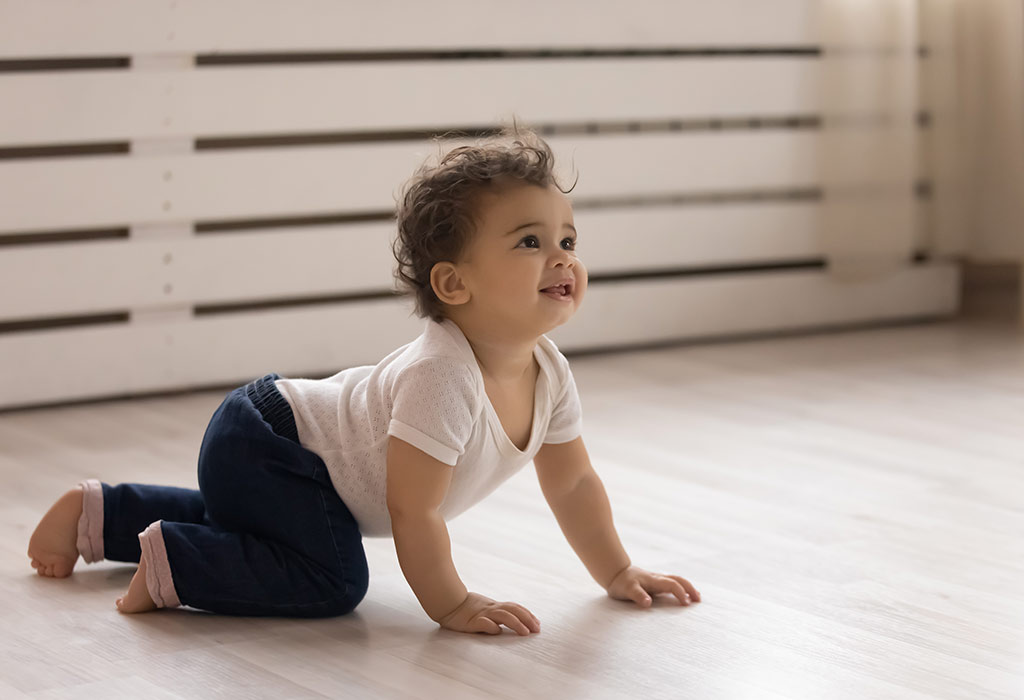
Creeping Vs Crawling – Know The Difference
Little ones grow way too fast, and many times, we lose track of their development while adoring them. It is, however, important to note the important milestones they go through so we know they are on the right track. Creeping and crawling are two important developmental milestones that indicate progress. There is a fine difference between the two, but many times, parents mistake baby creeping and baby crawling the same. Our mission today is to make you understand creeping vs crawling, and why knowing this makes a huge difference! While moving forward using arms and legs with belly touching the floor is crawling, moving forward on hands and knees with belly up is creeping.
If your baby isn’t already creeping or crawling by the age of 7 to 9 months old, try getting some toys and encourage them to move around. If they still don’t, something might be wrong, and you might need to have a word with the paediatrician. However, if they do – then there’s nothing to worry about. Here’s a simple distinction of creeping vs crawling in detail below.
What Is the Difference Between Baby Creeping and Crawling?
Want to know the difference between creep and crawl? Many parents don’t know the difference between creeping and crawling. The biggest reason is that the two look very similar at first glance. In the case of crawling, the child’s stomach stays in contact with the ground as he moves around. Which makes creeping the next progression when they lift it off the ground. Either way, if your child has already begun doing either of them, it’s a good sign.
When babies creep or crawl, it’s a sign that they are growing mentally, emotionally, and physically. Babies relish the freedom of being able to move around. And as a parent, it’s your responsibility to encourage them. As your baby continues to move more and more, they will slowly learn how to stand up and take their first steps.
Here are the differences you need to be aware of regarding both creeping and crawling.
1. Crawling
Crawling is the movement your baby does when his tummy is on the floor. He pulls his body, using his hands and knees, with his stomach touching the floor. There are various crawling methods out there, namely four common ones – reaching out with one arm and pulling with the other, using both elbows to pull the body forward, pulling your baby forward using one elbow at a time and finally, moving forward using both hands and knees (or crawling on the tummy).
Why Does It Matter?
Crawling matters because it tells you the following things about your baby:
Your baby’s upper body strength is building.
Your baby is learning how to balance his body and getting the hang of moving around.
Their fine motor skills are building alongside spatial awareness.
Primitive reflexes are getting better.
Neurological development is taking place, and they are starting to become more aware of their environment.
Your baby is getting the hand of hand-eye coordination and understanding how to move their limbs (1).
2. Creeping
Creeping comes after crawling. It’s the second stage, and after creeping, your baby will transition to walking. Isn’t that exciting?
How do you know your baby has begun creeping? The first telltale sign is when they lift their tummy off the floor and begin moving around using their hands and knees. Most parents confuse creeping and crawling and mix the two, but they’re different. Watch out for their tummy; you’ll know the difference immediately.
Why Does It Matter?
Creeping matters because it tells you a lot of things about your baby. For starters:
Your baby’s arms, feet, back, and upper body muscles have developed (2).
They are getting ready to move to the next stage, that is, walking.
Their coordination skills and sense of rhythm are improving.
Visual and proprioception skills are improving.
They are also getting better at conceptual thinking and gross motor skills.
Should You Worry if Your Baby Isn’t Crawling or Creeping Yet?
It is common for babies to generally reach these physical milestones by 9 months of age (3). However, if your little one is a late bloomer (we mean late creeper or crawler), there is no reason to panic. Every child is unique and has a unique pattern of growth and development. Let them develop at their own pace. Give them the necessary nutrition required for growth and proper assistance in helping them crawl and creep, and your little one will be fine. However, if, even after all necessary measures, you seem to notice any abnormality or simply delayed growth, consult a paediatrician.
FAQs
1. Why is crawling important for your baby?
Crawling is an essential physical milestone for better body and hand coordination, body balance, learning primitive reflexes, and strengthening body muscles.
2. Why is creeping important for your baby?
Creeping is important for the better development of fine motor skills, visual skills, conceptual skills, and body coordination.
3. What are the different names of creeping?
Gliding, inchworming, slithering, scooting, and shuffling are popular terms used for creeping.
4. What are different types of crawling?
There are two types of crawling: traditional crawling and commando crawling. In traditional crawling, the baby makes use of the hands and knees to crawl, whereas, in commando crawling, the baby uses arms to propel the body forward, just like they do in army.
Creep vs crawl in babies is not to be confused with. Don’t get worried if your baby is crawling and has not transitioned to creeping as yet. It takes time for young tots, and the best thing you can do as a parent is to encourage them. Just make sure you notice and see if they’re getting the movements right. If they aren’t, do it yourself and show it to them. Babies are excellent learners and learn best by copying. According to a study, babies who were trained in crawling apparently learned to creep significantly earlier than the other group of babies who weren’t trained. So, smile, have fun watching your child grow, and be amazed when they transition to taking their first steps. Until then, enjoy your baby’s crawling or creeping phase!
References/Resources:
1. Goldfield, E. C.; Transition from rocking to crawling: Postural constraints on infant movement. Developmental Psychology; 25(6), 913–919; https://doi.org/10.1037/0012-1649.25.6.913; https://psycnet.apa.org/record/1990-09454-001; 1989
2. Lagerspetz. K., Nygåkd. M, Strandvik. C; The effects of training in crawling on the motor and mental development of infants; Scand. J. Psychol; Wiley Online Library; https://onlinelibrary.wiley.com/doi/abs/10.1111/j.1467-9450.1971.tb00623.x, September 1971
3. Baby Milestones – When Babies Sit Up, Roll Over and Crawl; Help Me Grow; https://helpmegrowmn.org/HMG/HelpfulRes/Articles/BabyMilestones/index.html
Also Read:
When Do Babies Roll Over?
When Do Babies Hold Their Heads Up?
Baby Crawling Backwards – Is it Normal?
Normal Reasons Baby Might Not Be Crawling
Read more
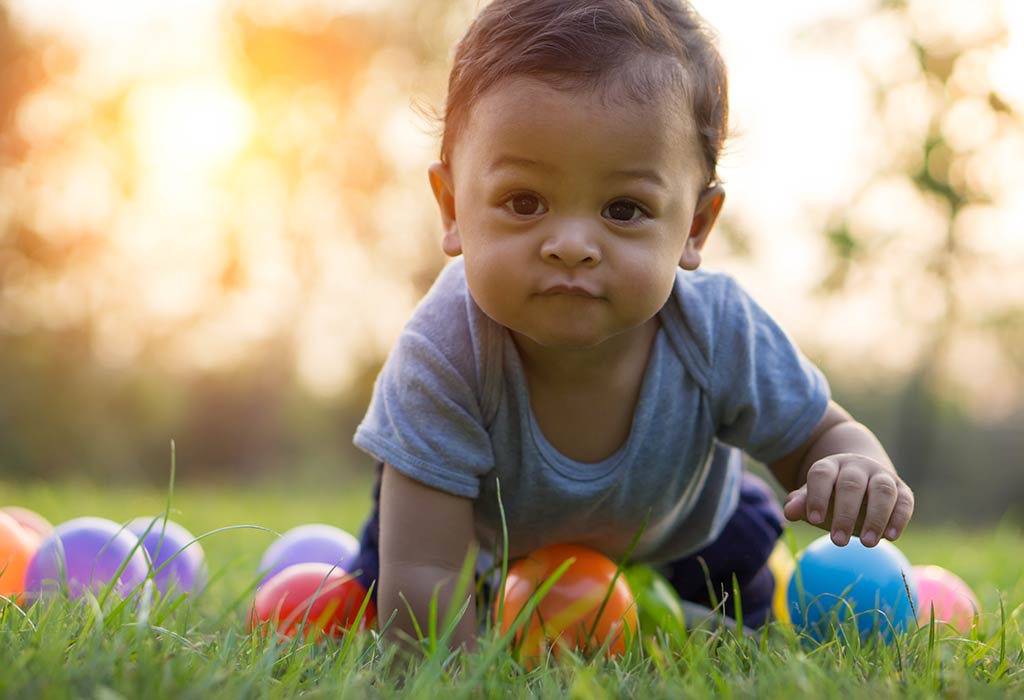
Baby Milestone – Creeping
Your little one will achieve many milestones in their first year after birth, and creeping will be one of them. Being able to move around is not only exciting for the baby, but parents also take great pride when they see their baby moving around without any assistance. As soon as your baby begins creeping, you will notice that standing and walking will be followed soon. If you wish to gain more insight into this developmental baby milestone, we recommend browsing the following post!
Video : Creeping : Your Baby’s Important Developmental Milestone
https://www.youtube.com/watch?v=PRXGZWxzOGw
At What Age Do Infants Start Creeping?
As parents, we are always excited about our baby’s developmental milestones, and we keep looking forward to them. So, if you are wondering when does a baby start creeping – well, as soon as your baby is able to sit on her own without any kind of support, she may try to be more mobile than before. You will notice that for the next two months, your baby will make great progress in her pre-crawling stage and may begin with movements, such as creeping, scooting, rocking, rolling, and squirming.
Once your baby shows the readiness to creep, you should offer a lot of free space to your little munchkin to move freely. You can also lure your kid to move by placing her favourite toys at a distance. Sometimes babies may also creep backwards, but there is no need to worry or hit the panic button. This is because it is easier to move the legs backwards than to move forward, but soon your baby will be on the right track.
Why Is Creeping an Important Milestone for Babies?
Creeping is an essential developmental milestone for your baby as it helps achieve various other milestones. Here is why creeping is an important aspect of a baby’s life:
Creeping helps the baby learn various concepts, such as up/down, far/near, under/over, etc. These skills acquired at a young age benefit the baby with advanced movement skills and mathematical concepts.
Baby’s vision gets better tuned, which is also advantageous in attaining better focus as the baby grows.
Creeping is a great way of getting the hang of primitive reflexes that proves practical for learning and coordination in the later stages of your baby’s life.
Baby learns about the timing and rhythm of the body, which aids them in walking and running later.
It helps strengthen the muscles, which, in turn, improves the baby’s fine motor skills.
What If the Baby Doesn’t Creep?
If you notice that your baby is not creeping, you can involve your little one in various activities and games that involve creeping and crawling. Activities, such as tumbling, rocking, spinning, and rolling, stimulate the cerebellum, thus, proving helpful in inhibiting primitive reflexes and muscle tone development of your little one.
Do Premature Babies Creep?
Yes, premature babies creep, too. However, the only difference would be the time. For instance, if a baby is born after a full term, they may start creeping at around 6 months of age. On the other hand, if a baby is born approximately 7 to 8 weeks before the due date, they may start creeping at around eight months of age. However, by the time your baby is around 2 years of age, they will be at par with other kids, and there may not be any delays.
Your baby is unique and develops at their own pace; make sure you do not compare your baby with others and let them achieve the milestones when they are ready.
References/Resources:
1. TABLE 3: Developmental Milestones; Pediatrics in Review; https://depts.washington.edu/dbpeds/Screening%20Tools/Devt%20Milestones%20Table%20(B-6y)%20PIR%20(Jan2016).msg.pdf
2. Lagerspetz. K., Nygåkd. M, Strandvik. C; The effects of training in crawling on the motor and mental development of infants; Scand. J. Psychol; Wiley Online Library; https://onlinelibrary.wiley.com/doi/abs/10.1111/j.1467-9450.1971.tb00623.x, September 1971
Also Read:
Baby Eating Milestone
Baby Cruising Milestone
Baby Clapping Milestone
Baby Speaking Milestone
Read more
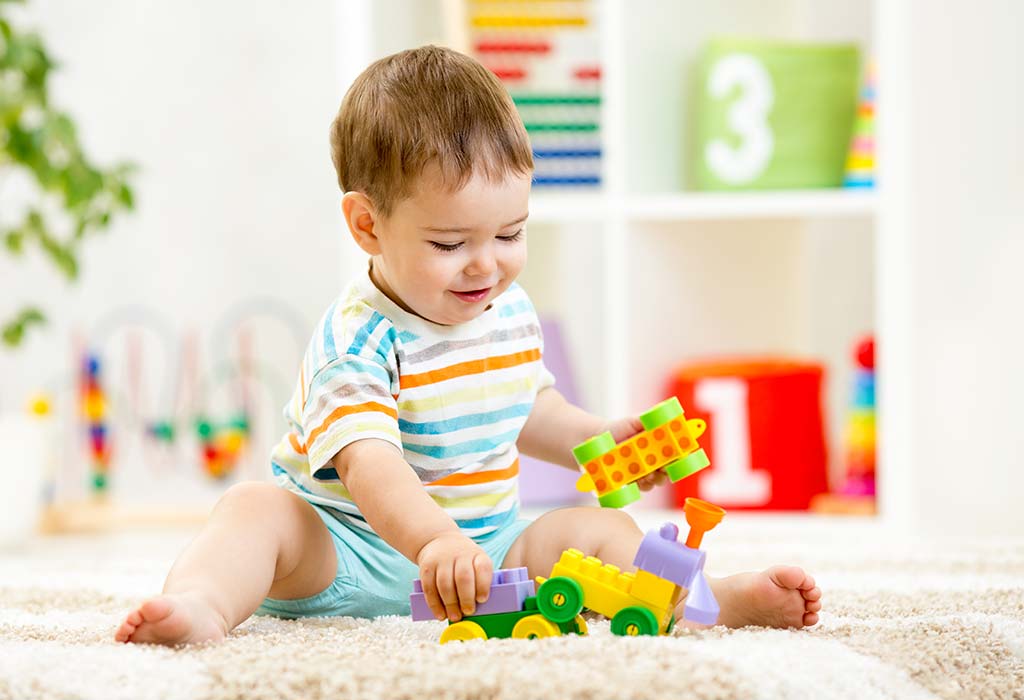
When Do Babies Start To Play With Toys
Following the hectic daily nursing cycle, a newborn baby is tiring for every mother. A mother knows the value of waiting for their babies to interact with them, yes, mothers start talking to their babies from day one, but they don’t get any response. Kids start responding when they get something to play with and begin understanding the actions initially. The process is gradual and takes time.
In this article, we are going to discuss the growth of kids over time and the role of toys in it. We shall be providing you with crucial information regarding the kind of toys kids should play with. Let’s get started.
When Does a Baby Start Playing With Toys?
We cannot deny the fact that during the first few months from the day the baby is born, the babies only play with their mother, father, and other family members. It is because they are too small to observe the world and things around them during that time.
After some months, things shift, and babies start playing with the things present around them. The age of a newborn baby decides the timing of playing with toys. To make it easy for you, we have categorized the age of a baby in the initial months from their birth to their first birthday. Have a look at the months when the baby is ready to play with particular toys.
1. Birth to two Months Old
A mother should know that the upcoming two months should belong to the newborn only after the baby’s birth. During this time, they need their mother to play with. Spending time with your baby, holding them, playing with them, and making them smile should be a priority. This period is one of the most beautiful phases of parenting.
Make sure that you are with them most of the time. During this period, when their senses are growing, you can bring toys with very soft sounds and vibrant and beautiful colors, which cannot harm the baby anyway. You can buy hanging toys for their cradle, like soft birds, rattles, etc. Keep toys at least 8-9 inches away from them.
2. 2 to 4 Months Old
During this period, your baby can still play with their previous toys, but now you can introduce them to more new toys. Old vibrant colored rattles, soft toys, colorful playing mats, and many other toys can be added to their toys section.
Try to look for the toys which will make them happy just by a glance, and the toys should not have sharp edges. Simply saying, look for the best quality kids-friendly toys.
3. 4 to 6 Months Old
A 4 to 6 months old baby starts developing some strength, and now they can pass, grab, and hit things with their hand movements. This is the best time to introduce them to toys that make sounds when they squeeze or toys that they can hit with their hands, like softballs.
A 4-6 month toddler puts everything they see around them inside their mouth. Hence, before buying toys, check whether the toy you bring is safe for them if they take it inside their mouth. You need to keep small toys that can choke them if they gulp them away from kids.
4. 6 to 12 Months Old
During this period, you will observe that your baby is growing very fast, get some new toys and observe them playing. New toys can include toys that they can grab and throw, hold and shake with their hands, toys to enhance their understanding, and much more.
Apart from the toys mentioned above, you should also bring some toys which they can use to stand up and take their first steps. In this period, they will start taking the support of objects around them to move by crawling or walking after a few months. Moving objects with sound and vibrant colors would be a great pick to help them move toward the toy.
What Toys Should Baby Play With?
As babies go through different growth phases, they learn different skills over that time. In fact, babies learn the most during their initial years. The toys you offer your babies should be helpful for them to learn through this rapid growth period.
For instance, right after the birth, the toys you offer to your baby should be focused on stimulating their senses for the first few months. Some of the best toys that you can offer an infant are as follows:
Toys with different textures
Toys that produce music
Tiny rattles
Unbreakable crib mirrors
As the baby grows and develops skills, they would need toys that can assist their skills development. These toys should be attractive to grab the infant’s attention so that you can successfully teach them the relationships between the cause and the effect. The following are some ideal toys for babies who are 3 to 6 months old:
Soft, colorful balls
Stuffed animals
Sensory toys
Between the age of 7 months to 1 year, you can offer your baby toys that allow them to engage in exciting and new things. Toys should be more of a stimulus for your kids during this period. The following could be the best toy for the proper development of your baby:
Stacking blocks
Walkers
Musical toys
Rolling toys
Factors To Consider When Buying Toys for Your Baby
Once you have figured out when can newborns can start playing with toys and what toys are appropriate for their age group, you must shop for the right toys. It is suggested never to buy random toys you see in toy shops for your baby. There are a lot of factors that should be taken into consideration before buying a toy for your baby. Following are the factors to consider when buying toys for your baby:
Colors: It is very important to introduce your baby to colors in the initial months after the birth. During this time, the only colors they can see and differentiate between are white and black only. Bringing toys with vibrant colors will be appealing enough for the kids.
Sounds: Your baby won’t need anyone if the toy they have produces sound. They will enjoy playing with them and creating the sound. Make sure the sound is not too loud.
Movement: Another factor to consider in a toy is whether it moves or not. Your baby will always pick a moving toy over a steady toy, as they find such toys more engaging.
Material: Checking the material quality is very important while buying a toy for your kid. Search for toys that are made of kid-friendly material. For a small baby, search for vibrant teether toys.
There is no such fixed time when a kid starts playing with toys, and not all the babies are the same. Some kids start early, and some do late, but as a mother, you should know that your kid has something to play with and learn at an appropriate time.
Also Read:
When Do Infant Start Sitting
When Does Baby Start Remembering Things
When Do Infants Start Recognizing their Mom,Dad and Family People
Read more
7 Ways to Aid Your Baby’s Ability to Reason
In collaboration with Nestlé Start Healthy Stay Healthy.
A baby’s world is fascinating. Everything is new, and just waiting to be explored by tiny fingers and big eyes! A baby’s environment is filled with things and people that he can touch, see, smell, hear, and even taste. Babies use these senses as the primary way to understand the workings of their world: how Mom’s skin smells, how Dad’s arms feel, how milk tastes, how soft the blanket is, how cool the floor feels, how firm a building block is, and so much more.
A baby’s brain develops the most from birth till the age of three. Millions and millions of synapses are formed in the brain as the baby discovers, learns, and understands new things, from how to crawl on his little legs, to how to work a jack-in-the-box with his hands, to how to hold a spoon and feed himself. Thus, this age range of 0 to 3 is crucial when it comes to helping your baby develop certain important cognitive skills, like logic and reasoning, problem-solving, and decision making.
It is beneficial to a child if he is able to learn such skills at an early age, so that as he grows up and becomes of school-going, homework-doing, and exam-giving age, he is able to overcome educational barriers, and can grasp new concepts easily.
Are there some ways that you, as a parent, can help your baby develop logic skills early on? Yes, absolutely! Read on to find out!
1. Dive into sensory exploration.
Give your baby different objects that feel different to the touch. Let him touch a ball of soft cotton and then a mildly rough woollen sweater, and feel the difference between the textures. You can do this with smooth and spiked balls, the sticky and smooth sides of tape, soft and crinkly leaves, and more!
2. Use your words.
Talk to your baby – about everything! Whether it’s playtime, dinner time, bed or bath time, talk to your little one about what he’s doing and what’s he playing with. Use the correct words for his toys, such as ball, car, book, doll, and use the right action verbs, like eating, running, reading, playing. This will help him associate the word to the object in hand or action being done, and he’ll pick up on your verbal cues quickly enough.
3. Teach object permanence.
In other words, show him that even if something is hidden, it doesn’t mean that it has disappeared. This is an important milestone to cross, and will help your little one enhance his reasoning skills at a young age. Play simple games like hide and seek or peek-a-boo, which can prove to be delightful and full of giggles for both of you!
4. Solve problems together.
It is important to teach your little one how to go about solving a problem on his own. It can be as simple as learning how to take the lid off his toy box, or how to remove a book from a short pile. Lead by example, and demonstrate how to fix these little obstacles. Then, let him try on his own. When he succeeds, the memory of it will stay with him, and he’ll be more inclined to try by himself the next time.
5. Encourage all sorts of exploration.
Children are naturally curious. Letting them safely explore their curiosity is highly beneficial for them, as it aids in healthy brain development. Let your baby roll, shake, rattle, bang, feel, and poke his toys to figure out how they work. This will also lead him to understand cause and effect: shaking a rattle produces a soft sound, banging metal spoons together makes a loud sound, shaking a ball makes lights appear, squeezing a teddy bear feels soft and squishy, etc.
6. Make nutrition a priority.
There’s a direct linkage to nutrition and brain development in the early years. Proper nutrition makes a way for nutrients and energy that is required to aid brain function and development in a way no amount of external stimulus can. On the flipside, nutritional deficiencies in earlier years can drastically affect cognition and ability to reason. Diets high in saturated fats and trans fats can impact learning and memory too. Building strong and healthy food habits in the first few years of your child’s life can set the tone for a healthier and smarter future.
7. Make habits out of these behaviours.
It’s not enough to engage in these developmental behaviours at only some points in a day or week – everything you do for your baby’s brain development should be incorporated into a daily routine, and repeated over a long period of time. It is these repetitive activities that ensure the long-term benefits enjoyed by a child with healthy cognitive development. For example, include sensory exploration in bath time, teach object permanence during playtime, and read picture books at bedtime.
Helping your baby develop his logic and reasoning skills at a young age will prepare him for school, social situations with peers, and eventual obstacles in academics in terms of brand-new concepts and knowledge. He will be better able to understand how things work, how to solve problems if he doesn’t know how something works, and how to make decisions that will serve him best in a given situation.
And, there’s a bonus to be had, too, as spending this wonderful time playing with your baby will create a strong bond of love and friendship, and your little one will feel safe, happy, and confident in your presence! It’s an absolute win-win!
In case of any further questions and clarifications regarding your child’s development, health, and nutrition, do get in touch with your paediatrician.
Also Read:
How to Teach a Child to Chew Food – Easy Ways for Parents
Baby Rolling Over – A Developmental Milestone
Read more
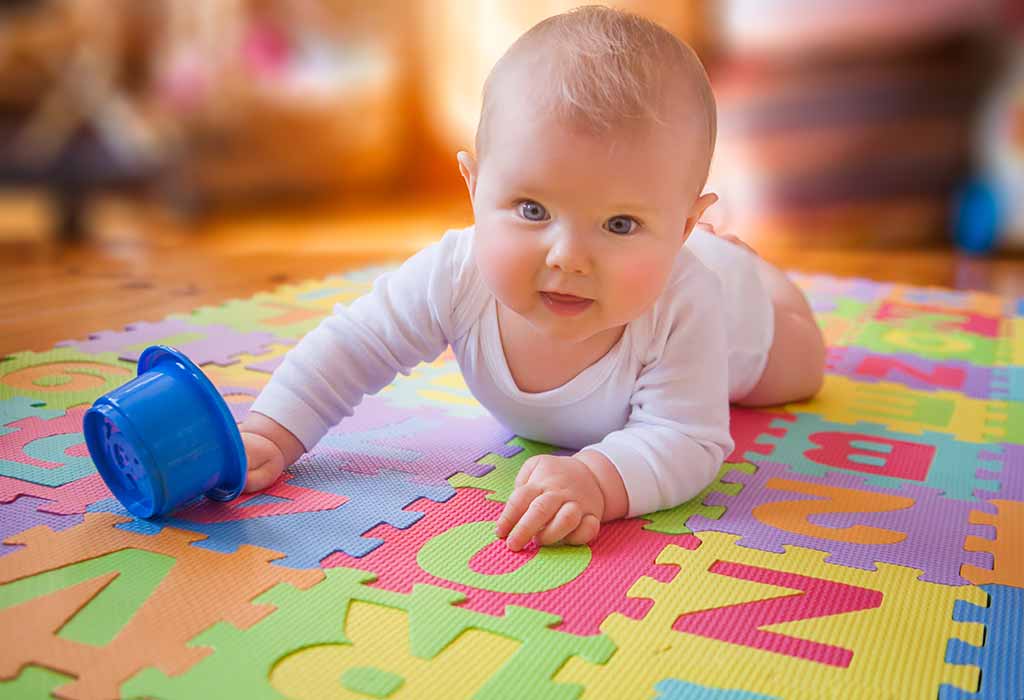
Tummy Time for Infants: When to Start, Right Position & Benefits
While there is a lot of focus on the right nap time, feeding time, and bath time, tummy time importance cannot be undermined. Babies spend almost 15 hours a day sleeping on their backs. Hence, they get fewer chances to practice using their arms, neck, back, and head to lift themselves up. When babies are placed on their belly, they might squall indignantly, be indifferent, coo happily, or just might seem to love the view. Whatever be your child’s reaction, tummy time is one of your baby’s first exercises and needs to be a part of their daily routine.
What Is Tummy Time?
Baby tummy time is a stepping stone to reach other developmental milestones for babies. It is the period when your baby spends some time on their stomach. Tummy time need is crucial for strengthening the core muscles of the back, arm, leg, neck, and shoulder muscles. Leaving babies on their belly while they’re awake help all the muscles to work simultaneously. As they put weight on their forearms, their upper body strength increases with gradual practice. Daily tummy time exercise will help your kid to strengthen the neck, arch the back while developing the ability to move their face out of a mattress or a blanket if they accidentally roll to the stomach. Tummy time also encourages babies to practice pivoting and developing motor skills that are often precedes rolling over, scooting around, crawling, sitting up, and eventually walking.
Benefits of Tummy Time
There are various benefits of tummy time when your child spends their waking hours in a belly-down position. The following points would help to understand why it is an important activity:
1. Reduces Chances of Flat Spots on Heads
Tummy Time reduces the chances of babies forming flat spots on the back part of the head. In severe cases, a flat head may lead to distortion of facial features.
2. Muscle Development
Tummy time helps to develop muscles of the neck, shoulders, arms, and upper back that eventually enable kids to lift their head.
3. Motor Skill and Sensory Development
Paves the way for motor skill and sensory development that leads them to learn rolling over, sitting up, crawling, and walking.
4. Stronger Eye Muscles
During tummy time your child gets attracted to the colorful objects in the room. Hence they look around and rotate their eyes which makes their eye muscles grow stronger.
5. Exercise for the Heart and Maintaining Weight
As tummy time involves more activity, it assists in better cardiovascular health and body mass index for babies.
Important Tummy Time Supplies
Here are some valuable supplies that you may need during tummy time for your baby. Buy them online or from shops that sell exclusive baby products. You may also borrow from a friend, purchase from second-hand stores or parenting groups.
Brightly colored soft toys. Light-up toy or rattle to attract a baby’s attention and distract them from the task at hand.
Activity mat or baby gym
Baby blanket
Tummy Time pillow
Baby plastic mirror (to be used after three months)
Inflatable tummy time water mat. Its textures and colors will instil positive curiosity for babies to explore.
Cloth book or picture book
When to Start Tummy Time as Per AAP?
As per the guidelines established by the American Academy of Paediatrics (AAP), tummy time new-born can begin right after they come back from the hospital.
Recommended Tummy Time for Infants per Day
If you’re starting tummy time when your baby is 2 weeks old, introduce short sessions of 30 seconds to one minute. Small increments of time can be made each day. Older babies need long stretches of tummy time to build their strength. If you’re wondering how long to do tummy time, observe your baby and adjust their tummy time as per their needs. The recommended tummy time for infants are given below:
Age of Baby
Daily Tummy Time
0 Month
1-5 minutes at a time, 2-3 times per day
1 Month
Up to 10 minutes at a time, 2-3 times per day
2 Months
Up to 20 minutes per day. Break down into multiple sessions
3 Months
Up to 30 minutes per day. Break down into multiple sessions
4 Months
Up to 40 minutes per day. Break down into multiple sessions
5-6 months
Up to 1 hour at a time while the baby isn’t complaining.
How to Do Tummy Time With Baby
Make sure to provide a conducive surrounding for tummy time. It is better to have tummy time when your baby is awake and alert after a nap, bath, or diaper change.
1. Clear the floor
Clear a small area on the floor so that your baby can practise tummy time in a safe environment. Spread out a blanket, clean towel or play mat on a flat and firm surface.
2. Toys
Surround the mat with your baby’s favorite toys. Lay down the baby on their belly.
3. Track the time
Start with three to five minutes for infants. Gradually extend the time by a few minutes per day.
4. Space out the tummy time sessions
Consider short sessions and space out the tummy time with two to three sessions throughout the day.
5. Frequent sessions
As your baby starts enjoying tummy time, increase the tummy time with more frequent sessions.
Best Ways to Boost Tummy Time
Some babies may dislike tummy time in the beginning. Don’t stress. Try different ideas to keep your child’s interest going on till they start to like this activity. Here are the best ways to boost tummy time for your baby and make them more comfortable:
1. Get down on the floor
It is important to get down with your baby, face-to-face or side-by-side during tummy time. It encourages you and reassures them if they get scared of tummy time in the beginning. Aim for 1 to 2 minutes at a time at first for tummy time.
2. Place an unbreakable mirror
They can also get fascinated seeing their own reflection on an unbreakable mirror. Vary its position front to the front to the side so that they can be enticed to reach out for them.
3. Tempt with toys
Surround your baby with their favorite toy or lighted toy for entertainment which helps develop all the different muscles necessary for sitting up, crawling and walking in the long run.
4. Prop up with a nursing pillow
Place a cushion or soft pillow under your baby’s chest and arms to prop him up if the child protests tummy time. Wean off the prop at a later stage.
5. Place your baby on your tummy
Lie on your back and place your baby on your tummy. Hold firmly for safety. Raise him overhead and make silly noises or kiss them to practice tummy time in a fun way.
What If Your Child Hates Tummy Time?
Don’t be surprised if your baby fusses or drops his head down at the first attempt of tummy time. Some even hate it if you wait too long to try it. Be patient and try again later. Remember that it takes some effort to lift that head up, and it may not always be fun. It’s a workout for the baby who needs to get adjusted to the new position. Try out different places like outdoors for tummy time. Include fun activities during tummy time for entertainment to help your child get involved and interested in tummy time. If your baby hates it on the floor, you can use a rolled-up towel or a large ball for tummy time. Eventually, your baby will learn to enjoy and tolerate it for more duration. Here are some tips for parents to help their babies have fun on their bellies.
1. Try shorter stints per day
Start tummy time with a few minutes. Go slow, be patient and try again later if your baby starts wailing.
2. Change locations
Switching up the locations or a change of scenery may sometimes make tummy time more tolerable for kids. You can try doing tummy time outside on a clean lawn or playroom with toys around.
3. Massage their feet
Massage their feet with oil to soothe your baby. As they feel relaxed, put them on the floor for starting this activity.
4. Interact with your baby
Read, talk or sing to your baby to draws their attention. They would surely raise their head and move around. Make sure you’re not pressurizing the child too much.
5. Take the help of an older sibling
Invite an older sibling to join the tummy time session. Your baby may get an energy boost by seeing a new face around and imitating their action. Keep a watch on both the kids, though.
Tummy Time Safety Tips
Recommendations to ensure a safe tummy time for your baby:
Do not introduce tummy time for premature babies, babies with special needs, or babies with reflux disease.
Clear the area on the floor. Place a clean mat.
If your child looks sleepy, place them back in their crib. Tummy time works best after babies wake up fresh from a nap or after a diaper change.
Never leave them alone or let them fall asleep on their tummy. Sleeping in this position involves a significant risk of sudden infant death syndrome (SIDS).
Be alert and keep a close watch or entrust the job to a responsible caregiver to watch your baby.
Use age-appropriate toys only for tummy time.
You can place your baby on a blanket on one side and use a rolled-up towel to prop up the head. Place a folded washcloth under the head for support.
As your child grows up and starts moving more, put away dangerous objects from the surroundings.
FAQs
1. Can tummy time be done on a parent’s chest instead of the floor?
Yes, tummy time can be done on a parent’s chest, especially for newborns or babies who dislike being on the floor. This position not only encourages neck and upper body strength but also fosters bonding through eye contact and closeness.
2. Can tummy time be done while the baby is in a sling or carrier?
Yes, tummy time can be adapted to be done while your baby is in a baby carrier or sling, though it’s not as effective as on the floor. This variation provides some benefits in terms of strengthening their neck and shoulder muscles while allowing them to be upright and engaged.
It takes small baby steps to achieve any parental goal while raising a child. In a perfect world, your infant will smile and gaze up at your face or move their head around during tummy time. The chances are that, in reality, that may not be the case. Most often, they need some sort of stimulation to keep them engaged. Talk to them in a soothing voice or mimic their expression. In fact, it can be the best time to play and interact with your child so as to strengthen the bond of love and care. By 3 months, most babies can lift their head up to 45 degrees while leaning on their forearm. They begin crawling by around 9 months (some babies don’t crawl at all). So, keep an eye on the exciting stages of development that follow tummy time and set aside that tummy time now! If you still have concerns or specific questions regarding the tummy time of your child, consult your paediatrician, who would offer the best advice to follow.
References/Resources:
1. Benefits of ‘Tummy Time’ and How To Do It Safely; Cleveland Clinic; https://health.clevelandclinic.org/3-benefits-of-tummy-time-for-newborns-how-to-do-it-safely
2. Back to Sleep, Tummy to Play; American Academy of Pediatrics; https://www.healthychildren.org/English/ages-stages/baby/sleep/Pages/Back-to-Sleep-Tummy-to-Play.aspx
3. 3 Tummy Time Activities to Try With Your Baby; American Academy of Pediatrics; https://www.healthychildren.org/English/ages-stages/baby/sleep/Pages/The-Importance-of-Tummy-Time.aspx
4. When a Baby’s Head is Misshapen: Positional Skull Deformities; American Academy of Pediatrics; https://www.healthychildren.org/English/health-issues/conditions/Cleft-Craniofacial/Pages/Positional-Skull-Deformities-and-Torticollis.aspx
5. Tummy Time for a Healthy Baby; Safe to Sleep (NIH); https://safetosleep.nichd.nih.gov/reduce-risk/tummy-time
6. Milestone Moments; CDC; https://www.cdc.gov/ncbddd/actearly/pdf/parents_pdfs/milestonemomentseng508.pdf
7. Tummy Time; Nemours Kids Health; https://kidshealth.org/en/parents/tummy-time.html
Also Read:
Baby Cruising Milestone
Baby Clapping Milestone
Baby Sleeping On Stomach
Neck Strengthening Exercises for Infants
Read more
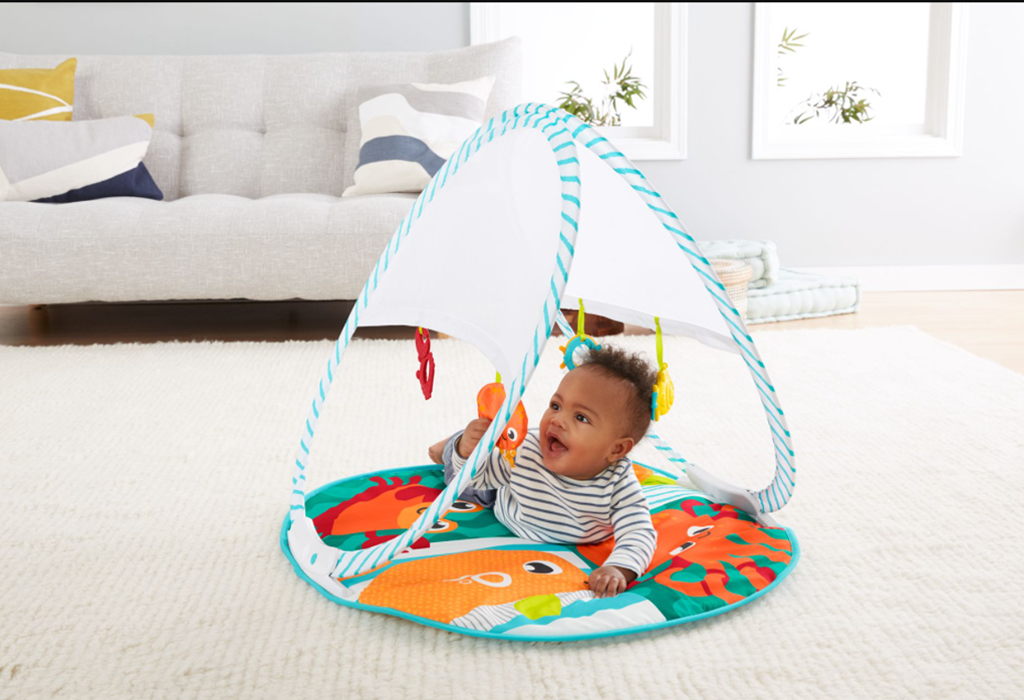
Tummy Time Play For Three-Month-Old Babies to Encourage Physical and Sensory Development
Babies, the heart and soul of their parents, need every ounce of care to develop and grow. Three months after being cradle bound, it is time for your little one to start exploring new milestones. As a parent, you could go to any extent to help your munchkin meet these milestones, but there will be times you will find yourself wondering if you are doing enough.
This is when educational toys prove to be extremely helpful. Using these toys, parents can help their little ones reach their highest potential through purposeful play. To help newborns develop and enhance the growth milestones, Fisher-Price has launched the concept of ‘Power of Play’, which focuses on building cognitive, physical, and socio-emotional skills in babies by age and stage, as per the development milestones while they play! But first, let’s talk about the development usually seen in three-month-old babies.
At three months, babies have better control of their neck muscles. They can easily keep their heads upright and turn it mostly to the left and the right to observe the surroundings. But, parents still have to make sure their babies keep practising looking up because that action doesn’t come naturally to them; it needs to be developed. The physical growth of a baby also happens from the top, starting with the head and the neck. So, the child needs to practice more head movements (head-up and head-banging) to promote development, which is explained in detail below.
Why Is Keeping the Baby’s Head Straight Required at Three-Months?
At the end of three months, a baby can usually straighten his/her head and keep it stable. But, the duration the baby can keep the head straight varies. Therefore, some babies can hold their heads for a few seconds at a time, while some, a little longer. This is usually because the degree of development of muscles in the neck, shoulders, back, etc., vary in each baby’s case. Nonetheless, you should challenge this action more often to bring about development!
Keeping the head upright and stable is also crucial in forming a healthy cervical curve. It is important for laying the foundation for advanced movements such as climbing, sitting, and standing. A newborn baby’s spine is still very soft, and the neck has a slightly protruding forward bend. By the time your child is three months old, thanks to the ability to lift his/her head, the neck and the back muscles are strengthened, and the first curvature of the spine begins to form. This is known as cervical lordosis or cervical curvature. Babies must practice balancing their heads upright to form a well-developed cervical curvature.
Are you wondering what you could do to help develop the cervical curvature? As mentioned earlier, looking up or practising the head-up exercise is a great way to form the curvature. And, tummy time is the best way to get your baby to lift his head and chest. But, it can be challenging for the baby because the degree at which he/she can hold his/her head upright depends on the strength developed. You can, however, extend your baby’s tummy time and take complete advantage of the concept of ‘Power of Play’ through development-oriented toys. Below, we will talk a little more about how tummy time can help form a better neck curvature.
Tummy Time for Upright Head and Better Cervical Curvature
Babies can start practising the prone position (sleeping on the tummy) by the time they turn a month old. That’s when they learn to lift their heads and chests, and eventually learn to support their own weights. At three months, additional tummy time will exercise and further strengthen your baby’s neck, chest, and back muscles. It also increases the lung capacity, promotes blood circulation, and expands the child’s field of vision. Looking at things from different angles is important for intellectual development, too. More importantly, tummy time gives the baby more opportunities to look up, which helps develop a cervical curve as soon as possible.
However, simply trying to get a three-month-old baby to lie on his/her stomach may lead to an unwillingness to cooperate. Parents should add some fun to make their babies interested in practising tummy time, and also maximise the benefits! You can do that with the help of enjoyable baby games and activities, such as the ones given below.
1. Tummy Time Play With New Concept Toys
Three-month-old babies can start using their wrists to support their upper limbs during tummy time. It helps them get used to raising their chest and keeping their head high. Parents can place the Fisher-Price Mini Musicians Piano Wedge for their babies to lie on as they practice push-ups. The wedge is an internationally renowned development toy for newborns that provides comfort and support during tummy time and helps strengthen your little one’s core and neck muscles. It can also be used when your baby is playing with other toys. If you are still wondering how exactly the wedge helps, read on to know its features.
Features of Fisher-Price Mini Musicians Piano Wedge
Tummy time strikes the perfect note with the Fisher-Price Mini Musicians Piano Wedge. This tummy-time support helps keep babies comfortable as they explore the soft piano, music note teether, and the tambourine clacker toy attached to the wedge. The removable piano plays up to 10 minutes of music and lights, with three musical play modes including long play, fun animal sounds, and real piano notes. You can easily detach the piano from the wedge to carry the musical fun along as you travel, or even use it as your little musician grows.
With its smart design, Fisher-Price Mini Musicians Piano Wedge can help your little one develop his/her gross motor skills and sensory skills. It can also make your baby curious about the toys and develop a sense of wonder in him/her.
Skill Development With Fisher-Price Mini Musicians Piano Wedge
Gross Motor: The wedge provides comfortable support for your baby as he/she pushes up during tummy time to play with the toys. The baby would extend his/her arms to reach out to the toys, too. Thus, the wedge can help strengthen the core, the neck, back and the arm muscles. This movement also involves looking up, which will help develop the cervical curvature we spoke about earlier.
Sensory: The piano’s bright colours, soft textures, and exciting music and sounds engage and delight your baby’s developing visual, tactile, and auditory senses. The audio also encourages your little one to try to mimic the sounds, which probably won’t happen this early, but you could see your baby trying to mouth the sounds.
Curiosity & Wonder: Your mini musician is introduced to the fun of cause and effect as he/she discovers how to activate the lights and music by pressing the piano keys. This develops a sense of wonder and makes the baby curious about new things.
Parents should invest in developing the skills mentioned above, as they are essential for the child to enter the next growth milestone. Get your baby’s own Fisher-Price Mini Musicians Piano Wedge now!
2. Play Gyms for Tummy Time and Kick and Play Development
You can also play games with your three-month-old baby for some good old bonding, and encourage the use of toys that can prolong tummy time and encourage kick and play activities. Fun toys, such as the Fisher-Price Fold & Go Portable Gym, a play gym-exercise mat, can help you keep your baby motivated to practice the prone position for longer durations.
When the baby is on his/her tummy lying on the gym and sees that the parents are also on all fours in front while shaking the rattle and clacker attached to the gym or trying to reach for the teether, tummy time instantly becomes an interactive fun time!
This toy grows with babies; its detachable features allow it to be used when babies start sitting-up, and even after they take their first few steps! These features enhance your baby’s skills and help you introduce them to storytime with fun character images at an early age. Read below to know the skills in detail.
Skill Development With the Fisher-Price Fold & Go Portable Gym
Sensory: A variety of textures and sounds engage and excite your baby’s developing tactile and auditory skills.
Gross Motor: The sea pals overhead encourage your baby to reach for and bat-at the toys, helping to strengthen their gross motor skills.
Security & Happiness: Giving your baby a familiar place to play with their favourite sea pals wherever they go helps them feel comfortable and happy.
Encouraging your child’s development through fun activities is made easy with the Fisher-Price Fold & Go Portable Gym.
3. Fly, Little Airplane
Sometimes prone exercises don’t have to be on the floor or in bed! You can try this fun movement game by holding the baby face to face and lying down. Support your child with your shins by bending your knees and bringing him/her closer to your stomach. Then, hold the baby carefully and gently lift by raising your legs and stretching your arms. Your baby will be enjoying tummy time mid-air with this activity! This activity encourages babies to raise their heads and look around, thus exercising the neck, and also allows them to enjoy the thrill of flying in the air.
These activities are not only useful; they are enjoyable, too, especially when they are done together. But, parents need to take care of a few things when doing these activities with their babies. Here are some tips to make the most of these games.
Tips for Parents
Tummy time exercises may seem simple, but there are some caveats that deserve parents’ attention.
1. Encouragement Is Key
Even if most babies easily learn how to take the prone position, don’t forget to encourage your baby! With your cheering, your baby will be more willing to take on challenges and become proactive.
2. Help Your Baby Relax After Practices
As is the case with adults, your baby’s muscles will also be tired after each exercise. Doing relaxing activities like holding the baby, caressing him with love, and sticking to the feeding and sleeping pattern will boost the effects of his/her exercise without much physical strain.
3. Be Patient With the Baby
Babies have a very short attention span. Therefore, when you introduce an educational toy, you need to give your little one some time to get used it. If the baby seems disinterested, give him/her something else, and get back to the educational toy later on. You might have to continue doing this till your baby finally develops an interest in the toy.
As mentioned earlier, babies develop physically from the top down, starting with their heads and necks. This means that only when their head and neck are well-developed can the rest of the body develop further. Parents should encourage their babies to look up and around every day so that they can stabilise their heads, develop a good, healthy cervical curve, and get ready for further developmental milestones.
Disclaimer: The above parenting advice is for reference only. We also recommend that you consult your healthcare provider.
Also Read:
Activities for 3 Months Old Baby
3 Months Old Baby Milestones
Your 3 Months Old Baby Growth and Development
Read more
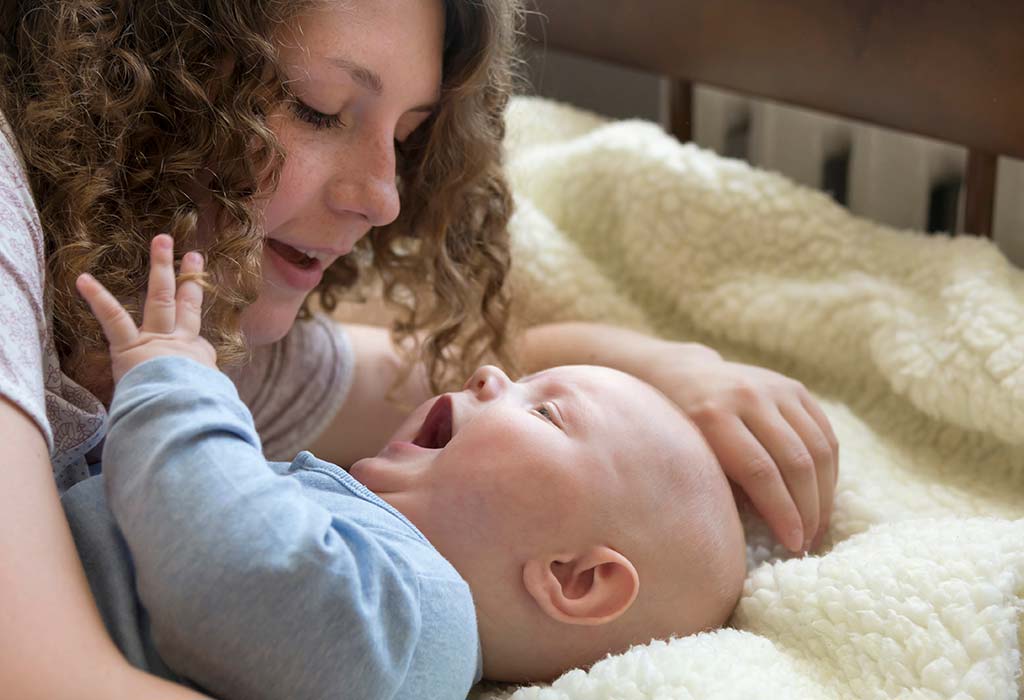
When Do Babies Start Saying ‘Mama' & ‘Dada'?
It is an absolute delight for parents to see their babies utter their first words! However, long before babies start talking, they acquaint themselves with various sounds or babbling and cooing. But the question of when babies start saying words like ‘Mama and ‘Papa’, may pop up in many parents’ minds. They eagerly wait for their little one to say these words, and it’s also a fun experience for both partners, with each one urging the baby to say ‘mama’ or ‘dada’ first. After all, it’s all in good spirit, and your baby is soon going to say much more than just these two words. Well, if you are wondering when do babies say mama or dada, and are interested in knowing more on this topic, we suggest reading the following post!
At What Age Babies Say ‘Mama’ and ‘Dada’?
We all know for the fact that all babies may reach different milestones at different times, and the same holds true in this case too. If you’re wondering when do babies say ‘mama’ and ‘dada’, the first thing to know is that it will happen in its own time. However, at around seven months of age, your munchkin may start making sounds like ‘mamamama’ or ‘dadadada’, but these are more of babbling sounds than actual words. At around nine months of age, your baby may start saying the actual words.
Why Are Babies’ First Words Always Mama Or Dada?
There are a couple of reasons why a baby’s first word is ‘mama’ or ‘dada.’ First off, babies often try to mimic sounds that they hear often. So, if you or your partner keep urging your baby to repeat these words by saying it to him often, he will latch on to the sound and try to mimic it, resulting in a sound that sounds similar to ‘mama’ or ‘dada’.
Additionally, these two words are made up of repeating sounds or syllables – ‘ma’ + ‘ma’ and ‘da’ + ‘da’. This actually makes the task easy, and by saying these words in front of your little one, he will at some point say them back to you.
What Will Your Baby Say First- ‘Mama’ or ‘Dada’?
You’re probably wondering, ‘do babies say mama or dada first?’ As a mom, you may want your baby to say ‘Mama’ first, but your partner may be secretly wishing for your baby’s first word to be ‘Dada’. Well, usually people often assume that a baby’s first word would be ‘dada’ because ‘da’ sound is easier to make than ‘ma’ sound. However, that may not be the case; rather, some babies may be more interested in saying ‘ma’ sound. So, the probability of your baby saying ‘dada’ or ‘mama’ may depend on which sound the baby latches on, that is if the baby latches on to ‘da’, then he may say ‘dada’ first and vice versa.
Also, the primary caregiver may have the edge over the other, which means if the mom spends more time with the baby, the baby may say ‘mama’ first, and this is why most babies usually say ‘mama’!
Do Babies Really Mean It When They Say ‘Mama’ and ‘Dada’?
Though your baby may start babbling words at around seven months of age, he may be uttering actual words by nine months or beyond. However, most parents may actually wonder whether or not their munchkin actually means what he uttered. Well, it is quite unlikely for babies to actually understand or connect with what they say before one year of age. So, be watchful as parents to see when your baby actually starts making sense with words!
Tips to Make Babies Say ‘Mama’ or ‘Dada’
Despite your best efforts, your baby may sometimes take his own time to say these words, prompting you to wonder how to teach the baby to say mama or dada. You cannot rush with your baby’s milestones. However, if you feel your baby’s language skills may not be developing according to the expected timeframe, here are some tips that can help your baby develop good language skills:
1. Work With the Senses
Repeating ‘mama’ or ‘dada’ again and again is one of the best ways of encouraging your baby to say these words. However, placing your baby’s hand over your mouth as you utter ‘ma’ may help in getting the feel of the word. Doing this exercise with your baby is a great way of stimulating your baby’s auditory, visual, and tactile skills.
2. Talk to Your Baby
Sometimes parents prefer babbling with their baby instead of talking with them thinking that it’s cute or they may be pretending to be conversing in baby language. Doing so once in a while can be adorable and cute, but doing so on a regular basis may not help with your baby’s language skills. Instead, talk to your baby about things around you, about your day, about what he is doing, etc. or simply sing or point and say the name of objects, and soon the baby will start saying momma or dada too!
3. The ‘Mama’ or ‘Dada’ Photo Album
Make a photo album with ‘Mama’ or ‘Dada’ pictures and every time you show the album to baby, you repeat the ‘Mama’ word. You can do that for every picture in the album and as you do so, point to the picture and to yourself. Doing so several times may help your baby to understand and associate the word with you. The same exercise can be repeated for ‘Dada’ too.
4. The Peek-a-Boo Game
Most parents play peek-a-boo games with their babies, and this fun game is also a great way of teaching ‘Mama’ or ‘Papa’ words to a baby. You can hide behind the door, curtain, or simply hide under the blanket, and every time you pop out from the place of hiding; you can say ‘Mama’. Do this a few times a day and within a few days, your baby may say ‘Mama’ when you pop out, instead of you saying so!
5. Pay Attention to What Your Baby Says
Your baby may be babbling, but he is trying to communicate with you in his own language. You should not ignore what your baby may be trying to communicate, and soon you may notice your munchkin making all the sense and saying the much-awaited words that may be the sweetest sounding words ever, that is ‘Mama’ and ‘Dada’.
6. Facing Your Child
Face your child when you say the words ‘mama’ or ‘dada.’ He should be able to see the movement of your mouth while doing so, and will -over time- try to mimic it.
7. Read to Your Child
Saying the words ‘mama’ or ‘dada’ is just the first step to developing language skills. Start off by reading simple books to your child that have these words in them. By hearing these words constantly through the book, he will try to repeat them. It’s important to read to your child everyday, so this is a good way to start.
FAQs
1. When Should I Get Worried About My Baby Not Saying ‘Mama’ and ‘Dada’?
Every child is different, and will start speaking in their own time. However, if your baby isn’t saying these words or any others at all by 12-15 months, consult a paediatrician. He will be able to address any concerns and also check for any hearing or speech issues.
2. Is There A Difference Between How Boys And Girls Say “Mama”?
There’s no difference between how a boy and how a girl says the word ‘mama.’ This is dependent on the baby itself, as each baby will pronounce it differently, and doesn’t have any relation to gender.
3. Does Saying ‘Mama Indicate a Stronger Emotional Bond Between an Infant and Their Mother?
Initially, babies repeat the words ‘mama’ or ‘dada’ simply as a repetition, as they are too young to know the meaning behind them. Your baby may just be mimicking the sound of this word, as you say it more frequently around him. However, as a parent, hearing your child say ‘mama’ is a deeply emotional moment that will bond you for life!
As parents, we wait eagerly for our babies to do everything at a fast-pace, but that is not the case. Every baby is special and different in a special way. You may need to exercise patience and sometimes hard work to help your child achieve these milestones and, in this case, talking to your child, reading, playing music and above all being patient will be really helpful!
Also Read:
Baby Speaking Milestone
Baby Talking Milestone
When Do Babies Recognise Their Father, Mother and Other People
Read more
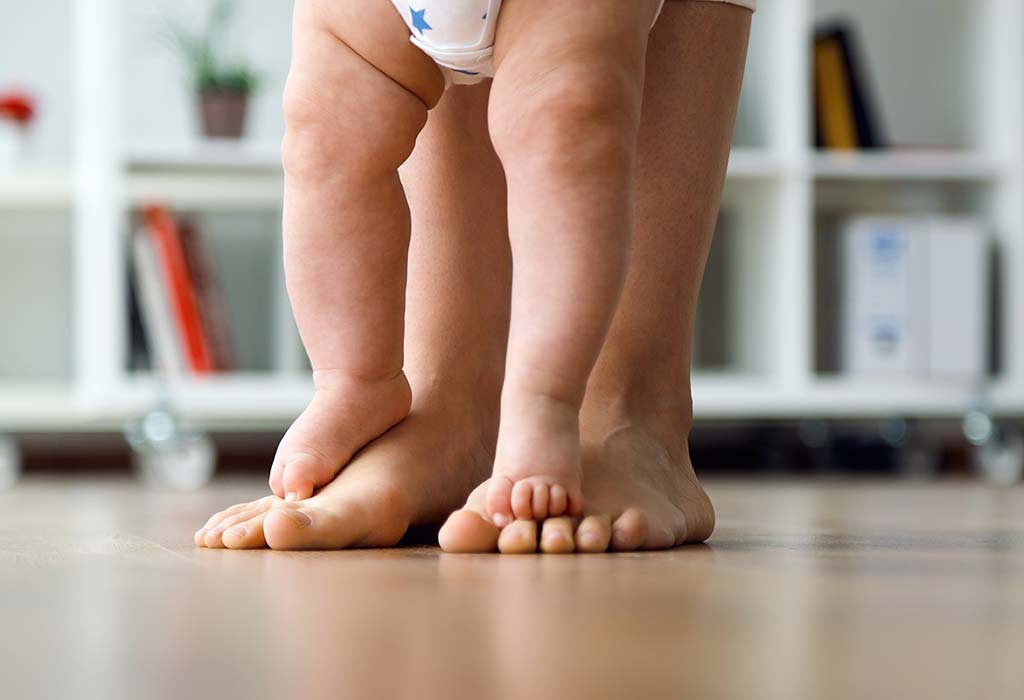
Baby's Feet – Developmental Stages, Foot Problems and Care
Your baby’s chubby, cute little feet might need a second look. Do they seem similar to your own? Externally, newborns and babies foot are miniature copies of the feet of adults, but appearances shouldn’t be deceptive. Your child’s feet are most probably going through its own developmental process that is unique to their age.
While they might look similar to yours, they are materially distinct and structurally different. The baby’s feet develop in different stages as they find newer ways to move, from slowly wiggling to finally walking without any aid.
Baby Feet – Development and Milestones
There are three primary stages in the development of a baby’s foot. These include –
1. Pre-Walkers and Crawlers
Children who haven’t shown an interest in standing or walking fall into the pre-walker or crawler group. There are many great developments that occur in the first 6 to 10 months as the newborn feet structure starts taking shape. You can expect the baby’s feet to grow by three sizes and then measure half of the length of their eventual adult foot by their first birthday only!
Newborns enter the world with zero bones in their feet and in place, there is spongy cartilage that gradually ossifies into the 26 bones and the 33 joints that eventually comprise an adult foot. The process isn’t complete until the age of 18 but it is during these first months that the babies’ feet are super delicate.
Babies’ feet can sustain certain developmental abnormalities if not taken care of properly. Keep in mind that when taking care of infant’s feet, ill-fitting shoes and socks can place tensions and pressure on the foot. This can eventually impede growth and cause problems that can persist for years. It is always good to check for your baby’s foot size and change their footwear as often as possible. When the shoes are a must, you can opt for soft soles so their little toes can stretch and therefore, strengthen.
2. Cruisers
This is an alternate name for beginner walkers as cruisers can explore the world on their own two feet. Somewhere in between the 8-and 10-month milestones, the baby will try standing on their own. They will use everything from the sofa to your leg and even the family dog to support themselves and there might be a few bumps along the way.
All of the standing and cruising requires a lot of developmental work. It also needs determination from the child as they strengthen and also tone muscles. Their soft cartilage would have hardened and become strong enough to support their weight. You will notice their little feet still lack an arch and this is normal. Children don’t show any signs of this arch until they are 7 years of age.
It is during these early walking days that the baby’s feet make great progress as they undergo a lot of emotional growth too. You must cheer at their successes and soothe them if they fall but don’t stop them from making mistakes. Falling is a way for them to accept their progress. Every time they get up, they toughen up not just physically but from an emotional aspect too. Continue checking for those signs when it’s time for a new shoe sign and always encourage them to explore.
3. Walkers and Toddlers
Your baby makes big strides at this stage. The bones and joints continue to fuse and form as the tendons and muscles start taking up new challenges. Anywhere between the ages of 9 and 17 months, these kids take their first steps. While you think this is a huge range, babies can actually walk from 10 to 12 months but some may take longer. Their feet develop at different paces and many babies walk in their own time.
Your child may end up displaying stances that can include out-and in-toeing, tiptoeing, and bow-leggedness and while these may be abnormal for adults, they are totally fine and common in toddlers and walkers. They are often a consequence of the nine months the baby spent in the womb, which contorted these particular muscles into different positions. Walking can aid in flexing and extending those muscles and will eventually restore their full range of motion.
When Do Babies Find Their Feet?
If you’re wondering when do babies start grabbing their feet, it begins as young as 4 months of age up to 8 months can discover their feet. Babies feel their feet before they can even see them. If they feel them, they try to eat them and this is a great pastime and source of entertainment. Toe tasting can be soothing for the baby. Even if they don’t do it, don’t worry, because not all of them do.
Your baby’s hands aren’t coordinated too but they begin to learn more about the different objects around them. Everything they come across, they will try to explore and also end up putting these items in their mouth, which is why most babies chew their feet once they’ve discovered them. Finding your babies’ feet in hands shouldn’t be a worry, but make sure their feet are clean before.
Common Baby Feet Problems and Solutions
There are a few common baby problems including abnormal feet in babies among others. These include –
1. Clubfoot
Clubfoot involves an array of deformities that can cause your newborn’s feet to end up being twisted, inwards, or pointing down. Babies who have clubfoot end up having the condition in both feet and up to 1 in every 4 babies have this condition. The condition appears nearly twice in boys than girls.
What can be done?
Clubfoot doesn’t normally cause pain in the baby, but it can end up manifesting in long-term problems, including their ability to walk. If it isn’t treated properly with stretching exercises, surgery or casts, the deformity can be corrected within the early childhood stage only.
2. Metatarsus Adductus
This is a common congenital condition of the foot that is seen in about 1% to 2% of all newborns. It is detected generally when the baby’s forefoot and toes are pointed inwards, making it harder to straighten them. The appearance of the baby’s sole resembles a somewhat bean shape.
What can be done?
Generally, mild cases end up resolving on their own but the more severe cases require splints, casts, and even corrective shoes. Surgery isn’t needed mostly for this condition.
3. Congenital Vertical Talus
The Congenital vertical talus is an uncommon type of a flatfoot type in babies. It is associated with chromosomal or congenital abnormalities. The baby’s foot appearance with the congenital vertical talus resembles a sole that looks like the bottom of a rocking chair.
What can be done?
To treat vertical talus, a similar sort of treatment to clubfoot must be done, including casts, stretching exercises and if needed, surgery too.
4. Polydactyly
This is a condition where your baby has an extra toe/s but it is fairly common. Around 1 in 1000 babies are born with this condition and it can occur to people with zero family history too.
What can be done?
The treatment of polydactyly depends on how and where the extra toe/toes are connected. If there is no bone and the toe ends up being poorly formed, you can place a clip to stop the blood flow. The toes which are better formed can be surgically removed once the baby is around a year old, but much before he/she begins to walk.
5. Congenital Curly Toes
Curly toes occur when the baby’s toes end up being rotated abnormally. The toe also remains in a bent position, but the main deformity is the malrotation. It generally occurs in both feet and up to 25% of these cases solve themselves.
What can be done?
The curly toe deformity treatment involves cutting the tendon right at the bottom of the toe in order to relieve any stress that causes the rotation. But it’s better to wait until your child is around 6 years old, so it can go away on its own, as is the usual case.
6. Overlapping Toes
Overlapping toes can occur when the fifth digit of the baby’s toes crosses right over the fourth toe. It can occur in various degrees and isn’t generally bothersome for most babies.
What can be done?
If it hurts children, then the overlapping toe can cause difficulties in footwear and also some pain. It may need a surgical procedure in order to correct the deformity.
You can take care of the infant’s feet properly if you notice any signs of deformity early on. It’s always advisable to get a few doctors’ opinions before proceeding with surgery of any kind.
Tips for Feet Development in Infants
Ensuring proper foot development in infants is crucial for their overall well-being. The early stages of life are vital for laying the foundation for healthy feet. Here are some tips to foster optimal foot development in infants:
Allow Barefoot Time: Let your baby spend time barefoot to encourage natural foot movement and muscle development.
Choose Soft-Soled Shoes: When shoes are necessary, opt for soft-soled ones to provide support without restricting natural foot movement.
Ensure Proper Fit: Select shoes that fit well and allow for growth, with enough room for the toes to wiggle.
Encourage Tummy Time: Tummy time not only helps with overall development but also aids in strengthening the muscles in the feet and legs.
Monitor Walking Milestones: Keep track of your baby’s walking milestones and consult with a pediatrician if you have concerns about their gait or foot development.
Avoid Tight Socks or Booties: Tight socks or booties can hinder circulation and restrict proper foot development, so choose clothing that allows for comfort and flexibility.
Engage in Foot Exercises: Gently move your baby’s ankles and toes to promote flexibility and strength in the foot muscles.
Create a Safe Environment: Ensure the environment is safe for your baby to explore, allowing for crawling and cruising to promote motor skills and balance.
Regular Check-ups: Schedule regular check-ups with a pediatrician to monitor your baby’s overall development, including their feet.
Interesting Facts About Baby Feet
Here are a few interesting facts about baby feet –
1. No Arch
The baby’s foot doesn’t have an arch. They instead have a solid pad of fat right in the middle of their foot. The fat disappears in time, and the baby’s arch shape is also visible. The baby might also spend his first year with flat feet.
2. Pliable at Birth
Most of the bones of the foot are pliable, even at birth. The baby’s feet take shape as they grow and they don’t remain flexible for quite a while. The foot bones aren’t well-formed too, up until she’s about 8 years of age.
3. No Need for Shoes
Babies also don’t need to wear shoes. When it comes to infants, barefoot is the best option. The baby’s foot moves around and grows and at this age, the shoes serve just to inhibit growth and movement. If they are walking upright, then don’t bother with shoes for them.
4. Walking Begins When Muscles are Developed
The process of walking begins when the foot muscles get ready, which is why different children begin at different ages. Up until the foot muscles are prepared, it isn’t safe for the baby to walk.
5. Babies’ Feet Require Exercise
The baby’s foot also requires exercise. The baby must move their feet around while lying on their back. You can change their position often so they exercise more than just a few muscles.
6. Doctors Count Your Baby’s Toes
The condition of polydactyly means that there are more than 10 toes present. It is more common than you actually think but it can be corrected with proper surgery.
7. Webbed Toes
Some babies can be born with webbed toes, but this might not be noticeable and present no problems, physically.
8. Clubfoot
Every 1000 births can give rise to an occurrence of clubfoot. Even though it might sound like a popular condition, it can be easily treated.
FAQs
1. What Should Babies Wear on Their Feet?
You must resist the temptation to place cute little shoes on your little one as it can be restrictive. Work with non-restrictive socks and crib shoes. Even when they are learning to walk, use shoes that are only essential for protection from slippery floors or the outside. Let them walk barefoot at home as it allows the toes to properly grip the floor and balance better overall.
2. Why Do Babies Put Their Feet in the Air?
Babies use their thumb and fingers to pick up objects and instinctively the first objects they can find are their feet. At this age, they explore objects by putting them in the mouth and that is why their feet too, are in the air as they discover these parts of their bodies which might seem new to them.
3. What Does It Mean If My Baby’s Feet Are Cold?
It isn’t a reason to worry if your baby’s feet are cold because it’s just a sign of an immature and developing immune and circulatory system. Once the baby grows a little, the blood can circulate better and ensure their feet remain warm.
4. Should I Worry If My Infant’s Feet Sweat a Lot?
Not really. A few babies can end up sweating more than others as is the case in their feet and hands. Their extremities end up feeling clammy and cool because little beads of sweat can present themselves. As they mature, they can control their temperature regulation and it can happen much less often.
Thus, make sure your baby enjoys this phase of discovering their feet. Once you understand the various foot problems in developmental care and so on, you will be able to identify patterns and make suitable adjustments for the little one.
References/Resources:
1. Babies and children’s feet; NHS 75: Bradford District Care; https://www.bdct.nhs.uk/babies-and-childrens-feet/
2. Newborn Feet: Common Deformities; American Academy of Pediatrics; https://www.healthychildren.org/English/health-issues/conditions/orthopedic/Pages/Newborn-Feet-Common-Deformities.aspx
3. Our Expert Guide to Your Baby’s Foot Development; University Foot & Ankle Institute; https://www.footankleinstitute.com/blog/experts-guide-to-babys-foot-development/
4. Stages of a child’s foot development; Pediatric Foot & Ankle; https://pediatricfootankle.com/childs-foot-development/
5. Price. C, McClymont. J, Hashmi. F, Morrison. S, Nester. C; Development of the infant foot as a load bearing structure: study protocol for a longitudinal evaluation (the Small Steps study) (Journal of Foot and Ankle Research); BMC; https://jfootankleres.biomedcentral.com/articles/10.1186/s13047-018-0273-2; June 2018
6. Children’s feet and shoes; Better Health Channel (Victoria State Government); https://www.betterhealth.vic.gov.au/health/healthyliving/childrens-feet-and-shoes
7. Is My Baby Ready for Shoes?; Nemours Kids Health; https://kidshealth.org/en/parents/baby-shoes.html
Also Read:
Leg Development Stages in Newborns
Emotional Developments in Infants
Physical Development in Babies from Birth till 12 Months
Read more
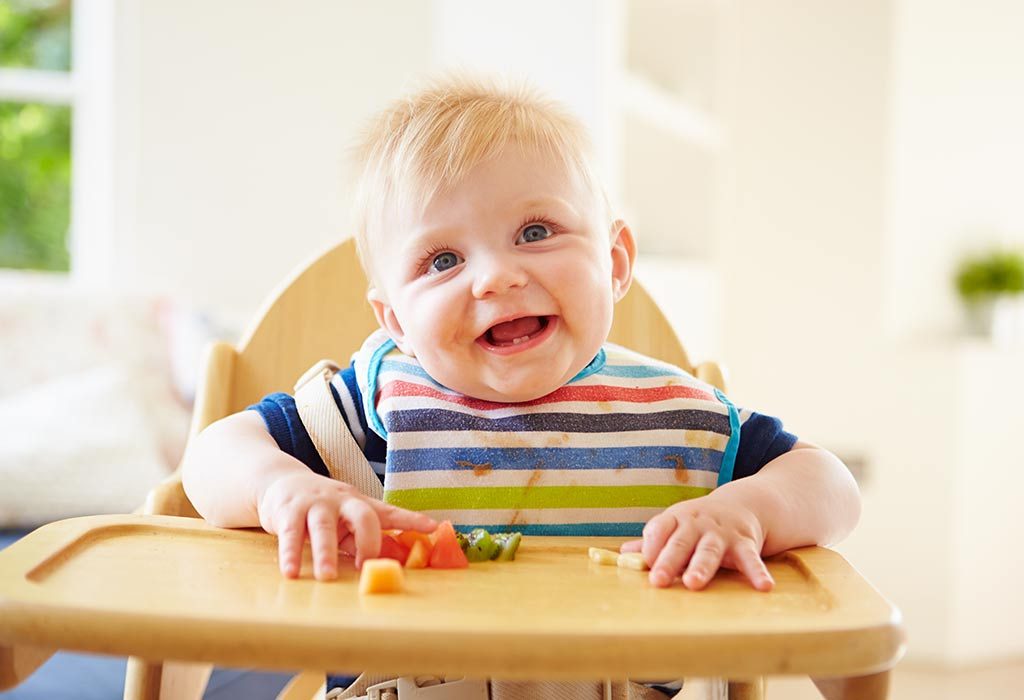
When Can a Baby Sit in a High Chair?
Have you started introducing your baby to solid foods, parents? Wow, that’s a milestone! It means that your little one is getting older and thus needs more nutrition from other foods. If your baby can also sit up or stay upright, we can add another milestone this time—the high chair! But when can a baby sit in a high chair?
You can introduce your baby to a high chair at the age of 6 months if he has started eating solid foods and can sit upright. A high chair is quite safe for the baby during his meal times. It makes feeding by the parent easier and keeps the baby comfortable as new foods, flavours, and textures come his way. It’s also easier to clean up afterwards! Parents love this transition of kids from sitting on their laps to sitting by themselves. They enjoy seeing their little ones grow up and reach new developmental goals. The high chair symbolises growth and is an important milestone in a child’s life.
What Are High Chairs?
High chairs are special chairs for babies and toddlers, in which they can sit for feeding and meal times. The chair usually comes with an adjustable seat, which can be lifted according to the height of the parent, whether the parent is standing or sitting to comfortably feed the child. There is usually a tray on the boom, which can be used to hold utensils and food during meal times, or when the kid is eating by himself. The high chair also usually has a broad base for better stability, and some high chairs come equipped with seat belts to securely fasten the child to the seat.
When Can a Baby Use a High Chair?
Parents wonder when their babies can start using a high chair or at what age they should start using a high chair. As every baby is different and thus grows differently, no one standard age can be followed by parents. However, according to high chair manufacturers and parenting experts, babies start using high chairs at six (6) months (2). However, parents can decide on their own, depending on their baby’s development. Some babies start sitting by themselves or sitting upright at the age of 4 months, and some start by 6 months.
When your child can hold himself upright, or show good stability with some support, he can be seated in a high chair (4). For safety reasons, if a baby can hold his head up without propping him with pillows, then the baby can be put in a high chair. Similarly, the baby’s shoulders should also not need any prop support, and should stay straight without any help. The baby should also move his arms on his own.
Types of High Chairs
High chairs are available in wide variety and different features. They come in many shapes and sizes, and not all high chairs share the same features. The parent should choose a high chair as per the family’s lifestyle, amount of space in the house, the features required, and the budget.
Read on below to know more about different types of high chairs and their features, to help you choose the perfect high chair for your baby.
1. Traditional High Chair
What are they:
The traditional high chair is the basic or the upright high chair. The chair can be made of metal, wood, or plastic, and is simply a raised chair for a baby. This chair cannot be folded, is designed to be kept in a designated area of the home, and has none of the trimmings of the modern high chair design.
Pros:
Simple, basic design
Available at a budget price
Cons:
No modern features
Cannot be folded to store away
2. Modern High Chair
What are they:
The modern high chair has many features, and has an appearance similar to the traditional high chair. These chairs come with adjustable height, reclining seat, adjustable footrest, and adjustable height of the tray. The chair comes with its features adjustable, to ensure the comfort of the baby, and easy feeding for both the parent and the baby. This reclining high chair can also be folded for easy storage.
Pros:
Adjustable parts
Fold for storage
Cons:
Complicated assembling
More expensive than basic chairs
3. Space Saver High Chair
What are they:
Space saver high chairs or booster chairs are the chairs that convert any ordinary chair in your house to a high chair. One needs to simply put the booster chair on top of the regular chair, and it is ready for the baby to sit in, for feeding and meal times. The small size of the chair helps to save storage space, and is perfect for families living in apartments, or who have space constraints.
Pros:
Fits on any chair
Takes less space
Easy to clean and store
Cons:
Takes time to set up every time
The chair gets messy
4. Convertible High Chair
What are they:
Convertible high chairs are the best solution for the question, what to do with the high chair when the baby grows up. This contraption can be used as a high chair, a booster seat, a toddler chair, and a child-sized activity table and chair! It is a long term investment, and can be used until the baby is 3 to 4 years old. These chairs are called 3-in-1 or 4-in-1, depending on the number of ways in which it can be used.
Pros:
Long use period
Multi-usage features
Cons:
Takes a lot of storage space
Bit expensive, as is multi-functional
5. Travel High Chair
What are they:
A travel high chair is the perfect chair for camping or travelling. It is designed for outdoor use only. The chair is usually made from heavy-duty canvas on a metal frame. They don’t require assembly, and can be folded for storage. However, they don’t have features like a removable tray, height adjustment, or reclining seats.
Pros:
Easy to take on travels
Weather-resistant
Easy to clean
Cons:
Not for indoor use
Canvas tray can get messy
6. Fabric High Chair
What are they:
These chairs are perfect to take along for your baby’s feeding time when you are travelling. It is a lightweight chair, and it can be folded into a small size and washed in a washing machine. One can use them on any available chair, by simply sliding over the cover and clipping the baby to it.
Pros:
Foldable to a small size
Machine washable
Suitable for travel
Cons:
Needs frequent washing
Does not boost the height of the chair
Essentials Features in a Safe High Chair for Your Child
Most parents may not know what essential features to look for, when buying a safe high chair for their child. Here are some important features to check for when buying a high chair (2).
1. Easy to Use
The parent should be able to put the baby into the high chair, and take him out of it, with ease.
2. Tray
The tray should be operable by one hand.
3. Stability and Mobility
The chair should be stable. If it has wheels, parents should be able to lock them to keep the chair stationary.
4. Size
How much storage space does it take, is a big question. Choose a high chair according to the space in your home.
5. Safety
The chair should come with some kind of seat straps or belts, that are easy to buckle and unbuckle around your child.
6. Certification
Purchase a high chair that is certified, or approved and tested by JPMA (Juvenile Products Manufacturers Association), as they are the safest.
7. Comfort
The chair should be comfortable for the baby, and have padded seats and a footrest.
8. Ease of Cleaning
Easy to clean as babies make a mess when eating.
9. Adjustability
Purchase a high chair that grows with the baby, meaning that the chair should accommodate a baby over an age range, such as 6 months to 3 years, to make it last long-term.
Guidelines to Follow While Transitioning Your Baby to a High Chair
Introducing a baby to sitting on a high chair can be a bit difficult for the parents. It’s a new concept for the kid; he may not understand why he has to sit by himself in a chair. Parents need to transition the child to start sitting in the high chair. Here are some guidelines for parents to follow while they transition their baby to a high chair (1) (3).
The first step is to become familiar with all the features of the high chair. Parents should know the different features, how they work, and how to adjust them.
It is best to first test drive the high chair for some days or weeks, before starting to use it regularly to feed the baby. Let your child become familiar with the chair by seating him in it, and giving them some toys, plates, spoons, etc to play with.
If the high chair has wheels, ensure that the wheels lock properly, and that you know how to lock them on the fly.
Every time you use the high chair, make sure all the features are in their place.
Adjust the footrest to support the baby’s feet comfortably.
If the child is in the high chair at the dining table, be sure to place the chair in such a position that he can see the parents and be part of the family meal.
Prepare the food before seating your baby in the chair, so that he knows that when he sits in the high chair, it’s eating time.
Keep the chair away from the wall, table, counter tops, and things that are sharp or hot.
Never never leave the baby unattended in the high chair.
Always strap your little one securely in the high chair.
FAQs
1. Can I use a high chair before 6 months?
It’s not recommended to use a high chair before 6 months, as babies typically don’t have the strength to sit up safely. Some high chairs come with reclining features for younger infants but always consult your paediatrician.
2. How long can a baby stay in a high chair at a time?
It’s best to limit time spent in a high chair to 20-30 minutes at a time. Extended periods can be uncomfortable and hinder your baby’s ability to move and explore.
High chairs are a convenient way to help your little one start eating by himself, when you have introduced him to solid foods. Your child can sit comfortably and with family at eating times, and start learning his eating routine!
References/Resources:
1. High Chairs Information Sheet; NHS Greater Glasgow and Clyde; https://www.nhsggc.org.uk/kids/resources/ot-activityinformation-sheets/high-chair-information-sheet/
2. Baby Safety Tips – Is Baby Ready for Utensils and High Chairs?; Pathways.org; https://pathways.org/utensils-and-high-chairs/
3. High Chair 101: Serve Up Safety; Nationwide Children’s Hospital; https://www.nationwidechildrens.org/family-resources-education/family-resources-library/high-chair-101-serve-up-safety
4. Starting Solid Foods; American Academy of Pediatrics; https://www.healthychildren.org/English/ages-stages/baby/feeding-nutrition/Pages/Starting-Solid-Foods.aspx
Also Read:
When Does A Baby Start Sitting
W-Sitting Position For Babies and Toddlers
Tips For Teaching Toddlers To Sit In A Chair
High Chair for Baby: Do’s and Don’ts
Read more

Erikson's Stages of Psychosocial Development: A Guide for Parents
Parenting is a journey filled with challenges and rewards, and understanding a child’s emotional and psychological growth can help parents provide the right support at each stage. If you regularly go through parenting magazines, you would be familiar with the name Erik Erikson in relation to psychosocial development. As a developmental psychologist, Erikson was well known in child psychoanalysis and is popular for Erikson’s eight stages of life theory of psychosocial development.
The term psychosocial development refers to how a person’s individual needs (psycho) come to gel with the demands or needs of society (social). Erikson’s stages of psychosocial development are stages everybody goes through from infancy to adulthood, and as you continue reading, you will recognise those from your own experience.
Erikson’s Eight Stages of Psychosocial Development
Similar to Sigmund Freud, Erikson theorised that personality development took place in stages. However, unlike Freud’s theory which is psychosexual, Erikson’s theory revolved around social experiences throughout the life that impacts people’s development. His interest was around how the personality development of people was influenced by social interactions and relationships (1).
He theorised that personality development takes place in a predetermined order that comprises of eight stages of psychosocial development from infancy to adulthood. Every stage builds on the previous stage and lays the foundation for future periods of development. Going from one stage to the other is characterised by a ‘conflict’ or a ‘crisis’ which would act as a pivotal point to the next stage. It’s important to remember, however, that the crisis could have a positive or negative outcome for personality development, as according to Erikson, the conflicts either develop a psychological quality or fail to develop it.
When the conflicts are successfully dealt with, people will emerge out of the stage with psychological strengths (essential virtues) that they can use to resolve conflicts and mitigate risks in the future. If the conflicts aren’t dealt with positively, the essential skills needed to establish a strong sense of self isn’t learned. Erikson also thought that a sense of competence is also developed at each stage which motivates behaviours and actions, while the person becomes competent in different areas of life.
When they fail to complete a stage of development, it results in a diminished ability to complete the next stage, and individuals end up with unhealthy personalities and a poorly formed sense of self. On the bright side, these issues can be resolved and the stages completed successfully at a point in life.
Here is what the Erikson stages chart for all people looks like (2) (3) (4) (5):
Stages
Psychosocial Crisis
Virtue Developed
Age
1
Trust vs. Mistrust
Hope
Infant- 18 months
2
Autonomy vs. Shame
Will
10 months – 3 years
3
Initiative vs. Guilt
Purpose
3- 5 years
4
Industry vs. Inferiority
Competency
5 – 12 years
5
Identity vs. Role Confusion
Fidelity
12 – 18 years
6
Intimacy vs Isolation
Love
18 – 40
7
Generativity vs. Stagnation
Care
40 – 65
8
Ego Integrity vs. Despair
Wisdom
65
Stage 1: Infancy: Trust Vs. Mistrust
The first of the Erikson’s stages starts at birth and continues until the baby has gone past his first birthday. It’s needless to say that at this stage, they are completely dependent on the mother for food, comfort, warmth, and security. The baby is born vulnerable and uncertain about the world and expects the parents to offer consistent care and stability.
Age Range
Birth to 18 months old.
Basic Virtue
With predictable and consistent care babies develop trust and with it the basic virtue of hope.
Desired Outcome
The trust built here is carried at later stages in life into relationships with people which offers a sense of security in times of threats. If the care has been inconsistent or unreliable or unpredictable, infants develop anxiety, mistrust, and suspicion. In the long term, they lose confidence in people around them and themselves.
Stage 2: Toddlerhood: Autonomy Vs. Shame And Doubt
When babies begin to assert their independence or prefer to do things by themselves and insist upon it, it is the milestone of autonomy. At this stage, they would show preferences towards food, clothes, and even the footwear they want.
Age Range
From 18 months to 3 years.
Basic Virtue
Being successful in this stage will lead to the development of the virtue of will. When ample support and encouragement are offered, they become more independent, confident, and secure in their own ability to navigate their environment.
Desired Outcome
Physical and cognitive growth marks this stage as they start to become partially independent from their parents. They are able to feed themselves, go to potty without help, and even dress. Having trust and a sense of self-awareness, they rely more on their own judgement.
Stage 3: Preschool Years: Initiative Vs. Guilt
The preschool years are when children learn social play and collaborate with others to play collective games. This is when they learn to control outcomes and take initiatives. At this stage of development, children learn to be more assertive in any negotiative environment.
Age Range
3 to 5 years old.
Basic Virtue
When children have a chance to balance their initiatives with a readiness to work with others, the virtue of purpose emerges from the ego. Success at this stage helps children feel confident and capable of leading others for a collective goal. Failure to acquire the virtues of this stage leaves them with a sense of self-doubt, guilt, and a lack of drive.
Desired Outcome
With success in this stage, children can play in groups, socialise, make up games, and stick to the rules of the play.
Stage 4: Early School Years: Industry Vs. Inferiority
The fourth stage of development occurs during early school years where they are more competitive and engage in the same things their peers do. They have also learned how to read, write, and do maths with teachers playing an important role in their learning outcomes.
Age Range
5 to 12 years.
Basic Virtue
With proper guidance by parents and teachers, children develop the virtue of competence which also reflects in their belief in their own ability to take up challenging tasks ahead of them. If they do not develop any skills, they start feeling inferior.
Desired Outcome
At this stage, the peer groups begin to take greater significance and their competence will help them gain a sense of self-esteem. They also compare themselves with their peers and have the need to validate their competency. Competence is demonstrated by building skills, applying them to make things, and getting results.
Stage 5: Adolescence: Identity Vs. Confusion
The fifth stage is adolescence during which they search for a sense of self and personal identity by looking through their values, beliefs, and goals and adopting new ones that better suit their sense of self. The transition from childhood to adulthood both physically and mentally will drive children to become more independent and acquire a sense of identity.
Age Range
12 – 18 years.
Basic Virtue
Success in this stage pertains to developing a strong sense of identity and their ability to take challenges while committing to their ideals, principles, and beliefs. Failing to establish an identity at this stage can lead to being a young adult confused about their future and also become susceptible to the ideas of influential people. Success in this stage leads to the virtue of fidelity.
Desired Outcome
The individual is capable of successfully abiding by society’s standards and expectations. The personal identity acquires and creates a sense of self that will endure throughout the lifetime.
Stage 6: Young Adulthood: Intimacy Vs. Isolation
This is the stage most people are quite familiar with, having a strong sense of identity and then, looking for a romantic partner to share their lives with. This stage presents a tougher challenger than all the previous ones as individuals need to invest their time and emotions into committed relationships.
Age Range
18 – 40 years.
Basic Virtue
Completing this stage successfully builds the virtues of love and commitment. Young adults also settle down at this stage and make compromises for long term family-oriented goals. Without completion of the previous stage and having a strong sense of identity, it is not possible to build strong committed relationships. The lack of identity and security coupled with the absence of warmth and intimacy triggers isolation.
Desired Outcome
The virtue of love developed during this stage helps young adults to offer both emotional and physical love and accept the same in return. They also become good at forming healthy reciprocal relationships with others.
Stage 7: Middle Adulthood: Generativity Vs. Stagnation
During adulthood, people continue building their lives with the focus mainly on career and family. Those who are able to do it successfully feel the need to contribute to the world starting from their community.
Age Range
40 – 65 years.
Basic Virtue
Having their career and lives in order, individuals tend to look for leaving behind a legacy. The urge to contribute makes them active in religious or other humanitarian or environmental causes to make the world a better place for future generations. When handled successfully, the developed virtue of this stage is care. Individuals also experience a sense of accomplishment regarding their career and personal life. Important milestones include having their children grown into adults.
Desired Outcome
Upon achieving the major milestones in life, they are able to offer strong support to their children, their community, and society. Failure to complete the stage results in a mid-life crisis and struggle to find a new purpose in life which can lead to stagnation.
Stage 8: Late Adulthood: Integrity Vs. Despair
The final stage makes the beginning of old age which is dominated by reflecting on life. People look back at their lives often and feel a sense of joy or regret depending on how successful they have been in all aspects of their life.
Age Range
Over 65.
Basic Virtue
Those who have made it this far having successfully completed all stages will feel a sense of pride and a strong sense of integrity. The virtue developed at this stage is wisdom as they look back at their lives with a general feeling of satisfaction and fewer regrets. Those who have been unsuccessful so far would feel a sense of despair of having wasted their lives and have many regrets.
Desired Outcome
Having successfully resolved the crisis from the previous stage, individuals at this stage have the wisdom to guide younger generations. They are also characterised by broad-mindedness, composure, and peace of mind. They are also capable of reflecting positively on their lives in the face of death.
FAQs
1. Why is Erik Erikson’s development theory important for parents?
Understanding Erikson’s psychosocial stage helps parents support their child’s emotional and social growth. By recognising the challenges and needs at each stage, parents can provide appropriate guidance, encouragement, and reassurance, fostering a strong foundation for lifelong development.
2. Do these stages apply to all children universally?
While Erikson’s stages provide a general framework, every child is unique. Parents should use these stages as a guide while adapting their approach based on their child’s needs.
3. How can parents help children transition smoothly between stages?
Parents can support transitions by being aware of developmental shifts, offering emotional support, setting age-appropriate expectations, and encouraging open communication.
Erik Erikson’s stages of development is the theory that personality development occurs in a predetermined order. It is built on the success of the previous stage and is an essential component of the psychosocial development of people. Going through each stage builds an essential virtue that helps people navigate the complexities of life.
References/Resources:
1. National Library of Medicine – Erikson’s Stages of Psychosocial Development
2. ResearchGate – Erik Erikson’s Stages of Psychosocial Development
3. Walden University – Master of Science in Education Insight: Erikson’s 8 Stages of Psychosocial Development
4. Pressbooks – ERIKSON’S THEORY OF PSYCHOSOCIAL DEVELOPMENT
5. Scientific Research Publishing – The Eight Stages of Psychosocial Protective Development: Developmental Psychology
Also Read:
Stages of Parental Development
Major Stages of Child Development
Role of the Family in a Kid’s Development
Factors Affecting Growth and Development of Child
Read more
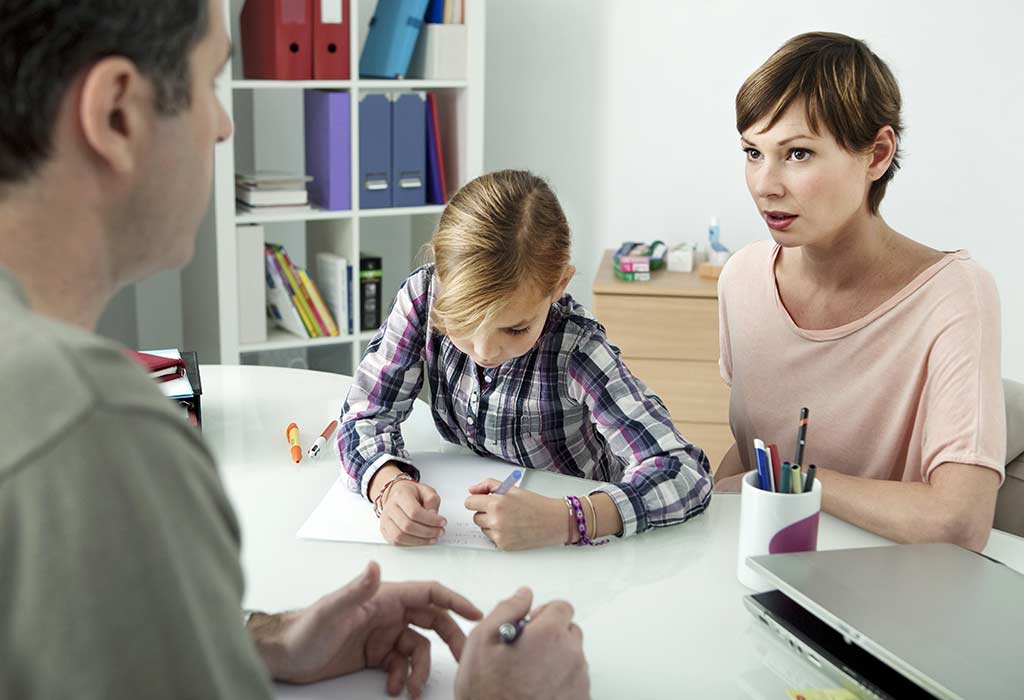
Bayley Scales of Infant and Toddler Development
Every kid develops and grows differently. Some kids show signs of developmental delays or behavioural disabilities as compared to other kids of their age. This makes parents anxious, and they start worrying. For the assessment of the infant’s development and to test their behavioural growth, Bayley Scales of Infant Development (BSID) is used by the doctors. The Bayley Developmental Scale is a widely used and highly regarded tool designed to assess the developmental functioning of infants and toddlers from the age of 1 month to 42 months. In this article, we’ll walk you through how the Bayley Scales of Infant Development work and what results they can reveal about a child’s development.
What Is Bayley Developmental Scale?
The Bayley Development Scale or the Bayley Scales of Infant & Toddler Development is a child assessment method to measure the development functioning of a child aged between 1 to 42 months. The assessment measures the development of motor, cognitive, social-economic, language, and adaptive behaviour in babies and young kids. The Bayley Development Scale involves a series of interactions and tasks between the examiner and the child. The tasks involve basic responses to complex responses from the child and the examiner observes the child during these tasks. It is used to tell about the current mental and motor developmental functioning and thereby assist in the diagnosis and treatment of the child (1).
Five Components of the Bayley Scales of Infant Development
There are five components of the Bayley Scales of Infant development test and the test or tasks take from 45 minutes to 1 hour to complete. After the completion of the tasks, the examiner is able to tell the parents about the development quotient of the child (2).
The Three Subtests
The three subtests of Bayley Scales of Infant Development are (3):
The Cognitive Scale: This measures the child’s cognitive ability such as engaging in pretend play, or look for fallen objects.
The Language Scale: This measures the ability of the child to understand and speak the language or follow instructions.
The Motor Scale: This measures the gross and fine motor abilities of the child.
Two Additional Tests
There are two additional tests of the Bayley Scales of Infant Development, which may or may not be administered varying from child to child. These are:
The Social-Emotional Scale: This measures the child’s social ability or the ability to engage socially with others and the ability to engage in age-appropriate play.
The Adaptive Behaviour Scale: This measures the level of development of everyday life skills of the child such as cooperating, following rules, or adapting to new situations.
How Does the Bayley Test Work?
The Bayley Developmental Test involves a series of tests and tasks during which the examiner observes and rates the child’s performance. Then the scores of all the tasks are totalled. These raw scores are compared to the already available table of scores of children of the same age to compare the child’s development to other children of the same age. Thus, the examiner is able to assess whether the child has developmental delays or not and their significance. This assessment is used by the child’s paediatrician to identify early signs of any neuro-development delays or disabilities and suggest a treatment. The Bayley test apart from testing development disorders is also used to test the child of autism and non-verbal learning disorders.
How to Prepare for the Test?
The examiner to prepare the parents and the child first explains the entire procedure and what will happen during the test to the parents. This is done so that the parents know what will happen beforehand and don’t question in between the test to divert the attention and refrain from talking to the child to avoid skewing the results. The non-involvement of the parents helps the examiner to establish a good rapport with the child during the procedure and get an accurate result.
Are There Any Limitations of the Bayley Test Results?
As the kids are young and have different development rates, so in most cases, the development delay might be temporary. So the Bayley scales of infant and toddler development interpretation should be taken as an assessment of the child’s current functioning. The age range for Bayley is 1 to 42 months, so a small number of kids may have developmental delays that continue to later years and diagnosed with development disability in school.
FAQs
1. Can the Bayley Scales diagnose developmental disorders?
While the Bayley Scales is not a diagnostic tool for specific disorders, it can help identify children who may be at risk for developmental delays or disorders. If the assessment reveals concerns, it can guide further diagnostic testing or interventions, leading to early support that can make a big difference in the child’s future development.
2. How long does the Bayley Scales assessment take?
The Bayley Scales assessment typically takes between 45 minutes to 1.5 hours, depending on the child’s age and the level of cooperation. The testing is divided into different sections for each developmental domain, with breaks if needed to ensure the child remains comfortable.
3. How often should the Bayley Scales be administered?
The Bayley Scales is typically used as a one-time assessment to evaluate a child’s development at a specific point in time. However, in cases where developmental concerns are identified, follow-up assessments may be recommended to track progress and determine if additional support is needed.
Most kids have dramatically different development rates, so there is no set age or development pattern. But if parents feel their child is not growing or developing properly, they should not hesitate to take the opinion of the child’s paediatrician. Early detection of any delay or disability in the child’s development results in better cure and proper treatment.
References/Resources:
1. National Library of Medicine – Bayley Scales Of Infant and Toddler Development
2. Institute of Myology – Bayley scale
3. American Physical Therapy Association – Bayley Scales of Infant and Toddler Development-III (ed 3) (Bayley-III)
Also Read:
Toddler Growth and Development Stages
Major Stages of Kid’s Development
Newborn Baby Growth and Development
Read more
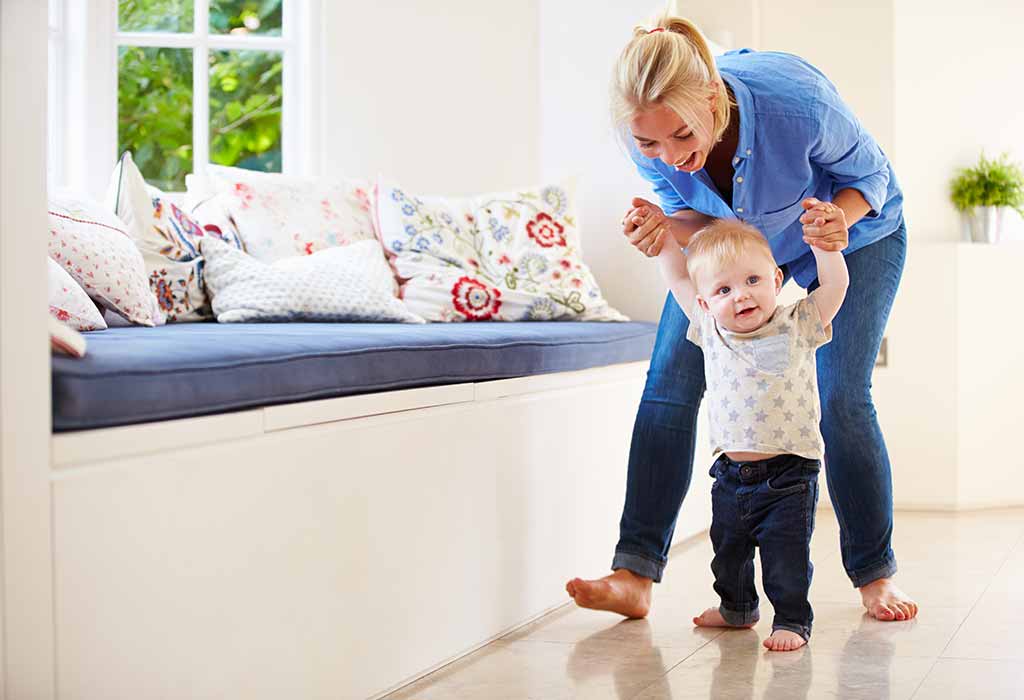
How to Assist Your Child in Developing Locomotor Skills
Locomotor skills start developing in babies as young as 11–12 months of age. Locomotor skills are an important part of the gross motor skills and should be developed from early on. If you have a little bundle of energy in your house, you must act soon to help develop locomotor skills in your child at the right time. Locomotor skills form the basis of sports and leisure activities that a child takes part in as he grows up, hence the importance of these skills cannot be emphasised enough. Let’s understand in detail what are locomotor skills and how you can develop these skills in your child.
Video : How to Help Your Child Develop Their Locomotor Skills
What Are Locomotor Skills?
There isn’t an exact definition of locomotor skills, but they can be defined as the basic ways of movement and coordination that form a foundation for the physical health of the kids. As mentioned above, locomotor skills are a part of gross motor skills which begin to develop in children after they turn one year of age. Walking is the first locomotor skill that develops in a baby, and soon others follow too.
Various Types of Locomotor Skills
The various types of locomotor skills that a child develops as he grows up are mentioned below:
1. Walking
Babies attempt to stand with the support of counters, tables, and chairs, or by holding their caregivers’ hands when they are about 10 months of age. It most likely will take a lot of effort to start standing or walking independently but children can be quite persistent when required.
2. Jumping
Kids love to jump. It’s something they learn instinctively and need not be taught. Expect your little one to perform that little dance of victory and jump of joy when he is happy. To avoid any inadvertent injury while jumping you may teach him the correct jumping technique.
3. Hopping
By the age of 4 years, most children learn to hop. Jumping up and down on one foot and by keeping one leg up in the air is known as hopping. After jumping, the next skill your little one might try is hopping. You can teach him how to hop if he doesn’t know it yet.
4. Running
At age of 18-24 months, a baby learns to run. Initially, the baby might lose the balance or fall forwards not able to control the momentum of the body. After a few attempts, your kids will start running. Kids find running to be a very enjoyable sport. However, it’s highly recommended that you ensure that your kids maintain correct posture while running. Children can be quite clumsy in the beginning so as parents you must keep an eye on your child when he starts running.
5. Galloping
Galloping can be a little challenging to teach but it’s worth the fun. Once your child is comfortable with jumping and hopping the next step is to teach galloping.
6. Leaping
Leaping is when one jumps forward or backwards with one leg outstretched in front, taking off one foot and landing on the other. Leaping requires some training and one also needs to consider some safety measures while teaching it to babies and kids. It is highly recommended that you let your child start practising leaping a soft mattress, to begin with.
7. Skipping
By age of 5 years, most children tend to learn how to skip a rope. A combination of walking, hopping, and a little bit of jumping is skipping without a rope. If using a skipping rope then it can be more chaotic. Practising skipping can be a little tricky for kids, but you can teach your child how to skip by showing him how to do it. Ask them to observe your feet and then the way you hold your rope as you skip.
8. Sliding
Galloping sideways is termed as sliding. A slide in the park is the most effective way to make the children understand the concept of sliding. You may also check out the toddler slides for your very young kids before they go for some actual stuff.
When Do Locomotor Skills Start Developing in Kids?
Locomotor skills start developing in kids from a very young age. Most children require some assistance and instructions to learn difficult physical skills. If you have toddlers and pre-schoolers, then make sure that they get enough opportunities to put these locomotor skills into action. If your child has turned one year of age, he should start walking independently by now. By the time 4 years, he should start running, hopping, or jumping. And, as he crosses 6-7 year mark, he should master more complicated skills like skipping, galloping, sliding, and leaping.
Games and Activities to Encourage the Development of Locomotor Skills
Children require proper instructions and assistance to master locomotor skills. As parents to a toddler, you must act at the right time to help develop these skills in him. In order to encourage your child to work on these skills, you need to engage him in games and activities that help in the development of locomotor skills.
Simple games like ‘Simon says’, a game in which everybody is supposed to follow the actions of their leader is a great way to encourage physical play that can help build these skills. While you are taking a stroll with your child in a park, you can show him different movements like walking on the tiptoe, swinging your arms, slowing down, speeding up or walking sideways, etc. You can play interesting games like relay race and hopscotch with your kids as these games require more locomotion skills. While going for brisk walks, you can teach them more challenging skills like galloping.
While at home, you can play various games that focus on developing locomotor skills. For instance, a game that requires your child to draw different blocks and hop on each of them until he reaches his destination can help him work on his locomotor skills. You can also encourage him to perform high knee skipping, marching, or rope skipping while at home. You can also tell your child to count how many hops he can do on one foot and then switching to the other. Another great game is to jump from one spot to another.
What Should Parents Do If They See Their Child Struggling With These Skills?
If you notice any concerns in the child’s physical development then you must consult a doctor, no doubt. But there are some other activities that you can try at home to develop your child’s locomotor skills:
1. Help Your Child Walk Skillfully and With Steadiness
Simple and easy techniques like placing a beanbag or some other small objects on the floor while walking will help him step over and walk away. You may also draw wavy lines with a piece of chalk on the floor and challenge your kids to follow them. Alternatively, you may also make paper footprints and ask him to follow it while inside or outside.
2. Work on Your Child’s Running Skills
Encourage games like racing, soccer, and other sports that involve running. Getting the kids with a goal in their mind like the winner gets their favourite toy or ice-cream can push him to work harder. However, make sure you don’t offer rewards always or else your child may start doing things only for rewards!
3. Help Your Child to Practise Skipping
You can encourage your little one to practise skipping by playing their favourite songs or music, the music and rhythm help children in following the step or hop pattern. For improving the balance, you may also have your child skip while touching a wall.
4. Teach Galloping Techniques
Using hula hoops around the waist is an interesting way to begin with. Get inside the hoop and ask your child to hold the hoop from behind. The child can hold the hoop and follow you as you gallop forward. This practice will help your child see how your feet are moving. Next, you can exchange the position and let him be the galloping horse.
5. Encourage Jumping at Home
Jumping is an excellent exercise that kids can indulge in. You can encourage your child to jump off the bed and in your arms. You may also make use of a small trampoline to show him how he can jump safely. Slowly you can move on to higher surfaces once he becomes accustomed to jumping. You may also use interesting pictures or portraits on the wall at a targeted spot and ask him to jump up and tag them.
Now you know everything there is to know about locomotor skills. If you’re parents to a toddler, make sure you encourage him to explore and work on his locomotor skills. In case he struggles with any locomotor skill, try the above techniques to help him master it. But always look after the safety of your child while he tries out different activities to master locomotor skills. You can make him wear a knee and elbow guard. And ensure that he plays in an area that is clear of any dangerous objects that has the potential of causing injuries.
Also Read:
Developing Co-operative Skills in Toddlers
Help Your Child To Develop Social Skills
How to Develop Reasoning Skills in Toddlers
Read more
Role of Social Referencing in Child's Overall Development
You may have noticed that every time your toddler comes across something new, be it an object or a person or a situation, he will look at you for your reaction or approval before he interacts with it. That is called social referencing, a tool that helps babies explore the world around them in a safe manner by relying on the caregiver’s cues. Social referencing in a child’s development holds a significant space as it gives the nod to the children to interact with their surroundings and regulate their emotions and behaviour accordingly. By better understanding how social referencing psychology works in babies, you can learn to use it to make them develop better.
What Is Social Referencing?
Going by the social referencing definition according to the American Psychological Association (APA), it is the process through which infants read their parents’ or caregivers’ responses to regulate their own responses towards persons, objects, and situations (1) (2). It is an important mechanism that allows infants to understand and explore the world around them (3).
The social expressions of parents towards their infants or toddlers influence their upbringing. For instance, if a child is playing in an amusement park, falls or gets hurt, he may look up at his parent’s expression to determine how intensely they should react. It’s also known that despite the event that upsets/hurts the child, the child will regulate their reaction by looking at the expression of the parent. Social referencing can take on many different forms starting from subtle cues in the form of facial expressions and gestures to major emotional outbursts or events. It can also occur anywhere such as home, school, playground, water parks, social gatherings and everywhere else.
Children at a very young age are quite vulnerable and impressionable without a baseline for how much they need to feel or express and this is where social referencing comes into play. As they learn from their parents, they would develop responses to situations based on how their social referencing has been. An overly reactive parent who exaggerates things will influence the child to become hyper-conscious about everything as they grow older and well into their adulthood while a parent who does the opposite will raise a child who is more relaxed and not overly sensitive.
According to a study, infants often look at their parent’s or caregiver’s faces when they expressed something positive, whereas, old infants looked at their parents when they expressed fearful or negative reactions (4).
Social Referencing in Different Stages of Child Development
Infants as young as six months use social referencing to understand their parents and surroundings and their development continues throughout childhood and even into adolescence. Here is how social and emotional development occurs as children grow.
During Infancy
From birth to 6 months of age, your baby can look at his hands and legs, suck his fingers and respond to your smiles and touch. He can also smile at the different sounds you make and try to find out where he is being touched.
From 6 months to one year of age, he would have learnt to express pleasure, unhappiness and even anger while also being able to distinguish between strangers and family members. He also responds to your gestures to please you and feels sadness when taken away from you.
After Infancy
Between the ages of 1 and 2 years, he takes your cues before approaching a new object or going to a stranger. Express happiness when you praise him for something good that he does and imitate your speech and actions.
Between the ages of 2 and 4 years old, your child will display different moods and interests and express some autonomy while still using social referencing for everything.
From 4 to 8 years of age, your child will learn to interact and play with other children and stay friendly. He will also learn to follow the rules and play as part of a team and express specific interest in activities or subjects.
Importance of Social Referencing in Your Child’s Development
One of the best examples of social referencing is when your child looks at something shiny on the ground and turns around for your reaction on whether it is okay for him to touch it or pick it up. Your frown or smile can reinforce his reaction to the new object and proceed to touch or avoid it. Similarly here is how social referencing plays a role in your child’s development:
Social referencing is a critical component of your child’s emotional development. Your child will start learning the meanings of different emotive expressions, the words and sounds that follow, and how to associate with things.
Social referencing is an important part of the decision making and will build your child’s confidence in your inputs. This mechanism develops into a process that forms the basis of their decision-making skills in life.
Social referencing in toddlers also lays down the foundation for complex thought and understanding the connotations of different emotive expressions. Although it is not obvious at that age, the foundation laid down at home, and other social environments will have a profound influence on the development of the child.
How Can Parents Use Social Referencing As a Teaching Tool for the Betterment of Their Children?
Whether you are aware of it or not, social referencing is an ongoing developmental process in children. Your emotional states, gestures, actions and the situations that come up in the family are constantly working as social referencing. By being aware of it and controlling your actions, it is possible to use it for your child’s benefit. Here is how:
Use plenty of facial expressions while interacting and playing with your child both when home and outside. Let your expressions be clear in the message that you are trying to convey, so he knows exactly how to map each expression to each emotion. This also applies to spontaneous events and things that catch you off guard and your untended, instinctive reaction.
Your behaviour around others and social situations also have a significant influence on what your child learns from it. If your tone of voice and body language doesn’t sync, it could confuse the child. For example, if you speak to a neighbour or another person with a smile and immediately change your expression after they leave or show annoyance, your child will instantly pick on the ambiguity and get confused.
Social referencing is very useful in building healthy eating habits in children. You can let your child know which foods are healthy and which should be consumed in moderation all through your expressions.
Your reactions towards people, events and situations will imprint strongly on your child. Therefore practice being mindful and calm even under pressure and try not to lose it hysterically. On the other hand, it’s also important to teach him that feeling hurt and crying and expressing sadness is also an important thing.
When Is Social Referencing Useful and When Is It Not?
Social referencing can occur both through negative and positive gestures and expressions. What is interesting is that as babies get older, negative reactions seem to have a stronger effect than positive ones. That makes sense when it comes to negative vs positive social referencing because as children get older, they tend to indulge in riskier activities which would make you react quickly and more dramatically. Therefore positive social referencing takes a backseat as more and safer activities become autonomous. You can also see this in social referencing during mealtime when positive reactions to certain foods will spike their interest in them. However, as they get older, no matter how often you portray a dish as delicious, it takes a while to get them to try it. On the other hand, even a small negative remark about food will remain in their memory for a long time influencing their choices.
FAQs
1. How does social referencing influence language development?
If you have ever seen children mimicking the style of speaking like a grandmother or an uncle, that means they have picked the social language cues from them. Social referencing plays a significant role in language development in children, as it helps children copy adults’ gestures, tones, and sounds, along with cues and affirmations. This, in turn, helps children’s understanding of language and the development of communication skills.
2. Is social referencing permanent?
Well, yes. Social referencing can continue for a very long time for an individual (5). However, there can be seen a subtle shift in the way social referencing happens in teenagehood and adulthood as cultural and social contexts change. For instance, instead of relying on direct cues from others, mature children make use of the subtle and indirect cues from others.
3. What does social referencing in toddlerhood look like?
During toddlerhood, children look for their caregiver’s expression before approaching a stranger or a strange object, or anything new to them. Whenever they make new friends, they show it to their caregivers. Similarly, when they see something new, they make expressions and look for their caregiver’s expressions for a better understanding of their emotions and behaviour.
Social referencing is an integral part of a child’s development. With everything that you have learnt about it, you can choose to express yourself better to mould your child’s emotional development as they grow older.
References/Resources:
1. APA Dictionary of Psychology; American Psycological Association; https://dictionary.apa.org/social-referencing
2. Stenberg. G, Forslund. T; Social Referencing; Encyclopedia of Infant and Early Childhood Development (Second Edition); https://www.sciencedirect.com/science/article/abs/pii/B9780128093245236493; 2020
3. Hertenstein. M. J; Social Referencing; In: Goldstein, S., Naglieri, J.A. (eds) Encyclopedia of Child Behavior and Development. Springer Link; https://link.springer.com/referenceworkentry/10.1007/978-0-387-79061-9_2704
4. Walden TA, Ogan TA. The development of social referencing. Child Dev.; PubMed; https://pubmed.ncbi.nlm.nih.gov/3168639/; October 1988
5. Walle. E. A, et al.; Social Referencing: Defining and Delineating a Basic Process of Emotion; UC Merced; https://idlab.ucmerced.edu/sites/idlab.ucmerced.edu/files/page/documents/walle_reschke_knothe_-_revision_2.pdf
Also Read:
Role of Parents in Child Development
Types of Play for Child Development
Impact of Working Parents on Child Development
Factors That Affect Growth and Development in Children
Read more
8 Month old baby Milestones and languages used for their communication
At 8 months, babies typically start crawling, experiment with self-feeding, and begin to understand object permanence. They also make more sounds and may start imitating sounds and gestures, while also exploring their world.
Here are some of the milestones that your 8-month-old baby may reach:
“At 8 months, babies typically start crawling, experiment with self-feeding, and begin to understand object permanence. They also make more sounds and may start imitating sounds and gestures, while also exploring their world.Expert NoteLaxman GadakhSEO
“ Here are some of the milestones that your 8-month-old baby may reach Laxman GadakhShare
Crawling. Your baby will likely start crawling soon after they’re able to sit well without support. For many babies this happens around 8 months, but don’t worry if your baby hasn’t started crawling yet. Some babies don’t crawl until they’re closer to 1, and some skip straight to walking.
Standing. Your baby may be practicing pulling themself up on furniture and standing while holding on. Some babies will start bouncing up and down in their cribs, using a crib rail for support. (Make sure to put the crib mattress on the lowest setting so your baby can’t fall out.) Standing is the next step on the journey toward walking – which for some babies starts as early as 9 months old!
Having a “lovey.” Soon, your baby may develop an attachment to a special blanket, toy, or stuffed animal. Don’t be concerned if your baby bonds with a “lovey” – in fact, it’s actually a healthy sign of development. Your baby is transitioning from depending on you as their main source of comfort to having another source of support. You can encourage your baby’s relationship with their lovey, but be sure to follow safe sleep practices and don’t put stuffed animals, blankets, or pillows in their crib.
Quick Tips:
Saying words. Babies will be babbling by 8 months old and some may have started saying words like “mama” and “dada.” True communication won’t kick in until they’re closer to 12 months. However, until then your baby is laying the foundation for language, so it’s important to keep talking and reading to your baby.
You May Also Like:
Increased motor control. Your baby may be able to pass things, such as a toy, smoothly from one hand to the other. They may also be skilled at grasping small items and getting them to their mouth. (Watch out!)
Pointing. Babies often start pointing between now and a year old, so watch out for this fun milestone. Encourage your baby by pointing to things and describing them, and if your baby points a finger at something, make sure to notice and respond.
Language and Communication:
Making Sounds: Babies may start making more sounds, including babbling and imitating sounds.
Understanding Words: They may start to understand simple words and phrases, and may even begin to respond to their name.
Other Important Milestones:
Exploring the World: Babies are actively exploring their surroundings using their senses.
Social Interaction: They may start to show more interest in social interactions and may enjoy playing games like peek-a-boo.
Sleep: 8-month-olds typically sleep about 14 hours in a 24-hour period.
Feeding:
Moral of the story Babies may start experimenting with self-feeding and may enjoy exploring different textures and flavors.
Self-Feeding:
Babies may start experimenting with self-feeding and may enjoy exploring different textures and flavors.
Variety of Foods:
They are likely eating a variety of solid foods in addition to breast milk or formula.
Avoid Choking Hazards:
It’s important to avoid foods that are choking hazards, such as whole grapes or nuts.
8-month-old weight and length
How much should an 8-month-old weigh? At this age, babies’ weights can vary quite a bit. Here are some averages:
Baby boys
Average weight for an 8-month-old: 18 pounds 15 oz
Average length for an 8-month-old: 27 3/4 inches
Baby girls
Average weight for an 8-month-old: 17 pounds 7 oz
Average length for an 8-month-old: 27 inches
YMYL
Read more
Sort By
 Latest
 Most Popular
 Trending
Please select atleast one Filter