

















.svg)
.svg)
.png)


Health
Suggested articles for you
World Polio Day 2026: Date, Significance, Themes, and More
Polio is a highly contagious and dangerous disease caused by a virus that attacks the nervous system. Such is the danger level of this disease that 1 in 200 infected people face the risk of permanent paralysis, according to the World Health Organization (WHO). Therefore, the eradication of polio was considered important on a global scale. This is why World Polio Day is an important occasion, observed to raise awareness for the polio vaccination and the eradication of polio.
When Is World Polio Day Observed?
World Polio Day is observed on the 24th of October every year.
History of World Polio Day
Established by Rotary International to commemorate the birth of Jonas Salk, the medical researcher who led the first team to develop a vaccine against polio, World Polio Day has been observed for over a decade now. He developed the inactivated poliovirus vaccine, which came into use in 1955, after which Albert Sabin developed the oral polio vaccine, which came into use in 1961.
The establishment of the Global Polio Eradication Initiative (GPEI) happened in 1988, launched by Rotary International and the WHO, when there were nearly 3,50,000 cases of polio across the world. As of date, several regions like the Americas, Europe, Southeast Asia, and Western Pacific have been declared polio-free. However, countries like Pakistan and Afghanistan still witness rare occurrences of this disease. World Polio Day, therefore, is the perfect occasion to spread awareness about the dangers of this disease and the immense need to vaccinate babies as per schedule so as to completely eradicate the virus completely.
Why Is World Polio Day Celebrated?
On this day, organisations around the world, such as Rotary International, WHO, and so on, celebrate the individuals and organisations involved in the global fight against polio and their efforts to eradicate the virus completely. Along with this celebratory note, it also seeks to spread awareness to people about the importance of curbing the virus and any potential outbreaks, as well as taking efforts to raise funds to achieve this objective.
How Is World Polio Day Celebrated Across the World?
On this day, worldwide, global organisations such as Rotary International and other similar clubs and organisations host several events and fund-raisers to raise awareness about polio. Events can be of various types, from rallies and walks to organising competitions in schools and clubs. It also goes to show that in the global fight to end polio, no member is too small to contribute!
World Polio Day – Themes of the Past Years
In the past few years, the themes of this occasion have been some of the following:
2022 – Stronger together to end polio globally
2023 – A healthier future for mothers and children
2024 – A Global Mission to Reach Every Child
2025 – End Polio: Every Child, Every Vaccine, Everywhere
This year, the overarching theme is “Ending polio for good” The theme urges to acknowledge the progress made so far in the struggle to eradicate polio in children and how they will continue to work together to give a healthier future for mothers and children. This way, mothers will be able to have a positive pregnancy experience, and children will reach their full developmental potential for a brighter and better future.
Some Important Facts About Polio
That polio is a deadly disease is well-understood. But these facts should help you understand the disease further and make you aware of the importance of polio eradication day.
Polio spreads mainly through infected faeces and contaminated water (due to infected human waste) and can even spread from person to person through a cough or sneeze.
While a person of any age can fall prey to the disease, it mainly affects people with compromised immune systems, pregnant women, and children under the age of 5.
There are two basic patterns of the disease – the first type is a minor illness called abortive poliomyelitis, which doesn’t affect the central nervous system (CNS). The second type is more critical, as it directly affects the CNS and may be paralytic or non-paralytic. In about 95% of the cases, the disease doesn’t show any symptoms.
Post-polio syndrome is also a part of the disease, whereby in some cases, polio survivors relapse after years of recovery.
In the case of those afflicted by paralysis, 5 to 10% of patients die if their breathing muscles also become immobilised.
Polio doesn’t have any cure, so prevention through vaccines is absolutely important, and babies need to be provided with the same per schedule. A single child being infected can put kids in all countries of the world at risk.
As of 2020, the Global Commission for the Certification of Poliomyelitis Eradication has declared that the wild poliovirus type 3 is globally eradicated.
Since polio has no cure, there is no other way to stop its spread than to immunise your baby at the earliest possible. So ensure that you protect your baby’s life by providing him with the vaccination on time, and in turn, do your part in reducing the transmission of this deadly virus as well!
Also Read:
Importance of Polio Vaccination
Read more




White Poop in Babies and Toddlers – What Does it Indicate?
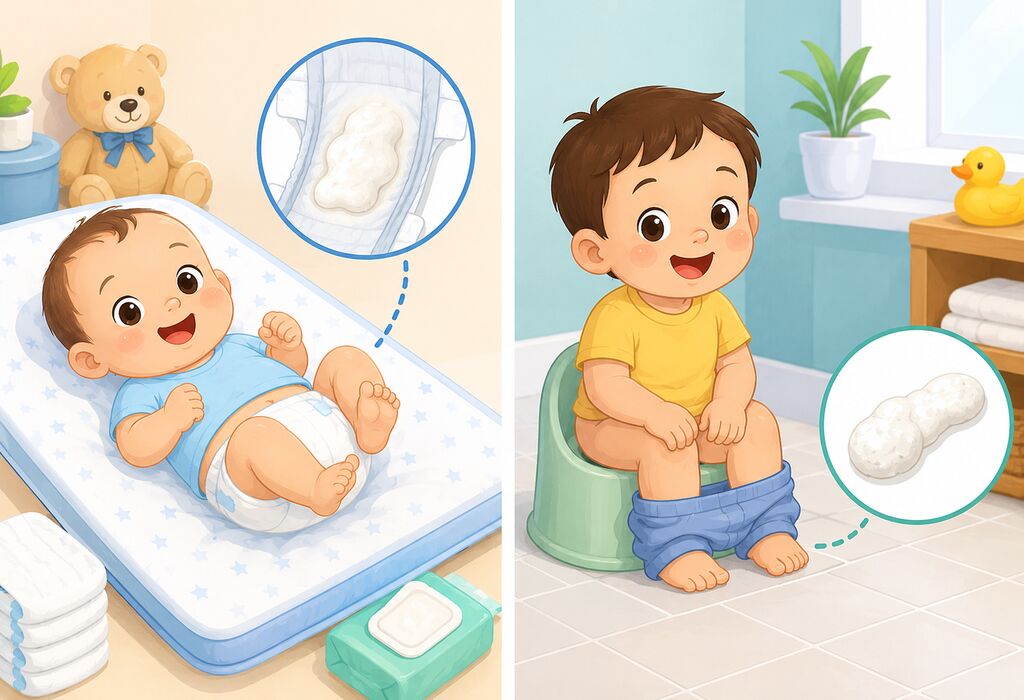
If your baby’s poop is white, it’s not something to brush off as a harmless change; it isn’t considered normal and may be a sign of a problem with bile flow that needs prompt medical attention. According to the American Academy of Pediatrics, pale, grey, or white stools in infants may be an early sign of biliary atresia or other liver diseases and warrant prompt medical evaluation (1). The same concern applies if you notice white poop in toddlers, as this unusual stool colour can also indicate an underlying digestive or liver-related issue. In this article, we’ll explain the possible causes, symptoms to watch for, when to seek medical care, and the treatment options available so you know exactly what to do next.
What Does White Poop Mean in Babies?
While changing your baby’s soiled diaper, if you notice white poop, you’ll worry if something is wrong with your baby’s health. If it’s a one-off occurrence, it is nothing to worry about. It could be as simple as undigested food, but parents should keep checking their baby’s stools. If the stool colours remain white, it could be due to the low production of bile (bile pigments give the yellow or brown colour to the stools) or a blockage that might be stopping bile from reaching the intestine (2). If your baby’s poop colour doesn’t change and continues to be white, you must check with a doctor.
What Are the Causes of White Poop in Babies?
Since most babies are on a liquid or semi-solid diet, the consistency of the poop might differ. However, the colour should be in the normal range for you to be sure of good health. White poop is never a good sign. There could be a range of causes, but here are some reasons you might find white poop in your infant’s bowels.
Medication could sometimes be the cause of white stools. Some antibiotics for ear infections can lead to white stools. Antacids that treat the baby’s reflux issues can also lead to white spots in baby poop.
White, along with some red poop, could be a sign of constipation.
An iron deficiency leads to white stool anaemia.
It could be a sign of a liver blockage in a more extreme situation. The liver produces bile which helps break down fats in the body. If the bile can’t be drained from the liver through the body’s normal functions, it can be a problem and scar liver cells. This leads to cirrhosis which could lead to liver failure (3).
Biliary Atresia is a rare but serious liver disease that affects infants. It occurs when the bile ducts are blocked or damaged, leading to a build-up of bile in the liver. One of the symptoms of biliary atresia is white or pale-coloured stools (4).
In breastfed babies, white stools can sometimes result from feeding exclusively on foremilk, the thinner, less fatty milk that comes at the beginning of a feed. This can lead to a lack of bile in the stool, resulting in a white or light-coloured appearance.
Some medications, such as antacids or antibiotics, can cause white or light-coloured baby stools. This is because they can affect the digestive system and reduce the amount of bile released into the stool.
Genetic disorders like cystic fibrosis affect the lungs, pancreas, and other organs. In infants with cystic fibrosis, white or pale stools can be a symptom of a blockage in the pancreatic duct, which can interfere with the digestion and absorption of fats (5).
Symptoms That May Accompany White Stools in Babies and Toddlers
If your baby’s stool colour is white, you’re bound to get concerned. If you notice it once or twice, it’s not a problem. It could be simply due to the medication that your baby might be on or white spots could be the remnants of the milk that your baby is consuming. But if you notice any of the following symptoms, it’s a cause of concern, and you must check with your child’s paediatrician.
Jaundice is a disease that is caused due to an improperly functioning liver. This disease leads to a slightly yellow tinge on the patient’s skin and eyes. Jaundice can be life-threatening and must be checked out by the doctor immediately (6).
Dark-coloured urine is never really a positive sign of good health. Darker urine points towards inconsistencies in the kidney, and liver region and should be checked out by a medical health professional.
Itchy skin could be an accompanying symptom, along with white stools.
Crying more than usual could be a sign of your baby’s discomfort. You must check with a paediatrician if your baby cries incessantly.
If your baby is not gaining or losing weight, it could be a sign that they are not absorbing nutrients properly. White stools can be a malabsorption symptom, leading to poor weight gain (7).
Changes in bowel movements can also be a sign of a digestive problem. White stools and diarrhoea or constipation may indicate a problem with the liver, bile ducts, or pancreas.
If your baby is experiencing abdominal pain, it could be a sign of a digestive problem. White stools and abdominal pain may indicate a blockage in the bile ducts or pancreas.
If your baby has a fever, it could be a sign of an infection. White stools, along with a fever, may indicate a bacterial or viral infection that is affecting the digestive system.
These symptoms and chalky poop could point towards something a bit more serious and may require medical intervention. White curds in baby poop in breastfed and formula-fed babies just point towards undigested fats from the milk that did not break down well.
White Stools in Children – Is It Dangerous?
The normal colour of poop in babies and infants should be yellow, brown, green or a mix of these. A doctor must be consulted immediately if parents spot that their 1-year-old baby’s poop colour is white. Home remedies should not be tried since it has to do with a serious internal problem that needs to be sorted out with the help of a medical professional. White stools can indicate some serious problems, so checking with a doctor is a must. The cause of white stools could be a tumour preventing bile from reaching the small intestine. Gallstones form in the bile can also block the bile. These conditions could further build a fever and exacerbate other symptoms (8). Gastrointestinal complications could lead to white poop as well. Hence, you must take your child to a doctor.
Serious Conditions That Can Happen in Baby & Toddlers Because of White Poop
White poop itself is not the complication, it’s often a warning sign that bile isn’t reaching the intestines as it should. If the underlying condition is not diagnosed and treated promptly, it can lead to serious health problems, especially in babies and young children. Here are some of the potential complications:
Liver damage or liver failure: Conditions such as biliary atresia or cholestasis can cause ongoing liver injury, eventually leading to scarring (cirrhosis) and liver failure if left untreated (9).
Poor growth and delayed development: Reduced bile flow affects the absorption of fats and fat-soluble vitamins (A, D, E, and K), increasing the risk of poor weight gain, stunted growth, and developmental delays.
Vitamin deficiencies: Inadequate absorption of essential nutrients can result in weakened immunity, vision problems, poor bone health, and an increased tendency to bleed.
Severe jaundice: Persistent bile blockage can worsen jaundice, causing yellowing of the skin and eyes and increasing the risk of complications if not managed promptly.
Need for a liver transplant: In severe or advanced cases, irreversible liver damage may make a liver transplant the only effective treatment option.
When Should You Not Get Worried About White Poop in Babies?
Children’s white stool can be a cause for concern, but it may not be a serious issue in some cases. Here are some situations in which you may not need to worry about white poop in your baby:
If your baby is less than a week old: In newborns, it’s common for their first few stools to be greenish-black, called meconium (10). After that, their poop may be yellow or brown. However, in some cases, their poop may appear white or pale. This newborn white poop is usually not a cause for concern, simply because their digestive system is still developing.
If your baby is formula-fed: If your baby is formula-fed, it’s possible for their poop to be a lighter colour, ranging from yellow to light brown. This is normal and may not be a cause for concern if your baby is otherwise healthy and gaining weight.
If your baby has just started eating solids: As they start to eat solid foods, their poop may change in colour and consistency. It’s common for their poop to be different shades of brown or green; occasionally, it may appear white or pale. This is usually not a cause for concern as long as your baby is healthy and happy.
If your baby has no other symptoms: If your baby’s poop is white or pale, but they have no other symptoms such as fever, abdominal pain, or poor weight gain, it may not be a serious issue. However, it’s always best to consult your healthcare provider to rule out potential health problems.
White Substance in Poop – What’s That?
It can be concerning if you notice white substances in your baby’s poop, but it’s not always a cause for alarm. Here are some possible causes of white substances in poop:
Undigested food: Sometimes, you may notice white substances in your baby’s poop that look like pieces of undigested food, such as rice or milk curds. This is usually not a cause for concern, as babies’ digestive systems are still developing and may not fully digest all types of food.
Mucus: Mucus is a sticky substance that lines the intestines and can sometimes be present in a baby’s poop. Mucus can appear white or yellowish in colour and can be caused by various factors, including infections or inflammation in the digestive tract (11).
Worms: In rare cases, white substances in poop can indicate the presence of worms, such as tapeworms. If you suspect your baby has worms, it’s important to consult with your healthcare provider for proper diagnosis and treatment.
Medication or supplements: Some medications or supplements, such as iron supplements or antacids, can cause white substances to appear in the stool. If you suspect a medication or supplement is causing this, speak with your healthcare provider for guidance.
Infections: In some cases, white substances in the stool can signify a bacterial or viral infection in the digestive tract. If your baby has other symptoms, such as fever or diarrhoea, seeking medical attention is important.
How to Treat White Poop in Babies?
Seeing white baby poop can be a concerning and alarming experience as a parent. Feeling worried and unsure about how to help your little one is natural. White poop in babies can be a symptom of various underlying health problems, ranging from minor issues to more serious conditions that require medical attention. In this context, being proactive and seeking prompt diagnosis and treatment is essential to help your baby feel better quickly. Here are some tips on treating white poop in kids to help ease your worries and get your baby back to good health.
Consult with your paediatrician: If you notice white poop in your baby, it’s important to contact your healthcare provider for further evaluation and treatment. They can help determine the underlying cause of the white poop and recommend appropriate treatment.
Adjust your baby’s diet: If your baby is formula-fed, your healthcare provider may recommend switching to a different type of formula. If your baby is eating solid foods, they may recommend eliminating certain foods or ingredients from their diet. Following their recommendations closely ensures your baby gets the proper nutrition.
Medications or supplements: If your baby has an underlying medical condition causing the white poop, your healthcare provider may prescribe medications or supplements to help treat the problem. It’s important to follow their instructions carefully and closely monitor your baby’s symptoms.
Surgical intervention: In rare cases, white poop in babies may require surgical intervention. For example, if there is a blockage in the bile ducts or pancreas, surgery may be necessary to remove the blockage.
When to Consult a Doctor?
If your baby’s poop colour is often white, you must check with a paediatrician immediately. While it could be due to a minor cause, it could also be due to serious problems mentioned in the above paragraph. So, see a doctor if you notice anything unusual.
FAQs
1. Which food causes white poop in babies?
While no specific food causes white poop in babies, certain types of formula or changes in diet can affect the colour of a baby’s stool. If you notice white substances in your baby’s stool, it’s vital to consult with your paediatrician for proper evaluation and diagnosis.
2. Why is your toddler poop clay-coloured?
Clay-coloured or pale stools in toddlers can indicate a problem with the liver, gallbladder, or pancreas. It can be caused by various factors, such as an obstruction in the bile ducts or liver disease. If you notice clay-coloured stools in your toddler, it’s important to consult with your doctor for accurate analysis.
3. Can white poop go away on its own?
It depends on the cause. If the stool appears white because of a temporary factor, it may resolve without treatment. However, persistent or repeatedly white stools should never be ignored, as they may indicate a condition that requires medical treatment.
For new parents, discussing their baby’s pooping habits is an everyday task. And if your baby’s poop colour is white, your discussions can leave you worried. But with proper information and your doctor’s guidance, it can be treated, and your little one will be healthy again!
Also Read:
Black Poop in Infants
Watery Stool in Newborns
Abnormal Poos and Wees In Babies
How Often Should your Newborn Baby Poop?
Read more
Chandipura Virus Infection – Symptoms, Causes, and Prevention
A relatively rare but potentially life-threatening infection, Chandipura virus (CHPV) primarily affects young children and can rapidly progress from a flu-like illness to severe encephalitis (brain inflammation). Chandipura virus is spread by infected sandflies, and has been linked to multiple outbreaks across the country. First identified in India, the virus has caused multiple outbreaks over the years. In July 2026, the virus resurfaced in Gujarat, where 7 children tested positive and 3 child deaths were reported, raising fresh public health concerns.
Since the infection can worsen within hours, parents should be aware of its symptoms, causes, transmission, and preventive measures. Keep reading to learn everything you need to know about Chandipura virus infection and how to protect your child from this potentially fatal disease.
Expert Says
“Clean environment and avoiding mosquito bites are the two most important factors to prevent this illness”
– Dr. Vandan H Kumar
What Is the Chandipura Virus?
Chandipura virus (CHPV) belongs to the genus Vesiculovirus of Rhabdoviridae family, similar to the rabies virus. It was first identified in the Chandipura village in nagpur India in 1965. It is a virus that causes severe encephalitis, an inflammation or swelling of the brain. While sandflies (the ones which are also the vectors for Kala Azar and Japanese encephalitis) mainly transmit the virus, there have been occasional reports suggesting that mosquitoes, specifically Aedes aegypti, might also play a role in transmission.
It is a significant health concern, particularly in India’s western, central, and southern regions, especially during the monsoon season. While the virus has been known since 1965, it gained significant attention due to several outbreaks in various areas of India (1).
Chandipura Virus Outbreak 2026
As of mid-July 2026, Gujarat has reported 7 laboratory-confirmed Chandipura virus cases out of 19 tested samples, with 3 child deaths. Health authorities are also investigating 27-32 suspected cases, primarily from Sabarkantha and Panchmahal districts.
Whom Does the Chandipura Virus Affect?
Chandipura virus primarily affects children, particularly those under the age of 15. While adults can also be infected, children are more susceptible to the severe neurological symptoms associated with the virus. Pregnant women are also at potential risk, as infections during pregnancy can pose additional health challenges, affecting the mother and the developing fetus (3).
Why Does It Mostly Affect Children?
Chandipura virus primarily affects children for several reasons:
1. Immune System Development
The immune systems of children are still developing, which makes them less capable of mounting a strong defence against new and emerging pathogens like the Chandipura virus.
2. Behaviour and Exposure
Children are more likely to play outside and engage in activities that increase their exposure to sandflies, the primary vectors of the virus. Their behaviour and close contact with the environment where sandflies breed heighten their risk of infection.
3. Lack of Immunity
Adults might have some level of immunity either due to past mild infections or repeated low-level exposure to the virus or related pathogens, whereas children, especially in areas where the virus is newly emerging, may lack such immunity.
How Is CHPV Transmitted?
Chandipura virus (CHPV) is primarily transmitted through the bite of infected sandflies, particularly the species Phlebotomus papatasi. These sandflies become carriers of the virus after feeding on an infected host’s blood, allowing the virus to replicate within them. When an infected sandfly bites a human, the virus is transmitted through the sandfly’s saliva into the human bloodstream.
Sand flies were considered to be responsible because they inhabit cracks in walls or home parts made up of sand or mud. Transmission is more common in rural and semi-urban areas, especially during the monsoon season when sandfly populations surge due to favourable breeding conditions (4).
Animal reservoirs: various mammals, including cattle, rodents, and bats, may act as reservoirs
Notably, there is no evidence to suggest that CHPV spreads directly from person to person, with the primary mode of transmission remaining through the bite of infected sandflies.
Is CHPV Contagious?
No, Chandipura virus (CHPV) is not contagious and does not spread from person to person through casual contact, coughing, or touching. The virus is primarily transmitted through the bite of infected sandflies, although mosquitoes and ticks may also play a role in its transmission.
Symptoms of Chandipura Virus
Chandipura virus (CHPV) infection can lead to severe and rapid-onset symptoms, particularly in children. Here are some of the key symptoms to watch for (2):
High Fever (102-106F)
Severe Headache
Vomiting
Persistent Weakness
Diarrhea
Seizures
Altered Mental Status
Coma (in severe cases)
The symptoms typically surface within 2-4 days after being bitten by an infected sandfly. Usually the disease has rapid Progression from mild symptoms to severe neurological manifestation within a short period. The fatality rate of Chandipura virus infection can be high, especially in children, with death within 48 -72 hours of onset of symptoms with some outbreaks reporting mortality rates of up to 50-75% (5) (7).
Diagnosis:
Since CHPV does not present with any specific clinical picture, it may not be possible to diagnose the disease simply on the basis of physical examination.
To diagnose Chandipura viral encephalitis cases, some serological, molecular, and tissue culture-based methods are available.
What Is the Treatment of the Chandipura Virus?
There is no specific antiviral treatment for Chandipura virus (CHPV). Management primarily focuses on supportive care to alleviate symptoms and prevent complications. In severe cases, hospitalisation may be required for close monitoring and care.
Treatment typically involves using medications to manage symptoms, such as fever and pain while maintaining adequate hydration and nutrition. Early diagnosis and prompt medical attention are essential for improving outcomes and effectively managing the disease (6).
How to Prevent Your Child From Getting the Chandipura Virus?
Chandipura virus prevention in children involves taking proactive measures to minimise exposure to the virus’s primary vector, sandflies. By implementing these measures, you can help reduce the risk of infection and safeguard your child’s health.
1. Use Insect Repellent
Apply insect repellent on your child’s exposed skin and clothing to protect them from sandfly bites. Choose an insect repellent with DEET, picaridin, or other effective ingredients (8).
2. Wear Protective Clothing
Dress your child in long pants, long-sleeved shirts, and socks, especially when sandflies are most active at dusk and dawn. Light-coloured clothing is preferable, as it is less attractive to sandflies.
3. Install Bed Nets
Bed nets treated with insecticide can provide additional protection while your child sleeps. Ensure that the net is tucked in properly and free of holes.
4. Keep Indoor Spaces Secure
Sand flies inhabit cracks in walls or home parts made up of sand or mud.
Identify sandfly breeding places: Breeding sites includes holes & crevices in wall,holes in trees, dark rooms , stable & store rooms.
Keep air and ventilation in houses. Cleaning of the collected water places and garbage control. To prevent sandflies from entering the home, make sure the doors and windows have screens.
5. Maintain Clean Surroundings
Remove standing water, keep the environment clean, and dispose of garbage properly to eliminate sandfly breeding sites around your home. Also, regularly clear vegetation and debris where sandflies might thrive (9).
6. Community Awareness and Action
Participate in community efforts to control sandfly populations, such as insecticide spraying and public health campaigns. Educating neighbours and local communities about preventive measures can help reduce the overall risk of Chandipura virus transmission.
What Are Doctors Saying About This Virus?
Experts emphasise the importance of vector control, hygiene, and awareness in combating the spread of the Chandipura virus (CHPV). Dr. Atul Goel from the Directorate General of Health Services and other health specialists highlight that comprehensive studies are essential to understanding the epidemiology and environmental factors contributing to CHPV outbreaks. They stress that reducing exposure to sandflies, the primary vector, and improving public health measures and community education efforts are essential (10).
When to Consult a Doctor?
Consult a doctor immediately if you or your child experiences:
Sudden high fever
Severe headache
Persistent vomiting
Drowsiness or unusual sleepiness
Confusion or altered mental state
Seizures (fits)
Loss of consciousness
FAQs
1. What actions has the government taken to address the Chandipura virus outbreak?
The government has implemented vector control programs to reduce mosquito populations and has conducted awareness campaigns to educate the public about prevention methods. Additionally, efforts are being made through health departments to monitor and manage outbreaks.
2. Are there any vaccination options available for the Chandipura virus disease?
Currently, no specific vaccine is available for the Chandipura virus. Prevention primarily relies on reducing mosquito exposure and following protective measures.
3. What should I do if my child shows symptoms of the Chandipura virus?
If your child exhibits a high fever, rash, or seizures, seek medical attention immediately. Early diagnosis is important to manage the disease effectively.
4. Does every sandfly bite cause Chandipura virus infection?
No. Only sandflies carrying the Chandipura virus can transmit the infection. Most sandfly bites do not result in CHPV infection.
5. Is Chandipura virus the same as Japanese Encephalitis?
No. Although both can cause encephalitis, they are caused by different viruses and are transmitted by different insect vectors. Chandipura virus is mainly spread by sandflies, while Japanese Encephalitis is transmitted by infected mosquitoes.
By implementing effective preventive measures and staying informed about the latest recommendations, you can significantly mitigate the risk of Chandipura vesiculovirus. Your efforts to stay informed and act make a big difference in keeping your child healthy and safe.
Also Read:
Cold vs Flu in Children
Dengue Fever in Kids
Malaria in Children
West Nile Virus in Kids
Chikungunya in Children
Zika Virus Infection in Kids
Rubella (German Measles) in Babies and Kids
Read more
Dengue in Infants and Toddlers – Causes, Symptoms, and Treatment
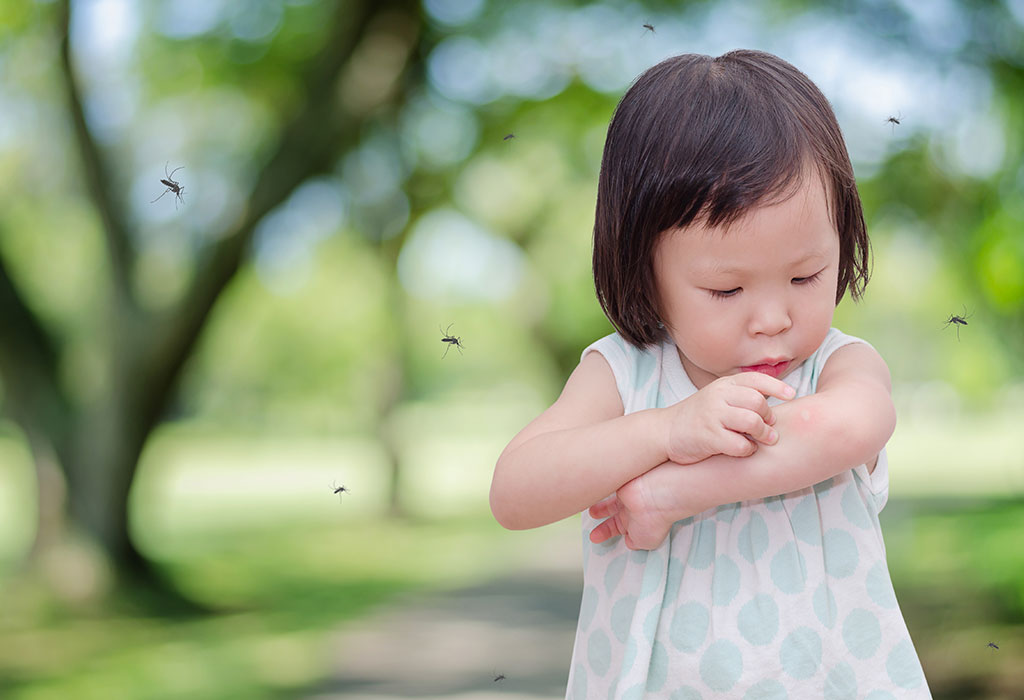
Babies are prone to various illnesses and diseases in the early stages of their lives. Most of them are taken care of by ensuring the diet is appropriate. Therefore, infants should have enough breastfeeding sessions, and older babies/toddlers should have a balanced diet of healthy, hygienic, home-cooked food. However, certain natural aspects, such as pests and insects, cannot always be controlled. Mosquitoes are the primary suspects of these; they find their way easily into our homes and cause havoc.
They are also responsible for causing many diseases, which can be quite harmful. Dengue in babies and toddlers is a mosquito-borne illness and a heavy concern to parents, which requires extra attention and care than regular fever and cough. In this article, we shall talk about dengue symptoms in babies and the causes and treatment options for babies and toddlers. Read on to know more.
What Is Dengue?
Dengue is a mosquito-borne viral disease that spreads through the bite of Aedes aegypti (a female mosquito) (1). The virus causes hemorrhagic dengue fever, headaches, nausea, dizziness, etc. (More about the symptoms in the article below). If not treated well, dengue can manifest in a severe form, which is quite fatal.
Dengue cases are widely known around the country. Infants under one year old have more chances of contracting dengue, which causes it to become severe.
What Is Hemorrhagic Dengue Fever?
When dengue is not treated well, it begins to manifest itself in the form of a fever, which lasts for about a week or so. During this period, the body undergoes a lot of conditions, such as mild, moderate or high fever, intense bleeding, difficulty in breathing, rashes under the skin, nosebleeds, cold, clammy skin, feeling of nausea and incessant vomiting. In some cases, the blood vessels may get damaged, and the platelets drop, which can be life-threatening (2). These are together termed as having contracted haemorrhagic dengue fever.
What Are the Different Stages of Dengue?
Dengue fever typically has three stages. It may be mild for some children and severe for others. Here is the detailed information on dengue’s three stages:
1. Febrile Phase
The febrile phase is the first stage of dengue that initiates with a high fever, which lasts up to 2-7 days. In this phase, the child experiences high fever, joint and muscle pain, vomiting, diarrhoea, and rashes.
If your baby is having bleeding gums and persistently vomiting and breathing heavily, then you should seek immediate medical attention without waiting any further.
2. Critical Phase
The critical phase is one step ahead of the febrile phase with severe dengue. In this phase, you may see some dengue symptoms subsiding along with a drop in the child’s body temperature. This is a critical period that requires observance of any severe complications like blood in the stool or vomit, extreme crankiness, excessive bleeding of the gums or nose, and heavy breathing after 24-48 hours of the initiation of dengue fever (3). In such cases, hospitalisation of the child is recommended to monitor the health of the baby closely.
3. Recovery Phase
In the recovery phase, the dengue fever symptoms start subsiding gradually and the child also starts recovering in observance. However, strict observance on the symptoms are required until the child recovers entirely.
What Causes Dengue and How Does It Spread?
As mentioned earlier, the variant of the mosquito that spreads the dengue virus is Aedes aegypti. This mosquito can be easily identified by the white or silver stripes/scales on its body. The scales resemble the stripes on a tiger; therefore, it is also called a female tiger mosquito. The mosquito transmits the virus to humans when it carries the virus and bites them to drink the blood.
One of the specific tendencies of these mosquitoes is their affinity for warm and humid climate, which provides them with the ability to breed easily. This is why the onset of monsoons and the innumerable puddles of water lead to breeding of these mosquitoes quickly and risk the spread of dengue. Another behaviour to be factored in is their tendency to feed and bite other humans in the daytime. Most of the mosquitoes from other variants get active towards the evening and night and begin biting then.
Dengue is not contagious among human beings since it can infect a person only when a mosquito carrying that virus ends up biting the person (1).
Symptoms of Dengue in Babies and Toddlers
We’ve already mentioned some dengue symptoms in infants in the article above, but here is a detailed list of symptoms you must look out for if you suspect your child could have dengue fever (4) (5).
Fever that appears suddenly and reaches high temperature very soon.
The eyes start hurting a lot, especially in the region behind the eyeballs.
Frequent headaches that are quite debilitating and severe.
Constant feeling of nausea and dizziness, leading to discomfort, too.
Frequent and incessant vomiting, which is sometimes even uncontrollable.
Increasing body aches that highly affect the muscles and joints.
The appearance of dengue rashes on babies following the fever.
Nosebleeds in mild quantities.
At times, babies can also experience bleeding in the gums.
Few babies may have trouble breathing, which may cause them to wheeze or breathe rapidly.
The discomfort and irritability caused by the fever and body aches.
Sick infants become fussy and lose their appetite.
Excessive sleepiness or difficulty waking
Cold hands and feet
Absence of urine for six hours
Once babies or toddlers show signs of Dengue, you need to deal with it a tad bit differently. It is highly recommended that you visit a paediatrician immediately to get the treatment started, but you must also know how to deal with the symptoms until a diagnosis is made. We will talk more about that below.
How to Deal With Symptoms of Dengue in Infants and Toddlers?
Intensely high temperature, body rashes, body aches, crying and vomiting are all strong signs of dengue. There are a few important things you must remember that can help you deal with the symptoms of dengue in your little one.
There is no specific cure for dengue, although there are a number of medications available that help get the fever down and manage nausea. If prescribed and taken in the recommended dosages, these medicines can consequently assist in taking care of dengue, too.
In any case, no medication that is meant for inflammations should be administered. They could further reduce the platelet count of your baby and result in a condition even more severe than before.
You must take your baby to the hospital immediately to get the diagnosis made and treatment started as soon as possible.
On that note, let’s take a look at how the diagnosis is made and what the possible treatment options are for dengue in babies and kids.
What Are the Complications of Dengue Fever in Babies and Toddlers?
In worse cases, dengue fever in infants and toddlers could cause severe complications, including (6):
Liver damage
Pneumonia
Febrile seizure (7)
Cardiomyopathy (heart disorders)
Diagnosis of Dengue
One of the first things the doctor will do is to undertake a blood test of the baby. Blood samples will be acquired and sent to the lab to check for infections.
The number of platelets in the blood is another marker for dengue. Any person contracting dengue suffers a huge drop in the platelet count that results in extreme weakness in the body.
If your baby has a fever, the temperature of the baby would also be noted. An extremely high temperature that rises very quickly is a strong sign of the presence of dengue.
The paediatrician might ask you to recall how the baby fell ill, and when did you first notice the temperature and how quickly it had risen.
The paediatrician might also ask you about the surrounding conditions of your home or if you’ve recently travelled to a place where the baby was exposed to mosquitoes.
Frequent vomiting could lead to dehydration. The paediatrician might recommend undertaking certain procedures to ensure it doesn’t cause further complications.
Dengue Fever Treatment for Babies and Toddlers
As mentioned before, there is no cure for Dengue. There are, however, multiple ways to reduce the symptoms, bring relief, and help the body fight the infection.
Taking enough rest is paramount. The body undergoes a lot of stress, and it needs enough rest to be able to recover. Frequent and incessant vomiting could lead to dehydration; thus, it is important for your child to remain hydrated (8). Therefore, the breastfeeding cycles will have to be increased for infants. For older babies, the fluid intake needs to be increased. In case your baby refuses to feed or is too weak to swallow food, the paediatrician might opt for intravenous nourishment alternatives to keep the electrolytic and hydration levels on point.
In order to combat fever, acetaminophen might be given. Consult a paediatrician before giving it to your baby, though. Also, stay away from administering any form of ibuprofen or aspirin (7). At times, even after the fever goes down, your baby might vomit incessantly. This could mean the onset of haemorrhagic dengue fever, and you must take your baby to the hospital immediately.
Tepid sponge baths using water at 85 to 90°F (29.4 to 32.2°C) also helps. It is not advised to avoid cold water as it could cause the child to shiver. Also, the American Academy of Pediatrics advises to strictly avoid using rubbing alcohol to treat fever in your child as it could be absorbed or inhaled by your infant and lead to severe conditions like coma (9).
Dengue can add to the stress levels as there is no specific cure on it. However, there are ways dengue can be prevented. Read below to know more.
How to Prevent Dengue?
The UNICEF recommends a few ways you can prevent dengue (10):
Mosquitoes that spread dengue breed in fresh and stagnant water; therefore, it is important to ensure that there is zero presence of any uncovered stored water bodies in your house or in the surroundings close to your home. This includes terraces, gardens, and even your washrooms.
Mosquito activity peaks 2 hours after sunrise and just before sunset. Children should avoid outdoor activity during peak mosquito hours.
Make use of mosquito repellents in the form of mats or vaporisers indoors to keep mosquitoes at bay. Using mosquito repellent creams and sprays might also be quite effective. Creams and sprays are perfect for keeping kids safe from mosquitoes when outdoors.
Playing around with dirt and mud can make the body attract mosquitoes even more since mosquitoes tend to hover around in moist areas. Advise your kids to avoid playing certain games/sports or clean up immediately to avoid attracting the mosquitoes.
Make sure your windows have a permanent mesh or make use of sliding mesh windows to prevent mosquitoes from entering the house.
Dress your children in clothes that cover their bodies completely.
Sleeping in beds that have mosquito nets is the best way to have an undisturbed and safe sleep.
When to Consult the Doctor
If you notice the following severe dehydration signs in your child, immediately consult a doctor or visit the emergency ward of the hospital (11):
Dry mouth, lips, and tongue
Extreme fatigue
Sunken eyes
Cold hands and feet
No tears while crying
Reduce urination
Sunken soft spot on the head
FAQs
1. Are mosquito repellents safe for babies and toddlers?
Some mosquito repellents are safe for babies and toddlers. Therefore, parents must be careful while purchasing a mosquito repellent. Repellents containing upto 30% DEET is safe for babies and children over two months, while repellents having Picaridin are safe for kids over 12 months of age (12).
2. Is dengue a recurring infection?
It is possible for an individual to get dengue infection again, three to four times, from various different dengue virus strains (5). Typically, the second or subsequent infection is caused by other strains of the dengue virus, and the following infections may be more serious than the first one.
3. Is there any vaccine available for dengue?
Currently, there is no vaccine for dengue licensed to be used for infants and toddlers.
4. Should I bathe my baby during dengue fever?
Heathcare professionals advise refraining from bathing babies or toddlers until the dengue fever comes down. Apparently, you can do the tepid sponge baths with lukewarm to cool water to bring down their fever temperature (11).
5. What are platelet counts, and why are they important in dengue?
Platelets help in blood clotting, and their levels often drop in dengue, increasing the risk of bleeding. Doctors monitor platelet counts closely during dengue to detect early signs of dengue hemorrhagic fever, a serious complication that may need hospitalisation.
Dengue can very quickly cause the health of a baby to deteriorate if left unchecked. With some simple measures, it is possible to prevent dengue to some extent. However, if your kid hasn’t been keeping well, keeping an open eye for signs of dengue and taking the right actions can help your baby heal faster.
References/Resources:
1. Cleveland Clinic – Dengue Fever
2. Mayo Clinic – Dengue fever
3. NHS – Dengue
4. REAN Foundation – Dengue Alert: How to Spot Dengue Symptoms in Infants
5. WHO – Dengue and severe dengue
6. StatPearls Publishing – Dengue Fever
7. MedlinePlus – Dengue fever
8. NORD – Dengue Fever
9. American Academy of Pediatrics – Treating Your Child’s Fever
10. UNICEF – Dengue: How to keep children safe
11. CDC – Manage Dengue in Infants
12. Nemours KidsHealth – Are Insect Repellents With DEET Safe for Kids?
Also Read:
Dengue in Children
Chikungunya in Kids
Home Remedies of Dengue and Malaria for Kids
Malaria in Children – Causes, Symptoms & Treatment
Read more
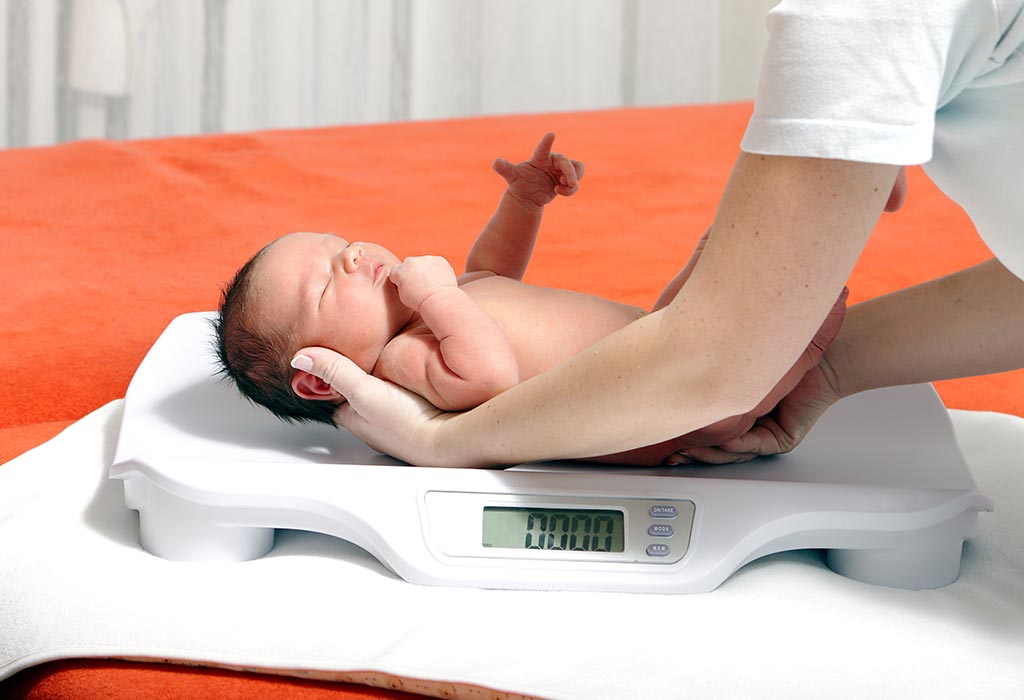
Newborn Baby Weight Gain – How Much Is Normal?
The most common way for one to understand the health of any being is growth. When our babies grow, it instils a comfort within us. Weight gain (along with height) becomes one of the key indicators of a newborn’s growth. Hence, it becomes important for us, as parents, to closely observe and analyse the weight gain.
Video: Newborn Baby Weight Gain – What’s Normal and What’s Not
Why Does Newborn Baby Weight Gain Matter?
Weight gain is consequential for an infant to achieve their milestones. Globally, paediatricians and health nurses prefer to keep babies under close observation for the first 24 hours. This is to determine the weight loss or gain of babies that will be a clear indication of their well-being. If the baby has low birth weight, parents are advised by the doctors to bring the child to the hospital for a weekly check-up. It is to make sure the child has is receiving enough nutrition to gain the right amount of weight.
Factors Contributing to Newborn’s Weight
Here are some of the factors that contribute to a newborn’s weight during his growth.
Factors that contribute to the weight of your baby extend much beyond birth: the race to which the baby belongs, if generally you or the other parent’s family have had large babies or small ones.
The genes of parents play a key role in the weight of the baby.
Your diet and sensitivity towards pregnancy may also affect the weight. For example, having severe sensitivity towards food during one of your trimesters might have affected the baby.
Unlike popular belief, research shows that younger mothers give birth to smaller babies while women in their 30s give birth to larger ones.
The month of the baby’s birth plays a crucial part in birth-weight. A premature baby will weigh lesser than a baby out on its D day with full nine months in the womb.
The first-borns tend to weigh less than the subsequent children.
Twins/triplets, or multiple births would have to divide nutrition among themselves in the womb, thus reducing the birth weight of every individual baby.
What Is the Average Weight of a Newborn?
The average weight of a newborn baby is between 2.5 kg and 3.5 kg. Anything less or more is uncommon and will be closely observed by the health nurse.
Normal Weight Loss for a Newborn in the Initial Days After Birth
It is natural for babies to lose weight after they are born. Doctors consider it normal for babies to lose up to 10% of their birth weight in the first few days of their life. However, they gain it back within ten days to two weeks. Breastfed babies and premature babies will take a longer time to come back to their birth weight.
Normal Weight Gain for a Newborn in the Initial Days After Birth
The average weight gain of these babies is 25 grams per day for the next three months of their life. This reduces in the next two quarters. The weight pattern shifts to 20 grams in the second quarter and 15 grams in the third respectively. The average gain of a newborn baby in a month is 175 to 200 grams per week. You can count it to be 700-800 (approx.) grams per month.
The baby is certified to double its weight in five or six months if enough nutrition has been received. A baby who feeds on the bottle may gain lesser than a breastfed baby.
Signs Your Newborn Is Getting Enough Feeding
Whether the baby is well fed or not is a perennial worry for parents. It is neither possible to run to the hospital to check the baby’s per day weight nor is it necessary to get a baby scale home. These signs should indicate if the baby is well fed:
Does not cry after a feed
Sleeps well
Your breasts feel lighter after a feed/ the bottle is empty after a feed
Feeds 8-12 times a day
Poops regularly
Poop is yellow
Heavy wet nappies (6-8 times a day) are good indicators
Per week weight gain
What Should You Do If Your Baby Is Not Gaining Enough Weight or Is Losing Too Much Weight?
Parents do tend to overthink and over worry sometimes. The baby is achieving growth milestones, sooner or later, is a true indicator of growth. It would mean that the baby is receiving enough food and nutrition for development. However, babies should not be losing more than 10 % of the birth weight in the initial days of life. This 10% weight loss is usually the loss of extra fluids that the baby had from the womb. And, newborn babies do not gain weight during the initial period of latching (breastfeeding) or learning to bottle feed. This happens since they may face difficulties to suck or have jaw coordination problems and may not drink enough thus losing some weight.
Managing Excess Weight Gain or Weight Loss in Your Newborn Baby
If you notice that your baby is losing too much weight or is gaining excess weight, you can try the following things to manage it.
Maintain feed: Decrease the feed to strike a balance. Make sure there are not more than three hours between a feed. Also, make sure the baby finishes and consumes the hindmilk which has the most amount of fat.
Coordination: If the baby is unable to latch on to the breast and thus receiving very less food then enrol for lactation classes. The classes will help both the mother and the baby coordinate and have a better breastfeeding experience. Another option is to substitute breastfeeding with a bottle.
Avoid the substitute: They comfort themselves from sucking on to water or pacifier, avoid it during meal times or in and around mealtimes.
Your nutrition and health: Make sure you have enough milk. Eat well and sleep right. A simple breast pump will show you how much milk you produce. In fact, research explains that pump also stimulates an increase in breast milk.
Avoiding abnormal gain: If you feel the baby is gaining weight abnormally and the doctor has prescribed that extra food intake is observed. Look for signs such as her turning her head away or, spitting the nipple out and stop feeding then and there.
When to Call a Doctor
There are a few common signs that may indicate an imbalance in development:
Lack of sleep
Has not come back to birth weight within the two weeks
Seems difficult to pacify and does not stop crying
If this causes worry, then please go to your health check-up nurse and observe along with them the schedule of the baby’s food habits and sleeping habits. The chances are that these may be the baby’s pattern and can be easily nurtured back to a better balance.
However, sometimes certain signs indicate a greater risk. Any abnormal weight loss in the coming weeks will lead to health problems such as Jaundice (hyperbilirubinemia) and low blood sugar (hypoglycemia).
If the weight loss is more than this or if you do not see an average increase in weight, you will see indicators such as:
Fewer wet nappies in the day
Dry lips or skin
Constantly irritated
Loose skin
The soft part of her head is sunken
Though birth weight is important, weight gain or loss is an indicator of the development. Babies will catch up sooner or later. If ever in doubt, take the advice of your paediatrician who will either help you out or assure you that all is fine.
It is the natural instinct for a parent to worry about unusual behaviour patterns of the baby. Weight loss is one of the worst nightmares among them. But, please remember to stay calm and consult your doctor before you come to conclusions. Do not miss any of the scheduled appointments even if all seems to be normal, and is in perfect balance. The best way to enjoy the experience of parenting is to stay calm, not overthink and be informed of the right things at the right time. There is no better formula than to keep calm and enjoy parenting!
Also Read: 15 Steps Of Newborn Baby Care Immediately After Birth
Read more
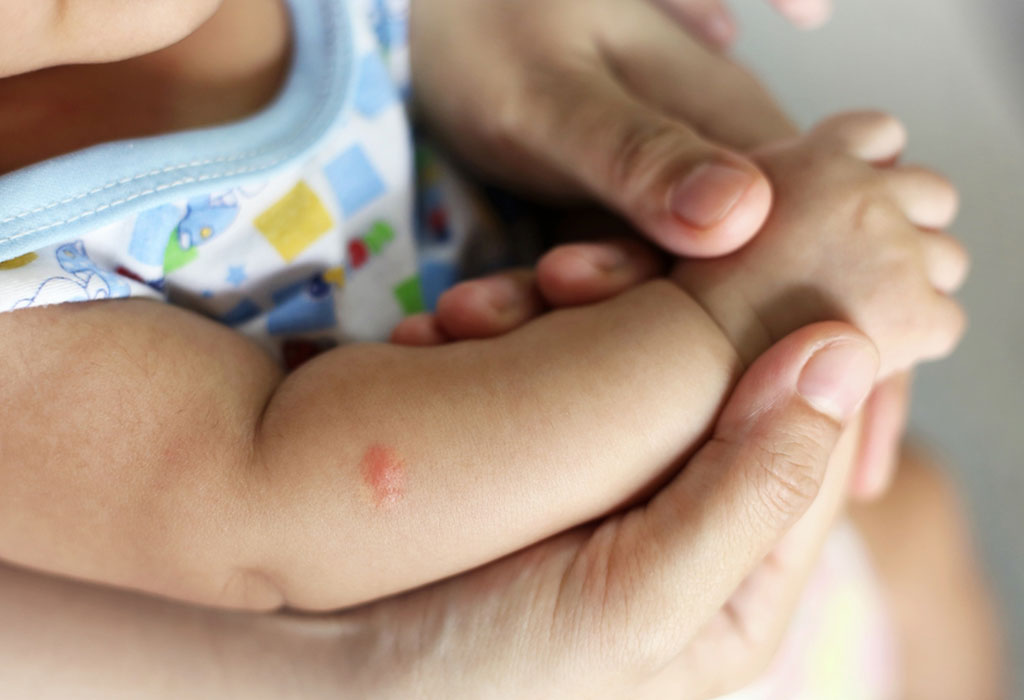
Mosquito Bites on Babies – Causes and Treatment
As adults, it gets hard to sleep and rest peacefully when there are mosquitoes looming around. Even more so, when it comes to your baby. The nights spent warding off the mosquitoes buzzing around your baby aren’t easily forgotten. Babies are easy targets for these tiny blood-sucking insects. It can be a painful affair, both for yourself and the little one, as you will need to stay up and soothe your crying baby. As your baby’s skin is sensitive, it is essential to know if any remedies you are using are safe for him. Keep reading for everything you need to know about identifying mosquito bites on your baby, treating them with home remedies, and preventing more bites in the future.
Video: How to Prevent Mosquito Bites on Babies (Plus 5 Home Remedies to Treat)
Causes of Mosquito Bites
Babies are unprepared to deal with mosquitoes and, hence, become attractive targets for them. Here’s why your infant may display mosquito bites all over his body:
1. Unclean Environment
Stagnant water and over-flowing/open garbage cans attract mosquitoes. If these are commonly found in your locality, your baby is at risk of mosquito bites.
2. Exposed Skin
When you dress up your baby in short pants/nappies and sleeveless T-shirts, he becomes an easy target for mosquitoes.
3. Dampness
Wet towels and clothes, leaking roofs and dampness are an invitation to mosquitoes and should be avoided when there’s a tiny one at home.
4. Uncovered Food Items
The smell of food can also attract a scourge of mosquitoes. You should maintain hygiene when you have a baby at home.
5. Perfumed Lotions or Creams
If you’ve stocked baby oils, lotions and creams in your baby’s bedroom, that might be one of the causes of mosquito bites. Perfumed powders should be avoided too.
6. Sweat
Mosquitoes are attracted to sweat odour and its warmth. If you find your baby sweating, use a soft towel to wipe it off. Do not allow the sweat to settle on your tiny one’s body.
7. Water-Based Decorations
Fancy waterfalls, flashing lights and gurgling sounds may give your home a unique look, but are breeding grounds for mosquitoes. Your innocent baby can become an easy target for such home-grown mosquitoes.
How To Identify Mosquito Bites on Your Infant?
If you notice any of these symptoms, it means that your infant has been bitten by mosquitoes.
Tiny red bumps
Swollen reddish areas
Dark spots
Baby scratching or crying without any noticeable reason
Raised skin with a prominent white centre and a red spot
Complications of Mosquito Bites in Babies
Although the effects of mosquito bites fade away in a few hours, your baby might experience certain complications in rare cases. Here are some possible complications, in which case you should consult a doctor.
1. Infection
If your baby is older and able to scratch the bites, doing so might cause an infection. One of the main symptoms of an infection is fever, so keep a watch out for an increase in body temperature. You may also notice some blisters in the area of the bite, which indicate infection.
2. Diseases
Some mosquitoes can be carriers of diseases such as malaria or dengue. If these mosquitoes bite your baby, they might transfer the virus. Keep a watch out for symptoms like fever, weakness, and vommiting in your little one, if he has been bitten by mosquitoes.
How To Treat Mosquito Bites on Your Baby?
Try these effective mosquito bite remedies on your baby to heal his skin:
Applying ice brings the itching and swelling under control.
Soothing calamine lotion is also a quick and easy remedy for mosquito bites.
Prevent your baby from scratching the itchy areas.
Home Remedies for Mosquito Bites
If you are looking to treat mosquito bites on babies, a home remedy is a safe solution. These remedies for infant mosquito bite relief are effective and don’t have any side effects. The ingredients needed are available in your kitchen itself!
Lemon – Lemon has excellent anti-inflammatory and anaesthetic properties. This makes it one of the best home remedies available. Cut a lemon into two and apply directly over the bite. You can also use fresh lemon juice for application on the skin.
Garlic – Garlic is a beautiful soothing balm for itchiness and swelling after bites. It helps the swelling to reduce, and the harsh odour keeps mosquitoes away from your helpless baby. Crush garlic and rub it gently over the bite. Clean it with a damp cloth after a few minutes.
Baking Soda – This inexpensive and effective method for curing mosquito bites in babies is highly popular amongst mothers. Baking soda can quickly restore the pH level and helps in reducing itching. Dissolve one teaspoon of baking soda in a cupful of water. Dip a soft towel in it and place it on the bitten areas for 10 minutes.
Ice – Ice is helpful in preventing inflammation and also keeps the bite from affecting nearby areas. Keep a few ice cubes in a clean, soft cloth and dab it on the skin repeatedly. Do not hold it over your baby’s sensitive skin for long as it could cause some discomfort. This simple yet effective treatment heals the condition quickly.
Salt – Clean the skin area with sea salt and water for quick relief. Like lemons, salt is anti-inflammatory and proves to be an effective home-based remedy for mosquito bites. Its easy availability makes it a quick solution to insect bites.
Aloe Vera – This is a natural antiseptic, and its gel is a great reliever for mosquito bites on babies. Keep the gel in the refrigerator for a few minutes and then apply over the affected area. It will reduce the itchiness, swelling and pain due to the mosquito bite.
Honey – Honey finds a lot of applications in the world of home remedies. Since it is anti-bacterial and anti-inflammatory, honey soothes the mosquito bites and keeps inflammation under control.
Prevention
You may wonder how to prevent mosquito bites on babies, to ensure your baby does not suffer and can sleep peacefully. Since prevention is always better than cure, take the following measures to prevent your baby from mosquito bites.
1. Cover With Mosquito Nets
Spread a fine-mesh mosquito net over your baby’s crib and car seat. This protects your baby’s skin from coming in contact with these terrible insects.
2. Keep Your Baby Covered
You should always keep your baby’s arms and legs covered with full-sleeved clothing, especially during the monsoon.
3. Use Insect Repellents
Never apply insect repellents directly onto your baby’s skin. Use them on your baby’s clothes instead. Mosquito repellents consist of DEET, which is unsafe for babies younger than two years.
4. Keep Your Child Away From Water Bodies
Accumulated water and woody areas are the ideal breeding grounds for mosquitoes. When you take your baby out for a stroll, avoid such places.
5. Invest in Window Screens
Cover the windows with nets or screens. This will prevent the mosquitoes from entering your home. You can also turn on a table fan to drive the mosquitoes away.
6. Keep the Doors Closed
Keeping the doors and windows closed once it turns dark can do a lot to protect your baby from mosquito bites.
7. Pay Attention to the Colours
As mosquitoes tend to be attracted to dark colours like navy and black, it makes sense to clothe your infant in light-coloured clothing. You should check if your baby’s room has ultraviolet, blue or fluorescent bulbs and replace them.
When Should You Call the Doctor?
Mosquitoes are effective carriers of various diseases and should be kept away from infants. Your baby will need immediate medical attention if you notice any of the symptoms mentioned below:
Lesions, inflammation and red patches on your baby’s skin
Wheezing and a swollen throat are indicators of anaphylaxis which can turn into a life-threatening condition
Vomiting and nausea
Heavy breathing and reactions in other parts of the body
Pain on or around the affected area
Reduced sensitivity to light
Swollen lips
Swelling around the neck
Enlarged bitten area that contains pus
Fever and chills
FAQs
1. How Long Does the Bite of a Mosquito Last on a Baby?
Mosquito bites can leave bumps on the baby’s skin that last upto a week. This is normal and not a reason to worry. However, if you notice other symptoms such as fever or pain, consult a doctor immediately.
2. What Ointment is Effective Against Mosquito Bites in Babies?
Calamine lotion or hydrocortisone cream will help provide some relief to your baby and ease inflammation and itching. It is always best to consult your doctor before applying these ointments to ensure they are safe for your little one.
It’s not possible to keep mosquitoes at bay at all times. However, the chances of mosquito bites can be minimised. When your baby is sleeping or playing, keep a close watch on the surroundings. Vigilance is all that is needed to keep your home mosquito-free.
References/Resources:
1. Mosquito Bite; American Academy of Pediatrics; https://www.healthychildren.org/English/tips-tools/symptom-checker/Pages/symptomviewer.aspx?symptom=Mosquito+Bite
2. Protect your infant from dengue; Centers for Disease Control and Prevention; https://www.cdc.gov/dengue/resources/educationmaterials_pdfs/15_261427-C_Seda_508_Update_Protect_your_infant_from_dengue.pdf
3. Mosquito Bites; Cleveland Clinic; https://my.clevelandclinic.org/health/diseases/17695-mosquito-bites#symptoms-and-causes; October 2021
4. Mosquito Bite Symptoms and Treatment; Centers for Disease Control and Prevention; https://www.cdc.gov/mosquitoes/mosquito-bites/symptoms.html; May 2023
5. Insect bites and stings; NHS; https://www.nhs.uk/conditions/insect-bites-and-stings/; June 2023
Also Read:
Chikungunya in Children
Bed Bug Bites on Babies and Kids
Homemade Insect & Mosquito Repellent for Babies
Read more
8 Best Baby Oil for Massage
We’ve all heard that massaging your baby with oil is good for his development. But, have you ever wondered how these oils actually help the baby, and which ones are the most suitable for your baby’s sensitive skin? Selecting the right massage oil for your baby is essential for their skin’s health and overall well-being. With numerous baby massage oil options available, it’s crucial to make an informed choice. This article explores various baby massage oils, highlighting their benefits and considerations. Discover which oil aligns best with your child’s skin type and preferences, ensuring a soothing and nourishing experience during these precious moments of bonding.
Benefits of an Oil Massage for Your Baby
There are various benefits of an oil massage for a newborn baby:
It makes your baby feel secure and safe, reduces crying, regulates breathing, and keeps him warm.
It improves blood circulation to the hands and legs.
Massages help make digestion and bowel movements easier. This is especially beneficial for colicky babies.
It relaxes your baby and makes him less anxious.
It can regulate the baby’s sleeping pattern.
In premature babies, massages give amazing results. They have shown to boost weight gain, stabilise heart rate, and increase brain activity.
Which Are the Best Oils for Your Baby’s Massage?
Although many types of oils are useful for your infant’s skin, season-specific oils keep him happy all day long.
Oils That Are Good for Your Baby in Summer
1. Coconut Oil
Coconut oil should be used in summer as it has a cooling effect, is light in texture, and is easily absorbed into the skin. Being anti-fungal and anti-bacterial, you can rest assured that coconut oil is great for your baby’s skin. You can use cold-pressed virgin coconut oil.
2. Sesame Oil
Sesame oil is light, and keeps your baby comfortable. This is the best baby massage oil that helps your little one develop strong bones.
Oils That Are Good for Your Baby in Winter
1. Mustard Oil
Mustard oil is very beneficial during the winter months. However, you should use mustard oil in combination with other carrier oils. A carrier oil is used to dilute a concentrated essential oil, so that it can be applied on the skin without the fear of side effects.
2. Olive Oil
Olive oil for baby massage is a popular choice among mothers. However, don’t use the oil if your baby has sensitive skin or has skin problems.
3. Almond Oil
Almond oil can be used in any season, as it’s rich in vitamin E. It also smells great, and makes your baby’s skin soft and supple. It is recommended that you use only pure almond oil for your baby’s massage.
Which Massage Oils Can Be Used for Babies With Dry and Sensitive Skin?
Any vegetable oil that is rich in polyunsaturated oils is the best oil for baby skin. These oils have a high content of linoleic acid, which is great for your baby. Some vegetable oils that fit this bill are:
1. Chamomile Oil
Chamomile is a good choice if your baby has sensitive skin or skin rashes. This oil can help with colic and ensure your baby gets sound sleep.
2. Tea Tree Oil
This natural oil is well-known for its antiseptic properties. You can mix a few drops of tea tree oil with a carrier oil, and use it on your baby’s skin.
3. Calendula Oil
Calendula oil is also an essential oil that has a soothing effect on your baby’s skin, with a mild smell that doesn’t irritate your baby’s nose.
4. Sunflower Oil
This oil is rich in vitamin E and can help improve the skin’s natural barrier function. Look for a high-quality, organic, and cold-pressed version.
For whichever oil you choose, do a patch test on your baby first. Apply a small amount of oil on your baby’s skin, and observe how it reacts. If you don’t see a reaction in three hours, then you can safely use that particular oil.
How to Choose the Right Oil for Your Baby’s Massage?
Follow these tips before you settle on a specific oil for your baby’s massage time.
Ask your paediatrician for the oils that will suit your baby’s skin type.
Use products specially formulated for babies. Products made for adults’ skin aren’t advisable for use, as they can cause harm to the baby’s delicate skin.
Don’t use oils that have a strong fragrance. Food-grade oils are the right choice, as they’re safe even if your baby licks it off his skin.
Essential oils need to be diluted with a carrier oil before application.
Avoid using mineral oils for your baby’s massage.
Which Oils Are Bad for Your Baby’s Skin?
If your baby dry or sensitive skin or eczema, avoid using mustard oil, clarified butter, and olive oil. These oils are high in a substance called oleic acid. This substance is said to make the top layers of your baby’s skin more permeable. This, in turn, makes the skin drier.
Things You Should Do Before Starting With a Massage
Creating a suitable environment is as important as the massage and the massage oil. This is how you can prep up the room before you start massaging your little one:
Shut the doors and windows. Put your pet, if any, in another room. Put your phone on silent mode.
Set the room temperature to around 24 degrees Celsius.
Play soft and relaxing music.
Lay your baby on a towel or changing mat.
Have at hand the massage oil bottle, hand towels, a change of clothes for both, and a diaper bag.
Tips to Keep in Mind While Massaging Your Baby
Here are a few points you should keep in mind while giving your infant a massage:
Most babies fall asleep after a massage, so ensure that massage time precedes nap time.
Massage your baby only if he likes it.
Don’t apply too much pressure while massaging your baby.
Test the temperature of the oil before using it on your little one. The oil should be neither too cold nor too hot.
Ensure that your hands are warm, clean, and dry.
Use cold-pressed oils, as these are neither refined nor have any additives.
Learn the techniques for massaging your baby. You can ask a trusted elder in your family, or watch videos online on the same.
Avoid storing large quantities of oil, as it may turn rancid.
Check the expiry date on the oil bottle before buying it.
Do not put oil in the nose and ears.
FAQs
1. Can I Apply Oil on My Baby in Hot and Humid Weather?
You can give an oil massage in hot and humid weather, provided the oil is applied before bath time and rinsed off properly after. This will make the baby comfortable.
2. Should I Oil My Baby Before or After Bath?
In India, the traditional oil massage is followed by a bath. This works well for heavier oils that leave a thick residue that can be washed off.
3. Which Oil Is Best for Baby Massage During Monsoon?
Opt for a lightweight baby oil for massage. A nourishing oil that is hypoallergenic for babies in the rainy season. Given the uniqueness of each baby’s skin, select an oil that aligns with your baby’s specific needs and preferences.
Massaging your baby with oil is one of the oldest practices in India. There are many benefits of massaging your baby with oil; one of the best is that it is an unbeatable bonding experience with your baby. Babies crave their mother’s touch, and this is the perfect opportunity to increase the health and development of your baby. Use oils according to season, and make sure you use pure oil, as your baby’s skin is very delicate. Do not hesitate to talk to your doctor about any concerns you have, and get approvals from your doctor regarding the best oil for baby massage.
References/Resources:
1. Chemicals in lavender and tea tree oil appear to be hormone disruptors; endocrine.org; https://www.endocrine.org/news-and-advocacy/news-room/2018/chemicals-in-lavender-and-tea-tree-oil-appear-to-be-hormone-disruptors
2. Baby massage: tips and benefits; nct.org.uk; https://www.nct.org.uk/baby-toddler/everyday-care/baby-massage-tips-and-benefits
3. The many benefits of infant massage; chrichmond.org; https://www.chrichmond.org/blog/the-many-benefits-of-infant-massage
4. Baby massage; pregnancybirthbaby.org.au; https://www.pregnancybirthbaby.org.au/baby-massage
5. Infant Massage: Benefits and Techniques; lancastergeneralhealth.org; https://www.lancastergeneralhealth.org/health-hub-home/motherhood/the-first-year/infant-massage-benefits-and-techniques
6. Baby Massage & Its Benefits; mypositiveparenting.org; https://mypositiveparenting.org/2021/12/22/baby-massage-and-its-benefits/
7. Best Massage Oil for Babies in Summer: These Oils Will Keep Your Baby Comfortable During The Summer; gracefultouch.org; https://gracefultouch.org/latest/featured/summertime-babies-massage-oil/
Also Read:
Using Grapeseed Oil for Infant
Best Massage Oils for Baby
Benefits of Argan Oil for Babies
Read more
16 Best Home Remedies for Blocked Nose in Infants
Babies cannot fight most minor ailments like a cold by themselves. And, if they have a blocked nose, they can become cranky and uncomfortable. Either way, a cold and a blocked nose will give both of you sleepless nights. Most parents would rush their little one to a paediatrician; however, some may not want to consult one thinking it is just a cold. But, you must know that for babies, the level of discomfort is way too high than what it is for the grownups. You may try some home remedies to soothe the cold and clear the congestion so that your little one can breathe and sleep properly. Read on to learn about home remedies for blocked nose in babies.
Is It Normal for Infants to Have a Blocked Nose?
Yes, it is normal for infants to experience a blocked nose. Nasal congestion in infants can be caused by factors such as dry air, exposure to irritants, or a common cold. It is important to keep their nasal passages clear, use a humidifier, and seek medical advice if there are concerns about their breathing or if symptoms persist.
What Are the Causes of Blocked Nose in Babies?
A blocked nose in babies is a common occurrence and can be caused by various factors. Understanding the potential causes helps parents and caregivers address the issue effectively. Here are some common reasons why infants may experience a blocked nose:
Dry Air: The air in the environment may be too dry, leading to nasal congestion in babies.
Irritants: Exposure to smoke, dust, or strong odors can irritate the nasal passages and result in congestion.
Viral Infections: Common cold viruses can cause nasal congestion in infants.
Teething: The process of teething may also contribute to nasal congestion.
Allergies: Allergic reactions to certain substances, such as pollen or pet dander, can lead to a blocked nose.
Anatomical Factors: In some cases, anatomical factors like small nasal passages can contribute to nasal congestion in babies.
Natural Remedies for Blocked Nose in Infants
In India, many parents resort to home remedies as they are not only inexpensive but also safe, unlike antibiotics (which may have side effects) and over-the-counter medicines (which should not be given to infants). Here are some of the best home remedies for nose congestion in infants.
1. Breastmilk
Focus on breastfeeding your baby. Breast milk has essential nutrients and antibodies that develop and strengthen your baby’s immune system. A good immune system will help your baby fight against a cold and cough. You can also put a few drops of breast milk into your baby’s nose to open up the nasal passage.
2. Nasal Drops
You can make nasal drops for your baby at home. To 8 teaspoons of water, add ½ a teaspoon of salt and mix well with a sterilised spoon. Pour a few drops into your baby’s nostrils once the solution cools down.
3. Elevating the Head
Elevating your baby’s head with the help of a pillow helps the mucus flow out, thereby opening up the nasal passage.
4. Hydration
Keeping your baby hydrated is important, more so when she’s down with a cold. Fluids dilute the mucus and relieve stuffiness in the nose. You can also feed warm and unsweetened apple juice and chamomile tea without honey if she’s older than 6 months.
5. Chicken Soup
Clear chicken soup is another useful home remedy for a cough and cold. Chicken contains anti-inflammatory properties that clear up the nasal passage as well as improve your baby’s immunity.
6. Indirect Steam
In case the nasal congestion is severe, turn on the shower and let the hot water create steam in the restroom. Then, take your baby into the bathroom for a few minutes. You can also give him a bath with warm water.
7. Nasal Aspirator
A nasal aspirator can do wonders for a stuffy nose. Just squeeze the air out of the aspirator and gently insert the tip into your baby’s nostril. Then slowly release the bulb so that the mucus gets sucked into it. Do the same for both the nostrils. After every use, wash the aspirator and sterilise it.
8. Humidifier
A cool-mist humidifier will create moisture in the air and clear out the congestion in your baby’s nasal passage. In case you don’t have a humidifier, keep a bucket of warm water in her room while she sleeps. The warm water will help ease your baby’s stuffy nose.
9. Mustard Oil Massage
A mustard oil massage is another effective way of treating cold and nasal congestion. To 1/4th cup of mustard oil, add 3-4 cloves of roughly crushed garlic and methi (fenugreek) seeds and heat it. Once the oil cools down, massage your baby with it. Apply the oil to the nasal bridge, forehead, cheekbones, chest and the back with soft and gentle hand movements.
10. Gently Patting
This is a simple baby stuffy nose remedy. Lay your baby across your knees and pat her back gently. This brings the mucus up from the chest, and she can cough it out easily.
11. Warm Compress
Give your infant a warm compress. Soak a small piece of cloth in warm water, squeeze out the excess water and place on her nose and cheeks. Repeat this a few times.
12. Honey and Ginger Mixture
For babies older than 1 year, mix a small amount of honey with ginger juice and give it to them. Honey has soothing properties, while ginger can help alleviate congestion.
13. Eucalyptus Oil
Add a few drops of eucalyptus oil to a bowl of hot water and place it in the baby’s room (out of reach). The menthol-like properties can provide relief from congestion.
14. Thyme Tea Steam
Prepare a thyme tea by steeping thyme leaves in hot water. Allow it to cool slightly, then inhale the steam by holding your baby near the cup (but not too close) to help ease nasal congestion.
15. Probiotics
If your baby is old enough to consume solids, consider incorporating probiotic-rich foods, like yogurt, into their diet. Probiotics may support the immune system and overall health, potentially reducing the frequency and severity of colds.
16. Neti Pot (Saline Rinse)
For older infants, a gentle saline rinse using a pediatric Neti pot can help flush out nasal congestion. Use a saline solution specifically designed for infants, and follow the instructions carefully to ensure safe and effective nasal irrigation. Always consult with your pediatrician before attempting this method.
When Should You Visit the Paediatrician?
If home remedies aren’t working for your baby, she may need a medical check-up.
Consider visiting a paediatrician if:
The cold doesn’t clear up within three weeks.
Your baby takes quick breaths.
She is running a high temperature.
She coughs up blood.
Your baby’s condition seems to be getting worse.
Your little one has a persistent sore throat.
You see her wheezing and her skin turning pale or blue.
How Does the Diagnosis Happen?
A paediatrician will check your baby’s temperature and observe her breathing pattern. For more clarity on her health condition, an X-ray may be suggested.
FAQs
1. How Can You Help Your Infant Sleep With a Blocked Nose?
Ensure the baby’s head is elevated using a pillow or crib wedge to allow natural drainage of mucus. Ensure proper support for the neck. This sleeping position is optimal for infants experiencing a blocked nose.
2. Are Over-the-Counter Medications Safe for Babies With a Blocked Nose?
Over-the-counter medications are generally not recommended for infants without consulting a pediatrician. Many of these medications may not be safe for young children and can have side effects. It’s crucial to seek professional advice before giving any medication to infants, and pediatricians may recommend specific remedies or treatments based on the baby’s age and health condition.
Home remedies for cold, cough and nasal block are practised in every Indian household. However, we must understand that all cases of nasal congestion cannot be cured through home remedies. Care and precaution should be taken in case of babies. If the symptoms do not subside, an immediate visit to a paediatrician is a must.
References/Resources:
1. Common Cold; University of Rochester Medical Center; https://www.urmc.rochester.edu/encyclopedia/content.aspx?ContentTypeID=85&ContentID=P00620
2. Nasal Wash Treatment; National Jewish Health; https://www.nationaljewish.org/conditions/medications/asthma-medications/alternative/nasal-wash-treatment
3. Stuffy or runny nose – children; Mount Sinai; https://www.mountsinai.org/health-library/symptoms/stuffy-or-runny-nose-children
4. Nasal Saline Rinse; Children’s Minnesota; https://www.childrensmn.org/educationmaterials/childrensmn/article/16567/nasal-saline-rinse/
5. Suctioning the Nose with a Bulb Syringe; Nationwide Children’s; https://www.nationwidechildrens.org/family-resources-education/health-wellness-and-safety-resources/helping-hands/suctioning-the-nose-with-a-bulb-syringe
6. Breastfeeding; Johns Hopkins Medicine; https://www.hopkinsmedicine.org/health/conditions-and-diseases/breastfeeding-your-baby/breastfeeding
7. Why your wheezing baby may need TLC, not medication; Harvard Health Publishing; https://www.health.harvard.edu/blog/why-your-wheezing-baby-may-need-tlc-not-medication-201601128959
Also Read:
Chest Congestion in Babies
Home Remedies for Fever in Infant
Natural Remedies to Treat Cold and Cough in Babies
Read more

Cow Milk vs Buffalo Milk – Which is Good For Babies & Toddlers
Mother’s milk is the best thing for a baby, as with a still-developing immune system, she would best be able to digest her mother’s milk. The World Health Organisation (WHO) also recommends and promotes breast milk as the ultimate nutrition for a baby. However, if breastfeeding is not possible, or the baby’s demand for milk cannot be met, cow or buffalo milk can also be given after the baby turns one. Cow milk contains essential nutrients for a baby’s growth, including protein, calcium, and vitamins. It is easily digestible for most infants and provides a good balance of nutrients. Buffalo milk is less commonly consumed but is prevalent in certain regions. It has a higher fat and protein content than cow milk, making it thicker and creamier. Read more about the comparative differences between cow and buffalo milk for babies and toddlers.
Video : Cow Milk Vs Buffalo Milk – Which Is Better for Babies and Toddlers?
When to Introduce Cow or Buffalo Milk to Your Child?
Infants have a developing immune system which is not strong. Hence, they may find it difficult to digest animal milk. Though cow and buffalo milk contain minerals and proteins, they are not suited for infants as they can affect their kidneys if introduced before one year. Thus, the best time to introduce them to your baby is after she turns one. In any case, you must make sure that your baby isn’t allergic to lactose or specifically to cow/buffalo milk. Always consult a pediatric dietician before feeding your child anything other than breast milk.
How to Prepare Bottle Feeds Using Cow or Buffalo Milk for Your Child?
Preparing bottle feeds using cow or buffalo milk for your child requires careful attention to hygiene and proper preparation techniques. Here are some essential points to keep in mind:
1. Sterilisation: Ensure all bottles, nipples, and other feeding equipment are thoroughly sterilised before each use. This helps prevent the growth of harmful bacteria and reduces the risk of infections.
2. Milk Selection: Choose fresh, pasteurised cow or buffalo milk from a reliable source. Avoid using raw or unpasteurised milk, as it may contain harmful bacteria that can be unsafe for your baby.
3. Dilution: If you are using cow or buffalo milk for infants under the age of one year, it is necessary to dilute the milk with boiled and cooled water. Follow the recommended ratio provided by your healthcare professional or the packaging instructions of infant formula as a guide. Ideally, cow milk should not be given to babies under a year old. So, consulting a doctor before giving your less-than-a-year-old baby cow milk is a safer way to their health.
4. Boiling: Boil the milk and water separately before preparing the feed. Allow them to cool down to room temperature before mixing them. This helps eliminate any potential bacteria present in the milk or water.
5. Mixing and Testing: Pour the required amount of boiled and cooled water into a sterilised bottle, then add the appropriate amount of diluted cow or buffalo milk. Shake the bottle gently to mix the contents. Always check the temperature of the feed on the inside of your wrist to ensure it is lukewarm and safe for your baby to consume.
Cow Milk or Buffalo Milk – Which Is Better?
1. Fat content
Cow milk has lower fat content than buffalo milk. Hence, cow milk is thinner in consistency as compared to buffalo milk. Your 1-year-old infant would find it easier to digest cow milk than buffalo milk.
2. Protein
Buffalo milk has a higher percentage of protein content than cow milk (approximately 11% more). This high protein content generates heat resistance and is difficult for babies to digest. Hence, cow milk is more soothing for a baby’s system. If you still wish to feed your baby buffalo milk, do so in small quantities.
3. Calcium
Buffalo milk is a rich source of calcium essential for the development of the bones. Children need calcium for their overall growth and to develop strength and height. Hence, as a source of calcium, buffalo milk is better for children above one year of age.
4. Calorific value
Cow milk is lower in calories than buffalo milk – thus, buffalo milk can enrich infants over one year old.
5. Constituency
The water content in cow milk is higher than in buffalo milk. Hence, consuming cow milk can be beneficial as it can keep your baby hydrated.
6. Consumption Window
Buffalo milk can be preserved naturally for longer due to high peroxidase activity, while cow’s milk should ideally be consumed within 1-2 days.
7. Digestibility
Cow milk is generally considered more easily digestible than buffalo milk. The fat globules in cow milk are smaller and easier to break down, making it lighter on the stomach. With its larger fat globules, buffalo milk may be harder to digest for some babies, especially those with lactose intolerance or digestive sensitivities.
8. Taste and Texture
The taste and texture of cow milk and buffalo milk differ. Buffalo milk is known for its richer, creamier taste, while cow milk has a milder flavour. The choice between the two depends on personal preference and the intended use. Buffalo milk’s distinct taste can be desirable in specific culinary applications.
Each baby is unique, and their digestion capabilities vary. Buffalo milk for infants may be preferred as it is richer in fat content, protein, calcium, and calorific value, making it more beneficial than cow milk. However, it may be difficult for an infant to digest it. Cow milk is easier to digest and keeps the baby more hydrated. As a mother, you can try both in small quantities and see which suits your baby better. However, for some babies, dairy milk may not be suitable due to various reasons. Some babies may digest formula milk better than cow or buffalo milk. (3)Always consult your paediatrician regarding choosing the right milk for your toddler.
Tips to Introduce Milk to Your Toddler
Start with giving your baby/toddler milk during mealtimes only.
If your baby doesn’t like the taste, mix it with breast milk or formula and see how she reacts.
Start off slow. Remember that after one year of age, milk will be a part of the toddler’s meal and not the entire meal itself.
Watch out for signs of allergy to milk. If you notice symptoms like swelling of the lips, rashes, vomiting, diarrhoea, or blood in the stools, immediately and rush to the doctor.
Consult your doctor before you start feeding your child milk regularly.
FAQs
1. Low-Fat or Fat-Free Milk- Which One Is Good for Your Toddler?
Ideally, toddlers can be fed whole milk as it can provide your baby with high-fat content that helps with weight gain. It even helps absorb vitamin A and D. Low-fat or fat-free milk is richer in proteins and minerals, which are challenging for babies and toddlers to digest and can affect their kidneys. After two years; you can feed your child low-fat or fat-free milk.
2. Organic vs Hormone-Free Cow Milk for Toddler – Which Is Best?
There is no evidence that organic milk or hormone-free milk is a better option for toddlers. However, if you introduce your baby to cow milk, you can go for the organic variant – it may pinch your pocket harder. Most importantly, the milk needs to be pasteurised before consumption. Unpasteurised animal milk contains parasites and bacteria that can harm your child. There have been incidents of children falling severely ill after consuming unpasteurised milk, which has led to the loss of life.
So, while breastfeeding is best for your child, cow and buffalo milk can be used as substitutes after your young one completes a year. While introducing animal milk, you must consider the important aspects like its effect on the kidneys, pasteurisation, and how often you clean the feeding bottle. Milk is a major source of calcium, so it must be included in your baby’s diet judiciously. While buffalo and cow milk for a newborn may have benefits, it is always important to consult your doctor before adding it to your baby’s diet.
References/Resources:
1. Infant Feeding Guide; University of Rochester; https://www.urmc.rochester.edu/encyclopedia/content.aspx?contenttypeid=90&contentid=P02694
2. Haug. A, Hostmark. AT, Harstad. OM; Bovine milk in human nutrition – a review; PubMed Central; https://www.ncbi.nlm.nih.gov/pmc/articles/PMC2039733/; September 2007
3. Why Do Infants Need Baby Formula Instead of Cow’s Milk?; healthychildren.org; https://www.healthychildren.org/English/ages-stages/baby/formula-feeding/Pages/Why-Formula-Instead-of-Cows-Milk.aspx
4. Mansson. H. L; Fatty acids in bovine milk fat; Food & Nutrition Research; https://foodandnutritionresearch.net/index.php/fnr/article/view/1134
5. Ehrlich. JM, Catania. J, Zaman. M, et al.; The Effect of Consumption of Animal Milk Compared to Infant Formula for Non-Breastfed/Mixed-Fed Infants 6–11 Months of Age: A Systematic Review and Meta-Analysis; PubMed Central; https://www.ncbi.nlm.nih.gov/pmc/articles/PMC8838240/; February 2022
6. Mayuri. M, Garg. V, Mukherji. C, et al.; Bovine milk usage and feeding practices for Infants in India; PubMed Central; https://pubmed.ncbi.nlm.nih.gov/22684180/; January 2012
7. Khattak. MMAK; Growth Performance of a Neonate Exclusively Fed on Buffalo Milk: A Case Study; ResearchGate; https://www.researchgate.net/publication/46032450_Growth_Performance_of_a_Neonate_Exclusively_Fed_on_Buffalo_Milk_A_Case_Study; January 2003
Also Read:
Benefits of Goat Milk for Babies
Benefits of Coconut Milk for Infant
Rice Milk for Toddler and Infants
Read more
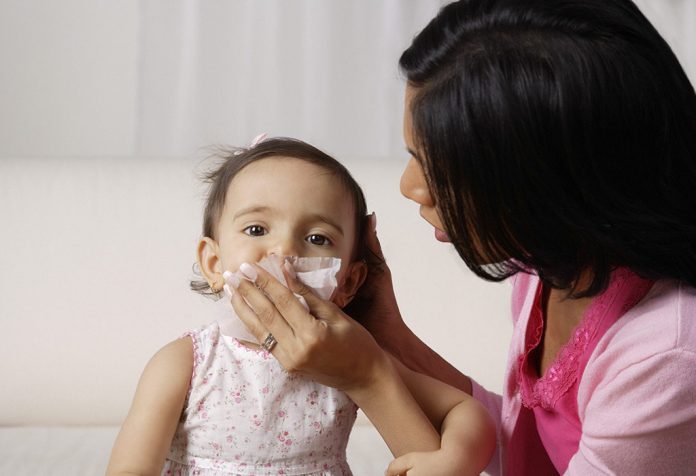
11 Home Remedies for Cold and Flu in Babies & Kids
Cold and flu are infections caused by viruses. Children under six cannot be given over-the-counter cold and flu medication so alternate home remedies can alleviate cold and flu symptoms in babies and children. Before we start with the list of home remedies for children’s colds and flu, you are advised not to try all of these remedies at once or simultaneously, and you should take care that your child does have allergic reactions to any ingredient. Also, consult with your paediatrician before trying these remedies, and remember to keep the baby’s age in mind before using any of them.
Before we move on to the remedies, you must know the symptoms of cold and cough in babies.
Video: 8 Home Remedies for Cold and Flu in Babies & Kids
Before we move on to the remedies, you must know the symptoms of cold and cough in babies.
Symptoms of Cold and Flu in Babies
Knowing the signs your baby may show when he has a cold will help you soothe the condition better. Here’s what you should look for :-
Mildly running nose
Mild cough
Sore throat
Stuffy or blocked nose
Loss or decrease in appetite
Restlessness
Mild fever
To treat the cold in babies, it is important that parents try first to comfort them so that they feel better. Fever causes dehydration, and the baby might not always feel thirsty or comfortable drinking. However, it is essential that you encourage him to consume more fluids. Look out for signs of dehydration and feed your baby fluids accordingly.
Here are some signs of dehydration in babies who are under 3 months of age:
Dry and chapped lips.
Sunken soft spots on the skin.
Baby appears less active.
Frequent urination (3 to 4 times in 24 hours).
Let’s take a look at some home remedies to treat the cold and flu in kids.
Home Remedies for Cold and Flu in Babies and Kids
These home remedies are safe, gentle and effective in helping babies feel better when they are suffering from cold or flu.
1. Breast Milk
Breast milk contains antibodies which make the body immune to all kinds of germs and viruses, including the cold and flu viruses. Along with this, breast milk also provides hydration. This is one of the best natural remedies for flu in infants. Breast milk can be fed to babies that are under 6 months of age who do not require any other medication.
2. Garlic and Ajwain Pouch
Garlic and ajwain are powerful cures for cough and cold as they contain anti-bacterial and anti-viral properties. This mixture is one of the best herbal remedies for the cold in children. Take 2 garlic cloves and 1 spoon of ajwain and dry roast them. Once cooled, put them in a muslin cloth and tie them tight. Place this pouch at a safe distance from the baby’s cot (not on the cot or under the bedding) so that the aroma provides comfort to the baby. This pouch should help clear any blockage the baby might have owing to a cold. Alternatively, you can also rub this pouch on the soles of the baby’s feet to achieve results.
3. Carrot Juice
Carrots contain essential nutrients and vitamins that help boost the immune system. This is one of the best home remedies to treat cold in toddlers. Carrots can be steamed, mashed and diluted with some room-temperature water for babies aged 6 months and above (babies who have been introduced to solids). For older kids who can digest fresh fruit juices, you can go for fresh carrot juice.
4. Saline Drops
Nasal or saline drops are a quick and safe option to provide your baby with some relief from congestion. One can use a dropper to administer the saline drops. Then use a nasal suction bulb to remove the mucus.
5. Use a Humidifier
A humidifier will help provide some relief from cough and cold by moistening dry air. A humidifier can be used in the baby’s room while he is asleep. Ensure that you clean the humidifier regularly or they begin to house mould and bacteria, which can affect your child’s health.
6. Steam Therapy
Run a hot shower and let some steam accumulate in the bathroom. Sit your baby in the steam for 10 to 15 minutes. The steam will loosen the mucus and will relieve the baby from congestion. Make sure your baby is adequately hydrated before and after the steam room treatment, as he will lose a lot of fluids.
7. Lemon Water Mixed With Honey
Lemons are rich in Vitamin C, which effectively fights a cold. Squeeze some lemon juice in warm water, and add honey for taste. This remedy is only for children above 1 year, as honey should not be given to children under 1 year.
8. Gargling
Older kids can gargle with salt water to relieve the cold and sore throat. Gargling helps in breaking down the mucus and reducing swelling. Make the baby gargle a few times during the day.
9. Raise Your Kid’s Head
Your child’s body repairs itself at night when asleep, which is why deep, uninterrupted sleep is important for the infection to subside. Raising your kid’s head will prevent the mucous from returning to his system and allow him to breathe easily. Simply take a towel and fold it. Put this towel under your child’s head to elevate his head. You can do so with a soft pillow too. Ensure that the pillow’s height is optimum, as your child may have neck trouble if the pillow is too elevated.
10. Warm Honey and Ginger Tea
A soothing and natural remedy that combines honey’s antibacterial properties with ginger’s congestion-relieving effects. Give your child 1-2 teaspoons of warm honey and ginger tea to ease cold and flu symptoms.
Please Note: If your baby is less than 1 year old, this recipe should be strictly avoided as honey is avoided for babies under 1 year old. Babies and toddlers above 1 year old can have this remedy.
11. Eucalyptus Oil Chest Rub
Create a homemade chest rub using eucalyptus oil, which has decongestant properties. Gently massage the rub onto your child’s chest to help relieve congestion and promote easier breathing during cold and flu episodes.
When you follow these remedies, you must also remember to ensure your baby doesn’t develop other issues. Let’s take a look at the precautions you must take.
Precautions to Take While Using Remedies for Cold and Flu in Babies and Kids
Avoid trying any home remedy that involves consuming an oil, herb, or medicine for babies below 6 months of age.
Ensure that the baby gets 18 hours of sleep, and toddlers or older kids get at least 8 hours of sleep when they have a cold and cough.
Do not use honey for children who are less than 1 year old. This could lead to infant botulism (a form of poisoning).
Toddlers and older kids should be encouraged to use a handkerchief and wash their hands to avoid infection.
Wash your and your baby’s hands frequently during this time to avoid infections. 80% of infections spread through touch.
Ensure that your child is not allergic to any ingredient you will be using in your home remedy.
Breastfeed as much as you can. Breast milk has a lot of antibodies that build immunity.
Do not forcefully give food to your baby. Loss of appetite is common during colds and flu.
Your baby’s clothing during a cold and flu should be in accordance with the weather. Keep your baby warm by clothing him in layers.
Keep your child away from daycare or school when he is unwell, especially if he has a fever.
Feed only boiled and cooled water to prevent any other infections in the baby.
Try the recipes on yourself before using them on the baby.
Keep your house clean so no one else falls ill. It is a good idea to disinfect objects that are used frequently.
Try to feed the baby warm fluids that will help flush out the mucus, hydrate him, and relieve him from the cold.
In case, despite trying these remedies, your baby’s health doesn’t show signs of improvement, you must take him to a paediatrician immediately. Read on to know when you must consult a doctor.
When to Consult a Doctor?
You must also observe your child for the symptoms below when using home remedies. If the symptoms persist, you must immediately take your little one to a doctor.
Runny nose and cough with thick, greenish and yellowish secretions.
Sore throat and difficulty swallowing.
Inflamed tonsils.
Increased respiratory rate.
Fever greater than 101 or 104 degrees for more than two consecutive days.
A high fever (100.4 degrees or higher) in babies under 3 months old.
Has a fever that does not subside after taking acetaminophen.
Extremely drowsy or fatigued.
Refuses to eat or drink.
Has breathing issues or is wheezing.
All the above symptoms are indicative of something other than the common cold and would require immediate medical attention.
The above-mentioned remedies will help provide your little one relief from the cold. You could take a trial-and-error approach where you can observe which treatment your baby responds to the best. You must go into prevention mode once your child recovers from the cold and flu.
References/Resources:
1. Ashkin. E, Mounsey. A. PURLs; A spoonful of honey helps a coughing child sleep; J Fam Pract.; PubMed Central; https://www.ncbi.nlm.nih.gov/pmc/articles/PMC3601686/; March 2013
2. Caring for Your Child’s Cold or Flu; American Academy of Pediatrics; https://healthychildren.org/English/health-issues/conditions/flu/Pages/caring-for-Your-childs-cold-or-flu.aspx
3. Coughs and Colds: Medicines or Home Remedies?; American Academy of Pediatrics; https://www.healthychildren.org/English/health-issues/conditions/chest-lungs/Pages/Coughs-and-Colds-Medicines-or-Home-Remedies.aspx
4. Cold medicines for kids: What’s the risk?; Mayo Clinic; https://www.mayoclinic.org/healthy-lifestyle/childrens-health/in-depth/cold-medicines/art-20047855
5. Should You Give Kids Medicine for Coughs and Colds?; USDA; https://www.fda.gov/consumers/consumer-updates/should-you-give-kids-medicine-coughs-and-colds
6. Saketkhoo. K, Januszkiewicz. A, Sackner. MA; Effects of drinking hot water, cold water, and chicken soup on nasal mucus velocity and nasal airflow resistance; https://pubmed.ncbi.nlm.nih.gov/359266/; October 1978
7. Paul. LM, Beiler. JS, King. TS, et al.; Vapor Rub, Petrolatum, and No Treatment for Children With Nocturnal Cough and Cold Symptoms; PubMed Central; https://www.ncbi.nlm.nih.gov/pmc/articles/PMC3600823/; November 2018
Also Read:
Safe Home Remedies for Cough in Children
Foods to Eat & Avoid during Cold and Cough for Babies, Toddlers and Kids
Read more
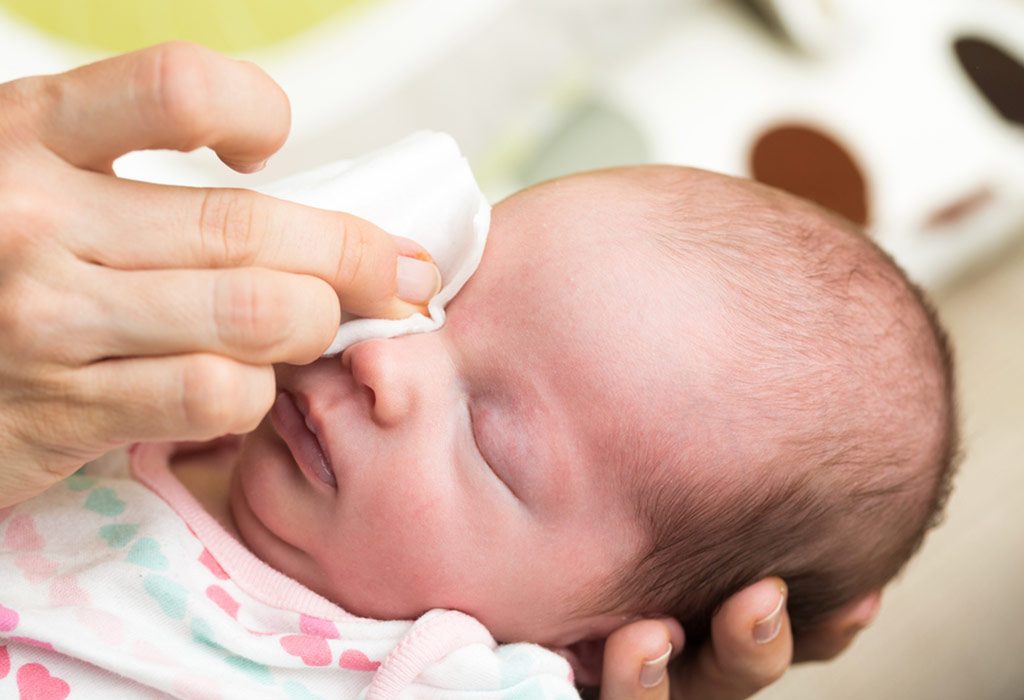
Sticky Eyes in Newborn Babies – Causes, Signs and Treatment
When you have your baby in your arms, your panic button remains alert. And when the baby is in the newborn phase, the magnitude of this anxiety increases. Even a tiny aberration may become a reason for concern. However, you need not panic when you see a squish of yellowish fluid forming near your newborn’s eyes. Sticky eyes in newborn babies, also known as neonatal conjunctivitis, is a common condition characterised by discharge in one or both eyes. A newborn’s sticky eye can concern new parents, but it is usually treatable with proper care and attention. Read on to find out what it is and the steps you can take to treat it.
Is Sticky Eyes in Babies Common?
Yes, sticky eyes in babies are quite common. Many newborns experience this condition due to a blocked tear duct, where the duct that drains tears from the eye into the nose is not fully open or developed. This can lead to an accumulation of tears and discharge (1). In some cases, sticky eyes may result from mild infections or irritations. While it can concern parents, sticky eyes are usually manageable and treatable with simple home care or medical intervention.
Causes of Sticky Eyes in Infants
Sticky eyes in infants can arise from a variety of causes. Here, we explore some of the most common causes of sticky eyes in newborns.
1. Nasolacrimal Duct Obstruction
A blocked tear duct is one of the infants’ most common causes of sticky eyes. This occurs when the duct that drains tears from the eye to the nose is not fully developed or is obstructed, leading to tear accumulation and discharge.
2. Neonatal Conjunctivitis
Neonatal conjunctivitis or ophthalmia neonatorum, is an inflammation of the conjunctiva in newborns. It can be caused by infections acquired during delivery, such as those from bacteria (e.g., Chlamydia trachomatis, Neisseria gonorrhoeae) or viruses (e.g., herpes simplex virus) (4).
3. Bacterial Infections
Bacterial infections, such as those caused by Staphylococcus aureus or Streptococcus pneumoniae, can lead to sticky eyes in infants. These infections often result in purulent discharge and require prompt medical treatment to prevent complications.
4. Upper Respiratory Tract Infections
Upper respiratory tract infections (URTIs), such as the common cold, can sometimes lead to sticky eyes in infants. The infection can cause inflammation and increased mucus production, spreading to the eyes and resulting in discharge.
5. Stye or Hordeolum
A stye (or hordeolum) is an infection of the eyelid glands, typically caused by Staphylococcus bacteria. It appears as a red, swollen lump on the eyelid and can cause sticky discharge. Proper hygiene and warm compresses are usually effective treatments (3).
6. Dacryocystitis
Dacryocystitis is an infection of the tear sac (lacrimal sac), often resulting from a blocked tear duct. This condition causes redness, swelling, and discharge from the eye. It can be serious and requires prompt medical attention to prevent complications (2).
7. Allergies
Though less common in newborns, allergies can result from exposure to allergens such as pollen, dust, or pet dander. Symptoms include redness, itching, and watery discharge (5).
Signs of Sticky Eyes in Babies
Some of the tell-tale signs of sticky eyes include:
A yellow or white fluid characterises it at the corner of the eyes.
The discharge may appear flaky or crusty, especially after sleep.
There may also be mild redness and inflammation around or below the eyes.
The baby’s eyes may become watery, resulting from heavy tearing of the tear ducts.
The colour of the discharge can also turn green.
Are Sticky Eyes in Infants Harmful?
Sticky eyes typically clear after a few days with regular cleaning and do not require further thought. However, in some cases, if they do not cure naturally or the condition aggravates, it may be a sign of an underlying issue, and you may need to seek a doctor’s evaluation.
How Can You Tell That Your Baby Has an Eye Infection?
While an eye infection can often be confused with a rash or a bruise, some of the signs include:
Excessive rubbing of eyes and discomfort.
Soreness develops around the eyes, or the eyes turn red.
The discharge gets more frequent and more severe.
Is the Yellow Substance Around Baby’s Eyes a Sign of an Eye Infection?
The yellowish discharge is due to the blocked tear ducts, and as the ducts open, the discharge stops. However, it may also be a sign of infection and conjunctivitis in some cases.
Treatment for Infant Sticky Eye
Effective treatment for sticky eyes in newborns depends on the underlying cause and can range from simple home remedies to medical interventions. Here are some common treatments to consider:
1. Antibiotic Eye Drops or Ointments
A paediatrician may prescribe antibiotic eye drops or ointments for bacterial infections. These medications help eliminate the bacteria causing the disease and reduce symptoms such as discharge and redness (8).
2. Massage
Massaging the area around the tear duct can help open a blocked duct. Using clean fingers, apply light pressure to the inner corner of the baby’s eye and move downward towards the nose (6).
3. Tear Duct Probing
If a blocked tear duct persists and does not resolve with massage or other noninvasive methods, a doctor may perform tear duct probing. This procedure involves inserting a thin, sterile probe into the tear duct to open the blockage (7).
4. Medications for Cough and Cold
Upper respiratory tract infections, which can contribute to sticky eyes, may be treated with medications for cough and cold. While infants typically cannot take over-the-counter cold medications, paediatricians may recommend saline nasal drops, a cool-mist humidifier, or other treatments to alleviate symptoms and reduce eye discharge.
Home Remedies for Sticky Eyes in Infants
Home remedies for sticky eyes in infants can provide gentle and effective relief for mild cases. Here are some of the most commonly recommended home remedies for managing sticky eyes in newborns.
1. Sterilised Water
This is the most commonly practised method to clean the eyes.
Step 1: Wash your hands thoroughly. Keep the sterilised water (water that has been boiled and cooled) and sterilised cotton balls handy.
Step 2: Gently wipe the gluey substance with sterilised cotton. Start by gently dabbing the cotton ball in the inner corner of the eyes, gradually moving towards the outer corner.
Step 3: Tilt the baby’s head towards the eye being cleaned. This will ensure that the water does not trickle down or to the side and prevent cross-contamination.
Step 4: Repeat the process until the eyes are cleaned, using a new cotton bud each time.
2. Saline Solution
The steps mentioned above can be done using a saline solution as well. It minimises the build-up of bacterial infection.
3. Cold Compress
It provides moisture to the eyes and makes it easier to dissolve the flakiness caused by the discharge, and the baby can open their eyes when they wake up.
4. Antibiotic Solution
A paediatrician can suggest eye drops or an antibiotic solution for cleaning the discharge. Please follow their instructions and dosage carefully.
5. Massaging
Gently massaging the areas near the eyes and nose may help open the blocked ducts and reduce the chances of sticky fluid building up. It’s better to consult an ophthalmologist who can practically demonstrate the massage technique to you (9).
6. External Instrument
The sticky discharge forms because the baby’s tear ducts are blocked. If the ducts do not open naturally within a year or so, your doctor may suggest opening them. The most common approach is surgical probing, where the doctor inserts a medical instrument into the tear duct to remove the obstruction. Remember, this procedure can be performed only by an expert and should not be tried at home.
Tips on how to clean the eyelids and eyes of your baby-
Before cleaning the baby’s eyes and eyelids, it is essential to wash your hands with water and neutral soap to avoid infecting the baby’s eyes.
The cleaning should be done with a sterilised wet wipe or gauze to soften the scabs and facilitate the extraction of secretions. Never rub or scratch if they do not disappear, as it could damage the baby’s eye.
The eye should always be cleaned from the tear duct to the corner of the eye so that the debris is dragged out.
Tips to Prevent an Eye Infection in Babies
Here are some tips you can follow to protect your baby from an eye infection:
Make sure to clean your baby’s hands regularly, as babies tend to rub their eyes, and dirty hands can lead to an eye infection.
If a family member or someone around the baby has an eye infection, keep him away from them.
Use eye drops or antibiotics only if a paediatrician recommends them.
Ensure that the baby’s surroundings are hygienic and that their bedding, towels, and clothes are washed regularly.
When Should You Call the Doctor?
Newborn sticky eyes are a result of blocked tear ducts. In most cases, it is not severe and can be treated at home. However, if your baby has sticky eyes for a long time, you should consult a doctor. Make sure to check the symptoms to avoid eye infections.
FAQs
1. Can sticky eyes in newborns lead to complications if left untreated?
Parents should understand the potential complications of untreated sticky eyes in newborns. While many cases resolve on their own or with simple treatments, complications such as persistent infections, corneal ulcers, or damage to the tear ducts can occur if left untreated. Prompt medical attention is crucial to prevent such complications.
2. How long does sticky eye last in newborns?
In mild cases, sticky eyes resolve on their own within a few days to a week with proper hygiene and care. However, more severe cases or those caused by infections may require medical treatment and can take longer to resolve.
3. Can sticky eyes in newborns be a sign of an underlying health condition?
While sticky eyes are often benign and temporary, they can sometimes be a symptom of an underlying issue, such as a blocked tear duct or infection.
Sticky eyes aren’t a problem in themselves. In fact, they are a natural process, and in most cases, they get better with home remedies. But it is always good to be aware and keep an eye on your baby so that it does not lead to an infection.
References/Resources:
1. Vagge. A, Ferro Desideri. L, Nucci. P, et al.; Congenital Nasolacrimal Duct Obstruction (CNLDO): A Review; PubMed Central; https://www.ncbi.nlm.nih.gov/pmc/articles/PMC6313586/
2. Prakash. R; A Bacteriological Study of Dacryocystitis; Journal of Clinical and Diagnostic Research; https://www.researchgate.net/publication/270450643_A_Bacteriological_Study_of_Dacryocystitis
3. Styes in Children; University of Rochester Medical Center; https://www.urmc.rochester.edu/encyclopedia/content.aspx?contenttypeid=90&contentid=P02102
4. Chawla. R, Kellner. J. D, Astle. W. F; Acute infectious conjunctivitis in childhood; PubMed Central; https://www.ncbi.nlm.nih.gov/pmc/articles/PMC2804756/
5. Chad. Z; Allergies in children; PubMed Central; https://www.ncbi.nlm.nih.gov/pmc/articles/PMC2805592/
6. Boyd. K; Blocked Tear Duct Treatment; American Academy of Ophthalmology; https://www.aao.org/eye-health/diseases/treatment-blocked-tear-duct
7. Kothari. M, Rathod. V, Shah. K, et al.; Congenital nasolacrimal duct obstruction: Should we continue lacrimal massage till 1 year or perform an office probing at 6 months?; PubMed Central; https://www.ncbi.nlm.nih.gov/pmc/articles/PMC5381299/
8. Conjunctivitis in Children; Stanford Medicine Children’s Health; https://www.stanfordchildrens.org/en/topic/default?id=conjunctivitis-in-children-90-P02078
9. Children with sticky and watery eyes due to failure of tear drainage; Cambridge University Hospitals; https://www.cuh.nhs.uk/patient-information/children-with-sticky-and-watery-eyes-due-to-failure-of-tear-drainage/
Also Read:
Dark Circles Under Baby’s Eyes
Watery Eyes (Epiphora) in Babies
Baby Eyes Rolling Back – Is It Normal?
Home Remedies for Baby Eye Infection
Baby Eye Color: When Does it Change and More
Read more
Using Diapers Safely for Newborns and Babies
As your little bundle of joy arrives in the world, one thing is sure that your days and nights will be extremely busy. All your tasks will revolve around your baby. You will do everything to make sure your little one is happy and healthy. For the first few months, your baby will only drink breast milk, urinate and poop. And, this will increase your duties in turn, especially when it comes to keeping him dry, clean and comfortable. This task in itself is very cumbersome as you will be doing this over and over again for quite some time. That is why, nowadays, parents have resorted to disposable diapers to keep their babies dry and comfortable. But, how safe are these diapers for newborns? We have put some information together on this topic and hope to help you keep your worries away. Read on to know more.
Are Diapers Safe for Infants?
There are mixed opinions about the use of diapers. The elderly are against using them, and they tend to think that mothers use it for their convenience and avoid the hassles of frequent cleaning and washing. They are also of the opinion that baby diapers cause rashes and infections, and so its excessive use is not a healthy practice. However, young mothers argue that diapers are designed with utmost care. So, they are generally safe to use.
What Are Diapers Made of?
There are two types of diapers available in the market, cloth diapers and disposable diapers. Cloth diapers are typically the ones that are made of soft fabric. You can wash, dry and reuse them. And, disposable diapers are made of different material and have the following components.
1. Sodium Polyacrylate
It is a polymer which is placed in the core of the diaper and packed with layers of other material. It is used as an absorbent. These particles act as tiny sponges that retain many times their weight in water.
2. Dye
Some diapers have wetness indicators which are made with dyes to help parents know when to change the diaper.
3. Cotton/Microfibre/Plastic Fibres
Material like cotton, hemp, plastic fibre, and microfibre is used in cloth/reusable diapers. Layers of these materials are used to cover the absorbent to ensure there are no leakages.
4. Wood Pulp
Wood pulp is used in diapers to give some cushioning. Wood pulp also works as an absorbent.
Now that you are aware of the components of diapers, it is advisable to choose the diapers for your baby wisely. Here are some types of diapers you can choose from.
Types of Diapers
Pull-up Diapers – Pull-up diapers look like underwear and need to be pulled up to the waist. These diapers have a soft elastic that holds on to the baby’s waist.
Disposable Underwear – These are available in various sizes and can be worn by older babies who still wet their bed.
All-in-one Diapers – These have an outer cover which is made of waterproof material, with a diaper sewn on the inside.
Pocket Diapers – These have pockets where you insert a disposable or a reusable cloth diaper.
Fitted Diapers – As the name suggests, these are fitted and have a narrow crotch area and a wider waist area. Some of these diapers come with fasteners too.
Although these diapers will make your life easy, you will need to be alert as your baby might develop an allergic reaction, especially because of the disposable diapers. Here are some more side effects diapers could have on your baby. If you observe any of these side effects, stop using diapers and seek medical advice immediately.
Side Effects of Disposable Diapers
Following are the side effects of diaper for baby girl and boy.
If the polymer sodium polyacrylate is mixed with acrylic acid, your baby could experience skin irritation around the diaper area.
Dyes can cause skin rashes in some babies.
Some diapers have volatile organic compounds that include chemicals like toluene and xylene that can also cause skin irritation.
When wood pulp is bleached, dioxins are produced. Remnants of dioxin in the diaper can cause medical issues.
These diapers need to be changed at regular intervals, as when remaining for a long time can cause skin rashes and infection.
Precautions to Take Before Using Diapers for Babies
Diapers are in direct contact with a baby’s skin, so it is advisable to take precautions opting for diapers.
Following are some precautions you must take to avoid side effects due to diapers.
Check the baby’s skin to ensure that there are no rashes. Some babies have very sensitive skin and develop rashes immediately.
Specially designed overnight disposable diapers can be used at night.
Avoid heavier diapers during the daytime. Use gel-based diapers or diapers with skin creams or cloth diapers.
Change diapers once every two to three hours to avoid rashes and infections. When babies pass stool, ensure that you change the diaper immediately.
After removing the diaper, don’t make your baby wear another diaper immediately. Allow the skin to breathe for a while.
Clean your baby’s skin with baby wipes or a soft, damp cloth after removing the diaper. You can use baby lotion, coconut oil, moisturisers, too. All these products help in maintaining good hygiene. Powders should not be used.
FAQs
1. How Do You Know If It’s Time to Move Up in Diaper Size?
Every diaper manufacturing company have a diaper size chart according to the baby’s age. So you can easily check the size chart and decide which diaper will fit your baby. Also, the following signs can be used to identify that your baby needs a new diaper size:
The diapers not fully covering the baby’s bottom
The baby is showing signs of distress
There are red marks on your baby’s thighs and waist area.
2. What Size Diapers Do Babies Wear for a Long Time?
Generally, the baby stays in size three diapers the longest.
The initial phase of motherhood is hectic because you strive to give the best to your baby. While diapers can make things easier, using diapers for longer periods generates heat. So, changing diapers frequently is the key to ensure that your baby is dry, comfortable, and healthy.
References/Resources:
1. Charru Jamwal, Dr.Priyanka Chaudhary, Dr.Rajwant Kour Randhawa; Effect of Disposable Diapers on the Health of the Baby and on the Environment; researchgate.net; https://www.researchgate.net/publication/358234124_Effect_of_Disposable_Diapers_on_the_Health_of_the_Baby_and_on_the_Environment; May 2021
2. Why is my baby always getting diaper rashes?; healthychildren.org; https://www.healthychildren.org/English/tips-tools/ask-the-pediatrician/Pages/Why-is-my-baby-always-getting-diaper-rashes.aspx
3. EWG’s Healthy Living: Quick Tips to Safer Diapers; ewg.org; https://www.ewg.org/research/guide-safer-diapers
4. Diapers: Disposable or Cloth?; healthychildren.org; https://www.healthychildren.org/English/ages-stages/baby/diapers-clothing/Pages/Diapers-Disposable-or-Cloth.aspx
5. Dental Care, Diapers, and Clothing; iapindia.org; https://iapindia.org/pdf/200921-Guideline-for-Dental-Care-Diapers-and-Clothing.pdf
Also Read:
Effective Ways for Changing Your Baby’s Diaper
Home Remedies for Diaper Rash in Babies
How to Buy Quality Diapers At Affordable Cost
Read more
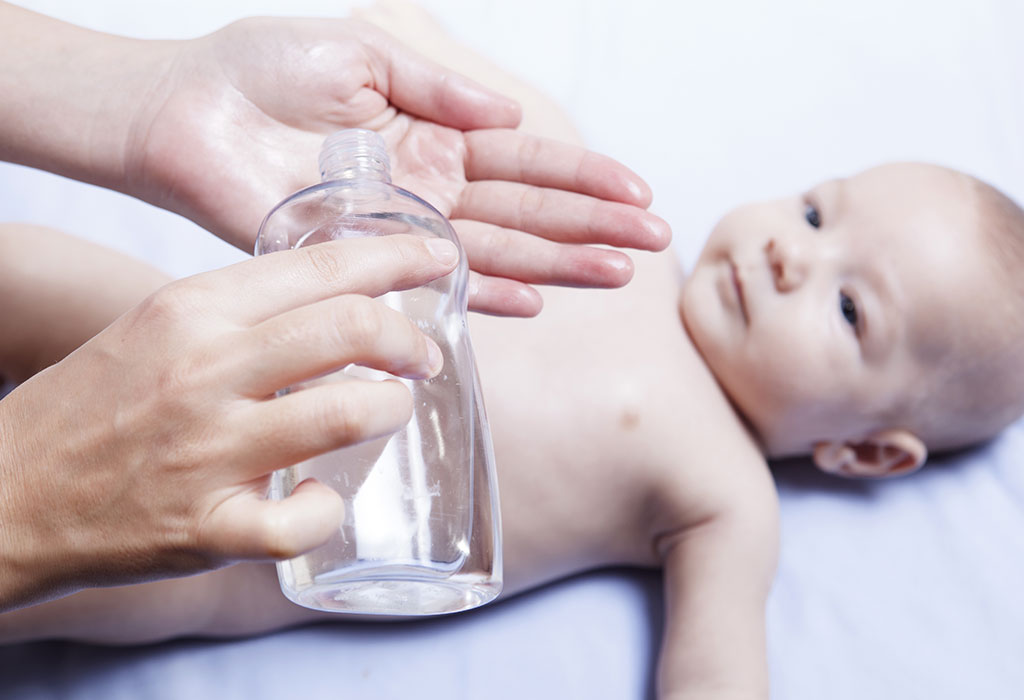
Essential Baby Skincare and Hygiene Products
Your baby, when she comes out of your womb and takes her first breath, is covered in a whole bunch of things – there’s vernix, there’s poop (sometimes, not always), and there’s blood. Your nurse will give your baby her first bath after you deliver her. But thereafter, it’s going to be you.
Now, you want to keep your baby healthy, fresh and clean, but you also want to take care your don’t damage or aggravate her delicate skin in any way, right?
A good bath starts with choosing the right kind of products for your baby, and that does not just include the hygiene products, but also the linen! Here is your most comprehensive bathing and skin-care checklist for your newborn.
Your Newborn Bath and Skin Checklist: Bath Products
The first thing you need to take care of are the actual products with which you are going to bathe your baby. There are a few things you need to ensure when buying any bath product for your baby (1):
The product should be dermatologically tested.
It should be paediatrician approved.
The product should be hypoallergenic.
It should have a mild fragrance (strong fragrances can disturb babies).
It should be mild and gentle on your baby’s skin.
The product should not rob your baby’s skin of moisture.
Having established the buying criteria, here is a list of bath products you will need for your newborn baby:
1. Baby Oil
It is recommended you massage your baby before giving her a bath, so as to lock the moisture of her skin in. Massaging has a lot of other additional benefits too. Ask your paediatrician about how to massage your newborn (2).
SHOP BABY OIL
2. Baby Body Wash
Most parents do not feel comfortable giving their newborn a water bath, at least in the first couple of weeks. If you are one such parent, this product will be your substitute for water.
SHOP BABY BODY WASH
3. Baby Soap
For slightly older babies, you can move from baby body wash to baby soap.
SHOP BABY SOAP
4. Baby Shampoo
For slightly older babies, you can move from baby body wash to baby soap.
SHOP BABY SHAMPOO
5. Baby Wipes
There may be times when a complete bath is not necessary but you still want to ‘clean’ your baby. Baby wipes will come to the rescue at such times.
SHOP BABY WIPES
6. Baby Bathtub
A lot of parents feel comfortable bathing their babies in the wash-basin (after thoroughly cleaning it, of course), while other prefer a bucket. A baby bathtub, however, is best suited due to its size, design, and material.
SHOP BABY BATHTUB
Your Newborn Bath and Skin Checklist: Linen
Here are a couple of buying considerations to remember when picking up linen for your baby.
The fabric should be super soft (think: fluffy kittens)!
The fabric should not give off lint; lint is nothing but the accumulation of tiny textile fibres, especially on other clothes. The reason you need to keep this in mind is because these tiny fibres that cloth might tend to ‘shed’ may enter your baby’s eyes or skin-folds and harm her.
It is better to opt for white coloured linen; coloured fabrics are dyed, and if the colour runs, it can harm your baby’s skin.
Here are the things your newborn needs:
1. Hooded Towels
These will help your baby adjust to the change in environment as you step out of the warm and humid bathroom, into the cooler and dryer environment of your baby’s room. A hood will keep her ears covered, and also her head protected from the temperature drop.
SHOP HOODED TOWELS
2. Regular Towels
These would be better sutied for your baby on warmer days.
SHOP REGULAR TOWELS
3. Wash Cloths
You’d need these to be used with baby body wash.
SHOP WASH CLOTHES
4. Swaddle
Many parents prefer to dry their baby inside the bathroom and then swaddle and bring them out (so that they do not feel uncomfortable because of the sudden change in the environment. If you are one of them, you may want to add this to your list.
SHOP SWADDLE
Your Newborn Bath and Skin Checklist: Skin-care & Grooming
Picking the right bath products is important – but so is picking the right after-bath skin-care products! The buying considerations are the same: the product should be dermatologically tested, paediatrician approved, hypoallergenic, have a mild fragrance, be mild and gentle on your baby’s skin, and not rob your baby’s skin of moisture. You will also have to ‘groom’ your baby from time-to-time. Here are the newborn baby skin care products you need:
1. Baby Powder
This is not a must after every bath and should be used sparingly.
SHOP BABY POWDER
2. Baby Lotion
It will help lock the moisture back into your baby’s skin and keep it soft and supple.
SHOP BABY LOTION
3. Diaper-Rash Cream
The best time to put this is right after a bath (and for every diaper change of course), that’s why this product makes it to our list of things you need for your newborn’s bath and skin-care.
SHOP DIAPER-RASH CREAM
4. Baby Nail Clipper
To trim those tiny nails. While you may be put-off by the thought of having to do this, it is important because those nails could hurt not only people who come in contact with your princess, but your princess herself too!
SHOP BABY NAIL CLIPPER
5. Baby Hairbrush/Comb
You need to keep your baby’s hair tangle-free. Combing or brushing her hair also improves blood circulation in the brain and scalp.
SHOP BABY HAIRBRUSH/COMB
Your Newborn Bath and Skin Checklist: Accessories
Some are water-babies and absolutely enjoy bath-time; others might want to wail their guts out! Either way, a few fun things can make bath-time an enjoyable experience.
1. Bath Toys
You can put them right in the tub with your baby, or you can hand them to your baby
SHOP BATH TOYS
2. Music
It is known that babies respond positively to music; so if you have a particularly fussy baby at hand who absolutely hates bath time, you can consider playing some music to help calm her down (3).
3. Thermometer
To measure the temperature of the bath water (although this is not a necessity).
SHOP THERMOMETER
FAQs
1. How often should I bathe my newborn?
Newborns only need a bath 2-3 times a week. Overbathing can strip their skin of natural oils, leading to dryness (4). On non-bath days, you can keep your baby clean with gentle sponge baths or by wiping down with a soft cloth and warm water (5).
2. Do newborns need sunscreen?
Sunscreen is not recommended for babies under 6 months. Instead, keep your baby in the shade and dress them in lightweight, protective clothing and hats. If sun exposure is unavoidable, consult your paediatrician for safe options (6) (7).
It is understandable to feel panic when thinking of bathing your fragile, delicate little newborn baby! But worry not. Equipped with all these newborn baby hygiene essentials, you are sure to become a bathing-pro in no time. Happy bath-time!
Also Read:
Baby Skin Allergy
Hygiene Tips for Baby
Hygiene Essentials for your Baby
Read more

Using Clove Oil to Relieve Teething Pain in Babies – Is It Safe?
Teething is a painful phase for a baby. Teething process can be hard for babies as they drool, become cranky and everything becomes a chew toy for them. As a parent, it can be really painful for you to see your baby in pain. But there is something that can help relieve his pain – it is clove oil. Clove oil is often used to relieve teething pain in babies. Read to know how it helps and what are its side effects.
Benefits of Using Clove Oil for Teething in Infants
Read the following benefits of using clove oil for infants before you use it for your little one:
1. Helps Numb the Pain
Clove oil has numbing properties and thus when it is diluted and applied on the baby’s gums, it can help ease the pain and discomfort.
2. Aids in Relieving Sore Gums
When a baby is teething, his gums become sore. Applying clove oil can help; the germicidal properties of clove oil help in treating sore gums effectively.
3. Helps Ease Teeth Soreness
A new tooth may take a few days to come out properly, and it may cause soreness. Clove oil is effective in dealing with tooth soreness in babies.
4. Helps Relieve Headaches
Yes, babies have headaches too, especially during the teething phase. To provide him relief from a headache, add a few drops of clove oil on a washcloth and place it on your baby’s head.
5. Helps Ease the Symptoms of a Sore Throat
Along with headaches, babies may have sore throats during their teething phase. You may apply diluted clove oil on the gums and around your baby’s mouth to soothe his sore throat.
6. Helps Fight Bad Breath
Babies also have bad breath sometimes. This may usually happen from milk deposits on the tongue or certain foods that baby may have consumed. However, this problem can be treated with clove oil. Dip a washcloth in some water mixed with a few drops of clove oil and clean your baby’s tongue and mouth with it.
7. Helps Fight Dental Cavities
Young babies or kids are not able to brush properly and thus may sometimes become prone to dental cavities. Using clove oil in your baby’s daily mouth cleaning regime may help in warding off the dental issues.
8. Calms the Baby
As you know that teething phase is a tough time for your little baby, so use clove oil as it will calm your baby.
9. Helps in Cleansing
For babies and younger children who begin brushing, the toothpaste may sometimes not provide good cleansing properties. Using olive oil may take care of your baby’s oral hygiene.
How to Use Clove Oil to Soothe Teething Pain in Babies
Many kinds of toothpaste available in the market today contains olive oil in them. You can buy any good toothpaste that is safe for babies. Alternatively, you can get clove oil from the market too. However, make sure you get a mild one or the one that is safe for babies. However, before applying it directly on to your baby’s gums, dilute the clove oil by adding some almond oil or other mild essential oil in it because clove oil is very strong and if used without diluting, it may harm the baby.
Are There Any Side Effects of Using Clove Oil for Teething?
If used with proper care and discretion, clove oil for a teething baby is one of the best home remedies for relieving teething pain and discomfort. This is because clove oil has anaesthetic properties and thus helps ease teething woes. However, clove oil should be used with utmost care when using for babies. This is because if it is used in more than required amounts, it can upset your baby’s tummy and may also cause blisters or bleeding in the gums.
What If You Have Already Used Clove Oil for Your Baby Who is Under 2 Years for his Teething Pain?
Clove oil is good for health and general well-being. But this oil is one of the essential oils that should not be used for babies under two years of age because of its strong properties. However, if you have already used this oil on your baby’s gums who is younger than two years of age, now is the time to stop and wait until he is over two years of age because using clove oil can cause irritation, blistering, redness and other such problem in babies who are less than two years of age.
Alternate Remedies for Teething Pain
Instead of clove oil, you can give frozen banana slices, a blunt frozen spoon, or a frozen (inverted) water in your baby’s feeding bottle and let him chew them. You may also keep a soft washcloth inside the freezer and let your baby chew it or you can massage your baby’s gums with it. All these tricks will provide him relief from teething pain.
Clove oil is very beneficial in curing teething pain. Make sure you seek your doctor’s approval if you wish to use clove oil or any other essential oil for your baby.
Also Read: Reasons for Late Teething in Babies
Read more
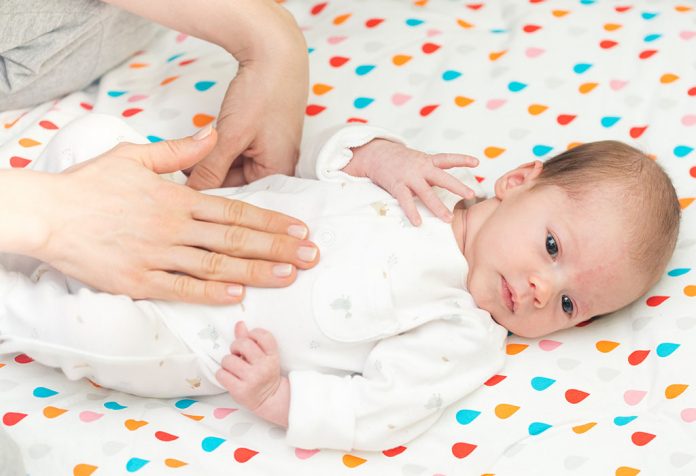
Effective Home Remedies for Loose Motion in Babies
Loose motions or diarrhoea is the way in which the toxins and bacteria are flushed out from the digestive system. A baby’s bowel movements will appear watery and foul-smelling if he has diarrhoea. The frequent bowel movements will irritate the baby, and due to restlessness, he may even cry. Infants who are teething can also have loose motions, but a viral or bacterial infection is the main cause of diarrhoea. Fortunately, there are several effective home remedies for loose motion in infants. In this article, we will explore 16 such remedies that can help soothe your baby and promote faster recovery.
Also Read: Is Diarrhoea a Symptom of Teething?
Causes for Loose Motion in Babies
Diarrhoea in infants and young children can be caused due to various reasons, and it is important to determine the cause for the same before beginning with the treatment:
Kids below two years of age are often plagued by the rotavirus which causes diarrhoea (1).
An allergy to milk, eggs,or peanuts can trigger loose motions, so it is best to figure out if your child is allergic to any of these (2).
Any kind of antibiotics can kill good bacteria in the stomach, and this could lead to loose motions (3).
If their surroundings are unclean, when babies crawl or put toys or other things in their mouths, it can lead to loose motions.
Also Read: Helpful Foods to Give during Loose Motion for Baby & Toddler
Signs of Diarrhoea in Babies
When stricken by diarrhoea, the body loses a lot of water and minerals known as electrolytes, leading to dehydration. Babies get dehydrated too quickly, so it’s important to notice the signs and take action at the earliest. Dehydration in babies can happen in a day or two so it can prove to be dangerous, especially if your baby is a newborn. The signs you need to look out for include fewer wet diapers, crying without any tears, tiredness or fatigue, fussiness, a dry mouth, skin that isn’t very elastic, etc. More serious symptoms include a high fever, blood in the stools, vomiting, and tummy aches (4).
Effective Home Remedies for Loose Motion for Babies
Since a baby’s immune system is not as strong as that of adults, he will be more prone to stomach conditions like diarrhoea or loose motions. It is best to try home remedies instead of administering OTC medicines. There are many effective home remedies for diarrhoea in babies. Having said that, you should always consult a doctor if the condition persists for more than 48 hours, to avoid any serious consequences.
1. Oral Rehydration Solution (ORS)
This is an age-old home remedy for treating loose motions. A packet of ORS can be either procured from the chemist, or you can prepare this solution at home. Boil one litre of filtered water and allow it to cool. Add six teaspoons of sugar and half a teaspoon of salt to the water and mix it till it dissolves completely. Give the ORS to the baby at regular intervals to keep dehydration at bay and to make up for the loss of salts and fluids (5). If you are unable to make the solution at home, purchase a packet from a chemist. Rice water is also a great way of replenishing lost fluids and salts.
2. Banana
Because of loose motions, babies lose a lot of potassium, and it is necessary to replenish it. Bananas contain potassium, zinc, iron, calcium, magnesium, and Vitamin A and B6. Loose motions can really drain your baby of his energy, so this would help replenish his strength. Fortunately, most babies love the taste of bananas. It is available all year round and makes it to the top of the list of essential foods in most households (6).
3. Ginger
Ginger is good for the digestive system and is an effective treatment for diarrhoea. Mix together a teaspoon of grated ginger, some cinnamon powder, a bit of cumin powder, and a teaspoon of honey. Give this mixture to your baby thrice a day. You can also add nutmeg before giving it to your child (7).
4. Puffed Rice
Soak a bowl of puffed rice in a glass of water for about 15-20 minutes. Strain the rice and give the water to your baby twice a day to provide quick relief from loose motions. Unpolished white rice contains a high level of starch and is easy to digest. It can be boiled in water, strained, and fed to your baby to provide relief from diarrhoea. This is an effective home remedy for loose motions for newborn babies, especially in India, where puffed rice is commonly found.
5. Apple
Apples are full of pectin which helps in firming up your child’s bowel movement. Wash an apple, boil it in water, and make a puree so that it will be soft and easily digestible. This will not only keep loose motions at bay but will provide your baby with much-needed energy.
6. Red Lentil Soup
Your baby will refuse to eat anything when he is suffering from diarrhoea. However, he needs to maintain his energy levels, and this is where red lentils can help. This superfood is packed with proteins and energy, which makes it healthy and easily digestible. Take a cup of lentils and boil them in water. Allow the lentils to cool. In some time, the lentils will settle down. Separate the water from them and give it to your baby. Add a pinch of salt to enhance its taste.
7. Buttermilk
Homemade buttermilk is effective when it comes to fighting germs and bacteria. It soothes the digestive system quickly and is tasty too. Add salt and black pepper to it and let your baby drink it. It is recommended for kids who are above 8 months old.
8. Coconut Water
Apart from the massive health benefits it imparts, coconut water is a wonderful liquid to aid your child’s recovery from a bout of diarrhoea. Not only does it taste good but it also helps the body regain lost fluids. It is recommended to give coconut water to your child at least 2-3 times in a day.
9. Curd
Fresh homemade curd and yoghurt are useful in restoring the healthy bacteria in a baby’s digestive system. It is considered to be the most gut-friendly food when your child has diarrhoea. Homemade lassi and buttermilk (without sugar) also contain probiotics, so don’t think twice before giving it to your baby.
10. Carrot Juice
Your baby will need to replenish his lost energy when he has loose motions. Carrots are a great source of energy during such times. Carrot juice or puree can be served a couple of times during the day. If your baby is above one year of age, carrot juice should suit him just fine.
11. Starch-Rich Products
If you have begun a semi-solid/solid diet for your tiny tot, you can opt for starchy foods like potato and rice cereal. Potato has starch in abundance which helps babies recover from loose motions quickly. Boil a potato, mash it till it is smooth and fine, and add a pinch of salt to it. Roasted cumin seeds in powdered form can also be added to prevent gas formation. This potato mash can be fed once a day.
12. Lemon
Lemon is found in most households and is a great home remedy for curing loose motions in kids. It is full of anti-inflammatory and anti-bacterial properties which makes it a reliable and easily-available remedy. A spoonful of lemon juice 4 to 5 times a day can relieve your baby of diarrhoea and other stomach-related problems. Your baby’s upset stomach will be relieved, and the pH balance in his body will be restored too.
13. Mint
Mint leaves, also known as pudina, contain a lot of anti-bacterial properties. They help in regulating digestion and hence, are highly recommended for curing loose motions in kids as well as adults. A bunch of mint leaves will give you a spoonful of mint juice. Add a teaspoon of honey and squeeze a few drops of lemon juice into this mixture too. Stir the mixture properly before giving it to your baby. You can give this juice to your baby 2-3 times a day. Do not use this for infants below 2 years of age.
14. Nutmeg
This powerful home remedy is known to cure recurring bouts of loose motions in infants. It is known as jaiphal in India. You can make a paste by mixing together nutmeg powder and water, and give it to your child.
15. Arrowroot Powder
Arrowroot is basically another form of powdered starch and is a good supplement to tackle loose motions in children. Due to its allergen-free properties, it is helpful in soothing your little one’s tummy. It also works wonders to rehydrate the body. Make a runny porridge by adding arrowroot powder to water or curd, and feed it to your baby.
16. Breast Milk
If you’re breastfeeding your baby, don’t pause it – breast milk is a sure-fire home remedy for your little one’s diarrhoea. Breast milk helps speed up your baby’s recovery because of its high antibody content. It can also prevent the need for hospitalisation of your baby. If your baby is both breastfed and formula-fed, it would be better to increase the amount of breast milk he gets to consume, as formula milk can be slightly more difficult for your little one to digest (8).
FAQs
1. How long does loose motion last in infants?
Mild cases of loose motion usually resolve within 2-3 days with proper care and hydration. However, if it lasts longer than a week or is accompanied by other concerning symptoms, medical attention is necessary.
2. What foods should I avoid giving my baby during loose motion?
Avoid giving dairy products (if lactose intolerant), sugary foods, high-fibre foods, fruit juices, and greasy or spicy foods. These can worsen diarrhoea or irritate the digestive system further (9).
In case your baby is refusing to eat anything because of diarrhoea, it is best not to force-feed him. Try feeding him after long gaps so that he will be hungry and won’t say no to food. Babies who are less than a year old should be taken to the doctor before trying home remedies. What you can do is enhance fluids in your baby’s diet. If there are other symptoms noticed along with loose motions and the above-mentioned home remedies do not prove to be effective, speak to a paediatrician immediately.
References/Resources:
1. Seattle Children’s Hospital – Diarrhea (0-12 Months)
2. Healthdirect – Diarrhoea in children
3. Cleveland Clinic – Diarrhea in Babies
4. The Johns Hopkins Medicine – Diarrhea in Children
5. PubMed – Oral rehydration solution for acute diarrhea prevents subsequent unscheduled follow-up visits
6. Cleveland Clinic – What To Eat When You Have Diarrhea
7. PubMed – Ginger relieves intestinal hypersensitivity of diarrhea predominant irritable bowel syndrome by inhibiting proinflammatory reaction
8. PubMed Central – The Role of Maternal Breast Milk in Preventing Infantile Diarrhea in the Developing World
9. Harvard Health Publishing – Is something in your diet causing diarrhea?
Also Read:
Home Remedies for Fever in Babies
Natural Remedies for Colic in Babies
Best Remedies for Your Baby’s Constipation
Home Remedies to Relieve Stomach Pain in Babies
Read more
7 Home Remedies for Conjunctivitis (Pink Eye) in Babies
The colour pink loses all its charm when a mum sees her baby’s eyes taking that colour! Conjunctivitis, or pink eye, is the inflammation of the inner eyelids, because of which the blood vessels become more visible and impart a pink colour to the eyes. So, is there any home remedy for pink eye in babies? Yes, there are. But first, it is important to assess what has led to pink eye in babies. Conjunctivitis may be caused by infection or contact with an allergen. The baby may feel itchiness in the eyes and may also have a discharge at the corner of the eyes. It can be viral, bacterial or allergic in nature. Check out the natural home remedies for pink eye in babies, and also consult your doctor.
What Causes Pink Eye in Babies?
Conjunctivitis or pink eye in babies can occur due to several reasons, including (1):
Viral Infection: A viral infection is one of the most common causes of eye infection in babies, which surfaces along with cold-like symptoms.
Chemical Conjunctivitis: In rare cases, topical antimicrobial eye drops given to newborn babies right after birth can cause irritation.
Blocked Tear Ducts: Blocked tear ducts by birth can also lead to swelling and pinkish eyes in babies.
Transferred Infection: Babies are prone to getting the infection from their mother during childbirth.
What Are the Signs of Pink Eye in Babies?
The following are the symptoms of conjunctivitis in babies (2):
Whites of the eye appear pink or slightly red
Puffy eyelids
Watery discharge from the eyes, causing teary and crusty eyes
Redness around the lower rim of the eyelids
Must-Know Home Remedies for Pink Eye in Babies
Infants are at a higher risk of contracting pink eye because of their still-developing immune system. These natural remedies for pink eye in infants can be applied to provide immediate relief and cure.
Note: Before trying any home remedy or any type of medication for pink eye in babies, it is advised to consult your doctor for natural remedies for conjunctivitis in babies. Uninformed actions can sometimes turn severe. Thus, it is essential to cross-verify the remedies with experts before proceeding.
1. OTC Lubricating Eye Drops
There are a few lubricating eye drops, also known as artificial tears, available over-the-counter for pediatric use (3). You can consult your doctor and have one prescribed for your little one.
2. Warm Compress
In bacterial and viral pink eye, the mucus is usually released from the eyes. It can sometimes cause eyelids to stick together. You can use a damp washcloth to loosen the dried mucus. Make sure to use a different washcloth for each eye (4).
Soak a clean washcloth in warm water and wring it nicely so there’s no water dripping from it.
Now, lay the damp washcloth over the eyelids and leave it in place until it cools.
Now again, dip the washcloth in the warm water and repeat the compress process.
In case of a blocked duct, a warm massage between the eye and the nasal area can help (5).
3. Cold Compresses
Cold compresses on the eyes help relieve itching, pain, and inflammation, mostly caused by viral conjunctivitis (6) (7).
A compress can be hot or cold. Use a store-bought compress or dip a washcloth in normal to cold water and squeeze.
Gently place it on the eyes and remove after 5 seconds. Repeat the process for each eye several times. Use a separate cloth for each eye.
4. Antibiotics
If the pink eyes do not heal naturally and there are symptoms such as an increase in the baby’s body temperature or excessive pain in the eyes, it may require immediate intervention by the doctor. The medicine will depend on the nature of the infection and its severity. Antibiotics for bacterial neonatal conjunctivitis can be used in the form of eye drops, ointment, medicine, topical cream, or even an injection (5).
5. OTC Medication
Medication can be given to babies for allergic pink eye after consultation with the doctor. It is advised not to purchase just any medicine for your baby targeted for conjunctivitis, as the dosage and potency of the medicine may vary.
6. Salt Water Solution
One of the easiest, cheapest and best-known remedies for eye infection is to use saline water. It soothes the eyes as well as clears the impurities caused by infection.
Here’s how to use it:
Add some salt to a pot of boiling water.
Once cooled, dip a cotton ball and place it on the eyelids.
Use a fresh cotton ball for each use.
7. Vitamin A
A Vitamin A-rich diet, like carrots and spinach, protects the body and promotes the growth of healthy cells to fight infections in the body. You can make purees or mash the veggies and feed your baby.
FAQs
1. Can I use breast milk as a remedy for treating conjunctivitis in my baby?
No. Breast milk is not a suggested remedy for treating infection or soothing inflammation, as it could potentially introduce new bacteria into the eyes of a baby and cause more serious infection. A study published in the British Journal of Ophthalmology suggests that this remedy does not work (8) (4).
2. What home remedies should I avoid for pink eye?
Avoid unproven remedies that aren’t doctor-approved, especially when it comes to your baby’s safety. Claims like breast milk, herbal extracts, or herbal concoctions like chamomile tea are not true and may further worsen the infection (4).
3. Does pink eye make your baby cry more?
Yes, pink eye can make babies cry more than usual. Since babies can’t talk, they communicate everything through crying, becoming fussy, or getting clingy. Inflammation in the eyes can cause watering, itching, swelling, and a gritty sensation in the eyes, making babies uncomfortable and prompting crying.
4. How long will pink eye last in babies?
Viral pink eye is contagious, and it diminishes on its own in about one to two weeks with home treatment. If bacterial conjunctivitis is the reason for pink eye in babies, it should be treated by the doctor as soon as possible, as leaving the infected eye untreated with just home remedies can be detrimental for the baby.
5. When should I contact a doctor for pink eye in babies?
If you notice an unusual fluid (discharge) coming from the eye of your baby or their eyelids have puffed red, restricting them from opening their eyes, then you should definitely consult a doctor without any delay (2).
6. Do I always need an antibiotic treatment for pink eye?
No, not always. Antibiotic remedy, whether in the topical or oral form or eye drops, targets only bacterial conjunctivitis. If the cause of conjunctivitis is viral or allergic, antibiotics will not work in any form (4).
In general, pink eye is neither a very serious condition nor fatal. However, considering the delicate nature of eye tissues, especially in infants, it is important to be informed about home remedies and act immediately if any problem arises.
Also Read:
Natural Remedies for Colic in Babies
Home Remedies for Cold & Cough in Babies
Home Remedies for Loose Motion in Babies
Home Remedies to Relieve Stomach Pain in Babies
Read more

Your Baby’s Immunity Lies in Their Gut – Here’s What You Need To Know!
Have you ever wondered how your little one stays protected from all those sniffles, tummy troubles, and other pesky ailments? Well, a big secret lies in their tiny tummies! While a baby’s immune system isn’t fully ready at birth, a healthy gut plays a massive role in building it up. In fact, 70-80% of their immunity comes straight from the gut (1)! Let’s explore this amazing connection and how you can help your baby build a super-powered immune system.
The Mother’s Role in Building Immunity
Mums are the first superheroes, starting the immunity boost even before birth. During pregnancy, you pass on your own antibodies to your baby through the placenta – think of it as a borrowed shield, providing them with immediate protection against certain diseases (2). After birth, breastmilk continues to be a fantastic source of immune support (3). Colostrum, the early milk, is especially important for providing antibodies and programs for the baby’s immune system. Breastfeeding facilitates the transfer of vital nutrients like prebiotics, immunoglobulins, and probiotics, further supporting the baby’s immune development. (3)
Benefits of Breast Milk: Liquid Gold
Breast milk is often called “liquid gold,” and for good reason! It’s packed with components that support the immune system, like essential nutrients and special bioactive compounds such as proteins, fats, sugars, antibodies, and probiotics (3) (4).
Breastmilk helps babies’ immune systems develop in the following ways:
Promoting the growth of friendly bacteria (4)
Keeping less desirable bacteria in check
Facilitating healthy bowel movements
Improving and strengthening the gut’s mucosal layer
But that’s not all!
Prebiotics in Mother’s Milk
Did you know that breast milk also contains special prebiotics that are crucial for a healthy gut? Prebiotic oligosaccharides are the third-largest component in breast milk, after lactose and fats. These pass undigested to the large intestine, where they act as food for beneficial bacteria, boosting their growth and activity (3).
These naturally occurring prebiotics offer specific advantages for infant health and development:
They can promote more frequent and softer stools
Prebiotics can help reduce both diarrhoea and constipation
Some studies suggest a link between prebiotics and fewer colds and fevers
They may also reduce the risk of allergic illnesses (2)
Prebiotics contribute to a healthier and more balanced gut environment (1) (4)
They may help reduce infantile colic
But how does your baby’s gut affect their immunity?
The Gut-Immunity Connection
So, we know breastmilk provides excellent building blocks, but what does this mean for your baby’s gut? Well, the gut and immune system are closely linked. In fact, approximately 70-80% of immune cells are strategically located within the gut (1), highlighting its vital role! A thriving and balanced gut environment directly contributes to a robust and effective immune system (1) (4).
Including prebiotics in the baby’s diet through breastmilk and complementary feeds is essential. But what can you do if you can’t breastfeed?
Scientifically-Created Prebiotics
If breastfeeding isn’t possible, scientifically created prebiotics are an option. Prebiotics such as galacto-oligosaccharides, fructo-oligosaccharides, inulin, and polydextrose provide similar benefits to naturally occurring prebiotics. Aptagrow contains prebiotics that support immunity by aiding in the creation of a healthy gut. Giving your baby access to prebiotic oligosaccharides helps build a strong and healthy immune system from birth (2)(5), ultimately promoting their overall growth and development.
Prioritising your baby’s gut health from day one can set them on a path to a stronger immune system and a healthier future. Access to prebiotic oligosaccharides helps build healthy immunity from birth, promoting overall growth and development (2)(5). While breastmilk is amazing, ensuring prebiotic intake through appropriate formulas or foods is essential, especially if breastfeeding isn’t possible or is supplemented. Always chat with your healthcare provider for personalised advice.
Also Read:
How to Boost Baby’s Immunity System?
Immunity Boosting Foods for Kids
Ways to Increase Immunity in Children
Read more

HPV and Cervical Cancer – Myths and Facts That Are Important to Know
Issued by MSD in the public interest for awareness purposes only.
People often synonymise HPV with cervical cancer. It’s easy to get overwhelmed by the misinformation around the subject, especially with all the fear and uncertainty associated with cancer. We’re here to change that and give you the facts.
In this article, we aim to bust some long-standing myths about the human papillomavirus (HPV) and cervical cancer so you can take steps towards its prevention.
HPV Infection
HPV infection is a viral infection caused by human papillomavirus (HPV) (1), which is a group of around 100+ viruses. Some types of HPV can cause cancer. The infection can affect the skin and genitalia.
Disclaimer: For most people, HPV clears on its own. But for those who don’t clear the virus, it can cause certain HPV related cancers and diseases.
Cervical Cancer
Despite being the second most commonly occurring cancer among women in India, there’s still not enough education around it (2). Cervical cancer is the growth of abnormal cells that begin in the cervix, the lower part of the uterus connecting to the vagina. When exposed to HPV strains, the immune system tries to fight it and prevent it from spreading. However, in a small percentage of people, the virus may survive for years and eventually turn the cervical cells into cancer cells (3). This causes cervical cancer.
Myths and Facts Around HPV and Cervical Cancer
There are ways to stay informed and protect yourself. The first step is to understand what information is science-backed and what counts as misinformation. Let’s bust some myths, shall we?
Myth 1: If you have HPV, then you will have cervical cancer.
Fact: Having HPV does not guarantee cervical cancer. Although it is true that HPV can cause cervical cancer (1), it takes persistent infection of certain HPV strains to ultimately lead to cervical cancer (4). HPV vaccination is a crucial step in helping reduce the risk of cervical cancer. HPV vaccination can help prevent certain HPV-related cancers, depending on the HPV vaccine types (5).
Myth 2: Only women who have multiple partners have HPV.
Fact: The truth is, women, irrespective of their relationship status, are susceptible to contracting the HPV virus (6). It is a common virus that transmits from people who do or do not present any symptoms (7). So, to think that women who have multiple partners can get HPV is inaccurate. HPV can still be contracted even with one partner (6). Eligible sexually active women can benefit from the HPV vaccine, especially against strains they haven’t been exposed to yet (8).
Myth 3: You don’t need to get vaccinated for cervical cancer as you don’t have symptoms, nor do you have a family history of cervical cancer.
Fact: Cervical cancer is most often caused by long-standing, high-risk HPV infection. Lack of symptoms or no family history of cervical cancer is not enough to avoid the vaccination (7).
HPV Vaccination helps reduce the risk of certain HPV-related cancers, but regular check-ups and screenings are just as important (9). Being proactive with your health allows for early detection and timely action.
Consult a healthcare provider if you notice any unexplained symptoms in your body. Remember, cervical cancer is preventable when vaccination is administered.
Myth 4: There is nothing you can do to prevent cervical cancer other than HPV testing or Pap testing.
Fact: You CAN help prevent cervical cancer by HPV vaccination and timely Pap smear tests. HPV vaccination can help provide protection against common HPV strains responsible for causing genital warts and certain HPV-related cancers (10).
You can also minimise the chances of developing cervical cancer by using protection. Remember to consult a medical expert about HPV vaccination for cervical cancer prevention.
Myth 5: Cervical cancer is contagious.
Fact: Cervical Cancer is not contagious.
Myth 6: HPV vaccine causes infertility.
Fact: That is not true. There is no evidence of HPV vaccines causing infertility, premature labour, miscarriage, or any other pregnancy complications in future pregnancies among women who are immunised with HPV vaccines.
In fact, globally acclaimed organisations, including the ACOG and FOGSI, support HPV vaccination in breastfeeding women.
Myth 7: Cervical cancer is not curable, and someone who gets it will die.
Fact: Cervical cancer is treatable if detected in its early stage (6). The doctor will recommend treatment options depending on the condition of the patient, stage of cancer and other related factors.
When and How to Receive the HPV Vaccination
Women are advised to get cervical cancer counselling for HPV prevention through vaccination and routine tests to help prevent the risk of certain HPV related cancers (11).
Consult your doctor to understand the recommended age and eligibility for HPV vaccination.
Currently, in India, the quadrivalent HPV vaccine and nonavalent HPV Vaccine are available.
Quadrivalent HPV Vaccine helps offer protection against HPV types 6, 11, 16, and 18.
Nonavalent HPV Vaccine covers HPV types 6, 11, 16, 18, 31, 33, 45, 52, and 58.
Cervical cancer is the second most common female cancer in India among women aged between 15 and 44 years (12).
It is wise to stay informed when it comes to your health!
IN-GSL-01058 | 17/06/2025 – 01/10/2026
Also Read:
Cervical Cancer and Fertility
HPV Vaccination for Girl Child
Cervical Cancer during Pregnancy
Human Papillomavirus and Pregnancy
Human Papillomavirus (HPV) in Children
Read more
How Your Baby’s Feeds Affects Their Poop
Let’s be honest—talking about baby poop isn’t exactly glamorous. But if you’re a parent, you know it quickly becomes one of the most important (and frequent) topics in the house. That little diaper tells a big story—about your baby’s digestion, hydration, and even their immune system. Surprising? Maybe. But it’s true.
In the early days, when your baby is breastfed, their poop can vary widely in colour and texture—from mustard yellow to seedy or even runny. That’s perfectly normal and often a sign that things are working just as they should. Breastmilk is easily digestible, so breastfed babies may poop more frequently (or sometimes not for days) and still be thriving.
But what happens when your baby is formula-fed—or if you’re using a mixed feeding approach? The story in the diaper can shift. Formula-fed babies tend to have fewer, firmer poops, and the colour may range from tan to greenish brown. The type of formula can influence these changes more than you might expect. So, how exactly does formula affect your baby’s poop—and what should you watch for?
How Your Baby’s Tummy Works
Babies have delicate digestive systems that are still developing. In the early months, their only source of nutrition is breastmilk (1). As they grow, their digestive systems mature as well. Breastmilk is designed to meet the nutritional needs of all babies exclusively till 6 months of age.
Breastmilk is nature’s perfect food. In the earliest breastfeeding days, mothers produce colostrum—a thick yellowish liquid rich in protein and immunoglobulins that supports the newborn’s immune system (2). Within a few days, colostrum transitions to mature breastmilk, which contains natural prebiotics and antibodies that protect against illnesses and support immune development. However, it is possible that some mothers are unable to sufficiently breastfeed their babies, and hence, they look out for suitable alternatives.
Formula, while a fantastic alternative, only begins to match breastmilk’s benefits when enriched with similar components, like prebiotics. The type of formula you give your baby can influence your baby’s digestive health and, yes, their pooping patterns. It is best to speak to your doctor to know more about prebiotics.
What Does a Healthy Poop Look Like?
Baby poop comes in many shades—from mustard yellow to green. Healthy, exclusively breastfed babies typically have soft, runny, seedy, or golden-coloured poop. Whereas, Formula-fed babies tend to have firmer and darker stools, but that doesn’t mean it has to be that way (3).
The Mayo Clinic outlines what’s typical in terms of baby poop colour and texture. Black or green stool shortly after birth is normal and consists of meconium (this is the first poop of the baby). Once that passes, you’ll likely see yellow-green stools. Seedy, mustard-yellow poop is common in breastfed babies. Formula-fed babies’ stools are usually firmer and range from yellow to tan, sometimes with a greenish tint. Green poop may look concerning, but is generally not a cause for alarm (4). But in case of any doubt, please contact your doctor immediately.
The Golden Poop
So, what is a “golden poop”? It’s yellow, soft, runny, and regular. As per the Bristol Stool Chart, the ideal poop for babies looks like a sausage or snake, smooth and soft. It signals good digestion and a happy gut—evidence that the milk is being processed efficiently and nutrients are being absorbed properly.
To better understand your baby’s poop, try using an AI Poop Checker Tool, which analyses stool consistency and colour for babies aged 0–2 years.
The Role of Nutrition in Your Baby’s Poop
The colour, texture, and frequency of your baby’s poop are directly affected by the type of nutrition they receive. Research shows that nutrients present in the formula can significantly impact your baby’s poop’s look and feel (5). Formula containing synbiotics can alter the gut microbiota to more closely resemble that of breastfed infants.
Synbiotics are a combination of probiotics and prebiotics. Probiotics are “good, friendly bacteria” that live in your gut. Whereas prebiotics are “food for these good bacteria”. They are not digested by your body but go straight to the gut and feed the good bacteria.
Breastmilk is naturally rich in prebiotics (and some amounts of probiotics), and now this benefit is present in certain infant formulas. The new-age infant formula contains probiotic species, such as bifidobacterium, and prebiotics, including galactooligosaccharides (GOS) and fructooligosaccharides (FOS).
A study published in 2017 found that synbiotic-supplemented formulas:
Promoted the growth of beneficial bifidobacteria in the gut
Encouraged stool patterns similar to those of breastfed infants
Lowered the risk of respiratory infections, and the need for antibiotics and hospitalisation
Reduced the risk of food allergies
Supports immune system development
These ingredients are considered very safe, and studies show consistent positive effects. Adding synbiotics to infant formula brings it one step closer to mimicking breastmilk.
So, Why Choose Infant Formula With Synbiotics?
Here’s how your baby can benefit from infant formula with synbiotics:
1. Increased Immunity
Synbiotics increase the growth of bifidobacteria, ensuring a strong immune system.
2. Better Digestion
Synbiotics help to soften the poop and reduce the likelihood of constipation.
Keeping a close watch on your baby’s poop might seem like a weird thing, but it is one of the prime indicators of their gut health. Choosing the right formula, especially one with synbiotics, can ensure your little one’s gut health stays close to that of a breastfed baby.
References/Resources:
1. UNC Health Talk – How a Baby’s Digestive System Works, for Parents
2. Cleveland Clinic – Colostrum
3. Pregnancy, Birth & Baby – Poos and wees
4. Mayo Clinic – I’m breastfeeding my newborn and my baby’s stool is yellow and mushy. Is this what I should expect?
5. PubMed Central – Prebiotics in infant formula
Also Read:
Watery Stool in Newborn
Abnormal Poos and Wees in Babies
Baby Poop: What’s Normal & What’s Not
Warning Signs Your Baby is Not Pooping Properly
Read more
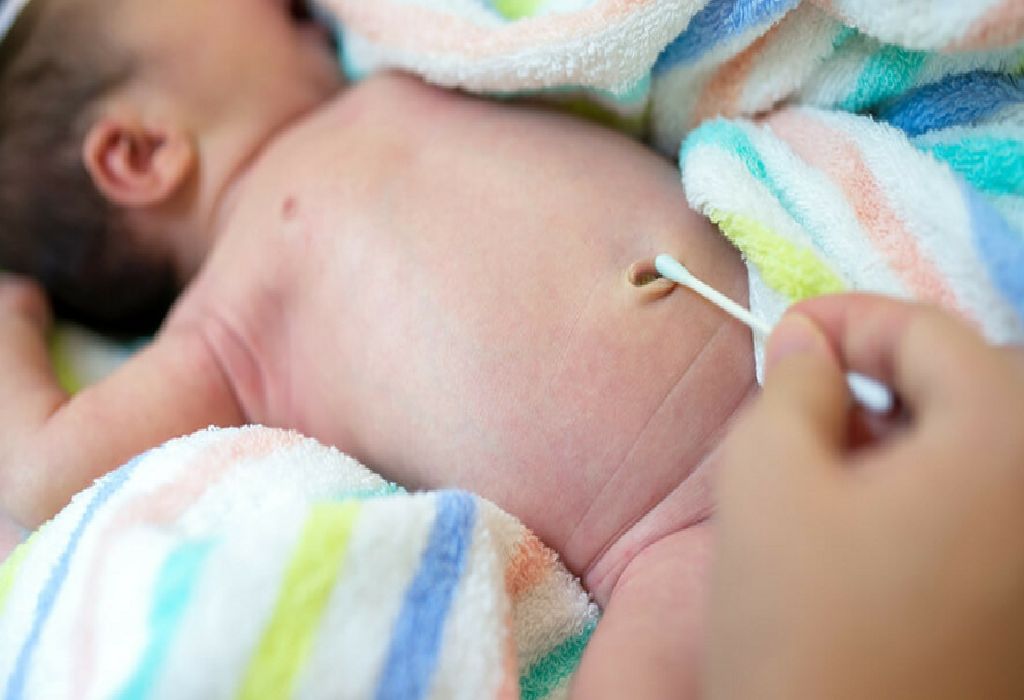
Omphalitis – Causes, Symptoms and Treatment
Omphalitis is an infection in a baby’s belly button. Though an umbilical infection can be treated with medicines, it’s vital to spot the early signs and symptoms and prevent it from becoming a serious infection.
Omphalitis is commonly known as belly-button infection. Though it is relatively rare, every 2-5 infants in a hundred may suffer from this painful infection after birth. It can even become a medical emergency and lead to hospitalization for a few days. Since babies have a weak immune system, they are quite susceptible to postnatal infections.
Thanks to rapidly advancing medical science and health care, babies are administered anti-infection remedies right after birth in order to protect them against various infections. However, as some babies may still suffer from Omphalitis, it is important for you, as a new parent, to have an idea of what type of infection it is and whether your baby could be at risk.
What is Omphalitis and Could Your Baby be at Risk?
The major cause of Omphalitis is exposure to bacteria like tetanus, strep and staph. This happens mainly during delivery while the doctor incises the umbilical cord. This infection mainly targets newborns, whose immunity powers are considerably low. It may attack a baby a few days after the delivery. Unfortunately, it may not be seen from outside during the neonatal days. Some common signs of infection like redness and pus, three to five days after birth, make this infection prominent.
Research on Omphalitis reveals that premature and underweight babies have a greater risk of this infection. These babies have a relatively weaker immune system and easily fall prey to such post-birth infections.
Symptoms of Omphalitis
A belly button is a conspicuous body part, it would be hard to not notice if something were wrong with it. Nevertheless, here are some common symptoms of omphalitis.
General discoloration around the umbilical cord, which may make the baby uncomfortable. This usually occurs within the first few days of birth
Inflamed belly button
Pus or a fluid-filled lump around the umbilical area that leads to a reddish stump which darkens as the case gets worse
The little one suffers from extreme fever
There is abdominal swelling that can cause discomfort
The infected baby belly button discharges a foul-smelling liquid
There is bleeding around the stump
Baby feels irritated and suffers from lethargy
The activity of baby reduces a lot; you often find it hard to feed him as he is always uncomfortable
How to Prevent Omphalitis?
Here are the best preventive measures to protect your baby from infant belly button infection:
1. Breastfeed
Breast milk has antibodies that can protect your baby from various diseases including omphalitis. It also protects against diarrhoea and hypothermia. According to a survey conducted by Medela India during the National Nutrition Week 2017, the “first feed post birth acts as a shield against a host of fatal diseases and impacts the intelligence of the child positively”
2. Umbilical Cord Hygiene
You need to keep the area around the cord clean and dry using a swab/soft gauze. The World Health Organization recommend the “dry method” of umbilical cord care. The dry method means avoiding using any ointments or lotions and leaving the area exposed to air
3. No Tub Baths
Try to avoid tub baths for your baby till the stump falls off. This will keep the area dry and reduce the chances of infection.
Key Takeaways:
Your baby’s belly button needs extremely gentle care in the first few days after birth.
To prevent omphalitis, keep the area clean and avoid covering it with diapers, shirts, etc.
If the belly button looks unclean or infected, discuss with your doctor and use a Q-tip dipped in rubbing alcohol to gently clean it.
Treatment of Belly-Button Infection
In case you observe any signs of infection in your baby’s belly button, ensure you seek treatment of Omphalitis without delay. If delayed, this infection may bring forth other medical emergencies. Therefore, you should not delay consulting a physician when you observe any of the above symptoms in your child.
Your doctor may prescribe antibiotics or other medicines and even surgical intervention when normal medicines do not work. If the infection is serious, the baby may need to be hospitalised for further treatment.
Home Care in Case of Omphalitis
While medication is a major part of treating omphalitis – or any kind of infection or disease for that matter – there are peripheral things you need to take care of too, to speed-up recovery. Here are a few tips in that direction.
1. Keep the Area Clean
Make sure to clean the area that joins the umbilical cord to the baby’s skin. Clean the umbilical stump at least one to three times in a day.
2. Use an Alcohol Swab if Advised by the Paediatrician
You can use an alcohol swab and then dry the area after cleaning. However, please do this only after consulting your paediatrician as some experts are of the opinion that rubbing alcohol can delay healing. Also, applying the wrong solution/lotion for belly button cleaning can have side effects on your baby’s skin.
3. Keep the Area Exposed
Avoid covering the stump area with a baby diaper. Do not keep any buttons, bandages, adhesives, etc., in this area.
If your home care is not working fine or the medication is not working properly, make sure you seek expert help immediately. Newborn belly button infection can become serious very quickly and needs to be treated as soon as possible.
Also Read:
Umbilical Cord Care
Outie Belly Button in Newborn
Umbilical Granuloma In Babies
Read more
Sort By
 Latest
 Most Popular
 Trending
Please select atleast one Filter