

















.svg)
.svg)
.png)


Behavior & Discipline
Suggested articles for you
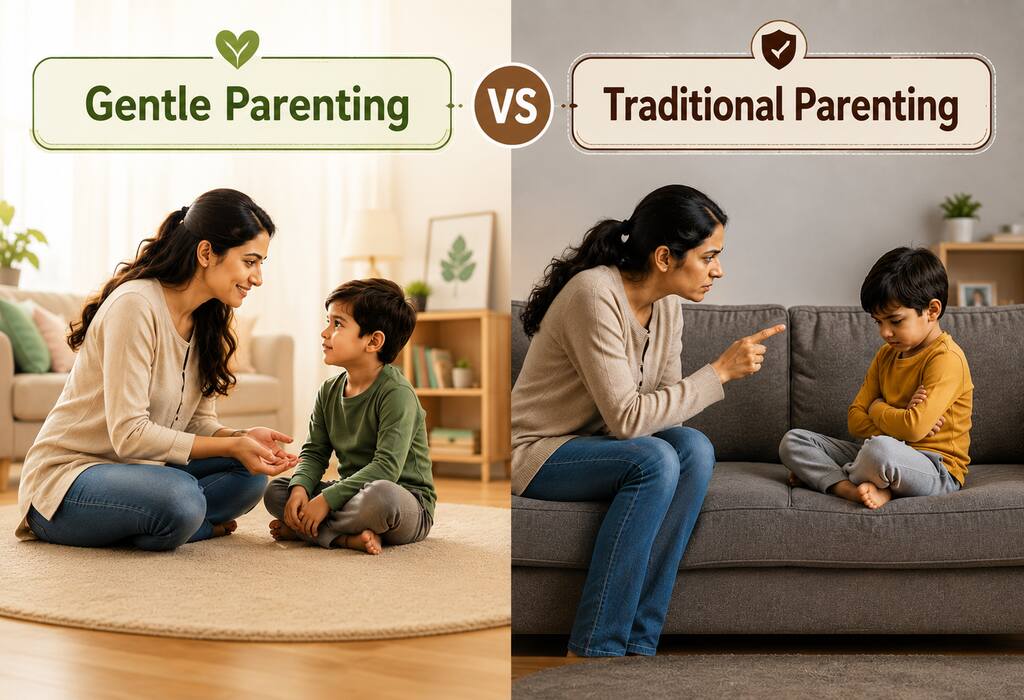
Gentle Parenting vs Traditional Parenting: Differences & Which Is Better?
Choosing between gentle parenting vs traditional parenting is one of the most debated decisions modern parents face, and it’s easy to see why. Both approaches promise well-adjusted, happy children, yet they take almost opposite routes to get there. If you’re a parent of a child anywhere between the toddler years and age ten, you’ve probably felt the pull between wanting to nurture your child’s feelings and needing them to actually listen when it matters. This article breaks down what each style really looks like day to day, where they overlap, where they clash, and how to figure out what will genuinely work for your family, rather than what looks good on social media.
What Is Gentle Parenting?
Gentle parenting is a child-rearing philosophy built around empathy, respect, and open communication. Rather than controlling a child’s behaviour through punishment, gentle parents try to understand what’s driving it. The core belief is simple: children misbehave because they lack a skill, not because they’re being deliberately difficult.
In practice, this might look like:
Getting down to your child’s eye level and naming their feelings (“You’re frustrated because we have to leave the park”)
Offering choices instead of ultimatums (“Do you want to put your shoes on yourself, or should I help?”)
Using natural consequences rather than punishments (a child who refuses a coat feels cold, rather than losing screen time)
Staying calm and connected even during meltdowns, rather than sending a child away to “calm down” alone
What Is Traditional Parenting?
Traditional parenting, sometimes called authoritarian parenting, is rooted in the idea that children need clear rules, consistent consequences, and respect for parental authority. It’s the style many of today’s parents grew up with themselves, shaped by generations of “because I said so” household rules.
Common features include:
Clearly defined rules with predictable consequences for breaking them
An expectation of obedience without lengthy negotiation
Rewards and punishments (sticker charts, time-outs, loss of privileges) used to shape behaviour
A parent-as-authority structure, where the adult’s decisions aren’t typically up for debate
Traditional parenting isn’t automatically harsh or cold. Many traditional households are warm and loving; they simply prioritise structure and obedience as the fastest route to raising well-behaved children who understand limits.
Gentle Parenting vs Traditional Parenting: Key Differences at a Glance
This is the difference between gentle parenting and traditional parenting in its clearest form: one starts from the child’s internal experience, the other starts from the household’s external rules. Most real families sit somewhere between the two extremes rather than living entirely in one camp.
Aspect
Gentle Parenting
Traditional Parenting
View of misbehaviour
A sign of an unmet need or missing skill
A choice that needs correcting
Discipline style
Empathy, natural consequences, collaboration
Rules, rewards, and punishments
Parent’s role
Guide or coach
Authority figure
Emotional expression
Actively validated and named
Often managed quickly, sometimes discouraged
Structure
Present but flexible
Firm and consistent
Common criticism
Can be time-consuming; may lack firm limits
Can feel harsh; may discourage emotional openness
Best suited for
Families prioritising emotional connection
Families prioritising predictability and order
Where the Two Styles Actually Overlap
It’s easy to frame this as a battle, but gentle parenting and traditional parenting share more ground than headlines suggest. Both aim to raise children who become capable, respectful adults. Both rely on consistency, since children of any parenting style struggle when rules change unpredictably. And both require the parent to stay involved and attentive; neither approach works well on autopilot.
Child development researchers often point to a third option that borrows the best of each: authoritative parenting. This style keeps the warmth and responsiveness of gentle parenting while holding on to the clear expectations of a more traditional structure. A child is allowed to express big feelings, but the boundary itself doesn’t move because of them.
Common Mistakes Parents Make With Each Style
Recognising these patterns matters more than picking a label. A parent who avoids these pitfalls, regardless of which camp they lean towards, tends to raise children who feel both secure and capable.
With gentle parenting:
Confusing validation with permission, so limits quietly disappear.
Over-explaining decisions to a two- or three-year-old who isn’t developmentally ready to process lengthy reasoning.
Feeling guilty for holding a boundary, which sends mixed signals to the child.
With traditional parenting:
Relying on punishment without explaining the reasoning behind a rule.
Dismissing a child’s feelings as “dramatic” or “attention-seeking”.
Using fear or shame as the main motivator, which can damage trust over time.
Which Approach Is Better for Your Child?
There’s no single answer that fits every family, but a few factors can help you decide where to land.
Consider your child’s temperament: A highly sensitive child may respond better to the emotional validation central to gentle parenting, while a child who thrives on predictability might do well with the clear structure of a more traditional approach.
Consider your own capacity: Gentle parenting asks a lot of the parent in the moment, patience, emotional regulation, and time to talk things through. On days when that reserve is running low, a simpler, rules-based response may be more realistic and still effective.
Consider the situation: Safety issues (running into a road, touching a hot stove) call for immediate, firm intervention regardless of parenting philosophy. Emotional moments (a tantrum over a broken toy) leave more room for a gentle, connection-first response.
Consider long-term goals: If raising a child who can identify and manage their own emotions is the priority, gentle parenting techniques offer useful tools. If the priority is a household that runs smoothly with minimal friction, traditional structure may feel more sustainable day to day.
How Each Style Plays Out at Different Ages
Gentle and traditional parenting can look quite different as children grow, with each approach shaping how parents respond to changing needs, behaviours, and levels of independence.
Toddlers (1-3 years): Gentle parenting techniques, such as naming feelings and offering limited choices, can reduce power struggles, but toddlers still need very short, very firm boundaries around safety. A purely traditional approach can feel overwhelming for a child who doesn’t yet have the language to explain what’s wrong.
Preschoolers (4-5 years): This is often where the two styles show the clearest contrast. Gentle parents lean on collaborative problem-solving (“What could we do differently next time?”), while traditional parents lean on consistent consequences (“If you throw a toy, the toy gets put away”). Both can work, provided they’re applied consistently rather than only when a parent has the energy for it.
School-age children (6-10 years): By this stage, children can understand cause and effect more fully, which makes room for a genuine blend of the two approaches. A parent can explain the reasoning behind a rule, gentle parenting’s strength, while still applying it firmly and predictably, traditional parenting’s strength.
A Practical Middle Ground
Many parenting professionals now describe the healthiest approach as one that blends empathy with firm limits, essentially taking the connection of gentle parenting and pairing it with the consistency of traditional parenting. In everyday terms, this could mean acknowledging a child’s frustration out loud while still holding the boundary that started the frustration in the first place: “I understand you’re upset we’re leaving, and we’re still leaving now.”
This blended approach also tends to age well. What works for a two-year-old having a meltdown over socks looks different from what a ten-year-old negotiating screen time needs, and a flexible framework adapts more easily than a rigid one.
FAQs
1. Is gentle parenting the same as permissive parenting?
No. Gentle parenting still involves boundaries and limits; the difference is in how those limits are communicated. Permissive parenting typically avoids setting firm limits altogether, while gentle parenting combines empathy with clear expectations.
2. Can I mix gentle parenting and traditional parenting?
Yes, and many experts recommend it. Combining the emotional validation of gentle parenting with the consistency of traditional structure, often called authoritative parenting, tends to produce well-balanced outcomes for children.
3. Does gentle parenting work for strong-willed children?
It can, though it may need to be paired with firmer limits than usual. Strong-willed children often respond well to having their feelings acknowledged, but they also need consistent boundaries so they understand where the limits genuinely sit.
Gentle parenting and traditional parenting aren’t rivals so much as two different toolkits for the same job: raising children who feel secure, understand limits, and grow into capable adults. Gentle parenting leans on empathy and connection to guide behaviour, while traditional parenting leans on structure and consistent consequences. Neither is inherently right or wrong, and most families find that a blend, rooted in warmth but backed by clear boundaries, works better than strict adherence to either label. The most effective parenting style is ultimately the one that fits your child’s temperament, your family’s values, and what you can realistically sustain on the hard days as well as the easy ones.
Also Read:
Gentle Parenting
Permissive Parenting Style
Gentle Parenting vs Authoritative Parenting
Read more




Nacho Parenting – Pros, Cons, And How To Use It
Parenting, in all its forms, offers a profound opportunity to shape the next generation. Among the many emerging parenting styles, ‘Nacho Parenting’ provides a unique blend of detachment and involvement, particularly in step-parenting situations. Though the name might conjure images of cheesy tortilla chips, the approach is far from frivolous. Instead, it is a metaphor for the non-biological parent’s role in the blended family. Let’s embark on this journey to understand the essence, advantages, and potential pitfalls of Nacho Parenting and how to implement it effectively.
What Is Nacho Parenting?
Nacho Parenting is a philosophy predominantly adopted by step-parents. In this approach, step-parents consciously choose not to get fully involved in disciplining or making decisions for their stepchildren. Instead, they allow the biological parents to take the primary role, fostering a more natural bond and avoiding potential conflicts (1). This approach likened to the ‘nacho’ problem (not your problem), promotes harmony in blended families and reduces unnecessary tensions.
How Does It Work?
The Nacho Parenting approach can seem abstract to those unfamiliar with the concept. It’s’ a paradigm shift in which step-parents prioritise building relationships over authoritative duties. The nacho parenting method recognises boundaries, and understanding is cultivated (2). Let’s delve into the intricate workings of this method through some core principles.
1. Building Trust First
Before anything, the relationship comes first. The initial phase involves building trust with the stepchild rather than asserting authority.
2. Deferring Discipline
When issues arise, the biological parent is the primary disciplinarian. This prevents potential resentment from the stepchild towards the step-parent.
3. Open Communication
Open dialogue between the biological parent and step-parent is vital. This ensures everyone is on the same page, and any concerns regarding the child can be addressed collaboratively.
4. Empathy Over Authority
The nacho parenting method emphasises understanding the child’s emotions and perspectives. Rather than enforcing rules, the step-parent offers empathy and support.
5. Recognising Individual Roles
Every member of a blended family has a unique role. Respecting these roles ensures that no one feels out of place or marginalised.
6. Strengthening the Parental Unit
While the step-parent may take a step back from direct parenting, they must support their partner’s decisions. This unified front is essential for family stability.
7. Flexibility and Adaptation
Blended families can be complex. The nacho parenting method emphasises adapting, recognising that each family dynamic might require varying approaches.
Incorporating these principles helps blended families navigate the delicate balance of roles and relationships, ensuring each member feels valued and understood.
Advantages And Disadvantages Of Nacho Parenting
In blended families, the Nacho Parenting approach has garnered attention and practice for its unique perspective on step-parenting. While it offers several benefits, especially in fostering better relationships, it has drawbacks. Let’s dive deep into the pros and cons of Nacho step-parenting.
Pros Of Nacho Parenting
1. Enhanced Relationship Building: Step-parents can foster a genuine bond with their stepchildren by focusing less on discipline and more on connection.
2. Reduced Resentment: Leaving disciplinary actions to the biological parents diminishes potential resentment stepchildren might feel towards their step-parent.
3. Unified Parenting Approach: The biological parents make primary parenting decisions, so there’s more consistency in rules and values (3).
4. Reduced Pressure on Step-parent: Removing direct parenting responsibilities gives the step-parent space and smoother the transition into the blended family (3).
5. Increased Understanding: ‘Nachoing’ creates an environment of empathy and patience, making it easier for step-parents to understand their stepchild’s feelings and behaviours.
Cons Of Nacho Parenting
1. Perceived Lack of Involvement: Some stepchildren might perceive the step-parent’s lack of disciplinary actions as disinterest or indifference.
2. Potential for Misunderstandings: Without open communication, the stepchild might misconstrue the reasons behind the nacho step-parenting approach.
3. Overburdening the Biological Parent: This method might burden the biological parent, making them the sole disciplinarian.
4. Inconsistency in Parenting: If not executed correctly, there can be noticeable discrepancies in parenting methods between the step-parent and biological parent.
5. Potential to Create Divides: Without proper understanding, this approach can create divides in the family, making the step-parent feel isolated.
6. Complex Adaptation: The line between ‘nachoing’ and total detachment can be thin, requiring constant evaluation and adjustment.
7. Might Not Suit All Families: Every blended family has its dynamics, and the Nacho Parenting method might not fit all.
Navigating the maze of blended family dynamics can be complex. While the Nacho Parenting approach offers a different perspective, its success requires careful execution and constant communication.
Simple Tips To Use Nacho Parenting
Embarking on the Nacho Parenting journey requires more than just understanding the philosophy; it calls for practical steps to embed it into daily life. For those considering or starting with this approach, here are some actionable tips to ensure a smooth transition and positive outcomes for your blended family.
1. Prioritise Bonding: Invest time learning your stepchild’s likes, dislikes, and interests. Organise activities together to foster a genuine bond.
2. Stay in Sync with Your Partner: To maintain a unified front, regularly discuss your roles, responsibilities, and any challenges your spouse faces.
3. Establish Clear Boundaries: Knowing when to step in and when to step back is essential. Clearly define these boundaries for both you and the child.
4. Be a Good Listener: Always be available for your stepchild to vent, share, or seek advice, even if you’re not the primary decision-maker.
5. Educate Yourself: Read up on Nacho Parenting, attend workshops, or join online forums to learn from other step-parents” experiences.
6. Seek Feedback: Occasionally, ask your partner and stepchild about how they feel about the relationship dynamics to ensure continuous improvement.
7. Practice Patience: Building trust and rapport takes time. Be patient and give the relationship the time it deserves.
8. Celebrate Small Wins: Acknowledge and celebrate small milestones in your relationship with your stepchild.
9. Avoid Negative Talk: Do not speak ill of the child’s other biological parent in their presence.
10. Stay Adaptable: Remember that every child is different. What works for one might not for another, so be prepared to tweak your approach as needed.
11. Seek Professional Guidance: Consult a family therapist or counsellor if challenges seem insurmountable.
Nacho Parenting is a continuous journey of learning and adapting. With the right mindset and these practical steps, step-parents can cultivate a harmonious and loving environment in their blended families (4).
Is Nacho Parenting the Right Choice for Your Family?
Deciding on a parenting style is deeply personal and should be tailored to each family member’s needs. With its emphasis on understanding, boundaries, and reduced step-parent intervention, Nacho parenting can be transformative for some families. However, its effectiveness largely depends on the blended family’s existing dynamics, relationships, and communication patterns.
Here are a few things to consider:
1. Assess Your Family Dynamics
The foundation of Nacho Parenting is allowing the biological parent to handle their child’s primary disciplining and decision-making. Consider if this dynamic will be accepted and respected by all family members.
2. Communication is Key
Nacho Parenting’s success is rooted in clear and open communication. Before adopting this method, gauge whether your family can consistently discuss feelings, boundaries, and concerns.
3. Gauge Stepchild’s’ Expectations
Every child is different. Some might appreciate a step-parent taking a backseat, while others view it as indifference. It’s crucial to understand your stepchild’s expectations and needs.
4. Your Comfort
As a step-parent, assess your comfort level. Are you okay with taking a more passive role in certain aspects of your stepchild’s life? Can you find fulfilment in building a relationship based on understanding rather than authority?
5. Feedback from Biological Parent
Discuss extensively with the biological parent. Their insights and feelings about you taking the Nacho Parenting approach are pivotal.
6. Trial and Adapt
If you’re leaning towards trying Nacho Parenting, remember that it doesn’t have to be all or nothing. You can adopt certain principles and see how they work, adapting as necessary.
7. Professional Insights
Consider getting insights from family therapists or counsellors familiar with blended family dynamics. Their external perspective can provide clarity.
Ultimately, the right choice fosters love, understanding, and harmony within the family. If Nacho Parenting aligns with these goals and feels like a good fit, it might be the right approach for your family. If not, that’s okay too. The key is finding what works best for your unique family unit.
When to Seek Help?
Every family faces unique challenges, and blended families, with their intricate dynamics, are no exception. While Nacho Parenting offers a structured approach to navigating these complexities, there are times when professional intervention becomes necessary. Recognising these moments and seeking assistance can make all the difference in fostering a harmonious family environment.
1. Persisting Tensions: If, despite best efforts, tensions remain high and relationships don’t seem to improve, it might be a sign that external intervention is needed.
2. Breakdown in Communication: When open dialogue becomes challenging and misunderstandings become frequent, it’s an indicator that professional guidance might be beneficial.
3. Feelings of Isolation: If any family member, whether a step-parent, biological parent or child, feels persistently isolated or left out, it should be a cause for concern.
4. Behavioral Changes in Children: Noticing drastic changes in the child’s behaviour, mood, or academic performance could indicate underlying issues that need addressing.
5. Feeling Overwhelmed and Stressed: If the pressures of blending families become overwhelming for any member, it’s essential to seek support.
6. Conflicting Parenting Styles: If there are constant clashes in parenting approaches between the biological parent and step-parent, a mediator might help.
7. Emotional and Mental Well-being: Prioritise the mental health of all family members. If anyone exhibits signs of depression, anxiety, or other emotional challenges, professional help should be sought immediately.
Seeking help isn’t a sign of failure but rather an acknowledgement that families, like individuals, need support, guidance, and sometimes therapy to thrive. Whether through counselling, family therapy, or support groups, external resources can offer invaluable perspectives and tools for navigating the challenges of blended family life.
Nacho Parenting presents a fresh perspective on navigating the intricate tapestry of blended families, emphasising understanding and boundaries. While it might be a beacon for some, it’s essential to remember that every family is unique, and what works for one may not work for another. Regardless of the approach chosen, the ultimate goal remains the same: fostering a loving, understanding, and harmonious environment for every family member.
References/Resources:
1. Making stepfamilies work; American Psychological Association; https://www.apa.org/topics/families/stepfamily https://www.apa.org/topics/families/stepfamily August 2019
2. Nacho Parenting: What It Is, Pros, Cons, & More; Choosing Therapy; https://www.choosingtherapy.com/nacho-parenting/
3. Carloni, K.; What Is Nacho Parenting? [IS IT EFFECTIVE?]; Father Resource; https://fatherresource.org/what-is-nacho-parenting/ May 2023
4. Stepfamily Relationship Quality and Children's Internalizing and Externalizing Problems – PMC; Todd M. Jensen, MSW, doctoral candidate, Melissa A. Lippold, Ph.D., assistant professor, Roger Mills-Koonce, Ph.D., associate professor, and Gregory M. Fosco, Ph.D., assistant professor; https://www.ncbi.nlm.nih.gov/pmc/articles/PMC5705583/
Also Read:
Dealing with Stepchildren Made Easier!
Ensuring Equal Treatment for all Children in Blended Families
Read more
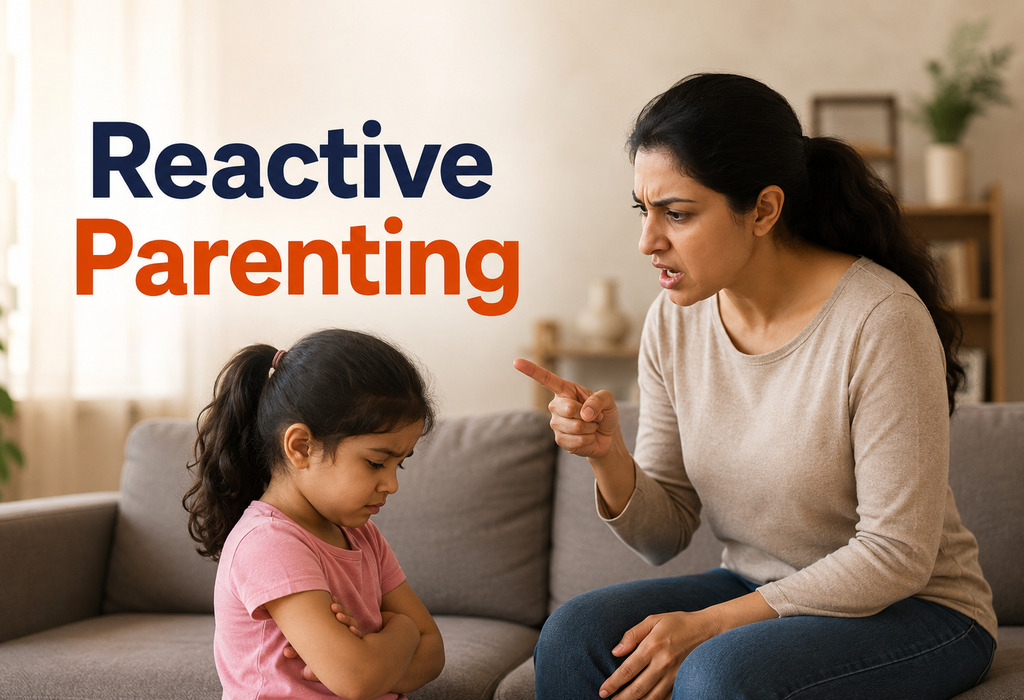
Reactive Parenting: Effects and Ways to Break the Cycle
Every parent has had a moment where a child’s whining or a public tantrum triggered a response they later regretted. That snap reaction, the raised voice that comes out before you’ve had time to think, is the hallmark of reactive parenting. It isn’t a character flaw. It’s a pattern, often rooted in stress or your own upbringing, and like any pattern, it can be recognised and changed. This article covers what reactive parenting looks like day to day, why it develops, how it affects children, and practical steps to respond instead of react.
What Is Reactive Parenting?
Reactive parenting is a style where a caregiver’s actions are driven by immediate emotional impulses rather than a thought-out approach to discipline or connection. Instead of pausing to consider the best response, a reactive parent acts on the first wave of frustration, fear, or embarrassment that arises.
This isn’t the same as occasionally losing your patience, which happens to every parent. Reactive parenting becomes a pattern when the same situations, such as whining, defiance, or public meltdowns, repeatedly trigger the same impulsive responses, like yelling, threatening consequences, or handing out punishments in the heat of the moment.
Why Reactive Parenting Happens
Reactive responses rarely come out of nowhere. They usually build from a few overlapping factors, including:
1. Chronic Stress and Exhaustion
A sleep-deprived parent juggling work and a toddler’s tantrum has a shorter fuse than a well-rested one, since stress lowers the threshold for what counts as “too much.”
2. Unprocessed Childhood Experiences
Many parents unconsciously repeat the discipline styles they grew up with, even ones they disliked, because those patterns feel familiar under pressure.
3. Lack of a Game Plan
Without a clear approach to common flashpoints like bedtime resistance or grocery store meltdowns, parents default to whatever feels urgent in the moment.
4. Feeling Judged
A tantrum in public can trigger embarrassment, which often escalates a parent’s response beyond what the situation calls for.
Recognising these root causes matters, because reactive parenting is rarely about the child at all. It’s usually about the parent’s internal state colliding with a hard moment.
Reactive Parenting Examples
Seeing reactive patterns in action can make them easier to spot in your own home. Common patterns that fit this style include:
Yelling “Stop it right now!” the instant a child starts whining, without addressing why it started.
Threatening to leave a store during a meltdown, then not following through.
Giving in to a demand just to stop a public tantrum, even when it’s normally not allowed.
Snapping at a child over a minor accident, like spilling milk, in a tone disproportionate to the event.
Comparing a child unfavourably to a sibling in the heat of frustration.
Each of these examples of reactive parenting shares a common thread: the response is driven by the parent’s discomfort rather than a considered plan for guiding behaviour.
Signs You Might Be an Emotionally Reactive Parent
It can be hard to see your own patterns clearly, especially in the middle of a hard day. A few signs tend to show up consistently in someone who reacts on emotion first and thinks second:
You often feel regret or guilt shortly after responding to your child.
Your tone or volume shifts dramatically within seconds of a trigger.
You find yourself saying things you don’t actually mean, like empty threats.
Your child seems to hesitate before telling you things.
You struggle to explain your reasoning calmly once the moment has passed.
None of these signs mean you’re a bad parent. They point to a pattern worth examining, and awareness is genuinely the hardest part of the process.
Comparing Reactive and Responsive Approaches
Trigger response
Immediate emotional reaction
Brief pause before responding
Consistency
Varies by mood or stress level
Consistent regardless of mood
Communication
Often raised voice, sharp words
Calm, clear explanations
Child’s experience
Uncertainty about what to expect
Predictability and security
Long-term goal
Stopping the behaviour fast
Teaching a skill or lesson
Parent’s emotional state
Driven by frustration or fear
Regulated, even under stress
This isn’t about labeling one parent “good” and another “bad.” Most parents move between these styles depending on the day and how many stressors are competing for their attention. The goal isn’t perfection, it’s shifting the balance toward the responsive end over time.
Effects of Reactive Parenting on Children
Growing up with consistently reactive parenting can shape how children understand themselves and their relationships. Although occasional reactive moments are a normal part of parenting, they don’t define a child’s development. It’s the consistent, repeated pattern that tends to leave a lasting mark.
1. Emotional Regulation Struggles
Children partly learn to manage big feelings by watching how the adults around them handle stress. When a parent regularly reacts with anger or panic, children may struggle to build their own calming strategies.
2. Reduced Trust and Openness
If a child anticipates an unpredictable or harsh reaction, they may become less likely to share mistakes or fears, creating distance in the relationship over time.
3. Anxiety Around Mistakes
Kids raised in reactive environments sometimes develop a heightened fear of getting things wrong, since past errors were met with strong emotion rather than calm guidance.
4. Modelling Reactive Behaviour
Children are natural imitators, and one frequently exposed to reactive responses may adopt similar patterns, reacting to frustration with outbursts rather than problem-solving.
How to Stop Being a Reactive Parent
Shifting away from reactive patterns takes practice, not perfection. These strategies can help build that shift over time.
Build in a pause: Even five seconds of silence before responding gives your brain time to move past the initial emotional surge, whether that’s counting to five or simply stepping back before speaking.
Name your triggers: Keep a mental list of situations that reliably set you off, like whining at dinner or dawdling before school, so you can prepare a calmer response in advance.
Prepare a few go-to phrases: A simple script, such as “I can see you’re upset, let’s figure this out together,” takes the pressure off improvising mid-meltdown.
Address your own stress first: Sleep, meals, and short breaks change how much emotional bandwidth you have left, and reactive responses often ease once basic needs are being met.
Repair after a reactive moment: If you do snap, circling back afterwards to acknowledge it models accountability and rebuilds connection quickly.
Get support when needed: A therapist or parenting coach can help uncover deeper patterns behind reactive responses, especially ones rooted in your own upbringing.
Common Mistakes Parents Make When Trying to Change
Changing long-standing parenting habits takes time, and setbacks are part of the process. Here are a few common mistakes that can make the shift more difficult than it needs to be.
Expecting instant results:Long-standing patterns take repeated practice to shift, and setbacks are part of the process, not a sign of failure.
Ignoring your own stress levels: Trying to parent more calmly while running on no sleep rarely works, since the underlying stress hasn’t been addressed.
Skipping the repair step: Moving on without acknowledging a reactive moment to the child misses a chance to model accountability.
Only focusing on the child’s behaviour: Real change usually requires looking at the parent’s own triggers, not just trying to control the child’s actions.
Being too hard on yourself: Harsh self-criticism after a reactive moment adds stress, which ironically makes future reactive responses more likely.
Myth vs. Fact
There’s no shortage of parenting advice, and not all of it is accurate. Here are some common myths about reactive parenting and what the evidence actually says.
Reactive parenting means you’re a bad parent.
Reactive parenting is a common pattern, often shaped by stress and past experiences, not a measure of how much you love your child.
Once you’re a reactive parent, you always will be.
With awareness and consistent small changes, most parents can shift meaningfully toward a calmer, more responsive style.
Staying calm means never showing emotion.
Responsive parenting still allows for genuine emotion; it simply involves managing the intensity and timing of the response.
Reactive parenting only affects toddlers.
The effects can extend into the school-age years and beyond, shaping how children handle stress and relationships later in life.
FAQs
1. Is reactive parenting the same as yelling at your child?
Yelling can be one expression of reactive parenting, but the pattern also includes other in-the-moment responses like giving in to demands, issuing empty threats, or overreacting to small mistakes. The common thread is an unplanned emotional response rather than the specific behaviour itself.
2. Can reactive parenting be unlearned?
Yes. While it takes consistent effort, most parents can shift toward a calmer, more responsive style by identifying their triggers, building in a brief pause before responding, and repairing after reactive moments. Progress tends to happen gradually rather than overnight.
3. When should I seek professional support for reactive parenting?
If reactive responses are frequent, feel out of your control, or are affecting your relationship with your child despite your efforts to change, a therapist or parenting coach can help identify underlying causes and build more effective strategies.
Reactive parenting is far more common than most parents realise, and recognising it in yourself is not a failure, it’s the first step toward change. By understanding your triggers, pausing before responding, and repairing the moments when you do react, you can gradually shift toward a calmer, more predictable style that helps your child feel secure. Progress is rarely linear, but every small shift adds up.
Read more

50 Acts of Kindness Ideas for Kids
Parents generally tend to focus on providing the child with the right kind of education, the perfect school, and ensuring he learns the skills required to be a productive individual. However, there are rare times when a child’s social growth and compassionate behavior are put in focus as well. In today’s world, kindness is taking a backseat with most people preferring to be selfish and uncaring towards others. Here’s your chance to make the next generation better than us.
Why Are Random Acts of Kindness Important for Children?
Many believe that being kind actually makes you naive and gullible, leading you to lose out to competition in life. But studies show otherwise. Kids who are kind to other children around them are more readily accepted by their classmates. Everyone wants to be treated kindly and seeing someone as a kind person helps you form a bond with them. The instances of bullying, bunking school, and unfounded violence begin to fade away when the benefits of kindness start getting visible. The random acts of kindness help your child in understanding that a kind act should not be looked at as a deal or a trade. It should come from within, from the heart.
Ways to Teach Your Child the Importance of Kindness
To understand the best way of teaching kindness to children, activities can always be useful, but so can everyday behaviour that helps inculcate kindness as a way of life.
1. Lead By Example
The easiest way for your child to be a kind person is to see you be one. Children readily emulate various traits and habits of their parents. If you tend to behave rudely, your child will end up looking at the world from the same eyes. By behaving kindly with others, you set an example for your child to look up to and do the same in his life.
2. Expand Their World
A child’s world is pretty small inside his head. His school, friends, toys, and family. That’s pretty much everything for him. This is why the concept of understanding random acts of kindness dawns a little late on them. Talk to them about the world and the people living in it. Open their eyes to other individuals in the school, the many people in the streets you cross daily, and let them know why kindness is so important today.
3. Make It a Habit, Not a Duty
Kids hate duties or chores and will do them simply to appease you. You wouldn’t want your kid to be kind just because you ask him to. This is a value that he needs to inculcate within himself. This can be achieved only by practising kindness on a daily basis. Let it be as small as waving to the fruit-seller you see every day on the way to school. Tiny habits come together to form a personality trait.
4. Let Them See the Power of Action
Teaching your child about kindness is one thing. But, once they see it happen in real life, there is no turning back. Ask your child to go and compliment a shopkeeper, or gift a toffee to a policeman standing on the road. Let them hear the words of thankfulness and experience the happiness that comes with helping someone.
5. Smile More to Be Kind
Not all kindness needs to manifest in the form of action. Even a small gesture of acknowledgement can improve someone’s day. Smile at people you see every day and wave to the ones you know well. Those are enough to make someone happy for the entire day.
6. Begin Young
As your child grows up, his habits start solidifying and introducing new ones, especially selfless ones, start getting difficult. Teach your child to be kind while he is a kid so that it integrates with his personality by the time he becomes an adolescent.
7. Join Him in Being Kind
Your little boy cannot do this all by himself. And it isn’t too late for you to start being kind again as well. Go with your child to encourage him to act kindly with others. Pick a day and a location and decide to smile at everyone you see them. Help your child take the first steps.
8. Clarify the Purpose
Make sure your child sees kindness for the altruistic act that it is. And not something to show off or expect something in return. That not only defeats the entire purpose of kindness but might make your child start doubting anybody else who is kind to him. This can even cause behavioral problems.
9. Kindness and Success
Later in life, your child will begin to associate success by comparing himself with others, leading him to be less kind to others in the effort to be better himself. Talk to him about what true success means and how kindness is an internal success that nobody can take from him.
10. Don’t Be Kind Alone
Let your child get together with his friends and organize a random act of kindness. Let him know that everyone is on the same side when they are kind and if someone isn’t actively kind, you shouldn’t end up judging the person for it.
List of Random Acts of Kindness for Kids to Try
Here’s a list of acts of kindness your kids would enjoy.
Writing a letter to a friend and posting it.
Thanking different staff members of the school.
Giving water to a thirsty child.
Clean the toys at home by himself.
Make a handmade gift for a friend’s birthday.
Giving healthy sweets to a police official.
Helping someone with their bags at a supermarket.
Replacing birthday gifts with donations to charities.
Write a song for someone you know.
Give old toys and books to an orphanage.
Leave a small lovely note for mommy in the kitchen.
Give free hugs whenever you can.
Use old printed papers to practice drawing.
Teach your friend a new activity you’ve learnt.
Bake muffins with your mom and give them to random people.
Clean the blackboard in the classroom before your teacher enters.
Play with someone you don’t know at the playground.
Say “thank you” to the bus driver.
Talk to faraway relatives regularly over video calls.
Make your bed and clean the room without mom asking you to.
Make popcorn yourself in advance for a movie night.
Help take care of someone’s dog while they’re travelling.
Assist elderly people with their luggage.
Gift your sick friend a “get well soon” card.
Work with your mom in helping her with dinner.
Get a packet of biscuits for your society’s watchman.
Save a little money in a kindness jar every day and use it for a random act.
Be polite, smile, and say “thank you” to servers in hotels and restaurants.
Brush your teeth with the tap shut off.
Write a letter to your principal, praising your teacher.
Play with kids from another school.
Remember to say hello and goodbye.
Read a book or a newspaper for your grandmother.
Talk to a friend you haven’t spoken to in long.
Collect any old clothes and donate to an orphanage.
Get flowers for your doctor during your visit.
Help your neighbour with his grocery shopping.
Talk to new kids at school.
Help set up the plates for meals on weekends.
Make lemonade for everyone randomly.
Walk your friend’s dog.
Plant a tree.
Give your postman a thank-you card.
Wash your dad’s vehicle.
Crack a joke out of the blue.
Leave a paper note in a library book.
Feed pigeons and birds with grains.
Wash your plates after eating.
Give a new kid a friendship bracelet.
Share an umbrella.
Random acts of kindness are not difficult to come up with. They are the most obvious ones once you start looking at the world with humane eyes. Let your child be that from his childhood, and he will grow up to be a wonderful human being loved by all.
Also Read: Good Habits for Kids
Read more

15 Helpful Parenting Tips for Preschoolers
If you’re a parent to a preschooler who is brimming with energy and is curious about every little thing, it must be hard for you to keep up with his energy levels. Your little bundle of happiness must be keeping you on your toes all the time. And at times, you may find it challenging and tiring to run after your little one. Raising kids is one of the most challenging jobs, but you don’t have to do it all alone. We’re here to help you! We bring some parenting tips for preschoolers that will help you raise your preschooler just the way you want. These parenting tips for preschoolers’ behaviour will ensure the right path for their creativity and exploration.
Why Is It Important to Parenting Your Preschooler Well?
Preschoolers’ curiosity knows no bounds. In this quest for the curiosity of knowing, ‘What is that?’ ‘Why is that?’ ‘How is that?’ and ‘Where is that?’ they often behavioural limits, not knowing what will happen next. This is why you must have seen children between 3 and 5 often stirring up trouble if you leave them off your sight for even one second. One moment, they are standing beside you, and the other moment, they are pulling a cat’s tail or touching something dangerous.
It’s not that they want to upset you or try to be malicious; they are simply curious, and their curiosity leads them to do things. This is why parenting a preschooler well in their early years with limits, rules, and boundaries is important for parents and caregivers. Rules and boundaries are not for ending their fun or hindering their creativity but to provide the answers they want and keep them safe. Establishing rules and enforcing them in the house and outside helps children learn discipline, build a reliable structure of living, and keep them safe and secure.
Best Parenting Tips for Preschoolers
The brain development during preschool years is categorised as “blossoming” with dynamic and physiological changes (1). This is the reason it is the right time to instil some rules and discipline in children’s lives that will pave the way for future discipline. Here are some parenting tips for kindergarteners that parents of preschoolers can follow.
1. Polish their communication skills
Communication skills of toddlers are important. The clearer their communication skills are, the better they will fare with other kids and teachers once they start going to preschool. This is the time for language polishing through reading, singing, and engaging in activities (2).
2. Teach them to be good listeners
We all know that it’s challenging to contain the curious mind of toddlers. However, when in preschool, your little one will have to take part in various activities, such as singing, drawing, listening to the teacher’s explanations, and so on. All these will require your toddler to sit still and pay attention. Being a good listener will help him proactively take part in various activities in preschool.
3. Encourage teamwork
Once your toddler starts going to school, he will be spending good 4-5 hours with his peers and teachers, and take part in various group activities. To ensure that your little one talks to other kids and engages with them, he needs to learn about teamwork. While he may be the centre of attention at home and all his demands must be fulfilled, the same won’t happen in school. To ensure that your munchkin gets along with other kids, you will need to teach him about teamwork. You can help build this skill in your toddler by playing games with him at home.
4. Teach them to follow instructions
This is a must! You must teach your little one to follow instructions and directions given to him. In preschool, your child will have to listen to his teacher and follow his instructions, so you must prepare him for the same. And you can do so by all by means of fun and games.
5. Help toddlers to work with stationery
Preschools offer various activities that require the use of objects such as pencils, crayons, scissors, and wax or colour pencils. You can help your toddler how to handle them correctly by encouraging activities like drawing and painting. Depending on age, they can be taught how to write strokes of alphabets, numbers, etc.
6. Encourage them to be independent
Your child needs to be independent and learn to do certain activities on his own when he starts going to preschool. At home, you will be there to wipe your toddler’s face or help him wash his hands after his mealtimes or playtime. But in preschool, he might have to do it all by himself. So, you need to teach him a few things before he goes to preschool. Learning these little tasks will instil a sense of responsibility and independence in toddlers, which will help them in life. You can start making them responsible and independent from home by staring with asking them to help you with house chores (3).
7. Have a set routine
Having a set routine for various activities, such as playing, meals, snacks, sleep, etc., is important for both of you. Not only will it teach discipline to your kid, but it will also help you manage your own time efficiently. Another advantage is that you won’t have to run after your toddler every day for meals or bedtime.
8. Try not to be too strict
Discipline should not be confused with strictness. Children tend to be stubborn if you are too strict with them. So, you need to talk to your child in a friendly manner and win his trust so that he can communicate with you without fear. It will also help you to have a strong bond with your child. But it is also important to be clear and consistent with your child when you are disciplining them (4).
9. Don’t give in to their tantrums
Having said that, you can’t be too mellow as well! Try to find the right balance that is neither too strict nor too soft. Don’t put a blind eye to your child’s tantrums. Instead, direct him to do something else if he is throwing a tantrum over a specific thing. The best way is to identify the cause of such behaviour and address it.
10. Don’t treat them like an adult
Sometimes, parents expect way too much out of their children. You may want to treat your child like an adult, but you have to understand your little one is still at a learning stage and that he is a kid. Don’t expect to understand everything you tell him immediately. Have patience, and let him learn at his own pace. The important thing is that you encourage him to learn and keep trying. You may want to find out what interests and motivates your child. Be creative when you give him a task, and ensure that it’s fun for both of you rather than a chore which you have to go through.
11. Don’t be a “no” person all the time
It might be challenging, but there are ways to go about it! Try not to say “No” very often. Kids’ hearts are sensitive, and they may feel unloved or undesirable if you say no to them often. If you say ‘no’ to everything to your child, it may lead to a rebellious attitude in him. Try talking to your child in a gentle way when you’re saying no. Explain why you are saying ‘no’ and he will understand.
12. Praise them for being good
We all love it when we are praised for our efforts. The same is with kids. In order to raise an independent and responsible child, you have to encourage them every. If they do something wrong, then let them know why it is wrong. Such awareness will make them conscious of what they are doing, and whether their actions will have a negative consequence.
13. Don’t put too many things on their plate
Every child is different and learns at his own pace. As a parent, of course, you will have certain expectations of your child. However, it is also the job of a parent to understand their child and accept his capabilities. It’s important not to put too many things on toddlers’ plates at once; remember, they are too young and still learning. Maintain a balanced schedule that is comfortable for your toddler.
14. Be a role model to them
Your children will be spending most of their time with you. How you behave, what you do, how you do things, and more will impact your child’s development. Be a role model to your child, so he can look up to you and follow in your footsteps.
15. Create a strong bond
Raising a child can be challenging but it’s a rewarding experience too. So enjoy the little things with your toddler and engage in fun activities together. Doing simple things together will help you create trust and a strong bond with your child. You should be a parent as well as a friend to your kids, and someone your child can rely on without hesitation.
Common Mistakes Parents Make With Preschoolers
No parent wants less for their kids; every single one of them thinks best for their child’s interests. However, many a time, those good intentions backfire or demotivate their child. Below are a few common mistakes that parents should avoid with their preschoolers:
1. Setting a Bad Example
Little ones are impressionable and they learn by observing their parents and surroundings. If you want to teach them a good habit, then start the change from within yourself first. You can’t expect them to eat a healthy meal when you are living on potato chips and cookies. If you want to inculcate reading habits in your child, you will have to show them.
2. Saying Yes Always
Do not give into your child’s demand almost always. If you always say ‘yes’ to your child, he will ask for anything and everything. Don’t let your child manipulate you; when it’s time to say no, say it clearly. Also, explain to your child why you are saying ‘no’.
3. Being Overprotective
It’s natural for parents to be protective of their kids, but being overprotecting hinders their growth. They start to rely way too much on their parents for almost everything. When parenting preschoolers, you should let them initiate things which they are capable of doing on their own. If your child falls while playing or walking, don’t rush to him each and every time. Let him learn how to stand up on his own. Watch and observe, and help him if he needs it. Let him grow!
4. Bribing Them
Bribing kids with chocolates or other treats to make them do something is a common approach, but something parents should avoid. For example, offering a piece of cake for eating veggies won’t help them like veggies. It might backfire as well, and they might start to hate it.
5. Comparing With Siblings
Many parents forget that every child is different and unique. Don’t compare children with their siblings. Such behaviour will discourage them and make them feel unloved. They may start to harbour hatred towards their siblings as well.
When to Be Concerned About Your Preschooler’s Behaviour?
It is important for parents and caregivers to always be on alert to detect anything wrong with their child’s usual behaviour. If you see a difference in their behaviour pattern, learning, and regulating their emotions than their usual behaviour, you should consider talking to a paediatrician or a child psychologist or therapist.
1. Anxiety and Depression
Although uncommon, preschoolers, too, are under the radar of developing anxiety and depression. Some common symptoms to look out for in children are:
Acute separation anxiety
Extreme fear of going to school or attending social events
Lack of interest in doing fun activities
Changes in eating habits and sleeping patterns
Extreme lethargy
Developing fears or phobias
Frequent anger or irritability
2. Behavioural or Conduct Disorders
It is common for preschoolers to test behavioural and social boundaries, but when the disruptive behaviour becomes repetitive, it indicates a problem.
Refusing to obey rules,
Showing unnecessary temper in a situation, and
Intentional violence and aggression towards animals and other kids are common signs of behavioural or conduct disorder in preschool children.
3. Learning Disorders
Children with behavioural or developmental disorders often have accompanying learning disorders, such as (5):
Attention deficit hyperactivity disorder (ADHD)
Autism spectrum disorder (ASD)
Dyslexia
Speech delay or speech disorders
FAQs
1. What are the developmental milestones of preschoolers?
Developing language, mastering their fine motor and physical skills, and learning about their surroundings are the major milestones of preschool children. They also learn to engage in imaginative play, learn to name colours, distinguish body parts, and other physical entities like house, plate, table, chair, etc., and express their emotions.
2. What is the most important tip for parents of preschoolers?
The world of make-believe is not new for preschoolers, but that does not mean they cannot distinguish between what is real and what is pretend. Although the guesses may not always be correct. This is the time for parents to introduce children to real-life media like animals, plants, and birds, and also fictional worlds with dragons and unicorns. Just make sure you are not exposing your child to inappropriate content.
3. When is a child ready for kindergarten learning?
Most children by the age of five are almost ready to attend a preschool or kindergarten (6). The best cue is that your child is feeling comfortable with other people other than the primary caregiver and is showing readiness for learning.
4. What if my preschooler nitpicks while eating?
If your child is nitpicking or refusing to eat certain foods, don’t force them to eat. Instead, find creative ways to make them eat while respecting their limits. Try making sandwiches with funny faces or buritos in the form of caterpillar. Ask them if any food, flavour, or texture is bothering them and change that if it does.
Parenting a preschooler is challenging, but it’s full of fun as well. At times, you may find it difficult to keep up with your child’s energy levels and curiosity, but you know it well that your child couldn’t have asked for better parents. Refer to these parenting tips if you need help and trust your parenting style. We know you’re doing a great job!
References/Resources:
1. Brown TT, Jernigan TL. Brain development during the preschool years. Neuropsychol Rev.; PubMed Central; https://www.ncbi.nlm.nih.gov/pmc/articles/PMC3511633/; December 2012
2. Ultimate Guide to Parenting Preschoolers (3-5 Years); Family Resource Centers; https://www.nantucketfamilyresourcecenter.org/ultimate-guide-to-parenting-preschoolers-3-5-years/
3. Positive Parenting Tips: Preschoolers (3–5 years old); CDC; https://www.cdc.gov/child-development/positive-parenting-tips/preschooler-3-5-years.html
4. Helpful Tips for Parents of Pre-K Children (4-5 years); Department of Lifelong Education, Advancement, and Potential, State of Michigan; https://www.michigan.gov/mikidsmatter/parents/pre-k/parenting
5. Children’s Mental Disorders; CDC; https://www.cdc.gov/childrensmentalhealth/symptoms.html
6. Getting You and Your Child Ready for Kindergarten; Department of Lifelong Education, Advancement, and Potential, State of Michigan; https://www.michigan.gov/mikidsmatter/parents/pre-k/faq-transition-to-kindergarten
Also Read:
Developmental Disorders in Preschoolers
What Is The Best Age To Start Preschool for Kids?
Ways to Manage Separation Anxiety in Preschoolers
Read more

Attention Seeking Behaviour in Children – Causes & Solution
Attention is a basic human requirement which arises from attachment. Thus, every child craves attention, especially from their parents. Due to today’s culture of work and hustle, most parents are unable to spend quality time with their children. As a result, a child can feel left out, leading to a sense of emotional deprivation. Feeling left out often triggers attention-seeking behavior as the child tries to reclaim the connection they feel is missing. Over time, if this need remains unmet, it can escalate into extreme attention-seeking behavior in a child, where they might engage in increasingly disruptive or even self-destructive actions just to get noticed. Such behavior is often a cry for help, signaling that the child is in desperate need of attention, reassurance, and validation. Read on to learn more about attention-seeking behavior in children, why it occurs, and how to effectively address and mitigate it.
What Is Attention-Seeking Behavior in a Child?
Have you ever faced problems with your child, such as lying down in the shop because he wants a specific toy, or causing a scene at the park amidst other siblings by stealing ice cream, or bullying other kids? These are examples of attention-seeking behavior, and sometimes it goes to an extreme, to the point where you get glares and glances from outsiders and other parents.
Causes of Attention-Seeking Behavior in Children
Attention-seeking behavior in children can stem from various underlying causes, often rooted in their emotional and psychological needs. Understanding these causes is essential for parents to address the behavior effectively and foster a healthier relationship with their child. Here are some common causes:
1. Lack of Quality Time with Parents
When children feel that they are not receiving enough attention or quality time from their parents, they may resort to attention-seeking behaviors to fill that void. This need for connection is often a child’s way of expressing their desire for more interaction, love, and support.
2. Inconsistent Discipline
Inconsistent discipline can confuse children, leading them to act out in search of boundaries. If a child receives mixed signals—such as being ignored sometimes and punished at other times for the same behavior—they may engage in attention-seeking actions as a way to test limits and understand what is acceptable.
3. Emotional Insecurity
Children who feel emotionally insecure or lack self-confidence may seek attention as a way to reassure themselves that they are valued and loved. This behavior can manifest in various forms, such as exaggerating situations, feigning illness, or causing disruptions to ensure they are noticed.
Signs of Attention-Seeking Behavior in Children
Attention-seeking behavior in children can manifest in various ways, often as a response to unmet emotional needs. Recognizing these signs early can help parents address the underlying issues and provide the necessary support. Here are some common signs to look out for:
Faking illnesses to get some of your time
Causing drama or throwing tantrums at home or in public settings
Causing harm to others and trying to play hero
Creating problems that make one parent argue with the other
Playing the victim by magnifying the proportion of simple, everyday problems
Showing that they are super busy and completing everything on time, or before
How Much Attention Is Enough for Your Child?
How much attention is enough for your child will depend on the child’s personality, behavior, and daily routine. Your child may feel satisfied with the attention he receives at home, but may be disappointed in the classroom, in which case, you may need to talk to the school counsellor or concerned teachers to make room for opportunity to shine by asking questions and encouraging participation in group discussions.
Giving your child 100% of your attention at home for at least some time of the day, fully and uninterrupted, is highly recommended. The reason behind this is if you don’t spare your attention for your children, they may end up causing temper tantrums or throw fits in other settings to cause a scene.
Types of Attention
There are different types of attention-seeking behaviors. However, just like behaviors, there are ways of approval and rewards that come with adult attention. They are listed below.
1. Positive Attention
If you find your child doing something good, give him words of encouragement, or reinforce that action with positive rewards. This is called positive attention. A pat on the back, a gentle hug, words of praise, and small smiley doodles or notes in their notebooks or lunch boxes work just as well.
2. Negative Attention
When your child misbehaves, and you get upset as a result, you might scold him. This attention that you are now giving your child is called negative attention. This can be in the form of scoldings, lectures, or punishments. If your child is actively seeking attention from you, this type of negative attention will not serve to reduce instances of his misbehavior, but will instead increase it. Thus, it will turn into a cycle of constant mischief and constant negative attention from you.
3. No Attention
No attention is when you aren’t paying attention when your child is doing something good; it means that you pay attention only when your child is misbehaving, and you are missing his positive-attention behavior. For example, two brothers who are usually messy or destructive in behavior are quietly watching TV together. Their parents don’t acknowledge or respond to this positive change. This is an example of paying no attention. On the other hand, if the brothers do misbehave again, the parents are quick to notice and respond with scolding.
Emotional Issues Behind Your Child’s Attention-seeking Behavior
The emotional issues or causes of attention-seeking behavior in children are –
Your child has trouble making friends at school.
He doesn’t get enough attention from you at home.
He feels lonely or left out amidst other siblings.
He feels ignored due to parents being busy or working too much.
He doesn’t get enough attention at school or in other social settings.
Past experiences or trauma.
How to Deal With Attention-seeking Behavior in Kids
Here are tips for dealing with attention-seeking behavior, or learning how to stop this behavior in children –
1. Give More Positive Attention
Help your kids with kitchen chores or praise them for spending time with themselves quietly, like watching TV or drawing. If they have talents, ask them to practice them and praise them for putting effort into them.
2. Ignore Bad Behavior
Bad behavior comes with no rewards. Make that known through your ignorance to your child’s whines and tantrums. In time, he will realise that, and slowly change his behavior for the better.
3. Give Options
Giving your child options will make them feel seen by you. Providing options also helps if he throws tantrums during simple tasks, such as dressing himself, or eating his meals. You can ask him what he would like to wear today, or what dessert he would like to eat after he has finished his vegetables.
4. Give Alone Time
Set aside 5 to 10 minutes of uninterrupted alone time that your child can spend with you and your spouse each, separately. Before bedtime, or any time that both you and your spouse can freely spare, can work.
Dos and Don’ts for Parents of Children with Attention-Seeking Behaviors
Below, we have some dos and don’ts of dealing with attention-seeking behavior in kids –
Dos
Try to ignore: If your child is screaming or yelling or simply causing a ruckus verbally, don’t be afraid to tell him that he won’t be given chocolate or extra TV time because of his actions, and that you’ll hear him out once he calms down.
Create a rules list: List out the rules of the house, and consequences for breaking each. For screaming, it could be 10 minutes cut from normal TV time, and for making a mess, it could be going to bed early, and so on. Create this chart with your kid, and hang it up at eye level in a place where he can see it regularly. Stick to this chart no matter what, and you’ll slowly notice your child making changes in his behavior.
Give attention mindfully: This is not to say that the rules cut out attention from your side. Come together as a family for dinners, conversations, and bedtime reading. Do little things that bring joy to your child’s daily life, but remember to enforce the rules and be consistent about playing out the consequences when the rules are broken. Your child will only take the rules seriously if you’re consistent and serious from your end.
Don’ts
Scream: It’s natural to feel angry or frustrated, but never lash out at your kids by screaming or losing emotional control from your end. Whenever you feel like you’ll lose your cool, feel free to move away and take a break. Don’t be afraid to tell your child that you’re taking a break because you’re not in a state to handle his whining currently, and will be back after a few minutes after he quietens down. Practice deep breathing exercises, and meditate for a few minutes every day to be calm and composed.
Guilt-trip your kids: Don’t make them feel guilty, or emotionally blackmail them. If you feel out of it, just tell your child you’re tired after a day’s work, and won’t be able to resolve his situation today since you don’t have the energy to do so. Make it clear that you won’t be able to keep him company on that day if he continues whining or yelling, and move out of the room instead. Even kids have feelings; they will surely understand.
Think that it’s a clinical disorder: Most parents think that their kids’ temper tantrums are linked to ADHD or other medical disorders. Don’t assume that. Sometimes it’s perfectly normal for kids to scream and yell, since they are at that stage of development in their lives. However, if your child is cutting himself or participating in dangerous situations, or causing harm, then seek out a medical specialist for help.
FAQs
1. Can attention-seeking behavior in children be a sign of an underlying mental health issue?
Yes, in some cases, persistent attention-seeking behavior in preschoolers can be a symptom of underlying mental health issues, such as anxiety, depression, or even a developmental disorder like ADHD. It’s important to observe other behaviors and consult a healthcare professional if you suspect there might be deeper concerns.
2. How does birth order influence attention-seeking behavior?
Birth order can play a role in attention-seeking behavior. For instance, middle children may feel overlooked compared to their older and younger siblings, leading them to seek attention in different ways. Similarly, the youngest child might display attention-seeking behavior to compete with older siblings for parental focus.
3. Can attention-seeking behavior in children affect their social relationships?
Yes, attention-seeking behavior can negatively impact a child’s social relationships. Peers may find the behavior annoying or disruptive, leading to social isolation or difficulty forming lasting friendships. It’s important for parents to guide their child in developing healthier ways to interact with others.
4. How does screen time influence attention-seeking behavior in children?
Excessive screen time can contribute to attention-seeking behavior. Children who spend a lot of time on screens may struggle to engage in real-life social interactions, leading them to seek attention in disruptive ways. Limiting screen time and encouraging more face-to-face communication can help mitigate this issue.
And, that’s it! Just try out the tips above, and keep these pointers in mind to fix attention seeking behavior in children in school and home, and we’re sure you’ll notice positive changes soon. And remember the magic word – time!
References/Resources:
1. Bosmans. G, Braet. C, Heylen. J, Raedt. R; Children’s Attentional Processing of Mother and Proximity Seeking; PLoS One; https://journals.plos.org/plosone/article?id=10.1371/journal.pone.0124038; April 2015
2. Downey. C, Crummy. A; The impact of childhood trauma on children’s wellbeing and adult behavior (European Journal of Trauma & Dissociation); Science Direct; https://www.sciencedirect.com/science/article/pii/S2468749921000375?via%3Dihub; February 2022
3. Hong. Y, Park. J; Impact of attachment, temperament and parenting on human development; Clinical and Experimental Pediatrics; https://www.e-cep.org/journal/view.php?doi=10.3345/kjp.2012.55.12.449; December 2012
4. Wagner. L; The Social Life of Class Clowns: Class Clown Behavior Is Associated With More Friends, but Also More Aggressive Behavior in the Classroom; Frontiers; https://www.frontiersin.org/journals/psychology/articles/10.3389/fpsyg.2019.00604/full; April 2019
5. Olofson. E, Schoppe-Sullivan. S; Same Behaviors, Different Outcomes: Mothers’ and Fathers’ Observed Challenging Behaviors Measured Using a New Coding System Relate Differentially to Children’s Social-Emotional Development; MDPI; https://www.mdpi.com/2227-9067/9/5/675; May 2022
6. Koepp. A, Watts. T, Gershof. E, Ahmed. S, et al.; Attention and Behavior Problems in Childhood Predict Adult Financial Status, Health, and Criminal Activity: A Conceptual Replication and Extension of Moffitt etal. (2011) Using Cohorts From the United States and the United Kingdom; American Psychological Association; https://www.apa.org/pubs/journals/releases/dev-dev0001533.pdf
Also Read:
Child Behavior Checklist
Bullying Behavior in Kids
Behaviour Charts for Children
Common Behavior Disorders in Children
Tips for Handling Negative Behaviour in Kids
Read more

Role of the Family in a Child's Development
Humans are social animals, and, thus, social structure plays a pivotal role in their development. The initial social interactions a baby experiences typically occur within their family circle, making immediate family members the primary social group. So, what role does a family play in a child’s development? The family plays multifaceted roles in a child’s development, serving as the primary source of emotional support, moral guidance, and cultural transmission. Additionally, family dynamics significantly influence cognitive and behavioral patterns, shaping the individual’s worldview and interpersonal skills from an early age. Thus, the family unit serves as the cornerstone of a child’s social and psychological development.
How Does the Family Influence a Child’s Development?
Family members are the first few people that a child interacts with and, thus, the role of the family in the socialization of a child cannot be undermined. It is because of these interactions that may help a child to have a better understanding of himself and of people around him. The way a child is loved, cared and nurtured at home provides the opportunities for a child to thrive better in his life. A family’s impact on child development is like a foundation, which may help in shaping up the future of a child. Here are some ways a family may influence a child’s development:
1. Values
A child is like a sponge and absorbs whatever he may notice or observe. This leaves a big onus on the parents because the child may eventually learn from the parents. Therefore, if you respect a certain section of society or give more preference to some people, your kid may be making his opinions in a similar manner. When you may behave in a disrespectful manner with somebody, your kid may be observing that too. The best way to teach a child is to lead by example, more than preaching it is what you may be practising that your child is more likely to follow.
Also, it will be a good idea to start inculcating good values from a younger age only. Many believe that a younger child may not be able to appreciate or understand the importance of learning good values, but that may not be true. Kids understand better when you make them understand the consequences of their actions. Help them know what may happen if they do things a certain way and vice-a-versa. Therefore, it is very important for a family to inculcate good values in their child.
2. Socialisation and Social Development
The family is your baby’s first social group. This means whatever your kid may be learning, he may be learning by observing the family members. It is observed that happy families or families that treat each other with love and respect help in giving a positive outlook of a family with their kid or share a positive example of social interaction. If your family spends quality time by having meals together, watching television together or spends time doing other such things together, it may help in fostering healthy social development.
Also, your interactions with your child help him in learning about interaction with others. It is the way a family interacts with a child that may help a child to understand relationships better. He may learn how to feel comfortable, make friends or trust people from his own family only. Relationships are very important for human survival, and your kid may learn to make and sustain relationships from his family. The foundations of good social skills are laid at home, which may help your kid to have better social skills and help him socialise better as he grows.
3. Developmental Skills
It is very important for a child to learn various developmental skills such as motor skills, cognitive skills, emotional skills and language skills for his optimal growth and development. For helping your child polish his motor skills, you should involve your kid in various kinds of physical activities that may help him tune his motor skills. What may seem ordinary or comes naturally to you as an adult may be a task for your little one. In order to help his motor skills help your kid to learn to sit, walk, crawl, run and do other such physical activities.
To help your kid with the language, it is important that you talk, read, sing or engage in other such activities that involve the use of language. It has been observed that parents or family members who spend more time talking to younger children have better hold over language. It is very important for a child to learn various emotional skills and a family plays an important part in that. It is from a family that a kid learns about various emotions such as love, compassion, sympathy etc. In lack of proper emotional skills, your child may not be able to express himself better emotionally, which may lead to making destructive choices later in life.
4. Security
A child understands security from his family because it is the family only that tends to all his basic needs such as food, clothing and shelter. Apart from taking care of these basic survival needs of a child, a family provides a child with emotional security that he may not find anywhere else. This is because when your kid is outdoors, he may be required to behave in a certain manner or be social because he may be expected to behave as per the social norms. However, at home, he may express openly and. thus. it becomes important that a safe and secure environment is created at home for a child to express freely. A child who feels secure and safe may grow and develop better than a child who may be living in an unsecured environment, where he may be scared to express himself freely. Security is of utmost importance for a child, and it may help your kid to grow better emotionally, physically and cognitively.
5. Spiritual Nurturing
Encouraging an understanding of spirituality, fostering prayerfulness, promoting moral discernment, cultivating empathy, instilling ethical values, fostering appreciation for parental guidance, and encouraging goal-setting all contribute to nurturing children’s spiritual essence. By instilling a sense of purpose and encouraging belief in benevolence, parents can empower their children’s spiritual growth. It’s essential to allow children the freedom to explore spirituality autonomously rather than imposing rigid religious beliefs upon them.
6. Mental Development
Parenting styles can help a child learn in new ways, accept setbacks and overcome them, understand discipline, receive criticism, and understand the concept of reward and punishment. It shapes their thoughts by governing their responses to stimuli.
Some Effective Parenting Tips to Make Your Child Grow Better
Parenting is a challenging yet rewarding journey that significantly impacts a child’s growth and development. Effective parenting involves providing love, guidance, and support while fostering independence and resilience in children. Here are some valuable tips to help parents navigate this journey and promote their child’s optimal growth:
1. Foster a Loving and Supportive Environment
Create a nurturing atmosphere at home filled with love, encouragement, and support to promote emotional well-being and security in your child.
2. Set Clear and Consistent Boundaries
Establishing clear rules and boundaries helps children understand expectations and develop self-discipline while promoting a sense of safety and structure.
3. Encourage Open Communication
Create an environment where your child feels comfortable expressing their thoughts, feelings, and concerns. Listen actively and validate their emotions to foster trust and strengthen your bond.
4. Lead by Example
Demonstrate positive behaviors and values you want to instill in your child through your actions. Be a role model they can look up to and emulate in their own lives.
5. Provide Opportunities for Independence
Allow your child to make age-appropriate decisions and take on responsibilities to foster independence, self-confidence, and problem-solving skills.
6. Prioritize Quality Time Together
Make time for meaningful interactions and activities as a family to strengthen bonds, create lasting memories, and support your child’s social and emotional development.
7. Support Learning and Exploration
Encourage curiosity, creativity, and a love for learning by providing opportunities for exploration, discovery, and hands-on experiences.
8. Practice Positive Discipline
Use positive reinforcement, praise, and constructive feedback to encourage desired behaviors while teaching important life lessons and values.
9. Be Flexible and Patient
Recognize that parenting is a journey filled with challenges and setbacks. Stay flexible, patient, and adaptable as you navigate the ups and downs of raising a child.
10. Take Care of Yourself
Remember to prioritize self-care and maintain your physical, emotional, and mental well-being. By taking care of yourself, you’ll be better equipped to meet the needs of your child and family.
FAQs
1. What is the role of parents in children’s education?
The role of parents in child’s life is crucial when it comes to education. They help by providing support, encouragement, and resources. They act as primary influencers, setting expectations, motivating learning, and reinforcing educational values. Additionally, parents collaborate with educators to create a conducive learning environment and monitor their child’s progress.
2. How do parents foster a child’s independence?
Parents foster a child’s independence by gradually granting age-appropriate responsibilities, encouraging decision-making, and promoting problem-solving skills. Providing opportunities for autonomy, allowing children to experience natural consequences, and offering guidance rather than dictating outcomes all contribute to nurturing independence.
3. What is the significance of a stable and nurturing home environment in child development?
A stable and nurturing home environment is essential for fostering healthy child development. The role of family in child development is a vital one. It provides emotional security, promotes positive relationships, and cultivates a sense of belonging and self-worth. Such an environment supports cognitive, emotional, and social development, laying the foundation for a child’s overall well-being and future success.
So, this was all about the role of family in character development of a child and many more avenues. Nurturing a child is not a cakewalk, and it requires great effort on the parent’s part. However, it is an extremely rewarding experience to see your child turn into a responsible and caring human being. It is not only important to inculcate good values and habits in your child, but it is also important to provide a conducive and secure environment to make sure that your child is able to abide by what you have taught him. Also, perfection may not always be feasible, and there is no harm in making mistakes, and the same goes for bringing up children. Parents are humans and may make mistakes but what is more important is to register the mistake and make amends. Do not be too harsh on yourself or your child. A family is a child’s first source of learning and thus make sure it is a good one. No one is perfect, but you can surely strive to make efforts to do the right things so that it may help in the optimal growth and development of your child.
Also Read:
Personality Development Tips for Children
Stages of Child Growth & Development
Importance of Play in Your Child’s Development
Factors Affecting Growth and Development in Child
Read more

10 Reasons Why Kids Misbehave & How to Address It
Many parents with misbehaving kids often wonder how to deal with them effectively. As children begin to grow, they are exposed to new environments, social interactions, and emotional challenges that could cause them to act out. Factors like stress, lack of attention (1), or even hunger can contribute to disruptive behavior. If you have been sailing the same ship, struggling to manage your child’s tantrums or defiance, you will find this article helpful. Understanding the root causes of misbehavior is the first step toward fostering positive change. Read on to know some common reasons why kids misbehave and how you can respond with patience and consistency to help them inculcate appropriate behavior for long-term growth.
Reasons Why Children Misbehave and How to Respond
Below are some of the causes of misbehaviour in children:
1. Parental Behaviour
The interesting bit about kids is that they often mimic their own parents. If parents have an attitude of indifference, kids, instead of being polite, are casual with their peers and elders.
What You Can Do
Make it a point to be polite to your partner whenever you interact with them. This could even mean something as simple as saying good morning every day with a smile. Don’t be surprised if you find your munchkin doing the same in a few weeks (2).
2. Testing Their Limits
As children get older, they will start questioning the rules that have been set up. At the very least, they would try their luck and see how far they can get away with doing something they shouldn’t.
What You Can Do
Stay vigilant and do not be afraid to make them aware of the consequences of behaving inappropriately.
3. Television
Have you noticed that your child is talking obnoxiously after he started watching a particular channel or playing a certain video game? Children are very susceptible to the environment around them and can easily pick up bad habits from people around them.
What You Can Do
Rather than stopping your child from watching television altogether, identify which show has caused this sudden behaviour. Then, try to find an alternative show with the same genre in which the protagonist acts as a role model.
4. An Inability to Control Their Emotions
Children are emotional beings, but sometimes it can be hard for them to recognise these feelings. For instance, one of the teachers at school might be harsh on your child, which may cause him to act out without realising that he is hurt. Therefore, the next time you wonder why a child misbehaves at school, this could be the reason (3).
What You Can Do
Awareness about their own emotions is essential for controlling misbehaviour. You need to teach your child about emotions and tell him ways in which he can control them like deep breathing. Once this happens, he will have better control over his conduct.
5. Inability to Comprehend Rules
Parents often misunderstand this case of misbehaviour. There may be situations wherein you think that your child is deliberately misbehaving when that is not the case.
What You Can Do
Be aware of your child’s own limitations. A 2-year-old will not know why you are upset with him if you ask him to wash the dishes, and he doesn’t do it. This is not out of defiance but an inability to independently wash plates himself.
6. Boredom
“Idle hands are the devil’s workshop.” This couldn’t be more true for a child. With so much free time on their hands, they may end up being mischievous on a regular basis.
What You Can Do
Make sure that you add structure to your child’s life. Have a good amount of activities that can keep him occupied. Enrolling your child for extra-curricular activities, such as book reading, dancing, etc. will keep him engaged and also give him an opportunity to learn some important life skills.
7. Unchecked Bad Behaviour
Giving in when it requires you to be firm can enforce negative behaviour in your child. For example, allowing the child to watch the television past his bedtime if he cries and throws a tantrum will lead him to think that he can get everything the way he wants by misbehaving. Some parents may not accept it, but it happens more often than you would think.
What You Can Do
You will need to be firm and not yield under pressure. Your little one’s cuteness and innocence might melt your heart, making it difficult to say no. However, you will need to think long-term and stick to the rules no matter what.
8. Control
Children can get argumentative when they feel that they do not have enough control over their lives. This could lead to an adversarial relationship between the two of you, which is not required.
What You Can Do
The solution is simple, but unfortunately, many parents are not aware of it. Offer your child a choice when you feel an argument is on the way. For example, if you need him to do his homework, offer him a choice between doing it before bedtime or in the morning. This inculcates a feeling of control over things.
9. Vengeful Misbehaviour
Vengeful misbehaviour is when children deliberately behave in a rude manner with someone close to them. For example, not wishing parents in the morning when they usually do or not responding when parents say they love them.
What You Can Do
This behaviour is most likely because they have perceived some small incident in the past as hurtful. Perhaps he wanted to play with his friend, and you told him that he had to come back home because it was getting dark. This incident may have affected him as he would have felt that you didn’t care about him or his friendship. What you need to do is talk to him and identify why he is upset. Then, explain why you said or did what you did. For example, in the case above, you can tell him that you wanted him to be safe, and that is why you insisted on him coming home before it got dark.
10. Refusal to Try New Things
There may be times when your child might say no to everything, even if you ask him to try out something he likes. At first glance, it may seem as if he is deliberately trying to push your buttons. However, it is just fear on his part that he may not do well.
What You Can Do
As this is a self-esteem issue, you need to constantly encourage your child through positive reinforcement and motivating words. Saying “You can do it” and “I’m proud of you” can work wonders. You can also try small activities that can help him gain confidence and then move on to bigger things. Take swimming, for example; your child can start in the kiddie pool and move to a regular pool once he gains some confidence.
FAQs
1. Can a child’s diet influence their behavior?
While most parents focus on discipline, few consider how nutrition affects behavior. Sugar spikes, food dyes, or nutrient deficiencies can contribute to hyperactivity, irritability, and impulsivity. A balanced diet with minimal processed foods may help stabilize mood and reduce outbursts (4).
2. Are kids more likely to misbehave around one parent?
Some children test boundaries more with one caregiver, often the more permissive or emotionally available one (5). This dynamic reflects their attempt to understand power structures in relationships, not just “favoritism.” Consistent rules between parents can reduce this behavior.
Kids are kids at the end of the day, and it wouldn’t be right to treat them harshly just because they are behaving poorly. At the same time, it would not be wise to be lax with them as they may end up bullying you. While there is no single approach to parenting, the important bit is that you understand why they are misbehaving. Once that is clear to you, it will become easier to come up with a solution.
References/Resources:
1. American Academy of Pediatrics – How to Shape & Manage Your Young Child’s Behavior
2. The American Academy of Child and Adolescent Psychiatry – Role Models and Children
3. American Psychological Association – How to help kids understand and manage their emotions
4. British Dietetic Association – Diet, behaviour and learning in children
5. National Library of Medicine – Same Behaviors, Different Outcomes: Mothers’ and Fathers’ Observed Challenging Behaviors Measured Using a New Coding System Relate Differentially to Children’s Social-Emotional Development
Also Read:
How to Handle a Difficult Child?
Creative Punishment Ideas for Kids
How to Deal With Conduct Disorder in Children
Helpful Tips for Parents to Handle Naughty Kids
Read more

How to Discipline a Child Who Talks Back: Best Tips for Parents
If you have children, you will most likely deal with disciplinary problems like backtalk. Backtalk can begin at any age, soon after the child learns the word ‘No’. It is part of a child’s normal growth and development process. However, backtalking can lead to more behavioural problems in the future if it is not handled correctly by the parents. Therefore, parents must set boundaries and teach children to express themselves positively and respectfully. Learning how to stop kids from talking back requires a balance of patience, consistency, and firm yet respectful communication. Instead of reacting angrily, parents should focus on disciplining a child who talks back in a way that teaches respect and responsibility. This article gives you practical tips on how to handle children who talk back.
What Does Back Talking Mean?
Back talking means impudent or rude remarks and behaviour from a child towards the parents or others in authority. Children often feel helpless and frustrated when adults don’t agree with them. Hence, they protest this by talking back or making rude gestures like rolling their eyes or smacking their lips to express their unhappiness with your decision.
Backtalk can come in various forms. Some children feel compelled to argue, in order to have the last word. Others keep repeating their request and explaining the reason for their request multiple times, even after you have said ‘no’. Some children may make rude gestures. This kind of insolent behaviour can lead to severe disciplinary issues if left unchecked. Hence, parents should take steps to address back talking in a firm but non-threatening way.
Why Do Children Talk Back?
Children talk back for a variety of reasons. The most common reason is that they want to assert their independence, and do not like to hear a ‘no’. Children also like to test their boundaries, and will push the limits to see how far you will let them go.
Another reason for back talking is learned behaviour. Children pick up tones from various sources. It could be from observing their peers, watching television, or even observing the behaviour of parents or extended family members. Some children imitate behaviours that they have seen without understanding that it is disrespectful. Another reason for children to talk back could be that they are irritable because they are tired, sleepy, or hungry. Children may also lash out at their parents by talking back.
How to Stop Your Child From Talking Back?
Parents should deal with back talking by children calmly and rationally. They should explain to the child unacceptable ways of communicating, and how to instead express himself in a constructive manner. Following are a few tips on how to discipline a child who talks back:
1. Keep Calm and Do Not Get Into an Argument
When a child speaks back, your automatic response may be to reply in anger with a raised voice. However, this only escalates the situation and leads to an argument or shouting competition. When dealing with a child answering back, stay calm, and do not get into an argument. A firm ‘no’ will get your point across. You need not explain the rationality of your decision to your child. You simply have to make him follow the rules.
2. Find the Root Cause
A child talking back to parents could be due to several reasons. Before responding, try to determine the reason for your child’s rude behaviour. It could be that the child is just grouchy from hunger or fatigue. It could also be that the child is imitating something he has seen on TV, and does not realise it is rude. If you determine the root cause, you can address it effectively.
3. Make a Note of When Back Talk Usually Happens
Keep track of when back talking usually occurs. If your child talks back after a long, tiring day at school or after not having had enough sleep, you can take measures to eliminate such triggers.
4. Set a Good Example
Children learn by observing their parents. Hence, it is important that you set a good example for them. If they see you making a snide remark or a disrespectful tone, they are likely to imitate you. If you wonder what to do when kids talk back, the answer is to explain to them about unacceptable behaviour. Sit with them and explain why it is important to communicate with others in a respectful manner, and teach them to avoid discourteous ways of communicating.
5. Listen Attentively to Your Child
Make your child understand that you will give him your complete attention and listen to him if he communicates in a positive and respectful way. This will show your child that you value his opinion and that you are listening attentively. It will also show him that communicating calmly and constructively gets better results than talking back.
6. Keep an Eye on What Your Child Watches on TV
Children often pick up negative behaviours from TV shows and cartoons that they watch. Keep a tab on what kind of shows they are watching. Several shows portray children talking back to their parents and making sarcastic remarks for comic relief. Children are very impressionable, and they may imitate such behaviour. Encourage your child to watch shows that emphasise effective communication and respectful behaviour.
7. Keep in Mind That This Is Part of Growing Up
Although listening to your child talk back can be frustrating, keep in mind that this is a natural part of growing up. As children grow, they feel the need to assert their independence over what they wear or eat, and when they play or sleep. Before you respond in anger, remind yourself that the back talk is not a personal attack on you, but just a way of asserting independence.
8. Get Professional Help
If your child continues to talk back and behave unacceptably despite your best efforts, it is best to seek professional help. If your child is constantly talking back, displaying aggression or violence, refusing to follow the rules, and continuously throwing tantrums, then it is advised that you seek professional help. Ask your paediatrician to recommend a good child counsellor or behavioural expert. The counsellor will work with you and your child to determine the root cause of such conduct, and suggest ways to improve your child’s behaviour.
FAQs
1. How can parents prevent backtalk before it starts?
Establishing clear family rules about respectful communication, modelling good behaviour, and ensuring children feel heard can prevent kids talking back.
2. At what age do kids usually start talking back?
Backtalk can begin as early as toddlerhood when children learn to express their independence. However, it becomes more common in school-age children and preteens as they test limits and develop critical thinking skills.
Back talking in children is a normal part of growing up. Children do not like to be told ‘no’, and they respond to this by talking back and making rude gestures. If the cheeky behaviour is not dealt with appropriately, it could lead to serious behavioural issues in the future. Parents should try to understand the underlying reason behind the child’s disrespectful behaviour, and try to address that in a composed and non-aggressive manner.
Also Read:
How to Handle a Difficult Child?
Ways to Deal with Stubborn Kid
Dealing With a Highly Emotional Kid
Parenting Tips to Handle a Bossy Child
Tips for Parents to Handle Naughty Children
Read more

Effects of Gadgets on Child Development
Technology has become an integral part of our daily lives, from smartphones and tablets to gaming consoles and smartwatches. While adults are still relatively new to the concept of ever-changing electronics, our kids have been used to it right from the start. This digital immersion has raised significant concerns among experts and parents alike. Can kids and gadgets coincide harmlessly, or is it detrimental to their development? The effects of gadgets on children are a topic of much debate, but the verdict often rests on the latter thought. Despite the growing body of research highlighting potential issues, many parents seem oblivious to the fact, as they expose their kids to the harmful effects of electronic gadgets. This unawareness could have long-lasting impacts on the well-being and future of our children.
Why Kids Are Addicted to Electronic Gadgets
It comes as no surprise that kids and teens are addicted to gadgets such as smartphones or video game devices and can’t spend an hour without them, let alone an entire day. For some kids, playing with electronic devices is not just a part of life; it’s the only thing in life. Of course, they have their parents to thank for that – those who seem to turn a blind eye and a deaf ear to the ill effects of placing an electronic gadget in their young child’s hand. If you are the parent of a child below the age of 15, and you have gadgets all over the place, you might want to take a look at how those gadgets are being used by your child. Here are a few reasons why children are addicted to electronic gadgets:
When they’re young, you hand over your phone to them willingly to keep them occupied or quiet. This is how it starts.
Kids may want a mobile phone or a video game because their best friend has one. This is when it aggravates.
Eventually, physical play time turns into digital game time, where kids enjoy competing with one another online, be it in their Snap streaks, or Candy Crush.
The way social media platforms are engineered, they’re addictive! Kids can become obsessed with what others have to say online.
10 Effects of Electronic Gadgets on Kids
It’s a fact that kids are more vulnerable to spending time on electronic gadgets than adults. Digital screens have a much greater impact on the overall development of your child than what meets the eye. Take a look at some ill effects of electronic gadgets on kids below:
1. Hampered Cognitive Development
Your baby’s brain develops at a rapid pace from the time he is born. Research has shown that overexposure to gadgets can result in slow cognitive development, attention deficits, and even impaired hearing. So, from the time that your baby learns to utter his first few words, the only person reading, singing songs and nursery rhymes, and talking to him should be you, and not some fictitious character on the TV or tablet.
2. Builds Obsession, Leading to Agitation
What starts as a means to pacify your toddler by giving him a gadget to play with can soon turn into an obsession for him. This obsession can further lead to increased agitation and temper tantrums if parents take these gadgets away or refuse to give them to the kids. If you don’t want an agitated toddler, limit the extent of exposure to electronic gadgets before your toddler gets too attached to them.
3. Delays Physical Development
Toddlers should be strolling around in their walkers or playing with blocks and other toys instead of being glued to the TV all the time! Lack of physical activity is bound to result in delayed physical development and even childhood obesity, which is alarmingly on the rise, considering the amount of time children spend on gadgets.
4. Restrains Social Relationships
When kids and gadgets become inseparable, the attachment can stand in the way of your child bonding with family and friends of his age. Keep this up, and your four-year-old could grow up to become a social recluse without any normal friends outside his electronic world.
5. Increases Risk of Obesity
About one-third of the children in the US are obese, making child obesity a leading health concern for most parents. The American Academy of Paediatrics has estimated that the average child spends upwards of seven hours watching television, browsing the Internet, and playing video games each day. It’s thus evident enough that children spend a good chunk of their time gazing at some type of screen instead of actively indulging in physical play. Moreover, increased time spent in front of the television or a computer leads to increased snacking and eating habits that are not mindful. So, if, instead of moving around, kids are stationary and mindlessly snacking, the chances of child obesity get higher. This poses a risk to the child’s overall health.
6. Less Focus on Studies
The more gadgets kids use, the more addicted they get. Mothers all around the globe are worried about the time their children spend watching television or playing video games. These addictions work like most other addictions, acting as a major motivator for the child, which is why the child finds it very difficult to focus on studies in the formative years. Increased screen time reduces the overall attention span of the child, making it hard for him to focus on his studies.
7. Sense of Isolation
As increased screen time reduces overall social time, it also subsequently increases the amount of time a child spends alone. When a child indulges in an electronic gadget, his entire focus is vested in that gadget. Naturally, he isn’t going to pay attention to external stimuli. When you agree to get your child a new electronic gadget, you are unintentionally nurturing a child who will be potentially socially isolated. This can shape his personality as he grows older, which should be a cause of concern.
8. Strain on the Eyes
Electronic devices are the main cause of eye problems in children. Overuse of gadgets results in dry eyes, causing multiple eye infections. It can also affect vision itself. The blue light emitted by display screens prevents the release of melatonin, an important sleep-inducing hormone. This leads to sleep impairment in children.
Too much contraction of eye muscles can make it difficult for them to relax easily, causing pseudo-myopia.
Parents are advised to keep their children away from gadgets or screens, and not hand it to them unless it’s really important.
Watching the television from a distance is much safer than staring at a gadget kept very close to the eyes.
9. Triggers Neck and Back Pain
Lost in their electronic world, kids hardly pay attention to their postures when using their gadgets. Constant engagement with gadgets causes back pain and other muscle-related issues in children. Poor sitting posture triggers neck pain, which results in sore neck muscles. Neck and back aches at a young age are very harmful for kids since they tend to affect the posture of the child for a lifetime if not looked after and corrected on time.
10. Radiation Exposure
Did you know that holding wireless gadgets too close to the body can increase your child’s exposure to radiation? Wireless gadgets emit radiation, which is absorbed by the child’s body at a rate that is higher than that in adults. This radiation exposure can cause cancer and other health risks.
How to Limit Child’s Exposure to Electronic Gadgets?
Here are some strategies to limit a child’s exposure to electronic gadgets:
Create Gadget-Free Zones: Designate certain areas in your home, like the dining room and bedrooms, as gadget-free zones. Encourage family interactions and activities in these areas to promote face-to-face communication and bonding.
Encourage Outdoor Play: Motivate your child to engage in outdoor activities and sports. This helps divert their attention from gadgets and promotes physical health, creativity, and social skills.
Introduce Alternative Hobbies: Encourage your child to explore interests such as reading, drawing, or playing a musical instrument. Providing alternatives can help reduce their reliance on electronic gadgets for entertainment.
Monitor Content: Keep an eye on the types of content your child is accessing on electronic devices. Use parental controls and discuss appropriate and inappropriate content to ensure they are engaging with age-appropriate material.
Plan Family Activities: Organize regular family outings or game nights that do not involve electronic devices. This can strengthen family bonds and demonstrate how enjoyable life can be without constant gadget use.
Educate About the Effects: Talk to your child about the potential negative effects of excessive gadget use, such as eye strain, poor posture, and decreased social interactions. Educating them can help them make more informed choices about their gadget use.
Create a Balanced Routine: Help your child establish a daily routine that balances screen time with homework, chores, physical activity, and downtime. A well-rounded schedule can minimize the appeal of gadgets as the main source of entertainment.
Reward Non-Gadget Activities: Use positive reinforcement to encourage your child when they choose non-gadget activities. Praise their efforts and occasionally reward them with experiences or privileges rather than more screen time.
Screen-Free Activities for Children
Here are five screen-free activities for children:
Imaginative Play: Encourage your child to engage in imaginative play using toys like dolls, action figures, or building blocks. Creating stories and scenarios allows them to develop creativity and problem-solving skills.
Gardening: Introduce your child to gardening by helping them plant seeds or care for a small garden. This activity teaches responsibility and patience while connecting them with nature and understanding where food comes from.
Music and Dance: Have a music and dance session at home. Play different types of music and let your child dance freely or play musical instruments like tambourines, maracas, or a simple keyboard to explore rhythms and sounds.
Science Experiments: Conduct simple science experiments at home using household items. Activities like making a volcano with baking soda and vinegar or creating a homemade lava lamp can spark curiosity and a love for science.
Storytelling: Encourage your kid to create and narrate their own stories. They can write them down, draw them as comics, or simply narrate them to you. This helps enhance their language skills and stimulates creativity.
FAQs
1. How do gadgets affect a child’s sleep patterns?
The use of gadgets, especially before bedtime, can disrupt a child’s sleep patterns. The blue light emitted by screens can interfere with the production of melatonin, the hormone responsible for regulating sleep. This can lead to difficulties falling asleep, irregular sleep schedules, and insufficient rest, which may affect a child’s mood, concentration, and overall health.
2. Is there a connection between gadget use and a child’s creativity levels?
Gadget use, especially when involving structured or passive consumption like watching videos or playing certain games, can limit opportunities for creative thinking and imaginative play. This reliance on digital entertainment may stifle a child’s ability to engage in open-ended play, reducing opportunities for innovation and creative problem-solving.
3. How do gadgets influence the development of fine motor skills in children?
Excessive gadget use can impede the development of fine motor skills in children. Activities such as typing or swiping do not provide the same range of motion and dexterity as traditional play, like building blocks or drawing. This limited engagement can delay the development of fine motor skills, impacting tasks that require precise hand movements.
So, these were the harmful effects of gadgets on children’s health. Prevention is better than cure, as the saying goes. Limit the use of any gadget, and it is no longer harmful. Kids don’t need a gadget to keep them occupied when there is so much more that they can do at that age – after all, we managed to grow up just fine without the world of technology encroaching upon our territory, didn’t we? So why expose your child to gadgets for entertainment? Allow them to grow up normally, using dolls and building blocks, puzzles and cricket bats, books and footballs. They’ll be grateful that you did!
References/Resources:
1. Ricci.R, Costa de Paulo. A, Borges de Freitas. A, Ribeiro. I, et. al.; Impacts of technology on children’s health: a systematic review (Revista Paulista de Pediatria); National Library of Medicine; https://www.ncbi.nlm.nih.gov/pmc/articles/PMC9273128/; July 2022
2. Zain. Z, Jasmani. F, Haris. N, Nurudin. S, Gadgets and Their Impact on Child Development; MDPI; https://www.mdpi.com/2504-3900/82/1/6; September 2022
3. Children and gadgets; UNICEF; https://www.unicef.org/belarus/en/stories/children-and-gadgets
4. Rashid. S, Mawah. J, Banik. E, Akter. Y, et. al.; Prevalence and impact of the use of electronic gadgets on the health of children in secondary schools in Bangladesh: A cross‐sectional study (Health Science Reports); National Library of Medicine; https://www.ncbi.nlm.nih.gov/pmc/articles/PMC8485597/; December 2021
5. Fitriahadi. E, Tyastiti. V; The impacts of the use of gadgets on the development of children 3-6 years of age (The Southeast Asia Journal of Midwifery); https://www.researchgate.net/publication/342050175_THE_IMPACTS_OF_THE_USE_OF_GADGETS_ON_THE_DEVELOPMENT_OF_CHILDREN_3-6_YEARS_OF_AGE; June 2020
Also Read:
Impact of Social Media on Children
Factors Affecting Child Growth and Development
Impact of Working Parents on Child Development
Harmful Effects of Using Mobile Phones on Children
Impact of Television (TV) on Children – Positive and Negative Effects
Read more
10 Helpful Tips for Parents to Handle Naughty Kids
As parents, your tolerance level will be tested if you have a ‘naughty’ child. If your child runs around and screams or cries or shouts at the top of his lungs if his demands are not fulfilled, you’re likely to lose your cool and scold him. You may also wonder what you did wrong that resulted in such behavior of your child. But there is no need to worry or lose patience. Once you understand where this naughty behavior comes from and stop blaming yourself, you can address the issue in a far more constructive and compassionate manner. Let’s look at how you can deal with your naughty child.
Common Causes of Naughty Behavior in a Child
Mentioned below are a few causes of naughty behavior in a child:
1. Developing Brains
In our frustration, we often forget that young children’s brains are still developing. Skills like self-regulation develop in children after careful and consistent efforts by the parents. So if your child doesn’t listen to your warning and throws tantrums or disobeys you, it may be because the area of his brain which is involved with self-control isn’t fully developed yet. Patience and consistent efforts are required from your side.
2. Physical Effects
Hunger, thirst, sleep deprivation, or sickness can affect even adults in many ways and make them irritable. And for kids, these effects are double-fold. So if they are tired or hungry or have too much sugar, they tend to be more active and act out as a consequence.
3. Too Much, Too Fast
It is vital to keep your child’s body and mind active, but this has to be balanced with proper rest, too. Sometimes when your kid feels stressed due to over-stimulation (it could be because of socialising or physical activity), his behavior may change. He may throw tantrums or be hyperactive. When kids have a good balance of activity and rest in their lives, this behavior will lessen.
4. Need for Independence
As parents, you may want your child to be independent, but you may get annoyed when your child actually strives to do things alone. So when your toddler is stubborn about choosing his own outfit and ends up going to school wearing something outlandish, try and be patient. Understand that no matter how silly or wrong the decision seems, he is just learning to be independent.
5. Overwhelming Emotions
Powerful emotions like fear, sadness, or frustration can take a toll on children, as they are not used to them and don’t have developed mechanisms for coping with such emotions at a young age. So when children are overwhelmed, they may throw temper tantrums, shout, cry, or be difficult. These are the ways how children express their feelings. If your child throws a fit or shouts or cries, you must support him during this time and teach him how to deal with his emotions. Do not shout at your child in such situations, talk in a gentle and even tone.
6. The Need to Burn Off Their Energy
Kids often have a lot of energy they need to burn off. They constantly need physical activity like riding bikes, running or playing outside. So if your child is fidgeting and is active at a time when he is supposed to be sleeping or taking a nap, this is a sign that he needs to burn off some energy.
7. Inconsistency
Every family has certain ground rules for kids that they are expected to adhere to. If your child has no rules to follow or if you are lenient with the rules you have set for your child, your child may get frustrated and act naughtily. So be consistent when setting rules and expectations for your child. He will respond and behave better when he knows what is expected of him.
8. Your Mood
Human beings generally are affected by the moods of people around them. So, if you display negative or angry behavior towards your child, he may mirror the same behavior. If you are calm and patient around them, they will display the same around you.
9. Love for Play
If your kid plays pranks like hiding your shoes before you go out or hiding the car keys, it is because he has an inherent love for playing, especially with his parents. It’s a sign of attention-seeking behavior and you must understand that your child wants you to spend time with him.
10. Different Characteristics
Everyone has different qualities, strengths, and weaknesses. Some people are motivated and focused while others are compassionate. It is the same with kids, and that might influence their behavior. It is important to know their strengths when dealing with their naughty behavior.
How a Child’s Naughtiness Affects Parents?
Parents may find it incredibly frustrating to manage a child’s naughty behavior. But sometimes it is the behavior of the parents themselves that bring about a child’s naughty behavior. A child’s naughtiness can make a parent feel:
Annoyed
Helpless
Worn out
Frightened
Sympathetic
How to Deal With a Naughty Child?
There are a few simple guidelines for you to help you handle your naughty children. Here are a few tips for dealing with naughty kids:
1. Fix Limits
Don’t accept everything your child says. Set limits and don’t put the responsibility of deciding what he needs and doesn’t need entirely on him. Be firm but gentle if he throws tantrums, then tell him that he won’t just get what he wants with such behavior.
2. Be Consistent
Don’t treat your children differently every day. If one day you are firm with your child and lenient the next day, he won’t take you seriously. For instance, if one day you don’t allow him to watch TV for long, and the next day you let him watch all he wants just because you are busy and want him to keep quiet, it will send out a mixed message to your child. So be consistent in setting and following rules.
3. Give Your Child Some Independence
Don’t dictate every last thing that your child should do. Give him a little independence with regard to choosing his own clothes or deciding how he would like to drink milk.
4. Limit Screen Time
Watching cartoons constantly without any limitation can increase agitation in children, making them over-excited and prone to naughty behavior. So set limits on how long your child can watch TV or play games on the computer.
5. Define Consequences
Let your child know about the consequences of his naughty behavior. He needs to know that he will get into trouble if he throws tantrums or shouts for no reason. Tell him that this kind of behavior is unacceptable.
6. Stand Strong in the Face of a Tantrum
If your child has been crying continuously for long, you may be tempted to give in to his demands. But don’t fulfil his demands every time he cries or throws a fit, as it will only spoil him in the long run. He will think that by crying or shouting he can get anything, so learn to ignore his cries. He will stop crying on his own.
7. Pay Attention
Sometimes children display naughty behavior because they want their parents’ attention. Learn to listen to your child calmly, ask him why he is acting that way and what can you do to make it stop. Your child will respond well to your considerate behavior.
8. Don’t Scream
Don’t lose your temper and shout back at your child, this is counter-productive as it will make him stop his tantrum for the time being, but he will also learn to mimic you in the future.
9. Don’t Take Out Your Anger on Your Child
When you are in a bad mood, and your child is not behaving properly, don’t take out your negative emotions on him. If you shout at your child when he is not at fault, he will get angry at you and may misbehave. Stay calm and handle the situation with patience. Children are impressionable; your calm behavior will be noted by your child and he will learn to stay calm in moments of anger by merely observing you.
10. Set a Regular Routine
When your child has holidays from school, set a regular timetable for him. That will set laws to live by, and your child won’t feel compelled to misbehave as he will have a solid routine to follow. Set a fixed sleeping and eating routine too.
FAQs
1. How do I encourage good behavior in a child who is prone to being naughty?
You can encourage good behavior by acknowledging and rewarding good behavior with praise, attention, or small incentives. Set clear expectations and be consistent in enforcing rules and consequences. Guide the child toward more appropriate activities when they display naughty behavior.
2. What role does positive communication play in handling naughty behavior in kids?
Communicating openly creates a trusting relationship with the child. Understand the reasons behind the behavior by actively listening to the child’s thoughts and feelings. Use positive language to encourage the child to express themselves and make better choices.
3. Should I punish my child for every instance of naughty behavior?
Avoid punishing for every instance; focus on addressing patterns or more serious behaviors. Use consequences as opportunities for learning rather than punitive measures. Discuss the reasons for the punishment, ensuring the child understands the connection between behavior and consequences.
Your own behavior will be a mirror of your child’s behavior, so make sure your behavior is ideal for him to follow. Do not be too strict on him as this will make him naughty and nervous as he will not understand your feelings and your expectations of him. Being clear and transparent with your child will go a long way in making sure that he doesn’t act naughty all the time. Cherish, love and respect your child and he will respond in kind.
Also Read:
How to Handle a Difficult Child?
How to Handle Kids Who Talk Back?
How to Deal with a Stubborn Child?
Common Parenting Issues Faced and Their Solutions
Read more

10 Tips On Personality Development For Kids
Personality development for kids is an ongoing journey that requires continuous support and guidance from parents, teachers, and caregivers. It encompasses a wide range of factors, including social, emotional, and cognitive development. From fostering a growth mindset and teaching problem-solving skills to promoting empathy and emotional regulation, there are countless ways to nurture a child’s positive personality traits from a young age. Engaging in activities that encourage self-expression, such as art, music, and storytelling, can also play a significant role in shaping a child’s identity and confidence. Moreover, providing opportunities for positive social interactions and collaboration helps children develop essential interpersonal skills and a sense of belonging.
What Exactly Is Personality Development in Kids?
There are many facets to a child’s personality, beginning with their own confidence, courage, and self-esteem to how they treat and respect others. Between the age of three and six, you can see the personality of your child developing. This is the right time to inculcate in them some values and practices that grooms them into positive individuals. As children learn and model the behaviour of their parents, you become the single biggest influencing factor in your child’s personality development.
Benefits of Personality Development for Kids
By nurturing positive traits and skills from a young age, children can enhance their social-emotional, and cognitive abilities, laying a strong foundation for their future. Following are some of the many benefits of personality development for kids:
1. Improved Self-Confidence
Through activities that encourage self-expression and positive reinforcement, children develop a sense of confidence in their abilities and worth.
2. Enhanced Communication Skills
Engaging in various forms of communication, such as verbal expression, active listening, and non-verbal cues, helps children convey their thoughts and feelings effectively.
3. Better Conflict Resolution
Learning to navigate conflicts constructively teaches children valuable skills in negotiation, compromise, and empathy, fostering healthier relationships.
4. Increased Resilience
Experiencing challenges and setbacks within a supportive environment enables children to build resilience and adaptability, equipping them to cope with adversity in the future.
5. Strengthened Leadership Abilities
Opportunities to collaborate, delegate, and take initiative enable children to develop leadership qualities, such as decision-making and teamwork skills, essential for success in various aspects of life.
6. Cultivation of Empathy and Compassion
Engaging in activities that promote empathy, such as volunteering and perspective-taking exercises, fosters a sense of compassion and understanding towards others, nurturing positive social relationships.
Ways to Develop Your Child’s Personality
So, how to develop a child’s personality? Many parents think lecturing their children about the dos-and-don’ts is the best way to influence their personality. Children do not pick up values from endless lectures, but from mirroring your behaviour. Therefore, the best way to give them a confident upbringing is to subtly push the agenda of positive personality traits in day-to-day actions. Here are some ways you can do it.
1. Stay Away From Labelling
Words make the world. When, as parents, you decide to brand your child for certain behaviour, you unconsciously make the child believe that he or she is indeed like that. Labelling the child closes their options of correcting themselves also. This may lead to low self-esteem, and the child might end up imitating this behaviour with others around him. Remember to always be cautious with your words, especially while correcting your child’s mistakes.
2. Be a Good Listener
Children crave for attention all the time. As kids grow, they become more and more independent. Preschoolers and toddlers tend to express themselves more by talking, especially when their language skills are developing. As parents, you can listen to their stories patiently to make them feel confident and secure in your company. This sets precedence for them to be good listeners themselves and also develops their confidence.
3. Be Gentle on Their Shortfalls
Many parents expect their children to excel at everything they do. When children do not match up to their expectation, they express their disappointment on the child in many ways by accusing them of not being competent enough. Each child has a unique capability, and as parents, you must identify and encourage it. You can give gentle assistance to improve the child’s shortcomings without lowering their confidence in themselves.
4. Refrain From Comparison
Comparing your child with other friends, relatives, and neighbours can do a great deal of damage to your child’s personality. Constantly comparing the child to someone makes the child believe he is not good enough. Children get confused about their own identity and start mimicking others. Respecting the child’s individuality is undoubtedly the first and foremost step in building their confidence and bringing the best out of them.
5. Model the Right Behaviour
Children learn what they see, more than what they hear. Therefore, practically implementing things that you advocate will leave a lasting impression on them. Starting from little things like arranging the books back on the shelf to being polite to guests, children follow what you do. If there is any hypocrisy or disagreement in your behaviour, children pick it up very quickly. Therefore, it is very important to practice what you preach.
6. Allow Unstructured/Free Playtime
Free play has drastically reduced among the children of this generation due to so many reasons. Nothing can teach values like sharing, caring, team spirit and resilience like playing a sport. Sports and games are the best personality development activities for kids. Sadly, many parents today shield their children from field play and even restrict them from taking up any sport. For an overall physical and mental development of your child, you must involve him actively in a sport. It is also great for children to unwind every day from the stress of academics and remain cheerful.
7. Limit Screen Time
Gadgets are new-age problems many parents struggle with. Studies have shown that too much screen time impacts children’s intellectual and social development. Playing games on gadgets leads to addiction, and in turn, leaves less time for social interaction. Spend more time with your child playing games and travelling to divert him from gadgets and give a real-life experience of things around him. Teach your child to value the roundings and people more than the virtual things he sees.
8. Chalk Out the Rules
Giving clarity to children about their responsibilities is essential for better understanding. Sometimes, parents fail to communicate what they expect from the child and end up accusing them of their misbehaviour. When the rules are straight, the child learns to align his behaviour with the expectations. It may take time for children to tune themselves to the set of rules, but continuous adherence to a code of conduct makes it a habit, eventually.
9. Encourage Independence
Parents of toddlers usually assist the child with all their work to the extent that they stop encouraging the development of any individuality or independence. While it is important to be caring and nurturing, it also important to teach kids to slowly manage their simple responsibilities. For things like packing the schoolbag, brushing teeth, or doing homework, you can encourage your child to become independent and provide minimal supervision. This not only trains children in essential life skills but also improves their sense of responsibility.
10. Practise Gentle Parenting
Physically reprimanding your child or yelling at him for his mistakes is going to make things worse for you and the child. Many times, children take the yelling to heart and do not register the corrective action they are expected to take. Patiently explaining the consequences of their wrongdoings will be an effective way of bringing the desired change in their mind. When you yell at your child, he obliges out of fear and does not understand the consequences of his action. Explaining, or even sometimes letting him experience the results of his actions, helps him understand the cause-effect relationship.
Personality Development Activities for Children
Personality development activities for children play a crucial role in shaping their character, fostering essential skills, and promoting overall well-being. By engaging in these activities, children can develop self-awareness, empathy, resilience, and other positive traits that contribute to their personal growth. Following are some personality development activities for kids:
1. Creative Expression Through Arts and Crafts
Encourage children to explore their creativity by engaging in various art and craft activities, such as drawing, painting, sculpting, and collage making.
2. Role-Playing and Pretend Play
Provide opportunities for children to engage in role-playing games, where they can take on different roles and perspectives, fostering imagination, empathy, and social skills.
3. Storytelling and Creative Writing
Encourage children to express themselves through storytelling, either by creating their own stories or retelling existing ones, which helps develop language skills, creativity, and communication abilities.
4. Mindfulness and Relaxation Techniques
Introduce mindfulness exercises, such as deep breathing, guided imagery, and progressive muscle relaxation, to help children manage stress, enhance self-awareness, and improve emotional regulation.
5. Team Building and Collaboration Activities
Organize group activities, such as team sports, cooperative games, or group projects, to promote teamwork, communication, leadership, and problem-solving skills.
6. Community Service and Volunteering
Engage children in community service projects or volunteering opportunities, where they can contribute to helping others, fostering empathy, compassion, and a sense of social responsibility.
7. Emotional Intelligence Activities
Implement activities that encourage children to recognize and express their emotions, understand the feelings of others, and develop empathy, such as emotion recognition games or journaling about their emotions.
8. Goal Setting and Personal Development Plans
Guide children in setting realistic goals for themselves and creating action plans to achieve them, teaching them the importance of perseverance, self-discipline, and self-improvement.
Myths About Personality Development in Kids
The word ‘Personality’ is often misinterpreted. It is a myth that a child’s personality is limited to appearance. Parents emphasise on clothes, grooming and health, oblivious to the fact that these form just one aspect of the personality. The child’s outlook on life, knowledge, social skills, interpersonal skills, etc. contribute towards the building of a balanced personality.
FAQs
1. What role does positive reinforcement play in personality development?
Positive reinforcement involves acknowledging and rewarding desirable behaviors in children. By praising and acknowledging their efforts and accomplishments, parents can reinforce positive behaviors, boosting their child’s self-esteem and motivation.
2. How can I help my child develop empathy and compassion?
Parents can promote empathy and compassion in their children by leading by example, demonstrating empathy in their interactions with others, and encouraging perspective-taking. Engaging in activities that promote kindness and volunteering can also foster these traits in children.
3. What strategies can I use to teach my child resilience?
Parents can help their children develop resilience by fostering a growth mindset, emphasizing the importance of effort and perseverance over innate ability. Encouraging problem-solving skills, discussing challenges openly, and providing emotional support during difficult times are effective strategies for building resilience in children.
So these were some personality development tips for children. Do remember that child personality development is a long drawn process in which may experience some temporary setbacks. A consistent effort towards inculcating positive values, behaviour, and attitudes is sure to pay off in the long run as you bask in the satisfaction of nurturing a well-rounded individual.
References/Resources:
1. Anaya. B, Pérez-Edgar. K; Personality development in the context of individual traits and parenting dynamics (New Ideas in Psychology); National Library of Medicine; https://www.ncbi.nlm.nih.gov/pmc/articles/PMC6411068/; March 2018
2. Utesch. K, Zalk. M, Back. M; Understanding Personality Development: An Integrative State Process Model (International Journal of Behavioral Development); ResearchGate; https://www.researchgate.net/publication/308779493_Understanding_Personality_Development_An_Integrative_State_Process_Model; December 2016
3. Vries. J, Spengler. M, Frintrup. A, Mussel. P; Personality Development in Emerging Adulthood—How the Perception of Life Events and Mindset Affect Personality Trait Change; Frontiers; https://www.frontiersin.org/journals/psychology/articles/10.3389/fpsyg.2021.671421/full; June 2021
4. Slobodskaya. H; Personality development from early childhood through adolescence (Personality and Individual Differences); Science Direct; https://www.sciencedirect.com/science/article/abs/pii/S019188692030787X; April 2021
5. Thompson. R; Social and Personality Development in Childhood; California State University; https://cool4ed.calstate.edu/bitstream/handle/10211.3/180951/
6. Smidt. W, Embacher. E; Does personality matter? The relationship between child personality and interaction quality in preschools; Taylor & Francis Online; https://www.tandfonline.com/doi/full/10.1080/02671522.2021.1941217; July 2021
7. Däschle. J, Hofmann. C, Wernicke. J, et. al.; The relationship between parenting behavior and the personality of kindergarten children; Frontiers in Psychology; https://www.frontiersin.org/journals/psychology/articles/10.3389/fpsyg.2023.1048391/full; February 2023
Also Read:
Role of Parents in Child Development
Cognitive Development in Children
Physical Development in Early Childhood
Importance of Play in Your Child’s Development
Read more

Jellyfish Parenting: What It Is, Pros & Cons
If you’ve been exploring modern parenting styles, you should definitely try jellyfish parenting. It is a type of parenting in which parents are deeply loving, emotionally available, and supportive, but tend to avoid setting firm rules or consistent boundaries. This approach of jellyfish parenting usually comes from a good place. Many parents want to move away from the strict or controlling environments they may have experienced growing up. They want their children to feel safe, heard, and free to express themselves. And in many ways, this style delivers on that promise.
At the same time, parenting is not only about connection. Children also need guidance and structure to understand the world around them. When those elements are missing or inconsistent, it can create confusion. Understanding how this style works can help parents find a healthier balance.
What Is Jellyfish Parenting?
Jellyfish parenting is a gentle and flexible way of raising children where love and emotional support come first, and when people talk about jellyfish parenting meaning they are usually describing a parent who avoids strict rules and lets the child lead many decisions, these parents care deeply about their child’s happiness and often step back to prevent conflict or stress, and it comes from a place of kindness and good intention but it can sometimes leave children without clear guidance on what is expected.
Pros of Jellyfish Parenting
This parenting style often comes from a deep desire to raise kind and emotionally secure children. When we look at jellyfish parenting characteristics, we see a strong focus on empathy, freedom, and trust. Parents who follow this approach usually create a home where children feel safe to express themselves. While it is not perfect, there are some real strengths that can positively shape a child’s growth.
1. Strong Emotional Bond
Children often feel very close to their parents because their feelings are heard and respected; this builds trust and openness in the relationship.
2. Encourages Self-Expression
Kids are given the space to share their thoughts and emotions freely, which helps them become confident in expressing who they are.
3. Builds Creativity
With fewer rules and more freedom, children often explore ideas and activities in their own way, which supports creative thinking.
4. Reduces Fear Based Behaviour
Children are less likely to act out of fear since discipline is not harsh, they feel safe making mistakes and learning from them.
5. Supports Independence.
When children are allowed to make choices early, they begin to develop a sense of independence and personal responsibility.
6. Nurtures Empathy.
Because parents model understanding and compassion, children often learn to treat others with kindness and sensitivity.
Cons of Jellyfish Parenting
This style feels warm and loving but it can quietly create gaps in a child’s development, children need both freedom and clear limits to feel secure and understand expectations, when boundaries are missing or unclear kids may feel confused even if they are loved, over time this can affect behavior confidence and how they handle real world situations.
1. Lack of Boundaries.
Children may struggle to understand limits because rules are not clearly defined or consistently followed. This can make it hard for them to know what is acceptable behavior in different situations.
2. Difficulty With Discipline.
Without structure it becomes hard for children to learn right from wrong or understand consequences. Over time they may not take rules seriously because they are not used to consistent guidance.
3. Low Frustration Tolerance.
Kids who are not used to hearing no may find it difficult to handle disappointment or setbacks. Even small challenges can feel overwhelming because they have not practiced coping with limits.
4. Struggles With Routine.
Inconsistent schedules can affect sleep habits school readiness and daily responsibilities. Children may feel unsettled because they do not have a predictable rhythm to follow.
5. Dependence on Parents.
Even with freedom some children may rely heavily on parents for decisions because guidance is unclear. They may feel unsure about making choices on their own without clear direction.
6. Challenges in Social Settings.
Children may find it harder to follow rules in school or group environments where structure is expected. This can lead to conflicts with teachers or peers who are used to clear boundaries.
7. Reduced Sense of Responsibility.
When expectations are loose children may not fully learn accountability for their actions and choices. They may avoid taking ownership because consequences are not clearly enforced.
Practical Tips to Practice Jellyfish Parenting Effectively
Many parents who follow this style want to stay gentle but also bring in some balance and clarity.
A thoughtful jellyfish parent can create a loving space while still guiding a child in the right direction.
It is not about becoming strict overnight but about adding small layers of structure that support growth.
With a few mindful changes this approach can feel both warm and steady for both parent and child.
1. Set Simple and Clear Boundaries.
Children feel safer when they know what is expected even if the rules are few. Keep boundaries simple and explain them calmly so the child understands the reason behind them.
2. Be Consistent With Rules.
It helps when rules stay the same from day to day so children do not feel confused. Consistency builds trust and makes it easier for kids to follow expectations over time.
3. Say No Without Guilt.
Saying no does not make you a bad parent it teaches children limits. When you say it calmly and kindly children learn that boundaries are a normal part of life.
4. Create Gentle Routines.
Daily routines like bedtime or mealtime bring a sense of stability. They do not have to be strict but should be predictable enough to help children feel secure.
5. Guide Instead of Controlling.
Offer choices but within limits so children learn decision making in a safe way. This keeps their independence alive while still giving them direction.
6. Teach Emotional Regulation.
Help children name and understand their feelings instead of avoiding them. This builds emotional strength and helps them handle tough moments better.
7. Follow Through on Consequences.
If a rule is broken respond in a calm and consistent way. Children learn responsibility when actions are linked to clear outcomes.
8. Encourage Problem Solving.
Instead of fixing everything for your child ask simple questions that help them think. This builds confidence and helps them learn how to handle challenges on their own.
9. Balance Freedom With Guidance.
Give your child space to explore but stay involved in their choices. A balance of freedom and support helps children grow with confidence and direction.
10. Reflect on Your Own Parenting Style.
Take time to notice what is working and what feels challenging. Small adjustments over time can make a big difference in how your child responds and grows.
FAQs
1. Is jellyfish parenting good for children?
It can help children feel loved and emotionally secure which is very important. At the same time it needs some structure so children also learn limits and responsibility.
2. How is jellyfish parenting different from gentle parenting?
Gentle parenting includes warmth but also focuses on clear boundaries and guidance. Jellyfish parenting leans more toward freedom and may lack consistent rules.
3. Can this parenting style affect a child’s behavior?
Yes children may struggle with rules or handling frustration if limits are not clear. With some balance it can still support positive behavior and emotional growth.
4. Can parents shift from this style to a more balanced approach?
Yes small changes like adding routines and consistent rules can make a big difference. It does not require a complete shift but a gradual adjustment.
5. What is the biggest challenge of this parenting style?
The biggest challenge is maintaining discipline while staying gentle and supportive. Without that balance children may feel confused about expectations.
Jellyfish parenting comes from a place of love and a genuine desire to raise happy and emotionally secure children, and that intention truly matters. At the same time children need a mix of warmth and guidance to feel confident and prepared for the real world. When parents bring in small but clear boundaries along with empathy this style can become more balanced and effective. The goal is not to change who you are as a parent but to support your child with both care and direction so they grow with confidence and clarity.
Also Read:
Gentle Parenting – Techniques, Pros and Cons
Benefits of Peaceful Parenting and Tips to Practise It
Authoritarian Parenting – Characteristics and Pros & Cons
Read more
Letter C Tracing Worksheets – Free Printables To Learn
Letter C tracing worksheets are a fantastic way to introduce preschoolers to early writing through fun, hands-on activities. These printable sheets guide young learners as they practice the correct strokes and learn to write both uppercase and lowercase C, building confidence and control. A letter C for tracing worksheet helps improve fine motor skills while reinforcing alphabet recognition. Perfect for use at home or in the classroom, these worksheets make learning enjoyable and meaningful.With a wide selection of letter C worksheets for preschoolers, learning becomes both playful and purposeful. To add even more variety, you can explore our collection of educational resources, including letter C worksheets free printables, that make handwriting practice enjoyable and accessible.
Uppercase Letter C Tracing Worksheets
Printable letter C tracing worksheets are an excellent tool for helping pre-K students and young learners practice the uppercase letter. These capital letter C tracing worksheets allow students to trace the dotted lines, improving their letter formation and fine motor skills.
C for Cake Worksheet
C for Car Worksheet
C for Cow Worksheet
C for Cat Worksheet
C for Cup Worksheet
Lowercase Letter c Tracing Worksheets
Lowercase Letter C Tracing Worksheets are great for helping students and kids practice writing the small letter c tracing. These worksheets provide clear guidance, allowing young learners to develop proper handwriting skills while enjoying the process.
“c” for camel Worksheet
“c” for chicken Worksheet
“c” for camera Worksheet
“c” for candy Worksheet
“c” for carrot Worksheet
Upper and Lowercase “Cc” Tracing Worksheet
This worksheet provide a fun and engaging way for kids and students to practice both the mixed lowercase and uppercase versions of the letter C. These worksheets help improve handwriting and letter recognition while offering clear guidance for mastering both letter forms.
“Cc” for Clock Worksheet
Fun Activities To Trace and Learn Letter C
Fun activities to trace and learn the letter C can make learning enjoyable and interactive for young learners. Kids can practice tracing using letter C dotted worksheets while engaging in various creative tasks. Here are some fun activities that will enhance their learning experience:
Tracing with Crayons : Using crayons, children can trace the dotted lines on the letter C worksheets, making it colourful and fun.
C is for Crafting : Kids can cut out shapes of the letter C and decorate them with stickers or glitter to reinforce recognition.
Letter C Scavenger Hunt : Ask kids to find items around the house or classroom that start with the letter C and trace them on the worksheet.
Sand or Salt Tracing : Kids can trace the letter C using their fingers in a tray of sand or salt, making learning hands-on.
Playdough Letter Formation : Using playdough, kids can form the letter C and then trace it on their letter C dotted worksheets for added tactile learning.
Flashcard Matching : Create flashcards with uppercase and lowercase C and ask kids to match them with the traced letters on their worksheets.
Letter C Art : Encourage children to draw pictures of objects that start with C (like a cat or car) and trace the letter C around them.
C Letter Stamps : Use letter stamps to stamp the letter C on paper and have kids trace around them on the worksheets.
Blank Lines Printable Worksheet For Practicing Tracing Letter C
Kids can independently practice writing the letter C with the help of blank lines printable worksheets. These worksheets offer blank lines where children can trace and write both the uppercase C and lowercase c, allowing them to master proper letter formation. With a C traceable worksheet download, kids can enhance their writing skills, improve hand-eye coordination, and gain confidence in writing the letter C correctly.
FAQs
1. How do letter C tracing worksheets help with handwriting?
These worksheets help kids improve their handwriting by teaching them how to form letters correctly. Tracing helps build muscle memory and hand-eye coordination, which is essential for neat writing.
2. How often should my child practice with letter C tracing worksheets?
It’s ideal for children to practice with letter C tracing worksheets a few times a week to reinforce letter recognition and improve writing skills without overwhelming them. Consistent short sessions work best.
3. Can letter C tracing worksheets be used with other activities?
Absolutely! You can pair letter C tracing worksheets with activities like finding objects that start with the letter C or writing short words with the letter C, further enhancing the learning experience.
4. How do I know if my child is tracing the letter C correctly?
Ensure your child follows the correct stroke order when tracing. The letter C should start from the top and curve smoothly to the right, forming an open curve. You can guide them by showing the proper formation and using tracing examples.
Letter C tracing worksheets are valuable for helping kids improve their handwriting and letter recognition skills. By practising tracing the letter C, children can develop better fine motor skills, gain confidence in writing, and establish a strong foundation for early literacy. With various fun and engaging activities available, these worksheets make learning the letter C an enjoyable and practical experience for young learners.
Also Read:
Cat Colouring Pages
Kitten Colouring Pages
Race Car Colouring Pages
Letter A Tracing Worksheets
Read more

Oedipus Complex – Definition, Symptoms, and How to Treat It
The Oedipus complex is one of the most debated ideas introduced by Sigmund Freud to explain the mix of affection and rivalry children may feel toward their parents. It suggests that a child forms a special attachment to the parent of the opposite sex while competing, often unconsciously, with the parent of the same sex. While some view it as outdated, the concept continues to influence how we think about childhood development, family bonds, and the formation of identity.
Curious to know what it really means, how it shows up, and how it can be worked through? Keep reading to find out.
What Is the Oedipus Complex?
The Oedipus complex meaning comes from Sigmund Freud’s early psychoanalytic theory, first introduced in 1899 and later developed further in 1905. He believed that during early childhood, kids often feel a strong emotional attachment to the parent of the opposite sex and may see the same-sex parent as a sort of rival. According to Freud, this is a natural stage in growing up, and most children eventually move past it as they mature. However, if someone doesn’t outgrow this phase, Freud suggested it could affect their emotions and relationships later in life (1).
When Does the Oedipus Complex Occur?
This complex typically occurs during the phallic stage of psychosexual development, around ages three to five (2). This is the period when children become more aware of their parents and start forming emotional attachments and rivalries.
What Are the Manifestations of the Oedipus Complex in Boys and Girls?
In Freud’s theory, the manifestations of the Oedipus complex show up differently in boys and girls:
In Boys
They may feel a strong emotional attachment or “special closeness” to their mother and see their father as a rival for her attention. Freud also believed boys may experience “castration anxiety,” a fear of punishment from the father for these unconscious feelings (3). Over time, boys usually resolve this by identifying with their father instead of competing with him.
In Girls
Girls may feel a deep emotional attraction toward their father and experience rivalry or jealousy toward their mother. Freud linked this to what he called “penis envy,” suggesting girls felt a sense of loss compared to boys. As they mature, girls typically begin identifying more with their mother and let go of this rivalry.
Stages of Freud’s Psychosexual Development Theory
Freud believed that as children grow, their minds and personalities develop through different stages, each linked to a specific body area that becomes a source of pleasure and learning. How a child moves through these stages can shape behaviour, emotions, and relationships later in life.
According to Freud, the stages of psychosexual development include (4) (5):
1. Oral Stage (Birth to 18 months): During this phase, the mouth is the main focus. Babies explore the world through sucking, chewing, and biting, finding comfort and pleasure in these actions.
2. Anal Stage (18 months to 3 years): Here, the focus shifts to bowel and bladder control. Toilet training is a major milestone that teaches children about independence, control, and responsibility.
3. Phallic Stage (3 to 5 years): In this stage, children become more aware of their bodies and the differences between boys and girls. They also start forming strong emotional attachments and learn to manage those feelings in healthy ways.
4. Latency Stage (5 to 12 years): This is a quieter emotional period where sexual feelings take a back seat. Instead, children focus more on friendships, learning, hobbies, and building confidence.
5. Genital Stage (Puberty onward): As puberty begins, sexual interests reawaken and mature. With lessons from earlier stages, this period supports healthy relationships, emotional balance, and a stronger sense of identity.
Signs and Symptoms of Oedipus Complex
Children may not show their feelings directly, but certain behaviours can indicate that complex emotions are at play. Below are some common signs and symptoms often linked to the Oedipal complex.
1. Strong Attachment to the Opposite-Sex Parent
A child may seem extra close to the parent of the opposite sex, craving more attention, affection, and reassurance than usual for their age. It can look like they always want to be near that parent or constantly seek their approval (6).
2. Rivalry or Jealousy Toward the Same-Sex Parent
Sometimes, the child may see the same-sex parent as “competition” for love and attention. This can show up as jealousy, stubborn behaviour, or mild negativity toward them, even without any real conflict happening.
3. Desire for Exclusive Attention
There may be a wish to keep the opposite-sex parent to oneself. They might feel upset when that parent spends time with others, dislike sharing affection, or try to pull the parent’s attention back to them.
4. Heightened Sensitivity to Parental Relationships
Children can become unusually aware of how their parents interact. They may seem curious, confused, or slightly uncomfortable, asking questions or making comments as they try to figure out their place in the family.
Causes of the Oedipus complex
The causes of the Oedipus complex are hard to define because the idea comes from Freud’s older psychosexual theory, which isn’t scientifically proven today. Still, Freud believed certain emotional conflicts in early childhood could play a big role.
1. Unresolved Feelings During the Phallic Stage
Freud suggested that if a child doesn’t fully work through their emotions during the phallic stage (around ages 3-5), those strong attachments to the opposite-sex parent and competitive feelings toward the same-sex parent may not fade the way they normally should.
2. Fear, Guilt, and “Castration Anxiety”
Freud believed boys eventually realise their father is the more dominant figure in the family, which may create fear of punishment for their feelings toward their mother. For girls, Freud suggested these emotions may turn into frustration toward the mother. Since she can’t “replace” her mother or take her place, a girl may feel disappointed and may even develop resentment toward her mother for a while. He thought these emotional struggles could intensify the Oedipus conflict.
3. Delayed Development of the Super-Ego
According to Freud, the Oedipus complex usually fades when children develop their super-ego, the part of the mind that helps them form morals and identify with the same-sex parent. If this development doesn’t happen smoothly, Freud believed unresolved emotions could continue to affect them (7).
What Are the Ways to Resolve the Oedipus Complex?
The Oedipus complex may seem complicated at first, but Freud saw it as a normal part of growing up, as children explore their emotions, family relationships, and sense of self. Over time, these feelings naturally settle, and here are some ways children can work through them (8).
1. Identifying With the Same-Sex Parent
According to Freud, the complex is resolved when a child stops seeing the same-sex parent as a rival and starts looking up to them instead. This helps the child develop a healthy sense of identity, confidence, and understanding of their role in the family.
2. Overcoming Fear and Emotional Conflict
Freud believed boys eventually let go of their fears about the father’s authority, while girls move past feelings of resentment toward their mother. As these emotions settle, children naturally shift from competition to acceptance.
3. Developing Morals and Self-Control (Super-Ego)
As children mature, they begin understanding right and wrong, social rules, and acceptable behaviour. This moral growth helps them manage jealousy, attachment, and confusing emotions, allowing them to move on from the Oedipus phase more smoothly (7).
4. Healthy Family Relationships
A calm, loving, and supportive family environment makes a big difference. When children see parents showing respect and affection toward each other, it helps them understand healthy relationships and reduces emotional tension.
How Does the Oedipus Complex Affect Later Development?
These early emotions play an important role in shaping a child’s development, influencing their relationships, confidence, and sense of morality. Here are a few ways the Oedipus complex can influence life later on.
1. Relationship Patterns
Unresolved Oedipal feelings may affect how individuals relate to romantic partners or close friends, sometimes leading to unconscious comparisons with parents or difficulties forming healthy attachments.
2. Gender Identity and Roles
Freud suggested that successfully moving past the Oedipus complex helps children internalise social norms and understand gender roles. Failure to do so could lead to confusion or conflict around identity and expectations in adulthood.
3. Emotional Regulation
Managing the strong emotions of attachment and rivalry during this phase teaches children to cope with jealousy, desire, and frustration. Difficulty resolving these feelings may result in challenges with emotional control later in life.
4. Self-Esteem and Morality
Resolution of the complex contributes to the development of the super-ego, which guides morality and self-discipline. Struggles at this stage may influence confidence, ethical understanding, and overall sense of self.
What Methods Are Used in Therapy to Treat the Oedipus Complex?
Treating the Oedipus complex in therapy is all about helping people understand early childhood feelings that may still affect them today. Here are a few ways therapy can help work through these emotions.
1. Understanding the Oedipus Complex
The first step in therapy is helping the individual grasp what the Oedipus complex is: a child’s unconscious attachment to the opposite-sex parent and rivalry with the same-sex parent. Understanding this concept is key to building self-awareness.
2. Exploring Its Meaning
Therapists guide individuals to dig into the significance of their feelings, emotions, dreams, and fantasies related to their parents. This helps uncover how these early attachments have shaped them.
3. Identifying Oedipus Complex Examples
Patients are encouraged to recall specific memories or experiences from childhood that reflect Oedipal feelings. These examples provide insight into how the complex first appeared and how it has influenced emotions and behaviour.
4. Uncovering Unconscious Desires
Therapy works to bring hidden desires and conflicts into awareness, especially those tied to the opposite-sex and same-sex parent. Talking through emotions, attachments, and unresolved issues helps bring clarity.
5. Resolving Oedipal Conflicts
Through guided discussions and reflection, individuals can work through feelings of jealousy, guilt, or anxiety associated with the Oedipus complex, helping them find emotional resolution.
6. Examining Adult Relationships
Therapists also look at how unresolved Oedipal feelings may be affecting adult relationships, including patterns of attachment, dependency, or rivalry in romantic or social interactions.
FAQs
1. How long does the Oedipus complex last?
For most children, it is a short-lived phase during early childhood. With healthy emotional development and identification with the same-sex parent, these feelings usually fade by around age 6 (8).
2. What is the Electra complex?
The Electra complex is a concept similar to the Oedipus complex, proposed for girls. It describes a girl’s unconscious attraction to her father and rivalry or jealousy toward her mother (9).
3. Can we reverse the Oedipus complex?
In most cases, there’s usually no need to “reverse” Oedipus complex, because it’s considered a natural phase that many children move past on their own as they grow and emotionally mature.
Even though the Oedipus complex by Sigmund Freud sparks plenty of debate, it still opens the door to understanding how family bonds and development connect in interesting ways. At the end of the day, what matters most is nurturing healthy, supportive relationships where children feel loved, safe, and free to grow into confident, emotionally healthy adults.
Also Read:
Autism in Children
Mentally Challenged Children
Reasons of Aggression in Kids
Read more
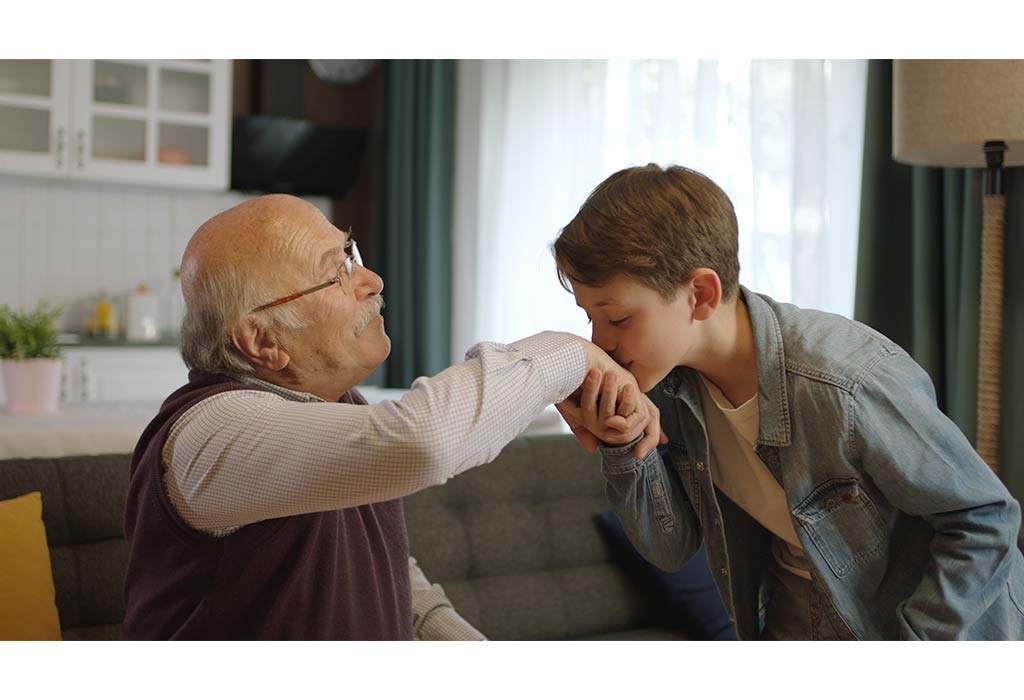
120+ Best Respect Quotes for Kids
Teaching children the value of respect is crucial for their personal growth, development, and long-term success. It’s what sets them apart and helps them navigate the world with empathy and understanding. Respect not only fosters positive relationships but also cultivates qualities like kindness, empathy, and a deep sense of responsibility, all of which are essential for becoming thoughtful and compassionate individuals. In this article, we will explore the concept of respect and the benefits of instilling respect in children and provide an extensive collection of 120+ inspirational quotes about respect for kids. Let these quotes inspire and guide you in nurturing respect in your children’s hearts and minds, shaping their futures for the better.
What Is Respect?
Respect is a fundamental value that involves recognizing the worth and dignity of oneself and others. It encompasses treating others with kindness, empathy, and consideration. Respect goes beyond mere tolerance and requires actively listening, understanding, and appreciating the differences and perspectives of others.
Benefits of Teaching Respect to Children
Instilling respect in children yields numerous positive outcomes that shape their character and contribute to their overall well-being. Here are ten benefits of teaching respect to children:
Promotes Healthy Relationships: Instilling values of esteem helps children create and maintain positive connections with peers, family, and educators.
Encourages Empathy: Understanding and valuing the feelings of others cultivates a strong sense of empathy, enabling kids to relate better to diverse perspectives.
Enhances Communication: Children who learn to value others tend to listen actively and communicate more effectively, fostering understanding.
Boosts Self-worth: When kids recognize the worth of others, they inherently see the value in themselves, bolstering their self-esteem and confidence.
Reduces Conflicts: A foundation in valuing others minimizes misunderstandings and disagreements, leading to more peaceful interactions.
Promotes Inclusivity: Children nurtured with such principles are more inclusive, embracing differences and fostering unity in diverse groups.
Fosters a Positive Learning Environment: A classroom where kids value one another creates a supportive space for academic and personal growth.
Shapes Future Leaders: Children who grasp the importance of valuing others often develop strong leadership qualities, understanding the nuances of team dynamics and collaboration.
Strengthens Moral Compass: Learning to treat others with dignity and understanding fortifies a child’s moral and ethical foundations, guiding them in making righteous decisions.
Sets a Foundation for Lifelong Values: The principles instilled during formative years often remain with an individual for life, shaping their personal and professional interactions in adulthood.
Inspirational Quotes About Respect for Kids
Teaching your child, along with introducing some children’s quotes about respect can be a powerful tool in shaping their understanding of this important value. Here are 120 inspirational quotes about respect for kids:
“To value someone is to understand them.” – Confucius
“We rise by lifting others.” – Robert Ingersoll
“By understanding others, we grow ourselves.” – Jane Austen
“Honor differences; they make the world colorful.” – Nelson Mandela
“Celebrate the beauty in every encounter.” – Johann Wolfgang von Goethe
“Each individual is a star; some just need a little help to shine.” – Marie Curie
“Seek the magic within each heart you meet.” – H.G. Wells
“In valuing others, we paint a brighter world.” – Frida Kahlo
“To value another is to embrace the universe’s beauty.” – Carl Sagan
“Listen deeply, cherish fully, understand always.” – Ludwig van Beethoven
“The highest form of wisdom is kindness.” – The Talmud
“Every person you meet is a lesson waiting to be learned.” – Isaac Newton
“Celebrate the beauty in every soul.” – Vincent van Gogh
“By understanding others, we become wise.” – Socrates
“Each of us has value beyond measure.” – Albert Einstein
“Lift others with words, actions, and understanding.” – Charles Dickens
“Every heart beats to its own rhythm.” – Ludwig van Beethoven
“The beauty of life is in understanding every soul’s journey.” – Leo Tolstoy
“To know another’s heart is the greatest treasure.” – Rumi
“The orchestra of life plays sweetest when we value every instrument.” – Itzhak Perlman
“Understanding is the first step to unity.” – Malala Yousafzai
“Find wonder in everyone you meet.” – William Wordsworth
“Value every encounter; each is a lesson.” – Jane Goodall
“Every story is worth hearing, every heart worth understanding.” – Mark Twain
“By valuing others, we find our own value.” – Harriet Tubman
“Find the wonder in every soul; it’s always there.” – Dr. Seuss
“In every laugh, tear, or sigh, there’s a tale worth hearing.” – Oscar Wilde
“To understand another is to touch a piece of the universe.” – Nikola Tesla
“Embracing all voices leads to the most harmonious of songs.” – Aretha Franklin
“Treasure the symphony of voices; each one matters.” – Maria Callas
Famous Respect Quotes for Kids
Children learn about respect from those around them, and these famous quotes by well-known thinkers and leaders help inspire them to treat others with kindness and empathy. These words of wisdom emphasize the value of understanding and honoring differences.
“Kindness in words creates confidence.” – Lao Tzu
“In understanding others, we find peace.” – Dalai Lama
“Every person has a story; take time to listen.” – Maya Angelou
“To honor another is to see their light.” – Mahatma Gandhi
“Our true worth is how we value others.” – Anne Frank
“Every face is a canvas painted by life.” – Pablo Picasso
“Understanding another’s story is the true magic of life.” – Hans Christian Andersen
“The beauty of life unfolds when we value every heartbeat.” – Edith Piaf
“Every heartbeat tells a story; are you listening?” – Ludwig van Beethoven
“By celebrating others, we uplift ourselves.” – Eleanor Roosevelt
“Value the stories, for they shape the world.” – Agatha Christie
“Honor each journey, for every path is unique.” – Ernest Hemingway
“In valuing others, we honor ourselves.” – Rosa Parks
“Every smile, tear, and laugh holds a universe of stories.” – Mark Twain
“Every voice matters; let’s listen.” – Martin Luther King Jr.
“See the beauty in every face, the universe in every soul.” – Oprah Winfrey
“The stars shine brightly when we value every glimmer.” – Galileo Galilei
“Value every moment, for it’s a chance to learn.” – Alexander Graham Bell
“Understanding another’s journey enriches our own.” – Paulo Coelho
“Listen to every heartbeat; each tells a story.” – Florence Nightingale
“In the heart of everyone, there’s a story waiting to unfold.” – J.K. Rowling
“Every soul holds a universe of wonders.” – H.P. Lovecraft
“When we value others, the world becomes a brighter place.” – Mary Shelley
“Find the magic in every soul; it’s always there.” – Dr. Seuss
“The key to unity is valuing every voice.” – Langston Hughes
“Every person is a book worth reading.” – Plato
“Every individual sparkles with unseen brilliance.” – George Orwell
“Honor differences; they make the world colorful.” – Nelson Mandela
“In every child’s eyes, there’s a universe of dreams.” – Marie Curie
“Listen deeply, for every soul has its song.” – Yo-Yo Ma
Short Respect Quotes for Children
Short and impactful, these quotes are perfect for children to remember and apply in their everyday lives. These brief reminders show that even a few words can convey the importance of respect for others and oneself.
“Kindness is the language all hearts understand.” – Mother Teresa
“Valuing others shows your true worth.” – Aesop
“Celebrate the beauty in every encounter.” – Johann Wolfgang von Goethe
“Admire the uniqueness in every person.” – Leonardo da Vinci
“The highest form of wisdom is kindness.” – The Talmud
“By understanding others, we become wise.” – Socrates
“Kindness is the bridge between all hearts.” – Jane Austen
“In every soul, there’s a universe of wonder.” – Galileo Galilei
“Each individual is a poem waiting to be read.” – Emily Dickinson
“In every child’s smile, there’s a ray of hope.” – Desmond Tutu
“Value every encounter; each is a lesson.” – Jane Goodall
“Listen more, speak less, understand always.” – Abraham Lincoln
“Every face is a canvas painted by life.” – Pablo Picasso
“Hold kindness as your highest badge of honor.” – Winston Churchill
“Celebrate the beauty in every soul.” – Vincent van Gogh
“Kindness is the sunshine in the moral universe.” – Helen Keller
“Find the wonder in everyone you meet.” – William Wordsworth
“Value the stories, for they shape the world.” – Agatha Christie
“Each soul shines its own unique light.” – Carl Sagan
“To value another is to embrace the universe’s beauty.” – Carl Sagan
“Value every encounter, each is a new universe.” – Buzz Aldrin
“Understanding another’s story is the true magic of life.” – Hans Christian Andersen
“The stars shine brightly when we value every glimmer.” – Galileo Galilei
“Kindness in words creates confidence.” – Lao Tzu
“In the heart of everyone, there’s a story waiting to unfold.” – J.K. Rowling
“In valuing others, we honor ourselves.” – Rosa Parks
“Listen deeply, cherish fully, understand always.” – Ludwig van Beethoven
“Each individual sparkles with unseen brilliance.” – George Orwell
“Admire the uniqueness in every person.” – Leonardo da Vinci
“To value another is to honor the universe within them.” – Neil Armstrong
Quotes About Respect for Kids From Parents
Parents play a crucial role in teaching their children the meaning of respect. These quotes reflect the deep love, care, and guidance parents provide to help their children grow into respectful, kind-hearted individuals.
“Treat every living being, including yourself, with kindness.” – Gautama Buddha
“Kindness is the bridge between all hearts.” – Jane Austen
“In every soul, there’s a universe of wonder.” – Galileo Galilei
“By celebrating others, we uplift ourselves.” – Eleanor Roosevelt
“Celebrate the beauty in every encounter.” – Johann Wolfgang von Goethe
“Listen to every heartbeat; each tells a story.” – Florence Nightingale
“Embrace the world with open arms and an open heart.” – William Shakespeare
“Each soul shines its own unique light.” – Carl Sagan
“Every individual sparkles with unseen brilliance.” – George Orwell
“Find beauty in every encounter, for it’s always there.” – Charles Darwin
“Every heart beats to its own rhythm.” – Ludwig van Beethoven
“To know another’s heart is the greatest treasure.” – Rumi
“The beauty of life is in understanding every soul’s journey.” – Leo Tolstoy
“Every smile, tear, and laugh holds a universe of stories.” – Mark Twain
“Seek the magic within each heart you meet.” – H.G. Wells
“Honor each journey, for every path is unique.” – Ernest Hemingway
“In every child’s eyes, there’s a universe of dreams.” – Marie Curie
“Lift others with words, actions, and understanding.” – Charles Dickens
“Kindness is the sunshine in the moral universe.” – Helen Keller
“By valuing others, we find our own value.” – Harriet Tubman
“In valuing others, we honor ourselves.” – Rosa Parks
“Understanding another’s journey enriches our own.” – Paulo Coelho
“Every soul holds a universe of wonders.” – H.P. Lovecraft
“When we value others, the world becomes a brighter place.” – Mary Shelley
“Every story is worth hearing, every heart worth understanding.” – Mark Twain
“Value every encounter; each is a lesson.” – Jane Goodall
“Kindness in words creates confidence.” – Lao Tzu
“By understanding others, we grow ourselves.” – Jane Austen
“In valuing others, we paint a brighter world.” – Frida Kahlo
“Celebrate the beauty in every soul.” – Vincent van Gogh
“In every child lies the promise of a better tomorrow.” – Mahatma Gandhi
“A child’s heart is like a seed, nurture it with kindness.” – Ralph Waldo Emerson
“Every child has a light within them; it’s up to us to help them shine.” – Nelson Mandela
“Children are the mirrors of our love and respect.” – Friedrich Nietzsche
“A child’s mind is a garden, and respect is the water it needs to grow.” – Maria Montessori
“In every young soul, there’s a spark of greatness waiting to ignite.” – Abraham Lincoln
“Each child is a unique masterpiece, deserving of love and respect.” – Pablo Picasso
“A child’s world is built on the foundations of respect and care.” – Dalai Lama
“When you respect a child, you teach them to respect the world.” – Dr. Seuss
“Children are born to be loved, not molded; respect helps them flourish.” – Leo Tolstoy
These quotes emphasize the significance of respect and its positive impact on relationships, character development, and personal growth. By integrating these quotes into your conversations and daily interactions, you can inspire and encourage your children to embrace respect as a core value in their lives.
FAQs
1. What are some best ways to encourage respect in kids?
Encouraging respect in kids can be achieved through leading by example, setting clear expectations, promoting empathy, providing positive reinforcement, teaching manners, and fostering open and respectful communication.
2. How can respect quotes for children help to shape their character and self-confidence?
Respect quotes for children serve as powerful reminders of the importance of respect. By regularly exposing children to these quotes, they can internalize the values and concepts associated with respect, shaping their character and enhancing their self-confidence. These quotes act as guiding principles for navigating relationships and societal interactions.
Teaching children the importance of valuing and understanding others is not merely a lesson for their younger years but a lifelong gift. When young minds grasp the essence of treating individuals with dignity and consideration, they carry these principles into adulthood, influencing every interaction, decision, and relationship. By instilling these core values early on, we lay a foundation for a more empathetic, understanding, and harmonious society, fostering connections that go beyond the surface and emphasizing the beauty of human connections.
Also Read:
Adorable Kids Quotes
Quotes About Kids Growing Up
Inspirational & Motivational Quotes for Children
Beautiful Love Quotes From Parents to Their Children
Read more

Manipulative Child Behavior: Signs, Symptoms, & Solutions
Kids and tantrums go hand-in-hand. They learn to throw tantrums for every little thing, and they learn this before even learning the word ‘tantrum.’ As babies, they cry when they are hungry, sleepy, or need their parents’ attention. So every time they cry for food, nappy change, or just for some lap time, and their parents come running to them, it affirms sub-consciously in their minds the notion that crying gets them what they want. All these skilful tactics of the kids to make their parents give in to their whims and fancies are manipulation. Sometimes, children may use such manipulative tactics to gain the attention or praise of their parents, siblings, and even friends.
What Is a Manipulative Child?
According to the Stanford Encyclopedia of Philosophy, manipulation is an act of shaping behaviour or feelings to generate benefit out of it, which is neither coercion nor rational persuasion (1). Someone who manipulates a person does it for self-benefit. A manipulative child is a child who exploits situations to get what they want from their parents, caregivers, or friends. They could also manipulate to avoid punishments or consequences.
They use that subconscious knowledge to convince their parents to get them toys, chocolates, extra playing time, pizza, or anything else as they grow up. They convince their parents they “need” those things despite already having so many of them through cajoling, crying, or flattery. At times, when these tactics fail to get them what they want, or these tactics are not giving them favourable results, they may start using lies, speaking ill to the parent, making the parents feel guilty for not being caring and loving, or doing a favour/chore to make the parent feel obligated to comply with their demands.
At What Age Kids Start Manipulating?
Manipulative behaviour in children can start at any age. You can see preschool children using emotional manipulation as a way to get what they desire from adults. Manipulative behaviour is clearly seen in adolescence and adulthood.
Reasons Your Child Manipulates You
Children may manipulate their parents for numerous reasons ranging from emotional needs to material gains. While children can manipulate you, you should not encourage such behaviour. Parents often wonder at what age a child can manipulate them. Well, your child can start to manipulate even at a young age. As your kid grows, this manipulative behaviour can harm their psyche and personality. Therefore, it’s critical to discipline a manipulative child from the start. Some common reasons behind your child manipulating you can be:
To get toys or gifts or other things they want
When you don’t permit them to do something, such as stay out or play at their friend’s place or eat chocolates before meals, they may use manipulative tactics to settle a score with you or provoke you to make you angry.
When they know you value their happiness or want to see them happy, they may emotionally manipulate you to make you do what they want.
When they feel neglected, they use manipulation to gain your attention.
To fit in with their friends or peers or social circle, they manipulate you to create a sense of anxiety, and you buy them things.
To know they have power over you.
To gain your love and care, they manipulate you to make you feel guilty of neglecting them or being uncaring.
To cover their mistake, they use manipulative lies.
At times, your kids might use manipulation to express their feelings.
Sometimes, to express their frustration, overwhelm, or fear, they use manipulation.
On the birth of their sibling, your kid may throw tantrums or manipulate you to express their distress or insecurity.
Signs and Symptoms of a Manipulative Child
The signs of manipulation by your child may not always be straightforward and often subtle, making you feel you are mistaken or the child is just behaving like a child. It won’t always be easy for you to pinpoint their tactics or stop a manipulative child. However, a few common signs and symptoms can help you know whether your child is manipulative. They are:
1. Emotional Outbursts
Your child might not be able to take “no” as an answer when you deny them anything. They may get irritated or exhausted when you don’t grant them their wish. When this happens, the child may get out of control and find it challenging to control their emotions. This can result in aggression, outbursts, crying, or rudeness. Such intense emotional behaviour can confuse you as a parent, and out of concern for your child, you may be obliged to grant their wish or fulfil their request.
2. Temper Tantrums
Another usual sign of manipulation used by your child is throwing temper tantrums. Intense, angry outbursts by your child for a short duration or till they have got what they wanted are the primary characteristics of temper tantrums. Sometimes, they may refuse to eat or refuse to talk to you to blackmail you into fulfilling their wishes emotionally. Your child may resort to blatantly ignoring you or shout ill words at you, such as they hate you, you are the worst parent, they don’t want to live with you, etc. When outside, they may embarrass you in public by lying down on the floor or crying out loud to get a new toy or chocolate that you refused. Though temper tantrums are a common occurrence in young kids, you should step in to stop them when your child does it often (2).
3. Lying
When your child cannot get something from you, they might resort to playing the victim card or lying in front of others to show their parents are not good enough or don’t want to see them happy. This can persuade you or force you to provide them with more things than they need or are necessary. Besides lying, your child may also resort to guilt-tripping their peers, siblings, or relatives into doing things for them. They can also use emotional blackmail to get what they want. In extreme cases, when your child can easily get away with lying and manipulation, they can gaslight someone or make them doubt their own beliefs or judgments.
What Are the Consequences of Being a Manipulative Child?
Manipulation can be beneficial for children at the moment, but it has consequences.
Kids who use manipulation in every other thing they do fail to form meaningful relationships because they are always trying to mould the situation in their favour.
Manipulative children often do not have real friends because real friends do not always do anything for some benefit.
Manipulation can lead to conflict and resentment in your child in situations that require selflessness and compromise.
In the long term, manipulation can be counterproductive. As children resort to manipulation for doing things, they may not learn real skills to actually complete a task.
How to Handle a Manipulative Child?
You may feel your child is selfish if they are skilled at devising new methods to wear you down to acquire what they want. You may often wonder how to parent a manipulative child in such situations. However, it is important to remember that it is natural for children to desire what they want and strive to have it at any cost. It’s natural for you to become frustrated and exhausted as a parent. You may succumb to these tendencies at times. It is, nevertheless, vital to draw a line and put an end to the manipulative pattern. Dealing with a manipulative child can be stressful but not impossible. Some strategies for handling your manipulative child are:
1. Set some goals
Setting objectives is critical to attaining any goal. At times, kids are prone to manipulating their parents to acquire what they desire. If you see that your kid’s conduct is getting repetitive, consider setting clear goals for them.
You may, for example, challenge your child to wait patiently for seven days for a specific request to be fulfilled. This would assist the kid in pausing and controlling the need to act on impulse. One week may make a huge difference in your child’s disposition and close the door to manipulation and instant fulfilment.
2. Have an action plan
An action plan for your child can be something you ask your child to follow whenever they ask for something or crave attention. The action plan should focus on your family values and desirable personality traits. You can customize an action plan keeping your child in mind with pointers. You should prepare your action plan based on specific goals or targets, such as desirable behaviour changes in your child or healthy habits that your child can do. It should be written and stuck on the refrigerator or pinned on a wall where your child can see it for regular reminders. This will teach your child an appropriate way to get things they want without using manipulative behaviour.
3. Distract your child
You can also manage your child’s manipulative behaviour using distractions. Research on animals suggests that young children can employ basic coping strategies, like participating in play or using distracting thoughts when confronted with delayed gratification (3).
Engaging your child in some play or activity can serve as a coping mechanism for the kid when you refuse their request or delay fulfilling it. Find a few distractions that suit your child’s sensory modalities so the child can easily use them or get interested in them. There can be visual distractions such as their favourite cartoon show or their favourite animal image that your child finds interesting. You can also use auditory distractions such as melodious music or a song that is different from the usual sounds around your child. The new thing will make the child curious and easily distract them. You can also go for tactile distractions, including living or non-living objects. Tactile distraction offers stimulation to the child as when the child touches these objects. They will get a warm feeling and get distracted.
4. Be your child’s role model
A typical and effective method is to shape your child by portraying yourself as a role model for them to follow. We learn to act like humans by observing others, also known as social learning. You can act as a role model for your children by showing them patience when they need something from someone. You can undertake a role-play in front of your kids to show them how to wait for something when they ask for it. This strategy is useful for teaching social interaction, communication, self-control, and various other skills.
You may also use an indirect role modelling strategy, such as displaying a film or telling a tale that incorporates lessons on manipulative behaviour management, to teach your children. Characters in the movie or tale would be separate from the child’s identity, allowing you to avoid condemning and humiliating them while educating them.
5. Participate and instruct
When you learn something with your children, it is called guided participation. Reading a tale with your children or role-playing with them can help. Role reversal is a type of psychodrama that helps adults and children express their emotions, learn about one another, and promote and practice positive conduct. This is also a chance for you to see the world through the eyes of your child.
For this, you might use a range of activities. For example, you can compose tales, meditate and practice mindfulness, engage in physical activities such as dancing, sketch different characters, or recreate a scene using dialogues.
6. Set clear rules
Set clear instructions for your kids to behave accordingly. Write them down and place them in a visible area. The rules should be simple and not strict and shouldn’t restrict your child’s thoughts and actions. All family members should follow the same rules, and the kids should know what they can do and what they can’t. The rules will teach your children responsibility, and the chances of throwing tantrums will be reduced.
7. Offer realistic rewards
When your children display good behaviour or follow the rules set by you, controlling their manipulative behaviour, offer a reward to your child. The reward can be tangible or intangible; however, it should be predictable and inform your child that it teaches self-control and patience. You can even make a list of rewards in consultation with your child and modify them according to their interests.
8. Help your child for catharsis
The psychological process of catharsis is useful for releasing painful and negative feelings and relieving the souls of the heavyweight. It is something that everyone requires at some time in their lives. People who keep their sentiments to themselves sometimes find it difficult to escape them, resulting in outbursts that can harm themselves and others. Even your child may sometimes need to be relieved from negative or pent-up emotions. To help your child express themselves freely, you can engage in a few activities such as a verbal game of sharing some annoying incident related to the given word, asking questions to your child that help them to share their feelings, or writing letters to someone without posting the letter or discarding it afterwards.
9. Teach journaling
Engage your child in journaling to focus on their mental health and treat manipulative child development. Ask your child to write their thoughts and feelings, including good and bad things. This excellent process is a good way to ensure your child stays positive and purges their negative thoughts and feelings. You can ask your child to set a regular time for journaling daily and maintain a colourful journal to record their happiness and pain.
10. Manage their stress
Your child’s or anyone’s rage and irritable conduct are frequently triggered by stress. Stress triggers may range from toys to foods, places, people, and events, all of which might cause your child to get agitated. Create a comfortable atmosphere at home to avoid activating the child’s manipulative behaviours. You might also study more about children’s stress and coping techniques to assist your children in dealing with any scenario.
11. Involve them in healthy family activities
To develop your link and establish a deep and strong relationship with your child, involve them in planning daily meals, weekly activities, and leisure time. After school and on weekends, you may perform various activities together.
FAQs
1. Is manipulative behaviour genetic?
It is unclear whether manipulative behaviour is simply a child’s individual temperament or genetic. Nevertheless, it is important to remember that genes are not the single factor to influence human behaviour. The environment they grow in, the type of parenting they receive, and their peers in their surroundings all play equivalent roles in shaping human behaviour.
2. Isn’t my child too young to use manipulation?
Perhaps not. Children as young as 15 months can learn the cue of crying so that their parents can pick them up. A 2018 study observed around 160 common childhood manipulation tricks among kids ages 3-7 (4).
3. Why is parenting manipulative children challenging?
Emotional manipulation of a child can take a toll on parents, as they may mostly feel like walking on eggshells. While they want to support and nurture their child, they also discipline them. Manipulative behaviour demonstrated by children can throw social, emotional, and mental health off balance, which may make parenting challenging.
Your child’s pranks and manipulative behaviour might sometimes wear on your nerves, and monitoring their conduct can be difficult, especially when it isn’t always obvious. Try the suggestions provided here, and if nothing appears to work despite your efforts, don’t be afraid to seek expert assistance.
References/Resources:
1. The Ethics of Manipulation; The Stanford Encyclopedia of Philosophy; https://plato.stanford.edu/entries/ethics-manipulation/
2. Temper tantrums; MedlinePlus; https://medlineplus.gov/ency/article/001922.htm
3. Evans TA, Beran MJ. Chimpanzees use self-distraction to cope with impulsivity. Biol Lett.; PubMed Central; https://pmc.ncbi.nlm.nih.gov/articles/PMC2391227/; December 2007
4. Kozachek. O. V; The age and the psychological conditions of the manipulative behavior of preschool children; Journal of Psychology & Clinical Psychiatry; https://medcraveonline.com/JPCPY/the-age-and-the-psychological-conditions-of-the-manipulative-behavior-of-preschool-children.html; July 2018
Also Read:
Tips to Deal with Naughty Kid
How to Deal with Difficult Child
How to Handle Highly Sensitive Kid
Ways to Deal with Stubborn Kid
Dealing With a Highly Emotional Kid
Read more

Controlling Parents – Types, Signs and How to Deal With Them
Children frequently believe their parents are too restrained in allowing them to live their own lives. This might be due to the child just pushing limits and developing a bit quicker than the parent understands, or it can be due to the parent wanting to dominate the child’s life. There are various reasons for wanting to control your kid, ranging from being a perfectionist to fearing that they will repeat your errors, and many parents are unaware that they are damaging rather than protecting their children.
These parents may use guilt, manipulation, or strict rules to maintain dominance, making it difficult for their children to develop autonomy and confidence. In this article, we’ll break down the different types of controlling parents, the signs of controlling parents, and simple, effective ways to handle them and set healthy boundaries.
What Are Controlling Parents?
Controlled parenting is a parenting style in which one or both parents keep a close eye on their children’s activities or maintain control over their life. It’s also known as authoritarian parenting, in which the parents place a strong emphasis on discipline and rigorous adherence to rules and regulations. Such parents may be unconcerned with their children’s needs, and their general behaviour may be harmful (1) (2). While some parents may grow out of this practice as their children get older, others may strive to manage their adult children as well.
What Are the Types of Parental Control?
Different styles of controlling parents directly affect children, adolescents, and adults, influencing their emotional regulation and overall well-being as they get older. As a result, it’s critical to use age-appropriate strategies to foster autonomy, develop problem-solving abilities, and improve stress management. There are three sorts of parental control:
1. Psychological Control
Manipulation tactics are used to manipulate or compel youngsters to obey. Guilt, humiliation, loss of affection, emotional blackmail, and invalidating sentiments are some of the strategies used.
2. Over-Controlling Parents
Over controlling, parents are characterised by a great amount of love and support and a high level of control. Due to parental over-involvement, the dynamic results in low degrees of autonomy.
3. Behavioural Control
Parental efforts to govern and monitor a child’s conduct are known as behavioural control. Inappropriate behavioural management for a child’s age might limit possibilities for autonomous development and influence emotional and social development.
Ways of Controlling Children
Depending on the methods used by controlling parents, children may have a diverse experience with parental control. The following are two approaches to regulating practice:
Controlling Externally: Parenting is controlled from the outside in an obvious and overt manner. The most popular tactics used to compel children to use external consequences include shouting, striking, punishing, and praising. Internal control is not usually psychological control. Some parents engage in personal assaults or unstable emotional conduct toward their children, such as swinging between caring and assaulting. Externally dominating parenting styles include harsh parenting, helicopter parenting, and rigid parenting (3). All of these parenting approaches are authoritarian.
Controlling Internally: Subtle nonverbal cues are frequently used to exercise psychological control. When parents generate sentiments of shame and guilt, these parents primarily appeal to forces and laws that lie inside the kid. Most psychological control tactics internally regulate parenting techniques since the control is more internal, covert, and nonobvious.
Reasons Why Parents Become Controlling
They may have a few unfair expectations, which might lead to them being controlling parents. Controlled parenting, regardless of aim, may have adverse consequences. Some reasons for controlling behaviour in parents are:
Some parents may not want to sacrifice their ego or dominance or to treat their children equally when they have grown up. They may feel lonely and wish for their children to be there for them anytime they require assistance.
Parents have strong opinions about their children’s lives because they want them to experience things that they never did.
They don’t want their children to make errors in life, some parents may become overbearing. As a result, they become overprotective.
Another factor might be apprehension about losing children. They may be terrified about growing up and being separated from their children. In this instance, they strive to maintain control and ensure that the child is constantly present.
Signs of Controlling Parents
The connection between the parents and the adult kid should grow through time as the child evolves into an adult. Otherwise, as in the case of regulated parenting, the equation may unravel. The following are some examples of controlling mother and father signs:
1. Your Parents Are Always Going to Have an Opinion About You
Do your parents advise you what to eat, dress, or even what job path you should take? Do they pass judgement on you, have an opinion about everything you do or say, and try to persuade you to adopt their perspective? Then your parents are most likely domineering. When you’re a youngster, having counsel is beneficial, but such viewpoints may be overwhelming and leave you in a bind as an adult. You’ll eventually get reliant on their approval and may find it tough to make wise judgements on your own.
2. Your Parents Handle Your Obligations
You’re an adult now, and you’re capable of handling your responsibilities, whether it’s travelling alone, cleaning your room, or managing your money. However, if your parents are always attempting to do your responsibilities, they may exert control over you.
3. No Privacy
If your parents don’t allow you to have privacy, offer each other some space. This basic concept also applies to adult children’s relationships with their parents. Either of your parents may be violating your privacy because of their domineering personality. Your parents might be monitoring you on Facebook or other social networking sites, reading your emails, or listening to your phone calls, to name a few instances. Remember that there is a fine line between your parents monitoring your internet activity as a youngster and meddling with and reading your communications as an adult.
4. Your Parents Are Unkind and Uncaring
Controlling parents may supply their children with basics, but they may not comprehend them. They may not be sympathetic to you owing to their busy schedules or a desire not to lose control over you.
5. Your Parents Have Complete Control Over You
It is a symptom of control if your parents continue to control you by rejecting your ideas or forcing you to do something against your will. For example, it indicates dominance if your parents compel you to sample a dish you dislike.
6. You’re Made to Feel Obligated by Your Parents
You may feel forced to do what your parents want of you if they continually remind you of how much they have done for you. However, if they desire something from you that you don’t want, they might be a controlling parent.
7. Your Parents Are Controlling
If your parents frequently pressurise, shame, or blame you, it might be a symptom of manipulative parenting. This is a hidden or passive kind of parenting in which the kid is compelled to do something they do not want to do.
8. Their Compassion and Love Are Sometimes Conditional
If you follow their instructions, they will lavish you with love and admiration. They grow irritated and may threaten to withdraw their financial assistance if you ever follow your heart.
9. Dramatic
When you don’t do what they want, they get a little too theatrical. Controlling parents may become enraged, act erratically, and even claim that your failure to follow their instructions has injured them mentally.
10. They Tend to Magnify Your Errors
Overbearing parents will make you regret even the tiniest of errors. They’ll keep reminding you of your errors and try to persuade you that everything happened because you didn’t listen to them.
Effects of Controlling Parenting on Children
Overparenting is typically motivated by concern for a child’s well-being or a desire to live vicariously through them; nonetheless, there are a few controlling parents’ effects on mental health; it prevents children from making decisions, solving issues, and learning how to cope with emotions and change. Children of controlling parents are forced to submit to parental authority, which leads to emotional uneasiness and reliance as they grow older. Parents too controlling can lead to the following (4) (5):
Codependency
Disobedience
Delinquency
Symptoms of anxiety
Symptoms of depression
Insecurity on the emotional level
Aggressive actions
Possessing a negative self-perception
Low self-confidence
Emotional dysregulation
Ability to perceive emotions is limited.
What Can Be the Consequences of Controlling Parents?
Even if the adult is living independently, the impact of having controlling parents might persist or worsen as life throws new challenges at them. This can lead to bad relationships, low self-esteem, and a low-stress tolerance, among other things. The following are some of the long-term implications of having domineering parents:
Taking part in high-risk activities
Substance abuse has increased.
Relationships that are unhealthy
Low self-esteem and self-efficacy, as well as a low threshold for stress
Poorly defined borders
Struggles with mental illness
The alteration in family relationships is another issue of having domineering parents. More emerging adults (ages 18-29) are staying at home longer or returning home for several reasons. Adults who stay at home with extremely controlling parents may engage in antisocial or withdrawn behaviour as a means of coping with their lack of independence, which can severely impact present and future relationships.
Tips to Deal With Controlling Parents
It takes time, patience, and persistence to learn to deal with overbearing parents. Set reasonable goals for yourself and keep reminding yourself why you’re using coping mechanisms. It is possible to start making positive adjustments for your physical and mental well-being. Here are nine tips to cope with controlling parents:
1. Recognise and Accept the Issue
Recognising controlling tendencies and learning about overbearing parents can bring relief and enable you to make changes. Accept that you have no power to force your parents to change their ways, but you have control over your emotions, limits, and connection with them. Concentrate on what you have control over.
2. Define Your Boundaries
Boundaries are good because they allow you to emphasise that certain actions will not be tolerated for the benefit of your emotional well-being. They can also be used to teach others what is and is not acceptable.
3. Create a Support Network
Connecting with others who have dealt with similar challenges may be reassuring and might help to relieve feelings of isolation. Having a strong support system of people you can trust might also help you stick to your boundaries.
4. Make Room for It
A helpful coping strategy is taking a break or making space. Going for a stroll, restricting visits or phone calls, or moving into your apartment are all examples of creating space. Space can provide a safe haven for you to process your emotions and ideas apart from your parents. It allows you to think about your aspirations and boundaries.
5. Pick Your Battles
It might be exhausting to face and defend every offence. Find a happy medium between confronting concerns and letting other things drift. This does not necessarily imply that you agree with the crime; rather, it may be a means of self-preservation.
6. Boost Your Emotional Health
Increasing your self-esteem can provide you confidence and comfort that you’re making good decisions. It can also assist you in identifying and defining your genuine self.
7. Keep Disclosures to a Minimum
You are not obligated to tell your parents everything. To prevent unwanted counsel, berating of decisions, or unpleasant criticism, it’s okay to keep your disclosures to a minimum. Limiting disclosures will help you preserve your connection while retaining your chosen level of privacy.
8. Recognise Your Limitations
Work on knowing when you’ve had enough and having an escape route available, similar to setting limits. Allowing yourself to leave or take a step back reinforces the importance of your sentiments and self-worth.
Can Therapy Help People Impacted by Controlling Parents?
The individual, group, and family therapy are all alternatives for dealing with problems caused by overbearing parents. Each provides a secure environment to learn about and understand how to cope with the impacts of controlling parents. Therapy also allows you to learn more about communication skills, mental health diagnoses, coping skills, good boundary establishing, healthy relationship development, and raising your emotional discomfort tolerance.
FAQs
1. Can controlling parents affect career choices?
Controlling parents often pressure their children into careers they prefer, disregarding their child’s interests and passions. This can lead to dissatisfaction, burnout, and lack of fulfilment in adulthood.
2. How can you stop the cycle of controlling parenting in your own future family?
Breaking the cycle involves self-awareness, learning healthy parenting strategies, and giving your future children the freedom to choose. Seeking therapy or self-education on positive parenting can also help you raise children with respect and autonomy.
3. What should you do if your controlling, manipulative mother refuses to change?
If she refuses to respect your boundaries, you may need to reduce interactions, limit personal discussions, or, in extreme cases, distance yourself for the sake of your mental health.
It might be tough to acknowledge our challenges, but we don’t have to go through them alone or in silence. Reaching out for help is a courageous act. Talking to a therapist, a trusted friend or family member, or a support group can assist with the difficulties that come with having overbearing parents. Remember that your suffering is real and deserving of treatment.
References/Resources:
1. The William & Mary Educational Review – How Parenting Style Influences Children: A Review of Controlling, Guiding, and Permitting Parenting Styles on Children’s Behavior, RiskTaking, Mental Health, and Academic Achievement
2. Michigan State University – Authoritarian parenting style
3. PubMed Central – A Systematic Review of “Helicopter Parenting” and Its Relationship With Anxiety and Depression
4. PubMed Central – Parental Psychological Control and Emotional and Behavioral Disorders among Spanish Adolescents
5. PubMed Central – The Effect of Parenting and the Parent-Child Relationship on a Child’s Cognitive Development: A Literature Review
Also Read:
Ways to Improve Your Parenting Skills
Signs of Toxic Parenting and Tips to Overcome
Signs of Bad Parenting and Its Impact on Children
Common Parenting Issues and Their Solutions
Read more

Best Tips to Deal With a Sulking Child
The only thing most parents or caretakers want is for their children to be as happy as possible. You think about this constantly no matter where you are and what you do and plan things to do that will make the children happy, no matter how long the effect of happiness will stay in them. However, there will come a time when they start sulking and whining about the littlest things despite all of your efforts, leading to frustrations and anger. Although we use the term “children” here, this is not just seen in younger children since teens often do this too! If your children are at this sulking and frustrating phase of their lives, read on to learn more about the best tips to deal with a sulking child and what you can do to improve things!
What Is a Sulking Behaviour in Children?
Sulking, otherwise commonly referred to as pouting, is a silent temper tantrum that many children experience. Children who sulk are often moody and express their emotions through sulking, whining, or pouting. All of these are done to show some negative response to the environment around them, and they do this to show they are angry, unpleasant, frustrated, or more. In some children, this could even be a symptom of a significant personality and mood disorder.
The sulking behaviour is very common in young children and teens, and it is vital for the parent or the caretaker not to give in to this kind of behaviour. Trying to reason with or blame your children will only worsen the situation, which might make them do it more.
Why Do Children Sulk?
Children love using insidious methods like pleading, shouting, whining, and shouting to drive their parents crazy. Even when a small thing does not go their way, they might get hurt, no matter how many of your attempts to keep them happy. If you are asking yourself, “Why is my child so moody all the time?” then here are some such reasons you might be missing out:
1. They Are Not Able to Express Their Feeling Through Words Yet
Small children are not able to express their displeasure or frustration through vocabulary and words. So, some ways they know how to express it are through various sulking methods they are used to.
2. They Lack Emotional Intelligence
Most children cannot express their negative feelings in a normal, healthy way because they lack emotional intelligence. This is not seen just in kids—teens can also lack emotional intelligence, leading them to sulk instead of communicating. You might even find them sulking for no reason because they cannot recognise their negative feelings.
3. They Are Scared to Communicate
Even when they know how to express their negative feelings through vocabulary, some children will not express them because of the repercussions they might face from their strict caretakers or parents. So, the only way they feel they can express their negative emotions is through sulking because it feels safer than communicating healthily.
4. They Are Trying to Manipulate You
If you are the type of caretaker or parent who gives into the children’s sad expressions and lets them have their way whenever they do it, you unknowingly gave them a potent tool. They use this tool to manipulate you whenever they require things to go their way.
5. They Need Attention
For most children, any attention they get is good attention. Therefore, even if they can attract attention from their parents by angering them through sulking, it is still good attention as long as the parent reacts and takes time to acknowledge the child.
How to Deal With Your Sulking Child?
There are many ways to deal with this behaviour, some of which could help you improve things for them. A few tips on dealing with pouting child are:
1. No Consequences
Responding to a sulking baby by accusing and blaming him or trying to reason with him will not always work since this can lead to more tantrums in the future. Therefore, one way to deal with this is to let them sulk away. When they are sulking, they do not give in to their way to reward them with attention (3). No matter how long, ignoring them and allowing them to act however they want will force them to reduce this habit since they know you will not respond to such behaviour.
2. A Rule Against Sulking
Teaching a child not to sulk will take a lot of time, but making a rule against sulking in your personal space will take their ability to use it against you. This is a great way to stop them from showing this behaviour because, as a result, they will learn that it is not productive to sulk when you are not seeing them and when they cannot see you.
3. Nurturing the Child
Spending quality time to nurture them and their growth can do much good. Good parental attention can provide stability and care for your children (5). This also helps them stay happy and open about their problems to you in a healthy way, thereby preventing them from sulking.
4. Visual Cues
Visual cues tend to work with younger, moody kids. In this method, you must call her name, get her attention, mimic her pouting expression, and use your fingers to turn it into a smile. This might influence them to do the same, and though it might not always work, you can always try it.
5. Encourage Them to Use a Diary
If your children find it hard to communicate through speech, ask them to write it down in their diary. Maintaining a journal might help them overcome feelings and reduce a child’s sulking.
6. Encourage Verbal Ways of Expressing Feeling
When you notice your children starting to sulk or pout, try encouraging them to express their feelings through words. This can help them vent their negative emotions in ways you can understand and inspire them to do this more often. However, ensure you do not give in to the sulking even if they do not listen. The point is to teach them that verbal communication can be healthier and more effective (1).
7. Providing a Pleasant and Safe Atmosphere
Your home should be the first place where your children feel safe and free to express their feelings. Therefore, create and maintain a safe atmosphere around them, especially when they behave sulking. Healthily communicate with your sulking baby, avoid blaming or arguments at home, and ensure your child feels comfortable in the environment to share their feelings (6).
8. Avoid Overreactions
When your child annoys you by sulking more often, try to calm down and not display harsh behaviour towards them (4). If they do it for your attention without specific reason at home, ignore them and let them learn that you will not give in to their unreasonable mood swings.
9. Check What Is Stressing Them Out
Make sure your children are not stressing about stuff happening around them. Avoid high expectations that are too much to handle and force them to study or work longer hours than required. Please encourage them to have an excellent play-study balance and avoid showing them your tension and frustrations since this might make them more anxious.
10. Ensure They Are Getting Enough Nutrition
Nutritional deficiency can be another reason children often experience mood swings (2). Therefore, ensure you provide your children with sufficient nutritious food for a healthy and active lifestyle! Good physical health will always ensure better psychological health as well.
FAQs
1. How can I understand the reasons behind my child’s sulking?
Sulking can be a way for children to express their emotions when they feel upset, frustrated, or misunderstood. Observing your child’s behaviour and asking open-ended questions can help you identify the underlying causes of their sulking.
2. When should I seek professional help for my child’s sulking behaviour?
If your child’s sulking persists over an extended period, interferes with their daily activities, or seems to be affecting their well-being, it may be time to seek professional guidance from a therapist or counsellor. They can help identify any underlying issues and provide targeted support.
3. How can I encourage my child to express their feelings instead of sulking?
Encouraging open communication and providing a safe space for your child to express their emotions can help reduce sulking. Ask questions about their feelings, listen actively, and validate their emotions to foster healthy expression.
Every parent will have to go through this stage of life when their child sulks about everything. However, when you react appropriately to a pouting child, you can teach your children to express negative feelings and deal with everything around them very healthily!
References/Resources:
1. Taming Tempers; Nemours KidsHealth; https://kidshealth.org/en/parents/temper.html
2. Zielińska. M, Łuszczki. E, Dereń. K; Dietary Nutrient Deficiencies and Risk of Depression (Review Article 2018–2023); PubMed Central; https://www.ncbi.nlm.nih.gov/pmc/articles/PMC10255717/
3. Angry Kids: Dealing With Explosive Behavior; Child Mind Institute; https://childmind.org/article/angry-kids-dealing-with-explosive-behavior/
4. Dealing with child behaviour problems; NHS; https://www.nhs.uk/conditions/baby/babys-development/behaviour/dealing-with-child-behaviour-problems/
5. Complete Guide to Managing Behavior Problems; Child Mind Institute; https://childmind.org/guide/parents-guide-to-problem-behavior/#block_64cbd9b5b5f22
6. Sperling. J; 4 parenting tips to break the negativity loop; Harvard Health Publishing; https://www.health.harvard.edu/blog/4-parenting-tips-to-break-the-negativity-loop-2020062320219; June 2020
Also Read:
How to Handle Difficult Kids
How to Handle Aggression in Kids
How to Deal with a Stubborn Child?
Tips for Parents to Handle Naughty Kids
Effective Tips to Deal With a Defiant Child
Read more

Sleep – An Underrated Routine That Makes Kids Smarter and Sharper
Kids tend to be active throughout the day. It’s a task to have them sit down quietly for different engagements. Had they been quieter, as we parents so dearly wish at times, we may have saved ourselves the tedious task of clearing up the mess every time these little tornados leave behind.
But, alas! Contrary to what we hope for, their love of physical pursuits never stops short. Their minds are always on the lookout to process new information, and this curiosity makes them examine everything they can lay hands on. It is hard to speculate what their next to-do assignment will be. Mostly, our concern for our child’s safety urges us to stop them from undertaking many physical pursuits.
However, it is believed that the more kids participate in such tasks, the more they acquire knowledge and learn the basics. Physical activities are instrumental in teaching them to assimilate failure and subsequently work toward overcoming shortcomings. Their curiosity compels them to look out for new arenas to gather new experiences. The more their engagements are, the more they challenge their capabilities to broaden their mental abilities and multitasking horizons.
As kids explore areas that nurture their ever-growing mental capacities, their cognitive abilities unfurl. A major portion of a kid’s mental growth happens by the time they reach the age of five. Thus, our responsibility is to nurture them in the best possible ways to facilitate the best outcomes.
Apart from food and nutrition, another daily activity that is instrumental in their all-around growth is sleep. Our heart, lungs, brain, kidneys work continuously throughout the day. Sleep at night gives them the time to re-energise. Our bodies need ample sleep for the growth of sound mental health. Sleep deprivation can lead to inalterable conditions, resulting in mental health issues.
Similarly, our little ones need to get the desired hours of sleep every day. The younger the kid is, the longer he needs to sleep. During sleep, the brain not only rests but also processes all information through memory consolidation. That’s how they develop memories for smell, touch, view, sound, vocabulary, incidences, dangers, good moments, etc. The better their everyday routine is, the healthier they grow up to be. However, it is at times a struggle to put kids to sleep at regular hours.
Every kid responds differently; while some are subtle, others turn out to be quite naughty. Kids seem to hate losing out on playtime that keeps them awake and thus ensues a conflict of interest between the child and the caregiver.
I, too, used to find it hard to persuade my kid to sleep at regular timings. He is now five years old, and reasoning with him is a lot easier. However, as a toddler, it was a perpetual struggle. The ritual of tucking him to bed and getting him to sleep began with cuddling him on my lap and singing a lullaby while taking a stroll in the room. The tactic worked well most of the time, though, on several occasions, I used to fall asleep before him. It was exhausting to see him wide awake, gazing intently at the dim light, smirking, and enjoying his victory on me. With compromised sleep, I, too, felt exhausted and irritated most mornings that lasted throughout the day.
That’s when I started researching techniques to achieve better sleep. A few ways helped me get some good sleep for my child and me.
1. Maintain a sleep routine.
Having a pre-determined time for waking up and bedtime every day helps set our biological clock. Practising the habit every day from an early age proves beneficial in the long run.
Besides, family members too may plan their day accordingly as kids tend to follow habits that they observe around themselves. A disciplined timetable not only comforts them as they internalize the chronology of their daily chores but also ascertains predictability. The schedule is to be maintained even on weekends, family events, etc., to prevent disruption in routine. Moreover, a sleep routine ensures meeting the child’s daily sleep requirement, essential for their overall development. It also facilitates kids to remain active throughout the day.
2. Make sleep a priority.
Parents need to plan food and sleep intake. As soon as a child comes into our lives, delicate planning and scheduling become an indispensable part. It saves parents from overlooking fundamental tasks. It consequently gives us time to rest to keep anxiety and tiredness at bay. It is vital for us as, more often than not, unavoidable work piles up suddenly and needs our urgent attention.
Sticking to a set bedtime helps children feel secure because it offers them predictability. They start reciprocating accordingly as it allows them to get used to their surroundings promptly.
3. Limit socialising.
Unexpected family events, parties, festivals, etc., crop up in our lives, and it’s lucrative to include kids in these ceremonies, but their participation must be limited. Often, we fail to maintain this and let kids’ routines be disrupted at the cost of losing sleep time, compromising on meals, etc.
This leads to a disruption in their Circadian Rhythm (a natural, internal process that regulates the sleep-wake cycle and repeats roughly every 24 hours), which often leads to slouching, restlessness, and sickness. Kids tend to get into a sense of discomfort due to such unexpected fluctuations in their routine.
Our parents too limited socializing during our childhood to give quality time to us. They took it upon themselves to let us feel their absolute dedication in giving us the best. This additionally ensured a peaceful atmosphere, which is essential for a good sleep. Kids need to spend quality time with parents or caregivers to grow up healthily.
4. Ensure ample sleep as per age.
It is a well-researched fact that mental development in kids occurs the most from birth until five years of age. As the brain works non-stop, it must be given good rest to perform to its best ability. Also, the brain processes all information gathered during the day while at sleep. Infants need to sleep for around 16 hours, and with the advancement of age, the duration reduces. By the age of five, kids need to have 8 to 10 hours of sleep, including nap time and night sleep. Insufficient sleep makes them feel groggy, and they may get cranky, deterring their daytime activities.
5. No screen time before bed.
This point has been all over the internet given that kids nowadays have access to mobile and the internet. Also, the pandemic has forced us to impart education through the internet. Prolonged exposure to mobile screens is detrimental to their eyes and also limits their creativity. Watching shows on mobile phones takes no mental and physical effort than reading a picture book or colouring. It also makes them lazy, detached from the real world and prevents them from being involved in daily chores. If unaddressed, this can result in childhood obesity as they cannot burn out their natural physical energy. Watching cartoons, etc., before heading to the bed coils up their thoughts, and they find it difficult to settle down on the bed. This can give kids nightmares.
6. Bed and clothing.
A clean bed looks inviting for a good sleep. Keep the bed clutter-free from toys, stuffed animals, extra cushions, etc. Change bed linen weekly to ensure cleanliness and keep it free from odour, dust mites, bed moths, etc. Cotton bedsheets and cotton pillow covers should be used for their quality and comfort.
Besides using pillows, one may also place bolsters on both sides to give kids a sense of security. A clean and pretty blanket can help keep them warm. You can use nappies at night to avoid sleep interruption due to bedwetting. Older toddlers are to be brought into a habit to attend nature’s call before heading to sleep. Parents should also assist kids in relieving themselves at least once during the night sleep time. Likewise, clothing is to be given priority. A change into a set of clean, fresh, and loose-fitting cotton nightwear is necessary to ward off any discomfort during sleep.
7. Pre-bedtime activities.
It is not about the quantity but the quality of time a parent spends with their kids. Gone are the days when we had ample time after work to spend with our extended family. With nuclear families, the responsibilities of each family member increase. Children often feel ignored if we do not spend quality time with them during their growing years, which may impact their personality and development.
It is important to contribute to building moments that shall be etched as beautiful memories during their childhood. Do take out as little as half an hour before sleep to focus on the child. Engage in conversations about the day, their fears, anxieties, happy moments, etc. Be sure to be a good listener.
Storytelling is a good way to engage with kids. It lets them settle down before bedtime, helps them learn vocabulary, and improves their creative thinking. Kids, too, face insecurities; they too have moments of stress. This is also a great way to let them know that they have your support when things aren’t working fine.
8. Calm them down with touch therapy.
As kids are active, helping them calm down is essential before settling them down to bed. Human touch can comfort human beings, which specifically works wonders with kids. A bear hug, a peck on the cheek, soft ruffling of their hair – all have one thing in common, i.e., comfort and love offered through touch. Every child has a different choice, and the caregiver has to anticipate the best way to show their love for them. A gentle kneading massage for the tired little hands and legs can prove to be a boon for many. A warm sponge bath works great to level down the temperament of the kids. Strolling with them in your lap is one activity that never ceases to calm kids. Few like to get caressed on their belly and back. Understanding what they prefer shall assist parents in delivering a beautiful experience to their kids.
We cannot control every aspect of our environment. Loudspeakers, horn honkers, bright light, traffic, loud chats, electricity disruption, and many more are beyond our scope to evade. However, we can change our habits and routines and adjust to the environment around us. A mix and match of the above techniques have been a blessing to me, and today it is a part of my daily routine. A persistent commitment towards maintaining a rhythm ensures good health too. However, in some rare cases, counselling is worthwhile in dealing with sleep difficulties, insomnia due to big changes in life, death, separation, health issues, etc.
Disclaimer: The views, opinions and positions (including content in any form) expressed within this post are those of the author alone. The accuracy, completeness and validity of any statements made within this article are not guaranteed. We accept no liability for any errors, omissions or representations. The responsibility for intellectual property rights of this content rests with the author and any liability with regards to infringement of intellectual property rights remains with him/her.
Read more
Sort By
 Latest
 Most Popular
 Trending
Please select atleast one Filter