
School Readiness Checklist: Is Your Child Ready?
Is your little one ready for school? Use this school readiness checklist to assess essential social, emotional, and developmental skills before the big day.




Key Takeaways
- School readiness is about the whole child, including social, emotional, language, physical, and thinking skills, not just knowing letters and numbers.
- Every child grows at a different pace, so a checklist is a guide and not a pass or fail test.
- Simple daily routines like reading, playing, and helping around the house build strong early school readiness.
- Pressure and heavy academic drilling can hurt a child’s confidence, so keep learning playful.
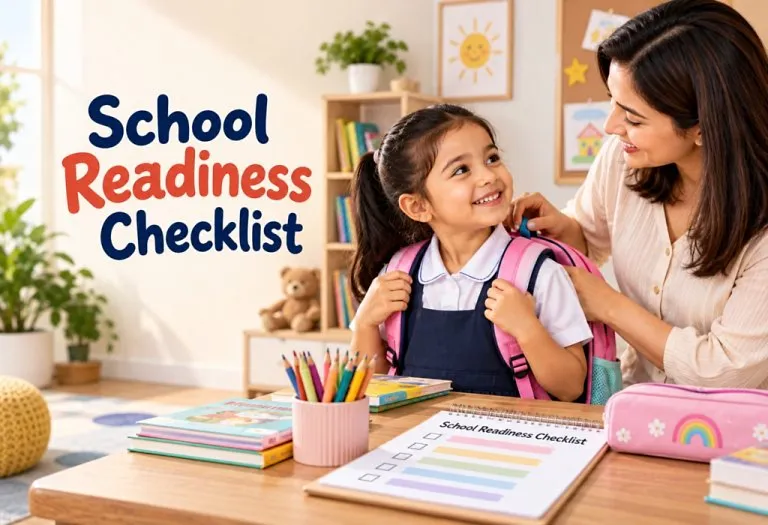
Starting school is a big step for children and parents alike. Many families wonder whether their child has the skills needed to walk into a classroom with confidence. A school readiness checklist gives you a simple way to see where your child stands today and what to build on next. This article explains what school readiness means, why it matters, and which skills to look for. You will also find everyday activities to practice at home and common mistakes to avoid.
What Is School Readiness?
School readiness means a child has the basic skills, habits, and attitudes needed to take part in learning at school and to feel comfortable doing so. It covers how well a child can follow simple directions, communicate needs, get along with others, manage feelings, and show curiosity about new things (1).
Why School Readiness Is Important for a Child?
When children arrive at school prepared, they settle in faster and enjoy learning more. Here are some of the main benefits of early school readiness (2):
- Stronger confidence: Children who know what to expect feel safer trying new tasks and speaking up in class.
- Smoother transition: Familiar routines and basic independence reduce tears and stress on the first days of school.
- Better social connections: Children who can share, take turns, and listen make friends more easily.
- Easier learning: Good language and motor skills help children pick up reading, writing, and maths concepts.
- Positive attitude toward school: A good start builds lasting enthusiasm for learning.
School Readiness Checklist Every Parent Should Know
Use this school readiness skills checklist as a gentle guide. Your child does not need to master every item, and many skills continue to grow during the first year of school (1) (3) (4).
1. Social Skills
Your child should be able to play alongside or with other children, take turns, share toys, and show interest in making friends. Look for simple signs such as saying hello, joining a game, or asking for a turn politely.
2. Emotional Skills
Children who are ready for school can separate from a parent without extreme distress and begin to name feelings like happy, sad, or angry. They may still have big emotions, but they can calm down with support from a trusted adult.
3. Language and Communication Skills
Your child should be able to speak in short sentences, express wants and needs, answer simple questions, and follow two or three step directions. Enjoying stories, rhymes, and songs is also a great sign of growing language skills.
4. Fine and Gross Motor Skills
For fine motor skills, check whether your child can hold a crayon or pencil, use child safe scissors, stack blocks, and turn pages. For gross motor skills, see whether your child can run, jump, climb, and balance with ease.
5. Self Care and Independence
Most schools expect children to use the bathroom on their own, wash and dry their hands, put on and take off a jacket, and open a lunch box. Practicing these tasks at home builds independence and pride.
6. Early Learning and Thinking Skills
These school readiness skills include recognising some letters and numbers, matching shapes and colours, sorting objects, and showing curiosity. Your child does not need to read yet. Attention span matters too, so see if your child can focus on a simple activity for a few minutes.
Everyday Activities to Prepare Your Child for School
You do not need special materials to support your child. These school readiness activities fit easily into daily life (5):
- Read together daily: Choose picture books, point to words, and ask questions like “What do you think happens next?” to grow vocabulary and listening skills.
- Practice routines: Set regular times for waking up, meals, and bedtime so the school schedule feels natural.
- Play and craft: Drawing, playing with clay, threading beads, and building blocks strengthen hand muscles needed for writing.
- Involve your child in chores: Let your child set the table, pack a small bag, or put away toys to build responsibility and independence.
- Arrange playdates: Time with other children helps your child practice sharing, taking turns, and solving small disagreements.
Looking for more ideas? Try school readiness activities for preschoolers such as sorting laundry by colour, counting steps on a walk, singing counting songs, or playing simple pretend school games at home.
Common Mistakes to Avoid When Preparing Your Child for School
Parents always want the best for their children, but a few common missteps can make the transition harder. Watch out for these.
1. Focusing Only on Academics
Knowing the alphabet is helpful, but social, emotional, and self care skills matter just as much. A child who can ask for help and manage feelings often does better than one who only memorises facts.
2. Comparing Your Child with Others
Children develop at different speeds. Comparing your child with a cousin or classmate adds stress for you and for your child. Celebrate your child’s own progress instead.
3. Starting Preparation Too Late
Waiting until a few weeks before the first day can feel rushed. Begin building routines and skills several months ahead so changes feel gradual and calm.
4. Putting Too Much Pressure on Your Child
Long drills, worksheets, and constant testing can turn learning into a chore. Keep practice short, playful, and relaxed so your child stays curious.
5. Skipping Independence Practice
Doing everything for your child may feel faster, but it leaves them unprepared for school tasks like zipping a jacket or opening a snack. Let your child try, even if it takes longer.
6. Ignoring Your Child’s Feelings About School
Some children feel excited, while others feel worried. Talk openly, visit the school if possible, read books about starting school, and listen without dismissing their fears.
FAQs
1. At what age is a child ready for school?
In the US, most children start kindergarten at age five, though cut off dates vary by state and district. Readiness depends on skills and maturity, not only age, so check your local school guidelines and talk to your child’s preschool teacher.
2. Should my child know how to read before starting school?
No. Most children learn to read in school. It helps if your child knows some letters, enjoys books, and recognises their own name, but reading fluently is not expected.
3. What if my child does not meet every item on the checklist?
That is completely normal. The checklist shows areas to support, not a final verdict. Keep practicing through play and daily routines, and speak with your paediatrician or teacher if you notice ongoing concerns.
4. How can I help a child who feels nervous about school?
Visit the school ahead of time, practice the morning routine, read stories about school, and talk about what the day will look like. Reassure your child that feeling nervous is okay and that you will be there at pickup.
School readiness is a journey that grows through everyday moments at home, not a single test your child must pass. By using this school readiness checklist, you can notice your child’s strengths and gently support areas that need more time. Simple habits like reading, playing, and practicing routines go a long way in building confidence. Remember to avoid pressure and comparison, and celebrate small wins along the way. With patience, love, and consistent support, your child will be ready to step into school with a smile.
Also Read:
Preschool Readiness Checklist
Kindergarten Readiness Checklist
Perfect First Day Of School Books For Kids
Was This Article Helpful?
- Author