

Prenatal Testing – Common Screenings in Pregnancy
Understand the purpose of prenatal tests, the different tests by trimester, and what the results may mean for you and your baby.





Medically Reviewed By
Dr. Priyanka Kalra
(Gynecologist/Obstetrician)

In this Article
- What Are Prenatal Tests and Why Are They Important?
- Who Needs Prenatal Testing?
- What Are the Types of Prenatal Testing?
- What Do Screening Tests and Diagnostic Tests Mean?
- First Trimester Tests
- Second Trimester Screening Test
- Third Trimester Tests
- FAQs
View More
This health content has been medically reviewed by qualified experts and follows the FirstCry Parenting editorial policy to ensure accuracy and reliability.
Prenatal tests, or antenatal tests in pregnancy, help healthcare professionals monitor the status and progress of pregnancy and the developing baby. While some tests are routine, others may be prescribed by doctors based on your pregnancy progress, medical or family history, or individual risk factors. Screening tests in pregnancy, on the other hand, are a specific type of prenatal test that look for a higher or lower chance of a health issue, but they alone cannot give a final diagnosis. During consultation, your doctor will explain which tests are recommended or needed during each stage of pregnancy and what their results mean. This article explores antenatal test meaning, various types of prenatal tests and more about screening tests or diagnostic tests in pregnancy.
What Are Prenatal Tests and Why Are They Important?

Prenatal tests are medical tests that your medical practitioner will perform on you in order to get an idea about the progress of your pregnancy and the health of your baby. Your doctor will perform certain tests each time you go for your prenatal check-up; these may include a urine test, blood test, etc., in order to gauge your health. Certain other prenatal screening tests are performed to detect any birth defects or complications in your baby.
Who Needs Prenatal Testing?
Every woman who goes through pregnancy needs routine prenatal testing. However, if you know of any genetic conditions that run in your family, you will need to discuss with your doctor any screening or genetic tests that need to be performed. Non-routine tests are recommended for women with high-risk pregnancies, including women who:
- are over 35 years of age
- are teens
- have had a premature baby
- have had a baby with genetic conditions or birth defects (1)
- Abnormal ultrasound findings
- have a twin or multiple pregnancies
- suffer from high blood pressure, heart disease, diabetes, cancer, lupus, asthma, STDs, seizures, etc.
- are from ethnic groups with a high risk of genetic disorders
What Are the Types of Prenatal Testing?
Prenatal tests can be classified into screening tests, diagnostic tests, and ultrasound during pregnancy. Further explanation is given below.
1. Screening Tests
Antenatal screening tests estimate the likelihood that a baby may have certain genetic or chromosomal conditions. They do not confirm that a condition is present. Depending on the test, screening may involve blood tests, ultrasound examinations, or both.
- First-trimester screening: This screening generally combines a maternal blood test with an ultrasound examination, usually performed between 10 and 13 weeks. The ultrasound may include a nuchal translucency measurement, while the blood test checks specific substances associated with the risk of chromosomal conditions such as Down syndrome (2).
- Second-trimester screening: The quadruple (quad) screen is a blood test that measures four substances in the mother’s blood. As per the Mayo Clinic, it can help estimate the likelihood of conditions such as Down syndrome, Edwards syndrome, and certain neural tube defects (3). The quad screen is generally performed between 15 and 22 weeks.
2. Diagnostic Tests During Pregnancy
Diagnostic tests are used when more definitive information is needed about whether a fetus has a particular genetic or chromosomal condition. They may be offered after an increased-risk screening result, although diagnostic testing options should be discussed and offered to all pregnant patients. Unlike screening tests, diagnostic procedures involve obtaining fetal or placental cells for laboratory analysis and carry a small risk of pregnancy loss.
Chorionic Villus Sampling (CVS): CVS involves collecting a small sample of tissue from the placenta for genetic testing. It is generally performed between 10 and 13 weeks of pregnancy, allowing diagnostic information to be obtained earlier than with amniocentesis (4).
Amniocentesis: During amniocentesis, a healthcare professional uses ultrasound guidance to remove a small amount of amniotic fluid with a thin needle. The fluid contains fetal cells that can be analysed for certain genetic and chromosomal conditions. The procedure is usually performed between 15 and 20 weeks, although it may be performed later when medically indicated (5).
3. Ultrasound During Pregnancy
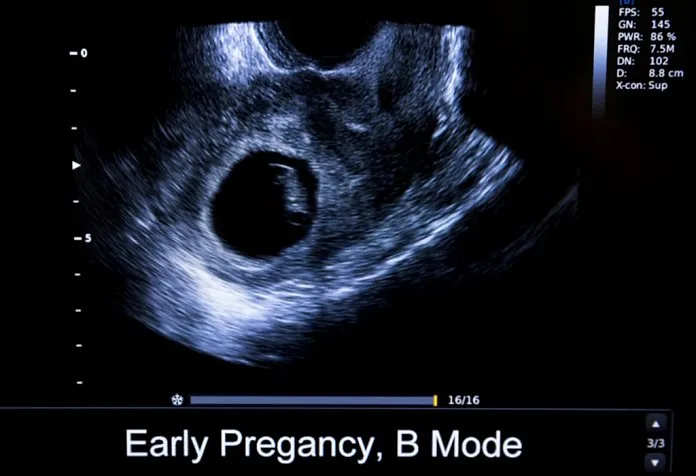
Ultrasound uses sound waves to create images of the developing fetus and can help healthcare professionals assess fetal development and identify certain structural abnormalities. Ultrasound examinations are used at different points in pregnancy for different purposes. For example, an early scan may help establish gestational age, while a detailed second-trimester ultrasound examines major fetal structures. The American College of Obstetricians & Gynecologists (ACOG) recommends offering a second-trimester ultrasound for fetal structural defects, ideally between 18 and 22 weeks (6).
What Do Screening Tests and Diagnostic Tests Mean?
Screening tests measure the level of risk of any potential health conditions in your baby, but will not determine if your baby has the condition or not. Diagnostic tests are performed if your baby shows a high risk for a specific condition. These tests are performed to ascertain if your baby suffers from a health or genetic condition.
First Trimester Tests
Here are some of the first trimester screening tests that are performed in the first trimester of your pregnancy.
1. Nuchal Translucency (NT) Scan
Nuchal translucency scan is an ultrasound that is performed to check for any risk of genetic conditions in your baby including Down syndrome, heart problems and chromosomal abnormalities. While the test will not indicate if your baby actually suffers from the condition, if the risk is low it can offer reassurance to the parents. If the risk is high, you may be advised to get a CVS test to determine if your baby has a problem.
NT screening is performed between the 11th and the 16th weeks of your pregnancy. The NT tests can cost between Rs. 600 and Rs. 4,000.
2. Blood Test
Blood tests are used to detect any infections like syphilis, hepatitis B and HIV. It also measures the level of a protein called Rh factor in your blood. If you lack the Rh factor and your baby has it, it may cause a condition called Rh disease in your baby. Blood tests also check for anaemia (7).
Blood tests are regularly performed several times during your pregnancy. The cost is between Rs. 400 to Rs. 2,000 based on the State and the hospital.
3. CVS
As per Johns Hopkins Medicine, Chorionic villus sampling (CVS) is a diagnostic test which takes a sample of tissue in the placenta to check for any genetic and chromosomal conditions. It can detect Down syndrome, cystic fibrosis and other genetic disorders (8).
CVS is performed between the 10th and the 13th week of your pregnancy. The average cost of the test is Rs. 10,000.
4. Carrier Screening for Genetic Conditions
This test uses blood or a saliva sample to check if you are a carrier of any genetic conditions that could affect your baby. You don’t necessarily have to have the condition, but a gene change that may pass on to your baby. The risk of your baby having the condition increases if both you and your partner are carriers of the same genetic condition. Carrier screening can be conducted to measure the risk of conditions like cystic fibrosis, thalassemias, spinal muscular atrophy haemoglobinopathies. Carrier tests can also be performed for conditions like Fragile X syndrome, as well as Tay Sachs disease.
This prenatal genetic testing can be performed before pregnancy if you are planning to conceive or in the first few weeks of pregnancy. The test can cost over Rs. 7,000, depending on the type of screening.
5. Non-invasive Prenatal Screening
Non-invasive prenatal screening is performed using your blood sample to look at the DNA from the placenta and identify if your baby is at risk of any genetic conditions. Prenatal screening tests like NIPT can only determine if your baby is likely to have the condition; they will not be able to indicate it for sure.
NIPT is performed after the 9th week of your pregnancy. The cost of the test starts at Rs. 18,000.
6. Early Ultrasound
An ultrasound scan gives you a picture of your baby and also tells you how far along you are in your pregnancy.
An ultrasound will be performed twice for a normal pregnancy – once at the beginning of your pregnancy and between the 18th and the 20th week to determine if your baby is growing properly. The cost of an ultrasounds starts from Rs. 450 and varies as per the lab.
7. Transvaginal Scan (TVS)
A transvaginal scan examines the cervix, fallopian tubes, vagina, uterus and the ovaries. It can check for any abnormalities in the placenta, monitor foetal heartbeat, check for any abnormal bleeding, and check for any complications in the cervix.
It is performed between the 6th and the 10th week of pregnancy and can cost over Rs. 500.
8. Abdominal Scan
An abdominal scan is used to examine the health of the organs in the abdomen including the liver, gallbladder, pancreas, kidneys, appendix, intestines, and spleen. It can also be used to have a glimpse of the growth and development of the baby.
This scan is performed between the 6th and the 7th week, and the cost for the scan starts from Rs. 500 and varies as per the place.
9. Sexually Transmitted Disease (STD) Tests
STD tests include a blood test to detect HIV, which causes AIDS, which can seep into the placenta during or before delivery and infect the foetus. The blood test is also used to screen for syphilis. Gonorrhoea and Chlamydia are detected with a swabbed sample from the cervix (9).
This test is performed on your first prenatal visit, and the cost can begin at Rs. 3,000.
10. Pap Smear
A Pap smear detects any signs of cervical cancer using cells swabbed from the cervix.
The test is performed on your first prenatal visit, and the costs can range between Rs. 200 to Rs. 1,500.
11. Blood Pressure
This is used to see if you suffer from preeclampsia or high blood pressure during pregnancy. Preeclampsia can cause your kidneys, liver and other organs not to function efficiently and can cause other problems during your pregnancy.
It is conducted during each one of your prenatal visits.
12. Urine Tests
Urine tests are performed with a urine sample for various purposes, including detecting gestational diabetes (excess sugar in the urine), preeclampsia (protein in the urine), infections (blood and bacteria in the urine), etc.
A urine test is performed during each prenatal visit, and the average cost of the test is Rs. 100.
13. Cystic Fibrosis (CF)
Cystic fibrosis causes problems with digestion and breathing. A CF test may be performed with saliva or a urine sample to determine who is a carrier of the condition. In the event that both parents are carriers, the baby may have a one in four chance of having the disease.
The test is performed before the 20th week of your pregnancy and can cost around Rs. 6,000.
Second Trimester Screening Test
Here are some of the second trimester tests that are performed during the middle phase of the pregnancy.
1. Multiple Marker/Quadruple Screen
This test during pregnancy for birth defects screens the baby for Down syndrome and certain neural tube defects, including anencephaly (abnormality in the skull) and spina bifida.
It is performed between the 16th and the 18th week of pregnancy, and the cost of the test can start from Rs. 1,700.
2. Integrated or Sequential Screening
This screening uses a combination of ultrasound images of the baby’s neck and blood tests to determine the risk of Down syndrome, spina bifida, brain disorder and spinal cord disorder. Even if the test doesn’t show any risk, a follow-up test will be performed.
The first test takes place between the 11th and the 14th week, and the second one between the 16th and the 18th week.
3. Amniocentesis
Amniocentesis draws amniotic fluid to test for genetic conditions, including Down syndrome, neural tube defects, etc.
It is performed between the 15th and 20th week of pregnancy. The cost of the test starts at Rs. 8,000.
4. Ultrasound
Ultrasound imaging is used to check your baby’s growth and detect any birth defects in the baby.
This scan is performed around the 16th to the 20th week of pregnancy, and the cost can start from Rs. 450 and vary by region.
5. Glucose Screening
A glucose screening is done to measure the risk of you having gestational diabetes using your blood sample. You will be asked to drink a sugary drink an hour before the blood is drawn.
This screening test is performed between the 24th and 28th week of pregnancy and can cost over Rs. 500.
6. Foetal Doppler Ultrasound
A foetal Doppler ultrasound is used to measure the blood flow in the baby’s veins and the overall health of the foetus. It can give a visual or audio representation of the movement of blood through the veins of the baby.
It can be performed twice, between the 22nd and the 24th week and the 30th and the 34th week. The ultrasound can cost around Rs. 3,500 or more.
7. Foetoscopy
Foetoscopy uses an instrument called a foetoscope, which is inserted into the uterus through a small incision on the abdomen, in order to check for any birth defects as well as collect a sample from the umbilical cord. The sample collected can further be tested for other genetic conditions.
This procedure is performed in the 18th week of pregnancy and can cost over Rs. 80,000.
Third Trimester Tests
Some of the tests performed during the third trimester of pregnancy are
1. GBS
Group B streptococcus test is performed with a culture of bacteria from the vagina and the rectum. These bacteria may pass on to your baby during delivery and lead to inflammation in the lungs, spinal cord, and brain or, in serious cases, can even be fatal. Antibiotics can prevent this transmission of bacteria to the baby if you test positive.
The GBS test is performed between the 35th and the 37th week of pregnancy.
2. Electronic Foetal Heart Monitoring
Electronic foetal heart monitoring tracks your baby’s heart rate during pregnancy, labour and delivery to determine your baby’s well-being.
This is performed several times, including during labour and delivery.
3. Contraction Stress Test
This antenatal test during pregnancy measures the baby’s heart rate when you experience uterine contractions and ensures that the baby receives an adequate amount of oxygen from the placenta during labour.
This test is performed during labour as you deliver your baby.
4. Non-stress Test
Your doctor may also suggest this test during the 3rd trimester pregnancy. As stated by the Office on Women’s Health, a non-stress test is used to measure the heart rate of the foetus when a woman has a high-risk pregnancy with conditions like preeclampsia and gestational diabetes (10).
It can be performed during the third trimester. It can cost between Rs. 300 to Rs. 600.
5. Biophysical Profile
A biophysical profile is a combination of a non-stress test along with an ultrasound and determines the heart rate and body movements of the foetus, as well as the volume of the amniotic fluid in the amniotic sac.
FAQs
1. Can antenatal tests hurt my baby?
All the checkups and tests are done under professional supervision, so there is no need to worry about the health of your child.
2. How long does a Doppler test take to complete?
A Doppler ultrasound test typically takes about 10 to 30 minutes to complete. In some cases, it may take longer as well.
3. Are antenatal tests accurate?
Usually, more than 99% of the test results are accurate. However, due to errors in sampling and genetic issues, and other reasons, there could be a chance of false results. There is no need to worry; doctors usually conduct tests again if needed.
Prenatal tests give you a clear idea of how your pregnancy is progressing and indicate the need for any extra measures that you need to take to ensure the health of your baby. Discuss with your healthcare expert which tests you will need to have based on your health condition.
Also Read:
Sequential Test while Pregnant
Non-Invasive Prenatal Testing (NIPT)
Non-stress Test (NST) during Pregnancy
Was This Article Helpful?
2. American College of Obstetricians & Gynecologists – Prenatal Genetic Screening Tests
3. Mayo Clinic – Prenatal testing: Is it right for me?
4. American College of Obstetricians & Gynecologists – Prenatal Genetic Diagnostic Tests
6. The American College of Obstetricians & Gynecologists – Current ACOG Guidance
7. March of Dimes – Prenatal tests
8. Johns Hopkins Medicine – Common Tests During Pregnancy
9. MedlinePlus – Prenatal Panel
10. The Office on Women’s Health – Prenatal care and tests
- Author
- Expert Reviewer

Related Articles
-

Accuracy of Pregnancy Ultrasound to Predict the Due Date
-

Swollen Lymph Node While Pregnant - Signs, Causes, & Treatment
-

Creative Ideas for Throwing a Fall-Themed Baby Shower
-

Baby Shower Etiquette: Rules for Planners & Guests
-

Do Babies Sleep in the Womb?
-

How To Calculate Pregnancy By Weeks, Months, & Trimesters?