
50 Open Ended Questions for Preschoolers to Build Communication Skills
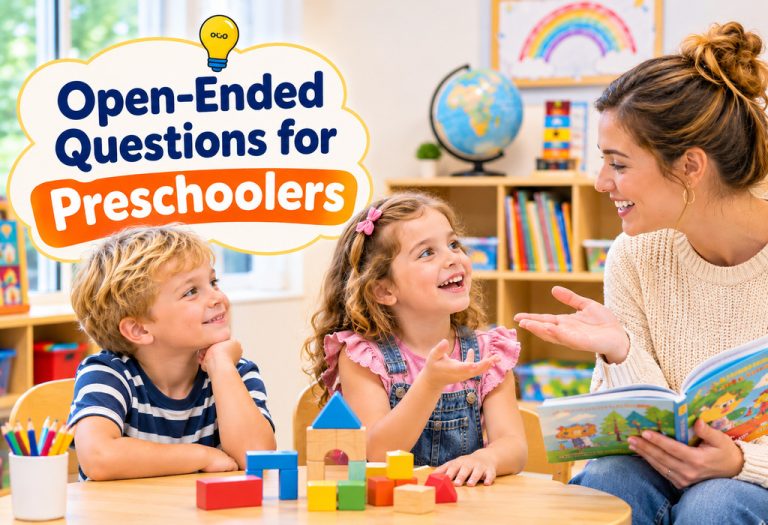
Use open-ended questions for preschoolers to boost communication skills, build vocabulary, encourage creativity, and develop confidence in expressing thoughts.




Key Takeaways
- Open ended questions have no single right answer, so they encourage preschoolers to think and speak in full sentences.
- Asking them daily builds vocabulary, confidence, and emotional awareness.
- Questions starting with “what,” “how,” and “why” work better than yes or no questions.
- Patience matters. Give your child time to think before you respond.
- Follow your child’s answer with a gentle extra question to keep the talk going.
Preschoolers are full of ideas, but they often need a little nudge to share them. Open-ended questions for preschoolers give children the space to explain, imagine, and express feelings in their own words. They turn quick replies into meaningful conversations.
Now, you might be wondering what questions to ask, when to ask them, or how to make these conversations more meaningful. Don’t worry, we’ve got you covered! This article brings together everything you need to get started, from understanding what open-ended questions are and exploring their types and benefits to finding 50 ready-to-use examples and practical tips to help you ask them effectively.
What Are Open Ended Questions?
Open ended questions are questions that cannot be answered with a simple yes, no, or single word. They invite children to describe, explain, and share opinions. For example, “Did you like the park?” gets a yes, but “What was your favourite part of the park?” starts a story. Open ended questions in preschool classrooms and at home help children practice speaking, listening, and thinking at the same time.
Types of Open Ended Questions for Preschoolers
Different questions build different skills. Here are four common types of open ended questions to ask preschoolers.
1. Imagination Questions
- What would you do if you could fly?
- What do you think lives on the moon?
- If you had a pet dragon, what would you name it?
- What would you build with a giant box?
2. Feeling Questions
- How did you feel when you saw your friend today?
- What makes you feel happy?
- What helps you when you feel sad?
- How do you think the puppy felt?
3. Observation Questions
- What do you notice in this picture?
- What do you see outside the window?
- How does this leaf feel?
- What is different about these two toys?
4. Problem Solving Questions
- How can we fix the tower that fell?
- What could we do to help our friend?
- How can we share these crayons?
- What should we try next?
Benefits of Asking Open Ended Questions to Preschoolers
The importance of open ended questions in preschool goes beyond conversation. They support growth in many areas.
- They build vocabulary as children search for the right words.
- They strengthen speaking and listening skills.
- They encourage creative and critical thinking.
- They help children understand and name their emotions.
- They boost confidence because every answer is welcome.
- They deepen the bond between children and caregivers.
Interesting Open Ended Questions for Preschoolers to Ask
Use this list of open ended questions for preschoolers at home, in the car, or during play. Each one is an example of an open ended question that keeps the conversation flowing.
- What was the best part of your day?
- What is your favourite game and why?
- What do you like most about your best friend?
- If you could be any animal, which would you be?
- What makes you laugh the most?
- How do you think a bird builds its nest?
- What would you do on a rainy day?
- What is your favourite food and how does it taste?
- Where would you go on an adventure?
- What do you want to be when you grow up?
- How do you help at home?
- What is your favourite story and why?
- What would you say to a new friend?
- How do you think plants grow?
- What colours do you see in the rainbow?
- What would you like to learn today?
- What is something that scares you, and what helps?
- What do you think the clouds are made of?
- How would you teach a toy to read?
- What makes a good friend?
- What do you like to do when you are alone?
- How would you decorate your dream room?
- What do you think the sun does at night?
- What sound do you like the most?
- What is the kindest thing you did today?
- How can we take care of our pets?
- What would you cook for your family?
- What happened in the story after the ending?
- What would you invent to make life easier?
- How do you feel when it is time to sleep?
- What do you like about your school?
- Which toy would you take on a trip and why?
- How do you think a fish breathes?
- What would you do with a magic wand?
- What is your favourite place to play?
- Why do you think the leaves change colour?
- What would you tell a baby about the world?
- How can we keep our planet clean?
- What songs make you want to dance?
- What did you learn today?
- What do you think is hiding under the ocean?
- How would you build a house for a bunny?
- What is the funniest thing you have seen?
- How do you say thank you to someone?
- What would you do if you were the teacher?
- What do you think the moon thinks about?
- How do you make someone smile?
- What would you pack for a picnic?
- What are you proud of?
- What would you like to do tomorrow?
Tips for Asking Open Ended Questions to Preschoolers
A few small habits make these questions work better.
- Start questions with “what,” “how,” or “why.”
- Keep the wording short and simple for young listeners.
- Wait patiently, because preschoolers need time to think.
- Show interest through eye contact and a warm tone.
- Follow up with “Tell me more” to deepen the answer.
- Ask about things your child already enjoys, such as toys or books.
- Use pictures, objects, or nature walks as conversation starters.
- Accept every answer without correcting it.
Common Mistakes to Avoid When Asking Preschoolers Open Ended Questions
Even well meaning adults can slip into habits that shut conversations down.
- Asking too many questions in a row can feel like a quiz.
- Rushing to answer for the child takes away their thinking time.
- Correcting answers makes children afraid to speak up.
- Using long or complex words can confuse young learners.
- Asking questions when the child is tired or upset rarely works.
- Sticking to yes or no questions limits language growth.
FAQs
1. At what age can I start asking open ended questions?
You can begin around age 2 or 3 with simple questions like “What do you see?” As language grows, questions can become more detailed and imaginative.
2. What if my preschooler says “I don’t know”?
Stay calm and rephrase the question or offer two choices to help them start. You can also answer first to model how it works, then ask again later.
3. How many open ended questions should I ask in a day?
There is no fixed number. A few meaningful questions during meals, play, or bedtime work better than many rushed ones.
Open ended questions turn everyday moments into chances to learn. They help preschoolers find their words, share their feelings, and think creatively. Use the list above, mix in different types, and stay patient as your child answers. Avoid common mistakes like rushing or correcting, and always show genuine interest. With regular practice, your little one will grow into a confident and expressive communicator.
Also Read:
Open-Ended Questions For Kids
Trick Questions For Kids With Answers
Best ‘Would You Rather’ Questions For Kids
Was This Article Helpful?
- Author


Related Articles
-

Does Inventive Spelling Really Help Children Learn?
-
The Person I Admire the Most Essay for Students and Children
-
Essay On River - 10 Lines, Short and Long Essay for Children & Students
-
15 Inspiring TED Talks for Kids
-
List Of Christmas Words That Start With C
-
Interesting Facts About Opossums for Kids