
Eating Salmon While Pregnant – Is it Safe?
Salmon while pregnant sounds like a catch, but is it really safe? Find out how to enjoy this omega 3 rich fish without any worry.





Medically Reviewed By
Dr. Prerna More Patel
(Gynecologist/Obstetrician)

This content has been reviewed by a qualified expert and follows the FirstCry Parenting editorial policy to ensure accuracy and reliability.
Pregnant women and salmon are generally a safe and healthy combination when the fish is fully cooked and consumed in recommended amounts. In fact, the U.S. Food and Drug Administration (FDA) and Environmental Protection Agency (EPA) advise pregnant women to eat 2–3 servings (8–12 ounces) of low-mercury fish per week, and salmon is listed among the best choices due to its high omega-3 content and low mercury levels (1).
However, many expectant mothers still have questions about portion sizes, farmed versus wild salmon, and whether smoked or raw salmon is safe to eat. In this article, we’ll cover the benefits of eating salmon fish in pregnancy, potential risks to be aware of, how much salmon is considered safe, and practical tips for including it in a healthy prenatal diet.
Can You Eat Salmon While Pregnant?
We’ve established the fact that salmon is tasty and healthy, but is it advisable for pregnant women to indulge in this delicacy? The answer is yes! Salmon has a great nutritious value that can be highly beneficial for both the expecting mother and child. A low-fat fish, salmon happens to be one of the most nutritious fish available (2). In addition to this, it helps to keep a lot of diseases at bay, thereby protecting you and your baby.
Benefits of Eating Salmon in Pregnancy
As mentioned above, salmon has a lot of health benefits, here are a few (3):
1. Rich in Omega-3 Fatty Acids
Omega-3 fatty acids are known for their many benefits, including great cardiovascular health, improved eyesight, and enhanced neurological development which are the most common advantages (4). Consuming this nutrient means good health for both you and your unborn baby.
2. Rich in Proteins and Vitamins
Proteins are extremely important for muscle growth and repair, and vitamins are highly instrumental in maintaining optimal blood pressure levels, preventing heart disease, and increasing immunity (5). In addition to this, vitamins are great for the eyes, skin, and hair and work as an antioxidant, thereby fighting toxins.
3. Great for the Heart
Salmon is great for the heart as it keeps a tab on blood pressure and cholesterol and prevents blood from clotting, especially in the arteries (3).
4. Helps Prevent Premature Delivery
Fish that have a low-fat content and high omega-3 fatty acid content are great for the body, and salmon is the perfect example of this. Research suggests that this fish, in particular, helps in preventing premature delivery.
5. High DHA Content
Salmon has a high content of Docosahexaenoic acid (DHA). This will aid in the brain development of your fetus. In addition to this, it can help prevent postpartum depression for the expecting mother (6).
How Much Salmon Can You Consume During Pregnancy?
It’s vital to consume salmon in moderation. Whilst salmon is one of the fish that contains low levels of mercury, it is recommended to consume not more than 2 to 3 servings or 8 to 12 ounces per week (7). This is the quantity recommended for consumption of low-mercury fish, If this limit is exceeded, it could be a concern for the baby’s brain development.
What Is the Nutritional Value of Cooked Salmon?
A single serving of cooked salmon (that’s about three to four ounces) contains approximately 200 calories (8). Most of those calories are good for you during pregnancy. Salmon is an excellent protein source and is also low in saturated fat. Opt for salmon for extra iron, potassium, and vitamins D and B12 for you and your growing baby.
Which Types of Salmon are Safe for Pregnant Women?
There are various types of salmon dishes that can be safely consumed during pregnancy. The key to keeping salmon safe during pregnancy is selecting properly cooked dishes and avoiding raw preparations. Check this list to know the best salmon to eat while pregnant.
1. Tinned or Canned Salmon
Tinned salmon is safe to consume during pregnancy as it’s sterilised during the canning process. Just take care as tinned salmon usually consists of larger bones. So make sure you remove them before consuming.
2. Fresh, Cooked, or Frozen Salmon Steak
You can try any cooking method for the salmon, as long as it’s thoroughly cooked. You can use a cooking thermometer to make sure that the internal temperature is 145°F or 63°C. This is the temperature at which pathogens and bacteria are killed (9).
3. ‘Ready to Eat’ Salmon Pouches
Ready-to-eat pouches of salmon are completely safe to eat during pregnancy, This is because the salmon is pasteurised in a different way, but very similar to the canning process. However, stay away from ready-to-eat smoked salmon pouches.
4. Crispy Salmon Skin
Salmon skin is safe, as long as it’s thoroughly cooked similar to salmon steak. So opted for fully cooked or crispy salmon skin.
5. Cold, Cooked Salmon
Cooked salmon can be eaten at cooler temperatures if it has been stored well in a refrigerator. Make sure you consume it within a couple of days after it is cooked.
Side Effects of Consuming Excess Salmon in Pregnancy
Too much of anything is bad, and this is something you must keep in mind especially if you are in the family way. Here are a few side effects of consuming excess salmon in pregnancy –
1. Excess Mercury
Salmon is one of the types of fish that contain the least amount of mercury. However, consuming salmon in excess can increase the amount of mercury in your system, so make sure you eat this fish moderately.
2. Could Contain PCB
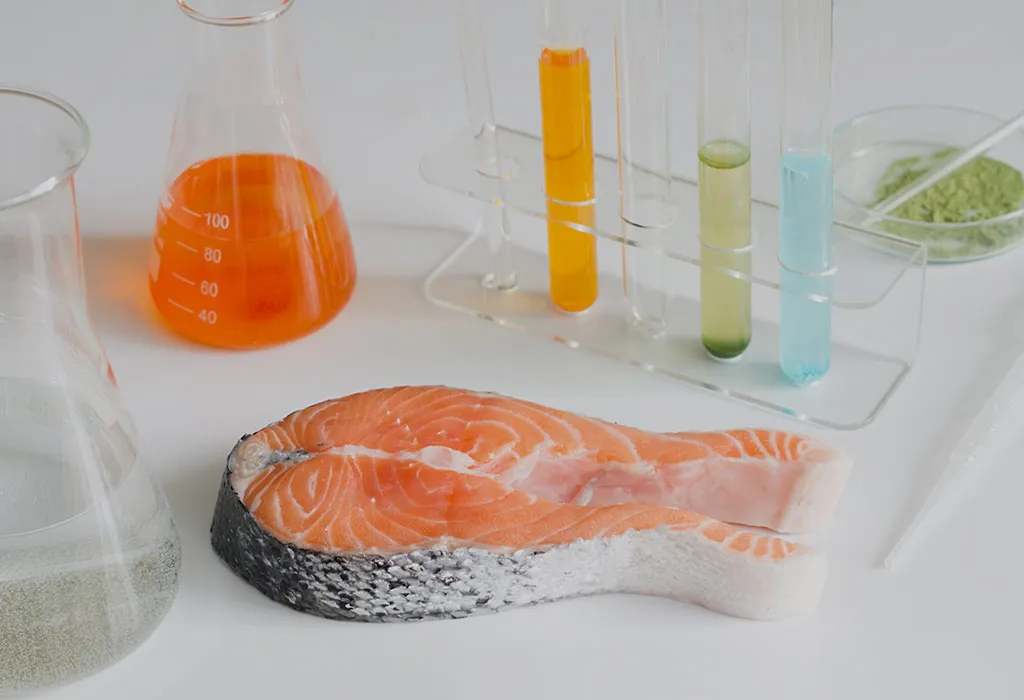
PCB or Polychlorinated biphenyls are harmful to the body as they are carcinogenic in nature, which means they can cause cancer (10). Excess consumption of salmon can put you at risk for this. PCB is also a causal factor in hindering the development of your foetus.
Which Is Better – Wild (Atlantic, Alaskan) or Farmed Salmon When Pregnant?
Most of the salmon we eat is farmed. On the other hand, wild salmon is becoming more scarce and due to this, expensive. If you have the budget and if the salmon is available, opt for cooked wild salmon throughout your pregnancy. However, most of the farmed salmon that’s available is produced in a safe, highly regulated, way and is safe for pregnant women to consume.
How Can You Include Salmon Fish in Your Pregnancy Diet?
There are several ways to prepare and include salmon in your pregnancy diet, but the best way to do so is by broiling, poaching or baking it. Make sure you avoid raw preparations like sushi, as this puts you at risk for bacterial infection. Consume this as a fillet with your rice and vegetables. Salmon salads filled with vegetables are a tasty option as well.
While it is best to avoid smoked seafood that has been refrigerated during pregnancy, there has been no negative correlation between smoked salmon and pregnancy as there is no evidence on why you should avoid it.
Salmon Recipe for Pregnant Women
Give your growing baby the best start and yourself too with this lovely salmon dish that’s ready in no time!
1. Honey Dijon Alaska Salmon
Ingredients
- 4 salmon filets (with the skin removed)
- 1 tbsp Dijon mustard
- 1 tbsp honey
- 2 tbsp olive oil
- ½ tbsp fresh ginger
- Black pepper to taste
- ½ cup spinach leaves
- 4 lemon wedges
- 1 pinch of salt
Preparation Time: 10 minutes
Cooking Time: 15 minutes
Servings: 4
How to Make:
- Preheat the oven to 200°C/395°F. Place aluminium foil on a baking tray.
- In a small mixing bowl, whisk together the Dijon mustard, honey, olive oil, and fresh ginger.
- Place the 4 salmon filets on the baking tray. For the seasoning, sprinkle a pinch of salt, and brush the honey Dijon glaze (prepared in the previous step) evenly over the filets.
- Bake for about 12-15 minutes. Check that the flesh is tender and glaze is caramelised.
- While the salmon is baking, blanch a few spinach leaves.
- Plate your spinach and salmon
- Sprinkle the black pepper and add a dash of fresh lemon juice. Your dish is ready!
Precautions to Take While Having Salmon When Pregnant
Here are a few precautions that you must keep in mind while consuming salmon when pregnant (9).
- Firstly, make sure you buy or order the fish from a trusted source. Even if you are buying from a local vendor, ask around to see if his fish are good. Before eating at a restaurant, check to see if it has good reviews, and is clean and hygienic.
- Make sure your salmon is well-cooked. Raw salmon while pregnant is dangerous as raw, uncooked food is a breeding ground for bacteria, germs, and viruses. You don’t want you or your fetus coming in contact with this.
- Make sure you remove the skin of the fish. After this, make sure that the meat is cooked until it is dark.
- Avoid cooking this fish with too much spice. Excessive consumption of spice is not good for you, especially if you are pregnant.
FAQs
1. Is it okay to eat pink salmon in pregnancy?
Yes, pink salmon like all varieties of salmon are considered safe to eat during pregnancy.
2. Can I eat salmon during the first trimester of pregnancy?
Yes, salmon can be safely consumed during the first trimester as long as it is fully cooked. Its protein, vitamin D, and omega-3 fatty acids can help support your baby’s early growth and development.
Taking care of yourself at this time should be high on the list of your priorities, as you are now not just responsible for yourself, but for your little unborn baby as well. Make sure you give yourself all the love and care that you truly deserve. If you’re pregnant and salmon is on your mind, do know that salmon is a great food, so go ahead and dig into this delicacy – but in moderation. Stay away from this food if you have an allergic reaction to it. Consult your doctor before consumption. If you’ve developed a reaction after consumption, make sure you go to the doctor immediately.
Also Read:
Consuming Crab in Pregnancy
Consuming Shrimp while Pregnant
Is It Safe to Eat Prawns during Pregnancy?
Health Benefits of Tuna during Pregnancy
Was This Article Helpful?
Parenting is a huge responsibility, for you as a caregiver, but also for us as a parenting content platform. We understand that and take our responsibility of creating credible content seriously. FirstCry Parenting articles are written and published only after extensive research using factually sound references to deliver quality content that is accurate, validated by experts, and completely reliable. To understand how we go about creating content that is credible, read our editorial policy here.
1. U.S. Food & Drug Administration – Advice about Eating Fish
2. Johns Hopkins Medicine – Healthy Fish to Eat
3. Cleveland Clinic – 6 Reasons Why Salmon Is So Good for You
4. Cleveland Clinic – Omega-3 Fatty Acids
5. Cleveland Clinic – Proteins
6. PubMed – Health benefits of docosahexaenoic acid (DHA)
7. March of Dimes – Foods to avoid or limit during pregnancy
8. U.S. Food and Drug Administration – Nutrition Facts
9. U.S. Food and Drug Administration – Meat, Poultry & Seafood (Food Safety for Moms-to-Be)
- Author
- Expert Reviewer


Related Articles
-

10 Must-have Dry Fruits and Nuts During Pregnancy
-
Tomatoes During Pregnancy - Benefits, Risks, and Tips
-
Eating Clam Chowder During Pregnancy
-
Chikoo (Sapota) in Pregnancy: Benefits & Risks
-
Taking Vitamin B5 (Pantothenic Acid) During Pregnancy
-
Passion Fruit in Pregnancy: Safety, Benefits, and Precautions