Cold Sore During Pregnancy – Causes, Symptoms, and Treatment




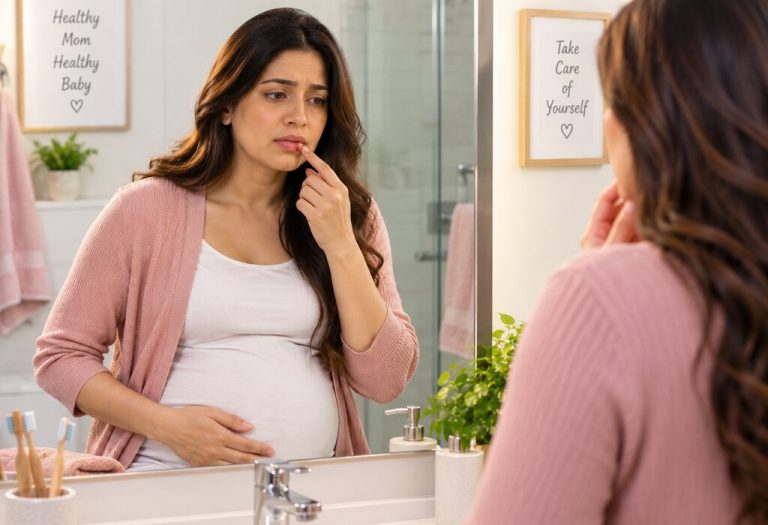
Being pregnant with a cold sore can make you worry about your baby’s health. Herpes simplex virus (HSV) generally causes cold sores that remain in the body after the initial infection and can reappear from time to time. Stress, illness, hormonal changes, and certain triggers may cause those recurrences, although outbreaks do not happen in every pregnancy. So, what happens when you experience cold sores and pregnancy at the same time? The NHS recommends seeking medical advice if you are pregnant and concerned about a cold sore (1), while RCOG guidance highlights the risk of HSV transmission to newborns during childbirth (2). If you develop a cold sore, knowing how to manage the symptoms and prevent spreading the infection is important. Moreover, there’s a difference between oral cold sores and genital herpes. Here’s a one-stop guide to the cold sore virus in pregnancy, including causes, treatment and precautions.
What Is a Cold Sore?
Sometimes known as “fever blisters”, cold sores form in a small group around the mouth and on the lip. The area around will become swollen, sore, and red. These blisters might break open, causing the leakage of translucent fluid. It will then start the healing process after a few days. A scab will form, and the blisters will begin to recede, healing completely after around two weeks. Cold sores are caused by HSV, and the virus remains in the body after infection, which is why recurrences can happen. The sores are highly contagious and can cause discomfort while they heal.
Is It Common to Get Cold Sores in Pregnancy?
Yes, it is very common to have cold sores when pregnant, even if you have never had them or haven’t had them in a long time. These sores are infectious and must be treated in time. So, if you develop cold sores while pregnant, you must tell your doctor about this.
What Causes Cold Sores When Pregnant?
The Herpes Simplex virus (HSV) is what causes cold sores. Both mouth, lip and genital cold sores are caused by it. As per the CDC, there are two strains of HSV: HSV-1 and HSV-2, and both are responsible for causing all forms of Herpes, where HSV-1 causes the majority of cold sore cases (3). There is no known cure for the HSV-1 virus.
The virus enters the body when there is an open wound in or around the mouth. When a person shares utensils or drinks from the same water bottle as someone with a cold sore, the virus can be transferred. Kissing can also spread the virus (4). The virus does not just stay around the mouth, but also passes to other places on the body.
You have a high chance of developing a cold sore during early pregnancy as your hormones fluctuate rapidly to prepare for your baby to grow. Stress is another contributor to cold sores in pregnant women, why you may experience more cold sore outbreaks than usual during pregnancy.
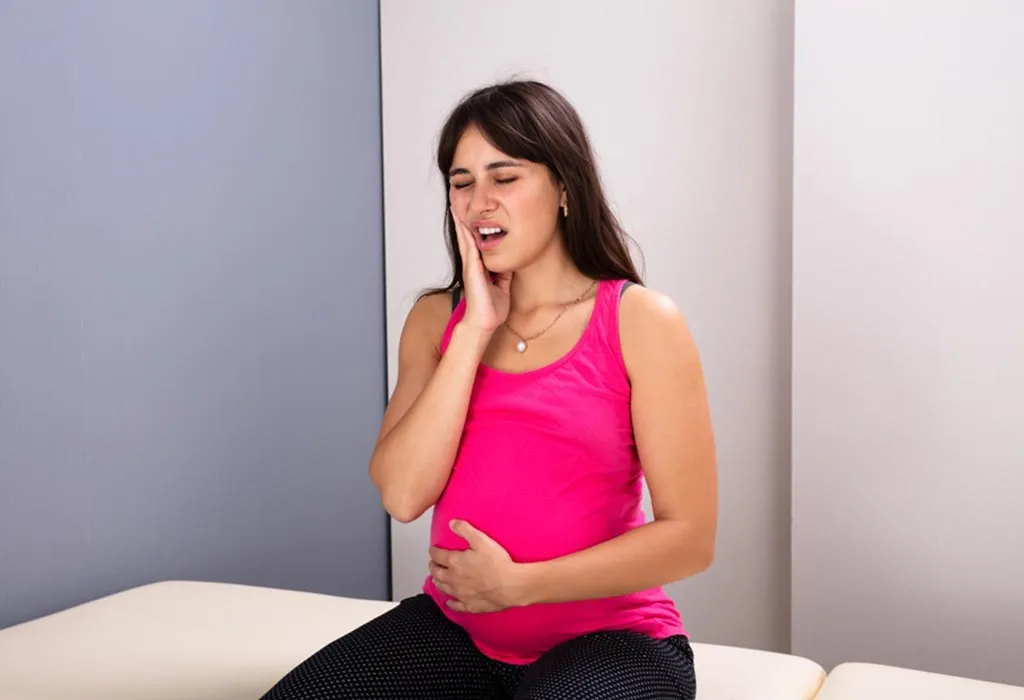
Signs and Symptoms of Cold Sores
While some people do not show any symptoms, others have obvious signs of the cold sore. Here are the signs and symptoms to look out for if you suspect you may be developing a cold sore:
- Painful sensation around the mouth or on the lips; sometimes both.
- Sore throat
- Fever
- Swollen neck glands or other body parts
- During the blister stage, there will mostly be a clear liquid that leaks out
- Scabs will form over the sore after a few days
Are Cold Sores Dangerous While Pregnant?
Cold sores should not affect your baby if you have your first outbreak or if it comes back in the first 34 weeks. But cold sores can be transferred to your baby during the birth, especially if it’s your first outbreak.
How Long Do Cold Sores Last While Pregnant?
As per the NHS, cold sores take about 10 days to heal, while the Cleveland Clinic informs that cold sores last about one to two weeks and may persist longer or take longer to heal for immunocompromised individuals, including pregnant women (5) (6).
Effects of Cold Sores on Foetal Development – Risk to the Baby
A major worry for any mother who has a virus or disease is whether or not it will harm her baby. Here is what you need to know about how cold sores can affect your little one.
In the Womb
- Often, getting a cold sore while pregnant won’t harm your baby, as an early pregnancy infection carries a risk of about 1%. As the HSV virus is only around your mouth, it doesn’t cross over into the placenta and make its way to your growing baby. This is because it is a localised infection.
- If you have contracted the herpes virus for the first time in your last trimester, the risk of neonatal infection could be from 30% to 50% (7). Your body does not have enough time to develop any antibodies needed to suppress viral replication before labour. Though oral HSV does not put your baby at risk, if oral HSV gets transferred to your genitals, it could be a problem for your baby. This is the reason that about 85% of transmission of HSV from mother to foetus occurs during the intrapartum period (time span of labour and childbirth) (7).
- The transmission risk of the infection from the mother to the fetus and the newborn is greatest with genital herpes, and is said to be more dangerous to your baby. This is because babies pass through the birth canal and contract the virus.
After Birth
The risk of herpes or cold sores doesn’t go away after your baby is born. If you contract the infection after giving birth, it is advised that you avoid kissing your child or touching the sores and then your newborn baby without washing your hands thoroughly with soap and water (8).
In some rare cases, cold sores could develop on breasts. In such cases, avoid breastfeeding from the breast that has a cold sore while you’re still contagious.
Transmission of a cold sore infection to a newborn baby is called neonatal herpes. The Cleveland Clinic states it can develop serious complications in newborns as they do not have a strong immune system. Neonatal herpes can appear in the form of fluid-filled blisters on the baby’s skin, around their eyes, and in their mouth (9).
Diagnosis of Cold Sores in Pregnancy
Though you may think that getting a proper diagnosis to tell if you have cold sores or not, cold sores are quite easy to diagnose. Your doctor will:
- Ask you to know if you came into contact with the virus.
- A physical examination.
You will not need any other type of test.
How to Treat Cold Sores While Pregnant?
While HSV cannot be cured, there are ways to help the healing to occur faster and ways to manage the pain. Once in your body, HSV will remain for the rest of your life. Here are some treatment options for you to consider:
- If you can manage it, you should just leave it be. Cold sores will heal within two weeks. However, if you feel like the pain is too much, or if you are simply embarrassed about them, you can seek treatment to help with healing.
- Oral medications that include antiviral medications. These are only available with a prescription. These must be taken when you feel the onset of cold sores. Once they develop, the medication will not have much effect.
- Daily antiviral medication can also be taken for those who have outbreaks regularly. These will help to prevent outbreaks.
- Those whose immune systems are weak may need a higher dosage of medicines so that outbreaks can be prevented or the symptoms controlled.
- Ointments or creams that are to be applied topically. Some need prescriptions, but others can be bought over the counter. These often reduce the symptoms of itching, pain and the time taken to heal.
Preventing Cold Sores During Pregnancy
If you already have the virus, preventing cold sores completely may not be the easiest task. Since pregnancy involves many hormonal changes as well as some stress, it becomes even harder than usual. Here are some simple and useful tips on how you can prevent the occurrence of cold sores.
- If you have never had this virus before, be sure to avoid any contact with the body fluids of those who are infected. This means no sharing cutlery, towels, toothbrushes, hairbrushes, flannels, razors, no sipping from someone else’s drink, and no sharing lip balms (10).
- Do not kiss anyone who has the virus.
- Take care of your health so that you have less chance of developing a cold or getting the flu. These can also trigger cold sores.
- Avoid stressful activities, as stress is another trigger for cold sores. Though it may be difficult to avoid completely during pregnancy, you can always aim to reduce it.
- Protect your face from the sun. Excess sunlight can cause flare-ups of cold sores. Use sunscreen and lip balm.
- Do not share a razor with anyone.
- Keep your hands clean, wash them often, and do not touch your face or sores. This way, the virus does not spread to others or to your eyes and genitals.
- Ensure to speak to your doctor about any medication that you can take daily that will help in preventing an outbreak.
When Should You Worry About Cold Sores While Pregnant?
Cold sores are common during pregnancy, but a first-time HSV infection during pregnancy requires immediate action using oral antiviral treatment. You should immediately consult with your doctor once you notice the following signs of cold sores to get the treatment on time:
- If it is your first time developing a cold sore during pregnancy?
- The sore or the lesion is unusually painful or large.
- You develop a fever, severe headache, widespread rash, or confusion
- The sore becomes red, swollen, or oozes pus
- The bump has lasted for more than two weeks
FAQs
1. Can having a cold sore in pregnancy harm my unborn baby?
A typical recurrent cold sore around the mouth is different from genital herpes. If you develop sores or are unsure whether they are oral or genital, contact your OB-GYN and maternity doctor.
1. Are cold sores a sign of early pregnancy?
Cold sores are quite common during pregnancy, but they might not be counted as an early pregnancy sign.
2. Can pregnancy cause an outbreak of cold sores?
During pregnancy, it is quite common for a mother-to-be, who has been unaffected for many years, to start experiencing outbreaks of cold sores again.
2. Can I use antiviral treatment for a cold sore while pregnant?
Some antiviral treatments may be used during pregnancy, but you must consult your doctor for a prescription.
3. Can I pass a cold sore virus to my newborn after delivery?
Yes. HSV can be dangerous to newborns. Avoid kissing your baby when you have an active cold sore, wash your hands carefully and prevent the sore from coming into contact with the baby (11).
If you have already contracted HSV before and are expecting an outbreak of cold sores during pregnancy, first trimester is likely when it will happen. Speak to your doctor about which is the best way that you can handle the situation. As long as you follow your doctor’s advice, you should be able to get through your pregnancy without having a major outbreak.
Also Read:
Mouth Ulcers while Pregnant
Bleeding Gums while Pregnant
Mouth Dryness during Pregnancy
Was This Article Helpful?
Parenting is a huge responsibility, for you as a caregiver, but also for us as a parenting content platform. We understand that and take our responsibility of creating credible content seriously. FirstCry Parenting articles are written and published only after extensive research using factually sound references to deliver quality content that is accurate, validated by experts, and completely reliable. To understand how we go about creating content that is credible, read our editorial policy here.
1. NHS – Infections in pregnancy that may affect your baby
2. Royal College of Obstetricians & Gynaecologists – Genital herpes and pregnancy
4. Pregnancy Birth and Baby – Cold sores in pregnancy and breastfeeding
6. Cleveland Clinic – Cold Sores
7. National Library of Medicine – Herpes Simplex Virus Infection in Pregnancy
8. MotherSafe – Royal Hospital for Women – Cold Sores in Pregnancy and Breastfeeding
9. Cleveland Clinic – Neonatal Herpes
10. Healthdirect Australia – Cold sores
11. UT Southwestern Medical Center – How to protect your baby from herpes infection
- Author

Related Articles
-
Nesting during Pregnancy: Symptoms, When Does It Start, & more
-
10 Pregnancy Hacks That Will Make Your Life Easier
-
Dark Circles During Pregnancy - Causes and Remedies
-
Can You Donate Blood While Pregnant?
-

Eating Rice During Pregnancy: Benefits, Types, and Safety Tips
-
Using Electric Blanket During Pregnancy - Is It Safe?