
Having Pest Control During Pregnancy – Is It Harmful?





Medically Reviewed By
Dr. Deepinder Kaur
(Gynaecologist)

This health content has been medically reviewed by qualified experts and follows the FirstCry Parenting editorial policy to ensure accuracy and reliability.
Key Takeaways
- Pesticide exposure during pregnancy above the moderate limit could lead to birth defects, miscarriage, and learning or developmental disabilities in children.
- It is safe to avoid the pest-controlled area for a while to avoid pesticide exposure.
- Avoiding or postponing pest control can lead to increased pest infestation, which could increase the risk of illnesses.
- Ask the pest control provider about the details of the chemicals used and their potential effect on pregnancy before starting the treatment.
Pest control during pregnancy is a lot more important than you think it is. The presence of pests is a problem that can affect pregnancy in multiple ways, and keeping that under control is necessary. While keeping your home free from insects and rodents is important, certain pesticides may pose health risks depending on their ingredients, concentration, and level of exposure. This makes it important to take precautions before planning a pest control treatment. If you are concerned about pregnancy and pesticides, this article will help you choose the best possible ways to deal with pests, how to keep your pregnancy safe during pest control, and how to prevent pests from developing in future.
Is Pest Control Safe During Pregnancy?
Is pest control safe for pregnancy? Most modern pest control methods don’t use harsh industrial-grade chemicals to carry out pest control, but still, they carry a certain level of toxicity that poses a risk during pregnancy. While modern and safe pest-control methods might be safe, it is still better to avoid being home while pest control takes place to keep you away from any kind of chemical contact altogether (1).
Effects of Pesticide Exposure in Pregnancy
Whether you end up inhaling pesticides during pregnancy or tend to come in contact with a powder or spray of any kind, being exposed to that kind of chemicals and substances may not always be safe. Here are some known effects of pesticide exposure in pregnancy:
- Pyrethroids are quite a common constituent in pesticides, which can be quite detrimental to the development of the foetus in the mother’s belly. It may cause a severe reduction in the IQ of the child at a vital stage of his growth, which many experts seem to find similar to that of being exposed to lead.
- Organochlorines are also a popular category of pesticides. A few studies have linked high exposure to these in pregnant women, resulting in children who suffered from problems related to sleep, focus and attention in children, which could even be autism spectrum disorder (ASD), intellectual disability (ID), or ADHD (attention deficit hyperactivity disorder) (2).
- Apart from affecting the behavioural function in children, multiple studies have observed that exposure to pesticides does affect cognitive function as well. Organophosphates have been deemed to be quite harmful in that regard. Not only does their presence substantially increases the risk of premature delivery, but children born after that have shown slow mental development for up to 2 years, as well as reflex actions that is abnormal in nature.
- Some pesticides are known to cause severe effects during pregnancy, including birth defects, miscarriage, and learning or developmental disabilities in children (3). A 2020 study found an increased risk for holoprosencephaly (HPE) after maternal exposure during pregnancy to pesticides, including personal insect repellents and insecticides and acaricides for pets (4).
Pest Control That Should Be Watched
The chemicals and substances included in the treatment methodologies used for pest control do have their risks. A certain degree of caution should be undertaken while opting to go ahead with pest control, more than ever so in the initial trimesters. However, avoiding or postponing pest control altogether may turn out to bring more harm than good.
Anything and everything from cockroaches to mosquitoes and fleas to flies can end up leaving diseases and illnesses that are equally dangerous to accidental pesticide exposure. These illnesses could be caused by bacteria or viruses of various kinds, some of which have been known to be fatal as well. Even if they are not, their effect on the pregnant woman can be substantial, leading the foetus to be born with birth defects or other complications. The American Pregnancy Association advises avoiding pesticide exposure, especially during the first trimester of pregnancy, as during this time, the neural tubes in the baby’s brain are developing (5).
Pregnancy-Safe Pest Control Methods
If you are looking for pregnancy-safe pest control methods without the use of toxic chemicals, here are some DIY methods to try:
- Seal the gaps, cracks, joints, or piping of small spaces using pregnancy-safe caulk (a flexible sealing material) and weatherstripping.
- Use essential oil sprays by diluting water and 4-5 drops of pregnancy-safe essential oils like peppermint, eucalyptus, or tea tree oil to repel insects naturally
- Make the very famous and practical vinegar and water solution to clean surfaces and keep ants away. It is safe for daily use throughout the pregnancy.
- Use food-grade DE (Diatomaceous earth) around our home, plants, and in cracks and crevices to kill crawling insects mechanically.
- Keep food properly stored in airtight containers to avoid pest infestation.
Why Are Pest Infestations a Concern for Pregnant Women?
The risks of exposure to pesticides at home while pregnant are a lot less than the concern of an infestation of various pests within the home (6).
The most common infestations in households are due to cockroaches. The waste matter that emerges from the cockroach’s body has been known to trigger allergies in children as well as adults. A constant problem with breathing and asthma may not be good for a pregnant woman and could morph later into a respiratory issue as well.
Many homes tend to have pets. They may not harm your pregnancy directly, but they definitely are culprits when it comes to introducing your homes to fleas. These then end up biting your body, leaving tiny bite marks which itch a lot. The moment you scratch them, the infection tends to spread even more.
Any kind of pests that reside in a home do have their own set of problems. Their effect is higher on a pregnant woman. Therefore, pest control is a matter of priority for sure. And the same can be attained by keeping your own exposure to pesticides as minimal as possible.
Tips to Stay Safe While Having Pest Control Around You
When undertaking pest control while pregnant, bed bug pesticides and pregnancy are best kept far away from each other as much as possible. Making use of a few easy tips can make things easier for you in a simple way.
- Recently, a lot of pest control professionals have started using chemicals and substances that carry a substantially lower risk for home use. In any case, it still works to your benefit to be fully aware of the pesticides being used and understand their ill effects in case of exposure. Avoid choosing pesticides by yourself and double-check the ones used by professionals.
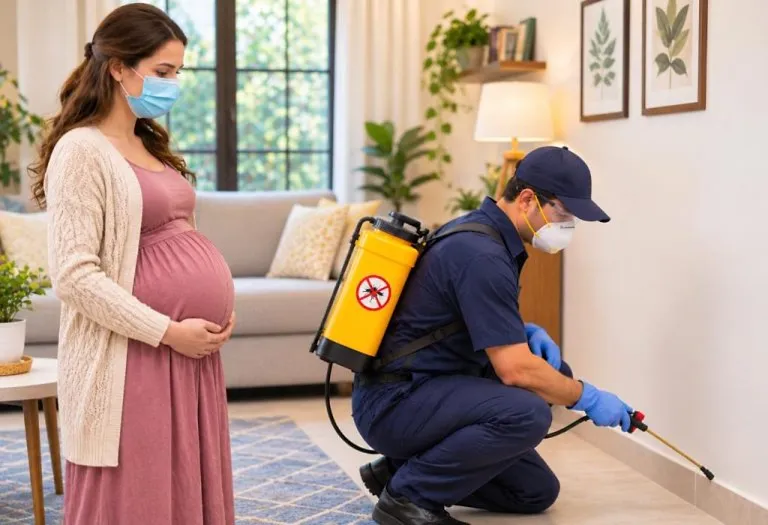
- When contacting a company that offers pest control services, go for licensed pet technicians and talk to them about your pregnancy very well. This will help them prepare in advance and check if they can carry out the same by using options that don’t make use of such chemicals. If that may not be a possibility, most companies will give you advice on how you can maintain your distance from the home as well as procedures to enter back safely.
- Undertaking pest control in pregnancy should be done with extreme precaution. Nemours KidsHealth suggests that it is best that someone else takes over this responsibility. Application of any chemicals or powders should be controlled and in the minimum required amount. This is highly preferred over spraying your home completely with chemicals. Keep every edible item in a safe place and store away all utensils and seal the drawers (7).
- Pest control may also be conducted in the surrounding area of your home. In that case, it is best for you to stay indoors and keep all doors and windows shut tight. Make sure you keep away from those areas after they are disinfected or cover yourself properly.
- Mosquito protection is generally done by using mosquito creams. However, ensure you get the insect or mosquito repellent with the lowest concentration of DEET, picaridin, para-menthane-diol, oil of lemon eucalyptus, or IR3535, as per the Environmental Protection Agency (EPA). The only downside is that you must apply the cream multiple times if you are outside longer. The protection level is the same across all concentrations.
If your partner or any other family member works at a place which makes use of pesticides or has had pest control, they need to keep their work clothes away and outside the home before entering. Maintaining high standards of hygiene is also required.
What Can You Do to Prevent or Remove the Pests in the Home?
While pest control is necessary, you can do your best to ensure that your interaction with pests is minimal. A few techniques can help prevent that or even drive the pests away from your home.
- Keep all food items stored properly and dispose of any rubbish or waste food as soon as possible.
- Prefer eating food in a specific area of the house rather than eating in bed or on the sofa.
Are There Any Alternatives to Chemical Pesticides?
Home pesticides and pregnancy might be a better alternative than using chemical pesticides, along with a few important ways of tackling everyday pests (8).
- Using glue-based traps to keep cockroaches at bay.
- Keeping areas dry to avoid fruit flies.
- Using heat and light traps to divert mosquitoes.
- Applying flea repellents on pets.
- Installing fly screens to keep fly infestation away.
- Throwing any pooling or stagnant water away.
- Block the gaps across cracks and corners by using sealants.
FAQs
1. Are there specific pests or treatments to avoid during pregnancy?
Some pesticides are more harmful than others, so it’s essential to inquire about the specific chemicals being used and their potential risks. Additionally, certain pests may pose a higher threat during pregnancy, such as those associated with diseases like mosquitoes or rodents. Alternative methods like traps or baits might be preferable in such cases.
2. Can I remain in my home during pest control treatments if I’m pregnant?
It’s generally recommended to leave the premises during pest control applications, especially if harsh chemicals are being used. Pregnant individuals should avoid direct exposure to pesticides and ensure proper airing out of treated areas before returning home.
3. Should I notify the pest control company about my pregnancy?
Yes, informing the pest control company about your pregnancy is crucial. They can then take appropriate precautions and possibly offer safer alternatives or adjust their treatment plan to minimize risks to you and your unborn child. Communication with both the pest control professional and your healthcare provider is essential for ensuring the safety of the pest control process during pregnancy.
4. Can chemicals used in pest control treatment harm my baby during pregnancy or after birth?
Exposure to pest control chemical residue can be controlled with proper ventilation and surface cleaning. Eco-friendly pest control treatments often break down quickly and leave no long-term contamination or do not harm infants after birth.
5. What should I do if I came in contact with pesticides while pregnant?
One-time exposure to pesticides won’t harm you or your baby. Repeated exposure can, however, harm the unborn baby. It is best to inform your doctor about the exposure at your next prenatal appointment.
6. Should I leave my home for days if I got the pest control treatment done?
No, although staying about 2 to 4 hours away from the pest-controlled area while pregnant can ensure low to minimal exposure to chemical residue. You don’t need to avoid your home with overnight stays unless high toxic chemicals are used.
This was all about pest control and pregnancy. Spraying pesticides while pregnant may not be the best choice. But avoiding pest control when pregnant completely is even worse. Arriving at a balance between the two can help you keep your pregnancy safe and secure at all times.
References/Resources:
1. National Pesticide Information Center – What about using pesticides if I am pregnant or have a baby?
3. CDC – About Pesticides and Reproductive Health
5. American Pregnancy Association – Pesticides and Pregnancy
6. Pests.org – Pest Control for Expectant Mothers
7. Nemours KidsHealth – Using Bug Killers and Repellents During Pregnancy
8. HealthyWA – Government of Western Australia – Pregnancy and pesticides
Also Read:
Is It Safe to Paint while Pregnant?
Toxic Chemicals You Must Avoid in Pregnancy
Using Perfume and Deodorant during Pregnancy
Was This Article Helpful?
Parenting is a huge responsibility, for you as a caregiver, but also for us as a parenting content platform. We understand that and take our responsibility of creating credible content seriously. FirstCry Parenting articles are written and published only after extensive research using factually sound references to deliver quality content that is accurate, validated by experts, and completely reliable. To understand how we go about creating content that is credible, read our editorial policy here.
- Author
- Expert Reviewer


Related Articles
-
Nosebleeds in Pregnancy - Causes and How to Stop It
-
Rubella (German Measles) in Pregnancy - Causes, Treatment, and Prevention
-
Insomnia During Pregnancy - Symptoms, Causes and Treatment
-

Pregnancy Must Haves Every Expecting Mom Needs
-
High Heart Rate During Pregnancy
-

Snoring in Pregnancy: Causes & Remedies