
Snoring in Pregnancy: Causes & Remedies
Snoring during pregnancy is common. Learn its causes, simple remedies, and when it may signal a health concern for you and your baby.





Medically Reviewed By
Dr. Deepinder Kaur
(Gynaecologist)

This health content has been medically reviewed by qualified experts and follows the FirstCry Parenting editorial policy to ensure accuracy and reliability.
Pregnancy snoring is common, affecting around 14-53% of pregnant women, and it often develops or worsens as pregnancy progresses due to hormonal changes, increased blood volume, and swelling in the airways (1). Although snoring and pregnancy frequently go hand in hand and are often harmless, persistent or loud snoring can sometimes be associated with conditions such as sleep apnea, gestational hypertension, or preeclampsia. That’s why it’s important to understand what causes pregnancy snoring, when it may signal a more serious problem, and what safe, effective steps can help improve your sleep.
In this article, you’ll learn the common causes, potential risks for both mother and baby, warning signs that shouldn’t be be ignored, and safe, practical remedies to help you breathe easier and get more restful sleep throughout your pregnancy.
Is it Normal to Snore During Pregnancy?
Yes. Even if you didn’t snore before pregnancy, it’s common to start snoring or notice it becoming more frequent as your pregnancy progresses (2).
In fact, studies suggest that up to one in three women snore during the third trimester. While it’s usually a temporary and harmless symptom, persistent or loud snoring should be discussed with your healthcare provider, as it may sometimes indicate an underlying sleep disorder.
When Does Pregnancy Snoring Start?
Pregnancy snoring can begin at any stage, but it most commonly starts during the second trimester and becomes more noticeable in the third trimester (1). As your pregnancy progresses, hormonal changes, increased blood flow, and weight gain can narrow the airways, making snoring more likely.
Common Causes of Snoring During Pregnancy
Have you ever wondered why do pregnant women snore? Following are some of the common causes of snoring during pregnancy:
1. Nasal Congestion
During pregnancy, the blood in your body increases and, hence, the blood vessels become thicker. These swollen blood vessels block your nasal passage, making breathing difficult, leading to snoring (3). A high level of estrogen also causes swelling of the mucous membrane in your nose, leading to nasal congestion and snoring.
2. Increase in Weight
The heavier you become, the more difficulty you will have in breathing because when you gain excess weight, there is extra fat in your neck and throat region. This excessive weight can cause breathing problems (4).
3. Sleep Apnea
Obstructive sleep apnea can be another reason for snoring. This is a medical condition and needs treatment, so do not forget to mention it on your next prenatal visit. This can be diagnosed if you are snoring loudly and frequently. Sometimes you can be making snorting or gasping sounds in your sleep. Sleep apnea needs treatment because, in this condition, your airways get blocked causing you to stop breathing during sleep. This could affect the baby too, as it can cause oxygen deprivation in your body and for the baby. This condition is usually treated with the help of a machine attached to your nose while sleeping (5).
4. Hormonal Changes
During pregnancy, increased levels of estrogen and progesterone can cause the blood vessels in the nasal passages to swell. This leads to congestion and reduced airflow, making snoring more likely (1).
5. Increased Blood Volume
Pregnancy increases blood volume to support the growing baby. This can lead to swelling in the mucous membranes of the nose and throat, further restricting airflow during sleep.

Risk Associated With Snoring While Pregnant
Snoring during pregnancy can be quite risky for the baby. University of Michigan’s sleep study centre revealed that snoring mothers have a higher risk of delivering smaller babies and are also likely to have a C-section delivery. If you notice that you are snoring more than three times a week, you need to consult the doctor for medical intervention.
- Most chronic snoring mothers are most likely to deliver a baby in the tenth percentile of weight. This shows that it does not matter if you were snoring before or after pregnancy. However, if you are frequently snoring and gasping for breath in your sleep, you must see a doctor. This could be harmful to the baby. The swelling of the blood vessels due to weight gain in pregnancy can also restrict blood flow to the placenta, which in turn will affect the growth of your baby because nutrients and blood will not reach the baby in proper quantity. There is no need to panic as it is completely manageable (6).
- Pregnancy snoring can also be an indication of gestational diabetes. You might want to take a glucose tolerance test to rule out this possibility.
- Another risk could be an IUGR (intrauterine growth restriction), leading to smaller babies with developmental delays (7). This can be managed with a regular ultrasound screening.
- Snoring can also lead to preeclampsia, which is a serious issue leading to premature birth and sometimes can be fatal too (8).
How to Stop Snoring During Pregnancy?
How to stop snoring? There are some simple remedies that are available to manage snoring.

1. Nasal Strips
Nasal strips for snoring during pregnancy are easily available in pharmacies and easy to use too. They are drug-free to and hence safe to use in pregnancy. You have to just stick it on your nose before going to bed (9).
2. Humidifier
If the snoring is due to nasal congestion, then use a warm mist humidifier in your bedroom while you sleep to get some relief. Humidifiers are readily available on any online shopping sites. They come with variations depending on the number of hours. Try and choose anything that has 8 hours or more so that you can have a good night’s sleep.
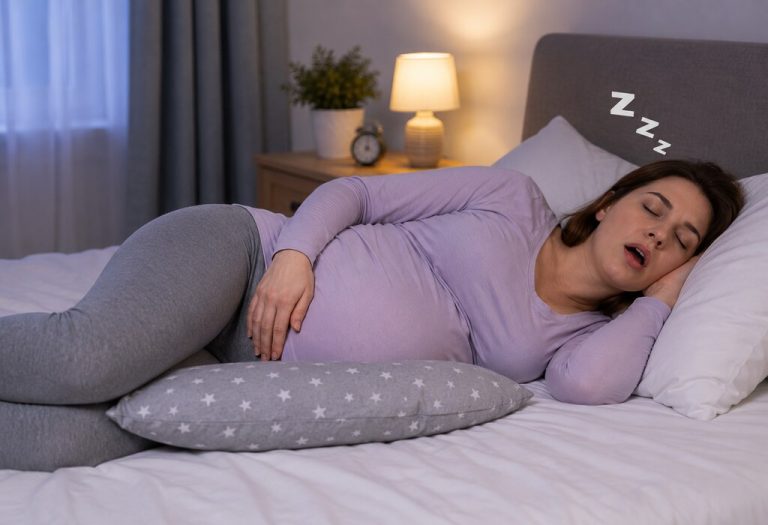
3. Sleep on Your Side
This is something that you will already be doing as sleeping straight is not possible during pregnancy, but remember to lie on your left side for better blood circulation and better sleep too (10).

4. Head Elevation
If you are sleeping with your head on the bed, then try using two pillows instead of one and keep your head elevated to help free airflow through our nose. This will ease your breathing and reduce snoring.
5. Eat Right
Weight gain during pregnancy is common, but you have to monitor and do not gain a lot of weight as it is difficult to shed those extra kilos post pregnancy. Excess weight gain causes snoring, hence, eat right and stay healthy.
6. Sleeping Couch
It is a good idea to ask your husband to sleep on a couch outside the bedroom or shift to another room. It can be quite irritating to be sleep deprived.
7. Avoid Alcohol, Smoking, and Sleeping Pills
A big ‘NO’ to alcohol, smoking and sleeping pills during pregnancy. These are good if completely avoided during pregnancy as they not only cause snoring but also harm the baby (11).
When Does Pregnancy Snoring Go Away?
In most cases, pregnancy snoring gradually improves after delivery and often goes away within a few weeks postpartum as hormone levels return to normal and swelling in the nasal passages reduces.
When to Consult a Doctor?
Although snoring seems to be a harmless problem, during pregnancy, it can indicate serious complications. If you notice the following symptoms, you need to visit the emergency room(ER) of a hospital:
- Persistent headaches
- Very sleepy during the daytime
- Swelling in the legs
FAQs
1. Are anti-snoring devices safe to use during pregnancy?
Some options, such as nasal strips or saline nasal sprays, may be safe for many pregnant women. However, it’s best to consult your healthcare provider before using any anti-snoring device or medication.
2. Can I prevent snoring before it starts during pregnancy?
Although it may not always be preventable, maintaining a healthy pregnancy weight, staying hydrated, sleeping on your side, and managing nasal congestion can help lower the risk of developing snoring (10).
Any persistent and unusual symptoms that you notice during pregnancy can be very significant. Therefore, you need to mention it to the gynaecologist during your prenatal visits, snoring too can seem very trivial but it sure is a cause for concern.
Also Read:
Melatonin in Pregnancy
Insomnia during Pregnancy
Sleeping Problems while Pregnant
Was This Article Helpful?
Parenting is a huge responsibility, for you as a caregiver, but also for us as a parenting content platform. We understand that and take our responsibility of creating credible content seriously. FirstCry Parenting articles are written and published only after extensive research using factually sound references to deliver quality content that is accurate, validated by experts, and completely reliable. To understand how we go about creating content that is credible, read our editorial policy here.
1. Sleep Foundation – What Causes Snoring in Pregnancy?
4. Johns Hopkins Medicine – Why Do People Snore? Answers for Better Health
5. Cleveland Clinic – Sleep Apnea
6. PubMed Central – Snoring during Pregnancy and Delivery Outcomes: A Cohort Study
7. Cleveland Clinic – Intrauterine Growth Restriction
10. Sleep Apnea – Snoring During Pregnancy
11. American College of Obstetricians & Gynecologists – Tobacco, Alcohol, Drugs, and Pregnancy
- Author
- Expert Reviewer


Related Articles
-

Infections During Pregnancy: Types, Risks, and When to Worry
-
Antidepressants in Pregnancy: What’s Safe and What to Avoid
-
Sex Drive During Pregnancy: Changes in Desires, and Tips
-
Losing the Mucus Plug During Pregnancy
-
20 Best Pregnancy Halloween Costumes Ideas for the Fright Night
-
Chromium in Pregnancy - Importance, Dosage, and Food Sources