
Squats During Pregnancy: Benefits, Safety, and Precautions
Learn the benefits of squat exercises during pregnancy, safety tips, proper techniques, and when to avoid them for a healthier pregnancy.





Medically Reviewed By
Dr. Sabiha Anjum
(Gynecologist/Obstetrician)

This health content has been medically reviewed by qualified experts and follows the FirstCry Parenting editorial policy to ensure accuracy and reliability.
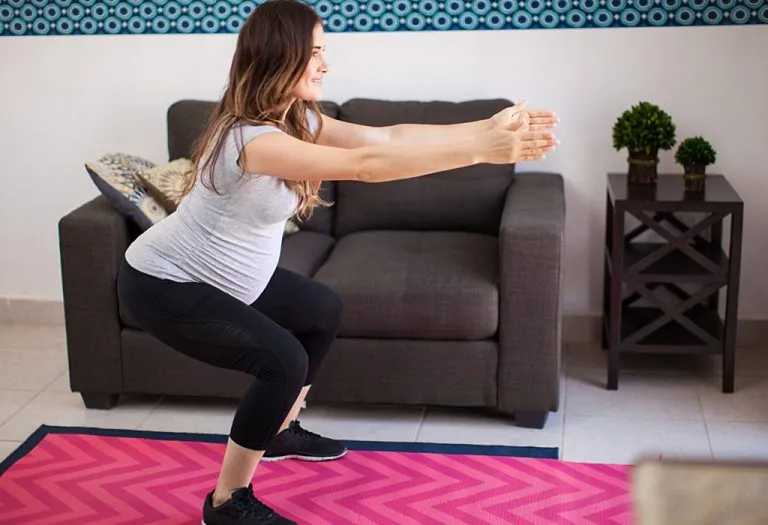
Squats is a popular exercise (no doubt hard, if you’re a beginner) and helps build lower body strength. It’s a workout that has many variations, can be done with or without equipment, and works on various body parts. It’s not popular for no reason. This effective workout can also be incorporated by pregnant women in their daily or weekly exercise routine, provided they follow safety precautions and consult a doctor and a trainer before starting with it, and perform under supervision.
If you want to include squats in your pregnancy workout routine, understand its benefits. (They might give you the much-needed boost.) Also, learn about the different types of pregnancy-safe squats, and safety tips you should follow while performing pregnancy squat workout.
Can I Do Squats While Pregnant?
Yes, many people can continue doing squats while pregnant, and squats are often recommended because they can help maintain leg and glute strength, support posture, and prepare the body for labour (1). However, whether they’re appropriate depends on your stage of pregnancy, fitness level, and any medical complications.
Benefits of Squatting During Pregnancy
Exercise in general and squatting specifically has a lot of potential benefits during pregnancy and eventually during labour. Squatting is a traditional form of exercise advised to pregnant women by midwives. Here are some common benefits of squats during pregnancy:
1. It helps maintain a healthy body weight
Weight gain in pregnancy can be unhealthy if it is beyond a certain level. Too much fat accumulation can lead to excess weight gain in pregnancy. People who are active during pregnancy and continue exercising have a healthy weight during pregnancy (2).

2. It helps maintain cardiovascular health
Cardiovascular fitness, endurance, and muscular strength can be maintained and improved through exercise and squatting during pregnancy. There is a lot of maternal adaptation happening in all the systems of the body during pregnancy, particularly the cardiovascular system. The blood volume increases, heart rate increases and cardiac output increases (3). Being sedentary during this time is not a very good idea.
3. It helps build muscular strength
During pregnancy, you will gain extra weight that is supported by your legs and back muscles. Practicing a proper squat position for pregnant women can help maintain good posture, strengthen the lower body, and reduce strain on the back (4). It may also help prevent undue stress on the knee ligaments without negatively affecting you or your baby when performed correctly.
4. It helps improve posture
Lower back pain can really hurt during pregnancy and squatting is the solution. Improving posture and body mechanics decreases the frequency and severity of the pain which is otherwise quite common during pregnancy. The most common types of back pain during pregnancy – the lumbar pain and the back of the pelvis pain, both are taken care of when you squat.
5. It can prevent pregnancy-induced complications
Women who are at the risk of developing gestational diabetes can benefit from exercising during pregnancy. Exercise has shown to prevent or control it by improving glucose tolerance, insulin sensitivity and also reduces the episodes of hypoglycemia by improving the glycogen stores in the liver and muscles (5). However, women who already have gestational diabetes may need advice and should exercise under guidance.
Pregnancy-induced-hypertension is another complication of pregnancy that can be perilous. Few studies have reported the protective effect of leisure time exercise during pregnancy against hypertensive disorders induced by pregnancy.
There is always a risk of miscarriage in early pregnancy. There is also a risk of foetal malformations in the early days after pregnancy. This is why these precautions about exercising in the first trimester are necessary.
6. It can provide relief from minor discomforts
Squatting helps reduce minor discomforts which are very common during pregnancy like constipation, poor bladder control, varicose veins, insomnia, heartburn, and leg cramps. Some women also reported that 3-5 minutes of exercise alleviates symptoms of morning sickness.
7. Eases labour
There is evidence that says that the women who were active throughout their pregnancy and performed squatting exercise during the 9th month of pregnancy had an earlier onset of labour at term, shorter duration of labour, reduced complications during labour and delivered babies with high APGAR scores. (APGAR scoring is done by the paediatrician on the newborn to estimate their health. Higher the score, the healthier the baby) (6).
Also recently there has been a lot of importance being given to squats to bring on labour and also delivering in the same position (2). In fact, various hospitals are now designing the labour room table such as to allow delivery in a squatting position and encourage squats while pregnant to induce labour.
8. It helps in faster recovery
An active mother during pregnancy recovers fast, and gets back to the pre-pregnant state in terms of energy, pain, muscle strength, weight loss, toned abdomen and endurance sooner.
9. It offers psychological benefits
There is no denying that pregnancy, delivery, and the postpartum period, however beautiful, is known to psychologically impact the mother. Exercising during pregnancy has positive effects on the maternal mental well-being leading to decreased depression and an improvement in self-esteem and body confidence (7).

Type of Squats You Can Perform During Pregnancy
Here are some variations of regular squats that you can perform during pregnancy. However, make sure you practise squat exercise during pregnancy only after having checked with your doctor, and under supervision.
1. Sumo Squats
- Stand straight with your spine erect. Keep your feet apart, slightly more than shoulder width. Your toes should be pointing outwards rotate.
- Stretch out your arms in front of you with or simply keep your hands on your hips.
- Now gently bend your knees keeping your back straight, how you would do while performing regular squats.
- Lower yourself to the point you are comfortable and at the same time feel the stretch on inner muscles of the thigh and the glutes.
- Return to starting position.

2. Wall Squat (Half)
- Stand against a smooth wall with an exercise ball between the wall and your back.
- Keep your feet a shoulder-width apart. If you don’t have a ball, lean directly against the wall.
- Now slowly bend your knees pointing forwards, lean back and start sliding downwards. Extend your arms.
- Take a deep breath and slowly exhale.
- Squat as low as you feel comfortable while keeping your back straight. There shouldn’t be any pressure on your knees.
- The outstretched arms will provide balance. You can also keep them on your knees.
- Then slide upwards while leaning against the wall or the ball.
3. Basic Squats
- Stand on the floor with your feet shoulder-width apart.
- Take a deep breath and as you exhale, slowly bend your knees and go down.
- As you go down, support yourself with your palms placed on your knees or your hands stretched outwards.
- Stretch your back and hold the position it will help the muscles in your lower back to relax.
- Don’t lift your heels while doing so.
- Return to starting position.

4. Chair Squats
- Keep a sturdy chair against a wall so that it doesn’t slide back.
- Stand in front of the chair.
- Keep your feet shoulder-width apart with your toes pointing outwards.
- Keep your hands stretched to balance yourself when you squat,
- Now slowly lower yourself and sit back on the chair.
- The slowly get up from the chair.
6. Deep Squat Hold With Pelvic Muscles Contraction
- Stand in the wide sumo squat position facing a wall.
- Squat as far down as you can do comfortably.
- Keep your arms outstretched. If needed, you can place the palms on the wall for balance.
- While you are in the squat position, contract your pelvic muscles (as if you are trying to hold in the urine.) Do it for 10 seconds.
- If possible you can stay low and contract and relax the pelvic muscles a couple of times. This will retract and release the abdomen also. The slowly rise up. Do 3 reps of this squat workout.
Note: If you wish to include squats in your pregnancy workout routine, do so only after checking with your doctor. If your doctor gives a go-ahead, you can perform the above variations of squats, but do them under expert guidance.
Tips to Keep in Mind
There are certain contraindications to squatting during pregnancy that you must know about. Consulting your doctor is the best idea before you begin squatting on your own.
1. If it’s your first time, here’s what you need to know.
Do not add squats in your workout routine during pregnancy if you’ve never done it before. If you wish to do it, you must check with your doctor, understand its advantages and the risks involved. While squat is good for the body, but repeated bending and straightening of the upper body, can become a major risk factor for a lumbar disorder associated with lower back pain, result in miscarriage or even premature labour.
The four most significant contraindications to beginning an exercise program or resuming one are:
- Physical injury
- An acute bout of illness or a serious chronic disease
- The onset of persistent or recurrent abdominal or pelvic pain, and finally
- Abnormal or heavy vaginal bleeding
2. Don’t exercise in case of absolute contraindications.
Any sort of exercise is not advised if you face any of the following:
- Cardiovascular, systemic and respiratory disease
- Uncontrolled hypertension, diabetes or thyroid disease
- Ruptured membranes or premature labour
- Persistent bleeding after 1st trimester
- Incompetent cervix
- Pregnancy-induced severe hypertension
- Multiple pregnancy (triplets, etc.)
- Poor foetal growth
3. Here’s what you need to know about relative contraindications.
Exercises can be performed, but require careful evaluation, monitoring, and prescription based on the condition of a woman.

You can exercise but require additional care and guidance based on your situation during pregnancy if you have experienced or are at the risk of the following::
- A history of premature delivery (3 or more)
- Diabetes
- Any previous problems of rapid labour or poor foetal growth
- Early pregnancy bleeding
- Breech presentation post 28 weeks
- Experiencing arrhythmias and palpitations
- Anaemia or deficiency of iron
- Extreme weights – under or overweight
Precautions to Take While Doing Squats or Other Exercises in Pregnancy
Follow these precautions while squatting or performing any other exercises during pregnancy (8).
- Obtain medical clearance before participation.
- Regular mild to moderate exercise routines is preferable to intermittent activity.
- Gradually increase exercise intensity and duration.
- A maximum heart rate limit up to 155 b/min is recommended, although levels of intensity higher than this can be prescribed on an individual basis.
- Walking, cycling, swimming, low-impact aerobics, and stretching can be performed during pregnancy.
- Do not exercise in the supine position after the 4th month. And do not stand in one position for long periods of time.
- Stop exercising if you feel tired and do not deliberately reach a point of exhaustion. Get plenty of rest.
- Do not perform exercises that could cause a loss of balance.
- Eat an additional 150–300 calories a day and drink plenty of fluids before, during, and after exercise.
- Do not exercise when it is hot or humid. Wear clothing that is cool and allows ventilation.
- Exercises that involve jumping, bouncing, or jerky movements are best avoided during pregnancy, especially in the third trimester of pregnancy.
- Avoid high-altitude activities and scuba diving.
- Participation in competitive sports is acceptable during the first 16 weeks of pregnancy if risk is accepted, but contact sports should be avoided thereafter.
- Lifting light to moderate weights is encouraged to develop or maintain strength, but the Valsalva manoeuvre should be avoided.
Know the warning signs to discontinue exercise and consult with a prenatal health advisor.
When Should You Avoid Squatting?
There are a few instances during your pregnancy where it is not advisable to squat. For example, if the baby is not in the optimal position, i.e. when the baby is in the breech position, which pushes it deeper down into the pelvis (9). You can turn your baby to the optimal position before continuing squatting.
Other instances include experiencing pain during squatting. If you are experiencing discomfort while squatting, then it is best that you stop squatting and continue with it after learning how to do it right.
FAQs
1. Can I do squats in all three trimesters?
Many women can safely perform squats throughout all three trimesters, provided they feel comfortable and have no pregnancy-related complications. As pregnancy progresses, you may need to modify the depth of the squat or use support for better balance.
2. Are there any risks associated with pregnancy and squats?
Squats are generally safe, but improper technique or overexertion can lead to muscle strain, loss of balance, or discomfort. Women with conditions such as placenta previa, cervical insufficiency, or a risk of preterm labour should seek medical advice before performing squats.
3. Is it safe to do weighted squats while pregnant?
Women who regularly performed weighted squats before pregnancy may be able to continue with lighter weights after receiving approval from their healthcare provider. The focus should be on maintaining proper form, avoiding excessive strain, and prioritising safety over lifting heavy loads.
Squatting is an effective exercise and can be performed during pregnancy for a smooth labour and delivery. That said, it can’t guarantee a stress-free labour. If you wish to include squats in your pregnancy workout routine, consult your doctor first. If she gives a go-ahead, do it under the supervision of a trained professional.
Also Read:
Is it Safe to Jump While Pregnant?
Treadmill Workout during Pregnancy
Performing Pelvic Tilt Exercise in Pregnancy
Was This Article Helpful?
1. NASM – SQUATS FOR PREGNANT WOMEN: PRENATAL FITNESS TIPS
3. National Library of Medicine – Physiology, Maternal Changes
5. American Diabetes Association – Blood Glucose and Exercise
6. Cleveland Clinic – Apgar Score
8. NHS – Exercise in pregnancy
9. Rishikesh Yogkulam – Safe Squatting Techniques for Late Pregnancy and Labour: Complete Guide
- Author
- Expert Reviewer


Related Articles
-

Restless Legs Syndrome (RLS) During Pregnancy
-
Choline in Pregnancy - Importance, Sources, and Recommended Intake
-
How to Effectively Take Charge of Your Pregnancy Stretch Marks
-
Is It Safe to Drink Coffee During Pregnancy?
-
Peter Rabbit Baby Shower Themed Ideas
-
Loratadine in Pregnancy - Is It Safe to Take?