

12 Balance Games & Activities for Kids
Boost coordination and confidence with fun balance games and activities for kids that keep them active while building essential skills.




In this Article
- Benefits of Balance Activities for Kids
- Static vs. Dynamic Balance
- 12 Games and Activities to Try With Your Kids
- Balance Activities by Age
- Common Mistakes to Avoid During Balance Activities
- When to Talk to a Professional
- FAQs
View More
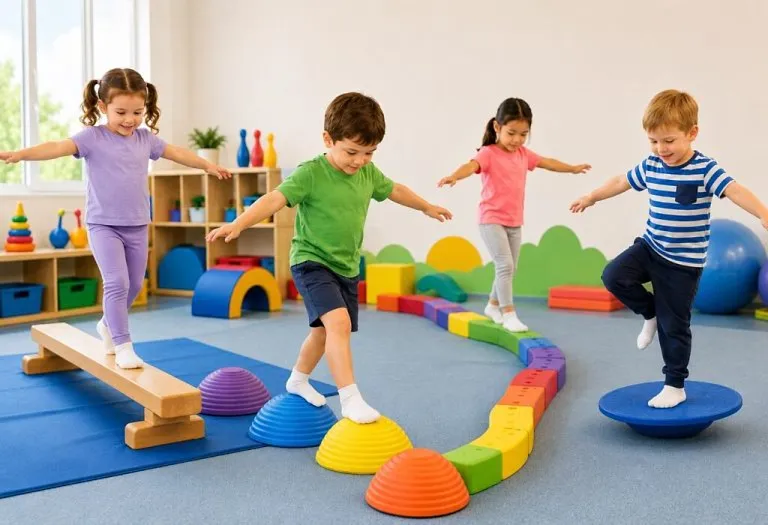
Have you ever noticed how much kids love walking along curbs, hopping on one foot, or pretending the floor is lava? That’s because balancing is naturally fun, and it’s also an important skill that helps children improve coordination, posture, confidence, and overall physical development. You don’t need fancy equipment or a large play area to help them practice. A few simple games and creative activities can turn balance practice into an exciting adventure filled with movement, laughter, and learning. Here are 12 fun balance games & activities for kids that will encourage them to stay active, improve their coordination, and have a great time along the way.
Benefits of Balance Activities for Kids
Balance is much more than standing on one foot. It’s a fundamental skill that children use every day, whether they’re walking up the stairs, riding a bike, getting dressed, playing on the playground, or simply moving around with confidence. Strong balance skills help kids improve coordination, posture, body control, and overall physical development, making everyday activities easier and safer (1).
Balance also supports other important developmental skills. As children practice balancing, they strengthen their core muscles, improve coordination between their eyes and body, develop better body awareness (knowing where their arms and legs are without looking), and build the gross motor skills needed for running, jumping, climbing, and sports. These abilities work together to help kids move confidently, stay active, and participate more comfortably in everyday play and physical activities (2).
Static vs. Dynamic Balance
Not all balance activities are the same. They generally fall into two categories: static balance and dynamic balance.
Static balance is the ability to stay steady while holding a position without moving, such as standing on one foot or balancing a book on your head.
Dynamic balance is the ability to maintain stability while your body is moving, like walking heel-to-toe along a line, hopping over obstacles, or riding a scooter.
Kids benefit from practicing both types of balance. Static balance helps build stability and body control, while dynamic balance improves coordination and confidence during everyday movements and active play. Including a mix of both in your child’s routine supports stronger motor skills and overall physical development.
|
Balance Type |
What It Looks Like |
Example Activity |
|
Static |
Holding a position |
Standing on one foot |
|
Dynamic |
Moving while staying steady |
Walking a balance beam |
|
Combined |
Shifting between still and moving |
Freeze dance |
12 Games and Activities to Try With Your Kids
Ready to get kids moving? These fun and easy balance activities turn skill-building into play, helping children improve coordination, stability, and confidence without feeling like they’re exercising. Pick a few favourites or try them all to keep playtime active and exciting.
1. Walk the Line
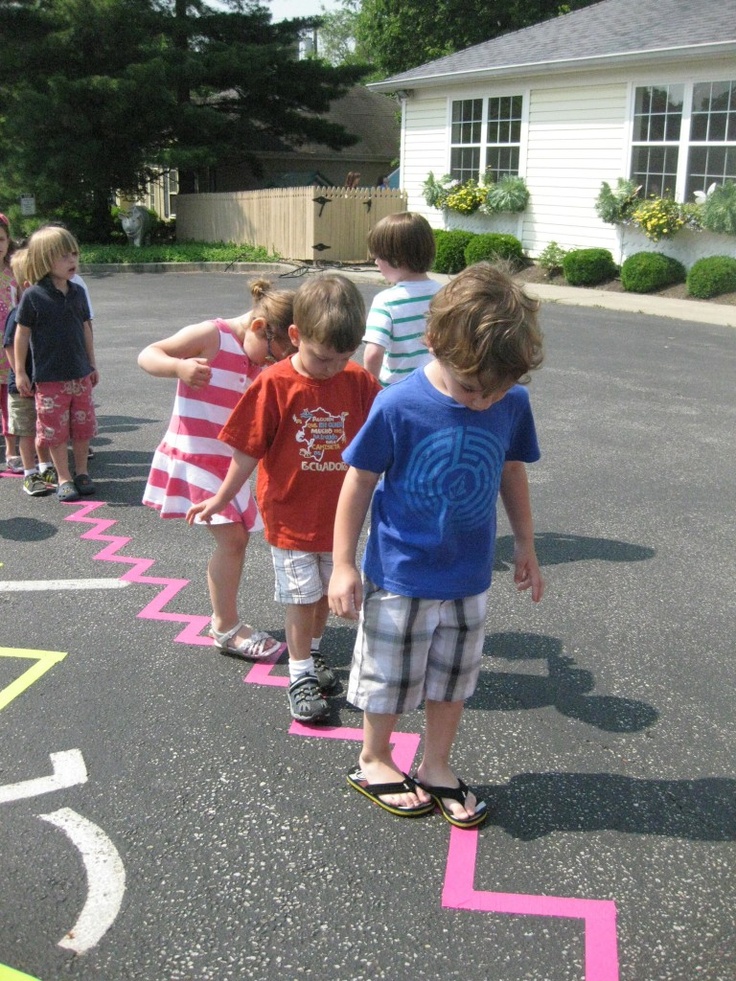
Source: Pinterest
What you need:
- Painter’s tape
- sidewalk chalk, or a length of string
Stick a straight line of tape on the floor and have your child walk along it heel-to-toe without stepping off. Once they master a straight line, switch to a zig-zag or figure-eight shape for an added challenge. This is one of the simplest balance activities for toddlers because it requires no equipment and can be set up in under a minute.
Skill focus: Dynamic balance, foot placement, concentration.
2. Freeze Dance
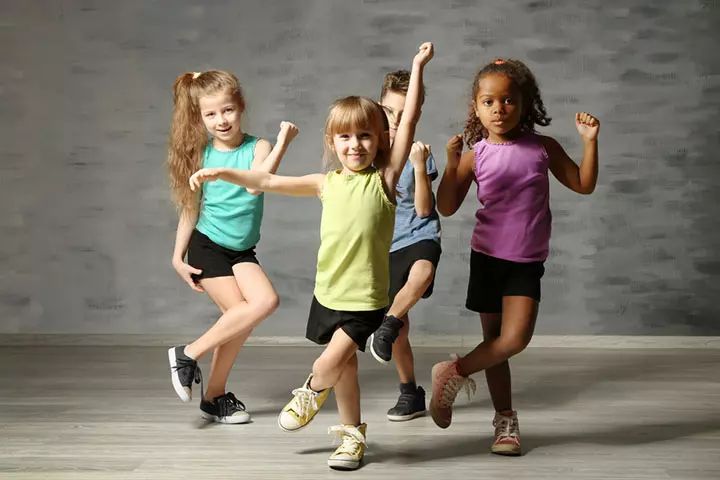
Source: PInterest
What you need:
- Music (a phone or speaker works fine)
Play music and have kids dance freely. When the music stops, they must freeze in whatever position they’re in and hold it for a few seconds before the music starts again. This game blends movement with sudden stillness, which is exactly the combination that builds real-world balance control.
Skill focus: Static and dynamic balance, reaction time, listening skills.
3. Animal Walks
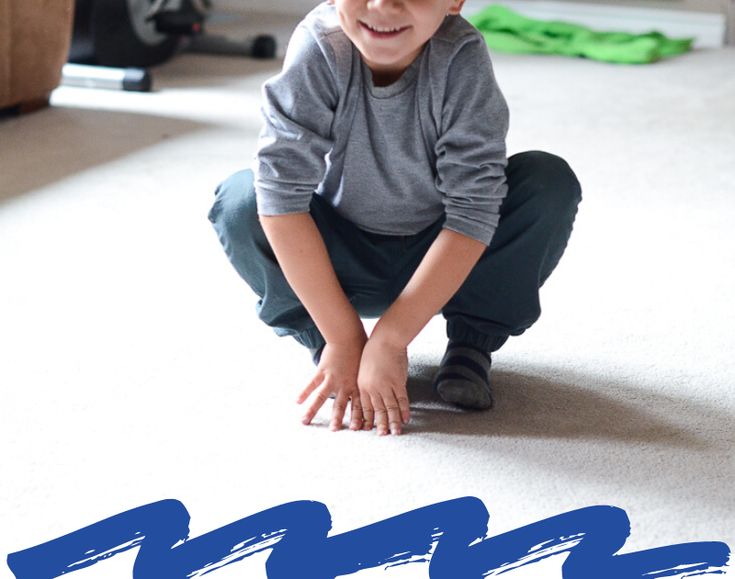
Source: Pinterest
What you need:
- Just open floor space
Ask your child to move across the room imitating different animals: a crab walk, a bear crawl, a duck waddle, or a penguin shuffle. Each animal walk shifts weight differently, forcing the body to recalibrate its balance with every step. This is a favourite among balance activities for preschoolers because it doubles as imaginative play.
Skill focus: Core strength, bilateral coordination, proprioception.
4. Pillow Path
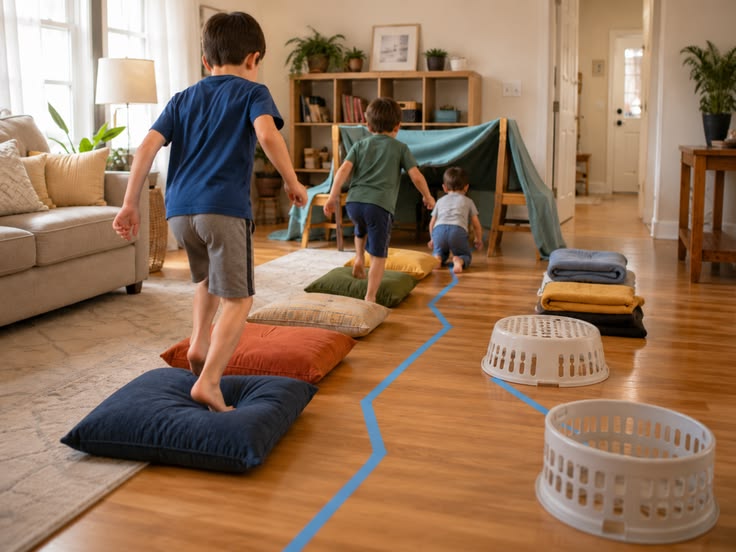
Source: Pinterest
What you need:
- Couch cushions, pillows, or folded towels
Lay pillows across the floor in a winding path and have kids step from one to the next without touching the ground in between. The soft, uneven surface challenges the ankles and core far more than a flat floor does, which makes this a great low-cost alternative to a wobble cushion.
Skill focus: Static balance, core engagement, spatial awareness.
5. Stand on One Foot Challenge
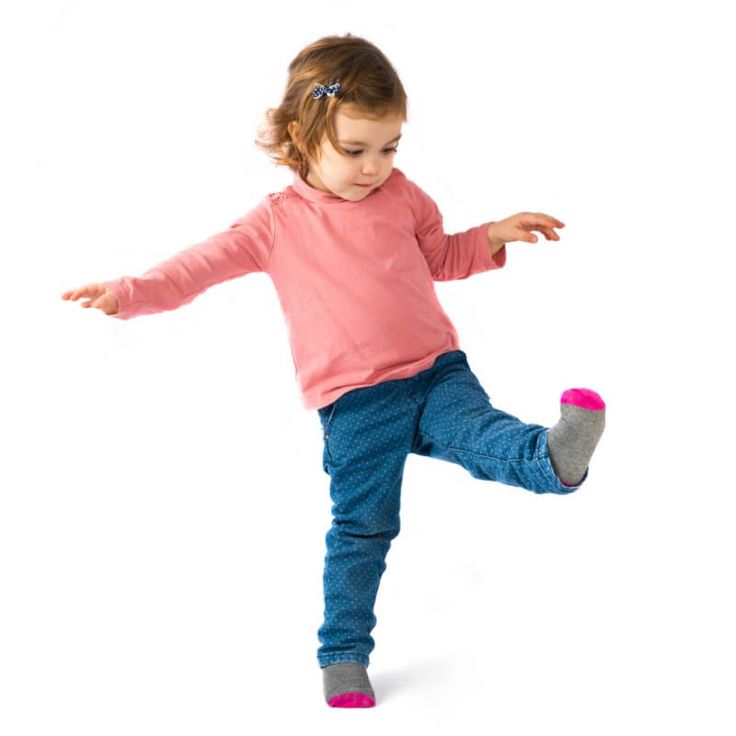
Source: Pinterest
What you need:
- Nothing, though a wall nearby adds safety for beginners
Have your child stand on one foot and count how long they can hold it before switching feet. Add a fun twist by having them close their eyes once they’re steady, which removes visual cues and forces the vestibular system to work harder. Keep a hand near a wall for younger kids who are just starting out.
Skill focus: Static balance, focus, vestibular processing.
6. Balance Beam Walk
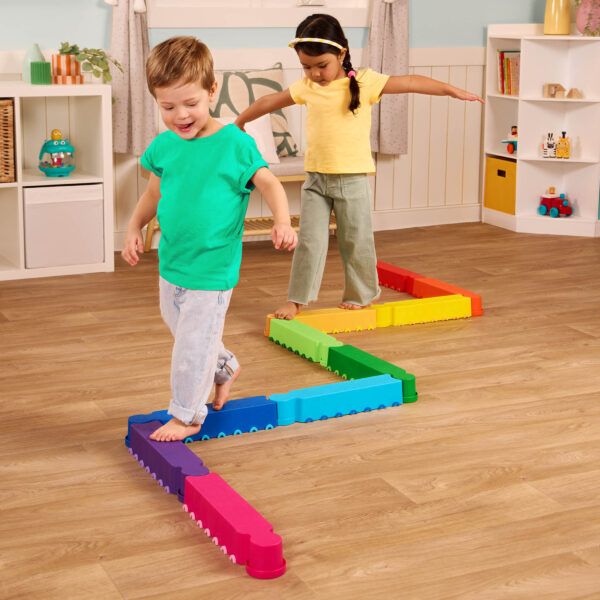
Source: Pinterest
What you need:
- A foam balance beam, a low curb, or a rolled-up yoga mat
Walking heel-to-toe across a raised surface is one of the most classic balancing games for kids, and for good reason. It combines height, narrow footing, and forward motion all at once. Start with a wide, low beam and narrow it as confidence builds. Always supervise closely near any elevated surface.
Skill focus: Dynamic balance, core strength, confidence building.
7. The Floor Is Lava
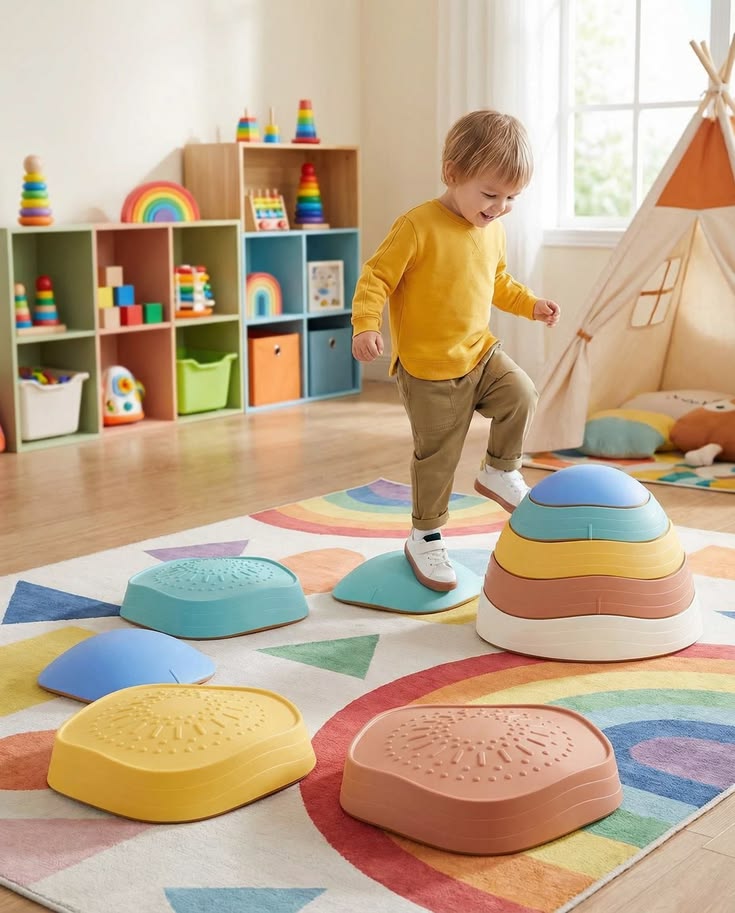
Source: Pinterest
What you need:
- Furniture
- cushions, or floor mats scattered around a room
In this game, the “floor” becomes off-limits, and kids must hop between furniture, cushions, or marked spots without touching the ground. It’s a fast-paced way to practice weight shifting and quick decision-making while having fun with siblings or classmates.
Skill focus: Dynamic balance, motor planning, problem-solving.
8. Bean Bag Balance
What you need:
- A bean bag
- small stuffed animal, or folded washcloth
Have your child place a bean bag on their head, shoulder, or the back of one hand, then walk across the room without letting it fall. For an extra challenge, ask them to walk on a taped line or step over small objects while balancing the bean bag.
Skill focus: Static and dynamic balance, posture, focus.
9. Yoga Poses for Kids
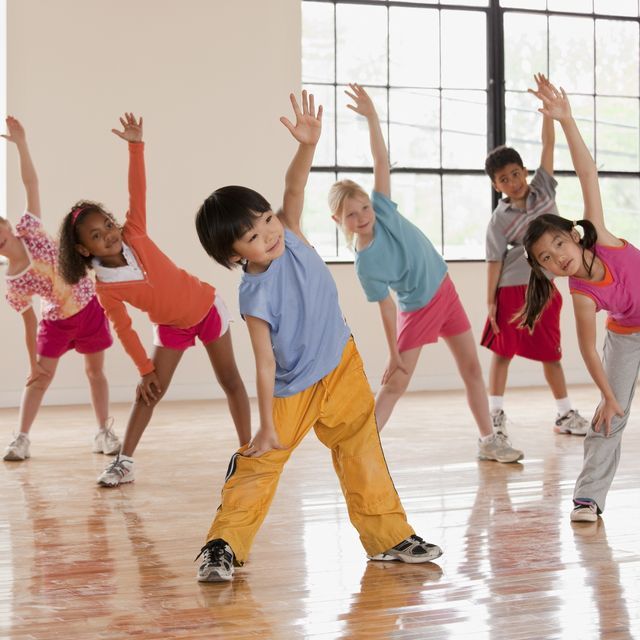
Source: Pinterest
What you need:
- A yoga mat or open carpet space.
Simple poses like tree pose, airplane pose, and warrior pose ask kids to hold their bodies in specific positions, often on one leg. Yoga is one of the gentler balance activities for children who are less confident with fast-moving games, and it builds patience alongside physical control.
Skill focus: Static balance, body awareness, calm focus.
10. Obstacle Course Balance Trail
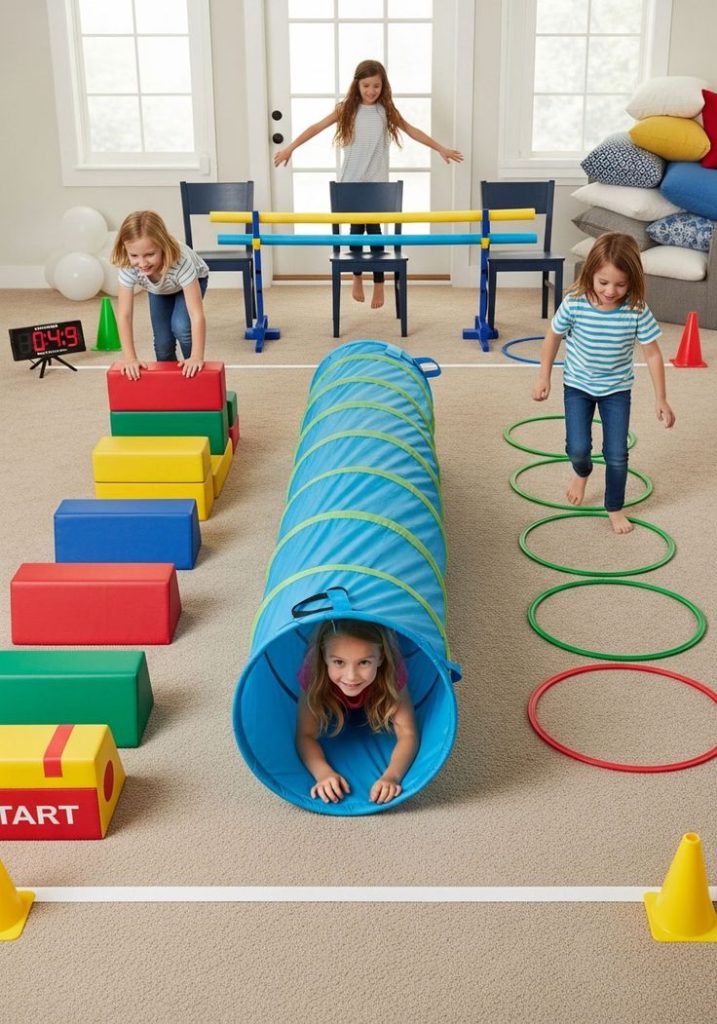
Source: Pinterest
What you need:
- Household items like chairs, pillows, hula hoops, or a jump rope.
Set up a simple path that combines several balance challenges: step over a pillow, walk a taped line, hop through hula hoops, and finish by standing on one foot for five seconds. Kids love timing themselves or racing a sibling through the course.
Skill focus: Combined balance skills, sequencing, gross motor coordination.
11. Musical Statues on Uneven Ground
What you need:
- A couch cushion, foam pad, or folded blanket.
This is a variation on freeze dance with a twist: play the game while standing on a soft or slightly unstable surface, like a couch cushion. The added instability makes each freeze moment a genuine balance test rather than just a stillness game.
Skill focus: Static balance, core strength, reaction time.
12. Bike or Scooter Riding
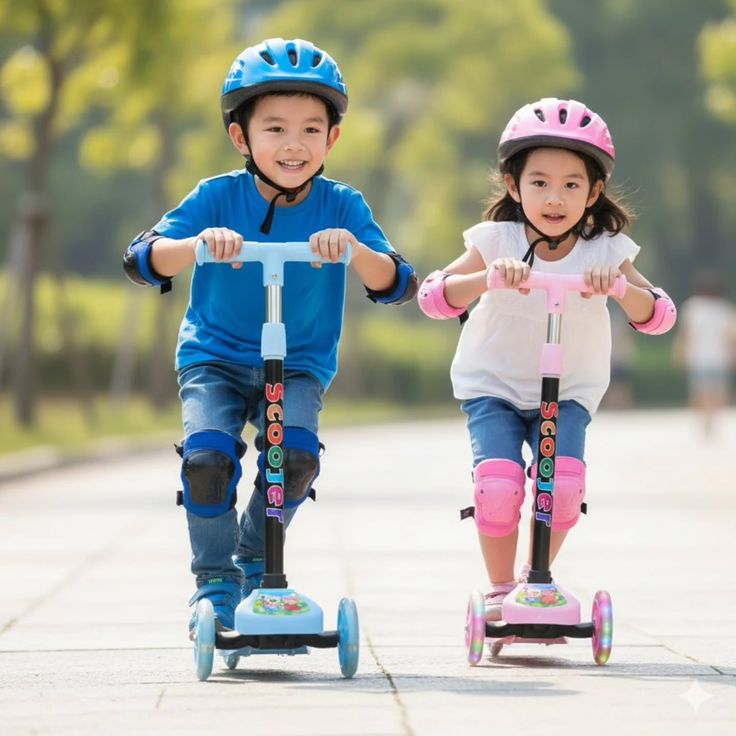
Source: Pinterest
What you need:
A balance bike, bicycle, or scooter sized for your child.
Riding a bike or scooter is one of the most functional ways to practice these skills because it applies balance directly to a real-world activity kids already want to do. Balance bikes without pedals are especially useful for younger children still building the coordination needed for a full bicycle.
Skill focus: Dynamic balance, steering coordination, confidence.
Balance Activities by Age
| Age Group | Best-Fit Activities | Focus |
| Toddlers (1-3 years) | Pillow path, animal walks, walk the line | Foundational static balance |
| Preschoolers (3-5 years) | Freeze dance, yoga poses, bean bag balance | Static-to-dynamic transition |
| School-age (6-10 years) | Balance beam walk, obstacle course, bike riding | Advanced dynamic balance |
Common Mistakes to Avoid During Balance Activities
Balance activities should challenge kids without making them feel overwhelmed or unsafe. Keep these common mistakes in mind to create a fun, safe, and rewarding experience.
- Skipping the warm-up stage : Jumping straight into advanced activities like a narrow balance beam can frustrate a child who hasn’t built basic static balance yet. Start wide and low, then narrow the challenge gradually.
- Over-relying on screens for balance games : Many balance-style video games ask kids to press buttons rather than move their bodies. True balance development requires actual physical movement, not simulated movement on a screen.
- Forgetting to rotate feet or sides : Practicing a skill on only one foot or one direction builds uneven strength. Always repeat activities on both sides of the body.
- Ignoring safety near elevated surfaces : Balance beams, curbs, and stairs are excellent tools, but they need close supervision, especially for toddlers and early preschoolers who are still gaining confidence.
When to Talk to a Professional
Occasional wobbling and falling is a normal part of childhood development. However, if a child seems significantly behind peers in balance, avoids physical play altogether, or shows ongoing clumsiness well past the toddler years, it may be worth mentioning to a paediatrician or paediatric occupational therapist. Balance difficulties can sometimes point to underlying vestibular or sensory processing differences that benefit from targeted support.
FAQs
1. At what age should kids start balance activities?
Most children begin developing basic balance skills between 18 months and 2 years, right around the time they start walking independently. Simple activities like standing on soft surfaces or walking short lines can start as early as this stage, with more advanced games introduced gradually through the preschool and school-age years.
2. How often should kids practice balance games?
Short sessions of 10 to 15 minutes, a few times a week, are enough to see steady improvement. Balance is a skill that responds well to frequent, low-pressure practice rather than long, infrequent sessions, so weaving activities into everyday play tends to work better than scheduled drills.
3. Do balance games help with anything besides physical coordination?
Yes. Balance activities also support focus, body awareness, and self-confidence. Because balance requires the brain and body to communicate quickly, regular practice can carry over into better concentration during seated tasks like schoolwork.
Start with the activities that match your child’s current stage, keep sessions playful rather than performance-driven, and let steady, low-key repetition do the rest. Over time, those wobbly first steps turn into the kind of confident, controlled movement that carries a child through every stage of childhood.
Also Read:
Learning Activities for Kids
Beach Games and Activities for Children
Indoor and Outdoor Physical Activities for Kid
Was This Article Helpful?
- Author





.svg)