
10+ Best Brain Gym Exercises for Kids
Fun and easy brain gym exercises for kids to boost focus, memory and learning.




Key Takeaways
- Brain gym exercises use simple movements to encourage coordination, body awareness, and focus in children.
- Activities such as cross crawls, double doodles, and belly breathing can be practised at home or school.
- Puzzles, reading aloud, music, and nature walks offer additional ways to engage children.
- Short activity breaks can fit easily into daily routines.
- Choose age-appropriate exercises, supervise young children, and keep movements gentle and comfortable.
Brain gym exercises for kids are simple, fun movements that encourage children to practice coordination, body awareness, and focused attention. These activities can easily fit into a child’s daily routine at home or in the classroom, making movement breaks more engaging and enjoyable.
From cross-crawl movements to simple hand exercises, these activities give kids a playful way to move their bodies and take a break from learning tasks. In this article, we’ll cover 10+ best brain gym exercises for students, along with easy ways to practice them as part of their everyday routine.
What Are Brain Gym Exercises?
Brain gym exercises are simple physical movements designed to support coordination, focus, and learning. These exercises contain several movements which help with your child’s ears, eyes, head, limbs, and overall body coordination. They often involve activities such as cross-body movements, stretching, and balance exercises (1).
Benefits of Brain Gym Exercises for Students and Children
Regular practice of brain gym exercises can support children’s overall development in several ways, including the following (2) (3) (4):
- Helps your child get sharper and smarter.
- Boosts your child’s self-esteem and confidence level.
- Improves health and boosts the immunity and healing in your child.
- Improves eyesight
- Improves their creativity
- Boosts their communicative skills
Effective Brain Gym Exercises for Kids to Sharpen Memory
Here are some fun and easy brain gym exercises for toddlers that make playtime fun and engaging while encouraging early development.
1. Double Doodle
This is a bilateral drawing exercise where your child draws two images with both his/her hands. This helps improve several skills like learning spelling accuracy, writing and recognition of symbols, calculation, etc.
2. Cross Crawls
In this exercise, your child will move their left arm to their right leg slowly. The slow movement increases your child’s mental coordination and attention. It can help release their stress and concentrate better on their studies.
3. Lazy Eight’s
This exercise requires your child to draw the figure eight either on a sheet of paper or in the air using their hands. This loosens the muscles in his arms and wrists and activates the creative side of your child. It also improves eyesight with eye muscle coordination and peripheral vision.
4. The Elephant
Let your child stretch their hands and place it next to their ear on the same side. After this, let them draw the sign of infinity with their extended hand for at least 3 times and repeat with the other hand too. This improves your child’s mind and body balance and also helps listen to words correctly.
5. Active Arm
In this exercise, your child has to stretch one arm and hold the other arm at a right angle to hold the extended arm in position. This not only increases the strength of your child’s upper body but also improves the hand and eye coordination in your child.
6. The Owl
Let your child sit comfortably and bring one of his/her hands to the opposite shoulder. Let him/her hold the hand steady and slightly pinch the shoulder near the trapezius muscle and then turn the head slowly towards the shoulder and take a deep breath. This improves blood circulation and improves the memory and attention of your child.
7. Gravitational Glider
Make your little one sit straight on a chair and then ask him/her to stretch their legs. Let him/her cross the right leg over the left ankle. Then, ask him/her to take a deep breath and lean forward to reach the feet. This enhances the flow of blood and oxygen and also stretches your child’s hamstring.
8. The Thinking Cap
Your child is required to hold both their ears with the thumb and the index finger and then roll and unroll the outer portion of the ear. This improves your child’s short-term memory, hearing, and peripheral vision.
9. Earth Buttons
Let your child either stand or comfortably sit down and place their right hand on the lips and the palm of the left hand on the navel. After this, let your child rub both his hands in their respective regions in small circular motions. This improves your child’s mental alertness and enhances their whole-body orientation.
10. Hook Ups
For this exercise ask your baby to either stand up, sit down, or lie down . Let your child cross their left ankle above the right one and then place the hands with fingers intertwined on the chest and breathe deeply. This lets your child’s mind and body relax and reduce stress.
11. Brain Buttons
Make your child place their right hand on their left collarbone and their left hand on their right collarbone. Ask them to apply gentle pressure and massage these points while taking deep breaths. This exercise can be beneficial when your child needs to regain focus during studying or other tasks.
12. Energy Yawn
Ask your child to take a deep yawn, inhaling deeply and then exhaling with a relaxed sigh. Tell them to stretch their arms out wide and let them drop down as they exhale. Repeat this process a few times to release tension and boost alertness.
13. Belly Breathing
Ask your child to lie down on their back or sit comfortably. Place their one hand on their chest and the other on their belly. Ask them to breathe deeply, focusing on expanding their belly while keeping their chest relatively still. Belly breathing can reduce stress and enhance relaxation.
14. Gravitational Midline
Make your child sit or stand comfortably and ask them to hold each wrist with the opposite hand. Now help them gently sway from side to side for a minute to enhance balance.
Brain Gym Activities for Kids
Here are some simple brain gym exercises for preschoolers that make learning fun while encouraging movement and coordination.
1. Puzzles and Board Games
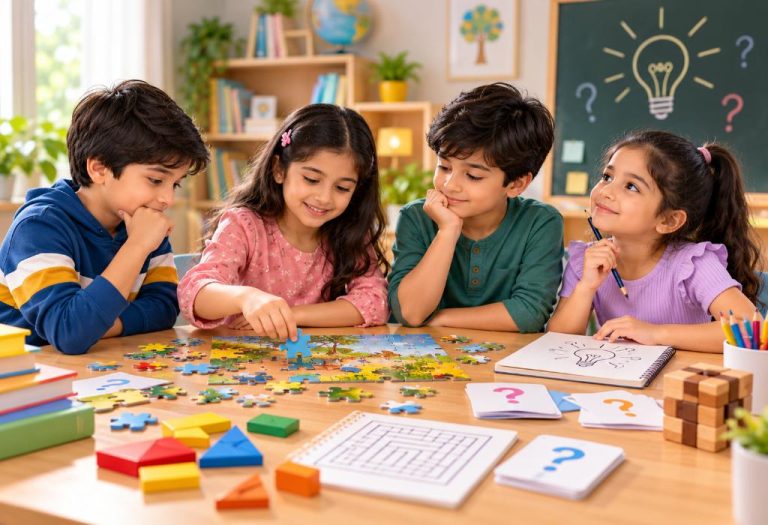
Puzzles and board games encourage children to think logically, recognise patterns, and solve problems. Games such as chess, matching cards, and jigsaw puzzles also help develop patience and strategic thinking while making learning enjoyable.
2. Music and Dance
Listening to music, learning an instrument, and following dance routines engage children in creative activities that involve memory and coordination. Remembering lyrics or dance steps also gives children opportunities to practise concentration and sequencing.
3. Reading Aloud
Reading stories aloud encourages children to focus on words, understand sentence structures, and build vocabulary. Parents can make this activity more engaging by asking questions about the story or encouraging children to narrate it in their own words.
4. Nature Walks
Outdoor walks give children opportunities to observe their surroundings and explore the natural world. Asking them to identify plants, notice different sounds, or spot birds encourages curiosity, observation, and attention to detail.
Incorporating Brain Gym in Your Child’s Daily Routine
Making brain gym a part of your child’s daily routine doesn’t have to be complicated. A few simple activities during playtime, study breaks, or morning routines can help keep kids engaged and active throughout the day.
FAQs
1. At what age can children start brain gym?
Children can start with brain gym activities at any age. These activities are typically introduced during the preschool and school years and even as early as eighteen months old.
2. What are brain exercises for kids called?
Brain exercises for kids are known as brain gym exercises or cognitive training.
3. Which brain gym exercises are used for calming children down?
Hook-Ups is one of the several brain gym exercises used to calm children’s nervous systems and relax their bodies because these exercises link the body’s electrical circuits and help circulate energy that has been blocked by tension.
4. How long should kids practise brain gym exercises?
Kids can start with 5-10 minutes of simple activities and adjust the duration according to their interest and energy levels. These exercises can be included in playtime or used as short breaks between learning activities.
5. Are brain gym exercises better before or after studying?
Children can try brain gym activities before studying or during breaks when they need a change of pace. The best time depends on the child’s routine and preferences, as these activities are intended to complement rather than replace regular study, sleep, and physical activity.
So, go ahead and let your child be one of the smartest one in their class with these simple brain gym activities for kids.
Also Read:
Best Mind Games for Kids
Park Games for Children
Memory Games for Kids
Was This Article Helpful?
Parenting is a huge responsibility, for you as a caregiver, but also for us as a parenting content platform. We understand that and take our responsibility of creating credible content seriously. FirstCry Parenting articles are written and published only after extensive research using factually sound references to deliver quality content that is accurate, validated by experts, and completely reliable. To understand how we go about creating content that is credible, read our editorial policy here.
- Author


Related Articles
-

10 Jumping Games & Activities for Kids
-

Spot The Differences - Find the Difference Between Two Pictures
-

Enhancing Your Preschooler's Ball-Playing Skills
-

15 Inspirational & Motivational Stories for Kids
-

Superman Coloring Pages – Free Printable Sheets and Images
-

10 Creative and Easy Turkey Crafts for Toddlers, Preschoolers and Kids