
Pram vs Stroller: Know the Difference Before You Choose
Confused between a pram and stroller? Learn their key differences, benefits, and features to choose the right option for your baby.




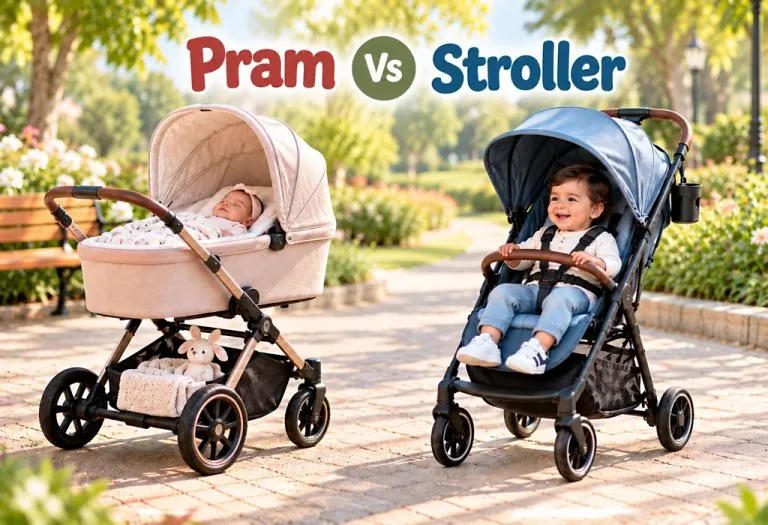
Key Takeaways
- A pram suits newborns because its carrycot keeps a baby fully flat, while a stroller suits babies who sit with support, usually from about 6 months.
- A stroller is lighter and folds smaller, so it suits daily errands and travel.
- A five point harness, working brakes and a named safety standard matter more than any extra feature.
- Compare folded size, wheel type and weight limit against your daily routine.
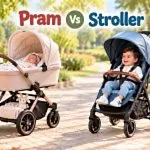
The difference between pram and stroller comes down to how your baby lies: a pram has a flat carrycot for newborns, while a stroller has an upright or reclining seat for babies who can sit with support. Pram design supports a young baby lying flat. Stroller design favours light weight, quick folding and easy travel. Parents of babies from birth to about 12 months usually need to weigh both. This article covers everything you need to know about pram vs. stroller, including their features, pros and cons, safety checks, FAQs, and a simple way to decide.
|
Key Facts Flat for the first 6 months. Raising Children Network advises that a baby should lie flat on a level surface in a pram for at least the first 6 months. Five point harness. The American Academy of Pediatrics says a stroller should have a five point harness, used on every ride. EN 1888 standard. EN 1888 Part 1 is the European safety standard for pushchairs and prams carrying a child up to 15 kg each, so a listing that names it tells you which test the maker followed. |
What Is a Baby Pram?
A baby pram is a wheeled carrier with a deep, flat carrycot or bassinet, made for newborns who cannot sit up yet. The firm, level base keeps the baby lying down, and the hood and high sides shelter against sun and wind. Parents often use one for the first 6 months.
Key Features
A pram is designed to keep newborns comfortable and supported during walks. Its main features include:
- Flat carrycot: A deep bassinet holds the baby level on a firm base.
- Large hood: A deep hood shades the baby, and a mosquito net suits warm weather.
- Sturdy frame: Bigger wheels and suspension soften bumps on uneven paths.
- Reversible handle: Parents can push with the baby facing them.
Pros
A pram can be a practical choice for newborns, particularly during the first few months. Here’s what makes it a popular option:
- Lying flat: The carrycot keeps a newborn level, which matches the advice for the first 6 months.
- More shelter: Deep hoods and high sides protect a baby from sun, dust and wind.
- Comfortable naps: A baby can doze in a flat bed while you stay close.
Cons
Before making a decision, it’s also worth considering the following limitations of a pram:
- Bulky size: The long frame needs room in the car boot, hallway and lift.
- Heavy to lift: Carrying a pram up stairs is hard work.
- Short use period: Most babies outgrow the carrycot once they sit up, usually after 6 months.
What Is a Stroller?
A stroller is a wheeled seat with an upright or multi recline position, made for babies who can sit with support, usually from about 6 months. The frame is lighter than a pram and folds smaller.
Key Features
Most strollers come with features designed to make everyday outings easier, such as:
- Reclining seat: Several positions let a baby move from upright to a lower recline.
- Five point harness: Straps over shoulders, hips and between the legs hold the child securely.
- Compact fold: Many frames fold small enough for a car boot.
- Canopy and basket: A canopy shades the child and a basket holds essentials.
- Footrest and swivel wheels: A footrest rests little legs and swivel wheels turn tight corners.
Pros
When it comes to everyday use, a stroller has a few clear advantages:
- Easy to carry: The lighter frame suits stairs, lifts and car boots.
- Tight turns: A narrower frame moves through shops and doorways.
- Longer use: One stroller can serve from about 6 months into the toddler years.
Cons
Before choosing a stroller, there are a few limitations to consider, especially when it comes to your baby’s age and the type of terrain you use it on:
- Not for newborns: An upright seat without a full recline does not suit a baby under 6 months.
- Smaller wheels: Small wheels can struggle on broken pavements.
- Less shelter: A smaller canopy covers less than a pram hood.
- Less storage: A small basket tempts parents to hang bags on the handles, which can make the stroller tip backward.
Difference Between a Pram and Stroller?
Pram vs stroller comes down to eight practical points, from how the baby lies to how the frame folds:
|
Feature |
Pram |
Stroller |
|
Baby position |
Fully flat in a carrycot |
Upright or reclined in a seat |
|
Suitable age |
Newborn to about 6 months |
About 6 months onwards |
|
Main structure |
Deep carrycot or bassinet |
Open seat with a footrest |
|
Frame size |
Long, wide and heavy |
Short, narrow and light |
|
Folding |
Bulky fold |
Compact fold |
|
Manoeuvring |
Wide turning circle |
Tight turns |
|
Storage |
Large basket below |
Small basket below |
|
Years of use |
Around the first 6 months |
Several years |
Which Is Safer for a Newborn: Lie Flat Position and Spine or Hip Support?
A pram is the safer choice for a newborn because its carrycot keeps the baby lying flat. Raising Children Network links sitting up in a pram to good head and neck control, which usually comes after 6 months. Some strollers recline to a near flat position, so read the recline angle and age guidance. If your baby has a spine or hip concern, ask your paediatrician before choosing any seat.
Safety Certifications and Harness Systems to Check Before You Buy
Check three things on every listing: a named standard, a five point harness and working brakes. EN 1888 covers pushchairs and prams in Europe, and ASTM F833 is the carriage and stroller standard that US regulation makes mandatory. Look for either name in the product description. Brakes should be easy to operate, and the frame should lock fully open before you place the baby inside.
What to Consider When Using a Pram or Stroller
These seven habits keep every ride safer and more comfortable, whichever type of pram or stroller you choose:
- Use the harness every time. Fasten all five points.
- Apply the brakes at every stop.
- Lock the frame open. Listen for the click.
- Keep bags off the handles. Use the basket instead.
- Mind small fingers. Keep hands clear of hinges.
- Supervise sleep. Keep a sleeping baby in sight.
- Check the label. Stay under the weight limit.
What Is the Right Choice for Your Baby?
A newborn needs a flat bed, so a pram or a stroller with a full flat recline fits the first months. Many parents settle the stroller or pram question by asking whether the baby sits with support. Parents asking when to switch from pram to stroller can use the same test: once your baby holds the head steady and sits with support, usually after 6 months, a stroller can take over.
FirstCry is a go to shopping destination for baby and kids essentials, where you can browse strollers and prams and narrow the list by age band, weight capacity, folding mechanism and hood. For a newborn, start with the 0 to 3 months age band and the Pram product type on the pram listing. Babyhug has a range of strollers, such as the Babyhug Comfy Ride Stroller With Reversible Handle, so read the description for recline details before using one for a young baby.
FAQs
1. Can a newborn baby use a stroller without a carrycot?
A newborn should use a stroller without a carrycot only if the seat lowers fully flat and the maker states it suits newborns.
2. When should you switch from a pram to a stroller?
Switch once your baby sits with support and holds the head steady, usually after 6 months. Check the carrycot label for its age and weight limit.
3. Can a pram be used as an overnight sleeping space for a baby?
A pram is built for outings, so keep overnight sleep in a cot or Moses basket in your room. The Lullaby Trust advises against babies sleeping in anything that keeps them seated or inclined.
4. Which is easier to fold and carry: a pram or a stroller?
A stroller is easier to fold and carry because the frame is lighter and more compact. Prams have longer frames and heavier carrycots.
5. Are lightweight strollers suitable for everyday use?
Lightweight strollers suit everyday use for babies who sit with support, since they weigh little and fold small. Check for a five point harness and wheels that cope with your roads.
6. Can you use a pram or stroller on Indian roads and uneven pavements?
A pram or stroller can handle uneven pavements if it has larger wheels, suspension and swivel wheels that lock.
7. What is the difference between a travel stroller and a regular stroller?
A travel stroller is lighter and folds smaller than a regular stroller, so it fits airports and car boots. Regular strollers add bigger wheels, deeper recline and more storage for daily use.
8. Are reversible seat strollers worth buying?
Reversible seat strollers are worth buying if you want your baby facing you in the early months. Check that the seat still reclines and the harness works in both directions.
9. How do you choose a pram or stroller for twins?
Measure doorways and lifts first. Side by side frames are wider and tandem frames are longer, and both need a weight limit that suits two children. FirstCry has a Twin Strollers & Prams product type to narrow the choice.
10. Can you take a baby pram or stroller on an aeroplane?
Airline rules on prams and strollers differ, so confirm the allowance with your airline. Compact frames are easier at airports, and FirstCry lists an Air Cabin Stroller product type.
11. How much weight can a pram or stroller support?
Each pram or stroller states its own weight limit on the label, so read it before buying. EN 1888 Part 1 covers pushchairs and prams carrying a child up to 15 kg each.
12. How do you clean and maintain a baby pram or stroller?
Wipe the frame with a damp cloth and mild soap, wash removable covers as the care label says, and dry everything fully. Check wheels, brakes and harness straps regularly.
13. What accessories are useful when buying a pram or stroller?
Useful accessories include a rain cover, mosquito net, sun shade and cup holder. FirstCry has a Stroller Frames & Accessories product type for these add ons.
A pram gives a newborn a flat, sheltered bed, while a stroller offers a lighter seat once your baby sits with support. The key safety rule is to keep young babies lying flat in the first months and never leave a sleeping baby alone. Before buying, check the recline, a five point harness, working brakes and a named standard such as EN 1888. Compare folded size, wheel type and weight limit against your daily routine. If you are unsure, ask your paediatrician for advice.
Was This Article Helpful?
- Author


Related Articles
-

Hair Removal Cream During Pregnancy - Is It Safe to Use
-
Why Bedtime Stories are More Important Than You Think
-
Schooling for Children with Autism Spectrum Disorder
-
10 Tips You Should Try If Your Child Doesn't Sleep Well Through The Night!
-
Millet Porridge With Curd Recipe
-
Parental Control on YouTube - How to Ensure Safe Search