Toy Rotation: What It Is, Benefits, and Tips
Learn how toy rotation keeps children engaged, encourages imaginative play, reduces overwhelm, and makes playtime more meaningful.




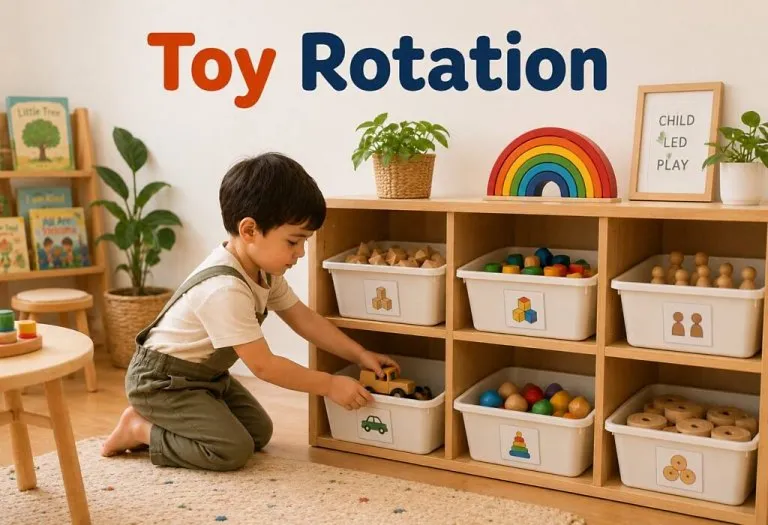
If you have ever tipped out a toy box and watched your child ignore ninety percent of what’s in it, you already understand the problem this idea solves. Toy rotation is the practice of keeping a limited number of toys within reach and storing everything else out of sight, then swapping the two groups on a regular basis. Instead of a playroom stuffed with options that blur together, your child sees a curated handful of toys that actually get picked up, explored, and played with properly.
It sounds almost too simple to work, yet parents who try it consistently report the same thing: children play longer, argue less over what to do next, and rediscover toys they had all but forgotten. This article walks through what toy rotation actually involves, the research and real-world benefits behind it, what age to begin, and a practical, step-by-step system you can adapt to your own home, however big or small your toy collection happens to be.
What Is Toy Rotation?
Toy rotation is a system where you store most of your child’s toys out of sight and keep only a small selection available at a time. Every few days or weeks, you swap the available toys with those in storage, making familiar toys feel new again without buying anything new (1).
Instead of displaying every toy on open shelves, the collection is divided into groups. One group is accessible while the rest are stored in bins, baskets, or a cupboard until it’s their turn.
The idea draws heavily from Montessori classrooms, where materials are displayed sparingly to help children focus without the distraction of visual clutter. However, you don’t need a Montessori-style home to use this approach, it works just as well with everyday toys, hand-me-downs, and birthday gifts.
A toy rotation can be as simple as swapping two labelled bins each week or as organised as a category-based system with multiple boxes. The best setup depends on how many toys you have and how much time you want to spend maintaining it.
Benefits of Toy Rotation
Toy rotation does much more than keep the playroom tidy. Here are some of the biggest benefits of toy rotation (1) (2).
1. Encourages Longer, More Independent Play
When children have access to dozens of toys at once, it’s easy to jump from one activity to another without fully engaging with any of them. A smaller, curated selection encourages them to spend more time exploring each toy, solving problems, and using their imagination. As a result, many parents notice longer periods of focused, independent play with fewer interruptions.
2. Reduces Overstimulation
An overcrowded play area can be visually overwhelming, especially for younger children who are still developing attention and decision-making skills. Fewer toys mean fewer distractions and fewer choices to process, creating a calmer environment that supports more relaxed, enjoyable play.
3. Makes Old Toys Feel New Again
Children naturally lose interest in toys they see every day. By storing some toys out of sight and bringing them back a few weeks later, those same toys often regain their novelty. Instead of buying something new, you can refresh your child’s interest simply by rotating what’s already in your home.
4. Keeps Clutter Under Control
Toy rotation limits how many toys are out at any given time, making play areas look cleaner and more organised. With fewer items scattered around the room, cleanup is quicker and less overwhelming for both parents and children.
5. Saves Money
Because toys feel fresh each time they’re reintroduced, children often stay interested in their existing collection for longer. This reduces the pressure to constantly buy new toys and helps you get more value from the toys you already own.
6. Supports Better Focus and Creativity
Having fewer options encourages children to be more creative with the toys they have. Instead of constantly seeking something different, they tend to invent new games, explore different ways to use familiar toys, and engage in richer imaginative play. This type of open-ended play helps build problem-solving skills, creativity, and sustained attention.
What Age to Start Toy Rotation?
Wondering when to begin? There’s no strict rule, but most parents find it useful from around three to four months, once a baby starts reaching for and tracking objects with real intention. At this stage, rotation might simply mean swapping two or three rattles or textured toys every few days.
As babies move into the six to twelve month age, rotation becomes more purposeful. Their interests shift quickly, and swapping toys daily or every couple of days keeps pace with how fast their skills and preferences develop.
Toddlers, roughly one to three years old, tend to do well with a rotation cycle of one to two weeks. This age group is also when categorising toys starts to pay off, since toddlers benefit from having a mix of toy types available rather than ten near-identical items.
Preschoolers and older children can stay on a slightly longer cycle, anywhere from two to four weeks, and can even help choose what comes out next. Involving them in the process builds a sense of ownership and makes the whole system easier to sustain long term. In truth, toy rotation works for any age where a child engages with toys at all; only the pace and complexity of the system needs to change.
Building a Toy Rotation System That Actually Sticks
A well-run rotation doesn’t need to be complicated to work well. The following steps cover everything from the first big sort to keeping the system running smoothly month after month.
1. Gather Everything in One Place
Pull out every toy your child owns, including ones stashed in bedrooms, the car, and grandma’s house if you can manage it. Seeing the full scale of the collection in one spot is often the push needed to be more decisive about what stays.
2. Sort Into Three Piles
Keep, Donate, Discard! Anything broken beyond repair or missing key pieces should go. Duplicates, toys your child has outgrown, or ones that never get picked up are good candidates for donation. Be honest here; a smaller, more intentional collection is the whole point.
3. Group the Keepers Into Categories
Sorting by type (rather than randomly) makes it far easier to build a balanced rotation each time, so your child always has a mix of toy types rather than five puzzles and nothing else.
4. Choose Your Storage and Label it Clearly
Clear bins, labelled baskets, or a dedicated cupboard shelf all work. The goal is simply to make swapping toys in and out fast enough that you’ll actually keep doing it.
5. Fill Your First Rotation
Pick a handful of toys from each category and put them on display. Aim for variety over volume.
6. Set a Schedule and Stick to it Loosely
Weekly works for many families, but fortnightly or monthly is just as valid. Consistency matters more than the exact interval.
7. Watch, Adjust, and Repeat
Notice which toys get ignored and which get picked up again and again. Let that observation guide what you rotate out next time, rather than rotating on autopilot.
Toy Rotation Categories to Sort By
Sensible groupings make the whole system easier to maintain, since you can grab one item from each group and know instinctively that the mix will hold a child’s interest. Common categories include:
| Category | Examples |
| Sensory and exploration | Rattles, textured balls, sensory bottles |
| Building and construction | Blocks, magnetic tiles, stacking cups |
| Fine motor | Shape sorters, lacing toys, puzzles |
| Gross motor | Balance boards, tunnels, ride-on toys |
| Pretend play | Play kitchens, dolls, dress-up items |
| Vehicles | Cars, trains, trucks |
| Music and sound | Drums, shakers, xylophones |
| Books | Board books, picture books |
You don’t need to use every category in every rotation. Pick a mix of two or three, add a couple of stand-out favourites, and rotate the rest as they become relevant to your child’s current interests.
Toy Rotation Storage Ideas
Good storage makes the difference between a system you keep up for months and one that quietly fizzles out after week two. A few options worth considering:
- Clear plastic bins with lids, stacked in a cupboard or under a bed, so you can see what’s inside without opening every box.
- Labelled fabric baskets on open shelving for toys currently in rotation, since these look tidy and are easy for children to use independently.
- Under-bed storage boxes for households short on cupboard space.
- A dedicated “toy library” shelf in a garage, loft, or spare room for anything not currently on display.
- Numbered bins so you always know which set is due out next, rather than relying on memory.
Whatever you choose, opaque storage tends to work slightly better for the “stored” pile, since toys genuinely feel new again when your child can’t see them sitting there in the meantime.
Tips for a Successful Toy Rotation System
There’s no single “right” way to rotate toys, but a few best practices can make the process much smoother. Here are some toy rotation tips to help you build a system that works for your family.
- Start small: A basic two-bin swap is a perfectly good starting point; you can always add complexity later.
- Rotate on a set day: Tying it to a day you already associate with tidying (Sunday evening, for example) makes it far more likely to actually happen.
- Leave comfort items out permanently: If your child has a toy they return to constantly, exclude it from rotation altogether rather than forcing it into storage.
- Don’t rotate mid-play: Wait until a toy has genuinely been abandoned before swapping it, rather than interrupting an activity your child is still engaged in.
- Involve older children: Letting them help choose what comes out builds buy-in and makes the whole process smoother.
- Keep it realistic: A system that takes twenty minutes to reset each week is far more sustainable than one that takes two hours.
Toy Rotation Mistakes to Avoid
Even a well-planned toy rotation can lose its benefits if it’s not managed properly. Here are some of the most common mistakes parents make, and how to avoid them.
- Rotating too often: Swapping toys daily for an older toddler or preschooler doesn’t allow enough time for deep, focused play to develop.
- Keeping out too much at once: If the shelf still looks full, the benefits of rotation largely disappear.
- Forgetting to observe: Rotation works best when it responds to what your child is actually doing, not a fixed calendar alone.
- Overcomplicating the system: An elaborate colour-coded spreadsheet sounds appealing but rarely survives contact with a busy week. Simple systems last longer.
FAQs
1. How many toys should be out at once?
Most families find that somewhere between 6 and 10 toys per play space strikes the right balance between variety and focus. Babies may need even fewer, while older children with more complex interests can sometimes manage slightly more.
2. Do books and large toys need to be included in the rotation?
Not necessarily. Many parents keep oversized items like play kitchens or climbing frames out permanently and rotate them less frequently, if at all. Books are often handled as a separate, smaller rotation of their own.
3. What if my child asks for a toy that’s currently in storage?
This is entirely up to you. Some parents bring the requested toy out straight away, while others gently explain it will be back soon. Neither approach is wrong; go with whatever keeps the system stress-free for your family.
Toy rotation isn’t about owning fewer toys or spending money on new storage solutions; it’s about giving your child the chance to properly engage with what they already have. By keeping a small, thoughtfully chosen selection out at any one time and swapping it on a schedule that suits your household, you’ll likely notice longer stretches of independent play, fewer meltdowns over too many choices, and a playroom that’s genuinely easier to manage. Start small, pay attention to what actually gets picked up, and adjust the system as your child grows. It rarely takes long before the effort starts paying for itself.
Also Read:
Tips for Choosing Toys for Kids
Benefits of Push and Pull Toys for Toddlers
Brain Development Toys for Babies and Toddlers
Was This Article Helpful?
Parenting is a huge responsibility, for you as a caregiver, but also for us as a parenting content platform. We understand that and take our responsibility of creating credible content seriously. FirstCry Parenting articles are written and published only after extensive research using factually sound references to deliver quality content that is accurate, validated by experts, and completely reliable. To understand how we go about creating content that is credible, read our editorial policy here.
- Author







.svg)