

Kindergarten Readiness Checklist: Is Your Child Ready?
Is your child ready for kindergarten? Use this simple checklist to assess key developmental, social, and learning skills.




In this Article
- What Does Kindergarten Ready Mean?
- The Complete School Readiness Checklist
- How Schools Assess Readiness
- Preparing for School: A Month-by-Month Timeline
- Myth vs Fact
- Common Mistakes Parents Make When Assessing Readiness
- Signs Your Child May Need Extra Support
- How to Build Readiness Without Adding Pressure
- FAQs
View More
Kindergarten marks the beginning of an exciting new chapter for both children and parents. Along with the excitement, it’s normal to have questions about whether your child is ready for this important transition. While some children eagerly look forward to school, others may need a little more time to develop essential kindergarten readiness skills, and that’s perfectly okay.
Being ready for kindergarten goes beyond recognising letters or counting numbers. Children also need everyday skills like following simple directions, interacting with others, communicating their needs, and managing basic tasks independently. This kindergarten readiness checklist highlights the key areas to look for, helping you understand your child’s strengths and identify where a little extra practice can make the move to kindergarten feel more comfortable and confident.
What Does Kindergarten Ready Mean?
Kindergarten readiness refers to a child’s ability to participate, learn, and feel comfortable in a classroom environment. It’s not about mastering reading, writing, or maths before the first day of school. Instead, it reflects a combination of developmental skills that help children adapt to daily routines, interact with others, and build confidence as they learn.
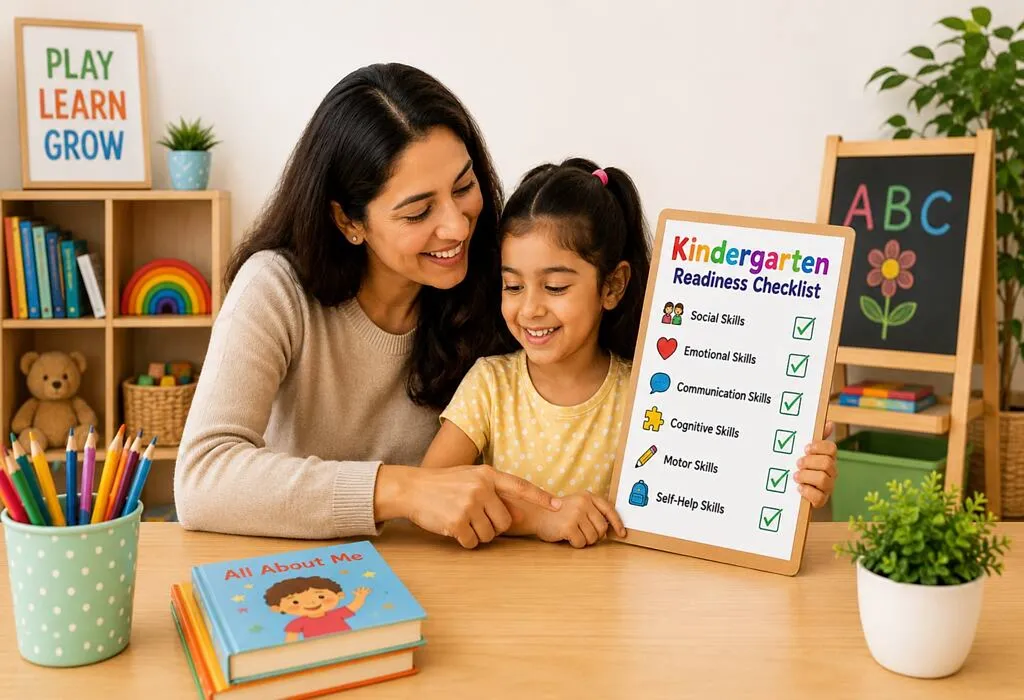
These skills generally fall into five key areas:
- Cognitive and pre-academic skills: Recognising letters, numbers, shapes, colours, and other early learning concepts.
- Social-emotional development: Sharing, taking turns, following classroom rules, and managing emotions.
- Physical development: Fine motor skills, such as holding a pencil or using scissors, along with gross motor skills like running, jumping, and balancing.
- Communication and language: Expressing thoughts clearly, asking for help, and understanding simple instructions.
- Independence and self-help skills: Using the toilet independently, washing hands, dressing, and keeping track of personal belongings.
No single domain determines readiness on its own. A child who can count to fifty but struggles to sit through a story session isn’t more “ready” than a child who reads no letters yet but adapts easily to group routines. Schools look at the whole picture, and so should parents.
The Complete School Readiness Checklist
Use this ready for kindergarten checklist as a general guide rather than a strict pass/fail list. Most children will be strong in some areas and still developing in others.
Cognitive and Pre-Academic Skills
| Skill | What It Looks Like |
| Letter recognition | Can identify some letters, especially those in their name. |
| Number sense | Can count to 10–20 and understands quantity, not just recitation. |
| Shape and colour recognition | Names basic shapes and colours confidently. |
| Pattern awareness | Notices and can continue a simple pattern (red, blue, red, blue). |
| Curiosity and questioning | Asks “why” and “how” questions about the world. |
Social-Emotional Skills
| Skill | What It Looks Like |
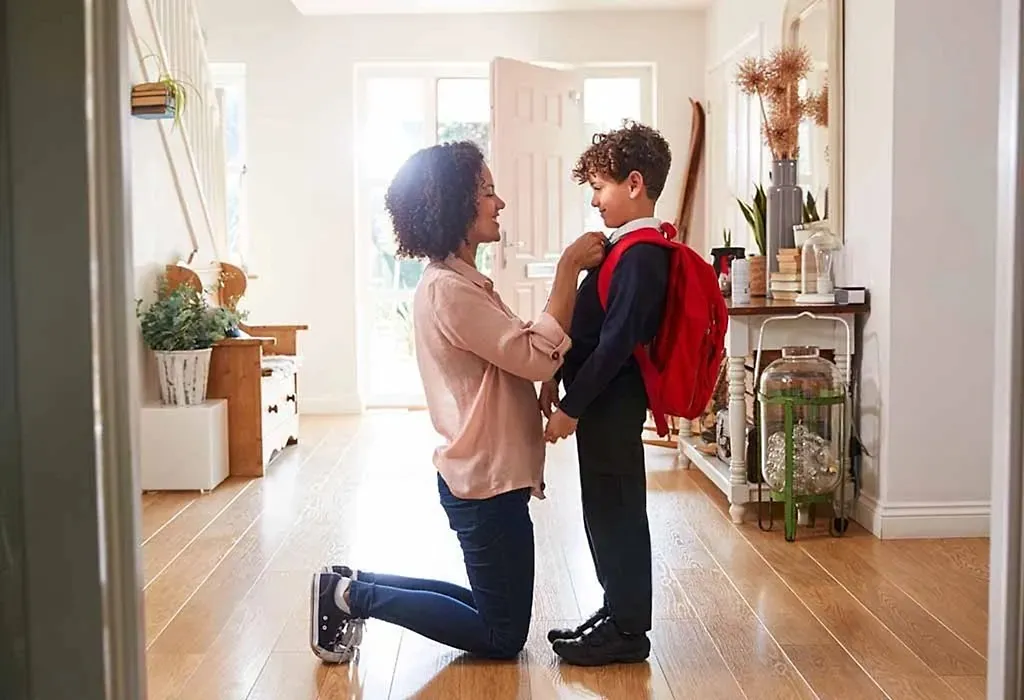
| Separation | Can say goodbye to a parent without prolonged distress. |
| Turn-taking | Waits for a turn in games or group activities most of the time. |
| Emotional regulation | Can begin to name feelings and use simple calming strategies. |
| Following group rules | Understands and attempts to follow classroom-style routines. |
| Peer interaction | Plays alongside or with other children cooperatively. |
Physical and Motor Skills
| Skill | What It Looks Like |
| Fine motor control | Holds a crayon or pencil, uses scissors with some accuracy. |
| Gross motor coordination | Can run, jump, climb stairs and balance briefly on one foot. |
| Hand-eye coordination | Can catch a large ball or complete simple puzzles. |
| Self-feeding | Uses utensils independently during meals. |
Communication and Language Skills
| Skill | What It Looks Like |
| Verbal expression | Speaks in full sentences that adults outside the family can understand. |
| Listening comprehension | Follows two-step spoken instructions. |
| Vocabulary | Uses a growing range of descriptive words. |
| Question-asking | Can ask for help or clarification when confused. |
Independence and Self-Help Skills
| Skill | What It Looks Like |
| Toileting | Manages the toilet independently, including handwashing. |
| Dressing | Puts on a coat, shoes and simple clothing with minimal help. |
| Belongings | Can manage a backpack, lunch box and personal items. |
| Routine transitions | Moves between activities without major meltdowns. |
How Schools Assess Readiness
Many schools use some form of school readiness assessment during the first weeks of term rather than as a gatekeeping test beforehand. These informal observations, sometimes carried out by the classroom teacher and sometimes involving an early years specialist, typically look at how a child settles into routines, interacts with peers, follows instructions and responds to new activities. Unlike a formal exam, there’s no pass mark. The purpose is to help the teacher understand each child’s starting point so they can tailor support accordingly.
Some school districts also offer optional pre-enrolment screenings, particularly for speech, hearing or developmental concerns. These are worth attending if offered, since they can flag areas worth monitoring well before the first day rather than after a child has already started struggling in class. Parents are usually welcome to share their own observations too. A short note to the teacher about a child’s temperament, interests or specific needs, such as a stutter, food allergy or history of separation anxiety, often helps far more than any formal test result.
It’s also worth knowing that terminology varies by country. In the United States and much of the global English-speaking market, “kindergarten” refers to the first year of formal primary schooling. In the United Kingdom, the equivalent year is usually called “Reception,” and the skills expected are broadly similar even though the label differs. If you’re researching readiness resources online, it helps to search using the term your local school district or education authority actually uses.
Preparing for School: A Month-by-Month Timeline
A kindergarten preparation checklist works best when spread across several months rather than crammed into the final weeks of summer.
Six months before starting school:
- Establish a consistent bedtime and morning routine.
- Practise short periods of independent play.
- Read together daily, pointing out letters and words.
Three months before:
- Visit the school if open days are offered.
- Practise self-help tasks: dressing, using the toilet independently, opening lunch containers.
- Introduce short separations from the primary caregiver, such as playdates or a few hours at nursery.
One month before:
- Talk positively about starting school and answer questions honestly.
- Practise walking through the morning routine, including the school run.
- Label belongings and set up a predictable “getting ready” system at home.
Myth vs Fact
When it comes to kindergarten readiness, there’s no shortage of advice, and not all of it is accurate. Let’s separate common myths from the facts so you can focus on what truly helps your child get ready for kindergarten.
| Myth | Fact |
| A child must know how to read before starting kindergarten. | Kindergarten is designed to teach early literacy; most children arrive with only partial letter knowledge. |
| Academic skills matter more than social skills. | Social-emotional readiness is one of the strongest predictors of a smooth transition into school. |
| Age alone determines readiness. | Two children of the same age can have very different readiness profiles; developmental pace varies widely. |
| Redshirting (delaying entry a year) always helps. | Research on delayed entry is mixed, and the right choice depends on the individual child, not a blanket rule. |
Common Mistakes Parents Make When Assessing Readiness
Wondering if your child is ready for kindergarten can bring up a lot of questions, and it’s easy to second-guess yourself along the way. Before you start checking off skills, here are some common mistakes to avoid.
- Over-focusing on academics: Letter and number recognition matter less in the first term than the ability to sit, listen and cooperate with others.
- Skipping practice with independence: A child who can recite the alphabet but can’t manage their own coat zip will struggle more day-to-day than the reverse.
- Comparing against other children: Readiness is individual. Comparing siblings or classmates rarely gives useful information and can add unnecessary pressure.
- Waiting until the last minute to build routines: Sudden changes to sleep and morning schedules right before term starts often cause more stress than a gradual shift.
- Avoiding the topic of separation: Some parents avoid discussing the first day to prevent anxiety, but children generally do better when they know what to expect.
Signs Your Child May Need Extra Support
Most gaps in kindergarten preparedness close naturally with time and practice. However, it may help to speak with your child’s paediatrician, health visitor or an early years specialist if your child:
- Has very limited or unclear speech compared to peers of the same age.
- Shows extreme distress at every separation, even after weeks of gradual practice.
- Struggles significantly with basic motor tasks, such as holding a spoon or crayon.
- Shows little interest in interacting with other children at all.
- Has not yet developed basic toileting independence close to the start date.
How to Build Readiness Without Adding Pressure
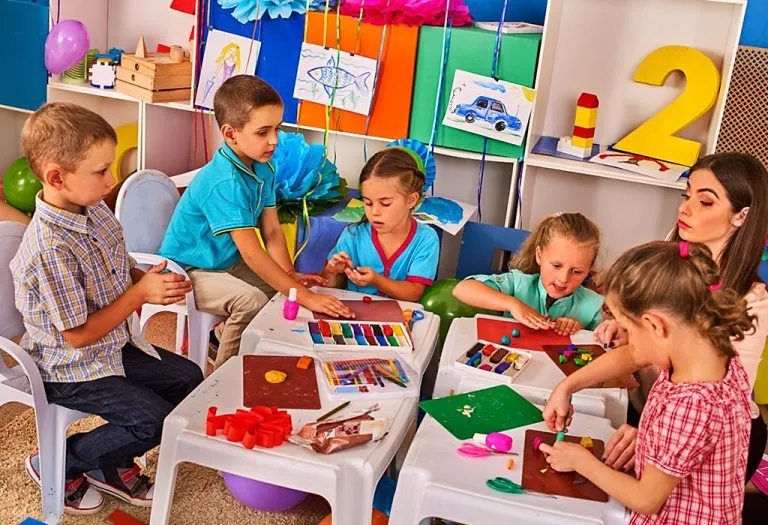
The most effective preparation tends to be playful rather than instructional. Everyday activities such as baking together (following steps, measuring, waiting turns), board games (turn-taking, following rules), and simple household chores (responsibility, following two-step instructions) build the exact skills a kindergarten checklist for parents typically covers, without feeling like a lesson. Children absorb far more from unstructured, repeated practice within daily life than from flashcards or worksheets in the weeks before term starts.
FAQs
1. What if my child isn’t ready for kindergarten?
Not being fully ready in every area is normal and expected; kindergarten is designed to build these skills, not assume they already exist. If gaps are significant, especially in speech, self-help or social interaction, a conversation with your child’s school or paediatrician can help determine whether extra support or a delayed start would be beneficial.
2. Does my child need to know the alphabet before starting kindergarten?
No. Most kindergarten programmes are built around the assumption that children are still learning their letters. Familiarity with a few letters, especially those in their own name, is helpful, but full alphabet mastery is not typically expected on day one.
3. How can I help my child with separation anxiety before school starts?
Practise short, predictable separations well in advance, such as leaving them with a trusted relative or at a playgroup for a few hours. Keep goodbyes brief and consistent, and avoid lingering, as prolonged goodbyes tend to increase anxiety rather than ease it.
Kindergarten readiness isn’t about raising a child who knows everything before the first day of school; it’s about helping them feel confident, curious, and prepared to learn. Every child reaches milestones at their own pace, and that’s completely normal. Use this checklist as a guide rather than a scorecard, celebrate your child’s progress, and offer support where it’s needed.
Also Read:
Kindergarten Writing Prompts
Kindergarten Curriculum Guide
Tips to Get Your Child Ready for Kindergarten
Was This Article Helpful?
- Author