
Rubella (German Measles) in Pregnancy – Causes, Treatment, and Prevention
Rubella during pregnancy can affect both mother and baby. Learn the symptoms, risks, treatment, and preventive measures.





Medically Reviewed By
Dr. Sabiha Anjum
(Gynecologist/Obstetrician)

This health content has been medically reviewed by qualified experts and follows the FirstCry Parenting editorial policy to ensure accuracy and reliability.
When the jubilation of knowing you are pregnant settles down, it is time to sit down and assess the necessary precautions to be taken to have a smooth and wonderful nine months. Let’s also not forget that even if you’re only in the stage of planning a pregnancy, you’ve got to take a lot of care, especially when it comes to infections such as Rubella (German measles). German measles in pregnancy can pose serious risks if not prevented.
As a pregnant mother, you will need to start looking out for your child from the minute you conceive. You must avoid contact with any disease as, if you are infected, you will be putting your child’s health at stake too. In this article, we’ll break down what causes Rubella in pregnancy, what treatment options exist, and most importantly, how you can protect yourself and your baby. Read on!
What Is Rubella?
Rubella is a viral infection caused by the rubella virus that causes lymph nodes to swell and rashes to form. It is a very common disease that can be contracted if no vaccination has been taken. A rare case is when a non-immune pregnant mother contracts the disease and passes it on to her foetus (1).
Pregnant Women & Rubella
The risk that rubella poses to pregnant women and to the unborn baby depends largely on when it is contracted. If the mother-to-be is infected in the first 20 weeks, she runs the risk of miscarriage, birth defects and even still-birth. Awareness about the disease helps prevent its incidence (2).
How Common Is Rubella?
Rubella is common in many countries especially those that do not have access to vaccination. In the US, between the years 2001 and 2004, there were only 5 cases of pregnant women who caught rubella. And this was because they weren’t vaccinated.
How Does the Virus Spread?
Rubella is also known as German measles and is like a ticking time bomb in pregnant women. Most people have the virus but do not show signs of it. If the mother has not been vaccinated for rubella or is not immune to it either, it is highly possible that on contracting it she will pass it on to the unborn child in the womb (3). The mother can also get it if the infected person coughs or sneezes around her. This can cause several complications for the baby.
Causes of German Measles in Pregnancy
Rubella is caused by the Rubella virus (togavirus). It is an air-borne disease. This means that the virus spreads through the air when a person coughs or sneezes (4).

Populations of many countries are host to this virus, and unless the person is vaccinated or immune to it, the disease can be easily contracted.
Symptoms of Rubella in Pregnancy
German measles and pregnancy are unfortunately two things that go hand-in-hand and have caused many babies to develop diseases that may be fatal.
There are various symptoms in a regular adult human that make it easy to diagnose this disease (3) (5):
- Low yet constant fever
- Swollen lymph nodes
- Joint pain
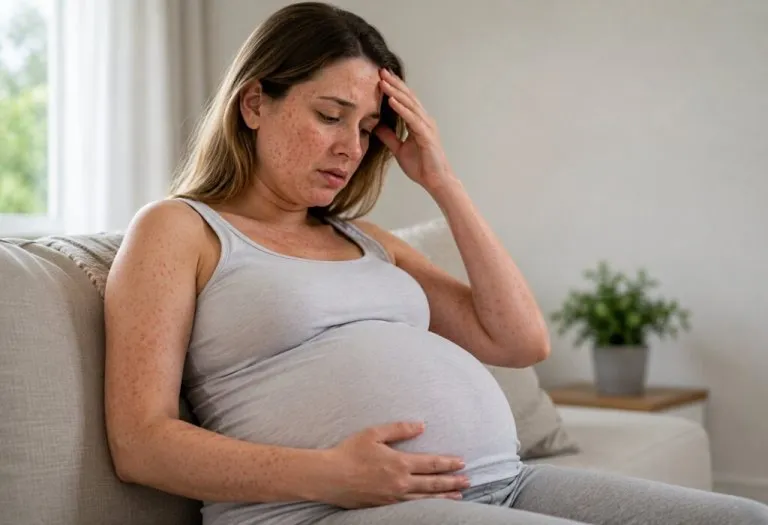
- A fine, red rash across the body yes
Rubella Virus Treatment During Pregnancy
Treatment of rubella for pregnancy varies and depends on what your doctor thinks is best for you. Certain scenarios that help keep rubella at bay. These include (6):
- In case you develop a rash during your pregnancy, you will be tested for rubella, and you are advised to not undergo any antenatal testing until test results arrive.
- In case you are planning to have a baby, you will have to make sure that you have had the right doses of MMR vaccine during your lifetime. If not, doctors will administer the vaccination. After taking the dose, you are advised to not get pregnant for a month as the MMR vaccine can cause harm to your fetus (7).
- Screening for rubella has been reduced as fewer cases have been found to exist. In case you do screen and have it while you are pregnant, you will only be administered a vaccine after giving birth.
- Unfortunately, if you are infected with rubella during the first 20 weeks of your pregnancy, there is no treatment available to prevent the onset of Congenital Rubella Syndrome (CRS) in your baby.
The kind of treatment that your doctor will provide in case you are pregnant is the administration of antibodies. These antibodies are called hyper immunoglobulins and help fight the virus and drive it from your body.
How Does Rubella Affect an Unborn Baby?
As mentioned above, if you contract rubella during the first 20 weeks of your pregnancy, then many complications may develop. These include (3) (5) (6):
- Possible miscarriage
- Possible stillbirth
- Rubella has effects on the foetus, such as: (Congenital Rubella Syndrome)
- Brain damage
- Hearing loss
- Cataracts
- Heart defects
- Low weight at birth
- Rashes on skin
- Spleen and liver damage
- Mental retardation
Risks of Getting Rubella If You Are Not Immune
The risks of rubella for you and your child depend on when you contract it. There are many stages that have different effects when the virus is caught by a non-immune, pregnant mother:
- If the mother contracts the disease within 12 weeks of pregnancy, then it is very likely that the baby will be born with defects (CRS) such as eye defects, rashes on the skin, hearing problem, and cardiac damages. In extreme cases, stillbirth and miscarriages can also occur.
- If the mother contracts the disease within 12 to 20 weeks of pregnancy, then the defects and problems are milder.
- If the mother contracts the disease after 20 weeks, no harm is done, and the mother is vaccinated after the baby is born.
Can I Take Rubella Vaccine While Pregnant?
A very common question that people ask is ‘Can I take an MMR vaccination when I’m pregnant?’ The answer is – No. You cannot take the rubella vaccine in pregnancy as you need to remember that a vaccine is a weakened/killed, non-potent strain of the disease-causing organism (bacteria, virus, etc.) that helps you build immunity to it (7). Rubella immunization and pregnancy is therefore a key consideration that should always be discussed with a healthcare provider.

While infection in the early weeks of pregnancy (up to 12 weeks) can cause severe health complications and birth defects, such cases are very rare for infections that are contracted after 20 weeks of pregnancy.
If you have not tested for rubella yet, there is no need to worry as many women today possess immunity to rubella. This is because almost all individuals are administered with the MMR vaccine at least twice before they reach adulthood. Therefore, many doctors don’t even consider it as a major threat due to successful containment.
How to Prevent Rubella During Pregnancy?
During pregnancy, you are susceptible to many diseases, and you must remember that it’s not just your health, but also your baby’s health that is at risk. A lot of preventive care must be taken before and after your pregnancy to prevent rubella (6).
1. Before Pregnancy
If you’re planning on having a child, make sure you’re physically sound. Locate your old records and find out if you’ve taken two sets of MMR shots in your lifetime. If you haven’t, then get them done. Make sure that you wait for a month after the shots to conceive, to prevent any rubella pregnancy complications.
2. During Pregnancy
If you happen to be pregnant and then realise that you haven’t been vaccinated, taking an MMR-shot is not advised (7). Take utmost care by not coming in contact with anyone with rubella and contacting your doctor immediately in case you do.
3. After Pregnancy
The MMR is sometimes administered after you have given birth and prevents you from passing it on to your next child in the future.
Rubella Test During Pregnancy
A rubella test is performed to detect the presence and amount of IgG in your blood (8). IgG is an antibody that is secreted by your body as a response against the virus.
If your result says, Rubella igG positive’, then you do not need to worry. This means that there are high amounts of IgGs present in your body. This makes you immune to the disease.
If your result says, rubella igG negative’, then it means that you do not have enough IgGs to battle this disease and will then need a vaccination. If you are planning a pregnancy, it is always best to take up the rubella test to prevent any complications and rubella infections in your child as well.
When to Consult a Doctor?
You should consult a doctor if you experience any of the following situations:
- You develop symptoms such as mild fever, rash, sore throat, or swollen lymph nodes.
- You have been in close contact with someone diagnosed with Rubella, even if you feel well.
- You are unsure about your Rubella vaccination or immunity status before or during pregnancy.
- You notice flu-like symptoms that don’t improve or feel unusual compared to a common cold.
- You are planning a pregnancy and want to confirm immunity through a blood test.
FAQs
1. Can a vaccinated woman still get Rubella?
It is very rare, but possible in some cases. However, vaccination greatly reduces the risk and usually protects against severe complications.
2. How long does Rubella take to show symptoms after exposure?
Rubella usually has an incubation period of about 14-21 days. This means symptoms, if they appear, may show up up to three weeks after exposure to the virus (8).
3. Is Rubella dangerous in all stages of pregnancy?
Rubella virus in pregnancy is most dangerous during the first trimester when the baby’s organs are developing. The risk of severe complications decreases as pregnancy progresses, but monitoring is still important at all stages.
A successful pregnancy is a safe and peaceful one. Making sure that your child is safe and sound is a tough and sometimes tiring battle, but in the end, it is worth it all. As a mother, you are sure to stop at nothing to take care of your child, and you will get all the help you want at every step of the way.
While Rubella poses a risk during pregnancy, it is a problem which can easily be diagnosed and addressed. Taking the necessary precautions and keeping abreast of your checkups will help ensure that you have a safe and healthy pregnancy.
Also Read:
Chikungunya in Pregnancy
Cytomegalovirus in Pregnancy
Human Papillomavirus in Pregnancy
Was This Article Helpful?
1. Cleveland Clinic – Rubella (German Measles)
2. PubMed Central – Rubella (German measles) in pregnancy
4. Encyclopedia Britannica – togavirus
5. NHS – Rubella (german measles)
6. March of Dimes – Rubella and pregnancy
7. Tommy’s – Rubella vaccine (MMR) before pregnancy
8. Wiley – Rubella and pregnancy: diagnosis, management and outcomes
- Author
- Expert Reviewer


Related Articles
-

Alfalfa in Pregnancy and During Breastfeeding
-
Pregnancy Journal: Tips for Documenting Your Journey
-
Tiredness and Fatigue During Pregnancy - Causes and How to Cope With It
-
20 Hobbies Worth Taking Up during Pregnancy
-
Pregnancy Symptoms Not to Ignore: 15 Danger Signs to Look For
-
9 Ways to Avoid Stress During Pregnancy