

Nail Polish During Pregnancy – Is It Safe to Use?





Medically Reviewed By
Dr. Rima Sonpal
(Gynecologist/Obstetrician)

This health content has been medically reviewed by qualified experts and follows the FirstCry Parenting editorial policy to ensure accuracy and reliability.
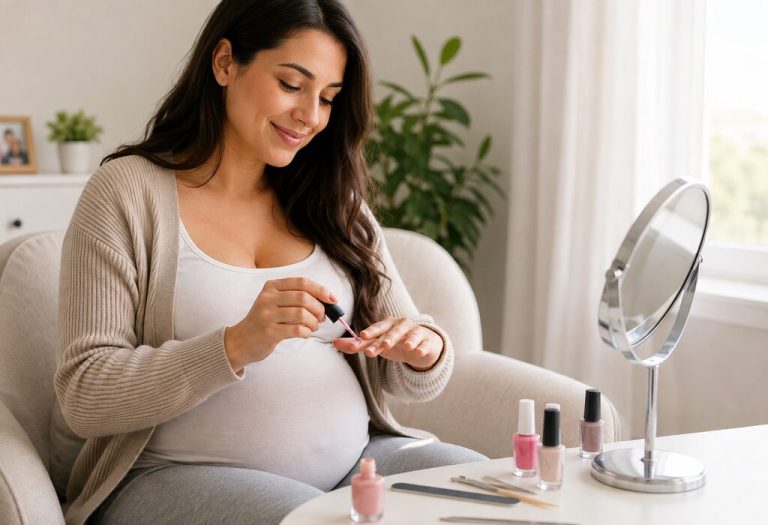
There’s a natural instinct to use nail polish in pregnancy to beautify the hands. But what if we tell you that nail polishes come with lingering toxic effects due to chemical baddies like toluene, formaldehyde, dibutyl phthalate, and several other plasticizers. Moreover, there are several reports highlighting harmful effects of certain nail polishes on the growing baby when used during pregnancy. This has led to confusion among many women about the safety aspects of painting nails while pregnant. In this article, we help clarify all the facts about using nail polish during pregnancy and also give some safety tips to follow while using them.
Can You Use Nail Polish During Pregnancy?
The use of nail polish during pregnancy is safe only if used occasionally and with the least possible chance of ingesting it. There is no evidence of nail polish-related adverse reactions in pregnancy reported till now. However, the Food and Drug Administration (FDA) has categorised some chemicals in nail polish and in nail enamel removers as unsafe and associated with some skin infections, poisoning and other consequential complications.
Choosing formulas that are marketed as “3‑free” (toluene‑, DBP‑, and formaldehyde‑free) or “5‑free” (adding camphor‑free and xylene‑free) is safe for pregnant women.
Thus, nail polish for pregnant women is safe as long as non-toxic nail polishes are used and applied occasionally.
Nail Polish Ingredients to Avoid While Pregnant
Some chemicals used in nail polishes are reported to have harmful effects on the body. It is particularly unsafe when a developing foetus comes in contact with it. The common important chemicals used are:
- Formaldehyde: Formaldehyde is a hardener used in most nail polishes (1). If inhaled, it can irritate the nose, eyes, and throat. The mother’s body breaks down this chemical if it is accidentally ingested, making it relatively low-risk for the developing baby. Exposure to formaldehyde during pregnancy increases the risk of premature birth, spontaneous abortion, and congenital malformations (2).
- Toluene: Toluene in nail polish gives it a very smooth texture. Inhaling this chemical can cause irritation of throat, lungs and eyes and high exposure can affect the nervous system of the developing baby. According to a 2022 study published in Pediatrics, Hydranencephaly (HE) is a rare congenital neurological disorder that developed in an infant due to maternal occupational exposure to toluene and continued throughout the pregnancy (3).
- Dibutyl phthalate: Dibutyl phthalate (DnBP) is another chemical used in some nail polishes that has a similar effect to formaldehyde and toluene. It offers chip resistance benefits in nail polish (4). Care must be taken to avoid such chemicals while buying nail polish.
- Plasticizers including bisphenol-A (BPA) and phthalates: Such chemicals are usually added to the nail polish to prevent chipping. However, these plasticizers are linked with endocrine disruption and impaired fertility when used excessively (6).
- Industrial Camphor: This chemical can trigger nausea and dizziness when exposed to in high doses.
Additional chemicals to watch for include xylene and ethyl tosylamide, which are sometimes present in “5‑free” or “7‑free” formulations. Always check the ingredient list on the bottle or the brand’s website before purchase.
Which Nail Polish Is Safe to Use?
There are many nail polishes available in the market that do not contain these toxic chemicals: formaldehyde, toluene, dibutyl phthalate (DnBP), and methyl methacrylate monomer (MMA) (5). Pregnancy-safe nail polish can be chosen after confirming the absence of any of these chemicals, which should be written on the label.
Safety Tips to Use Nail Paints While Pregnant
Nail polish and pregnancy can work together when used occasionally and mindfully. These precautions will help you stay protected if you want to avoid the ill effects of nail polish in pregnancy.
- Paint your nails on special occasions only to minimise chemical exposure.
- Opt for chemical-free (8-free, 10-free, or 13-free) nail polishes.
- Select and use a nail polish that does not contain any toxic chemicals.
- Try to use acetone-free nail paint removers.
- Keep your hands away from your mouth so you don’t inhale any fumes while the nail paint dries.
- While applying nail polish, keep the doors and windows open to let out the vapours and strong smell coming from them.
- Dry the polish by keeping the arms away from the body. Blowing on the nail polish to dry it out will only make you inhale the fumes. Better to avoid it.
- Wash your hands with soap to remove any residue stuck on your hands.
- If there is any accidental spillage, then avoid the area.
- Use preferably only one coat of nail polish.
- If you observe the nail polish peel away quicker than usual, avoid using it as there are chances of ingesting it.
Can You Use Nail Polish Remover?
The next important question that women have is that, “Is nail polish remover safe during the first trimester of pregnancy?”
Nail polish removers are generally safe, and they contain acetone in them. Acetone is present in our body and around us and does not cause any harmful effects when used occasionally.
Can You Wear Nail Polish During Labour or for a Planned C-Section?
Although it is harmless to wear nail polish during labour, some hospitals do not permit it. The medical reasons behind it are that nail polish can sometimes increase the chances of infection and can also decrease the visibility of any blue discolouration in the nail caused by lack of oxygen.
FAQs
1. How can I have a safe manicure and pedicure during pregnancy?
If you are a nail technician, make use of protective gloves and face masks mandatorily when working with chemicals in nail polish while pregnant. Avoid handling tasks with heavy chemical exposure during pregnancy, so you can ask others to perform that task for you. If you love getting your nails done, then opt for chemical-free, odour-free, vegan-friendly, and water-based nail paints manufactured in the UK or EU.
2. Which nail polish brands are safe during pregnancy?
To enjoy colourful nails during pregnancy, you can opt for 8-free (Toluene, Dibutyl phthalate (DBP), Formaldehyde, Formaldehyde Resin, Camphor, Triphenyl phosphate (TPHP), Ethyl tosylamide, and Xylene), 10-free, and 13-free nail polishes.
3. Is it safe to get a gel manicure during pregnancy?
In gel manicures, a polymer-based polish is cured using an LED or UV light. The two main issues are the higher concentration of some compounds in gel formulae and the increased exposure to UV rays. While some dermatologists advise reducing UV exposure during pregnancy as a precaution, the FDA has not found sufficient evidence that the UV exposure from a conventional gel manicure causes harm. If you decide to get a gel manicure, pick a “non-toxic” gel brand, make sure the salon has enough ventilation, and think about using a broad-spectrum sunscreen on your hands prior to the procedure.
4. Can nail polish application during pregnancy harm my baby?
Occasional application of nail polishes during pregnancy won’t increase the exposure risk and harm your baby. Choosing pregnancy-safe, non-toxic alternatives will help mothers enjoy their pamper time stress-free without compromising the well-being of the baby.
5. How many nail polish applications are safe per week while pregnant?
It is safe to limit the nail polish application to no more than two to three applications in a week throughout pregnancy. Make sure the room is properly ventilated and you have no prior history of chemical sensitivities.
Although the safety of using nail polish during pregnancy can look like a trivial issue, it has its own side effects on the mother’s body. The limited use of safe nail colours can go a long way toward preventing any complications.
Also Read:
Facial Bleach in Pregnancy
Wearing Make up during Pregnancy
Eyebrow Threading when Pregnant
Manicure And Pedicure while Pregnant
Can Pregnant Women Use Hair Removal Cream?
Was This Article Helpful?
Parenting is a huge responsibility, for you as a caregiver, but also for us as a parenting content platform. We understand that and take our responsibility of creating credible content seriously. FirstCry Parenting articles are written and published only after extensive research using factually sound references to deliver quality content that is accurate, validated by experts, and completely reliable. To understand how we go about creating content that is credible, read our editorial policy here.
- Author
- Expert Reviewer


Related Articles
-
Scabies During Pregnancy - Causes and Treatment
-

Cystic Fibrosis (CF) and Pregnancy - What You Need to Know
-
Sinus Infection While Pregnant: Causes, Symptoms, & Treatments
-

Best Twinkle Twinkle Little Star Baby Shower Ideas
-
Dehydration During Pregnancy: Signs, Risks & Treatment
-

Viable vs Nonviable Pregnancy: Key Differences, Signs, & What to Expect