
20 Self Esteem Activities for Kids to Boost Confidence
Boost your child's confidence with self-esteem activities for kids that encourage resilience, self-belief, and emotional growth.




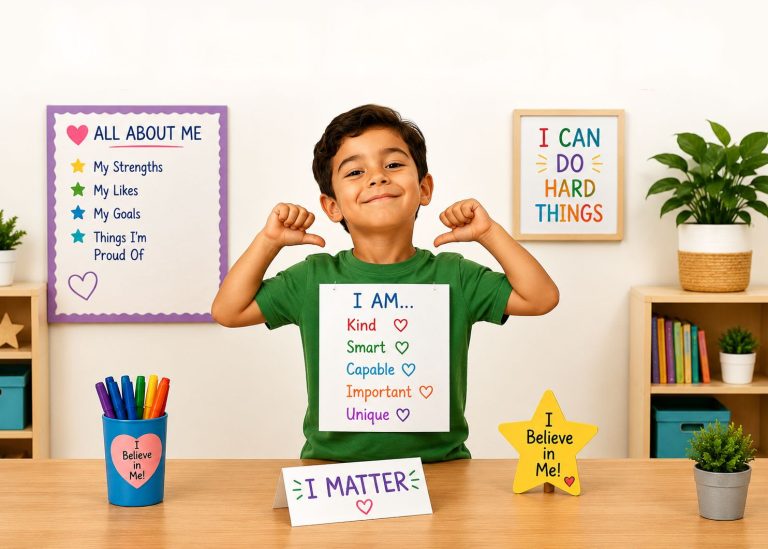
Confidence isn’t something kids are simply born with; it’s something they build through everyday experiences, encouragement, and small wins. From trying a new activity to speaking up in class or learning from mistakes, every positive experience helps shape how children see themselves. That’s why self-esteem plays such an important role in their emotional well-being, resilience, and overall development.
Building self-esteem doesn’t have to involve complicated strategies or expensive resources. Simple, engaging activities can help kids recognise their strengths, embrace their uniqueness, and develop a healthy sense of self. In this article, we’ll explore 20 fun and effective self-esteem activities for kids that inspire confidence, encourage positive self-talk, and help children believe in their abilities.
What Self-Esteem Really Means for Children
Self-esteem is not the same as arrogance, and it is not built by telling a child they are the best at everything. Genuine self-esteem comes from a child’s internal sense that they are capable, valued, and able to handle setbacks. Psychologists often describe it as having two parts: a feeling of being loved unconditionally, and a feeling of competence earned through real effort.
Activities that only offer praise without any actual skill-building tend to produce short-lived confidence that collapses the first time a child faces genuine difficulty. The strongest approach combines warmth with opportunities to practise, fail safely, and try again.
How to Choose the Right Activity for Your Child’s Age
Not every activity suits every child. A toddler cannot set a written goal, and a ten-year-old will find a sticker chart for putting on socks a little insulting. Use these general guides:
- Ages 1 to 3: Focus on sensory experiences, simple choices, and lots of descriptive praise for effort rather than outcome.
- Ages 4 to 7: Introduce small responsibilities, structured play, and activities that let children see their own progress.
- Ages 8 to 10: Shift toward goal setting, independence, and activities that involve real decision-making and mild risk.
Self-Esteem Activities for Kids
Every child deserves to feel proud of who they are, and the right activities can make building self-esteem both fun and meaningful. To make it easy to find the best fit, we’ve divided these 20 self-esteem activities for kids into age-wise categories.
For Toddlers and Preschoolers (Ages 1 to 4)
The early years are the perfect time to nurture a strong sense of self through play, encouragement, and everyday interactions. These simple, age-appropriate activities help toddlers and preschoolers build confidence, express their emotions, and celebrate small achievements as they learn and grow.
1. The “I Did It” Wall
Set up a small corkboard or section of the fridge where your toddler can display drawings, stickers, or photos of things they attempted. The direct value here is visibility: children this age build confidence by seeing proof of their own efforts displayed somewhere important.
2. Two-Choice Decisions
Offer toddlers a simple choice between two options, such as the red cup or the blue cup. This teaches them that their preferences matter without overwhelming them with too many options, and it is one of the easiest self esteem building activities for kids to start with no preparation at all.
3. Mirror Talk
Stand with your child in front of a mirror and name one thing their body did well that day, such as climbing the stairs or helping carry a bag. Concrete, physical praise sticks better than vague compliments at this age.
4. Helper Tasks
Give toddlers a real, small job, like handing you a spoon or placing napkins on the table. Completing an actual task, rather than a pretend one, gives them a genuine sense of contribution.
5. Emotion Naming Games
Use picture cards or simple books to help toddlers name feelings like happy, frustrated, or proud. Children who can identify their emotions cope better with setbacks, which protects self-esteem over time.
For Young Children (Ages 5 to 7)
As children enter their early school years, they begin to discover what they’re good at and what makes them unique. The following activities will help strengthen their self-esteem through creativity, encouragement, and everyday successes.
1. The Effort Jar
Each time your child tries something difficult, whether they succeed or not, add a token to a jar. When the jar fills up, celebrate the effort itself with a small family activity. This shifts focus away from winning and toward persistence.
2. Strength Spotting
At dinner, ask each family member to name one thing they saw the child do well that day. Hearing specific, varied praise from multiple people carries more weight than a single generic compliment.
3. Simple Chores With Ownership
Assign one chore that belongs entirely to your child, such as watering a plant or feeding a pet. Full ownership of a task, even a small one, builds a sense of reliability.
4. Drawing Their Own Story
Encourage your child to draw and narrate a short story about themselves solving a problem, such as a character who was scared of the dark but found a solution. Rehearsing problem-solving through play helps children believe they can handle real challenges.
5. Team Games With Rotating Roles
Play simple board games or team sports where every child gets a turn leading or scoring. Rotating roles ensures no child is stuck feeling like the weakest link every time.
6. Compliment Swap
Have siblings or friends take turns giving each other one genuine compliment before bed. This builds both the giver’s and receiver’s social confidence.
7. Mistake Show and Tell
Once a week, share a mistake you made as a parent and what you learned. Watching adults handle errors calmly teaches children that mistakes are not something to fear or hide.
For Older Children (Ages 8 to 10)
As kids grow, so does their need for confidence and self-belief. These activities encourage children ages 8 to 10 to recognise their strengths, embrace challenges, and feel more confident in who they are.
1. Goal Ladder
Help your child write down a goal, then break it into three or four smaller steps on a simple ladder drawing. Ticking off each rung gives a visible sense of progress toward something they chose themselves.
2. Skill Teaching Swap
Ask your child to teach you or a younger sibling something they know how to do, whether it is a card game or a bike trick. Teaching others is one of the fastest ways to confirm competence.
3. Decision Days
Let your child plan one part of a family outing, such as choosing the restaurant or the route on a walk. Real decision-making with real consequences builds independence faster than hypothetical choices.
4. The Feedback Sandwich
When correcting behaviour or schoolwork, sandwich the correction between two honest positives. Children at this age are sensitive to criticism, and this method keeps feedback constructive rather than discouraging.
5. Public Speaking Practice
Have your child practise a short “show and tell” or a toast for a family dinner. Small, low-stakes public speaking builds tolerance for the nervousness that comes with bigger challenges later.
6. Sports or Physical Challenges
Enrol your child in a sport or set a physical challenge, like learning to swim a length of a pool. Physical competence transfers surprisingly well to general confidence, particularly for children who struggle academically.
7. Journaling Wins
Give your child a notebook to jot down one thing they were proud of each day, even something as small as finishing homework without being asked. Reviewing the journal after a month shows a visible pattern of growth.
8. Community Contribution Projects
Involve your child in a small volunteering task, such as helping organise a food drive or making cards for a care home. Contributing to something bigger than themselves gives children a sense of purpose that pure self-focus cannot provide.
Common Mistakes Parents Make When Building Confidence
Even with the best intentions, some parenting habits can unintentionally affect a child’s self-esteem. Before we wrap up, let’s look at some common mistakes parents make and how small changes can make a big difference.
- Overpraising every action: When everything is “amazing,” children stop trusting the praise and start doubting your judgement.
- Comparing siblings or classmates: Comparisons, even positive ones, teach children to measure worth against others rather than their own progress.
- Rescuing too quickly: Stepping in before a child has a chance to attempt something removes the exact struggle that builds resilience.
- Focusing only on outcomes: Praising the result rather than the attempt teaches children that trying only counts if they win.
- Inconsistent follow-through: Rotating chores, forgotten goal charts, and abandoned journals send the message that the activity, and by extension the child’s effort, was not important enough to sustain.
FAQs
1. How long does it take to see results from self-esteem activities?
Most parents notice small shifts in a child’s willingness to try new things within two to four weeks of consistent practice, though deeper changes in how a child talks about themselves can take a few months.
2. Can these activities help a child who is being bullied?
Yes, activities that build a sense of competence and identity outside of peer approval, such as skill teaching swaps and journalling wins, can give a bullied child a steadier sense of self while other support, such as speaking with the school, is arranged.
3. What if my child resists these activities?
Start smaller and let your child choose which activity to try first, since forced participation tends to backfire, while a small amount of ownership over the process often turns resistance into interest within a week or two.
Confidence is not something a child either has or lacks forever. It grows in the small, repeated moments where a child tries, struggles a little, and comes through the other side with proof that they could handle it. None of the twenty activities above require special training or a big budget, only a willingness to show up consistently and notice effort as much as results. Pick two or three that suit your child’s age and personality, give them a few weeks, and watch how a steady diet of small wins adds up to a child who genuinely believes in themselves.
Also Read:
Fun Cinco de Mayo Crafts for Kids to Make at Home
Things to Do in Washington, D.C. With Kids
Exciting Throwing Games for Kids
Was This Article Helpful?
- Author


Related Articles
-

25 Solar System Coloring Pages (Free Printable Pictures & Sheets)
-
Ninja Turtles Coloring Pages - Printable TMNT Pictures to Color
-
Encouraging Your Preschooler To Create With Play Dough
-
The Connection between Music and Your Preschooler's Growth
-
10+ Critical Thinking Games & Activities for Kids
-
25 Cooking Games for Kids to Learn and Have Fun





.svg)