
15 Grief Activities for Kids to Help Them Process Loss and Heal
Help children cope with loss through grief activities for kids that encourage emotional expression, healing, resilience, and healthy coping.




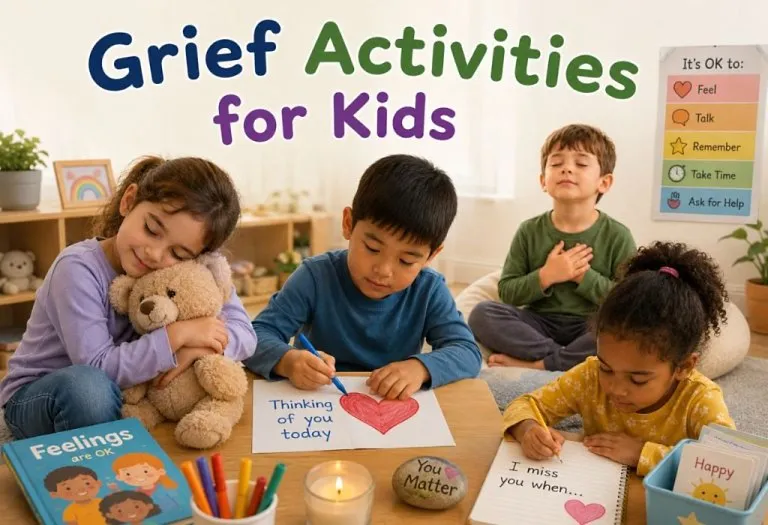
Losing a loved one is one of the hardest experiences a family can go through, and children often struggle to make sense of it in ways adults don’t expect. They might ask the same question repeatedly, act out during playtime, or seem fine one moment and fall apart the next. Grief activities for kids give children a language for feelings they can’t yet put into words, turning confusion and sadness into something they can hold, draw, or talk through at their own pace.
This article walks you through fifteen practical, age-appropriate ideas that parents, teachers, and carers can use to support a grieving child, along with common mistakes to avoid and signs that extra professional help might be needed.
How Children Understand Loss at Different Ages
Grief doesn’t look the same at every age. Toddlers and preschoolers often see death as temporary or reversible, so they may ask “When is Grandpa coming back?” weeks after a funeral. Children between six and eight start grasping that death is permanent, but they may worry it was somehow their fault. By nine or ten, kids can usually understand death much like adults do, though they may still struggle to express what they’re feeling.
That’s why the activities below are grouped by developmental stage rather than treated as one-size-fits-all.
Activities for Younger Children (Ages 3 to 6)
Play is the primary language of young children, so the most effective grief activities for preschoolers lean on sensory, hands-on experiences rather than verbal reflection.
1. Feelings Jar
Fill a clear jar with different coloured pom-poms, each one representing an emotion such as sadness, anger, or confusion. Let your child pick a colour and talk about when they felt that way.
2. Draw the Person You Miss
Hand your child crayons and ask them to draw their loved one doing something they enjoyed together. Young children often express grief more freely through pictures than words.
3. Puppet or Stuffed Animal Play
Let your child act out a story with dolls or soft toys and follow their lead rather than directing the scene. Play is how preschoolers rehearse and release difficult emotions.
4. Comfort Object Craft
Help your child decorate a small pillow, blanket, or stuffed animal that becomes their “cuddle friend” for tough nights. Having something physical to hold can ease bedtime anxiety after a loss.
5. Read a Picture Book About Loss Together
Simple illustrated stories help young children realise their feelings are normal and give parents a natural opening to answer questions honestly.
Activities for School-Age Children (Ages 7 to 10)
As children between the ages of 7 and 10 begin to understand what loss really means, they often have a lot of feelings—but not always the words to express them. The activities below are designed to gently help them open up, process their emotions, and find comfort in a way that feels natural.
1. Memory Box
Decorate a shoebox and fill it with photographs, letters, or small keepsakes connected to the person who died. Children can add to it over time and return to it whenever they want to feel close to their loved one.
2. Grief Journal
Give your child a notebook to write, doodle, or paste photos in whenever a memory or feeling comes up. There’s no wrong way to fill the pages, and it never needs to be shared.
3. Letter Writing
Encourage your child to write a letter to the person who died, saying anything they didn’t get to say. Some families read the letters aloud, others tuck them away, and both are valid.
4. Plant Something Living
Planting a tree, flower, or herb garden in memory of a loved one gives children a growing symbol of remembrance that changes with the seasons, much like grief itself.
5. Create an Acrostic Poem
Using each letter of the person’s name, help your child write a word or phrase that describes them. This is a gentle way to focus on happy memories rather than only the loss.
6. Build a “Remembering” Playlist
Ask your child to pick songs that remind them of their loved one, or that simply make them feel better. Music can process emotion in ways words sometimes can’t.
7. Emotion Charades or Matching Games
For children who find it hard to name feelings, a simple game matching emotion words to facial expressions builds emotional vocabulary without pressure.
Activities for the Whole Family
Healing doesn’t have to be a journey kids take on their own. The following family-friendly activities encourage meaningful conversations, shared memories, and moments of connection that can help everyone support one another through grief.
1. Family Memory Jar
Everyone writes a memory of the loved one on a slip of paper and drops it into a jar. Pull one out on hard days or anniversaries to read together.
2. Volunteer for a Cause They Cared About
If the person who died loved animals, gardening, or a charity, an afternoon volunteering in their honour helps children feel connected to that legacy.
3. Light a Candle or Hold a Small Remembrance Ritual
Marking anniversaries or holidays with a simple ritual, such as lighting a candle or sharing a favourite meal, gives children something predictable to hold onto during hard dates.
Common Mistakes to Avoid
There’s no perfect way to help a child through grief, but avoiding a few common missteps can make a big difference. Before you try the activities above, keep these important things in mind to ensure they feel supportive, not overwhelming.
- Forcing an activity: If a child refuses to join in, offer it again another day instead of pushing.
- Rushing the timeline: Grief isn’t linear, and a child who seems “over it” may still need support months later.
- Using euphemisms: Phrases like “gone to sleep” can confuse young children and create new fears around bedtime.
- Doing all the talking: Ask open questions and leave space for silence.
- Ignoring your own grief: Children take emotional cues from adults, so modelling healthy expression matters too.
When to Seek Professional Help
Most children move through grief with time, patience, and family support, but some signs suggest it’s time to bring in a grief counsellor or child therapist. Watch for prolonged withdrawal from friends, ongoing sleep or appetite changes, a drop in school performance that doesn’t improve, or talk of wanting to join the person who died. A paediatrician or school counsellor can point you toward child-specific grief support.
FAQs
1. What is the best age to start grief activities with a child?
There’s no minimum age. Even toddlers benefit from simple, sensory activities like drawing or comfort objects, adapted to their level of understanding.
2. How long should grief activities continue after a loss?
There’s no fixed timeline. Many families return to memory boxes, journals, or rituals for years, especially around anniversaries and birthdays.
3. Should grief activities happen at school or only at home?
Both settings can help. Schools often have counsellors trained to support grieving students, and consistency between home and school routines tends to help children feel more secure.
There is no perfect way to help a child through loss, but small, consistent acts of connection go a long way toward helping them feel less alone. Whether it’s a memory box tucked under the bed or a candle lit on a difficult anniversary, these activities give children permission to feel, remember, and slowly heal, all while knowing the adults around them are right there with them.
Also Read:
Easy Ice-Cream or Popsicle Stick Crafts for Kids
Things To Look For in your Child’s Drawings
Best Goodie Bag Ideas for Kids
Was This Article Helpful?
Parenting is a huge responsibility, for you as a caregiver, but also for us as a parenting content platform. We understand that and take our responsibility of creating credible content seriously. FirstCry Parenting articles are written and published only after extensive research using factually sound references to deliver quality content that is accurate, validated by experts, and completely reliable. To understand how we go about creating content that is credible, read our editorial policy here.
- Author







.svg)