

Mindful Parenting: Benefits, Tips, and Real-life Examples
Practice mindful parenting to build stronger bonds, reduce stress, and respond to your child with patience, empathy, and intention.




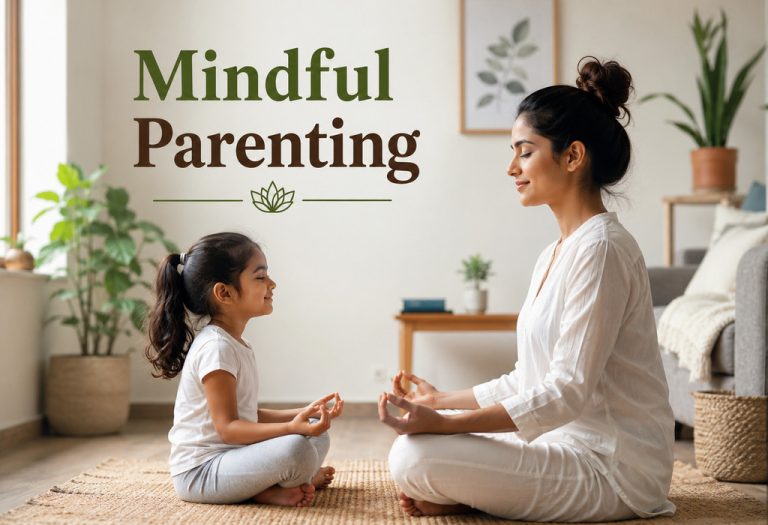
Raising kids in the middle of school drop-offs, snack negotiations, and bedtime stalling tactics rarely leaves room for calm reflection. Mindful parenting offers a different way to handle those chaotic moments. Rather than adding another rigid rulebook to your day, mindfulness and parenting work together to help you notice what’s happening inside you and your child before you respond, so your reactions come from intention rather than frustration.
This article breaks down what mindful parenting actually looks like, why it matters for children ages one through ten, and how to start practicing it today, even if you’ve never meditated in your life.
What Is Mindful Parenting?
Mindful parenting is the practice of bringing full, nonjudgmental attention to your child and to yourself during everyday parenting moments. It means noticing your thoughts, emotions, and physical sensations as they arise, rather than letting them automatically drive your words or actions (1).
The concept grew out of mindfulness traditions that have been studied for decades, applied specifically to the parent-child relationship since the late 1990s. This doesn’t mean staying calm all the time or never feeling angry. A mindful parent still feels frustration, worry, and exhaustion (2). The difference is in what happens next: you notice the feeling, give yourself a beat before acting, and then decide how you want to show up for your child.
The Three Core Qualities of Mindful Parenting
Most approaches to mindful parenting rest on three foundations (3):
- Awareness and attention. Staying present with what’s actually happening rather than replaying yesterday’s tantrum or worrying about tomorrow’s.
- Intentionality. Understanding the reasons behind your child’s behaviour instead of assuming the worst.
- Nonjudgmental acceptance. Approaching both your child’s feelings and your own without harsh self-criticism or unrealistic expectations.
Why Mindful Parenting Matters: The Research-Backed Benefits
This approach isn’t just a feel-good idea. Multiple studies have examined how mindfulness changes the parenting experience, and the findings point to real, measurable benefits for both generations (1) (2) (3).
Benefits for Parents
- Lower stress and anxiety, with reduced symptoms of depression and fewer negative mood episodes.
- Improved emotional regulation, since noticing triggers early reduces impulsive yelling or harsh discipline.
- Greater parenting satisfaction, with many parents reporting parenting feels less effortful once mindful habits stick.
- Stronger self-compassion, as letting go of the “perfect parent” standard reduces guilt after difficult days.
Benefits for Children
- Better emotional regulation, as kids internalise the calm pausing they see modeled.
- Improved social decision-making and stronger emotional understanding, which supports peer relationships.
- Fewer behaviour problems, including reduced aggression, hyperactivity symptoms, and defiance.
- Closer communication, since children feel more heard when a parent is genuinely listening.
Mindful Parenting Techniques You Can Start Today
Becoming a mindful parent is a gradual practice, not a switch you flip. These mindful parenting tips work whether you’re new to mindfulness or just want to apply it more consistently.
1. Identify Your Triggers
Every parent has “hot spots,” the situations or times of day that make staying calm especially hard, like whining before dinner or sibling fights when you’re running late. Notice patterns over a week so you can prepare instead of being blindsided.
2. Use the Pause
When frustration rises, build in a deliberate pause before responding. Even three seconds of silence, paired with a breath, interrupts the automatic reaction and gives your thinking brain time to catch up.
Try this: Inhale for four counts, hold for four, exhale for four. Repeat once before you speak.
3. Listen With Full Attention
Put down the phone and make eye contact when your child is talking, especially during emotional moments. Children can tell the difference between a parent who’s half-listening and one who’s fully tuned in, and that shapes how safe they feel sharing things later.
4. Practice Nonjudgmental Acceptance
This applies in two directions. Accept your child’s emotions as valid, even when the behaviour tied to them isn’t acceptable. A tantrum over a broken cracker is genuinely upsetting to a three-year-old. Extend that same acceptance to yourself when parenting doesn’t go as planned.
5. Model Self-Regulation Out Loud
Narrate your own calming process so your child can see mindfulness in action. Saying “I’m feeling frustrated, so I’m going to take a deep breath before we talk about this” teaches kids a concrete tool they can use themselves.
6. Build in Daily Micro-Practices
Short daily habits add up:
- Take three mindful breaths before walking through the front door after work.
- Name one thing you notice with each of your five senses during a walk with your child.
- Do a one-minute body scan before bedtime to release tension from the day.
7. Set Realistic Expectations
Mindful parenting strategies work best when you expect progress, not perfection. Some days you’ll catch yourself before reacting; other days you won’t. The goal is increasing that ratio over time.
Mindful Parenting in Action: Real-Life Examples
Seeing how these techniques play out in common parenting scenarios makes the concept easier to apply.
1. Scenario: Toddler Tantrum at the Grocery Store
Without mindfulness: You feel embarrassed by the stares, grab your child’s arm, and rush out while raising your voice.
With mindfulness: You notice your own embarrassment without acting on it, crouch down, acknowledge the disappointment your child feels, and calmly hold a boundary while staying physically close. The tantrum still happens, but it resolves faster because your child isn’t also reacting to your escalation.
2. Scenario: Child Refuses to Eat Dinner
Without mindfulness: You take the refusal personally and argue at the table until the meal ends in tears.
With mindfulness: You consider that the refusal might be about texture, tiredness, or autonomy testing rather than a judgement of your cooking. You offer a calm choice between two foods already on the table and let go of needing the plate cleared.
3. Scenario: Sibling Conflict Over a Toy
Without mindfulness: You jump in immediately, assign blame based on who’s crying loudest, and hand down a quick verdict.
With mindfulness: You pause, observe for a moment, and ask both children what happened before responding. This models fairness and gives them practice working through small conflicts with guidance.
Common Mistakes to Avoid
Many people unknowingly make the same mistakes, and these small errors can lead to bigger problems over time. Here are the common mistakes you should steer clear of.
- Treating it as all-or-nothing. Overhauling your entire parenting style overnight usually leads to burnout. Start with one technique, like the pause, before adding more.
- Using mindfulness to suppress emotions. The goal is awareness, not bottling up frustration until it explodes later.
- Forgetting self-care. You cannot model calm regulation if your own stress, sleep, and emotional needs are chronically ignored.
- Expecting instant behaviour change in kids. The benefits build gradually through repeated modelling, not a single calm conversation.
When to Seek Additional Support
If you notice that your reactions to your child consistently feel out of your control, if anger escalates to a point that frightens you or your child, or if family conflict is affecting daily functioning, consider speaking with a family therapist or paediatric mental health professional. These practices are a helpful foundation, but they aren’t a substitute for professional support when stress, trauma, or mental health concerns are significantly affecting your parenting.
FAQs
1. What age is mindful parenting appropriate for?
It can be adapted for any age, from infancy through the teenage years. The core skills, pausing, listening, and regulating your own emotions, apply whether your child is a toddler or a preteen.
2. Do I need meditation experience to become a mindful parent?
No. This mainly involves practical habits like pausing before reacting and listening fully, which don’t require any meditation background.
3. How long does it take to see results from this approach?
Many parents notice a shift in their own stress levels within a few weeks. Changes in a child’s behaviour tend to emerge more gradually, often over a few months.
4. Is mindful parenting the same as gentle parenting?
They overlap but aren’t identical. Gentle parenting focuses on discipline philosophy, while mindful parenting is specifically about the parent’s internal awareness and emotional regulation, which can support gentle parenting or other styles equally well.
Mindful parenting won’t eliminate tantrums, sibling squabbles, or the everyday chaos of raising young kids, but it changes how you move through those moments. The shift doesn’t happen overnight, and it doesn’t require perfection. What it does require is a willingness to notice your own patterns and try again the next time things get hard, which, for most parents, tends to be sooner rather than later.
Also Read:
Uninvolved Parenting Style: Characteristics, Examples, Pros & Cons
Authoritarian Parenting – Characteristics and Pros & Cons
Gentle Parenting – Techniques, Pros and Cons
Was This Article Helpful?
Parenting is a huge responsibility, for you as a caregiver, but also for us as a parenting content platform. We understand that and take our responsibility of creating credible content seriously. FirstCry Parenting articles are written and published only after extensive research using factually sound references to deliver quality content that is accurate, validated by experts, and completely reliable. To understand how we go about creating content that is credible, read our editorial policy here.
- Author


Related Articles
-

How to Make Kids Listen To You - 12 Best Tips
-
Things Kids Learn About Love by Watching Their Parents
-
Real Reason Why Children Are Naughtier With Moms, Not Dads
-
Raising an Introvert Child - Tips to Bring Out the Best in Your Kid
-
Conduct Disorder In Children- Causes, Symptoms And Treatment
-
Parenting Tips to Handle a Bossy Child







.svg)