
Preschool Readiness Checklist: Is Your Child Ready for Preschool?
Use this preschool readiness checklist to see if your child is prepared for preschool and ready to learn, play, and thrive.




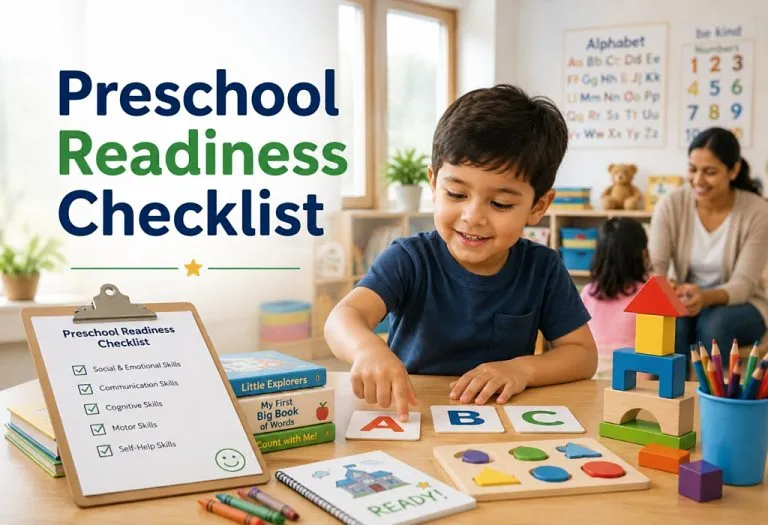
Starting preschool is a milestone that brings up questions for almost every parent: Is my child ready? Are they too young? What skills should they have first? If you’ve been wondering the same thing, you’re not alone. Every child develops at their own pace, and preschool readiness is about much more than knowing letters or numbers. It’s about having the confidence, curiosity, and everyday skills to adapt to a new environment, interact with others, and enjoy learning through play.
A preschool readiness checklist can take the guesswork out of this decision by giving you a clear picture of the skills and behaviours that support a smooth transition. In this article, we’ll walk you through a simple getting ready for preschool checklist so you can identify the signs, ease your worries, and help your child start preschool with confidence.
What Does “Ready for Preschool” Actually Mean?
Preschool readiness refers to a child’s overall developmental preparedness across four key areas: social-emotional development, language and communication, thinking and learning, and physical independence.
Children who are ready don’t need to be perfect in any of these areas. Preschool itself exists to build these skills. The goal is that your child has enough of a foundation to feel safe, engage with others, and begin learning in a group setting.
Age matters, but it’s not the whole picture. Most children enter preschool between 2.5 and 4 years old. A child who turns 3 but isn’t comfortable separating from a parent may benefit from a little more preparation at home first. A confident 2.5-year-old who communicates well and enjoys group play may be completely ready. Watch the child, not the calendar.
5 Key Areas of School Readiness
While every child develops at their own pace, there are a few core areas that play a big role in making the transition to preschool smoother. Let’s take a closer look at the five key areas of school readiness.
1. Social and Emotional Skills
This area often matters most in those early preschool weeks, because a child who can manage their emotions and connect with peers will settle in much faster.
Look for these signs:
- Can separate from a parent with some reassurance, even if there are tears at first.
- Shows interest in playing near or alongside other children.
- Can take turns during play, even imperfectly.
- Expresses basic emotions like happy, sad, or angry using words or gestures.
- Can sit quietly for a short activity like a story or song.
- Shows curiosity about new places and people.
One thing parents often overlook: your child does not need to be a social butterfly. Many children who are naturally shy or quiet do wonderfully in preschool once they have consistent routines and kind teachers. Shy is not the same as unready.
2. Language and Communication
Children need to be able to express their basic needs and understand simple directions. They don’t need to speak in complex sentences or have a large vocabulary.
Look for these signs:
- Speaks in short sentences of two to four words (“I want water,” “Go outside”).
- Understands and follows simple two-step instructions (“Put your shoes on and come here”).
- Can name familiar people, objects, and body parts.
- Can communicate basic needs like hunger, thirst, or needing the bathroom.
- Enjoys books, songs, and simple conversations.
Language development varies widely at this age, and children who speak languages other than English at home are not at a disadvantage. What matters is that your child can communicate needs in whatever way works for them.
3. Thinking and Early Learning Skills
Preschool introduces children to structured exploration. A few basic cognitive skills help them engage with activities and follow the classroom rhythm.
Look for these signs:
- Recognises some basic colours and shapes.
- Can match or sort objects by colour, shape, or size.
- Shows interest in books, puzzles, or drawing.
- Understands simple concepts like “more/less,” “big/small,” or “in/out”.
- Can count a few objects, even if not consistently accurate.
- Follows the plot of a simple story.
These skills are built through play, not formal instruction. If your child loves stacking blocks, sorting toys, or listening to stories, they’re already developing the cognitive foundation preschool builds on.
4. Physical and Motor Skills
Preschool days involve a lot of movement, art, outdoor play, and hands-on activities. Basic physical development helps children participate fully.
Look for these signs:
- Can walk, run, and climb with confidence.
- Holds a crayon or marker and makes marks on paper.
- Can stack blocks or manipulate simple toys.
- Shows basic hand-eye coordination through activities like ball play or puzzles.
- Can sit upright for short periods during table activities.
Fine motor skills like holding scissors or writing are things preschool actively teaches. Your child doesn’t need these in place before they arrive.
5. Self-Help and Independence Skills
This area surprises many parents, because it’s often what makes the daily preschool experience smooth or stressful for everyone involved.
Look for these signs:
- Can eat with some independence, even if it’s messy.
- Attempts basic dressing tasks like pulling pants up or pushing arms through sleeves.
- Has some awareness of toileting needs, even if not fully trained.
- Can wash hands with minimal guidance.
- Can carry a small bag or water bottle.
- Responds to simple routines like “clean-up time” or “snack time”.
Full toilet training is ideal before preschool, but many schools accommodate children who are still in the process. Check with your specific program about their policy.
Signs Your Child Might Need a Little More Time
Not every child is ready at the same moment, and that’s completely normal. Consider waiting a few more months if your child:
- Becomes extremely distressed during any separation, even brief ones.
- Cannot communicate a basic need like hunger or pain.
- Shows little interest in other children or in exploring new environments.
- Has not yet developed basic awareness of toileting needs.
- Struggles significantly with transitions between activities.
Getting Ready for Preschool: Simple Ways to Prepare at Home
You don’t need a formal curriculum. The preschool readiness skills checklist above translates directly into everyday activities that are already part of family life.
| Skill Area | What to Do at Home |
| Social-emotional | Practice short separations; have playdates with one or two children. |
| Language | Read together daily; narrate your activities (“Now we’re washing hands”). |
| Thinking skills | Count objects during play; sort laundry by colour; name shapes while cooking. |
| Physical skills | Let them use crayons, play with playdough, and climb at the playground. |
| Independence | Let them dress themselves, carry their bag, and clean up their toys. |
FAQs
1. What age is typically right for preschool?
Most children begin between 2.5 and 4 years old. However, the right time is based on your child’s development, not a fixed birthday.
2. What if my child isn’t ready in all five areas?
That’s okay. No child checks every box perfectly. Preschool is designed to develop these skills, not require them in advance. Look for a general readiness across areas rather than perfection in any one.
3. How long does it take to settle in?
Most children adjust within one to three weeks when routines are consistent and parents stay positive about the experience.
4. How can I reduce first-day anxiety for myself and my child?
Visit the preschool in advance if possible. Practice saying goodbye with confidence, keep goodbyes brief, and never sneak away. Children settle faster when their parents leave with a clear, calm farewell.
Preschool readiness looks different in every child, and that’s exactly as it should be. The preschool readiness skills checklist above is a practical guide, not a pass-or-fail test. If your child is curious, can communicate basic needs, enjoys being around other children, and manages some daily tasks independently, they likely have the foundation they need. And if they’re not quite there yet, a few intentional weeks at home can close most gaps.
Also Read:
Online Education for Preschoolers: A Guide for Parents
The Story of the Three Billy Goats Gruff for Kids
Amazing Facts About Tornado For Kids
Was This Article Helpful?
Parenting is a huge responsibility, for you as a caregiver, but also for us as a parenting content platform. We understand that and take our responsibility of creating credible content seriously. FirstCry Parenting articles are written and published only after extensive research using factually sound references to deliver quality content that is accurate, validated by experts, and completely reliable. To understand how we go about creating content that is credible, read our editorial policy here.
- Author