

Daycare vs Nanny: What’s Ideal for You?
Choosing childcare? Learn the key differences between daycare and a nanny to make a confident, informed decision.




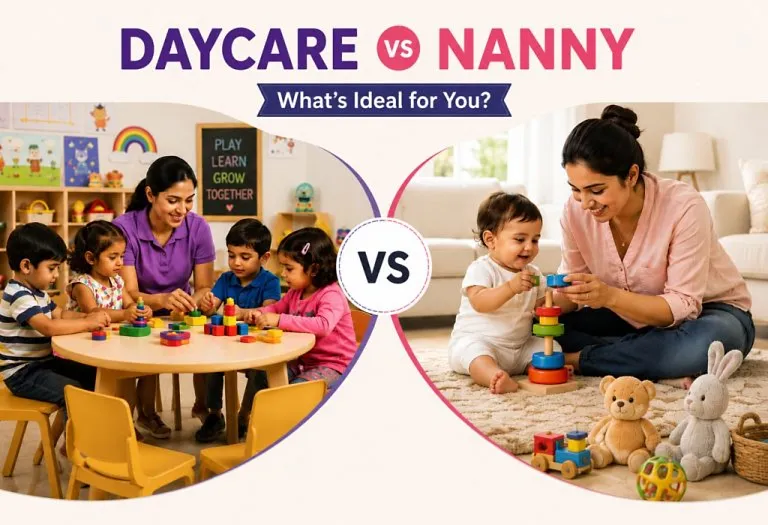
Few decisions feel as personal, or as stressful, as choosing between daycare or nanny care for your child. You’re not just picking a childcare arrangement. You’re deciding who will shape your child’s days, how your family budget will stretch, and how much flexibility you’ll have when life gets unpredictable. Both options can give children a safe, nurturing environment, but they work in very different ways, and what suits your neighbour’s family might be completely wrong for yours.
This article breaks down the real differences between daycare and nanny care, including costs, daily routines, developmental impact, and the questions parents overlook until it’s too late. By the end, you’ll have a clear framework for making a decision that fits your child, your schedule, and your finances.
What Is Daycare?
Daycare centres are licensed facilities where trained staff care for groups of children, usually organised by age. Most centres operate on fixed hours, follow a structured daily schedule, and use a curriculum that blends play, early learning activities, and rest periods. Ratios of caregivers to children are regulated by state or regional licensing boards, which means a single infant room might have one adult for every three or four babies, while preschool rooms typically allow larger groups per caregiver.
Advantages of Daycare
A good day care centre not only provides quality care but also helps children develop essential life skills from an early age. Let’s explore some of the key advantages of day care and how it benefits both children and parents (1) (2).
- Provides a safe and secure environment for children under proper supervision.
- Helps children develop social skills by interacting with other children and caregivers.
- Encourages early learning through educational activities, games, and storytelling.
- Builds communication and language skills through daily conversations and group activities.
- Promotes independence by teaching children to complete simple tasks on their own.
- Develops good habits such as sharing, cooperation, discipline, and following routines.
- Supports physical development through outdoor play and age-appropriate activities.
- Prepares children for school by introducing them to a structured learning environment.
- Boosts emotional confidence by helping children adapt to new people and situations.
What Is a Nanny?
A nanny is a caregiver who comes to your home to provide one-on-one or small-group care. Nannies can work full-time, part-time, or on a live-in basis, and their responsibilities often extend beyond supervision to include meal prep, light housekeeping tied to the child, transportation to activities, and homework help for older kids.
Families typically find nanny childcare through agencies, referrals, or online platforms that specialise in domestic staffing. Agencies usually handle background checks, reference verification, and sometimes even payroll setup, though they charge placement fees that can add up to several weeks of a nanny’s salary. Independent hires cost less upfront but shift the vetting responsibility entirely onto the parents, which means budgeting extra time for interviews, trial days, and thorough reference calls before making a final decision.
Advantages of Hiring a Nanny
Thinking of hiring a nanny but not sure if it’s the right choice? Here are some of the major advantages of hiring a nanny (3) (4).
- Provides one-on-one care and attention based on the child’s individual needs.
- Allows children to stay in the comfort and familiarity of their own home.
- Offers a flexible schedule that can suit the family’s routine and working hours.
- Reduces the risk of exposure to common illnesses compared to group childcare settings.
- Assists with light child-related household tasks, such as organising toys and preparing meals.
How Much Does Each Option Cost?
Childcare costs vary enormously depending on where you live, the age of your child, and the type of care you choose. In the United States, full-time infant daycare typically ranges from around $800 to $1,800 per month, with costs climbing higher in major metro areas like San Francisco, New York, or Boston. A full-time nanny, by contrast, often runs between $2,800 and $4,500 per month once you factor in taxes, insurance, and paid time off, making nanny cost vs daycare one of the biggest deciding factors for most families.
In India, the gap is smaller in absolute terms but still significant relative to household income. Daycare fees in metro cities such as Mumbai, Bengaluru, or Delhi generally fall between ₹8,000 and ₹25,000 per month, while a full-time nanny can cost anywhere from ₹15,000 to ₹40,000 or more depending on experience and whether the arrangement is live-in or live-out.
Is a nanny cheaper than daycare in any scenario? Yes, when you have three or more children close in age. At that point, a single nanny’s salary can end up costing less per child than paying multiple daycare tuitions, since daycare pricing rarely offers steep sibling discounts.
Hidden Costs to Watch For
The price you see isn’t always the amount you’ll end up paying. From extra fees to unexpected expenses, hidden costs can quickly add up if you’re not prepared. Here’s what to watch out for before choosing a childcare option.
- Daycare: registration fees, supply fees, late pickup penalties, and closures for holidays or staff training days that you still have to cover.
- Nanny: payroll taxes, workers’ compensation insurance, paid sick leave, backup care when your nanny is unavailable, and periodic raises to retain good caregivers.
Daycare vs Nanny
| Factor | Daycare | Nanny |
| Average cost | Lower, especially for one child | Higher, particularly for full-time or live-in care |
| Setting | Group facility outside the home | Your own home |
| Flexibility | Fixed hours, set holidays | Negotiable hours, can adapt to your schedule |
| Socialisation | Regular interaction with peers | Limited unless playdates are arranged |
| Illness exposure | Higher due to group settings | Lower, since your child avoids large groups |
| Backup coverage | Built in, other staff cover absences | Depends on backup arrangements you set up |
| Curriculum | Structured, age-based learning | Varies by caregiver, often less formal |
| Consistency | Same caregiver not guaranteed daily | Same caregiver every day |
Which Should You Choose?
If cost and built-in socialisation matter most, daycare is usually the better fit. If flexibility, one-on-one attention, and staying in your own home matter most, a nanny is usually worth the higher price tag. Families with more than one child close in age, or those needing overnight and weekend coverage, often find a nanny more practical despite the cost.
Common Mistakes Parents Make When Deciding
With so many childcare options available, it’s easy to overlook important factors during the decision-making process. Being aware of common mistakes can help you choose the option that best suits your child’s needs and your family’s lifestyle. Let’s take a look at some of them.
- Focusing only on the sticker price: A slightly cheaper daycare that requires you to leave work early for every minor illness can end up costing more in lost income than a nanny would.
- Skipping background checks: Whether you’re touring a centre or interviewing a nanny, always verify licensing, references, and any past incident reports.
- Underestimating backup care needs: Nannies get sick or take vacation too. Have a backup plan before you need one.
- Ignoring your child’s temperament: A highly social toddler may thrive in a group setting, while an easily overwhelmed baby might do better with quieter, one-on-one care.
- Not touring in person: Photos and websites rarely capture the real energy, cleanliness, or safety practices of a facility.
Questions to Ask Before Making Your Decision
Ask yourself these questions before deciding. There’s no wrong answer here, only the option that best matches your specific circumstances this year, since needs often shift as children grow.
- What’s your realistic monthly budget? If cost is the primary constraint, daycare usually wins.
- How predictable is your work schedule? Frequent travel or irregular hours favour a nanny.
- How many children need care? Two or more children often tips the maths toward a nanny.
- Does your child have specific medical or developmental needs? One-on-one care may be safer and more manageable.
- How important is early socialisation to you? If it’s a priority, daycare offers a natural advantage.
- Do you have backup support nearby? Family members close by can offset the risks of relying on a single nanny.
FAQs
1. Is a nanny or daycare better for a newborn?
Both can work well for newborns, but many parents prefer a nanny or family care for the first few months to limit illness exposure before starting daycare later.
2. Can I switch from a nanny to daycare later, or vice versa?
Yes, and many families do exactly this as their needs change, moving from a nanny during infancy to daycare once a child is ready for more group interaction.
3. Do nannies need to be licensed?
Licensing requirements vary by location. Many families instead rely on background checks, reference verification, and sometimes agency vetting rather than formal licensing.
4. What do daycares do with infants?
Daycares provide infants with a safe, caring, and stimulating environment that supports their early growth and development. Caregivers follow each baby’s individual routine for feeding, diaper changes, and naps while engaging them in age-appropriate activities such as tummy time, singing, storytelling, sensory play, and gentle interaction.
Choosing between daycare and a nanny isn’t about finding the objectively superior option. It’s about matching your child’s needs, your family’s budget, and your daily logistics with the arrangement that supports all three at once. Whatever you choose, revisit the decision periodically, since what works for a six-month-old rarely stays the right fit for a six-year-old.
Also Read:
Epsom Salt Bath for Babies and Kids – Benefits & Risks
Shaving a Baby’s Hair To Make It Thicker – Fact or Myth
Essentials to Keep Your Baby’s Skin Protected This Winter
Was This Article Helpful?
Parenting is a huge responsibility, for you as a caregiver, but also for us as a parenting content platform. We understand that and take our responsibility of creating credible content seriously. FirstCry Parenting articles are written and published only after extensive research using factually sound references to deliver quality content that is accurate, validated by experts, and completely reliable. To understand how we go about creating content that is credible, read our editorial policy here.
- Author


Related Articles
-

Sponge Bath vs. Tub Bath For Your Baby
-
Newborn Care Immediately After Birth - What to Expect
-
Homemade Baby Care Products - Benefits and Recipes
-
Moms, Don't Forget These Precautions When Taking Your Baby For The Pulse Polio Vaccine!
-
How to Handle Your Fussy Baby
-
Babysitter Checklist - What You Should Put On It








.svg)