

Can You Scuba Dive While Pregnant? Safety & Risks




In this Article
- What Is Scuba Diving?
- Is It Safe to Scuba Dive While You’re Pregnant?
- Harmful Effects of Scuba Diving During Pregnancy
- How Long Should I Wait to Scuba Dive After My Delivery?
- What Are Safe Alternatives to Scuba Diving While Pregnant?
- FAQs
View More
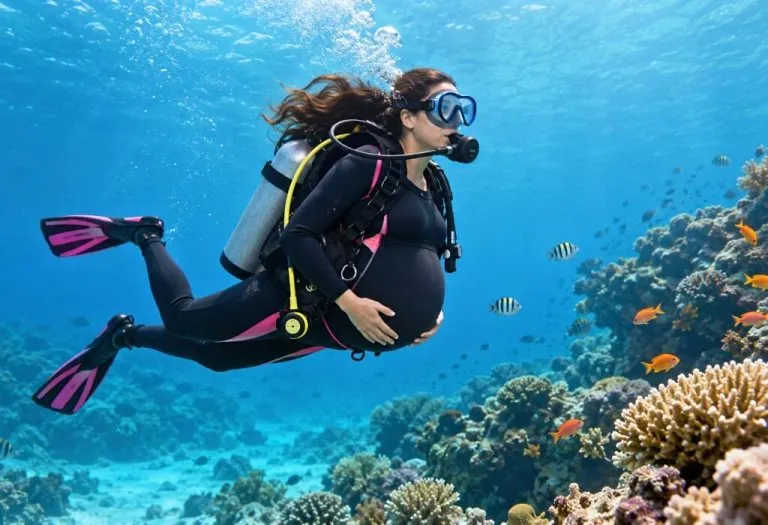
When it comes to scuba diving in pregnancy, a majority of institutions, such as the American College of Obstetricians and Gynecologists and Divers Alert Network (DAN), recommend no diving during the course of pregnancy (1) (2). The reason is simple: fetal and maternal safety. But can you scuba dive while pregnant if all safety measures are taken for accidental drowning? The main reason behind not recommending scuba diving while pregnant is not the gear; it’s something more instrumental in scuba diving—the underwater pressure. Before you scratch your head to understand the dynamics of pressure and the underwater sport and how it can affect the delicate journey of pregnancy, we recommend reading this article on scuba diving and pregnancy.
What Is Scuba Diving?
Swimming underwater with a constant air supply and appropriate equipment is what scuba diving entails. This enthralling sport allows you to study life under the ocean’s surface. Many individuals also love scuba diving because it is therapeutic, enabling them to disconnect from everything and relax!
Is It Safe to Scuba Dive While You’re Pregnant?
Scuba diving while pregnant is generally not advised. Even if the risks are minimal, it is best to avoid diving during the first few weeks. The fetus takes oxygen from the placenta, as the fetus’s lungs are still not fully developed. If the mother dives while pregnant, the baby could suffer from decompression sickness or hyperbaric oxygen exposure because the bubbles created in the water might reach critical organs such as the brain and the heart. The fetus can experience the effects of decompression sickness and even suffer fetal complications, which could cause premature delivery.
Even if the mother is in a no-decompression zone, the unborn baby is susceptible to fetal decompression illness (DCI) (3). While the mother’s lungs safely filter out these bubbles, they can travel to the fetus, causing fatal complications. If a pregnant woman experiences carbon monoxide poisoning, she will have to undergo treatment in a hyperbaric chamber.
However, a pregnant lady should still see her doctor before diving. Diving is usually not a brilliant idea if you are six to thirteen weeks pregnant. Most women do not know they are pregnant until six weeks or later. As a result, having patience until the fetus is delivered before scuba diving is a brilliant idea.
Harmful Effects of Scuba Diving During Pregnancy
In some cases, scuba diving is dangerous while pregnant. Some of them are as follows:
- Diving should be avoided during the first few weeks of pregnancy. There is little chance of prenatal abnormalities, but further study is required to understand the precise amount of risk.
- Since the placenta provides oxygen to the fetus, the dissolved nitrogen in the mother’s blood might enter it. This may result in decompression sickness in the fetus, leading to issues including limited growth and deformity (4).
Furthermore, pregnant women who develop decompression sickness should avoid diving. The placenta is a thin membrane that allows the unborn infant to access its essential organs. It may also cause early labour, which may end in the baby’s death. Furthermore, there is a chance of getting heart disease or brain damage.
- Breastfeeding moms should avoid scuba diving when pregnant. It may affect the mother’s uterus and the baby.
Consequently, to prevent complications during pregnancy, women should always adhere to their PADI Open Water Diver Course criteria. However, it is also crucial to realise that the consequences of scuba diving do not stop after the first few weeks of pregnancy.
Although human data for scuba diving when pregnant is not extensive, women are advised to avoid diving when pregnant. However, unintentional recreational scuba diving while pregnant in the first trimester or in early pregnancy does not result in pregnancy termination (3).
How Long Should I Wait to Scuba Dive After My Delivery?
Before you go diving, it’s critical to learn the medical guidelines for birthing. Most women should avoid it for the first eight weeks, then wait three to four weeks after giving birth. However, depending on delivery and complications, this time might vary considerably. Your doctor will be able to provide particular suggestions for you. In general, women may safely return to diving three to four weeks after giving birth.
Most women who have had a cesarean birth should wait at least four to six weeks before becoming pregnant again. Those who had twins or had issues or a preterm delivery should wait eight to twelve weeks. Survivors of miscarriages should refrain from driving until they have fully recovered physically. According to a recent poll of breast cancer survivors, there are no restrictions on diving. In many situations, women may resume diving soon after giving birth, but it’s vital to check with your doctor to make sure you’re ready.
Most pregnant women should avoid diving for four to six weeks. The suggested wait time for diving is determined by the kind of birth and the baby’s health. While diving right after delivery is not recommended, it is advisable to avoid it. There is no hard and fast rule for how long one should wait after birth. However, it is essential to note that you should contact your doctor before scuba diving after pregnancy.
What Are Safe Alternatives to Scuba Diving While Pregnant?
While scuba diving is off the charts during pregnancy, you can engage in these safe alternatives to scuba diving while pregnant:
- Swimming during pregnancy offers various advantages, including the benefits of a terrific workout, even if you are not an athlete. “Can you dive when pregnant?” is a crucial question. Swimming while pregnant is, thankfully, both safe and fun (5). Swimming relieves pelvic and back discomfort. You’ll feel less tension on your lower back and sciatic nerve since you’re weightless in water.
- Aqua yoga is another gentle activity that helps with focused breathing in water.
- Aquatic exercises under the supervision of a professional can help with better control of the weight of both mother and newborn, ease lower back pain, ensure fitness mobility, and improve cognition (6).
- Water walking, like walking in the pool, also helps with mobility, weight distribution, and less pressure on your joints (7).
FAQs
1. Can you scuba dive while pregnant?
No. Scuba diving is generally not advised during pregnancy because pressure changes and decompression can pose potential risks to the fetus. Since medical evidence is limited for scuba diving in pregnancy, there is no established safe depth, duration or diving schedule during pregnancy.
2. What happens if I scuba dived before knowing I was pregnant?
If you went scuba diving and later came to know that you are pregnant, it is advised not to panic and then consult your doctor and inform them about the recent activities. They can assess your medical health and decide whether further monitoring is required.
4. Is scuba diving safe during the first trimester?
Scuba diving in the first trimester of pregnancy is not considered safe for the baby’s health. The potential effects of decompression on the developing baby are a big concern.
5. Can I snorkel instead of scuba diving while pregnant?
Similar to scuba diving, snorkelling also involves going underwater, but it keeps you floating on the surface and not so deep in the ocean. However, when it comes to pregnancy, it is wise to first consult your doctor and get the go-ahead after getting all your vitals checked to prevent any complications after indulging in any activity.
You are pregnant and want to do some Scuba diving! That is great, but you need to be cautious and follow the above-mentioned few Scuba diving tips. Furthermore, if you are worried about your condition, make an appointment with your doctor.
Also Read:
Cycling in Pregnancy
Jumping while Pregnant
Bowling during Pregnancy
Was This Article Helpful?
Parenting is a huge responsibility, for you as a caregiver, but also for us as a parenting content platform. We understand that and take our responsibility of creating credible content seriously. FirstCry Parenting articles are written and published only after extensive research using factually sound references to deliver quality content that is accurate, validated by experts, and completely reliable. To understand how we go about creating content that is credible, read our editorial policy here.
- Author


Related Articles
-

Mouth Ulcers During Pregnancy - Causes, Symptoms & Treatment
-
When Should You Call Your Doctor During Pregnancy?
-

Tips for Choosing Comfortable Footwear for Pregnancy
-
Low Lymphocytes during Pregnancy
-
How to Sleep During Pregnancy in Third Trimester - Positions & Safety Tips
-
Iron Supplements During Pregnancy - Benefits and Risks