
Is It Safe to Get a Vaccination for Whooping Cough During Pregnancy?
The Whooping Cough (TDAP) vaccine during pregnancy helps protect both mother and baby by reducing the risk of serious infection in newborns.




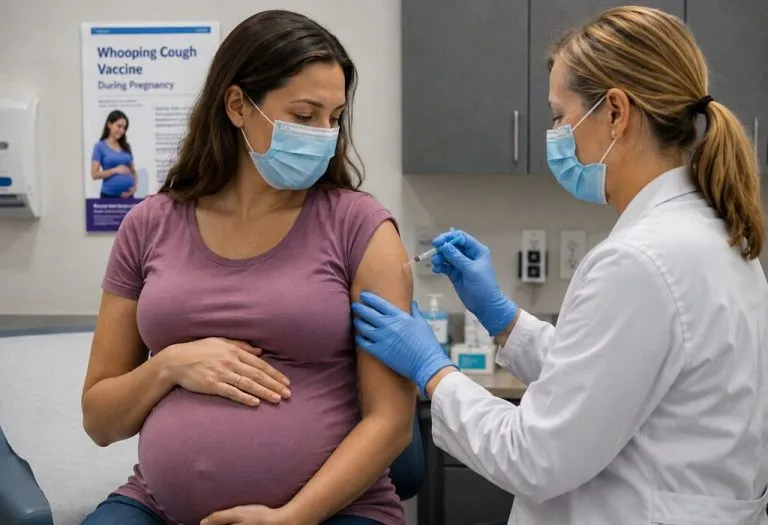
Whooping cough immunisation in pregnancy is recommended to help protect newborns from a serious infection during the first few months of life. The vaccine, known as Tdap, protects against whooping cough (pertussis), tetanus, and diphtheria, while also helping your body pass protective antibodies to your baby before birth. The CDC recommends the Tdap vaccine during every pregnancy, preferably between 27 and 36 weeks, to maximise the transfer of protective antibodies to the baby (1). This is particularly important because infants are most vulnerable to whooping cough before they are old enough to receive their full primary vaccination series. But is the vaccine safe during pregnancy? This article explains the benefits of the whooping cough vaccine in pregnancy, its safety, ideal timing, and what you can expect after vaccination.
What Is Whooping Cough?
As mentioned above, whooping cough is a serious respiratory infection caused by bacteria. It can affect people at any age – whether they are young or adults. This infection is not dangerous for adults; however, it can be fatal for infants and children under the age of 5. The symptoms of this infection start showing after 7-10 days of being exposed to it (2).
Is Whooping Cough Dangerous During Pregnancy?
Whooping cough during pregnancy may not be harmful for a mother-to-be, but it can be extremely dangerous for the unborn baby. Sometimes, this infection may lead to urinary incontinence or even fracture in ribs in the pregnant woman, but it does not harm her in any significantly dangerous way. However, it can affect the health of the baby. This condition may pass on to the baby. In rare cases, this condition can also prove fatal, especially for babies less than 2 months old (3).
Can You Get a Vaccination for Whooping Cough While Pregnant?
Yes, whooping cough usually affects young children with weakened and developing immune systems. Pregnant women are also at a risk of developing this condition more than any other adults. The rapid hormonal changes during pregnancy weaken the immune system greatly, hence a women may get this condition (4).
Why Do You Need to Get Whooping Cough Vaccine in Pregnancy?
Whooping cough can be particularly dangerous for newborns. Babies may develop severe coughing, breathing difficulties, pneumonia, and other complications if they contract the infection. Since protection from their routine childhood vaccines takes time to build, vaccination during pregnancy offers an important layer of protection in those early weeks (5).
It can also reduce the chance of a mother passing the infection to her baby after birth. By getting vaccinated as recommended, you can help lower your baby’s risk of developing severe whooping cough when they are most vulnerable.
When and How to Get a Whooping Cough Vaccination While Pregnant?
Women who have not been vaccinated against whooping cough prior to their pregnancy should wait until the late second or third trimester to get a vaccination. Women who have just delivered a child and have not had a vaccination for whooping cough during or before the pregnancy should be vaccinated soon after the pregnancy to avoid complications (6). The whooping cough vaccine does not provide lifelong immunity from the condition and may require boosters every 10 years. Immunisation vaccines are the most effective way of curbing this condition
Can a Vaccine for Pertussis During Pregnancy Lead to Whooping Cough?
While there is a possibility that the whooping cough vaccine can cause whooping cough in pregnant women, the chances are extremely low. There has nearly never been a case where this vaccine has caused the condition to pregnant women or adults and children.
Which Whopping Cough Vaccine Will I Get?
During pregnancy, the whooping cough vaccine you will typically receive is called Tdap, which stands for tetanus, diphtheria, and acellular pertussis. It is specifically designed for adolescents and adults and provides protection against all three infections (7).
Will a Baby Need to Be Vaccinated at 2 Months If the Woman Had Been Vaccinated Against Pertussis During Pregnancy?
Yes, regardless of whether a woman had the vaccine during pregnancy or not, the baby will need to be vaccinated for this condition. The vaccines for a mother may not provide enough antibodies to the child. Doctors recommend that you follow the NHS vaccination schedule for your child (8).
Side Effects of Whooping Cough Vaccine in Pregnancy
Yes, there are numerous side effects of this vaccine, which are mentioned below (9):
- Mild swelling
- Redness at the injection point
- Tenderness at the injection point
- Loss of appetite
- Mild fever
- Skin irritation at the injection site
Who Should Not Get a Vaccination for Pertussis?
Vaccination for whooping cough during pregnancy is recommended for nearly everyone who is not allergic to the shot itself. The chances of you being allergic to this shot are close to zero. Everyone regardless of the age should have a whooping cough vaccine and its subsequent booster shots on time. It isn’t just the mother, everyone who comes close to interacting with the baby should get a shot, as whooping cough can be very dangerous. The condition is also very contagious and can be contracted through the air or by smear contact. So, you must ensure that your baby’s caregivers also receive a vaccination for pertussis.
FAQs
1. Can you get Pertussis vaccine and flu vaccine at the same time during pregnancy?
Yes, there has been no evidence that pertussis and flu vaccines counteract each other in any way. So, you can have both vaccines at the same time. It is important that you stick to the vaccination schedules and do not delay one shot for another.
2. If a woman had received a vaccination for Pertussis in her childhood, does she need to get vaccinated again during her pregnancy?
Yes, the pertussis vaccine is not a lifelong immunity shot. It requires boosters every 10 years or so. Doctors recommend that you stay on an active NHS vaccine schedule for whooping cough for your child and you get a booster when you require it. For more accurate information about vaccine boosters for whooping cough, talk to your medical professional.
3. If you were vaccinated against whooping cough in your previous pregnancy, do you need to be vaccinated again?
Yes, to protect your baby from this condition at birth, doctors recommend that a mother must get vaccinated in the late second or third trimester for whooping cough. This will ensure your baby does not contract the condition.
4. What are the dangers of whooping cough vaccine in pregnancy?
The whooping cough vaccine is generally considered safe during pregnancy. Serious side effects are rare, while some people may experience mild soreness, redness, or swelling at the injection site, along with a low-grade fever or tiredness.
5. What is the best time to get whooping cough vaccine in pregnancy?
The best time to get the whooping cough vaccine in pregnancy is usually between 27 and 36 weeks, with vaccination earlier in this window often preferred to allow enough time for protective antibodies to pass to the baby before birth.
Whooping cough is characterised by the “Whoop” sound after a cough, this symptom may not exist in adults but is very prominent in young children. A woman may also be affected by this condition during pregnancy, which is why, you must look out for its symptoms and seek medical assistance immediately.
Also Read:
Consecutive Test during Pregnancy
Doing Yoga Inversions in Pregnancy
Benefits and Side Effects of Prednisone during Pregnancy
Was This Article Helpful?
Parenting is a huge responsibility, for you as a caregiver, but also for us as a parenting content platform. We understand that and take our responsibility of creating credible content seriously. FirstCry Parenting articles are written and published only after extensive research using factually sound references to deliver quality content that is accurate, validated by experts, and completely reliable. To understand how we go about creating content that is credible, read our editorial policy here.
1. Centers for Disease Control and Prevention – Tdap Vaccination for Pregnant Women
2. Mayo Clinic – Whooping cough
3. The Royal Children’s Hospital – Whooping cough
4. NHS – Whooping cough vaccination in pregnancy
5. National Foundation for Infectious Diseases – Vaccines during Pregnancy
7. Centers for Disease Control and Prevention – Tdap (Tetanus, Diphtheria, Pertussis) Vaccine VIS
- Author

Related Articles
-
Ajwain in Pregnancy: Benefits, Side Effects, and Precautions
-

Best Gift Ideas for a Gender Reveal Party
-
Makeup During Pregnancy: Is It Safe for You and Your Baby?
-
Appendicitis in Pregnancy - Causes, Symptoms & Treatment
-

Grandma Shower: Purpose, Ideas, and Etiquettes
-
Things to Take Care of Before Hitting the Maternity Ward