
Working Mom vs Stay-at-Home Mom: Benefits and Challenges
Working mom or stay-at-home mom? Compare the benefits, challenges, and realities of both to find the right fit for your family.




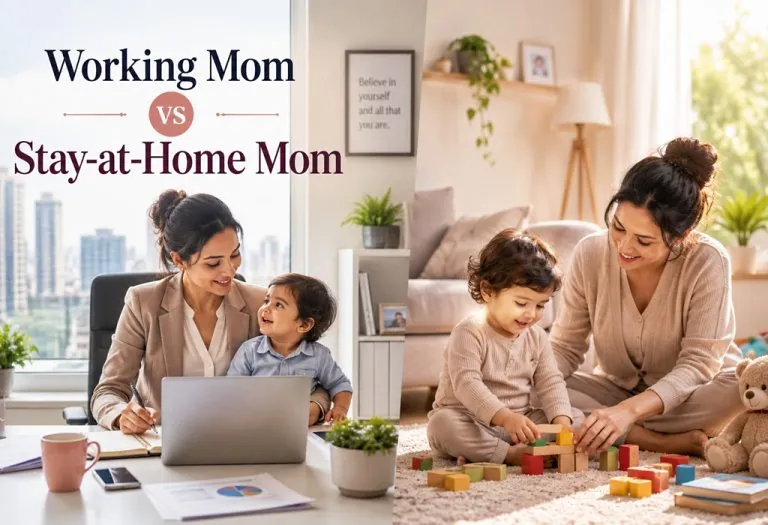
Few decisions weigh on new and experienced parents quite like the working mom vs stay at home mom debate. Some families make the choice out of necessity, others out of preference, and many land somewhere in between with part-time work or flexible arrangements. There is no single correct answer, but understanding what each path actually involves, day to day, financially, and emotionally, can help you decide what will work best for your household.
This article breaks down the real benefits and challenges of both roles, without judgement, so you can make a decision that fits your family rather than someone else’s idea of what a “good mom” looks like.
What Is a Working Mom?
A working mom is a mother who balances raising her children with paid employment. She may work full-time, part-time, remotely, freelance, or run her own business while managing family responsibilities. Every working mom’s routine looks different, but most juggle professional commitments alongside childcare, household tasks, and family life.
Benefits of Being a Working Mom
Choosing to work while raising children isn’t always easy, but it can bring valuable opportunities for both you and your family. Below are some of the most important benefits to consider.
- Financial Stability and Independence: A second income (or the primary income, in single-parent households) reduces financial stress and builds savings for things like education, healthcare, and retirement. Many mothers also value the independence that comes with earning their own money.
- Career Growth and Identity: Staying professionally active keeps skills sharp and opens the door to promotions, raises, and long-term career security. For many women, work is also a meaningful part of their identity, separate from parenting.
- Modelling Independence for Kids: Children of working parents often grow up seeing firsthand what a strong work ethic and goal-setting look like, which can shape their own ambitions later in life.
- Access to Benefits: Employer-sponsored health insurance, retirement contributions, and paid leave are practical advantages that stay-at-home parents typically have to source independently.
Challenges of Being a Working Mom
Being a working mom often means wearing many hats at once, and that can take a toll over time. While every family’s experience is different, there are several common challenges that many working mothers encounter. Here’s a closer look at them.
- Time Scarcity and Guilt: Balancing meetings, school pickups, and bedtime routines is genuinely difficult, and many working moms describe persistent guilt over missed moments, even when the trade-off is a good one for the family.
- Childcare Costs and Logistics: Daycare, nannies, or after-school programs add significant expense and require backup plans for sick days, school holidays, and unexpected closures.
- Mental Load: Working moms frequently manage a second, invisible job at home, coordinating schedules, meals, and appointments on top of their paid role, which can lead to burnout if unaddressed.
What Is a Stay-at-Home Mom?
A stay-at-home mom is a mother whose primary role is caring for her children and managing the household rather than working in paid employment outside the home. Her daily responsibilities often include childcare, meal preparation, household organisation, scheduling appointments, and supporting her children’s education and activities.
While stay-at-home moms may not earn a traditional salary, their role involves significant time, effort, and skills that contribute to the family’s well-being.
Benefits of Being a Stay-at-Home Mom
Being a stay-at-home mom may not come with a paycheck, but the role has immense value. Here are some of the most important benefits to consider.
- More Present, Unstructured Time With Kids: Stay-at-home moms are typically available for school events, sick days, and the small, unscheduled moments that build connection, without needing to negotiate time off.
- Flexible Daily Routine: Without a fixed work schedule, families often have more control over nap times, activities, and how the day unfolds, which can reduce stress for younger children in particular.
- Lower Childcare Costs: Without the need for daycare or after-school care, families save a significant, recurring expense, which can partially offset the loss of a second income.
- Hands-on Involvement in Early Development: Many stay-at-home moms feel more directly involved in early milestones, routines, and habits, especially during the first few years.
Challenges of Being a Stay-at-Home Mom
While staying home with your children can be incredibly rewarding, it also comes with its own set of challenges. Here are some of the most common challenges stay-at-home moms face (1).
- Financial Dependence: Giving up a salary affects the household budget, retirement savings, and can create financial vulnerability if circumstances change, such as divorce or job loss for the working partner.
- Social Isolation: Without the built-in adult interaction of a workplace, stay-at-home moms can feel isolated, particularly in the early years before children start school or structured activities.
- Career Gap Concerns: Time away from the workforce can make re-entry harder later, and some mothers worry about outdated skills or reduced earning potential if they return to work.
- Identity Shifts: Some stay-at-home moms report a loss of the personal identity and sense of accomplishment that a career once provided, which can affect self-esteem over time.
Stay at Home Mom vs Working Mom: Pros and Cons at a Glance
| Factor | Working Mom | Stay-at-Home Mom |
| Household income | Contributes a second income or is the sole earner | Relies on one income (or savings) |
| Time with children | Limited to mornings, evenings, and weekends | Available throughout the day |
| Career growth | Continues building skills and advancement | Paused, with a potential re-entry gap |
| Daily flexibility | Structured around work hours | More adaptable to the child’s needs |
| Social interaction | Built into the workplace | Requires intentional effort |
| Childcare costs | Ongoing expense | Minimal to none |
| Employer benefits | Health insurance, retirement, paid leave | Must be sourced independently |
Myth vs Fact
Parenting choices are often surrounded by opinions, but not all of them are true. Here are some of the biggest misconceptions about working and stay-at-home moms.
Myth: Stay-at-home moms don’t “really” work.
Fact: Managing a household and raising children full-time is a demanding, unpaid job that often runs well beyond a standard eight-hour day.
Myth: Working moms are less bonded with their children.
Fact: Research on attachment consistently shows that the quality of interaction, not the number of hours logged, drives a strong parent-child bond (2).
Myth: One path guarantees better outcomes for kids.
Fact: Studies comparing children of working and stay-at-home mothers find no consistent long-term advantage tied to employment status alone; parenting quality matters far more (3).
How to Decide What’s Right for Your Family?
Instead of comparing yourself to other families, work through these questions together as a couple or as a single parent weighing the decision:
- Can your household comfortably manage on one income, including savings and emergencies, or does the second income cover essentials rather than extras?
- What does your support system look like? Nearby family, reliable childcare, or a flexible employer can shift the calculation significantly.
- How do you personally feel about work? Some mothers find fulfillment and stress relief in their careers, while others feel most at ease focused on home life. Neither reaction is wrong.
- Is there a middle ground? Part-time work, remote roles, freelancing, or job-sharing can offer a blend of income and presence that a strict either/or choice doesn’t capture.
- What does your child actually need right now? A newborn, a toddler, and a school-age child often call for different levels of hands-on presence.
There is rarely one static answer. Many families revisit this decision as circumstances, finances, and children’s needs change over time, and stay at home mothers versus working mothers is often less a permanent identity than a phase that shifts as life does.
FAQs
1. Is it better for children to have a stay-at-home mom or a working mom?
Neither is definitively better. Child development research points to parenting quality, consistency, and emotional availability as the strongest predictors of a child’s wellbeing, not whether a mother works outside the home.
2. Do working moms feel more guilt than stay-at-home moms?
Both groups report guilt, just about different things. Working moms often feel guilty about missed time, while stay-at-home moms sometimes feel guilty about not contributing financially or “doing enough” at home.
3. Can you switch between being a working mom and a stay-at-home mom?
Yes. Many mothers move between the two roles, or blend them through part-time or flexible work, as their family’s financial needs and children’s ages change.
Choosing whether to work or stay home isn’t really about which role is objectively better, because both come with real benefits and real trade-offs that depend heavily on your family’s finances, support network, and personal priorities. What matters most for your children isn’t the label on your daily schedule but the consistency, warmth, and attention you bring to your time together, however much or little of it there is. Whether you choose to work, stay home, or find a flexible middle ground, the most sustainable choice is the one that keeps you, and your family, feeling supported rather than stretched thin.
Also Read:
Breastfeeding as a Working Mom: Everything You Need to Know
Was This Article Helpful?
- Author


Related Articles
-

Secure Your Child’s Future With These 5 Financial Tips
-
100+ Thanksgiving Quotes, Wishes and Messages for Family & Friends
-
National Sisters Day 2026 – Date, History, Significance, Quotes and Wishes
-
This is What Your Baby's Zodiac Sign Reveals About His Personality!
-
Birth Celebrations Across the Globe
-
How to Make Liquid Hand Soap at Home