
Cot vs Crib: Key Differences and Which One to Choose
Understand the key differences between a cot vs crib, including their features, benefits, and which option is best for your baby.




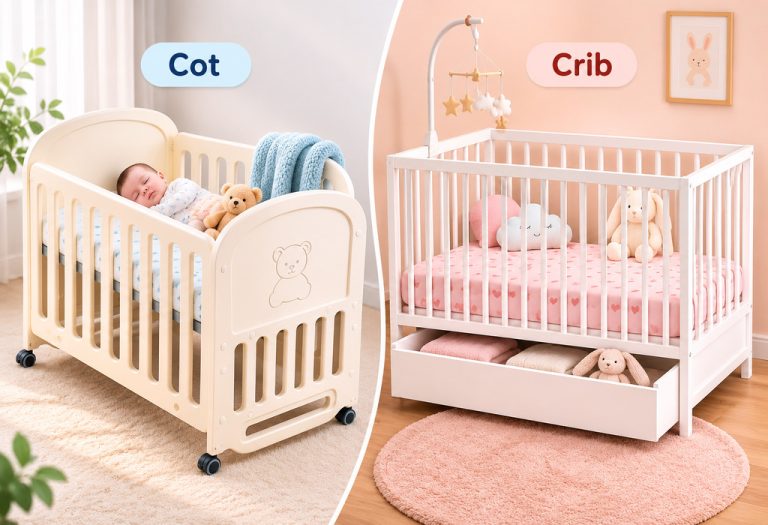
Key Takeaways
- A crib is usually the compact baby bed, while a cot is usually larger with higher sides and a longer lifespan.
- Both follow the same safe sleep rules: a firm, flat mattress that fits snugly and nothing soft inside.
- Slats should be no more than 2 3/8 inches (about 6 cm) apart.
- The NHS advises a separate cot in the parents’ room for at least the first 6 months.
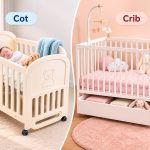
Crib vs cot is mostly a choice between a compact bed for the early months and a larger bed built to last into the toddler years. The difference between crib and cot designs is small in some regions, where both words mean the same bed, so size and side height matter more than the name. Both beds need the same safe sleep basics: a firm mattress that fits snugly and nothing soft inside. This guide for parents of newborns and babies under two covers definitions, pros and cons, safety checks, choosing tips and common questions.
|
Key Facts Room sharing rule: The NHS advises placing a baby in a separate cot in the same room for every sleep for at least the first 6 months. Slat gap: Crib slats should be no more than 2 3/8 inches (about 6 cm) apart, so a baby’s body cannot fit through. EN 716: This European standard covers children’s cots for domestic use with an internal length greater than 900 mm, up to 1,400 mm. Beds smaller than that may fall outside it, so read the product description for compliance details. |
What Is a Crib?
A crib is a compact, fully enclosed baby bed with slatted sides, designed for newborns and babies until they start to climb. Cribs are particularly suitable for smaller rooms and the early months of a baby’s life. Some regions, including the UK, use the word cot for the same bed, so compare dimensions and features rather than the name.
Cribs are available in several designs, each offering different features to suit a family’s space, lifestyle, and long-term needs. The most common types include:
- Fixed crib: A rigid frame with slatted sides that stays in one place, which keeps assembly simple.
- Portable or folding crib: A frame that folds flat for storage or travel, so check that the mattress is firm and flat.
- Convertible crib: A crib that later turns into a toddler bed, which extends its use.
Benefits of Crib
Cribs offer several practical advantages during the newborn stage, including:
- Space saving: A crib fits small rooms and sits beside a parent’s bed.
- Easy to move: Lighter frames shift between rooms, and folding designs travel well.
Limitations of Crib
Despite these advantages, cribs also have some limitations, especially as babies grow and their sleeping needs change:
- Shorter use: A baby who sits, pulls up or climbs may outgrow a crib quickly, so a second bed comes sooner.
- Fewer adjustments: Many cribs offer limited mattress height settings, which makes lifting a growing baby harder.
What Is a Cot?
A cot is a larger baby bed with higher sides, built for longer use from birth into the toddler years. It usually offer several mattress height settings, and many convert into a toddler bed. A cot needs more floor space than a crib, so measure the room first.
Benefits of Cot
Cots offer several practical advantages as babies grow, particularly in terms of durability and adjustability:
- Longer lifespan: Many cots convert into a toddler bed, so one frame lasts past the baby stage.
- Adjustable mattress height: A high setting helps with a newborn, and a low setting suits a baby who stands.
Limitations of Cot
However, their larger size and sturdier construction can make cots less convenient in smaller bedrooms:
- Needs floor space: A cot takes more room, so measure the bedroom and the doorway before ordering.
- Harder to move: Heavier frames are awkward to shift, and a large cot may not fit beside the parents’ bed.
Crib vs Cot: Key Differences
The difference between baby crib and cot designs shows mainly in size, side height and lifespan. This table compares nine features.
| Feature | Crib | Cot |
| Size | Usually compact and shorter | Usually larger with more internal length |
| Side height | Often lower slatted sides | Usually taller sides |
| Mattress height | Often one or two settings | Usually several settings |
| Typical use | Newborn stage to early toddler years | Birth through the toddler years, longer as a cot bed |
| Conversion | Some convert to a toddler bed | Many convert to a toddler bed |
| Moving it | Lighter and easier to move | Heavier and harder to move |
| Floor space | Suits small rooms | Needs a larger room |
| Upfront cost | Often lower | Often higher |
| Safe sleep rules | Firm, flat mattress, snug fit, nothing soft | Same rules apply |
Crib and Cot Safety Standards: What to Check Before You Buy
Every crib and cot should pass the same seven checks. Compare the product description against this list.
| Safety check | What to look for | Why it matters |
| Slat gap | No more than 2 3/8 inches between slats | A baby cannot slip through |
| Mattress fit | A firm mattress that fits tightly | No gap traps a baby |
| Mattress surface | A firm, flat mattress with a fitted sheet | The surface stays flat and firm |
| Soft items | No bumpers, pillows, duvets or loose blankets | The baby’s face stays clear |
| Hardware | All screws and brackets present and tight | Loose parts weaken the frame |
| Named standard | EN 716 in the description | Points to a cot standard |
| Finish and edges | Smooth, rounded edges and no peeling paint | Protects skin and mouths |
Things to Keep in Mind When Picking a Crib or a Cot
Before choosing a crib or cot, consider a few important factors to ensure the bed meets your baby’s needs and fits your home. These include:
- Check size and room fit: Compare the internal length and width in the product description with your room, leaving space to reach the baby.
- Check the safety features: Look for slats no more than 2 3/8 inches apart, a snug mattress fit and no missing screws.
- Check the mattress and finish: Confirm whether a mattress is included, and that it is firm and flat with a smooth, rounded finish.
- Look for a named standard: Look for EN 716 in the description, which simply means the bed was made as a children’s cot.
Once the criteria match, shop cots and cribs on FirstCry, a shopping destination for baby and kids essentials, and read each product description for dimensions, mattress details and any standard. If a listing leaves these out, choose another.
Cot vs. Crib: Which Suits Your Baby Best?
A cot suits most families who want one bed for several years, while a crib suits families with limited space who want a compact bed for the early months. In the baby crib vs baby cot decision, room size, budget and planned years of use carry the most weight. Choose a crib for a small bedroom, easy moving and room sharing in the first months. Choose a cot for a larger room, adjustable mattress heights and a bed that converts later. Whichever bed you pick, the safe sleep basics stay the same: a firm, flat mattress, a snug fit, narrow slat gaps and nothing soft inside. The AAP also advises a firm, flat mattress with a fitted sheet.
FAQs
1. Can a newborn sleep in a crib or cot from birth?
Yes, a newborn can sleep in either bed from birth if it has a firm, flat mattress and nothing soft inside. The NHS advises a separate cot in the parents’ room for at least 6 months.
2. How long can a baby use a cot bed?
A cot bed can stay in use from birth into the toddler years because it converts into a small bed. Check the maker’s age, height or weight limit in the product description.
3. When should a baby move from a crib to a toddler bed?
A baby should move to a toddler bed once the child can climb out or passes the height or weight limit in the manual. Do not wait, because climbing out risks a fall.
4. What mattress size fits a standard crib or cot?
Mattress size depends on each bed’s inner frame, so match it to the internal length and width in the product description. The CPSC asks for a tight fit with no trapping gap.
5. Should I buy a cot or a bassinet first?
A cot suits parents who want one bed from birth, while a bassinet is smaller and outgrown within months. Buy a cot first if space and budget allow, and check any bassinet’s weight limit.
6. What materials are best for a crib or cot?
Sturdy solid wood or metal frames with smooth, rounded edges suit most families. Check that the finish is described as suitable for children, and avoid cracked or peeling paint.
7. Does a crib or cot come with a mattress?
Some cribs and cots include a mattress and many do not, so read the product description. Any mattress should be firm, flat and snug against the frame.
8. Should my baby sleep in a crib in my room?
Yes, a baby should sleep in a separate cot in the parents’ room for at least the first 6 months, according to the NHS. Keep the cot clear of pillows, duvets and bumpers.
9. Where to buy baby cribs and cots online?
Buy from a seller that lists internal dimensions, mattress details, age or weight limits and any standard such as EN 716. On FirstCry, you can compare cots and cribs and read each product description against those points.
10. Which are the top brands of baby cribs and cots?
No single brand of baby cot or crib suits every baby, so compare slat gap, mattress fit, finish, standard details and size. On FirstCry, read each listing against those points to find a brand that matches them.
A crib is the compact first bed, while a cot is the larger bed built to last longer. Both need a firm, flat mattress, a snug fit, slats no more than 2 3/8 inches apart and nothing soft inside. Before buying, check the size, mattress details, finish and any named standard such as EN 716. Missing details in a listing are a reason to look elsewhere. Ask your paediatrician if you are unsure which bed suits your baby.
Was This Article Helpful?
- Author


Related Articles
-

Amazing Fish Facts for Kids
-

6 Tips to Fill The Generation Gap Between Parent and Child
-

15 Safe & Effective Home Remedies for Cold While Pregnant
-

Eliana Name Meaning and Origin
-

How Talking and Listening Skills Develop in Preschoolers
-

Low Body Temperature in Babies – Causes, Symptoms and When to Visit Doctor