
11 Breastfeeding Essentials to Make Nursing Easier
Choose the right breastfeeding essentials to make nursing more comfortable, convenient, and manageable for new mothers.




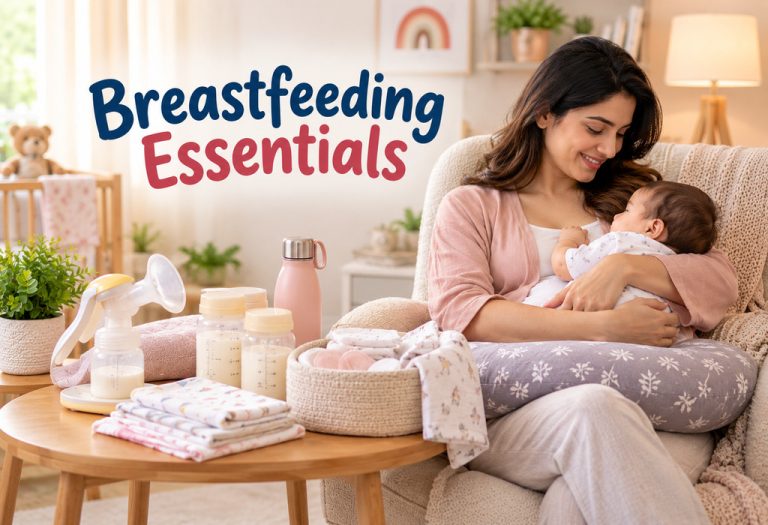
Key Takeaways
- Nursing bras, breast pads, a nursing pillow and nipple cream cover most feeding needs in the first weeks.
- A breast pump, milk storage bags and cleaning tools become useful once you plan to express milk.
- Sore nipples usually point to a latch problem, so speak to a midwife or breastfeeding specialist before buying fixes.
- Buy comfort items in the last weeks of pregnancy and wait on the pump until you know how often you will express.
Breastfeeding essentials are the few items that make early feeding more comfortable, and most new mums need fewer than shop shelves suggest. The core kit is a supportive nursing bra, breast pads, a nursing pillow and nipple cream, with a pump and storage added once feeding settles. The trade off is timing: buying too much early wastes money, while buying too late leaves you searching at 3 am. To help you feel better prepared, here’s a closer look at what you might need along the way. This article covers 11 items to consider before and after your baby arrives, plus answers to common buying questions.
|
Key Facts Milk storage window: Freshly pumped milk keeps for up to 4 hours at room temperature (77°F or colder), up to 4 days in the fridge and about 6 months in the freezer for best quality. Latch comes first: NHS says sore nipples are usually caused by a baby not latching on properly, so help with attachment is the first step. Pump hygiene: CDC advises cleaning pump parts that touch milk soon after pumping and sanitising them at least once daily, which matters most for babies under 2 months old. |
Why Breastfeeding Essentials Are Important for New Mums?
Breastfeeding supplies make early feeding more comfortable, which helps mums feel confident through the first weeks. WHO recommends exclusive breastfeeding for the first 6 months of life, so feeding becomes a daily routine for a long stretch. Basic necessities for breastfeeding reduce strain on the back, shoulders and nipples. A pump and storage set also lets another adult handle some feeds. Treat these breastfeeding basics for new moms as a starting point, and add items only when your routine, work plans or feeding style call for them. Fewer, well chosen items are easier to wash, store and carry, and they keep the early weeks calmer.
Breastfeeding Essentials List for New Moms
These 11 first time mom breastfeeding essentials cover comfort, feeding, pumping and cleaning, listed in the order most mums need them. FirstCry is a shopping destination for baby and kids essentials, where the feeding and nursing section lets you filter by brand, price and type.
1. Nursing Bras
Nursing bras have clips or stretch cups that open with one hand, so you can feed without taking the bra off. Choose a soft, stretchy fabric, ideally without underwire, because breast size may change in the first weeks of feeding. Buy two or three at first and add more once your size settles. Try the clip with one hand at home, since a stiff clip is hard to open with a baby in the other arm. Avoid cups that leave red marks, since tight fabric can press on the breast and make feeds uncomfortable. On FirstCry, the type filter in the Breast Feeding category does not list nursing bras, so search for them separately.
2. Breast Pads
Breast pads absorb leaks between feeds and protect your clothes. Washable pads suit everyday use, while disposable pads suit travel and busy days. Change a pad when it feels damp, as moisture against the skin may irritate tender nipples. Check the label for a soft top layer and a leak proof backing, and keep a spare pair in your bag for leaks when you are out. Wash reusable pads as the label directs so they stay soft and dry fully between uses. On FirstCry, the breast pads type separates washable and disposable pads, and the Babyhug range includes 3D contoured disposable breast pads.
3. Nursing Pillow
A nursing pillow lifts your baby to breast height, so your arms, neck and back carry less weight during long feeds. The pillow supports positioning but cannot fix a shallow latch, so ask for help if feeds hurt. Look for a firm, wrapped shape with a removable washable cover, as spit up and milk drips are common. Check the size too, because a bulky pillow can push a small baby away from you, so check the fit at home before removing the tags. Keep the pillow for feeding time and move your baby to their cot to sleep.
4. Nipple Cream
Nipple cream is a soothing balm for dry or tender nipples, and it works best alongside a good latch. Latch is the first thing to fix, as the key facts explain. NHS also advises avoiding nipple shields and breast shells, because they will not improve attachment. Pick a cream made for use during breastfeeding, with a short, readable ingredient list. Ask your midwife, health visitor or doctor before using a new product, especially if nipples are cracked or bleeding. Wash your hands before applying, follow the pack directions on how much to use, and keep the tube in your feeding spot so it is always within reach.
5. Breast Pump
A breast pump is one of the breastfeeding and pumping essentials worth choosing carefully, because the right type depends on how often you plan to express. Manual pumps suit occasional use, electric pumps suit regular pumping, and wearable pumps let you express with both hands free. Check that spare parts such as valves and breast shields are easy to find, and that every part touching milk can be washed. Think about noise and charging too, since you may pump at night or while travelling. On FirstCry, the Breast Feeding category has manual, electric and wearable pump sub types, and the Babyhug range includes electric and wearable breast pumps.
6. Milk Storage Bags
Milk storage bags hold expressed milk in single feed portions for the fridge or freezer. CDC advises using bags or clean food grade containers with tight fitting lids, labelling each with the date the milk was expressed, and leaving about one inch of space at the top because milk expands as it freezes.[1] Choose bags with a double zip seal, a writing area and a flat shape that stacks easily. Fill each bag with the amount your baby usually takes at one feed to avoid waste, and lay the bags flat in the freezer so they stack neatly.
7. Nursing Cover
A nursing cover is a lightweight cloth or shawl that gives privacy when you feed away from home. Pick breathable cotton, because a thick cover can feel hot in warm rooms. Choose a cover with a firm neckline or strap so you can see your baby’s face while feeding. Some babies pull covers off, so practise at home first. A cover is optional, and many mums feed comfortably without one. A large muslin or a light scarf can do the same job if you already own one.
8. Pump Cleaning Kit
A pump cleaning kit with a small bottle brush, a dedicated wash basin and a drying rack makes daily hygiene quick. Cleaning tools are essential breastfeeding supplies for anyone who pumps, because small parts hold milk residue. The washing and sanitising routine is in the key facts. CDC also advises inspecting parts that cannot be sanitised for cracks, chips or wear, and discarding tubing straight away if milk or mould gets inside. Keep a spare set of tubing and valves so one soiled part does not stop pumping, and store the kit somewhere clean and dry.
9. Nursing Tops and Nightwear
Nursing tops and nightwear have front openings or lift up panels, so you can feed without undressing. Choose soft, stretchy cotton, and avoid tight bands across the chest that press on the breast. Pick dark or printed fabrics that hide leaks. Night feeds are frequent in the early weeks, so one or two easy access sleep tops make 3 am feeds calmer. Buy only a few pieces first, because you will wash them often in the early weeks and they need to dry quickly.
10. Water Bottle and Snacks
A large water bottle within reach of your feeding spot reminds you to drink while your baby feeds. Choose a bottle with a spill proof lid and a straw or one hand opening, so you can drink without help. Keep a simple snack nearby too, such as fruit or a handful of nuts, since feeding can leave you hungry. Place the bottle where you feed most, whether that is the bed, the sofa or the nursery chair. Refill it each time you sit down to feed.
11. Burp Cloths and Muslins
Burp cloths and muslins catch spit up and milk drips during and after feeds. Pick soft cotton squares that wash easily and dry fast, and keep a few within reach of each feeding spot. A muslin also protects your shoulder while burping your baby. Fold one into a pad to wipe your baby’s chin, so milk does not irritate the skin in neck folds. Buy a pack of several so you always have a clean one while others are in the wash, and pick plain colours so stains show up and you can wash them early.
FAQs
1. What are the must have breastfeeding essentials?
The must haves are nursing bras, breast pads, a nursing pillow and nipple cream for most mums. Add a breast pump, storage bags and a cleaning kit if you plan to express milk.
2. Which is better: manual, electric, or wearable breast pump?
Manual pumps suit occasional expressing, electric pumps suit regular pumping and wearable pumps suit mums who want both hands free. Choose by how often you express and where you pump, and check that spare parts are easy to find.
3. How many nursing bras and breast pads do I need?
Two or three nursing bras let you rotate while one is in the wash. Breast pads wear out fast, so start with a small pack or a few washable pairs and add more once you know how much you leak.
4. Are reusable breast pads better than disposable ones?
Reusable breast pads suit daily use and usually create less waste, while disposable pads suit travel and busy days. Neither type suits every mum, so choose by leak level, budget and how easily you can wash pads.
5. Is a nursing pillow worth buying?
A nursing pillow is worth buying if you feed for long stretches or feel back, neck or shoulder strain. Rolled towels or cushions can work at first, so try those before you buy.
6. Which nipple creams are safe for breastfeeding?
Choose a nipple cream made for use during breastfeeding, with a clear ingredient list on the pack. NHS advises speaking to a midwife, health visitor or breastfeeding specialist about nipple pain, so ask before using any product.
7. What should I check before buying milk storage bags?
Check that milk storage bags have a secure double seal, a writing area for the date and a flat shape for freezing. CDC advises labelling milk with the date it was expressed and leaving about one inch at the top.
8. What mistakes should I avoid when buying breastfeeding products?
Common mistakes include buying too many items before birth, choosing a pump without checking spare parts, and using nipple shields as a latch fix. On FirstCry, use the type and sub type filters to compare options, and ask your midwife about any pain.
9. When should I buy breastfeeding essentials?
Buy nursing bras, pads, a pillow and cream in the last weeks of pregnancy, so they are ready at home. Wait on a breast pump until you know how often you will express, unless your doctor advises otherwise.
10. How do I clean and store breast pump parts?
Wash pump parts that touch milk soon after pumping, air dry them fully and sanitise them at least once daily, as CDC advises. Store the parts only once they are fully dry.
The breastfeeding must haves for new moms fall into comfort items, feeding aids, pumping tools and cleaning supplies. Nursing bras, breast pads, a pillow and nipple cream suit most mums from day one, while a pump suits those who plan to express. Safe storage and regular cleaning keep expressed milk and pump parts hygienic. Before buying, check pump type, fit, washability and spare parts. Ask your midwife, paediatrician or doctor if you feel unsure about feeding or any product.
Was This Article Helpful?
- Author