
Varicose Veins After Pregnancy: Causes, Signs, & Treatment
Learn what causes varicose veins after pregnancy, common signs to watch for, and treatment options that may help improve comfort.





Medically Reviewed By
Dr. Deepinder Kaur
(Gynaecologist)

This health content has been medically reviewed by qualified experts and follows the FirstCry Parenting editorial policy to ensure accuracy and reliability.
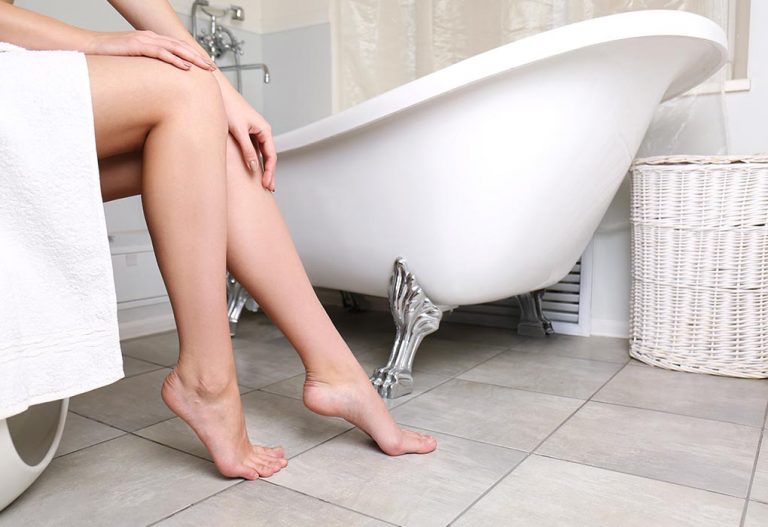
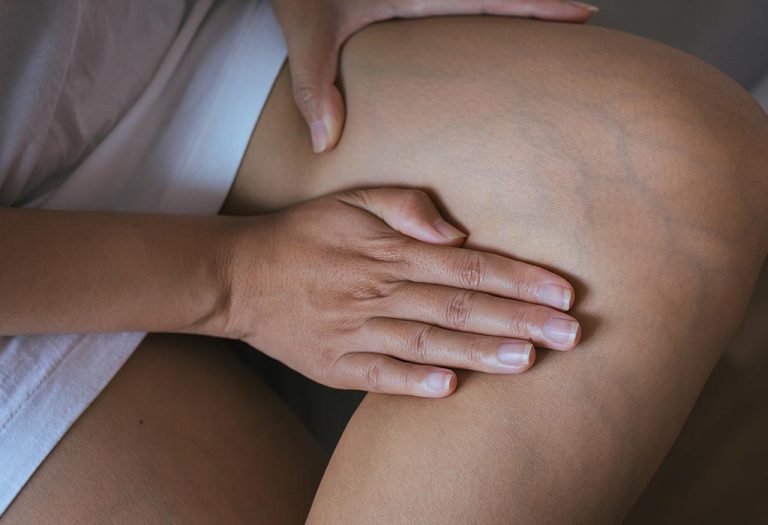
Varicose veins after pregnancy are like that persistent itch that neither dulls nor goes away. According to the Mayo Clinic, varicose veins are enlarged, bulging veins that cause aching pain and discomfort. It mostly affects the veins in the legs due to excessive standing or walking, which puts pressure on the veins of the lower body (1). While varicose veins reduce after childbirth, in many cases, they remain or persist even during postpartum. In this article, we aim to discuss in detail postpartum varicose veins, why they reappear, and what you can do to get relief as well as prevent them. Stay tuned.
What Are Postpartum Varicose Veins?
Many women have varicose veins during pregnancy, but sometimes this problem may stay after pregnancy, too. In some cases, there may be an improvement in the condition after childbirth. However, even if the condition may get better, the damage that your veins may have suffered remains irreversible.
Causes of Varicose Veins After Childbirth
The following are the causes of varicose veins in women post-pregnancy:
1. Number of Pregnancies
It is observed that the chances of developing varicose veins increase with the number of pregnancies. This means if you suffered from this condition in your first pregnancy, then the chances are that you may suffer from it in your subsequent pregnancies, too.
2. Genes
If you have a family history of varicose veins, then you may suffer from it, too.
3. Extra Damage to the Veins
If the veins are damaged too much during pregnancy, then this damage may not be fixable, and you might suffer from this condition post-pregnancy.
What Are the Signs and Symptoms of Postnatal Varicose Veins?
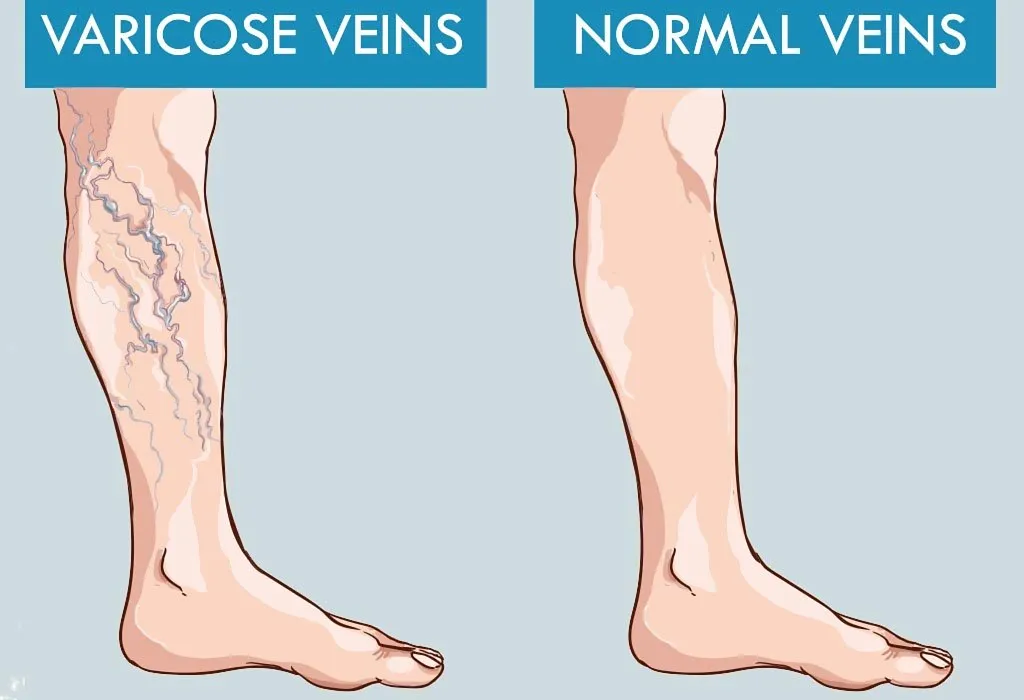
The Cleveland Clinic lists some signs and symptoms of varicose veins (2):
- You may experience pain in your legs.
- There may be swelling in your feet and legs after standing for too long.
- Your legs may feel heavy, sore, or tender.
- You may notice blue blood vessels on your legs and feet.
- You may have a burning sensation in your legs.
- You may have skin ulcers around your ankles.
- You may experience itching on these veins.
How to Treat Varicose Veins After Delivery?
Varicose veins may lead to discomfort and pain, and thus it is important to treat them. If you wish to treat varicose veins after pregnancy, the following suggestions may help (3):
1. Keep your legs and feet elevated
Make sure that every time you sit, you keep your legs and feet elevated. You may use a stool while sitting, and pillows while lying down, to elevate your legs and feet. Also, as far as possible, refrain from standing for long durations.
2. Exercise for better blood circulation
Your condition can improve if there is proper blood circulation. Therefore, it will be a good idea to take out some time for exercising, as it will improve your blood circulation and thus reduce the symptoms of varicose veins.
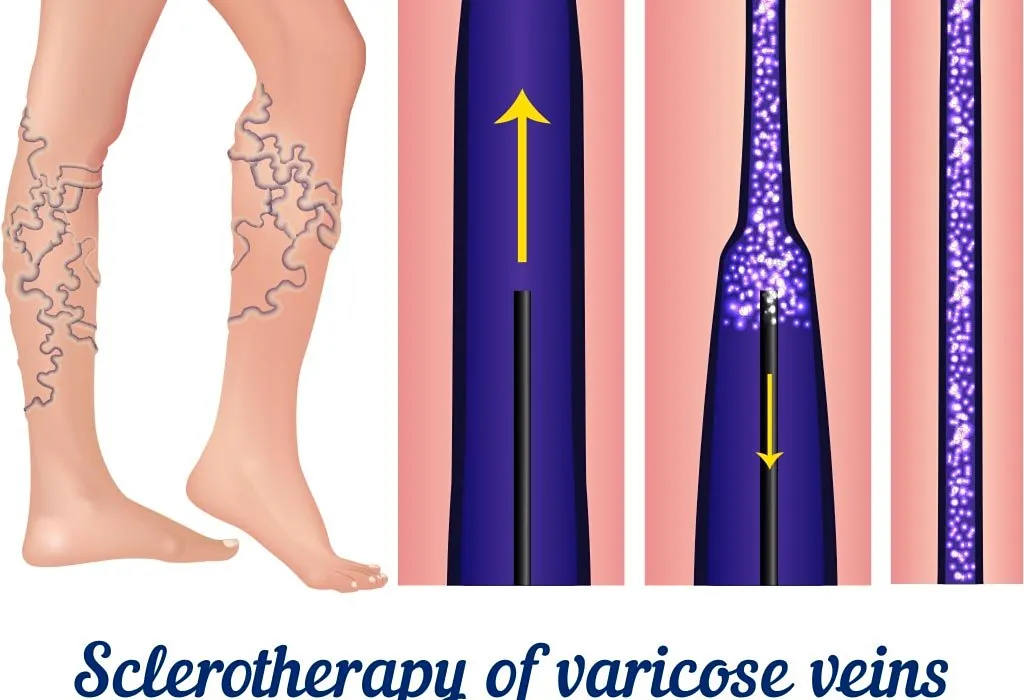
3. Try sclerotherapy for persistent varicose veins
If the symptoms of varicose veins do not improve after several months postpartum, a doctor may recommend sclerotherapy. The minimally invasive procedure involves the use of a solution, which is injected into the affected veins, causing it to collapse and gradually fade. However, it may take time for this treatment to show effective results. It is commonly used for both spider veins and small-to-medium varicose veins.
4. Wear support hose
Supportive pantyhose, tights or compression socks are effective in providing relief from varicose veins by improving blood circulation. and reduce pain and discomfort (4).
5. Your doctor may suggest endovenous laser or radiofrequency ablation
For larger or symptomatic veins, doctors may use laser or radiofrequency energy to seal the affected vein from the inside. These outpatient procedures are less invasive than traditional vein surgery and usually involve a shorter recovery period (5).
Effective Home Remedies for Postpartum Varicose Veins
Some home remedial measures may prove to be effective in treating this condition, such as:
- Honey is a great remedy to relieve pain and puffiness. You may apply a thin layer of honey, cover it with polythene for some time and wash.
- Take high doses of vitamins and minerals by drinking carrot, beet, or spinach juice. All these juices may help in removing swelling and extra fluid.
- You may use chamomile-infused bandages to wrap the affected area to reduce the symptoms.
- Apply a mixture of olive oil and beeswax to the affected area two times a day to provide relief.
How Can You Prevent Varicose Veins After Pregnancy?
Here are some ways that may help in the prevention of varicose veins:
- Exercise regularly.
- Follow a healthy diet.
- Drink ample amounts of water.
- Wear comfortable shoes.
- Maintain proper hygiene.
- Maintain a healthy weight.
When to Consult a Doctor
Consult your doctor if you experience:
- Severe pain or swelling in one leg
- Redness or warmth around the vein
- Skin changes
- Ulcers
- Symptoms are not improving after giving birth
FAQs
1. Will my varicose veins go away after pregnancy?
Many pregnancy-related varicose veins improve within a few months after delivery as hormone levels normalise and pressure on the veins decreases. However, some varicose veins may not disappear after pregnancy. They may remain visible, especially if you have a family history of vein problems or have multiple pregnancies.
2. What if my varicose veins don’t go away after delivery?
If your symptoms do not subside within 3 to 6 months after the birth of your baby, we recommend that you opt for varicose vein treatment. However, in most cases, your doctor may recommend that you wait until your body recovers from childbirth, and in some cases, until you stop breastfeeding your baby.
3. How long does it take for varicose veins to improve after childbirth?
For many women, symptoms start improving within the first 3–6 months postpartum. In some cases, complete improvement may take longer, while persistent veins may require medical treatment.
4. Do the chances of varicose veins increase or worsen with future pregnancies?
Yes. Varicose veins are often more noticeable with each pregnancy because of repeated pressure on the veins and changes in circulation.
If you suffer from the condition of varicose veins after pregnancy, you can try various home remedies and other treatment options. However, first, get your doctor’s approval for the same!
Also Read:
Postpartum Swelling
Postpartum Psychosis
Loose Skin after Pregnancy
Back Pain after Pregnancy
Was This Article Helpful?
- Author
- Expert Reviewer

Related Articles
-

Shatavari for Lactation - Does It Really Increase Breast Milk Supply?
-
Postpartum Sitz Bath - Benefits, How to Take & Tips
-
Vitamin D and Breastfeeding Mothers
-
Breast Milk Colours - What's Normal, What's Not
-
Simple Ways to Take Care of your Skin Post Delivery
-
C-section Underwear - Benefits and Tips to Choose the Right One