
Breech Baby – Causes, Risks, and Turning
Understand breech baby position in pregnancy, including causes, signs, and the delivery methods recommended by doctors.





Medically Reviewed By
Dr. Shruti Kainth
(Gynecologist/Obstetrician)


This health content has been medically reviewed by qualified experts and follows the FirstCry Parenting editorial policy to ensure accuracy and reliability.
Not all pregnancies are normal – some go more smoothly, while some come with issues like babies in a breech position. You will obviously be worried if your doctor informs you that you have a breech baby, meaning their buttock or feet are poised to emerge first instead of their head. It is normal for babies to be in a breech position in early pregnancy, and by the end of the pregnancy, they will turn. While medical interventions are available, many parents seek natural methods to encourage their breech babies to turn into the optimal head-down position for childbirth. So, how to turn a breech baby naturally? Let us present you with some techniques and exercises to turn it the right way naturally!
What Is Baby Breech?
A breech position during pregnancy is an asymmetry or imbalance in the mother’s pelvis or soft tissues. This is unavoidable, as many women have a slight twist in the pelvis, which is common (1). In a breech, the baby’s bottom or feet are facing towards the lower portion of the uterus, as opposed to the normal delivery position, in which the baby’s head is down in the lower portion of the uterus (2).
Almost all babies are in the breech position at some point in pregnancy, but by 36 or 37 weeks, almost all turn naturally in a head-down position.
What Are the Chances of Having a Breech Baby?
By 36 weeks, about 3 to 4% of babies remain in breech position in full-term pregnancies, which usually leads to delivery in about the 39th or 40th week of pregnancy (3). Most babies turn head down naturally before delivery.
Different Types of Breech Positions
There are four types of breech positions during pregnancy (4):
1. Frank Breech: In this position of breech, the baby’s buttocks are facing down, facing the vagina, while the legs stick up straight upward in front of the body. The baby’s feet may come near the fetus’s face.
2. Complete Breech: In a complete breech position, the baby’s buttocks are facing down, while the knees and hips are flexed in a crossed position.
3. Footling Breech: This is the position in which the baby’s one or both feet are positioned downward, making it deliver before the rest of the body.
4. Transverse Lie: In this position of breech, the baby lies horizontally across the uterus instead of vertically (5).
The ideal fetal position required for pregnancy is when the baby faces down, faces your back and their chin is tucked to their chest. The baby’s head is ready to enter the vaginal canal.
Causes of Breech Baby
There can be many causes of baby breech, and all the responsibility can’t be on the mother. While doctors can ascertain the exact reason for breech position, the American Pregnancy Association lists some of the common causes of breech position (6) (7):
- Serious falls
- Crossing legs
- Long car rides
- A neck or ankle injury
- Sports injuries
- Abrupt stops that torque the torso
- Carrying or supporting a toddler on the hip or doing hip rotation, causing activities over time
- Low amniotic fluid
- Abnormally shaped uterus
- Early or premature birth
Diagnosis of Breech Baby
During the later weeks of pregnancy, the obstetricians routinely check the baby’s position. By gently examining the abdomen, they can often tell whether the baby’s head is down or positioned differently. If needed or there’s any doubt, the doctor may suggest an ultrasound scan or pelvic exam to confirm the exact position.
While breech position is an unwanted one in the later days of pregnancy, it’s important to remember that many babies remain in a breech position (head up, feet down) until around 36 weeks. Most doctors wait until the 37th week of pregnancy before confirming a persistent breech presentation and discussing delivery planning.
Risks of Having a Breech Baby
Delivering a baby vaginally in a breech position can be very challenging and come with additional risks, which are (8):
- Baby getting stuck: The baby’s body may pass through the birth canal while the head becomes lodged against the pelvic bones, making delivery difficult.
- Bone injuries: Because the baby’s legs and arms may be extended in unusual ways, there is a higher chance of fractures or joint dislocations during delivery.
- Umbilical cord prolapse: The umbilical cord can slip down before the baby or become compressed, potentially limiting oxygen supply.
Due to these risks, a planned cesarean section is often considered a safer option when a baby remains breech near full term (8).
Can You Feel If Your Baby Flips?
It is possible to notice if the baby has turned or not. You may tell if the breech flips by observing the baby’s kicks. Earlier, the head would be near the womb; now, it will be near the pelvic region, with the feet high in the womb. Leg kicks are stronger than kicks from arms, so you may be able to notice a difference when the baby kicks, and you feel them strongly at the top of the womb.
Techniques to Turn a Breech Baby
Your ultrasound report might have shocked you when you learned that your baby was in a breech position. This may be a matter of concern, but the good news is that there exist ways to turn a breech baby into a head-down position naturally. If you want to know how to turn a breech baby naturally, refer to the following effective techniques:
1. Light
Light can do wonders. When you come to know in your late pregnancy that your baby’s head is not facing downward, you may not know what to do next. By simply putting a flashlight on the lower pelvic area, you can see the magic happen.
It is known that by the end of the second trimester, the foetus can recognise light from the outside. When you shine light on your lower pelvic area, there is a pretty good chance that the baby will follow the light and move his head towards the bottom. Though there is no conclusive study related to this, there is no harm in trying this simple technique.
2. A Magical Touch of Frost
This is another simple way to turn your baby’s head downward. Placing the ice pack or a frozen pea pack would do. All you need to do is place a towel on your tummy, particularly where the head is and then gently keep the ice pack on it. It is likely that the baby would feel the cold and would try to move away from it, and that is what you want. Isn’t it?
3. Go the Medical Way
Most babies in breech position at the time of delivery will require a cesarean delivery. This technique should be considered as an alternative when nothing else seems to work. The procedure that is widely used for physically turning the baby is called ECV or External Cephalic Version (ECV). If ECV also fails, a cesarean is recommended (9).
First of all, your doctor or midwife would help your uterus relax by giving you an epidural. Once it is done, the gynaecologist would physically try to move or tilt the baby. This could be painful and dangerous, too. But using the right technique and expertise, it can be achieved without much effort. But one should never ignore the risks associated with the process that could lead to placental abruption, caesarean section surgery, or umbilical cord prolapse.
4. Try Changing Your Side
You can also look forward to effective sleeping positions to turn a breech baby. Turning to the sides can help your breech baby come into the right position. This is because, by turning again and again to either side, you make your pelvis flexible, which further allows the baby to turn. This is a natural process, and you would not even realise it in your sleep when your baby tilts back to the head down position. Sleep on your left side instead of your right side for increased blood circulation. Also, bending your legs and knees should be done, and a pillow should be placed between your legs.

5. Experiment With Moxibustion Acupuncture
Acupuncture is a great way to turn a breech baby. In this technique, a physician would pinch the thin and narrow needles on both of your toes. Then, incense called moxibustion comprises a herb called moxa or mugwort, which is burned, and its smoke is spread around the toes. It is believed that the combination of heat, needle pressure, and smoke can help increase fetal movement, stimulate estrogen and prostaglandin production, and increase uterine contraction (10).
6. The Soothing Magic of Water
There is no denying the fact that a pregnant woman feels relaxed and light when in water. If you are a pro at swimming, you can flip forward and backwards in the water or even try the breaststroke. This can greatly help in flipping the baby to the head-down position. Another thing that you could try is a headstand under the water. This may sound weird, but it is a useful and effective technique. However, one needs to be careful when hitting the water and should always take advice from their doctors prior to diving. And, also while going for the headstand underwater, do take help from someone who can hold both your feet in position.
7. Make Some Noise for the Baby
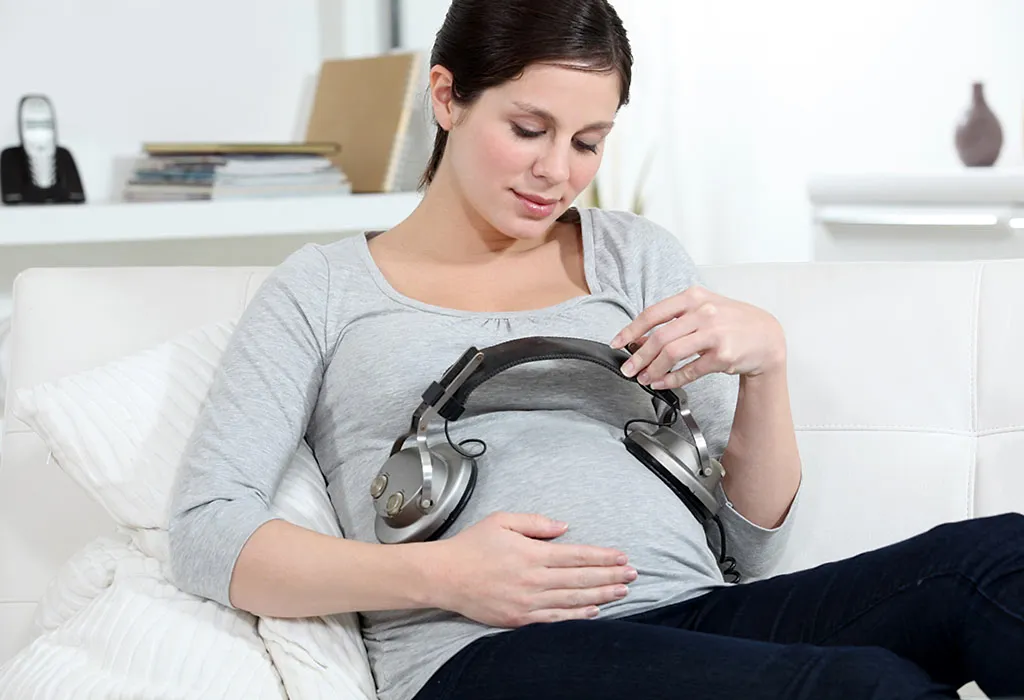
You would be surprised to know that a baby starts to respond to noise from outside once you reach the third trimester. Therefore, this method can also prove to work positively. All you need to do is play some calming music and place the headphones on the lower pelvic area. The baby would hear this music and would naturally move down to where the sound may seem to be coming from.
8. The Power of Hypnotism
This is the craziest thing you might be hearing, but yes, it is a technique that has led to positive results in the past. The science behind this includes the fact that our conscious mind takes a back seat while the subconscious mind dominates our thoughts. A hypnotist would hypnotise the mother-to-be and ask her to relax and forget all her worries. Once the body is relaxed, she would be asked to create a mental image of her baby in the right position. This can help in activating the process in reality.
9. Try a Massage
Prenatal massages have been popular since time immemorial. Massage can help relax and get the much-needed break from pregnancy stress and pain.
A massage can significantly help in flipping the baby to the desired position. You should know that when you are pregnant, the ligaments, the tendons, and even the muscles around the pelvic area turn stiff. But with the right kind of massage, your body and mind will relax and thus make way for the baby to turn downwards. Massages during pregnancy should only be performed by a qualified masseuse who has been trained specifically with pregnancy massage techniques for pregnant women.
10. Going the Webster Way
This technique is conducted by an expert chiropractor. This process is carried out to realign your pelvic bones and relax your ligaments, creating a natural passage for the baby to move his head downward. You won’t get the desired result in a day, so you need to be patient. You would have to attend sessions at least 3 times a week when you are nearing your delivery date. Moreover, there is limited evidence on the safety of this technique (11). Also, make sure that your chiropractor is trained and professional with a successful track record in the past.
11. Grab Some Pulsatilla Herb
This involves relying on homoeopathy for flipping over the baby. Pulsatilla is a herb that is derived from the windflower and is recommended for women by their physicians when they are pregnant with a breech baby. If the positioning of the placenta or the uterine aberration is the reason for your breech baby, this herb is not your thing. But if everything is normal except the resistance your baby is showing towards turning over, pulsatilla can prove to be a boon. It is the dosage of this herb that aids in expanding your uterus, thus adding space for your baby to flip over.
Exercises to Turn a Breech Baby
While the above-mentioned techniques would do the needful, exercises can also help turn your breech baby to the normal head-down position. Also, exercising keeps you fit and your mood happy, so why not try to give some space for your baby to move? There should be no problem in turning a baby before 37 weeks with these exercises. However, turning a breech baby at 37 weeks or after should be done only under medical assistance.
1. Slope Your Body
Also called the tilt method, this exercise can be easily done with the help of an iron board. Look for a stable surface like your sofa and rest the ironing board in the slope position, with one end on the sofa and the other on the floor.
Lie down on the iron board with your head towards the floor and your feet towards the sofa. But keep someone by your side, as balancing could be an issue. This tilt would put some pressure on the baby’s head, and he would probably tuck his chin; thus, there is a possibility of him flipping over. Try this exercise at least 3 times a day, with each session lasting for about 10-15 minutes, for effective results later.
2. Knee to Chest
This exercise is based on gravitational pull. It is a simple exercise that involves you getting down on your knees on a mat. Next, keep your forearms on the ground, tuck your chin into the resting forearm and elevate your butt in the air. Stay in this position for about 5-10 minutes. This exercise helps the lower portion of your uterus to expand, thus creating more space for the baby to turn the right way.
It is recommended to do knee-to-chest exercises at least 2 times a day. Also, prefer doing it on an empty stomach, as it could add to discomfort or nausea later. If you feel your baby turning while doing this exercise, use one of your hands to exert gentle pressure on the baby’s rear part that lies just above the pubic bone.
3. The Cat-Cow Position
Also called the hands and knee position, a mom-to-be can rely on it in order to turn the baby around. This position can help turn the body flexibly so that the flipping over of the baby can be achieved easily. Get a yoga mat or a simple mat for yourself. Now, get down on your knees and put your hands on the mat. Also, drop your belly low. This position is similar to a cow posture. Next, elevate your back in a curved position and stay there. This is similar to a cat position. Repeat this 3-4 times a day, and you may notice a miracle when your breech baby is no longer breech.

4. Forward-Leaning Inversion
This exercise is similar to the knee-to-chest exercise but involves a bit more effort. Follow a similar pattern to that of the knee-to-chest exercise. However, this time, place your lower body on the couch or the bed and your upper body parts, i.e., the head and elbows, on the ground.
Do remember to tuck your chin, as this very step will help in pelvic muscle relaxation. Keep someone by your side while you practice this exercise. Stay in the position for about 30 seconds and repeat it 3-4 times a day.
5. Pay Attention to Your Posture
Exercising is one important thing, but what is more important is keeping your posture straight. A perfect posture would provide your baby with enough space to turn over. The right way to maintain good posture is to stand straight with your chin perpendicular to the ground. Let your shoulders rest naturally without attempting to move them backwards. Remember not to stand in a tilted position as if your belly is protruding and pull in your butts so that your body’s centre of gravity stays on them.
6. Breech Tilt
Breech tilt is an amazing activity to understand if you want to know how to turn a breech baby at home. Place a pillow under your hips and bend your knees gently. Now, put a pillow under your head; this way, you won’t lie straight on your back. Do this activity 10-15 minutes at a time on an empty stomach and when your little infant is active and kicking.
7. Massage With Breech Tilt
After putting a pillow under your hips and head, lie in a comfortable position and start massaging your belly using both hands. Massage your belly in the direction your baby can easily turn to. You can use a massage oil as well, and gently massage the belly. Asking your doctor or midwife is also helpful.
8. Side Lying Release
You can do the side-lying release activity on both sides for several minutes. Take the help of a midwife so she can assist you better. Remember to do this on both sides.
Lay on one side with your head elevated on a pillow and your neck straight. The expectant mother pushes her hip all the way up to the edge of the couch while holding a chair or a table close by. When the pregnant person’s leg hangs, the helper must stop them from cocking their hip forward.
Following that, the expectant woman straightens her lower leg, but the assistant must not pull the leg straight. Toes ought to be pointed up and flexed toward the knee. The pregnant person lifts their leg up and over their thigh just a little bit after the helper is steady and in place (but not before).
The SLR receiver allows their leg to sag slowly in front of them. As soon as the leg hangs a little lower, wait two to three minutes. Do both sides to prevent the pelvis from becoming unstable. The pregnant woman should then stand up and walk around the room in all directions or straight back if there is enough room.
9. Mini Massages
Perform circular mini-massages between the rib and abdomen along the front of the rib cage to soften the superficial margin between the fascia surrounding the rib cage, the respiratory diaphragm, and the peritoneum.
What Happens If You Have to Deliver a Breech Baby?
With a smooth flow of pregnancy, when at the last minute the baby is breech, or if you can’t have the delivery you expected, many pregnant women get stressed and anxious if the baby won’t turn. But it is important to trust the process and the medical experts and try as many natural techniques as you can between 34 and 36 weeks of pregnancy. If you have any doubts, do not hesitate to voice your concerns.
Things to Keep in Mind
Flipping a breech baby can be a challenging task. And, if you try the above techniques and exercises, you may get to achieve what you desire. However, there are some things to keep in mind so as to avoid any issues during the course of pregnancy or during labour.
- A breech baby position is a normal thing till you reach your 30th week of pregnancy, and fine until you reach the 32nd week.
- Always take advice from your gynaecologist before trying any technique or exercise, as there may be health risks associated with your specific condition.
- In case your baby is still breech by the end of the 37th week of pregnancy, medical assistance is strictly recommended. It is important to note that ECV, or an External Cephalic Version, for manually turning a breech baby, could be conducted in such cases.
- You need to be confident and positive, and you should not mourn why this happened to you.
- If you have any pain or discomfort during exercise, stop immediately.
- Drink as much water as you can. Drinking fluids is one effective solution for all body problems, and there is no denying this fact.
- ECV is not a recommended technique for pregnant women who are expecting twins or for pregnant women who have a heart-shaped womb and not a pear-shaped one.
- Trust yourself, your baby, and your body; sometimes, all you need to do is wait and get your baby to turn into a head-down position naturally. Panicking is not the solution here.
- Turning a breech baby becomes important in order to avoid problems in babies, such as hip dysplasia or even lack of oxygen that reaches the brain.
- Talking can be helpful sometimes. It is the words that come from the heart that can prove to be helpful. Talk to your belly; let the baby hear what you want and what he needs to do in this situation.
- Lastly, a C-section is the last option if no other technique works. It is always better to pre-plan for your C-section in order to avert any issues later.
When to Consult a Doctor
Typically, your doctor will be the one to inform you if your baby is in a breech position in pregnancy during your routine prenatal checkup or ultrasound. Once you know, it’s important to discuss all your options. You can ask about the pros and cons of a vaginal breech birth versus a cesarean, what the C-section surgery would involve if they recommend it, and how you can prepare both physically and emotionally.
FAQs
1. Can breech babies turn on their own?
Most foetuses, earlier in a breech position, will turn head-down before reaching full term (37 weeks). However, some cases don’t. If a baby is still in a breech position, your doctor will monitor your routine prenatal care and may suggest an external cephalic version or a C-section, whichever is required.
2. Can you have a normal delivery with a breech baby?
It is possible to have a vaginal birth if your baby is in a breech position. However, vaginal breech birth carries higher risks than when a baby is head-down. The main concerns include potential injury to the baby’s arms or legs, complications with the umbilical cord, as it could get compressed or twisted, and difficulty delivering the baby’s head and shoulders safely. These challenges can sometimes affect the baby’s oxygen supply during birth (4).
Note: Not all doctors have the same level of experience with vaginal breech births. That’s why it’s important to have an open discussion with your doctor or midwife. They can walk you through the possible risks and benefits and help you decide what’s safest based on your individual pregnancy.
3. Do breech babies experience health issues later in life?
In most cases, babies born in a breech position grow up perfectly healthy and do not experience long-term problems because of how they were positioned at birth. After delivery, paediatricians usually check the baby’s hips carefully, as breech babies have a slightly higher chance of hip concerns. If anything needs monitoring, your doctor will guide you on the next steps.
4. Is a C-section more complicated with a breech position baby?
A C-section birth for a breech infant can be slightly more complex than one for a head-down baby. However, most obstetricians are well-trained and experienced in handling these situations. The procedure may require minor adjustments, such as a slightly larger incision or different techniques to gently guide the baby out safely.
Even though the approach may vary a bit, C-sections for breech babies are commonly performed and are generally considered a safe option.
5. Are exercises helpful in turning a breech baby?
Yes, some targeted positioning exercises, especially for pregnancy, may help, but scientific evidence is limited. It is always best to consult your obstetrician before starting any exercise.
Looking at the above information, you would know by now what a breech baby is and what you could do about it. Maintain your calm and meditate to steer clear of any stress. Also, knowing that this is a normal situation and only about 3% of babies do not turn in the head-down position by the end of 37 weeks becomes important here. Take it as an add-on tip; remember to trust yourself and your instincts rather than believing in what others have to say.
Also Read:
Umbilical Cord Around Neck
Causes of Breech Baby Birth Defect
Baby in Vertex Position during Labour and Delivery
Was This Article Helpful?
Parenting is a huge responsibility, for you as a caregiver, but also for us as a parenting content platform. We understand that and take our responsibility of creating credible content seriously. FirstCry Parenting articles are written and published only after extensive research using factually sound references to deliver quality content that is accurate, validated by experts, and completely reliable. To understand how we go about creating content that is credible, read our editorial policy here.
1. Tommy’s – What happens if my baby is breech?
2. UT Southwestern Medical Center – Can you turn a breech baby around?
4. Cleveland Clinic – Breech Baby
5. NHS – What happens if your baby is breech?
6. American Pregnancy Association – Breech Births
7. Familydoctor.org – What Can I Do if My Baby is Breech?
8. Pregnancy Birth and Baby – Breech pregnancy
- Author
- Expert Reviewer

Related Articles
-

Eclampsia in Pregnancy: Causes, Symptoms & Treatment
-
Missed Miscarriage - Causes, Symptoms and Effects
-
Molar Pregnancy (Hydatidiform Mole): Signs & Treatment
-
Uterine Fibroids: Affect on Infertility and Treatment
-
Ectopic Pregnancy – Symptoms, Reasons and Treatment
-
Cervical Cerclage: Benefits,Procedure, Types & Risks