

20 Amazing Hummingbird Facts for Kids: The Tiny Bird That Can Fly Backwards
Meet the hummingbird, a tiny bird with amazing powers! Learn fun facts about how it flies backwards, hovers, and zips through the air.




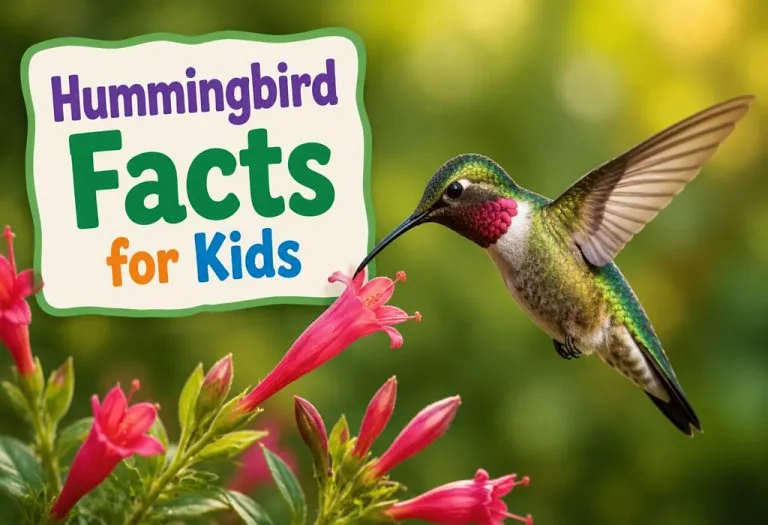
Image Source: AI-Generated Image
In this Article
- What Do Hummingbirds Look Like?
- Different Types of Hummingbirds
- Where Do Hummingbirds Live?
- What Do Hummingbirds Eat?
- How Do Hummingbirds Fly?
- Hummingbird Behaviour and Communication
- Hummingbird Nesting and Life Cycle
- Hummingbird Migration Facts
- How Long Do Hummingbirds Live?
- Hummingbird Predators
- Interesting Facts About Hummingbirds For Kids
View More
Have you ever watched a tiny bird hover near a flower and wondered how something so small can be so extraordinary? Hummingbirds are some of the most fascinating birds on the planet. Their sparkling feathers, lightning-fast movements, and incredible flying skills make them look almost magical. Despite their tiny size, these birds are packed with remarkable abilities that help them survive and thrive in nature.
Learning hummingbird facts for kids can open the door to a world of amazing discoveries. These miniature birds can flap their wings so quickly that they create a humming sound, which is how they got their name. They can hover like helicopters, zoom through the air at impressive speeds, and even fly backward, a rare talent among birds. From their unique eating habits to their incredible migrations, hummingbirds are full of surprises. In this article, you’ll uncover fascinating facts about these tiny aerial acrobats and learn why they continue to amaze scientists, birdwatchers, and children around the world.
What Do Hummingbirds Look Like?
Hummingbirds may be tiny but they are some of the most beautiful birds you can ever see. Many people are surprised by how small they are when they spot one for the first time. Their bright colors often shine and change in the sunlight making them look like living jewels. Even though they are delicate in size they stand out wherever they go.
Different Types of Hummingbirds
There are more than 300 species of hummingbirds found across the Americas. While they all share the ability to hover and sip nectar many of them have unique colors sizes and features. Some are known for their brilliant feathers while others stand out because of their long tails or unusual beaks. Learning about different types of hummingbirds helps children understand how diverse and fascinating these tiny birds can be.
1. Ruby Throated Hummingbird
The Ruby Throated Hummingbird is one of the most common species in North America. Males have a bright red throat that shines in the sunlight. These birds are small energetic and often visit backyard feeders. Many people spot this hummingbird during spring and summer.
2. Anna’s Hummingbird
Anna’s Hummingbird is known for its beautiful pinkish red head and throat. It can be seen throughout the year in some parts of the western United States. Unlike many hummingbirds it does not always migrate long distances. Its cheerful buzzing sound makes it easy to notice.
3. Rufous Hummingbird
The Rufous Hummingbird has striking orange and copper colored feathers. Despite its tiny size it is known for being brave and protective of its feeding area. This species travels thousands of miles during migration. Its long journey is impressive for such a small bird.
4. Black Chinned Hummingbird
This hummingbird may look simple at first glance but it has a beautiful dark throat with a hint of purple. It is commonly found in gardens parks and open woodlands. These birds adapt well to different environments. They are quick and graceful flyers.
5. Costa’s Hummingbird
Costa’s Hummingbird is easy to recognize because of its bright purple face and throat feathers. The colorful feathers spread out from the sides of its neck giving it a unique appearance. It lives mainly in desert regions. Watching one hover near flowers is a memorable sight.
6. Broad Tailed Hummingbird
The Broad Tailed Hummingbird is often found in mountain areas. Males have shimmering pink throats and produce a musical sound when they fly. Their wings create a gentle trilling noise that many bird lovers enjoy hearing. They are especially active around wildflowers.
7. Bee Hummingbird
The Bee Hummingbird is the smallest bird in the world. It is about the size of a large bee and can fit comfortably in the palm of a hand. Found only in Cuba this tiny bird is a remarkable example of how amazing nature can be. Even though it is small it plays an important role in pollinating flowers.
Where Do Hummingbirds Live?
Hummingbirds can be found in many different habitats across North America Central America and South America. These tiny birds usually live in places where flowers grow in abundance because they depend on nectar for energy. Some species make their homes in tropical rainforests filled with colorful plants while others live in mountains deserts woodlands and even backyard gardens. They are highly adaptable and can thrive in a variety of environments as long as they have access to food and shelter. During colder months many hummingbirds migrate to warmer regions where flowers continue to bloom. It is amazing to think that a bird so small can travel such great distances to find the perfect place to live and feed. Their ability to settle in different landscapes is one of the many reasons people around the world admire these remarkable birds.
What Do Hummingbirds Eat?
Hummingbirds may be small but they need a lot of food to power their busy lives. These energetic birds mainly feed on nectar from flowers which provides the sugar they need for quick energy. Their long beaks and tongues help them reach deep inside blossoms to drink the sweet liquid. Along with nectar they also eat tiny insects and spiders which give them important nutrients and protein. Many hummingbirds visit backyard feeders filled with sugar water especially when flowers are not blooming. Because they burn energy so quickly they must eat many times throughout the day and may visit hundreds of flowers to get enough food. Watching a hummingbird pause at one flower after another is a wonderful reminder of how hard these tiny birds work to stay healthy and active.
How Do Hummingbirds Fly?
Watching a hummingbird fly can feel almost magical. These tiny birds move in ways that many other birds cannot. They can hover in one spot dart in different directions and even fly backward. Their unique flying skills are one of the reasons they fascinate people around the world.
Hummingbirds fly by beating their wings incredibly fast sometimes dozens of times every second. Unlike most birds their wings move in a figure eight pattern which creates lift on both the forward and backward strokes. This special movement allows them to stay perfectly still in the air while feeding from flowers. It also helps them fly up down sideways and backward with amazing control. Their strong chest muscles power these rapid wing movements making them some of the most skilled flyers in the animal kingdom. Even though they are tiny their flying ability is a remarkable example of nature’s engineering.
Hummingbird Behaviour and Communication
Hummingbirds may be tiny but they have big personalities. They are active curious and often very protective of their feeding areas. If another hummingbird comes too close they may chase it away with surprising confidence. Watching them zip through the air and defend their favorite flowers shows just how determined these little birds can be.
Hummingbirds communicate in several ways. They make soft chirping and clicking sounds to interact with other birds. Their body movements also send important messages. A hummingbird may perform special flight displays to attract a mate or warn another bird to stay away. Bright feathers can also play a role in communication especially during courtship. Although they are often seen alone hummingbirds are constantly aware of what is happening around them and use sounds movements and visual signals to express themselves. Their behavior is a wonderful reminder that even the smallest creatures have complex and fascinating ways of interacting with the world.
Hummingbird Nesting and Life Cycle
The life of a hummingbird begins in a nest that is surprisingly small and delicate. These tiny birds may seem fast and fearless in the air but they start out as fragile hatchlings that need constant care. Watching a hummingbird grow from a tiny egg into a skilled flyer is one of nature’s most remarkable stories. Every stage of their life cycle shows just how resilient these little birds are.
Female hummingbirds build small cup shaped nests using soft plant fibers moss and spider silk. The nests are often attached to thin branches and can be as small as a walnut shell. After building the nest the female lays one or two tiny eggs that are about the size of small jelly beans. She carefully keeps the eggs warm until they hatch. When the chicks emerge they are blind and featherless and depend completely on their mother for food and protection. Over the next few weeks they grow quickly and develop feathers wings and stronger muscles. Once they are ready they leave the nest and begin learning how to fly and find food on their own. Most hummingbirds live for several years in the wild and spend their lives feeding migrating and raising the next generation of tiny birds.
Hummingbird Migration Facts
Hummingbird migration is one of the most amazing journeys in the bird world. Even though these birds are tiny many species travel hundreds or even thousands of miles every year to reach warmer areas where food is easier to find. As the seasons change they move between their breeding and wintering grounds in search of blooming flowers and suitable weather. Some hummingbirds even cross large bodies of water during migration without stopping to rest. Before beginning their journey they eat extra food to build up energy reserves that will help them along the way. It is remarkable to think that a bird weighing only a few grams can complete such a challenging trip. Their migration shows just how strong determined and adaptable these tiny birds truly are.
How Long Do Hummingbirds Live?
Hummingbirds live busy and demanding lives from the moment they hatch. Their days are filled with feeding flying and avoiding dangers in the wild. Because they are so small many people assume they only live for a short time. The truth is that these remarkable birds can survive much longer than most people expect.
Most hummingbirds live between 3 and 5 years in the wild although some can live much longer under the right conditions. The first year of life is often the most challenging because young birds must learn to find food avoid predators and survive changing weather. Once they reach adulthood their chances of living longer improve. Scientists have recorded some hummingbirds living for more than 8 years and a few have even reached 10 years or more. Considering their tiny size and fast paced lifestyle this is quite impressive. Every year they survive is a testament to their strength adaptability and remarkable ability to thrive in the natural world.
Hummingbird Predators
Life is not always easy for a hummingbird despite its speed and agility. These tiny birds face many dangers in the wild every day. Their small size makes them vulnerable to a variety of predators. Even so they use their quick reflexes and sharp awareness to help them stay safe.
Hummingbirds are hunted by several animals including hawks owls snakes and larger birds. Cats can also be a threat especially in areas close to homes and gardens. Young hummingbirds and eggs are at greater risk because they cannot escape as easily as adults. Large insects such as praying mantises may sometimes catch hummingbirds near flowers or feeders. To avoid danger hummingbirds rely on their fast flight and their ability to change direction in an instant. They are constantly alert to movement around them and often leave an area quickly if they sense a threat. Their ability to survive despite so many challenges is one of the many reasons these tiny birds are so remarkable.
Interesting Facts About Hummingbirds For Kids
There is always something amazing to learn about hummingbirds. Their tiny bodies are packed with abilities that seem almost impossible for such small birds. Many children enjoy learning fun facts about hummingbirds for kids because these birds are full of surprises. From their flying skills to their incredible speed every fact makes them even more fascinating.
1. Hummingbirds are the only birds that can fly backward.
2. Their wings can beat more than 50 times every second.
3. The humming sound they make comes from their fast moving wings.
4. Some hummingbirds are no bigger than a large bee.
5. The Bee Hummingbird is the smallest bird in the world.
6. Hummingbirds can hover in one spot like a helicopter.
7. They can fly up down sideways and backward.
8. Their hearts can beat more than 1000 times per minute when they are active.
9. They mainly drink nectar from flowers.
10. Hummingbirds also eat tiny insects and spiders for protein.
11. They help flowers grow by spreading pollen from one flower to another.
12. Some hummingbirds migrate thousands of miles every year.
13. Their nests can be as small as a walnut shell.
14. Hummingbird eggs are about the size of small jelly beans.
15. Their feathers can look different colors depending on how the light hits them.
16. They have excellent eyesight and can spot bright flowers from a distance.
17. A hummingbird may visit hundreds of flowers in a single day.
18. These birds have very strong chest muscles that power their wings.
19. Most hummingbirds spend much of their day searching for food.
20. Despite their tiny size hummingbirds are brave and often defend their feeding areas from larger birds.
Hummingbirds may be some of the smallest birds in the world but they are also among the most extraordinary. From flying backward and hovering in midair to traveling long distances during migration these tiny birds have abilities that continue to amaze people of all ages. Their colorful feathers energetic lifestyle and important role in nature make them fascinating creatures to learn about. By understanding how hummingbirds live eat communicate and care for their young children can gain a greater appreciation for the natural world around them. The next time you see a hummingbird darting between flowers take a moment to watch closely because there is something truly special about these tiny birds that can do such incredible things.
Also Read :
Best Bible Stories for Kids – Teach Faith With Fun
Fun Harry Potter-Themed Crafts for Kids
Importance of Curiosity in Children and Tips to Develop It
Was This Article Helpful?
- Author


Related Articles
-
Animals That Start With I (With Pictures & Facts)
-

Republic Day Speech In English for Students and Kids
-

How To Skip a Grade - Is Your Child Ready For It
-
Nouns That Start With L (With Types and Example Sentences)
-

Helping Your Child Learn Name, Age and Gender
-
Interesting Facts About the National Bird of USA for Kids


.svg)