
Frozen Embryo Transfer (FET): Costs, Procedure & Success Rate
A complete guide to Frozen Embryo Transfer (FET), covering the procedure, expenses, success rates, benefits, and FAQs.





Medically Reviewed By
Dr. Sukriti Sharma
(Gynecologist/Obstetrician)


This health content has been medically reviewed by qualified experts and follows the FirstCry Parenting editorial policy to ensure accuracy and reliability.
Frozen embryo transfer (FET) is an IVF procedure in which a previously frozen embryo is thawed and transferred into the uterus to achieve pregnancy. The process is carefully timed based on ovulation or preparation of the uterine lining. During the FET procedure, the embryo is gently placed into the uterus using a thin catheter, and the transfer usually takes only a few minutes. But what happens before and after the transfer? How successful is FET, and what factors can affect the outcome? In this article, we’ll explain the frozen egg transfer process, its benefits, success rates, preparation, and what you can expect at each stage.
What Is a Frozen Embryo Transfer?
When an embryo created during an IVF cycle and frozen for storage is retrieved and utilised for a pregnancy cycle, it is termed as a FET or a frozen embryo transfer. This saves on undergoing a repeat IVF cycle and injections altogether (1).
Why Would You Freeze an Embryo?
During the process of IVF, there is a possibility of creating multiple healthy embryos. These frozen embryos are stored for later cycles, should the current one fail, or if you choose to get pregnant again at a later stage in life.
When Can You Have Frozen Embryo Procedure?
There is no rush for using frozen embryos since they can retain their potential to no end. A FET can be conducted after an IVF procedure has failed to bear fruit, or even later in life when an IVF cycle does not help obtain healthy eggs (2).
Benefits of Frozen Embryo Transfer
Although frozen embryo transfer may not seem like the most natural way of giving birth, there are a bunch of benefits which may convince you to consider this procedure if you are looking to get pregnant. It is not only good for the mother’s well-being but also helps in making smart decisions when it comes to the future of the child and the family together. Let’s find out what are the benefits of frozen embryo transfer (3) (4).
1. Ability to Plan a Family at a Later Stage
These days couples generally focus on their career and want to achieve success in life and then start with family planning. But as a woman’s biological clock keeps ticking, it may be a tussle for her to establish a balance between her personal goals and the chance to start a family. Making use of frozen embryos can help a woman undergo the procedure and have a child even until she is nearly 50 years old.
2. Genetic Issues Can Be Detected
The news of pregnancy is wonderful. But if your baby is diagnosed with certain problems and your doctor suggests that you do an abortion, it can be extremely disheartening for you. But with the option of external embryo creations, their genetic makeup can be examined. Also, any genetic defects can be determined beforehand. Based on the results, you can opt for the embryo that has the best chances of growing into a healthy child.
3. The Risk of Ovarian Hyperstimulation Syndrome is Reduced
Ovarian hyperstimulation syndrome (OHSS) is usually observed in women who tend to have oestrogen levels way above the safe mark; women who are susceptible to an increased number of follicles; women who gain weight rapidly during pregnancy, and so on (5). If a woman with such signs gets pregnant, the embryos can be opted for frozen storage to avoid any risks. Pregnancy can be executed later on when the conditions are suitable for it.
4. The Risks in Pregnancy When Progesterone Levels are High are Avoided
Medical sciences and research have made observations that have established a link between high progesterone levels and embryo implantation. The lining of the uterus, termed as the endometrium, does not portray a favourable response to the embryo for implantation when the progesterone levels in a woman are high. In such a case, opting for freezing the embryos can help you avoid a loss of pregnancy later on.
5. The Procedure is Very Convenient
Compared to many other procedures, many women tend to favour and opt for a frozen embryo transfer, or FET, once they know the details. Primarily, the entire procedure is surgery-free, including the obtaining of the eggs. No anaesthesia needs to be administered and it is painless. Hence, it a convenient and painless option for pregnancy.
6. The Cost of Undergoing a Frozen Embryo Transfer is Less Than Creating Fresh Embryos
The cost of fertility treatments, particularly in-vitro fertilization, are usually high. Compared to those, opting for a frozen embryo transfer to continue a pregnancy is much cheaper than generating embryos all over again.
7. The Existence of an Opportunity to Have Additional Cycles Without Going from Scratch
Once you undergo the stimulation from the medicines and other procedures of the in-vitro fertilization, the embryos that are created from the eggs obtained in that cycle can be frozen and stored for later use as well. This allows you to have a repeat pregnancy later in life, or even resume an interrupted one.
How and Where Are Embryos Frozen?
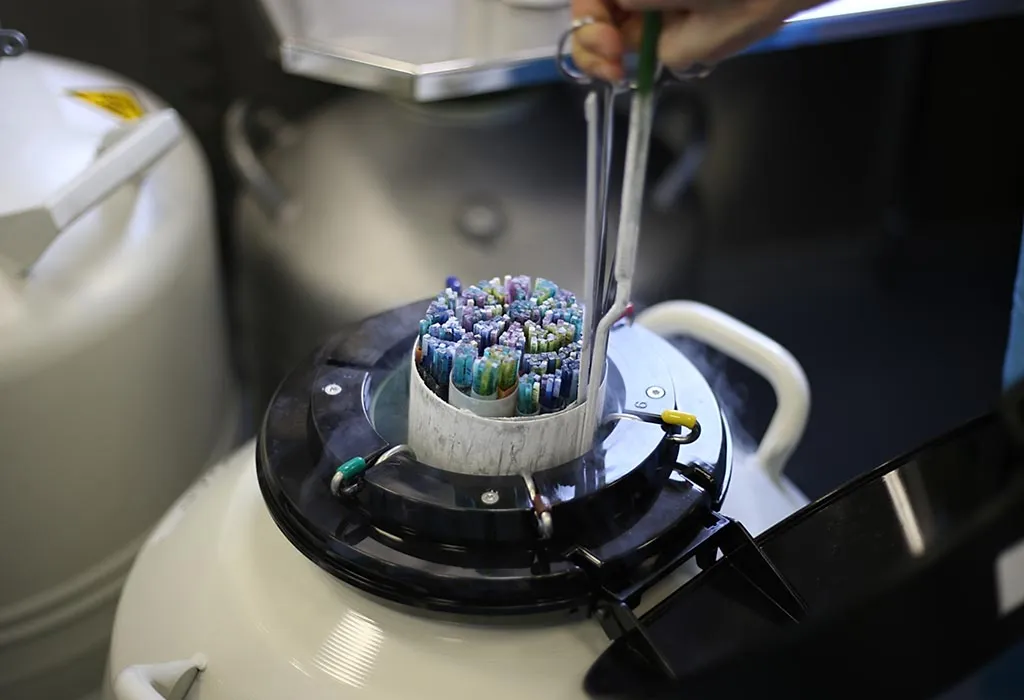
Embryos are frozen using a technique called vitrification. They are stored within plastic trays placed within glass goblets. Once frozen, these are stored in cryopreservation chambers that make use of liquid nitrogen to keep the embryos safe (6).
Frozen Embryo Transfer Procedure
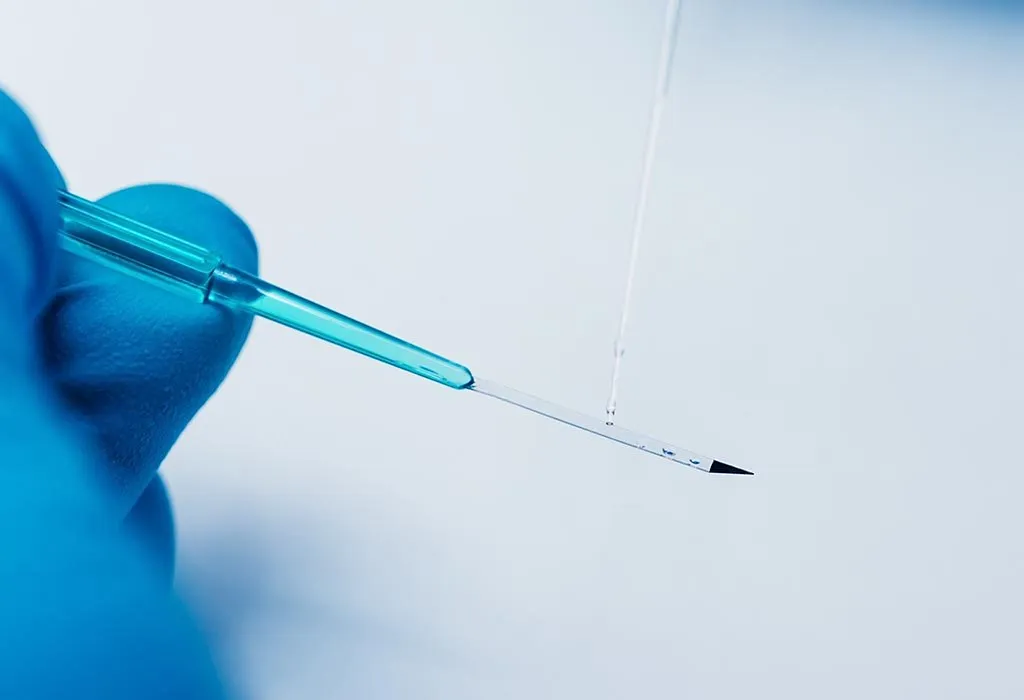
To begin a frozen embryo transfer cycle, the embryos are thawed and prepared for implantation. Based on the stimulation medicines and the woman’s optimal date, the embryos are transferred via the vagina and allowed to implant within the uterus.
Foods to Eat and Avoid During Embryo Transfer
A balanced, nutritious diet can support your overall health before and around an embryo transfer, although no specific food can guarantee implantation or pregnancy. Let’s look at the foods you can include in your diet and those you may want to avoid before embryo transfer.
Foods to Eat Before Embryo Transfer
Here are some nutritious food choices that can help you maintain a well-balanced diet before your embryo transfer:
- Leafy green vegetables: Spinach, kale, broccoli, and other greens provide folate, iron, and antioxidants.
- Fresh fruits: Berries, oranges, apples, and other fruits provide fibre and essential vitamins.
- Protein-rich foods: Eggs, lentils, beans, lean poultry, and well-cooked fish can help meet your protein needs.
- Whole grains: Oats, brown rice, quinoa, and whole-wheat foods provide fibre and important nutrients.
- Healthy fats: Avocados, nuts, seeds, and olive oil provide unsaturated fats that can be part of a balanced diet.
- Low-mercury fish: Salmon, sardines, and other low-mercury fish provide protein and omega-3 fatty acids.
- Adequate fluids: Water should be your main source of hydration, unless your fertility specialist has advised otherwise.
Foods to Avoid Before Embryo Transfer
Along with choosing nutritious foods, it is helpful to limit or avoid certain foods and beverages that may carry food-safety risks or are best consumed in moderation.
- High-mercury fish: Avoid fish known to contain high levels of mercury, such as shark, swordfish, king mackerel, and marlin.
- Raw or undercooked animal foods: Avoid raw eggs, undercooked meat, poultry, and seafood because of the risk of foodborne infections.
- Unpasteurised foods: Avoid unpasteurised milk, cheese, and other products that may carry harmful bacteria.
- Excessive caffeine: Keep caffeine intake within the limit recommended by your fertility specialist; many guidelines advise limiting it during pregnancy to about 200 mg per day (7).
- Alcohol: Avoid alcohol when trying to conceive and during fertility treatment unless your healthcare provider advises otherwise (8).
- Highly processed foods: Limit foods high in added sugars, unhealthy fats, and excess sodium, such as processed meats, sugary drinks, and frequent fast food.
What Is the Success Rate of Frozen Embryo Transfer Procedure?
The success rates of pregnancy with a FET process are the same as that of a fresh cycle via IVF. Women who are 35 years old or less can expect a 60% success rate. However, it plummets as a woman’s age increases (4).
Factors That Affect the Success Rate of Frozen Embryo Transfer
For many years, the success rates associated with a frozen embryo transfer were quite erratic. But in recent years the factors that govern the success of the FET procedure were determined. There are two major ones that play a vital role in that regard.
1. The Technique Used to Freeze the Eggs
In recent years, the cryopreservation process has been replaced with a smarter, modern one. This is called vitrification. Quite contrary to cryopreservation, vitrification makes use of freezing in a flash, by suddenly cooling down the embryos to a freezing point within a matter of seconds. It also makes use of certain substances that protect the embryos, avoiding the formation of ice crystals. This has ramped up the survival rate of the embryos to nearly 95%.
2. The Quality of the Embryos Procured
Embryos were being created in labs for many years, but their chances of surviving in those conditions were extremely low. Even if they were transferred successfully, the implantation within the uterus would fail. In recent years, techniques and equipment have improved considerably. Now, embryos are known to survive for nearly a week at the blastocyst stage, the point where an embryo transfer has the highest chance of success in matters of implantation and continued pregnancy.
How Soon After a Frozen Embryo Transfer Can You Take Pregnancy Test?
Similar to an IVF cycle, it is recommended to wait for at least a couple of weeks before undertaking a pregnancy test. Any earlier than that could result in a false positive. The tests should be repeated again after a few days for confirmation.
Can Anything Go Wrong With a Frozen Embryo Transfer?
As advanced as frozen embryo transfer might be, there are a few possibilities that can make a transfer go wrong (9).
1. Presence of Fluid in the Uterine Cavity
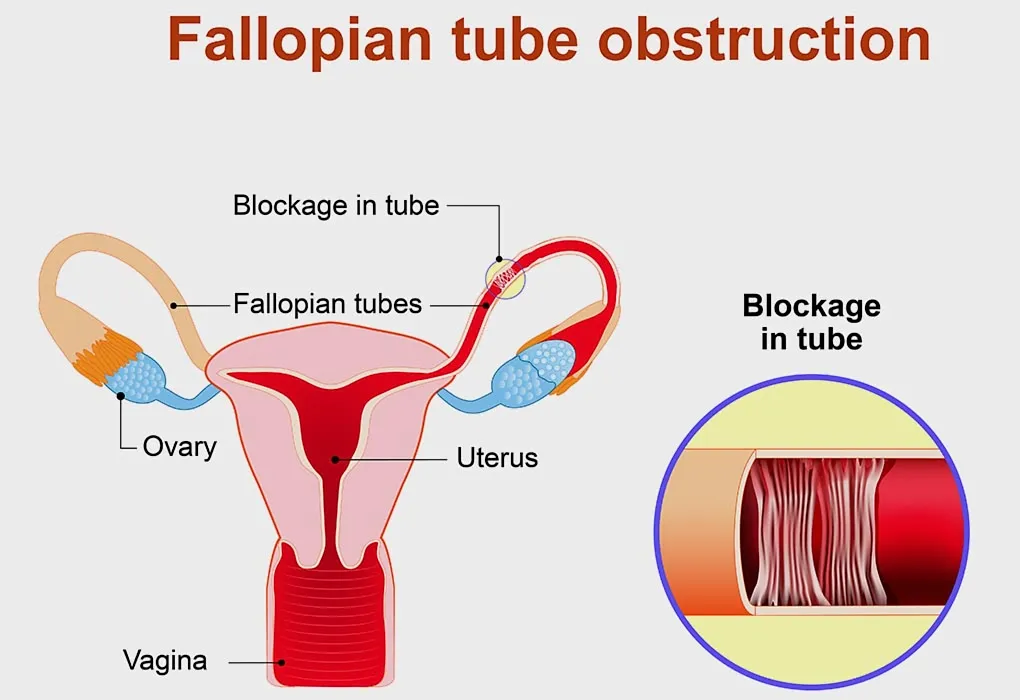
While the uterus is constantly producing and leaking fluid, some of it might be stored in the cavity, reducing the chances of embryo implantation. It could also indicate the presence of blocked fallopian tubes, which can be corrected with surgery. But if that isn’t the case, draining the cavity is a challenge and might require cancelling the FET altogether.
2. Wrong Time to Carry out the Transfer
Some women ovulate earlier than expected, shifting the implantation window to a different zone. Medical testing can help determine the right timing of the window and adjust the transfer accordingly.
3. Ovulation at an Unexpected Time
Progesterone supplements that are taken to prepare the endometrium for implantation are used as a marker to determine the right timing for transfer. A shifted ovulation can cause progesterone levels to rise early on and make it difficult to transfer correctly. Certain medications can also be administered to prevent ovulation from taking place.
4. Presence of a Thin Endometrial Lining
Even after medication and treatment, the endometrium may not be as thick as needed for successful implantation. This can substantially reduce the success rate of a FET. Doctors usually strengthen the medication to counter this issue and carry out the FET anyway or cancel the procedure completely.
5. FET Problems Due to Undetermined Factors
The entire process of implantation depends on numerous factors that are beyond hormones levels and endometrial strength. While research is being conducted to determine more dependencies that are present, a FET may continue to fail even when the conditions seem to be optimal.
What Are the Risks of Frozen Embryo Transfer?
A frozen embryo transfer surely has many benefits but it has its risks too. The benefits are absolutely feasible but so is the possibility of things not going ahead as expected. Know what are the risks of frozen embryo transfer:
1. Multifetal Pregnancy
There are multiple embryos that are transferred during FET to help with implantation. At times, many embryos among those could be implanted successfully causing you to be pregnant with triplets or even more babies. This might require you to undergo fetal reduction to ensure a better chance of completing the pregnancy successfully (10).
2. Failure of Medical Equipment
All medical equipment used in fertility clinics and for the FET procedure is kept to a high standard of functioning. Despite that, there are chances of malfunction that could lead to a total loss of obtained eggs and frozen embryos. This may call for undergoing an IVF procedure again.
3. Ectopic Pregnancy
When FET is being conducted, some embryos may not be ready for implantation and may continue to stay outside the uterus. At times, these could float towards the fallopian tubes and enter them, causing them to be implanted inside those. Such an ectopic pregnancy can be harmful to the mother and needs to be terminated immediately (11).
How Long Can Embryos Be Frozen and Still Be Viable?
The frozen embryos can retain their potential for nearly an infinite time. They can be utilised at any point in your life whenever you want to get pregnant.
What to Do with Leftover Embryos?
The leftover embryos could either be allowed to thaw and terminate naturally. Alternatively, you could donate them to other people or allow them to be used for scientific research.
What Is the Storage Cost of Frozen Embryo?
The cost of storing a frozen embryo depends from clinic to clinic. However, it starts from one lakh at the very least.
What Is the Cost of Frozen Embryo Transfer?
Embryo transfers can be covered by certain medical insurance policies. If not, the entire process can cost in the range of 1.5 to 2 lakhs, excluding any medication that might be required.
FAQs
1. What is the difference between fresh and frozen embryo transfer?
In a fresh vs frozen embryo transfer, the main difference is timing. A fresh embryo transfer usually takes place during the same IVF cycle in which the eggs are retrieved and embryos are created, while a frozen embryo transfer uses an embryo that was frozen and stored for later use.
2. Is frozen embryo transfer painful?
Most people experience little or no significant pain during FET, although mild cramping or discomfort may occur. A thin catheter is passed through the cervix into the uterus to place the embryo, and routine anaesthesia is generally not recommended for improving IVF outcomes.
3. What happens after a frozen embryo transfer?
After FET, you can generally return to normal daily activities unless your fertility specialist advises otherwise. Your clinic will provide instructions about medications and the timing of a pregnancy test; bed rest has not been shown to improve embryo-transfer outcomes.
Knowing the correct frozen embryo transfer implantation timeline is key to achieving a successful pregnancy from the procedure. Understanding the long-term benefits of FET can help you plan your family in the manner of your choosing.
Also Read:
Egg Freezing
Embryo Donation and Adoption
Implantation Cramping – What Is It
Was This Article Helpful?
Parenting is a huge responsibility, for you as a caregiver, but also for us as a parenting content platform. We understand that and take our responsibility of creating credible content seriously. FirstCry Parenting articles are written and published only after extensive research using factually sound references to deliver quality content that is accurate, validated by experts, and completely reliable. To understand how we go about creating content that is credible, read our editorial policy here.
1. Weill Cornell Medicine – Frozen Embryo Transfer (FET)
2. Johns Hopkins Medicine – Freezing Embryos
4. Apollo Fertility – Embryo Freezing: Understanding the Process and its Benefits
5. Cleveland Clinic – Ovarian Hyperstimulation Syndrome (OHSS)
6. Cleveland Clinic – Embryo Freezing (Cryopreservation)
7. Cleveland Clinic – Caffeine and Pregnancy: How Much Is Safe?
8. Tommy’s – Drugs, alcohol and trying to conceive
- Author
- Expert Reviewer

Related Articles
-

Effects of Chemotherapy on Fertility in Men and Women
-
Sperm Motility - How Does it Affect Fertility
-

Is Insurance Coverage Available for IVF Treatment in India?
-
Infertility Risk Factors: Should You Go for Evaluation
-

Best Ayurvedic Treatment to Cure Infertility
-
Embryo Donation and Adoption - A New Path to Parenthood