
Calcium Supplements in Pregnancy: Benefits & FAQs
Find out how calcium supplements benefit pregnancy, who may need them, and the key FAQs every mom-to-be should know.





Medically Reviewed By
Archana Shah
(Diabetologist/Nutritionist/Dietitian)

This content has been reviewed by a qualified expert and follows the FirstCry Parenting editorial policy to ensure accuracy and reliability.
Calcium is a key mineral you need during pregnancy (and even otherwise), along with other vitamins and minerals. You may think that drinking a glass of milk daily or snacking on cheese can help meet your daily requirements of calcium in pregnancy, but that’s only partially true. While milk and cheese are a good source of calcium, they are not enough to fulfil your calcium requirements, especially now that you’re pregnant. The little one growing inside you needs calcium for the healthy growth of their bones and teeth, and you need to up your calcium intake (if you’re not getting enough of it) and ensure that it comes from healthy sources.
Read this article to understand how much calcium you need while pregnant, its benefits, food sources, and whether you may need a calcium supplement during pregnancy.
How Much Calcium Do You Need While Pregnant?
Ideally, women need to consume about 1,000 mg of calcium daily before, during, and after pregnancy. The World Health Organisation and the Food and Agriculture Organisation (part of the United Nations) recommend a dietary intake of 1,200 mg of calcium daily for pregnant women (1).
If you’re wondering, “is calcium safe for pregnancy?”, the answer is yes. When consumed in the recommended amounts, it is an essential nutrient that supports both maternal and foetal health. Taking calcium during the first trimester helps in foetal growth and ensures transmission of nerve impulses, development of muscles and a strong heart, besides building stronger bones and teeth (2). Inadequate calcium intake could result in rickets or weak limbs and even lead to retarded growth.
Adequate intake of calcium during the second trimester may reduce the risk of preeclampsia, as the nutrient aids muscle contraction and helps in regulating blood pressure. Taking calcium in the second trimester may also prevent leg and muscle cramps, a common problem at this stage.
The need for calcium during third-trimester increases as the baby’s skeleton is developing at a faster rate than before to prepare for delivery.
Health Benefits of Calcium for Pregnant Women
As mentioned above, calcium offers health benefits to both mother and child. Here are a few of the benefits which make calcium an important part of a pregnancy diet.
Benefits for the Mother
Calcium can lower the risk of hypertension and preeclampsia, two common pregnancy complications. The deficiency of this nutrient can impact both mother and baby, leading to osteopenia, tremors, muscle cramping, tetanus, delayed foetal growth, low birth weight, and poor foetal mineralisation. Calcium intake during pregnancy has a positive impact on lowering the risk of hypertension too (3) (4).
Benefits for the Baby
In pregnancy, the developing baby draws calcium from the mother to build strong bones and teeth. Eating calcium-rich food during pregnancy is vital because it helps develop a normal heart rhythm and blood-clotting capabilities (4).
Sources of Calcium During Pregnancy
Calcium is available in many food groups including fruits. Here is a list of foods you may choose if you are looking at increasing your calcium intake while pregnant.
Foods

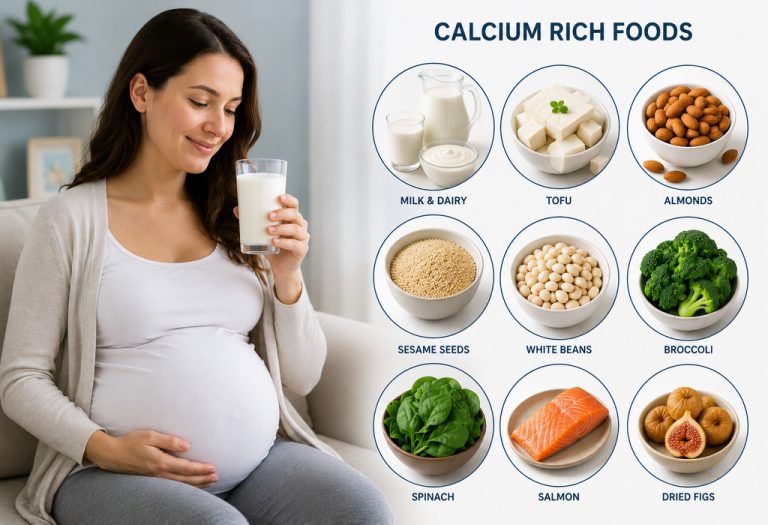
Milk and dairy products are a good source of calcium, as are calcium-fortified cereals, juices, canned fish, soy products, and bread. However, not all products are fortified with calcium, so be sure to check the label before making your choice. If you’re looking for food high in calcium for pregnancy, consider adding the following options to your daily diet (2) (3) (5):
- Cottage cheese: One cup of cottage cheese (250 ml) contains up to 138 mg calcium.
- Yoghurt: Yoghurt is high in calcium, and an eight-ounce serving of yoghurt (about 237 ml) can provide up to 450 mg of calcium.
- Milk: A cup of milk (250 ml) contains 300 mg of calcium.
- Almonds: Almonds have high calcium content. A quarter-cup serving contains around 88 mg of calcium. Figs, dates, pistachios, and walnuts are also rich in calcium.
- Salmon: A 3-ounce can of fish like salmon contains about 180 mg of calcium.
- Spinach: A cooked serving of spinach contains up to 120 mg calcium.
Fruits
Consider eating calcium-rich fruits during pregnancy if you are lactose intolerant and cannot consume dairy products. These include (5):
- Oranges: A 100 g serving of oranges provides 40 mg of calcium.
- Tangerines: A 100 g serving of tangerines contains about 37 mg of calcium.
- Kiwi: A 100 g serving of kiwi contains about 34 mg of calcium.
- Strawberries: A 100 g serving of strawberries contains about 16 mg of calcium.
Your body needs Vitamin D in order to absorb calcium. So, ensure that you also get adequate Vitamin D in your diet.
Can Your Take Calcium Supplements While Pregnant?
Taking calcium supplements during pregnancy is a subject of debate. Your doctor may prescribe a calcium supplement if she deems it necessary, but remember that your body’s calcium absorption capability is 500 mg at a time (3). Do not consume calcium supplements without consulting your doctor first, as excessive calcium consumption can trigger adverse effects on the body.
Calcium supplements are available in various forms and can be taken as capsules, chews, liquids, powders or calcium tablets during pregnancy. The common sources of calcium supplements are carbonate and citrate, which are easily absorbed by the body.
What Is the Best Time to Take Calcium Supplements While Pregnant?
While your doctor will recommend a dosage based on your individual needs, following certain timing and intake guidelines can maximise the benefits of calcium supplementation.
- Take calcium after a meal: Calcium supplements are generally better absorbed when taken after breakfast or lunch rather than on an empty stomach.
- Pair it with vitamin D: Vitamin D plays a crucial role in calcium absorption, so ensure you’re getting enough vitamin D through safe sun exposure, diet, or supplements as recommended by your doctor (6).
- Avoid taking it late at night: Many experts recommend taking calcium earlier in the day instead of close to bedtime for better digestion and utilisation.
- Split larger doses: The body absorbs calcium most efficiently in doses of 500 mg or less at a time (3). If you’ve been prescribed a higher dose, divide it throughout the day.
- Keep calcium separate from iron supplements: Calcium can interfere with the absorption of iron, zinc, and certain minerals. Leave a gap of at least two hours between these supplements (7).
Warning: Over Consumption of Calcium During Pregnancy
Calcium intake during pregnancy needs to be regulated because of its side effects. Consuming too much calcium may cause constipation, increase the risk of urinary stones, and cause infection in the urinary tract. It can also hamper the absorption of other essential micronutrients in your body. It is thus advisable to stick to the doses of supplements prescribed by the gynaecologist.
Important Things to Consider While Taking Calcium in Pregnancy
Getting enough calcium during pregnancy is essential, but your body also needs to absorb and use it effectively. Certain foods and dietary habits can affect calcium absorption, so it is important to make mindful choices while meeting your daily calcium requirements.
- Limit your intake of soft drinks, carbonated beverages, and excessive caffeine, as these may increase calcium loss from the body over time.
- Avoid consuming too much salt, as a high-sodium diet can reduce calcium retention and increase the amount of calcium excreted through urine.
- Try not to rely heavily on high-fat foods, as excess dietary fat may interfere with the body’s ability to absorb calcium efficiently.
- Some foods containing compounds such as phytates can hinder calcium absorption. These include certain legumes, soy products, and unfermented grains.
- Follow a balanced diet rich in calcium and vitamin D, and take calcium supplements as advised by your healthcare provider to support optimal absorption.
FAQs
1. When should I start taking calcium supplements during pregnancy?
The timing of calcium supplementation depends on your nutritional status and your doctor’s advice. Some women may need supplements early in pregnancy, while others may start later if dietary calcium intake is inadequate.
2. Should calcium intake increase during the third trimester?
The baby’s bones grow rapidly during the later stages of pregnancy, making adequate calcium intake especially important during the third trimester. Continue meeting your daily calcium requirements through diet and supplements, if prescribed.
3. Is calcium needed while breastfeeding as well?
Yes. Calcium remains important after delivery because your body continues to support your baby’s growth through breast milk. Maintaining adequate calcium intake during breastfeeding helps protect your bone health and meet your nutritional needs.
The relationship between pregnant women and calcium intake is crucial for supporting a healthy pregnancy. Maintain the intake of this nutrient even after pregnancy to ensure good health for yourself and the baby.
Also Read:
Pregnancy Nutrition
Potassium during Pregnancy
Intake of Protein in Pregnancy
Was This Article Helpful?
Parenting is a huge responsibility, for you as a caregiver, but also for us as a parenting content platform. We understand that and take our responsibility of creating credible content seriously. FirstCry Parenting articles are written and published only after extensive research using factually sound references to deliver quality content that is accurate, validated by experts, and completely reliable. To understand how we go about creating content that is credible, read our editorial policy here.
1. National Library of Medicine – Guideline: Calcium Supplementation in Pregnant Women.
2. NHS – Vitamins, supplements and nutrition in pregnancy
3. National Institutes of Health – Calcium
4. PubMed Central – Calcium: A Nutrient in Pregnancy
5. INTERNATIONAL OSTEOPOROSIS FOUNDATION – CALCIUM CONTENT OF COMMON FOODS
6. PubMed Central – Calcium and Vitamin D: Skeletal and Extraskeletal Health
- Author
- Expert Reviewer

Related Articles
-

Third Trimester Diet – What to Eat & What to Avoid
-
Eating Curry Leaves (Kadi Patta) During Pregnancy - Benefits & Precautions
-
Spinach (Palak) in Pregnancy: Health Benefits & Side Effects
-
Caffeine and Fertility
-
Figs in Pregnancy - Benefits & Ways to Eat It
-
Cheese During Pregnancy - What's Safe and What's Not