Peanut Butter During Pregnancy – Safety, Benefits & Risks
Peanut butter during pregnancy raises real questions about allergies and safety. This nutritionist reviewed guide has the answers.





Medically Reviewed By
Megha Gupta
(Paediatric Nutritionist)

This content has been reviewed by a qualified expert and follows the FirstCry Parenting editorial policy to ensure accuracy and reliability.
Peanut butter in pregnancy is safe for most pregnant women and does not need to be avoided unless you have a peanut allergy or your doctor advises otherwise. Many expecting mothers worry that eating peanuts during pregnancy could increase their baby’s risk of developing a peanut allergy. This concern is understandable, as the Centers for Disease Control and Prevention (CDC) estimates that about 4 out of every 100 children have a food allergy (1). However, current evidence does not recommend avoiding peanuts during pregnancy to prevent food allergies in babies (2). In fact, peanut butter is a good source of protein, healthy fats, folate, and other essential nutrients that support a healthy pregnancy.
This article answers the common question, “Is peanut butter safe for pregnant women?” It also explores the nutritional benefits of peanut butter, its potential risks, and practical tips for enjoying it safely as part of a balanced pregnancy diet.
Can Pregnant Women Eat Peanut Butter?
Peanut butter and pregnancy can be a healthy and nutritious combination when consumed in moderation, providing essential nutrients like protein, healthy fats, and vitamins that support both maternal health and fetal development, as long as there is no peanut allergy. If you are even remotely sensitive or allergic to peanuts, do not eat them. It can prove to be harmful to the baby because of the effect it has on the mother.
Allergies are defined as a deformity of the immune system. The chances of a child developing an allergy are high when the parents have an allergy. They are more prone than children without hereditary allergies. Children will not inherit the same allergy. The body will inherit the information of being sensitive to certain elements but will not read exactly the right elements. For e.g., you or your spouse may have a peanut allergy, but your children may simply inherit an allergy to pollen and may happily eat their peanut butter all day. It is important to remember that it is parents whose allergies can be hereditary, not just mothers. So, mothers, peanut butter is good for pregnancy if you have no allergic reactions.
Nutritional Value of Peanut Butter
Peanut butter is a nutrient-rich food that provides a variety of essential vitamins, minerals, and healthy fats, making it a valuable addition to a pregnancy diet. Here’s a nutritional value per 2-tablespoon (32 gram) serving of regular, unsweetened peanut butter (3):
| Nutrients | Amount |
| Calories | 190 calories |
| Protein | 8 g |
| Fat | 16 g |
| Saturated fat | 3 g |
| Carbs | 7 g |
| Fibre | 3 g |
Benefits of Peanut Butter in Pregnancy
When consumed in moderation as part of a balanced diet, peanut butter can provide several nutrients that support both maternal health and your baby’s growth and development. Here are some of the key benefits of peanut butter for pregnant woman:
- Aids in the development of foetus: Folate and folic acid are important in the development of the foetus. Peanuts are rich in folate and folic acid it is advisable to consume them. 100 g of peanut butter will take care of 60% of folate intake during pregnancy. Two tablespoons of the butter have 76 mcg of folic acid. This helps in controlling birth defects, development of the brain and overall development of the baby (4).
- Natural protein: Protein is essential for a mother during pregnancy and 100 gram of peanuts contain quite high protein to fulfil the daily intake. Especially for vegetarians whose natural source of protein is limited, organic or home-made peanut butter becomes a good source of daily protein intake.
- Bone building: Pregnant woman loses a lot of calcium in those nine months and even afterwards. Peanut butter is rich in calcium and is known to build good bones for babies and mothers alike.
- Improves the immune system: Peanut butter is rich in iron, vitamins, and minerals. It has Vitamin E and flu-fighting antioxidants which strengthen the immune system. A very important element for pregnant women who are prone to fall ill or are weak.

Risk of Eating Peanut Butter While Pregnant
Eating peanut butter while pregnant is usually safe, but there is a small risk related to aflatoxin, a toxic compound produced by the Aspergillus fungus that can contaminate raw peanuts grown underground. Consuming aflatoxins has been linked to severe health issues, including liver cancer, impaired fetal development, anaemia, premature delivery, and, in extreme cases, pregnancy loss (5).
In the U.S., the Food and Drug Administration (FDA) regulates the amount of aflatoxin in peanut products, so commercially made peanut butter is safe. However, peanut products might have more aflatoxin in countries with less strict food safety rules.
Who Should Avoid Peanut Butter?
When pregnant, peanut butter is not always good food especially if you are allergic to it. Well, it is not as easy as you think. Peanut butter allergy can vary from peanut intolerance to peanut allergy. No matter how severe (less or more) your reactions are.
- Peanut sensitivity: If you have observed that eating peanuts have caused minute gas or indigestion problems, its best to avoid peanuts during pregnancy simple to stop further inconvenience to self.
- Past Allergic reactions: If you have had past allergic reactions to peanut or peanut butter ingredients, it is best to completely avoid it for life and especially during pregnancy.
- Prone to increase in weight during Pregnancy: If your doctor or health practitioner has warned you about your rapid increase in weight, its best to avoid nuts and butter of any kind. These are high in caloric value. Just a tablespoon of peanut butter will be close to 100 calories.
Does It Prevent Allergies During Pregnancy?
Eating peanut butter and other nuts during pregnancy might actually help reduce the risk of nut allergies in children. Recent research involving over 70,000 families found that children were less likely to have nut allergies if their mothers consumed nuts while pregnant. This suggests that eating nuts and peanut butter during pregnancy may promote immune tolerance in the child, helping protect them from nut allergies (2).
Experts also recommend introducing peanut products and other common allergens to infants early, ideally between 4 and 6 months old, as this may further help prevent allergies (6) (7). However, if your baby has eczema or an egg allergy, it’s important to discuss this with your baby’s doctor before introducing these foods.
While there’s still a lot we don’t fully understand about food allergies, having peanut butter during pregnancy might be a positive step for allergy prevention.
What Are the Best Types of Peanut Butter to Consume in Pregnancy?
The healthiest choice, both in pregnancy and in general, is natural peanut butter without additives. Many peanut butter contains added hydrogenated oils, salt, and sugars, which aren’t ideal. Hydrogenated oils introduce trans fats, which are linked to a higher risk of heart disease, and added sugars can negatively impact heart health as well (8).
To ensure you’re getting a healthy option, check the ingredient list — it should be simple. The best peanut butter will contain just peanuts or peanuts and salt. If you see other ingredients on the label, especially oils or sugars, it’s better to choose a different jar.
How to Add Peanut Butter in Your Pregnancy Diet?
Peanut butter is a versatile and nutrient-rich food that can be easily included in your pregnancy diet. Here are some simple and healthy ways to add peanut butter to your pregnancy meals and snacks:
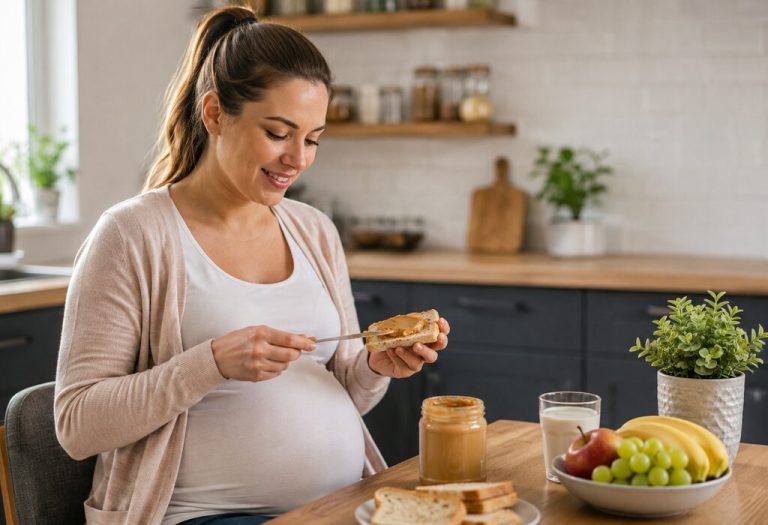
- Spread peanut butter on whole-grain toast, chapati, or crackers for a filling breakfast or snack.
- Blend a spoonful into smoothies with milk, yogurt, and fruits for a protein-rich drink.
- Pair peanut butter with apple slices, banana, celery sticks, or whole-grain crackers for a healthy snack.
- Stir it into oatmeal, porridge, or yogurt to boost protein and healthy fat intake.
- Use peanut butter as a dip or in homemade sauces and dressings for vegetables, noodles, or salads.
When to Consult a Doctor?
While peanut butter is generally safe and nutritious during pregnancy, there are situations where medical advice is important. You should speak to your doctor if:
- You develop signs of an allergic reaction, such as hives, itching, swelling of the lips, tongue, or throat, wheezing, or difficulty breathing.
- You have a known peanut allergy or a history of severe food allergies and are unsure whether peanut butter is safe for you.
- You have gestational diabetes or another medical condition that requires a specialised diet and need guidance on portion sizes.
- You experience persistent digestive discomfort, such as severe bloating, nausea, or stomach pain after consuming peanut butter.
FAQs
1. Should I avoid peanut butter if my family has a history of allergies?
Generally, you don’t need to avoid peanut butter if there’s a family history of allergies, as current research suggests that consuming peanuts during pregnancy does not increase allergy risk. However, if you’re concerned, consult your doctor for personalised advice.
2. How much peanut butter is safe to eat during pregnancy?
Like any food, moderation is key. Consuming 1-2 tablespoons of peanut butter a day can provide nutritional benefits without excessive calories.
3. What if I crave peanut butter but have a nut allergy?
If you are craving peanut butter while pregnant but have a peanut allergy, try alternatives made from seeds, such as sunflower seed butter or soy nut butter, which provide similar flavours and nutrients without triggering allergies.
Peanut butter for pregnancy can be a beneficial snack that support the growth and development of the baby. Just try to make it an organic buy or homemade, if you wish to consume the food on a regular basis. Again, remember that these foods can always be supplemented with some other food if you are uncomfortable. But if eating peanut butter brings immense joy, go for it and make yourself and your baby happy!
Also Read:
Eating Ghee while Pregnant
Eating Butter during Pregnancy
Eating Wheatgrass when Pregnant
Is It Safe to eat Cheese during Pregnancy
Was This Article Helpful?
Parenting is a huge responsibility, for you as a caregiver, but also for us as a parenting content platform. We understand that and take our responsibility of creating credible content seriously. FirstCry Parenting articles are written and published only after extensive research using factually sound references to deliver quality content that is accurate, validated by experts, and completely reliable. To understand how we go about creating content that is credible, read our editorial policy here.
2. PubMed Central – Maternal peanut consumption and risk of peanut allergy in childhood
3. U.S. DEPARTMENT OF AGRICULTURE – Peanut butter, creamy
4. Harvard T. H. Chan School of Public Health – Folate (Folic Acid) – Vitamin B9
5. PubMed Central – Maternal aflatoxin exposure during pregnancy and adverse birth outcomes in Uganda
6. PubMed Central – Early introduction of foods to prevent food allergy
8. PubMed Central – Trans fats-sources, health risks and alternative approach – A review
- Author
- Expert Reviewer


Related Articles
-

Spirulina in Pregnancy – Is It Safe for Pregnant Women?
-
Energy Drinks While Pregnant - Is It Safe?
-
Eating Water Chestnut (Singhara Fruit) During Pregnancy - Benefits and Side-effects
-
Third Month of Pregnancy Diet (9-12 Weeks)
-
Olive Oil in Pregnancy - Benefits, Side-effects, & Safety
-
Indian Pregnancy Diet Plan for Healthy Pregnancy