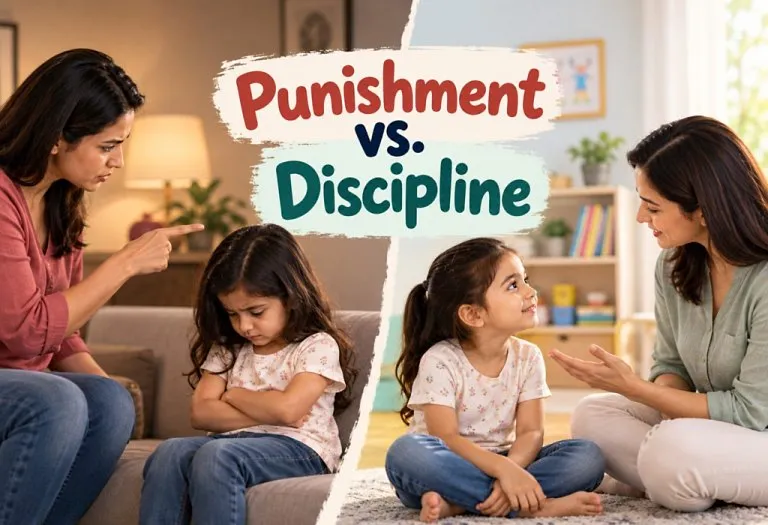
Reactive Parenting: Effects and Ways to Break the Cycle
Learn how reactive parenting affects your child and adopt healthier habits that foster trust, connection, and emotional well-being.




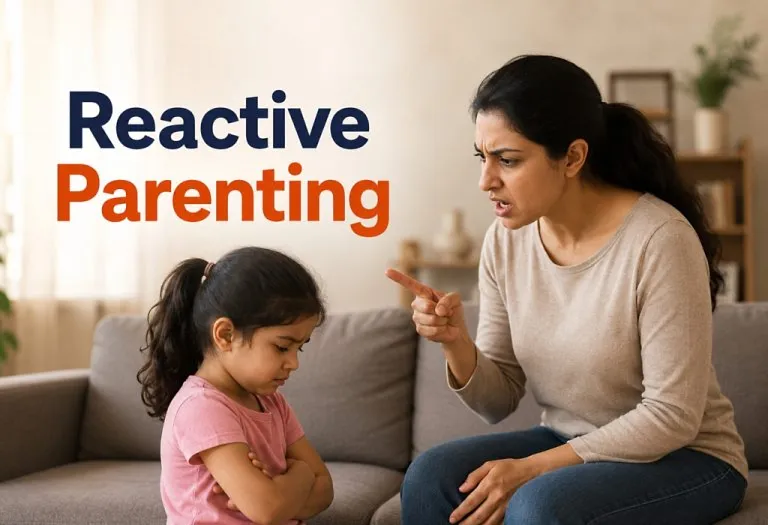
Every parent has had a moment where a child’s whining or a public tantrum triggered a response they later regretted. That snap reaction, the raised voice that comes out before you’ve had time to think, is the hallmark of reactive parenting. It isn’t a character flaw. It’s a pattern, often rooted in stress or your own upbringing, and like any pattern, it can be recognised and changed. This article covers what reactive parenting looks like day to day, why it develops, how it affects children, and practical steps to respond instead of react.
What Is Reactive Parenting?
Reactive parenting is a style where a caregiver’s actions are driven by immediate emotional impulses rather than a thought-out approach to discipline or connection. Instead of pausing to consider the best response, a reactive parent acts on the first wave of frustration, fear, or embarrassment that arises.
This isn’t the same as occasionally losing your patience, which happens to every parent. Reactive parenting becomes a pattern when the same situations, such as whining, defiance, or public meltdowns, repeatedly trigger the same impulsive responses, like yelling, threatening consequences, or handing out punishments in the heat of the moment.
Why Reactive Parenting Happens
Reactive responses rarely come out of nowhere. They usually build from a few overlapping factors, including:
1. Chronic Stress and Exhaustion
A sleep-deprived parent juggling work and a toddler’s tantrum has a shorter fuse than a well-rested one, since stress lowers the threshold for what counts as “too much.”
2. Unprocessed Childhood Experiences
Many parents unconsciously repeat the discipline styles they grew up with, even ones they disliked, because those patterns feel familiar under pressure.
3. Lack of a Game Plan
Without a clear approach to common flashpoints like bedtime resistance or grocery store meltdowns, parents default to whatever feels urgent in the moment.
4. Feeling Judged
A tantrum in public can trigger embarrassment, which often escalates a parent’s response beyond what the situation calls for.
Recognising these root causes matters, because reactive parenting is rarely about the child at all. It’s usually about the parent’s internal state colliding with a hard moment.
Reactive Parenting Examples
Seeing reactive patterns in action can make them easier to spot in your own home. Common patterns that fit this style include:
- Yelling “Stop it right now!” the instant a child starts whining, without addressing why it started.
- Threatening to leave a store during a meltdown, then not following through.
- Giving in to a demand just to stop a public tantrum, even when it’s normally not allowed.
- Snapping at a child over a minor accident, like spilling milk, in a tone disproportionate to the event.
- Comparing a child unfavourably to a sibling in the heat of frustration.
Each of these examples of reactive parenting shares a common thread: the response is driven by the parent’s discomfort rather than a considered plan for guiding behaviour.
Signs You Might Be an Emotionally Reactive Parent
It can be hard to see your own patterns clearly, especially in the middle of a hard day. A few signs tend to show up consistently in someone who reacts on emotion first and thinks second:
- You often feel regret or guilt shortly after responding to your child.
- Your tone or volume shifts dramatically within seconds of a trigger.
- You find yourself saying things you don’t actually mean, like empty threats.
- Your child seems to hesitate before telling you things.
- You struggle to explain your reasoning calmly once the moment has passed.
None of these signs mean you’re a bad parent. They point to a pattern worth examining, and awareness is genuinely the hardest part of the process.
Comparing Reactive and Responsive Approaches
|
Aspect |
Reactive Parenting Style |
Responsive Parenting Style |
|
Trigger response |
Immediate emotional reaction |
Brief pause before responding |
|
Consistency |
Varies by mood or stress level |
Consistent regardless of mood |
|
Communication |
Often raised voice, sharp words |
Calm, clear explanations |
|
Child’s experience |
Uncertainty about what to expect |
Predictability and security |
|
Long-term goal |
Stopping the behaviour fast |
Teaching a skill or lesson |
|
Parent’s emotional state |
Driven by frustration or fear |
Regulated, even under stress |
This isn’t about labeling one parent “good” and another “bad.” Most parents move between these styles depending on the day and how many stressors are competing for their attention. The goal isn’t perfection, it’s shifting the balance toward the responsive end over time.
Effects of Reactive Parenting on Children
Growing up with consistently reactive parenting can shape how children understand themselves and their relationships. Although occasional reactive moments are a normal part of parenting, they don’t define a child’s development. It’s the consistent, repeated pattern that tends to leave a lasting mark.
1. Emotional Regulation Struggles
Children partly learn to manage big feelings by watching how the adults around them handle stress. When a parent regularly reacts with anger or panic, children may struggle to build their own calming strategies.
2. Reduced Trust and Openness
If a child anticipates an unpredictable or harsh reaction, they may become less likely to share mistakes or fears, creating distance in the relationship over time.
3. Anxiety Around Mistakes
Kids raised in reactive environments sometimes develop a heightened fear of getting things wrong, since past errors were met with strong emotion rather than calm guidance.
4. Modelling Reactive Behaviour
Children are natural imitators, and one frequently exposed to reactive responses may adopt similar patterns, reacting to frustration with outbursts rather than problem-solving.
How to Stop Being a Reactive Parent
Shifting away from reactive patterns takes practice, not perfection. These strategies can help build that shift over time.
- Build in a pause: Even five seconds of silence before responding gives your brain time to move past the initial emotional surge, whether that’s counting to five or simply stepping back before speaking.
- Name your triggers: Keep a mental list of situations that reliably set you off, like whining at dinner or dawdling before school, so you can prepare a calmer response in advance.
- Prepare a few go-to phrases: A simple script, such as “I can see you’re upset, let’s figure this out together,” takes the pressure off improvising mid-meltdown.
- Address your own stress first: Sleep, meals, and short breaks change how much emotional bandwidth you have left, and reactive responses often ease once basic needs are being met.
- Repair after a reactive moment: If you do snap, circling back afterwards to acknowledge it models accountability and rebuilds connection quickly.
- Get support when needed: A therapist or parenting coach can help uncover deeper patterns behind reactive responses, especially ones rooted in your own upbringing.
Common Mistakes Parents Make When Trying to Change
Changing long-standing parenting habits takes time, and setbacks are part of the process. Here are a few common mistakes that can make the shift more difficult than it needs to be.
- Expecting instant results:Long-standing patterns take repeated practice to shift, and setbacks are part of the process, not a sign of failure.
- Ignoring your own stress levels: Trying to parent more calmly while running on no sleep rarely works, since the underlying stress hasn’t been addressed.
- Skipping the repair step: Moving on without acknowledging a reactive moment to the child misses a chance to model accountability.
- Only focusing on the child’s behaviour: Real change usually requires looking at the parent’s own triggers, not just trying to control the child’s actions.
- Being too hard on yourself: Harsh self-criticism after a reactive moment adds stress, which ironically makes future reactive responses more likely.
Myth vs. Fact
There’s no shortage of parenting advice, and not all of it is accurate. Here are some common myths about reactive parenting and what the evidence actually says.
|
Myth |
Fact |
|
Reactive parenting means you’re a bad parent. |
Reactive parenting is a common pattern, often shaped by stress and past experiences, not a measure of how much you love your child. |
|
Once you’re a reactive parent, you always will be. |
With awareness and consistent small changes, most parents can shift meaningfully toward a calmer, more responsive style. |
|
Staying calm means never showing emotion. |
Responsive parenting still allows for genuine emotion; it simply involves managing the intensity and timing of the response. |
|
Reactive parenting only affects toddlers. |
The effects can extend into the school-age years and beyond, shaping how children handle stress and relationships later in life. |
FAQs
1. Is reactive parenting the same as yelling at your child?
Yelling can be one expression of reactive parenting, but the pattern also includes other in-the-moment responses like giving in to demands, issuing empty threats, or overreacting to small mistakes. The common thread is an unplanned emotional response rather than the specific behaviour itself.
2. Can reactive parenting be unlearned?
Yes. While it takes consistent effort, most parents can shift toward a calmer, more responsive style by identifying their triggers, building in a brief pause before responding, and repairing after reactive moments. Progress tends to happen gradually rather than overnight.
3. When should I seek professional support for reactive parenting?
If reactive responses are frequent, feel out of your control, or are affecting your relationship with your child despite your efforts to change, a therapist or parenting coach can help identify underlying causes and build more effective strategies.
Reactive parenting is far more common than most parents realise, and recognising it in yourself is not a failure, it’s the first step toward change. By understanding your triggers, pausing before responding, and repairing the moments when you do react, you can gradually shift toward a calmer, more predictable style that helps your child feel secure. Progress is rarely linear, but every small shift adds up.
Was This Article Helpful?
Parenting is a huge responsibility, for you as a caregiver, but also for us as a parenting content platform. We understand that and take our responsibility of creating credible content seriously. FirstCry Parenting articles are written and published only after extensive research using factually sound references to deliver quality content that is accurate, validated by experts, and completely reliable. To understand how we go about creating content that is credible, read our editorial policy here.
- Author


Related Articles
-

Child Behaviour Checklist (CBCL) - Assessing Emotional & Behavioural Problems in Children
-
Gifted Children - Characteristics and Challenges
-
How can Parents Handle Toddler Conflicts
-
How to Develop Positive Thinking & Attitude for Children in Life - 14 Tips
-
Nose Picking in Kids - How to Get Your Kid to Stop It
-
5 Ways To Help Preschoolers Resolve Conflicts







.svg)