
Traffic Rules for Kids: 15 Road Safety Rules for Children
Simple traffic rules and road safety tips every kid should know and follow daily.




In this Article
- Key Takeaways
- Why is Road Safety Important for Children?
- 15 Road Safety Rules for Kids
- Different Road Safety Signs for Kids
- How to Keep Your Child Safe on the Road?
- Road Safety Activities for Children
- Interesting Road Safety Facts for Children
- FAQs
View More
Key Takeaways
- Teach children basic traffic rules early to help them develop safe road habits.
- Always supervise young children near roads and hold their hands while crossing.
- Use footpaths and pedestrian crossings, and follow traffic signals.
- Helmets, seat belts, and appropriate child car seats help reduce the risk of serious injuries.
- Make learning fun with road safety games, activities, and everyday practice.
Teaching children traffic rules from an early age helps them stay safe on the road and develop responsible habits. Simple practices, such as following traffic signals, using pedestrian crossings, and looking both ways before crossing, can make a big difference in preventing accidents.
These traffic rules for kids are easy to understand and practise in everyday life, whether children are walking to school, cycling, or travelling with family. Let’s look at 15 essential road safety rules for kids that parents can teach their children to help them stay alert and safe in different traffic situations.
Why is Road Safety Important for Children?
Teaching kids road safety is a very crucial part of raising the young ones as it directly concerns their physical safety and well-being as they grow and become independent. Rather than isolated lectures and demonstrations, road safety is something that needs to be done continuously and even subtly at times.
15 Road Safety Rules for Kids
Here are 15 basic road safety rules for children that every child should learn and practise.
1. Crossing the Road After Looking Both Ways
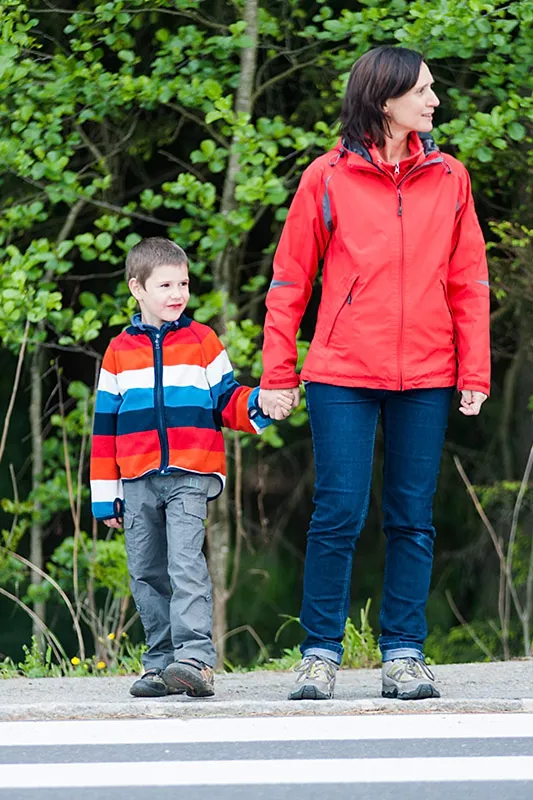 The thought of children crossing the road is enough to make any adult apprehensive, as unpredictable movements and the natural recklessness of a child can cause accidents. The rule of thumb is that young children should not be allowed to cross the road without adult supervision. As kids grow, they are bound to venture outside, and very soon, they will need to crossroads on their own. Ensure that they understand the importance of stopping and looking both ways before crossing, and never take a chance by hurrying across when there is an approaching vehicle. Set a good example when you take your children out. Conditioning is the best way to teach road crossing skills.
2. Reading and Interpreting Road Safety Signs

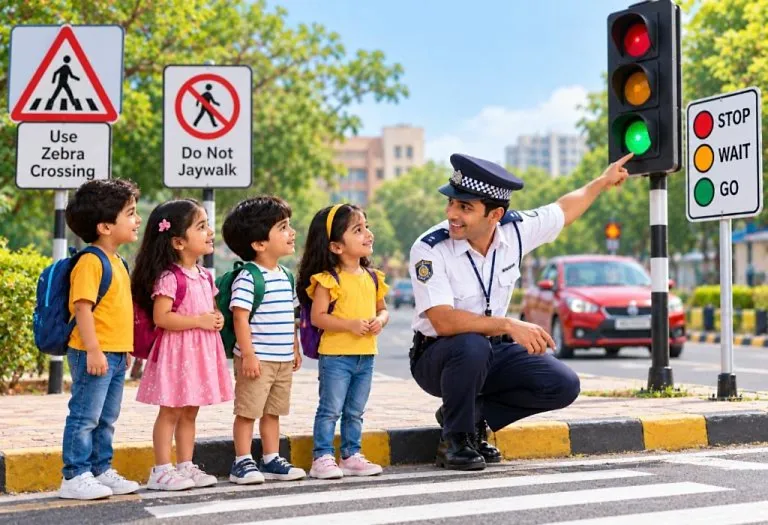
It is paramount that kids are aware of the basic traffic signs and signals. When you are driving, and your child is with you, it is the perfect time to teach them about the difference between the red and green signals, and what the yellow signal means. Teach kids about the pedestrian signals too, as the icon of a person walking, is the most common symbol at most intersections. The ability to interpret basic signs can be the foundation of a long-running education, and exposure to the larger set of rules associated with road traffic safety.
3. Concentrating on the Road

Road safety for children starts with the importance of presence of mind. Children can be lost in their world at times and do not notice the environment and structures around them. They need to be taught to pay attention to their surroundings and be responsive to their senses. Car horns and engine sounds indicate the approach of a vehicle even before it is visible, and kids should be taught to listen to them when crossing.
Another habit that leads to accidents is being engaged in gadgets while walking on the road. Older children love their phones, and everything from games and videos to texting can distract them. Make sure that your child understands that their smartphone must stay in the pocket at all times while crossing the road. Even listening to music while taking a stroll should be a strict no-no for your young one.
4. No Running on the Streets
 Young children cannot understand the distinction between a safe playground and any other open space, and this is something which poses a risk. Children should be warned against running when they are near a road, or when they are crossing it. Running in open spaces with vehicular access is dangerous and can lead to falls near moving vehicles and other rash incidents. Sometimes demonstrating a few examples of incidents may be necessary, especially if children start exhibiting impatience and disregard to instructions regarding running.
5. Using Sidewalks Only When Walking

Tell your kids to never stray onto the roads. Traffic in India is very haphazard and lacks discipline, with vehicles, especially two-wheelers tending to change lanes a lot. Keep children away from the roads and make them understand that a footpath is the only area where they should be. This rule should be reinforced even on empty streets, as once again, the message should be consistent.
6. Crossing the Road Only at Zebra Crossings

Children (and adults too) should not cross roads at all places. Intersections and zebra crossings are specifically determined areas where pedestrians can cross a road. The risk with children is that they tend to sprint or choose any spot to cross because it may seem empty, or approaching vehicles may be far away. Accidents occur when pedestrians fail to gauge the speed of an oncoming car or are caught unaware by a blind spot. This is the reason why pedestrian crossings and intersections are the safest places to cross. In residential areas with streets where there is no such demarcated area, it is necessary to reinforce the ‘stop, look both ways and cross’ rule.
7. Avoiding Blind Spots
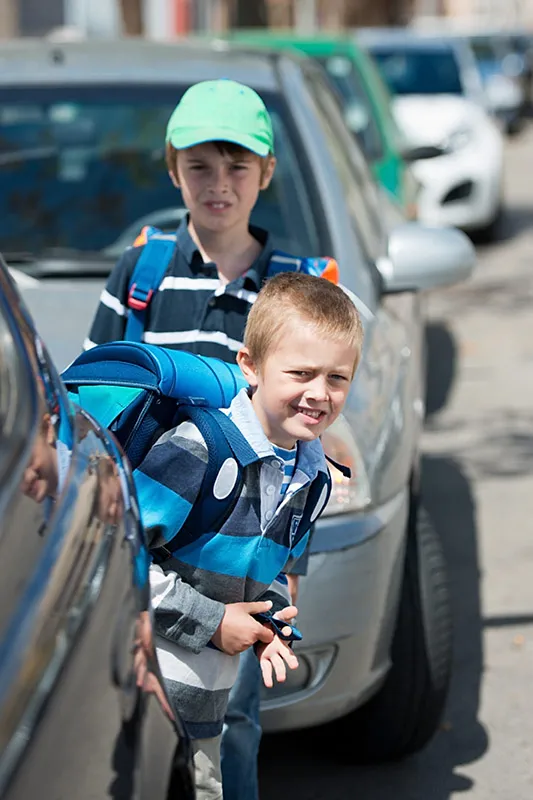 Kids should be taught to never cross at a curve or between parked cars. They should be taught to ascertain all the blind spots before choosing a spot to cross a road. Crossing at bends is a strict no-no. Cars sometimes do not honk at curves, and the pedestrian is completely unaware of any oncoming vehicle because of the blind spot. The same reason applies when crossing between stationary objects. Such objects prevent them from getting a full view of the space around them and can pose a risk.
8. Ensuring Bicycle Safety

All kids love their bicycles, and you may not be able to supervise them as they cycle around the neighbourhood. Here are rules which every kid must follow to ensure safety when cycling:
- A helmet is mandatory: Many times, we overlook this simple detail while paying heed to seatbelt rules and helmets for motor powered two-wheelers. Statistics indicate that this simple accessory can reduce the risk of debilitating head injuries by up to 70%. Make sure your kid is always wearing a high-quality helmet whenever he or she is on a bicycle
- Bicycle maintenance is very important: Flat tyres and malfunctioning brakes can result in loss of control. It is important to keep checking the condition of the bicycle to guard against skidding or breakdowns
- Use a Bicycle-light: It is prudent to use a light on the bicycle, especially when the light changes in the evenings or if it is dark. Not only does the child have a better view of the road, but he is also more visible to other motorists, reducing chances of being hit
- Children should ride bicycles in safe zones where traffic is minimal: Larger main roads should be avoided by children. When cycling, a child should use cycle lanes wherever possible, or stick to the extreme left of the road. Cycling should be avoided if the roads are wet and slippery
9. Set Rules for In-Car Behaviour

Children can be quite restless inside a moving car, which also can lead to bumps and injuries. Here are some rules that kids should follow while travelling in a car:
- Seatbelts should be strapped on. This is a habit that needs to be imbibed for life. While everyone in a car needs to wear a belt, it is especially important that children are strapped in, as they are at a higher risk of falling and injuring themselves
- Children should be taught never to stick any body part outside a moving car. There have been numerous incidents leading to head or arm injuries, and it is best to avoid risking life and limb by sticking a body part out of the car window
10. Follow Bus Safety Tips

Children on a school bus are harder to monitor, and the larger dimensions can also lead to them moving around and falling. Teach them bus safety tips like the following to ensure they are careful:
- Kids should be warned against standing near the door of a moving bus. This can be risky if the bus stops or sways suddenly, or if the door malfunctions
- Children should also not move around the aisle of a moving bus. Sudden brakes or change of momentum can cause them to lose balance and fall
11. Safety Around The Neighbourhood

Another important aspect of traffic safety is awareness in familiar spaces. Parking spaces of apartment buildings, driveways and garages are also places where children spend time. A child engrossed in chasing a ball or playing with a pet might not notice a car backing up or coming into the vicinity. This is why it is important to teach a kid never to let his or her guard down even when playing. When there is a car nearby, the awareness button should remain switched on!
12. Getting Off a Car

This refers to the rule on blind spots mentioned above. Accidents and falls can occur when children get off a car. Also, diminutive height and the obstructing door can cause them not to see an approaching vehicle. When children alight from a vehicle, it should always be towards the side of the footpath, or away from the traffic.
13. Being Seen at Night
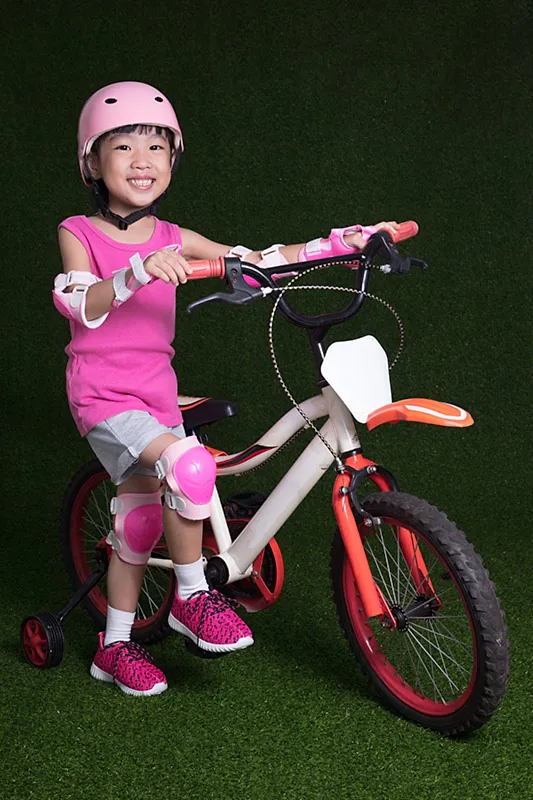
Kids can sometimes go unnoticed until a vehicle reaches up close. The same applies to children on bicycles too. Along with the right safety gear, it is also important to always be seen when travelling near roadways. If your child is venturing out at dusk, or in the evening, make sure he or she is not wearing dark colours that will act as a camouflage. Reflective colours or bright shades are a much safer option. This rule is especially crucial for kids who are cycling around the neighbourhood.
14. Kids Should Not be in Cars Alone

You should never leave a kid alone in a car, but it is equally important that even the child understands why this rule is there. Ensure that your child is taught that he or she should never venture into a car alone. Children can get fidgety and curious and may accidentally start a car. This leads us to the next rule kids should keep in mind, and that is that they should not handle the car-keys around a car or inside it. Leaving children in the car unsupervised can lead to unfortunate accidents where the child can lock himself in by mistake, and with the overheating of the car, suffer a heatstroke.
15. Practice Patience

Whether it is eagerness to meet a friend or excitement about a trip to the zoo, children often rush into a vehicle or on the road, pushing and jostling to be the first ones seated. Teach your child to be patient and wait for his or her turn whether it is while boarding a vehicle, getting off, or even walking across the road.
Different Road Safety Signs for Kids
The different rules and lessons mentioned above will help you teach your child to practice road safety, along with a knowledge of safety and road signs. While teaching safety at road for kids, make sure to cover the essential signs mentioned below:
- The Stop Sign: This sign enables children to be careful about areas where vehicles usually come to a halt. Stop signs often indicate accident prone areas.
- School Crossing Sign: It is important that children learn to recognise this sign as a safe point from which they can cross the road on their way to school.
- Slow-Children at Play Sign: Found near playgrounds and school yards, these signs emphasise the need for motorists and children to be extra careful in areas used by both.
- Seatbelt Buckle up Sign: With the emphasis on road safety in India, the seat-belt buckle-up sign now appears on the streets too. It is important that children learn the importance of buckling up, as this not only ensures their security but also prepares them to be responsible drivers.
How to Keep Your Child Safe on the Road?
Keeping your child safe on the road starts with teaching simple safety habits and making them part of everyday life. Here are seven practical tips about road safety for kids that parents can follow to help children stay safe around traffic.
- Teach Traffic Rules Early: Explain traffic signals, road signs, and basic road safety rules so your child knows how to behave around moving vehicles.
- Always Hold Their Hand: Hold your child’s hand while walking near busy roads or crossing streets, especially when they are young.
- Use Pedestrian Crossings: Teach children to cross only at designated pedestrian crossings, footbridges, or underpasses where available.
- Set a Good Example: Follow traffic signals, use seat belts, and avoid distractions while driving to encourage your child to develop safe habits.
- Avoid Mobile Phones Near Roads: Encourage children to put away their phones, avoid wearing distracting headphones, and pay attention to their surroundings near traffic.
- Practise Road Safety Together: Walk with your child and let them practise stopping, looking both ways, listening for traffic, and crossing safely under your supervision.
Road Safety Activities for Children
Teaching road safety becomes easier when children learn through fun, hands-on experiences rather than instructions alone. These engaging activities can help reinforce road safety tips for kids and teach children how to respond to different traffic situations.
1. Traffic Light Game
Teach children what red, yellow, and green traffic lights mean through a simple game. Call out a colour and ask them to stop, get ready, or move accordingly, helping them remember traffic signals in a fun way.
2. Create a Road Safety Poster
Give children paper, crayons, and markers to create posters featuring traffic signs, pedestrian crossings, and road safety messages. This activity encourages creativity while helping them remember important safety rules.
3. Practise Crossing the Road
Create a mock pedestrian crossing at home or in a safe open space using chalk or tape. Teach children to stop, look both ways, listen for traffic, and cross with an adult when it is safe.
4. Identify Traffic Signs
Show children pictures of common traffic signs, such as Stop, No Entry, and School Ahead. Ask them to identify each sign and explain what it means to help build their road awareness.
5. Role-Play Different Road Situations
Let children take turns pretending to be pedestrians, cyclists, and drivers using toy cars and road signs. This activity helps them understand how different road users should behave and why following traffic rules matters.
6. Go on a Road Safety Walk
Take your child on a supervised walk around the neighbourhood and point out footpaths, zebra crossings, traffic lights, and road signs. Encourage them to identify safe places to walk and cross while explaining potential road hazards.
7. Play a Road Safety Quiz
Ask simple questions such as, “What should you do before crossing the road?” or “Where should you walk if there is a footpath?” A short quiz makes learning interactive and helps you check whether your child understands essential road safety rules.
Interesting Road Safety Facts for Children
Here are five important facts that explain why following traffic rules and using safety equipment are essential.
- Vulnerable Road Users Face Greater Risks: Pedestrians, cyclists, and motorcyclists account for approximately half of all road traffic deaths worldwide, highlighting the importance of protecting people who are less shielded from traffic.
- Helmets Can Save Lives: Wearing a good-quality, properly fitted helmet can reduce the risk of death in a road crash by around 40% and the risk of serious head injury by about 74% (1).
- Child Car Seats Offer Better Protection: Using an appropriate child car seat can significantly reduce the risk of serious injuries during a crash. Research from the CDC indicates that car seats can lower the risk of injury among infants and toddlers by 71–82% (2).
- Seat Belts Reduce the Risk of Death: Wearing a seat belt can reduce the risk of death among vehicle occupants by up to 50% in a road crash. This is why children and adults should buckle up on every journey (3).
- Lower Speeds Make Roads Safer: Driving at lower speeds gives drivers more time to react and helps reduce the severity of collisions. Even a small reduction in speed can lower the risk of crashes and serious injuries.
FAQs
1. At what age should children start learning traffic rules?
Children can begin learning simple road safety rules as soon as they start walking and exploring their surroundings. Parents should supervise young children closely and gradually teach them more advanced safety skills as they grow older.
2. What should children do when there is no footpath?
If there is no footpath, children should walk well away from traffic and follow local pedestrian safety guidance. Where permitted, walking facing oncoming traffic can help them see approaching vehicles. Younger children should always walk with an adult.
3. What should children do if a traffic signal is not working?
Children should never assume that it is safe to cross when a traffic signal is not working. They should wait, look carefully for approaching vehicles, and seek help from a traffic police officer or trusted adult before crossing.
Children are a product of their environment, and a trusted adult who respects traffic rules will spread that influence on the younger ones. Whether it is imbibing the concept of road safety signs for kids or general safe pedestrian behaviour, children need to be taught about responsibility towards their personal safety.
Also Read:
Outdoor Safety Tips
Safety Rules for Kids at Home
Safety Tips for Toddler Cycling
Safety Rules to Follow in School
Was This Article Helpful?
Parenting is a huge responsibility, for you as a caregiver, but also for us as a parenting content platform. We understand that and take our responsibility of creating credible content seriously. FirstCry Parenting articles are written and published only after extensive research using factually sound references to deliver quality content that is accurate, validated by experts, and completely reliable. To understand how we go about creating content that is credible, read our editorial policy here.
- Author


Related Articles
-

6 Tips to Fill The Generation Gap Between Parent and Child
-

This Is Why We MUST Not Force Little Children to Say Sorry, & Do This Instead
-

The Importance of Positive Discipline for Preschoolers
-
Important Character Traits for Kids and How to Teach Them
-

7-Year-Old Behavior Problems and Tips to Discipline Them
-

15 Helpful Parenting Tips for Preschoolers