
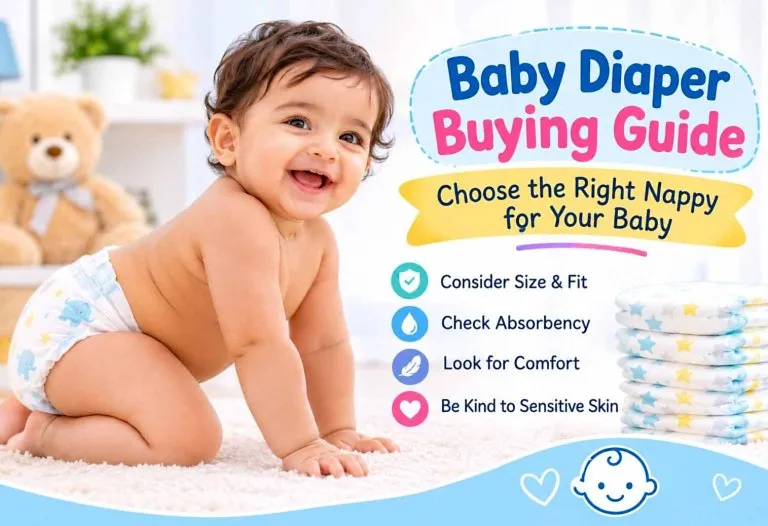
Baby Diaper Buying Guide: Choose the Right Nappy for Your Baby
Learn how to choose the best baby diaper by understanding diaper types, sizes, absorbency, fit, skin comfort and key features to consider before buying.




Our editorial process ensures that the information we provide is well-researched and reliable. Learn more about our approach in the FirstCry Parenting editorial policy.
Key Takeaways
- Choose diapers by your baby’s current weight, not age: weight bands are more reliable than the age ranges printed on packs.
- Leg-cuff fit and core absorbency matter more than brand or price when preventing leaks.
- Fragrance-free inner layers lower nappy rash risk, especially in warm, humid weather.
- Cloth diapers cost more upfront but save money over time; disposables suit travel and overnight use better.
- Always test a small pack first: fit varies between brands even within the same size label.
A baby diaper buying guide helps parents cut through the options and choose what actually works. The right diaper keeps your baby dry, comfortable and free from rash, but the wrong size or material leads to leaks and skin irritation. The main trade-off is between absorbency and fit: a diaper too big leaks at the legs, while one too small leaves pressure marks. This guide covers every type, size, feature and buying check to help you decide with confidence.
Types of Baby Diapers: Disposable, Cloth and Eco Options
Baby diapers fall into four main types. Knowing what each offers makes it easier to pick the right one for your baby’s stage and your household routine.
| Type | Best For | Key Benefit | Main Limitation |
|---|---|---|---|
| Disposable | Daily use, travel, overnight | High absorbency, easy to change | Ongoing cost; generates waste |
| Cloth (reusable) | Home use, budget-conscious families | Washable, economical over time | Needs regular washing; slower to dry |
| Eco or biodegradable | Reducing plastic use | Plant-based materials, less petroleum | Usually costs more per diaper than standard disposables |
| Swim diaper | Pool or beach | Contains solid waste in water | Does not absorb liquid; not for everyday use |
Disposable diapers are the most widely used for their absorbency and ease. Cloth diapers have a higher upfront cost but work out cheaper over the long term; they need frequent washing and adequate drying time, which matters when humidity means fabrics take longer to dry. Eco-friendly diapers offer a middle path: similar convenience to disposables but with fewer petroleum-based materials. Swim diapers serve a single, specific purpose and cannot replace everyday diapers.
How to Find the Right Diaper Size
Diaper sizing is based on weight, not age. A baby who grows quickly may need a larger size well before the age range on the pack suggests it. A premature or smaller baby may stay in a smaller size for longer. Always check the weight band printed on the pack, and move up a size when leaks appear at the leg cuffs or the tabs no longer fasten flat across the belly.
| Size Label | Typical Weight Range |
|---|---|
| Newborn (NB) | Up to 5 kg |
| Small (S) | 4 to 8 kg |
| Medium (M) | 7 to 12 kg |
| Large (L) | 9 to 14 kg |
| Extra Large (XL) | 12 to 17 kg |
| XXL | 15 kg and above |
Weight ranges are approximate and differ between brands. [VERIFY against live listings] If a size feels right on weight but is still leaking, try a different brand in the same weight range before moving to the next size up.
Quick Fact: Diaper sizes vary between brands: a size M in one range may cover a different weight than a size M in another. Check the weight band printed on the pack rather than the size letter alone.
Key Features to Look for in a Baby Diaper
The features that make the biggest difference to everyday use are absorbency, leg-cuff fit, tab quality and breathability. Knowing what each does helps you read a product description with confidence.
Absorbency and Core
A good absorbent core draws moisture away from the skin quickly and holds it, even after multiple wees. The inner surface should feel dry to the touch; a wet-feeling surface means the core is not pulling moisture away fast enough.
Elasticated Leg Cuffs
Leg cuffs create the seal that stops leaks during movement, feeds and nappy checks. After fitting, run a finger along the inside of the cuff: it should feel snug but not leave a deep red mark on the skin.
Refastenable Tabs
Tabs that peel cleanly and re-stick firmly after a nappy check save a diaper from being replaced unnecessarily. Tabs that lose grip quickly or tear on first opening are a common complaint in buyer reviews and a sign of lower build quality.
Wetness Indicator
A colour-changing strip on the outside of the diaper turns from yellow to blue when the diaper is wet. Brands such as Pampers, Huggies and MamyPoko offer disposable options with wetness indicators, which many parents find useful during the newborn weeks when feed and sleep routines make it easy to lose track of changes.
Breathable Outer Cover
A breathable outer layer allows air to circulate while holding moisture in. Breathability is worth prioritising if your baby spends extended stretches in a diaper without an outer layer of clothing, particularly during warm months.
Materials, Skin Safety and What to Check on the Label
The inner layer of a diaper sits against your baby’s skin for hours at a time, so the material genuinely matters. Most disposable diapers use a soft non-woven fabric layer next to the skin, with a super-absorbent polymer core beneath it, and a thin outer film that prevents leakage.
Quick Fact: Most disposable diapers use a super-absorbent polymer core that pulls moisture away from the baby’s skin and locks it in, keeping the inner surface dry even after several wees.
Fragrance-free diapers are a safer starting point for newborns and babies with sensitive skin. Added fragrances and lotion coatings on the inner layer can cause contact reactions; if rash appears with a scented diaper, switching to a fragrance-free option is worth trying before applying any cream.
No specific quality-control order for baby diapers has been confirmed under BIS at the time of writing [VERIFY]. Until a mandatory standard applies, check whether the product description mentions dermatological testing or hypoallergenic material claims. These are not regulated in the same way as a certified standard, but they indicate the maker has tested for skin compatibility.
At a glance: materials do and do not
| Do | Do Not |
|---|---|
| Choose fragrance-free for newborns and sensitive skin | Continue using scented diapers if rash has appeared |
| Check for a soft, dry inner layer in the product description | Assume all diapers use the same core material |
| Look for hypoallergenic or dermatologically tested claims | Rely on pack photography alone to judge inner material quality |
| Switch brand or material if rash persists after a few days | Apply heavy cream without first trying a different diaper type |
Practical Considerations When Buying Diapers
Check Weight, Not Age Range
Diaper packs often show an age range prominently and the weight range in smaller text. Always read the weight figure because two babies of the same age can be very different sizes. Plan when your baby is likely to move up a size and avoid buying large packs too far in advance.
Buy a Trial Pack First
Fit and absorbency vary between brands within the same size label. A small trial pack lets you test whether the leg cuffs, waistband and tabs work for your baby before committing to a bulk order that may sit unused.
Verify the Seller and Return Policy
When ordering online, check that the seller is listed as authorised or fulfilled by a reputable retailer. Confirm the return and exchange terms before buying a large pack; many platforms allow returns on sealed, unused baby products within a stated window. Keep the original packaging until you are confident the diaper fits well.
Consider Multiple Caregivers
If more than one caregiver will be changing diapers, check that the tab system and leg-cuff adjustments are straightforward for different people to manage. Tabs that fasten in a single step without threading or adjusting are easier for everyone to use consistently and correctly.
Common Diaper Buying Mistakes to Avoid
Knowing what trips parents up most often saves money and prevents frustration.
- Buying the wrong size in bulk. A diaper that fits this week may be too small in a fortnight. Buy in bulk only once a size has proved comfortable for at least two consecutive weeks.
- Choosing by age range alone. The age range on a pack is an estimate based on average growth curves. Weight is the more reliable guide.
- Assuming all same-size diapers fit the same way. Cut and leg-cuff shape differ between brands. If leaks persist despite the right weight range, try a different brand rather than moving straight to a larger size.
- Ignoring materials when rash appears. Persistent rash is sometimes caused by a fragrance or lotion coating rather than wetness alone. Switching to a fragrance-free option is worth trying before applying a heavy barrier cream.
- Skipping the return policy check. Buying a large pack online without reading the return terms can leave you with an unusable product if the fit does not work out.
Quick Fact: Disposable diapers have a shelf life noted on their packaging. The elastic in the leg cuffs and waistband is the component most affected by heat, humidity and long-term storage.
Your Pre-Purchase Diaper Checklist
Go through this list before adding any diaper to your order:
- Baby’s current weight checked against the size chart on the pack
- Size confirmed by weight, not by age range
- Inner material type noted: fragrance-free and lotion-free for newborns and sensitive skin
- Leg-cuff and waistband style reviewed in the product description or images
- Wetness indicator present if useful for your routine
- Small or trial pack chosen for the first order of any new brand
- Seller verified as authorised or fulfilled by a reputable retailer
- Return and exchange policy confirmed before purchase
Conclusion
Baby diapers come in disposable, cloth and eco-friendly types, each with different costs, materials and convenience levels. Always match size to your baby’s current weight, not the age on the pack. Check leg-cuff fit, inner material and breathability when comparing options. Buy a small trial pack before committing to bulk, and confirm the return policy with the seller. If your baby develops persistent redness or rash, ask your paediatrician whether a material or type change would help.
FAQ
What is the difference between disposable and cloth diapers?
Disposable diapers are single-use and highly absorbent, designed for convenience and ease of change. Cloth diapers are washable and reusable, making them more economical over time but requiring regular laundering. The right choice depends on your daily routine, washing access and how much drying time is reliably available.
How do I choose the right diaper size for my baby?
Choose the size that matches your baby’s current weight, using the weight range printed on the pack rather than the age guide. Babies grow at different rates, so the right size may change sooner than the age label suggests. When leaks appear at the leg cuffs or tabs no longer fasten flat, it is time to move up a size.
How often should I change my baby’s diaper?
Newborns typically need a change every two to three hours, or promptly after any bowel movement regardless of wetness. As babies grow, the gap between changes may extend slightly. Changing immediately after a soiling is the most effective single step for preventing nappy rash.
Which are the best baby diaper brands in India?
No single brand suits every baby, as fit and skin compatibility depend on body shape and sensitivity. When comparing, look at the weight range, inner material, leg-cuff design and whether the diaper is fragrance-free. Brands such as Pampers, Huggies, MamyPoko and Himalaya Baby offer a range of disposable options; test a small pack of each before buying in bulk. [VERIFY all four brands on the listing page before publishing]
Where can I buy baby diapers?
Baby diapers are available from dedicated baby retailers and large online platforms. FirstCry, Amazon and Flipkart carry a wide range of brands and sizes. When buying online, verify that the seller is authorised, check that the return policy covers sealed unused packs and confirm the product description lists the size, weight range and material details.
Are fragrance-free diapers better for sensitive skin?
Fragrance-free diapers are a better starting point for newborns and babies with easily irritated skin. Fragrances and lotion coatings on the inner layer can cause contact reactions in some babies. If rash appears with a scented or lotion-containing diaper, switch to a fragrance-free option before applying any cream.
How do I prevent nappy rash?
Nappy rash is most often caused by prolonged contact with moisture or stool. Change diapers promptly, allow some air time without a diaper each day, and apply a barrier cream at each change if skin is prone to redness. If rash persists or spreads, consult a paediatrician before changing the diaper type.
What should I check on a diaper listing when buying online?
Check that the listing states the size label and weight range, the inner material type, whether the diaper is fragrance-free and any dermatological testing claim. Confirm the seller is authorised, that return and exchange terms are clearly stated, and read recent reviews for comments on fit and leaks at the leg cuffs.
What return or exchange policy should I look for when buying diapers online?
Look for a policy that allows return or exchange of sealed, unused packs within a clear window. Confirm the terms before buying a large pack of a new brand, and keep the original packaging until you are sure the diaper fits well and suits your baby’s skin.
Are eco-friendly diapers as absorbent as standard disposables?
Eco-friendly diapers use plant-based or recycled materials in place of some conventional components and are generally comparable to standard disposables in absorbency, though performance varies by brand. Test a small pack first, check the stated weight range carefully and read recent reviews for feedback on leakage during active use.
Was This Article Helpful?
Parenting is a huge responsibility, for you as a caregiver, but also for us as a parenting content platform. We understand that and take our responsibility of creating credible content seriously. FirstCry Parenting articles are written and published only after extensive research using factually sound references to deliver quality content that is accurate, validated by experts, and completely reliable. To understand how we go about creating content that is credible, read our editorial policy here.
- Author