

16 Weeks Pregnant: Symptoms, Baby Development, Diet & More





Medically Reviewed By
Dr. Sabiha Anjum
(Gynecologist/Obstetrician)

In this Article
- Growth of the Baby at 16 Weeks of Pregnancy
- Size of the Baby
- Common Bodily Changes
- Symptoms of Pregnancy at Week 16
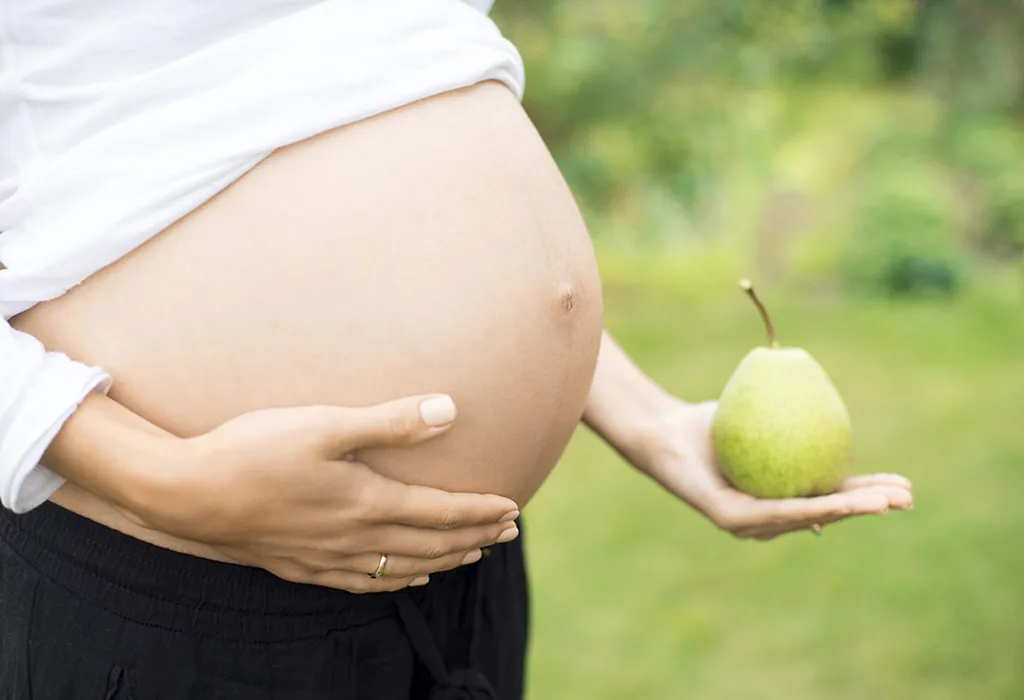
- Belly at 16 Weeks of Pregnancy
- 16 Weeks Is How Many Months in Pregnancy?
- Ultrasound Scan at 16 Weeks of Pregnancy
- What to Eat
- Care Tips
- What You Need to Shop For
- When to Consult the Doctor?
- FAQs
View More
This health content has been medically reviewed by qualified experts and follows the FirstCry Parenting editorial policy to ensure accuracy and reliability.
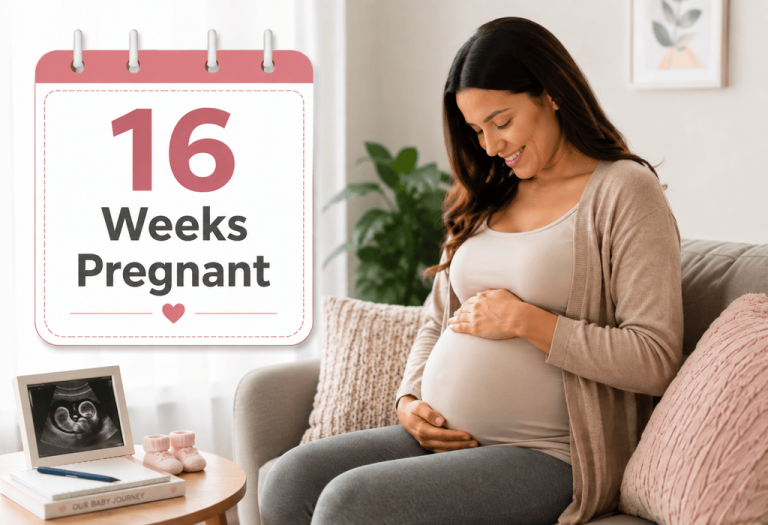
At 16 weeks pregnant, your baby is around 11.6 cm long, about the size of an avocado, and is becoming increasingly active as their nervous system develops. You may also notice your own body changing, with symptoms such as constipation, bloating, headaches, heartburn, or round ligament pain becoming more noticeable. Some women may even begin to feel the first gentle flutters of movement, although it is completely normal not to feel them yet; most people notice movement between 16 and 24 weeks. In this article, we’ll cover what’s happening to your baby and body at 16 weeks, common symptoms, healthy diet choices, lifestyle tips, prenatal care, and when to contact your doctor.
Growth of the Baby at 16 Weeks of Pregnancy
This week is the real deal, as your baby is likely to have fully formed genitals and eyes that are still fused but sensitive to light. Your baby may also start yawning inside your tummy now. The tiny muscles and backbone have gained strength, which means that your baby can now straighten their head and neck further than in the last few weeks. Your baby’s facial features have matured, thereby enabling him to frown or squint (1). However, your baby’s skin will still be transparent (2).
Size of the Baby
This is probably the most exciting part, as your tummy is now home to a 4-5-inch foetus that weighs around 100 grams (3). The other exciting part of your baby’s size is that your doctor will now know if your baby is a girl or a boy as the genitals are fully formed. Let’s just say that your avocado-sized baby is as good as a fully functional human being (4). Keep in mind that at 16 weeks pregnant, the baby’s size may also vary depending on different medical factors.
Common Bodily Changes
Since your baby’s body and weight have already changed at the onset of 16 weeks, it is hardly a surprise that you will face certain changes in your body during pregnancy at the end of this week. For starters, you will be curvier than before and may have to wear bigger clothes.
You will notice that you have fewer mood swings and a beautiful glow on your face, and you will feel less nauseated (5). Your biggest worry at this point will soon be stretch marks besides the well-being of your baby.
Symptoms of Pregnancy at Week 16
By this time, you are likely to get adjusted to the usual symptoms of pregnancy. It is, of course, safe to say that some symptoms are likely to continue until the end of pregnancy, while new ones will develop as each week progresses. Here are some common sixteen weeks pregnancy symptoms:
- You may experience backache now owing to the weight of the foetus (6).
- Your breasts will certainly be bigger and will continue to be sensitive.
- Your eyes will be more sensitive owing to the changing hormones.
- You may end up being constipated more often (4).
- You may also be forgetful owing to the hormonal changes that your body is constantly undergoing.
- You might also get varicose veins or cramps in your legs (1).
- Nasal congestion or a stuffy nose can also occur because hormonal changes increase blood flow to the nasal passages.
Belly at 16 Weeks of Pregnancy
At times, you might struggle to catch your breath. This is because your baby is growing, gaining weight and generally feels free to move around your belly. More importantly, there will be quite a bit of activity inside your belly as your baby might have started kicking or simply moving around, and you might want to be careful because muscle twitches and gas are still common in the 16th week of pregnancy.
16 Weeks Is How Many Months in Pregnancy?
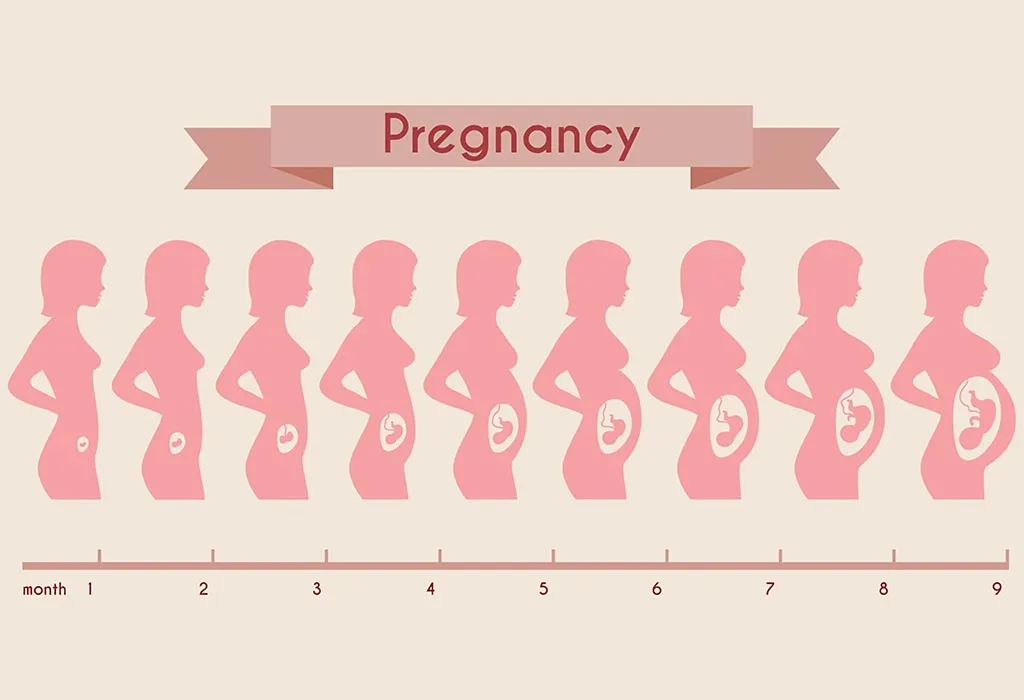
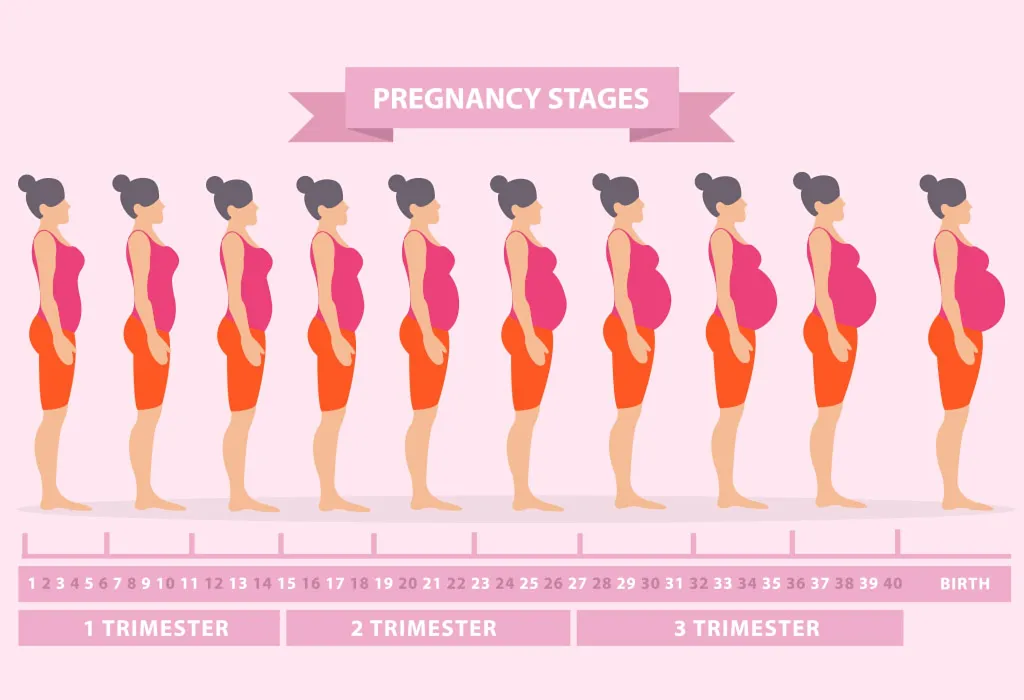
16 weeks gestation is four months pregnant. It is important to note that doctors track pregnancy progress in weeks, not months.
Ultrasound Scan at 16 Weeks of Pregnancy
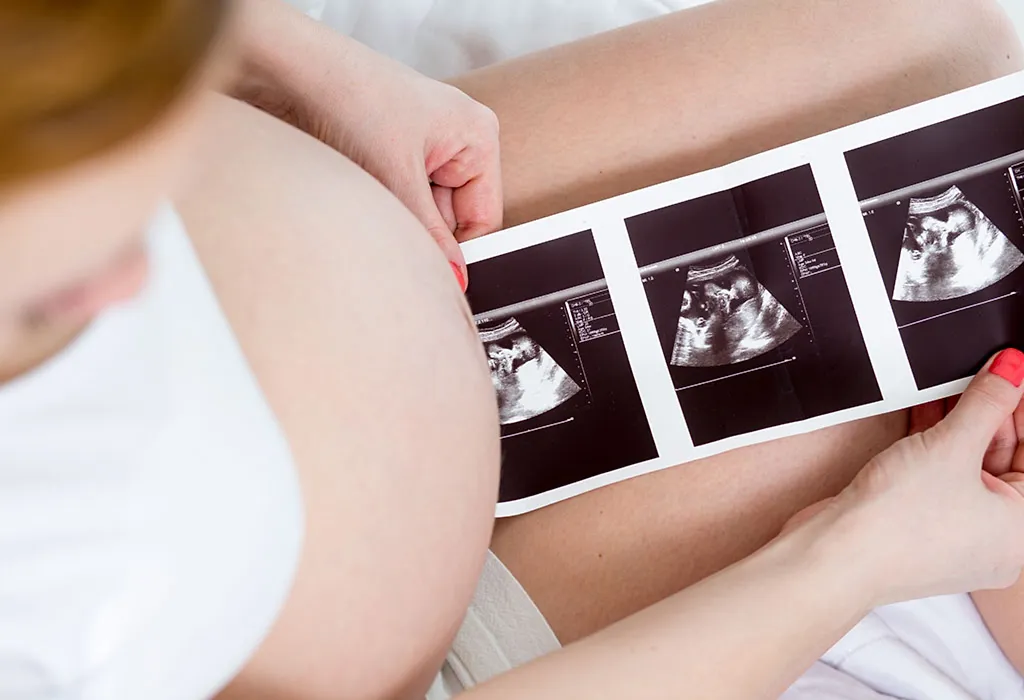
The ultrasound at the 16th week will show the maturation of organs. Your baby’s taste buds will form, and so will his eyebrows, hair, and eyelashes. Since your baby can now identify voices and sounds, it indicates that the tiny bones of the ears, as well as the tympanic membrane, will have developed.
In addition to the 16-week sonogram, your urine might also be tested during this week to check for diabetes and other diseases. Besides that, the usual signs of your baby’s growth, such as heartbeat, maturing organs, movement and sensitivity towards light, can all be charted.
What to Eat
Apart from the well-being of your child, the other thing you will mostly worry about at the 16th week of your pregnancy is food. Listed below is a suggestion of what you should be eating.
- A bite of chocolate may do you good, but as a regular practice, continue eating fruits and yoghurt, which aid digestion and provide necessary nutrients.
- String cheese is an excellent choice for those craving salty foods, as it is rich in calcium and proteins.
- Include a range of fresh fruits and vegetables in your diet to make sure your baby gets the nutrients essential for growth (7).
- Make sure you consult a doctor and take proper vitamin supplements. These ensure that you get the nutrition that food can alone not suffice.
- Lean meat, little red meat, fish, eggs, and pulses are all good choices to include in your diet as they contain easily digestible proteins.
- Make sure you include iron, vitamin C, and calcium in your diet to supplement it.
Care Tips
This is the time when you should start taking extra care of yourself. Eating properly will benefit your weight gain, as it is important to have the strength to bear the weight of your baby. Make sure you do not perform any task in excess as this may have a negative effect on your unborn baby.
Dos
- Exercise mildly or walk, at least for 30 minutes each day, to relieve your backache or leg cramps (8).
- Remember you aren’t eating for two. You are simply providing nutrition to yourself and your baby. So, go for mindful eating and do not overeat.
- Get plenty of rest and adequate sleep.
- Stay hydrated without increasing soft drink consumption.
- Think positive and stay cheerful, as that will go a long way to improving mental health.
Don’ts
- Drink too much caffeine as it can have a negative impact on your baby’s overall health.
- Indulge in heavy workouts, as they may leave you exhausted.
- Starve yourself or your foetus.
- Stay in an unhygienic state.
- Ignore your oral health.
- Stress yourself out.
- Shy away from asking for help as and when required.
What You Need to Shop For
Pregnancy doesn’t need to be boring; flaunt your baby bump in style. If you prefer stylish, shop for bright maternity dresses that make you feel comfortable and good. Invest in good shoes, preferably with soft padding that will relieve the muscles of your feet. Comfortable tops and button-up maternity kurtis look great and are very convenient, too. Bella Mama has a lovely range of maternity night suits and nighties that are ideal as comfortable sleepwear. Get a good anti-stretch mark cream or oil because your skin will keep expanding. Do buy some lotions and creams because your skin will feel dry. Don’t forget to invest in a practical handbag that can stock up your essentials. Also, purchase eye drops that provide a cooling effect that can help relax your eye muscles. Oral care products are important,t too. Finally, don’t forget to purchase good parenting books.
When to Consult the Doctor?
During the second trimester, you may have prenatal appointments with your doctor every 3-4 weeks or differently depending on your progress. However, if you feel something unusual or any sudden discomfort, it is advised that you don’t wait for your scheduled appointment and consult a doctor as soon as possible to get your concerns checked.
At 16 weeks of pregnancy, you should immediately consult a doctor if you experience:
- Vaginal bleeding (should always be informed to the doctor) (9)
- Severe cramping
- Fever
- Dizziness or fainting
- Changes in vaginal discharge
- Foul-smelling discharge
- Severe vomiting
FAQs
1. Where is your baby positioned at 16 weeks of pregnancy?
By 20 weeks, the uterus slowly reaches the belly button. In most pregnant women, the 16-week fetus is usually below the belly button.
2. Can you feel the baby when 16 weeks pregnant?
Most pregnant women feel the movements of their babies for the first time between 16 and 20 weeks of pregnancy (10). This phenomenon is called quickening (11). The movements may feel like a little fluttering, tiny pulses, or bubbles in your tummy. However, if you don’t feel your little one’s movements between 16 and 20 weeks, please remember that it is normal.
3. Why do I frequently feel so constipated?
Constipation in pregnancy is a common pregnancy symptom throughout the pregnancy, which is caused by a combination of factors, like prenatal vitamins or low activity levels (12). Although not dangerous, it could lead to discomfort and other issues, like haemorrhoids and anal fissures. Contact your doctor for a suitable remedy.
4. How can I prevent pregnancy stretch marks?
Honestly, there’s not much you can do to avoid pregnancy stretch marks, as it is genetic. But the best you can do to stay away from them is to stay hydrated by consuming water and water-rich foods and moisturising your skin regularly.
A thorough idea of what to expect during pregnancy can keep you ready to overcome the challenges that you may likely face during this period. Don’t stress; enjoy each and every moment, and have a great pregnancy!
Previous Week: 15 Weeks Pregnant
Next Week: 17 Weeks Pregnant
Was This Article Helpful?
Parenting is a huge responsibility, for you as a caregiver, but also for us as a parenting content platform. We understand that and take our responsibility of creating credible content seriously. FirstCry Parenting articles are written and published only after extensive research using factually sound references to deliver quality content that is accurate, validated by experts, and completely reliable. To understand how we go about creating content that is credible, read our editorial policy here.
1. Tommy’s – 16 weeks pregnant: baby’s development, your mental health and antenatal appointments
2. ACOG – How Your Fetus Grows During Pregnancy
3. Nemours KidsHealth – Pregnancy Calendar: Week 16
5. American Pregnancy Association – 16 Weeks Pregnant
6. Pregnancy Birth & Baby – Pregnancy at week 16
7. NHS – Have a healthy diet in pregnancy
8. NHS – Exercise in pregnancy
9. ACOG – Bleeding During Pregnancy
10. Cleveland Clinic – Quickening in Pregnancy
11. Johns Hopkins Medicine – The Second Trimester
12. Cleveland Clinic – Pregnancy Constipation
- Author
- Expert Reviewer


Related Articles
-
7 Weeks Pregnant - Symptoms, Baby Growth and Care Tips
-
14 Weeks Ultrasound - What to Expect
-

20 Weeks Pregnant: Ultrasound, Symptoms, & Belly Size
-
Foetal Growth Chart Week by Week – Length & Weight
-
30 Weeks Pregnant - Baby Development, Signs and Symptoms
-

8 Weeks Pregnant: Ultrasound, Symptoms, & Belly Size