
20 Rhino Facts for Kids You Can’t Miss
Learn fascinating rhino facts for kids, including their habitat, diet, unique features, and why these gentle giants need protection.




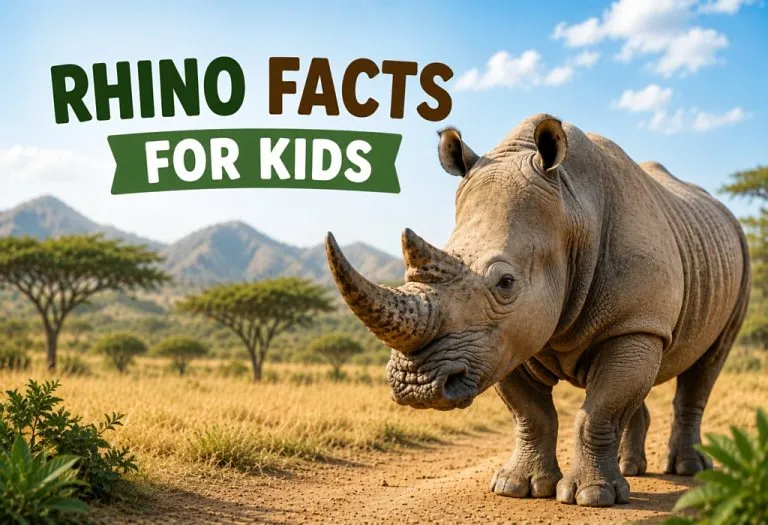
Rhinos are some of the coolest and most fascinating animals on Earth! With their giant bodies, tough skin, and impressive horns, they almost look like they walked straight out of the age of dinosaurs. But did you know that rhinos are actually gentle plant-eaters with some surprising abilities? From their amazing sense of smell to the different species found around the world, there’s so much to discover about these incredible creatures.
Get ready to explore 20 rhino facts for kids and discover incredible secrets about these mighty animals. You might even find a few fun facts that will surprise your family, friends, and teachers!
What Is a Rhinoceros?
A rhinoceros, or rhino for short, is a large, plant-eating mammal known for the horn (or horns) on its nose. The name comes from Greek words meaning “nose horn,” which makes perfect sense.
Rhinos belong to a group of animals called megafauna, meaning they are some of the biggest land creatures alive today (1). They have thick, tough skin, short legs, and a stocky body built for strength rather than speed, though as you’ll see below, they can still move surprisingly fast when they want to.
Where Do Rhinos Live?
Rhinos are native to Africa and Asia. African rhinos roam grasslands and savannas, while Asian rhinos tend to prefer dense forests and swampy areas. Because their habitats look so different, each species has adapted in its own unique way to survive there. African rhinos often travel across wide open spaces looking for grass, while Asian rhinos are more likely to be found wading through rivers and marshes as they search for leaves and fruit.
Interesting Facts About Rhinos for Kids
Check out these interesting rhino facts for kids to discover amazing things you probably never knew about these incredible animals!
Fact 1: There Are Five Rhino Species
Two species live in Africa (the white rhino and the black rhino), and three live in Asia (the greater one-horned rhino, the Javan rhino, and the Sumatran rhino) (2). Each species looks a little different and lives in its own part of the world.
Fact 2: White Rhinos Aren’t Actually White
Despite the name, white rhinos are grey, just like black rhinos. Many experts believe the name came from a mix-up with an old word describing the shape of the rhino’s wide mouth, not its colour at all (3).
Fact 3: Rhinos Prefer Warm Climates
Because rhinos have very little hair on their bodies, they thrive in warm regions like the grasslands of Africa and the tropical forests of Asia. Cold weather isn’t friendly to their thick but hairless skin.
Fact 4: White Rhinos Are True Heavyweights
An adult white rhino can weigh more than 5,000 pounds, roughly as heavy as a small pickup truck. That makes it the second-largest land animal on Earth, right behind the elephant.
Fact 5: The Sumatran Rhino Is the Smallest
While white rhinos are giants, the Sumatran rhino is the smallest living species, weighing around 1,300 to 2,000 pounds. It’s also covered in reddish-brown hair, which sets it apart from its nearly hairless relatives (4).
Fact 6: A Rhino’s Skin Is Super Thick
A rhino’s skin can be up to two inches thick in some places, acting like natural armour. Despite being so tough, the skin is still sensitive to sunburn and insect bites, which is why rhinos love rolling in mud. The mud dries into a protective coating that shields their skin from the sun and keeps biting insects away, almost like a natural sunscreen.
Fact 7: Rhinos Can Run Fast
Even though they look slow and heavy, rhinos can run up to 30 miles per hour over short distances. That’s faster than most humans can sprint, so it’s always best to admire them from far away.
Fact 8: Rhino Horns Are Made of Keratin
A rhino’s horn isn’t made of bone. It’s made of keratin, the exact same protein found in human hair and fingernails. This is one of the most surprising pieces of rhino information for kids to learn, since most people assume the horn is like a solid piece of bone (2).
Fact 9: Some Rhinos Have One Horn, Others Have Two
The Javan rhino and greater one-horned rhino each have a single horn, while white, black, and Sumatran rhinos have two horns, one larger and one smaller (4). The number of horns is one of the easiest ways to tell species apart.
Fact 10: Horns Keep Growing All Life Long
Rhino horns never stop growing, much like human fingernails. If a horn breaks or gets worn down, it can slowly grow back over time (5).
Fact 11: Horns Are Used for Defense
Rhinos use their horns to defend themselves, protect their calves, and compete with rivals during mating season (5). Mother rhinos are especially quick to use their horns if a calf seems threatened.
Fact 12: A Group of Rhinos Is Called a Crash
Most rhinos prefer to live alone, but white rhinos and greater one-horned rhinos sometimes gather in small groups. When they do, that group has a special name: a crash (6).
Fact 13: Rhinos Talk Through Sounds, Not Words
Rhinos communicate using growls, snorts, grunts, and even a soft sound similar to a snore. These sounds help them warn each other about danger or stay connected with their calves.
Fact 14: Rhinos Have Poor Eyesight
A rhino can struggle to spot a person standing still from just 100 feet away. To make up for this, they rely heavily on their sense of smell and hearing to understand what’s happening around them.
Fact 15: Birds Help Rhinos Stay Safe
Small birds called oxpeckers often ride along on a rhino’s back, eating insects off its skin. In return, the birds act like an alarm system, making noise whenever they spot danger nearby.
Fact 16: Rhino Pregnancies Last Over a Year
A mother rhino carries her baby for about 15 to 16 months, one of the longest pregnancies of any land animal (6). That’s more than four times longer than a human pregnancy.
Fact 17: Calves Stay Close to Mom
A calf usually stays with its mother for about two years, learning how to find food, avoid danger, and understand its home territory. The bond between a mother rhino and her calf is one of the strongest in the animal kingdom, and mothers are fiercely protective the entire time.
Fact 18: Newborn Calves Are Already on Their Feet
Despite weighing close to 100 pounds at birth, a rhino calf can stand and walk within just a few hours. Within days, it’s able to keep pace with its mother as she moves around her territory.
Fact 19: Every Rhino Has a Unique Horn
Just like no two people have identical fingerprints, no two rhino horns are exactly alike. Each horn has its own shape, size, and curves that make it unique.
Fact 20: Rhinos Have an Amazing Sense of Smell
A rhino’s eyesight isn’t very sharp, but its sense of smell is incredibly powerful. It can detect other animals, find food, and even sense danger from far away by using its nose.
FAQs
1. What is a baby rhino called?
A baby rhino is called a calf, just like a baby cow or elephant.
2. Are rhinos dangerous to humans?
Rhinos are generally not aggressive unless they feel threatened or are protecting their calves, but their large size and poor eyesight mean it’s always best to observe them from a safe distance.
3. Why are rhinos endangered?
Rhinos are endangered mainly because of poaching for their horns and the loss of their natural habitat.
If you’re looking for rhino information for kids, these fun facts make learning about these amazing animals easy and exciting. Sharing them with your child is a great way to spark curiosity about wildlife and inspire a love of learning. As kids discover more about these incredible creatures, they can also begin to understand why it’s important to protect animals and the habitats they call home.
Also Read:
Exciting and Fun Facts About Animals for Kids
Amazing Tortoise Facts for Kids to Learn
Tree Facts for Kids That Will Surprise You
Was This Article Helpful?
- Author


Related Articles
-

Kidney Stones in Pregnancy: Causes, Symptoms & Treatment
-
Acai in Pregnancy – Safety, Benefits, Risks, and Recipes
-
40 Interesting Mystery Riddles for Kids
-
36 Weeks Pregnant: Symptoms, Fetal Movement, Body Changes
-
Is It Safe to Consume Propranolol During Pregnancy?
-
7 Things You Should Do At Home To Make Your Baby's Muscles Strong and Healthy!








.svg)