

15 Rabbit Facts for Kids That Will Surprise You
Amazing rabbit facts for kids that make learning fun, from their super senses and speedy hops to surprising habits and unique traits.




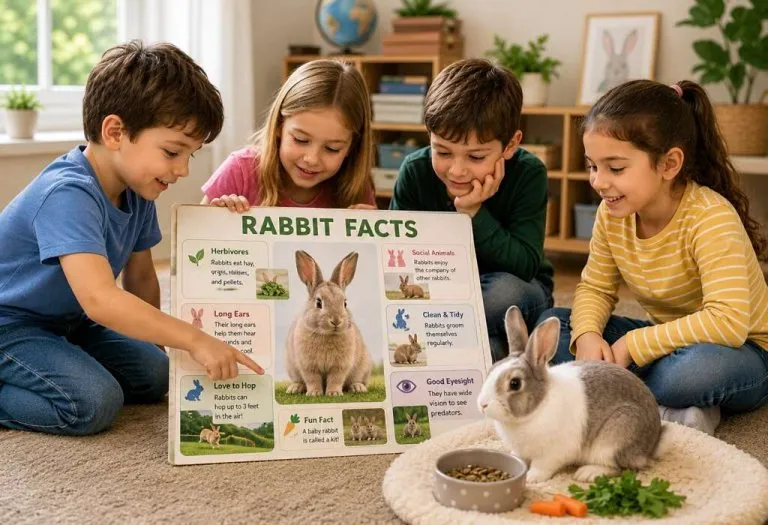
Kids who love animals are usually fascinated by the fluffy, twitchy nosed creatures that hop around backyards, meadows, and pet store windows. If your child has ever asked why a bunny’s ears are so big or why it thumps its foot, this collection of fun facts about rabbits for kids will answer those questions and plenty more they haven’t thought to ask yet. From secret superpowers to strange eating habits, these facts turn an ordinary animal into an extraordinary one.
Why Rabbits Make Such a Fascinating Animal to Learn About
Rabbits show up in classrooms, storybooks, and backyards more than almost any other wild animal, yet most children only know the basics: they’re fluffy, they hop, and they eat carrots. In reality, rabbits have unusual bodies built for survival, surprising family lives, and behaviours that scientists still study today. Learning real information about rabbits helps kids see how nature designs animals for the specific challenges they face, whether that’s escaping a fox or surviving a snowy winter.
Interesting Facts About Rabbits for Kids
Let’s hop right in and discover some fun and interesting facts about rabbits!
1. Rabbits Can See Almost All the Way Around Their Head
A rabbit’s eyes sit on the sides of its head, giving it a nearly 360 degree field of vision. This means a rabbit can spot danger sneaking up from behind without turning its head at all. The one small blind spot sits right in front of its nose, which is why rabbits use their whiskers and sense of smell to check what’s directly in front of them (1).
2. Their Back Legs Are Built Like Springs
A rabbit’s powerful back legs let it leap distances of up to nine feet in a single jump and reach speeds of around 30 to 45 miles per hour when startled. Those long legs also mean rabbits cannot walk backward easily. Instead, they hop, pivot, or reverse direction with a quick jump.
3. Rabbit Teeth Never Stop Growing
A rabbit’s front teeth grow continuously throughout its life, sometimes several inches a year. To keep them from getting too long, rabbits gnaw on hay, twigs, and other tough materials. This constant chewing wears the teeth down and keeps them a healthy, manageable length (2).
4. A Group of Rabbits Has Some Fun Names
A group of rabbits is called a colony or a herd, and a group of baby rabbits born together is called a litter (3). The place where wild rabbits live and raise their young underground is called a warren, which can include dozens of connected tunnels and rooms.
5. Wild Rabbits Are Expert Tunnel Builders
Wild rabbit facts often highlight their incredible digging skills. Using their strong front paws, wild rabbits carve out extensive burrow systems with multiple entrances, escape routes, and nesting chambers. These warrens protect rabbit families from predators and harsh weather, and some can stretch many feet underground.
6. Rabbits Communicate Without Making Much Noise
Unlike dogs or cats, rabbits are mostly silent animals. Instead of barking or meowing, they communicate through body language. A rabbit thumping its back foot warns other rabbits of danger nearby. A joyful rabbit will often leap and twist in the air in a move called a binky, and a relaxed rabbit flops onto its side when it feels completely safe.
7. Baby Rabbits Are Born Without Fur
Newborn rabbits, called kits or kittens (4), arrive blind, deaf, and without any fur. Within about a week, their eyes open and fur begins to grow in. Mother rabbits only nurse their babies once or twice a day, for just a few minutes at a time, which is much less often than most other mammal mothers.
8. Rabbits Are Not Rodents
Even though rabbits look like they might belong in the same family as mice and squirrels, they actually belong to a completely different group called lagomorphs. Lagomorphs have an extra set of small teeth behind their front incisors, a feature no rodent has (5). Pikas and hares also belong to this same family.
9. Marsh Rabbits Are Surprisingly Good Swimmers
Marsh rabbit facts surprise a lot of kids because most people picture rabbits avoiding water entirely. Marsh rabbits, found in wetlands across the southeastern United States, are strong swimmers that paddle through swamps and marshes to escape predators or reach food (6). They even have slightly webbed back feet to help them move through water more easily.
10. Some Rabbits Change Colour With the Seasons
Certain wild rabbit species living in cold, snowy regions grow a white winter coat that helps them blend into the snow. Snow rabbit facts often mention how this seasonal colour change, called molting, helps rabbits stay hidden from hawks, foxes, and other predators until the snow melts and their coat shifts back to brown or grey for spring.
11. A Rabbit’s Nose Twitches Up to 120 Times a Minute
That constant nose wiggle is not just for looks. Twitching helps rabbits pull in more scent particles, giving them a sharper sense of smell to detect predators, food, and other rabbits nearby. When a rabbit feels calm and comfortable, its nose often slows down or stops twitching altogether.
12. Rabbits Eat Some of Their Own Droppings
This fact tends to surprise kids the most. Rabbits produce a special soft dropping called a cecotrope, which is packed with nutrients their bodies could not fully absorb the first time around. By eating these droppings, rabbits get a second dose of vitamins and protein, helping them get the most out of every meal of grass and plants (7).
13. Wild Rabbits Rarely Live More Than a Few Years
While pet rabbits can live eight to twelve years with proper care, wild rabbits usually survive only one to three years due to predators, disease, and harsh weather. To make up for this short lifespan, female rabbits can have several litters a year, with each litter containing anywhere from one to twelve babies.
14. Rabbits Have Nearly 360 Degree Hearing Too
A rabbit’s tall ears do more than help it stay cool. Each ear can rotate independently, allowing a rabbit to pinpoint the exact direction of a sound without moving its body. This early warning system gives rabbits precious extra seconds to freeze, hide, or bolt when a predator approaches (8).
15. Rabbits Are Found on Every Continent Except Antarctica
From deserts to snowy mountains to marshy wetlands, rabbits have adapted to live almost everywhere on Earth. This incredible range is part of why there are so many species, each shaped by the specific climate and landscape it calls home.
Fun Ways for Kids to Remember These Facts
Learning is more fun when it sticks. Try turning these facts into a simple game night activity:
- Pick a favourite fact and act it out, like hopping nine feet or twitching a “nose” without laughing.
- Draw a rabbit warren and label the tunnels, nesting rooms, and escape routes.
- Compare a marsh rabbit, a snow rabbit, and a backyard wild rabbit on a simple chart showing where each one lives and how it stays safe.
- Ask your child to guess which fact surprised them the most and why.
These small activities help facts move from short-term memory into something kids actually remember and enjoy sharing with friends.
Rabbits may seem like a simple, familiar animal, but their bodies and behaviours are full of surprises, from nearly 360 degree vision and ever-growing teeth to swimming marsh rabbits and colour-changing snow dwellers. Sharing facts like these with kids does more than fill a few minutes of conversation. It builds curiosity about the natural world and shows children that even the animals they see every day have remarkable stories worth discovering.
Also Read:
Tortoise Facts for Kids
Giraffe Facts for Children
Hedgehog Facts for Children
Was This Article Helpful?
Parenting is a huge responsibility, for you as a caregiver, but also for us as a parenting content platform. We understand that and take our responsibility of creating credible content seriously. FirstCry Parenting articles are written and published only after extensive research using factually sound references to deliver quality content that is accurate, validated by experts, and completely reliable. To understand how we go about creating content that is credible, read our editorial policy here.
1. Rabbit.Org Foundation – What Do Rabbits See?
2. Pressbooks – The Teeth That Keep Growing and Growing and Growing and…
3. Wildlife Center of Virginia – If you find a baby rabbit …
4. Adelphi University – Did You Know?
5. Encyclopedia Britannica – lagomorph
6. North Carolina Wildlife Resources Commission – Marsh Rabbit
7. Rabbit.Org Foundation – Cecotropes
8. Cheltenham Animal Shelter – How rabbits see the world
- Author








.svg)