

Flaxseeds for Babies and Kids: Benefits, Safety and Recipes
Explore how flaxseeds can support your child’s nutrition, their benefits, possible side effects, and safe ways to include them in meals.





Medically Reviewed By
Dr. Arva Bhavnagarwala
(Paediatrician)

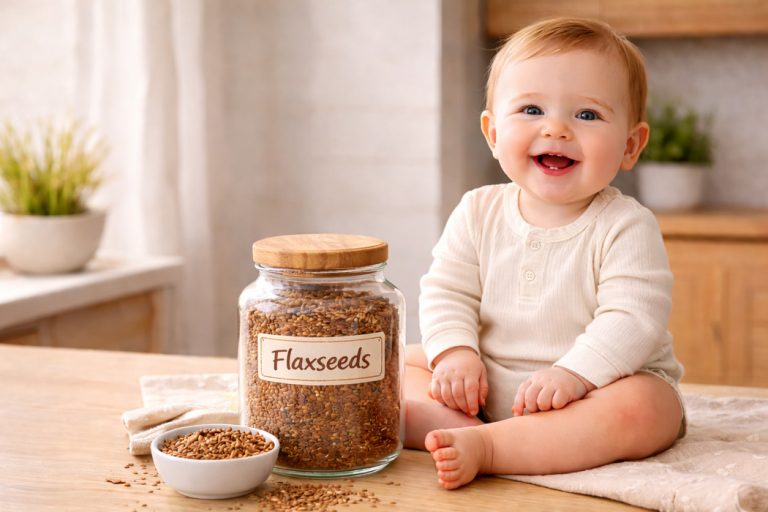
Image Credit : AI Generated Image
Did you know that the introduction of flaxseeds for babies and kids is highly beneficial for their growth and development? Flaxseeds are a known ‘superfoods’ that contain good amounts of essential vitamins, minerals, and nutrients like Vitamin B complex, Vitamin C, folate, omega-3 fatty acids, choline, calcium, and iron. Yes, children in their formative years need lots of nutrition to grow and develop properly. This nutrition comes in the form of a large variety of fruits, vegetables, grains, nuts, seeds, and even supplements (choose natural and organic foods whenever you can!).
The inclusion of flaxseeds in a child’s diet is beneficial for him, but it is a decision that should be taken after consideration of its nutrient content, pros, and cons. There are a number of food items that your kid needs to be consuming on a regular basis, but eating habits may not necessarily be correct at this stage, leading them to fall short of some particular nutritious elements that might be vital to them. Flaxseeds may actually help them keep all of it balanced in an appropriate manner.
What Are Flaxseeds?
Flaxseeds are obtained from the flax plant, which flowers perennially throughout the year. Usually present in the Western regions of the world, the seeds can be found in most supermarkets. The flax plants have been cultivated, and the seeds have been used for ages in many civilisations, too.
Nutritional Value of Flaxseeds
As mentioned, flaxseeds are a superfood. The nutritional benefit it provides is ground-breaking! In 100 grams of flaxseeds, the following nutrients can be obtained:
| Description | Quantity |
| Water | 6.96 g |
| Energy | 534 kilocalories |
| Sugar | 1.6 g |
| Fibre | 27.5 g |
| Carbohydrates | 29 g |
| Lipids | 42.2 g |
| Protein | 18.3 g |
| Iron | 5.75 mg |
| Calcium | 256 mg |
| Copper | 1.3 mg |
| Zinc | 4.4 mg |
| Sodium | 31 mg |
| Phosphorous | 815 mg |
| Magnesium | 393 mg |
| Vitamin K | 4.5 mcg |
| Folate | 90 mcg |
| Vitamin B6 | 0.5 mg |
| Pantothenic acid | 1 mg |
| Niacin | 3 mg |
| Riboflavin | 0.2 mg |
| Thiamine | 1.6 mg |
| Vitamin C | 0.5 mg |
| Selenium | 25 mcg |
| Manganese | 2.5 mg |
Source: USDA (1)


When to Introduce Flaxseeds to Babies
There is no clinical evidence of flaxseeds in the diet or from supplements triggering toxicity. However, it can be harmful if consumed in large quantities. So, small quantities of flaxseeds rarely trigger any allergies in babies, making them a safe food to be given to infants. The ideal age is usually the time when babies are introduced to solids, making them a great fit for when your little one is about 9 months old or so.
Possible Benefits of Flaxseed for Older Babies and Kids
Aside from the nutrition that they provide, there are tons of properties that can benefit your child, both directly and indirectly, in numerous ways (2).
1. Anti-Cancerous Properties
One of the constituents of flaxseeds is lignans. These are known to protect the body from numerous cancer risks that could cause problems either presently or later in life.
2. High Fibre Content
Our gut loves fibre, and flaxseeds are rich in dietary fibre, both soluble and insoluble. The soluble fibre in flaxseeds helps retain water and increase the bulk, keeping you full for a longer time. Flaxseeds are also great for keeping constipation at bay (3). Coarsely ground flaxseeds work more efficiently than finely ground flaxseeds.
3. Protects From Respiratory Disorders
Many studies have reported that flaxseeds can substantially reduce the risks of various problems associated with the respiratory system, such as inflammation. By hampering that, flaxseeds reduce the chances of asthma, migraine and other disorders.
4. Brain and Eyesight Development
Babies and kids have plenty of development to go through, especially in terms of brain growth and the improvement of eyesight. Omega-3 fatty acids play a vital role in this regard, as they stimulate the development of the brain. Flaxseeds contain alpha-linolenic acid, which allows the body to build the omega-3 acids, thus supporting overall growth (4).
5. Streamlines Digestion
The amount of fibre in flaxseeds is what makes it a favourite amongst health fanatics (5)! Flaxseeds work on bowel movements and regularise the normal functioning of the digestive system in a jiffy.
6. Source of Protein
Proteins play a huge role in a child’s development, providing them with the energy they require for metabolic activities and aiding the development of muscles as well as the internal growth of organs. Flaxseeds provide all of this within a nice, small package!
7. Good Source of Iron
Not too much, flaxseeds contain a decent amount of iron that helps produce haemoglobin. About 5.6 to 5.7 mg of iron per 100 grams can be obtained from flaxseeds. While not as dense as other superfoods, a tablespoon of ground flaxseeds can give about 1.1 to 1.2 mg of iron, making it a good addition to diets.
However, whether babies and young children can consume flaxseeds in their ground form or in another form should be determined only by qualified paediatricians. Parents must consult their child’s paediatrician to get approval and safe ways to include flaxseeds in their child’s diet.
Besides, flaxseed in different forms helps reduce cardiovascular diseases, cancer, diabetes, osteoporosis, arthritis, atherosclerosis, and several autoimmune and neurological disorders. It also supports the immune system and treats and prevents heart disease (6).
Possible Side Effects of Flaxseeds in Children
The multiple advantages of flaxseeds might get you eager to start using them in your child’s food preparations right away. However, this superfood does not come without some potential side effects.
- Certain cases have been observed where flaxseeds have increased the susceptibility to injuries and bleeding.
- The chances of allergies are slim, but the itching, rashes, and wheezing sensations might occur if your child consumes flaxseeds. Stop serving him the food immediately, and consult your paediatrician.
- Most children face problems of gas and flatulence after eating flaxseeds.
- The constituents of flaxseeds can, at times, lead to diarrhoea if they are eaten in large quantities, owing to their mildly laxative effect.
- There is a possibility that flaxseeds could interact with ongoing medicines or supplements, thereby reducing the intended effect of both.
Are Flaxseeds a Choking Hazard for Babies?
Yes, flaxseeds can pose a choking risk for babies when given whole or dried, particularly to infants under 1 who are still developing and learning to swallow and chew different foods. Whole flaxseeds tend to be very slippery, small, and hard to chew, making it difficult for young babies to chew and swallow them nicely. When properly soaked, ground, or cooked into soft foods, flaxseeds can be safely incorporated into children’s diets.
Paediatricians recommended introducing flaxseeds only after babies are 6 months old. In such cases, flaxseeds can be ground into a smooth, age-appropriate texture to be added to porridges or purees. This will ensure easy assimilation of flaxseeds and reduce the risk of choking in babies, while allowing them to retain nutrients and healthy fats.
As with any other food, including flaxseeds, parents should be alert while introducing any new foods and serve them in small amounts to avoid the choking hazard and always keep the child under close supervision.
How to Store Flaxseeds
Flaxseeds can decay quite easily if they aren’t stored in the right manner. Storing them in the refrigerator is the best method. If the seeds are whole, they can last for up to 2 years when stored properly.
Precautions to Take When Using Flaxseeds for Babies
While flaxseed is rich in several goodies, there are some precautions that should be taken when babies and young children are considered.
- Strictly avoid giving whole flaxseeds to your baby. Whole flaxseeds may either pass through the gut as they are without providing any nutritional benefit or pose a choking hazard (7). Instead, provide ground flaxseeds mixed into the food like a puree or a mash.
- Always use freshly ground flaxseed powder when using it for your baby. If the powder smells rancid or has mould growth, throw it away.
- Start small. Instead of adding two to three tablespoons of flaxseed powder to their meal in the beginning only, start by adding one-fourth or half a teaspoon of ground flaxseeds and check for their reaction. Let them understand the change in the taste and texture of the food when you add flaxseeds to their food.
- To learn whether your baby is allergic to flaxseeds or not, do a patch test by adding a small amount to their food and wait for any unusual symptoms. If your little one does not show any weird or unusual reaction to the flaxseed-mixed food, you can continue adding it to their meal.
- If your baby shows intolerance or any kind of sensitivity, it’s better to discontinue feeding and try again later. If they again happen to have the same reaction, talk to your doctor. Check for allergy signs like itching, swelling, hives, nausea, and vomiting and consult a doctor.
- Since flaxseed is high in fibre, make your little one drink a good amount of water to stay hydrated and avoid gas or bloating.
- There is a possibility of flaxseed reacting with medications. Thus, if your child is on any medication, avoid including flaxseed in their meal. Flaxseed is also said to be avoided if an individual has inflammation or gastrointestinal strictures (8).
Can You Use Flaxseed Oil as a Substitute for Other Cooking Oils?
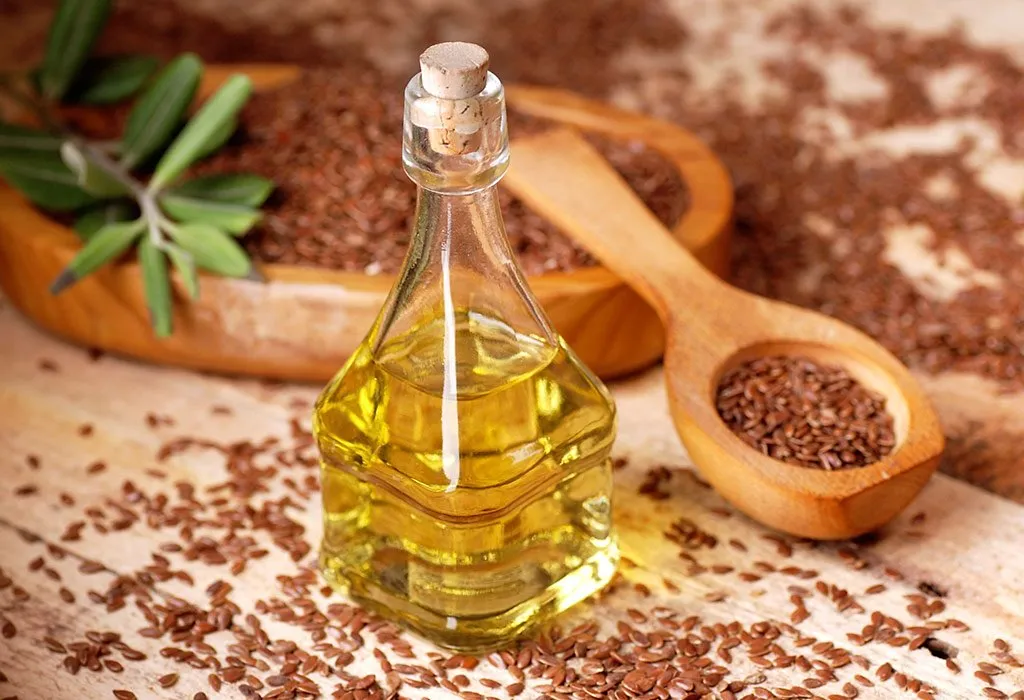
Flaxseed oil is another product of the flax plant. However, it would be unwise to use it to prepare food. Flax oil is not intended for cooking; any exposure to heat will cause it to burn and spoil.
However, that being said, flaxseed oil is actually quite safe and beneficial when used in other methods, such as dressings for salads, additions to dips and sauces, and even as a tablespoon or two in smoothies and shakes! They can also be taken as supplements and are especially important if you aren’t taking fish oil supplements (for omega-3 fatty acids).
How to Include Flaxseed in a Child’s Diet
Flaxseeds can go with numerous other food items. Making them a part of your child’s diet is possible in different ways, depending on their age.
A Baby’s Diet
To be able to bring the most benefit, flaxseeds need to break down completely within the body and be absorbed by the digestive system. Thus, don’t bake them into muffins, bakes, or bread, as that can prevent absorption of all the constituents in an appropriate manner.
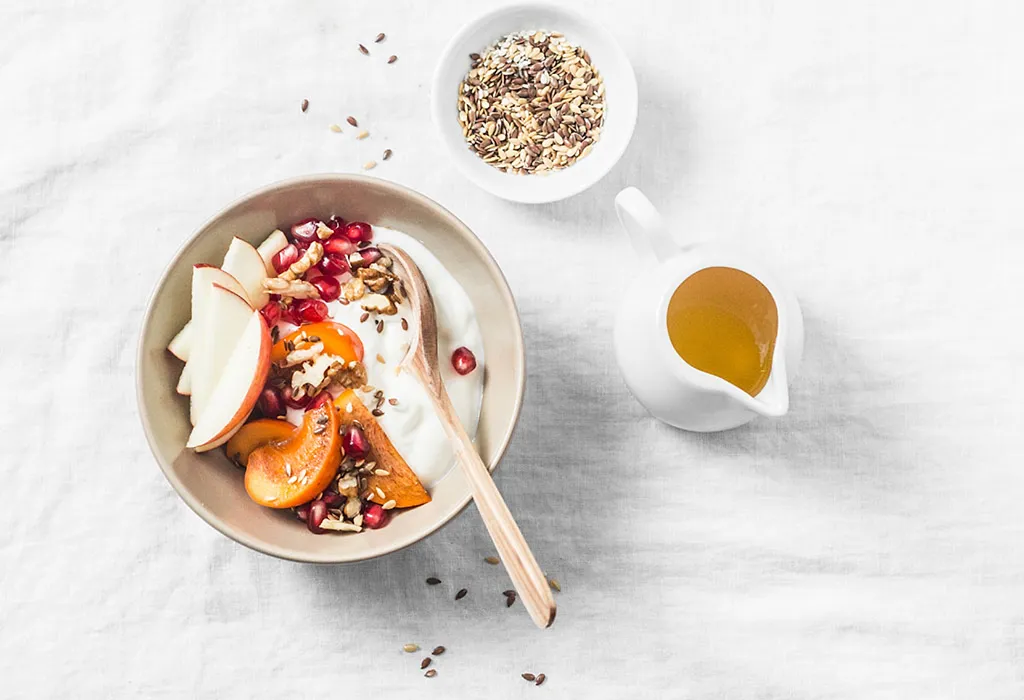
- When giving your baby some porridge or yoghurt, mix a few seeds with it.
- If your baby is at his teething stage, you can include flaxseeds in the recipes you use to make edible teething biscuits.
- As he comes closer to being a year old, and if he is being introduced to meat, ground flaxseeds with meatballs and chicken nuggets can be a good pairing.
- Garnishing purees with a few flaxseeds can be digested really well.
- Once he starts having cereals, mixing flaxseeds with oatmeal can be a tasty meal.
A Child’s Diet (older than 1 year)
As cooperative as your baby might have been in the early years, he might not like flaxseeds as he starts growing up, due to the fussy toddler stage. Don’t worry, though – you can still find great ways to include them without him finding out!
- If your child is a fan of soups and vegetable stews, mixing the flaxseeds with other garnishing items can work as a great camouflage and make for a nutritious addition, too!
- While making ketchup and other dips at home, combine ground flaxseeds with other mild spices to make these sauces healthier without affecting their taste.
- When making a tasty smoothie for your child, add in flaxseeds, and he will hardly notice them among the flavours of the fruits!
Easy Flaxseed Recipes for Babies and Kids
Flaxseeds can be safely introduced to babies’ and young children’s diets when coupled with awareness. Check out these baby-safe flaxseed recipes to introduce flaxseeds into your little one’s diet.
1. Flaxseed Apple Porridge
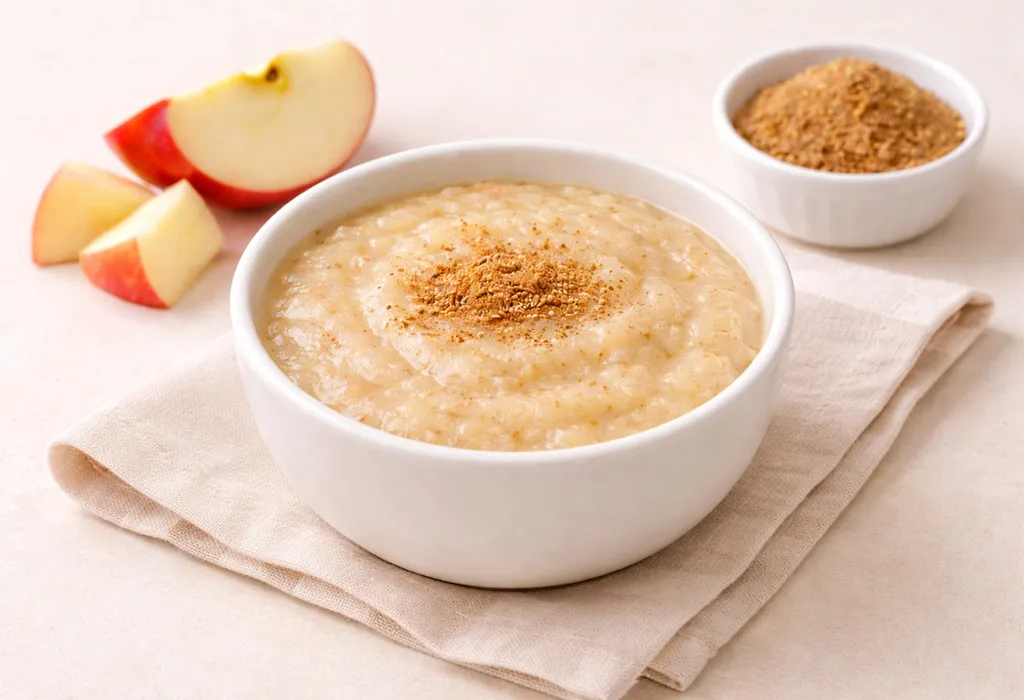
Image Credit : AI Generated Image
Ingredients:
- Finely ground flaxseed powder – ½ teaspoon
- Apple (peeled and chopped) – 1 small
- Water – 1 cup
- Rice cereal or broken rice – 1 tablespoon
Method:
- Cook the chopped apple in water until soft and mushy.
- Add rice cereal or broken rice and cook until fully done.
- Mash or blend the mixture to a smooth consistency.
- Stir in the flaxseed powder once the porridge cools slightly.
Note: Always add flaxseeds to the food after cooking only to avoid bitterness and ensure better digestion.
2. Soft Flaxseed Banana Mash
This recipe is suitable for babies who have already tried banana and shows no signs of food sensitivity.
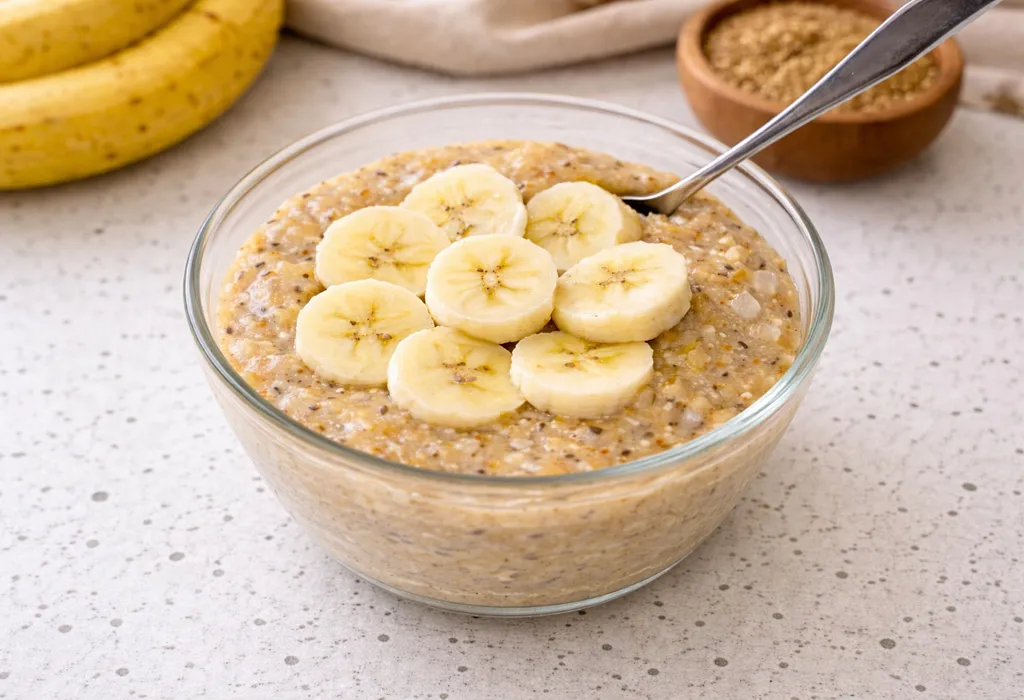
Image Credit : AI Generated Image
Ingredients:
- Ripe banana – ½
- Finely ground flaxseed powder – ¼ teaspoon
Method
- Mash the banana thoroughly using a spoon or fork.
- Sprinkle the flaxseed powder evenly over the mash.
- Mix well until no lumps remain.
3. Flaxseed Vegetable Khichdi
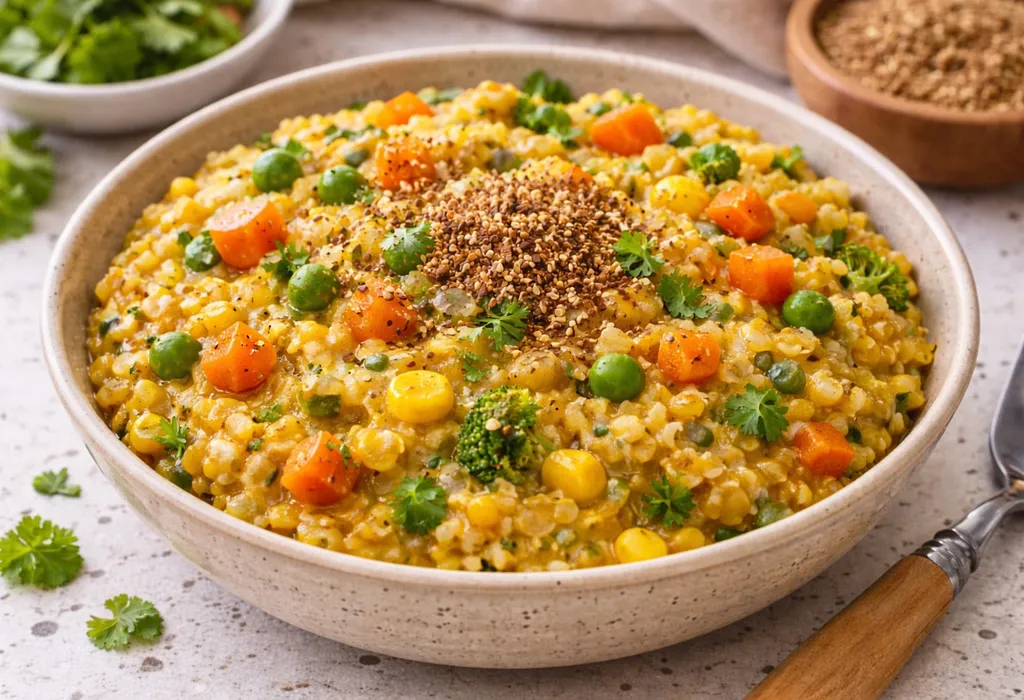
Image Credit : AI Generated Image
Ingredients:
- Rice – 1 tablespoon
- Moong dal – 1 tablespoon
- Mixed vegetables (carrot, pumpkin, or bottle gourd) – 2 tablespoons
- Finely ground flaxseed powder – ½ teaspoon
- Water
Method:
- Pressure cook rice, dal, and vegetables with water until very soft.
- Mash the cooked mixture well or blend lightly for younger babies.
- Allow it to cool slightly, then mix in the flaxseed powder. Ensure the texture is soft and lump-free to suit your child’s age.
4. Flaxseed Oatmeal for Toddlers
Recommended for toddlers above 1 year who are comfortable with thicker textures.
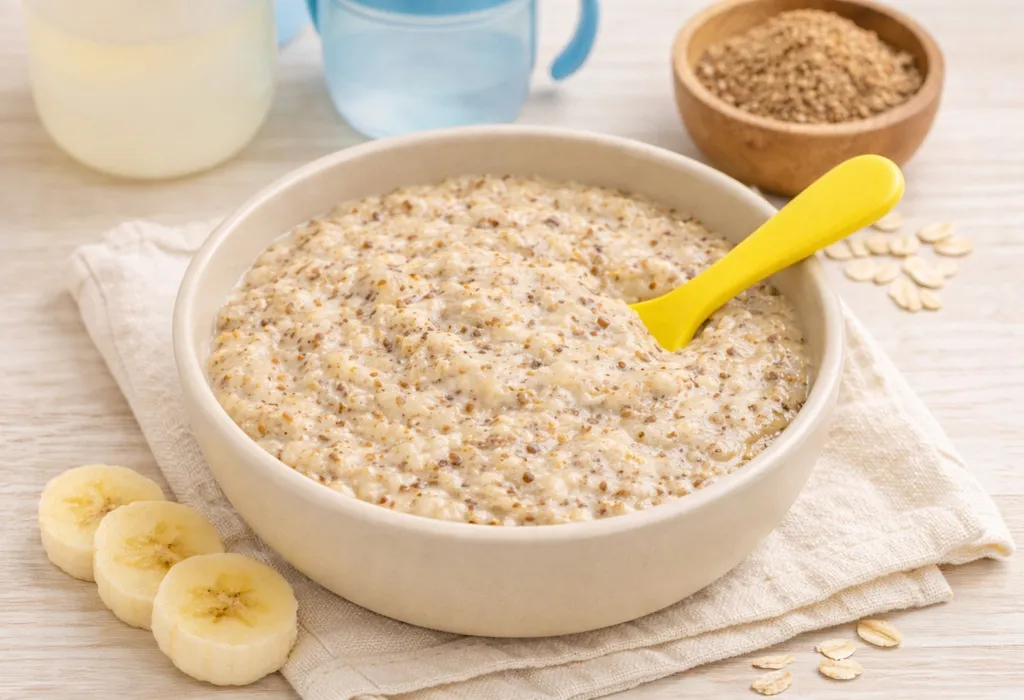
Image Credit : AI Generated Image
Ingredients:
- Rolled oats – 1 tablespoon
- Water or breast milk/formula – 1 cup
- Finely ground flaxseed powder – ½ teaspoon
Method:
- Cook oats in water or milk until soft and creamy.
- Let the oatmeal cool to a warm temperature.
- Stir in the flaxseed powder thoroughly.
5. Flaxseed Yogurt Mix
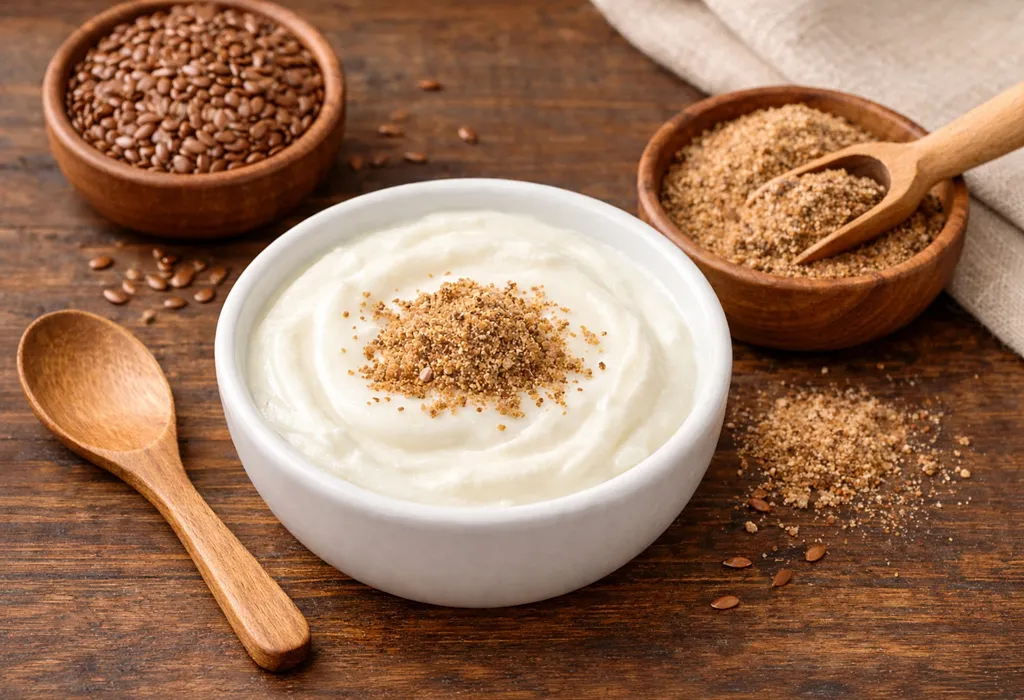
Image Credit : AI Generated Image
Ingredients:
- Plain homemade curd (yoghurt) – 2 tablespoons
- Finely ground flaxseed powder – ¼ teaspoon
Method:
- Whisk the yoghurt until smooth.
- Add flaxseed powder and mix well.
- Serve fresh. Offer this only after dairy has been safely introduced and tolerated.
FAQs
1. How do flaxseeds compare to other Omega-3 fatty acid sources for children?
The three primary omega-3 fatty acids include alpha-linolenic acid (ALA), eicosapentaenoic acid (EPA), and docosahexaenoic acid (DHA), with ALA being classified as an essential fatty acid since the body cannot synthesise it. A single tablespoon of whole flaxseeds provides approximately 2.35g of ALA. An ounce of chia seeds and walnuts offers 5.06g and 5.27g of ALA, respectively. Three ounces of fish, for instance, salmon, typically contain about 1.2g of DHA and 0.5g of EPA.
2. Can flaxseeds relieve a baby’s teething pain?
There are no scientific reports on flaxseeds relieving teething pain in babies.
3. Can flaxseeds help babies with eczema?
A 2017 study conducted on experimental animals indicated that fermented flaxseed oil positively impacted atopic dermatitis (eczema) and helped reduce symptoms, including epithelial damage, redness, swelling, and itching. However, there are currently no large-scale human studies confirming these findings (9). Thus, it is wise to consult your child’s paediatrician for any health issues like eczema or skin dryness.
Flaxseeds are supremely nutritious and are consumed by people all over the globe. Right from using flaxseed oil for constipation to including them as a supplement for enhanced health, your children can benefit from flaxseeds when administered in the appropriate amounts. Be assured that they will warm up to their presence in the diet after a few instances!
Also Read:
Makhana for Babies
Ajwain and Ajwain Water for Babies
Consuming Tofu for Babies
Eating Butternut Squash for Infants
Was This Article Helpful?
Parenting is a huge responsibility, for you as a caregiver, but also for us as a parenting content platform. We understand that and take our responsibility of creating credible content seriously. FirstCry Parenting articles are written and published only after extensive research using factually sound references to deliver quality content that is accurate, validated by experts, and completely reliable. To understand how we go about creating content that is credible, read our editorial policy here.
2. PubMed – Dietary Flaxseed as a Strategy for Improving Human Health
4. NIH – Flaxseed and Flaxseed Oil
5. NHS Tayside – The use of Golden Linseed (Flax seeds) for Constipation
6. National Library of Medicine – Flax and flaxseed oil: an ancient medicine & modern functional food
7. British Heart Foundation – Are flax seeds good for me?
- Author
- Expert Reviewer
 About the Author
Mahak Arora
Related Articles
-

Best Vitamins and Minerals for Kids - Benefits, Sources, & Daily Needs
-
Understanding Baby Food Labels - Easy Guide for Parents on How to Read & Use
-
9 Ways You Can Stop Your Child From Unhealthy Snacking
-
9 Healthy Indian Winter Foods for Babies With Recipes
-
Goat Milk for Babies: Benefits & Recipes
-
Ginger for Babies - Health Benefits and Safety Measures




.svg)