
9 Exercise to Avoid During Pregnancy




Pregnant women are often advised to stay away from strenuous activities, and one of the first things that usually comes to mind is exercise. However, contrary to this common belief, staying active during pregnancy can actually be highly beneficial when done correctly. In fact, with proper guidance and the right workout routine, exercise can help improve flexibility, reduce pregnancy discomfort, boost mood, and support overall health for both the mother and the baby.
That said, it is equally important to understand the exercises to avoid during pregnancy to ensure safety throughout this delicate phase. In this article, we’ll walk you through workouts to avoid while pregnant and explain why skipping them can help you enjoy a healthier, safer, and more comfortable pregnancy journey.
Is It Safe to Exercise During Pregnancy?
It is safe to practice light exercises every day during pregnancy. By avoiding rigorous and stressful workouts, you can stay fit and healthy with some simple exercises. Practising light exercises not only gives you stamina and energy but also gives you good sleep, reduces stress and tunes the body for delivery (1) (2).
When Not to Exercise
Typically, there are some exercises that need to be avoided during the first trimester and some others that are unsuitable for the second and third trimester. It is better to learn the exercises from an expert who understands the impact of each exercise on the various muscles of the body. If you have conditions like diabetes, heart problems, low placenta, weak uterus or bleeding, you must seek medical advice before starting on an exercise regime (3).
Exercises Not to Do When Pregnant
Your instincts are the best judge in deciding what exercises to avoid during pregnancy. A growing baby bump considerably shifts the centre of gravity and restricts body movement. The following are some exercises not to do when pregnant.
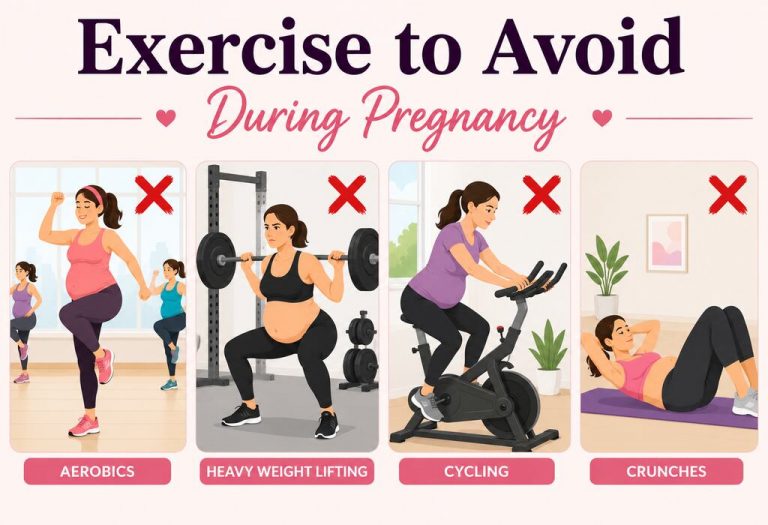
1. High Impact Aerobics
Those exercises that involve heavy jumping, jogging and exertion can be avoided during this period as there are chances of losing balance while doing so (4).
2. Heavy Weight Lifting
Exercises that involve weight training by lifting weights, cause a pull in the abdomen putting pressure on the uterus. Overhead shoulder presses also put a strain on the lower back.
3. Lying on the Abdomen
Lying on the abdomen and doing exercises can be very harmful to the foetus. After the first trimester, even lying on the back can be a little uncomfortable. Exercises in both these position cause discomfort and can be avoided (2).
4. Contact Sports
Active sports like volleyball, basketball, horse riding etc., have a high risk of injury. The ligaments and bones tend to be more fragile during pregnancy and are prone to damage (3).
5. Cycling
Cycling is a very good physical exercise. But during pregnancy, the growing uterus can make it difficult for you to balance the cycle. The chances of tripping and falling are more due to the altered centre of gravity (5).
6. Crunches
Crunches are great exercises for shaping the area around the abdomen. However, it is especially an exercise to avoid during pregnancy first trimester. The pull in the lower abdominal muscles can cause undue stress to the uterus and the baby (6).
7. Sauna/Hot Yoga
Exposure to excessive heat is harmful to the developing baby and for this reason hot sauna baths or hot yoga techniques must be avoided during pregnancy (7).
8. Tough Yoga Asanas
Yoga is very good during pregnancy, and in fact, there are many pre-natal yoga courses that you can take to relax and de-stress themselves. However, there are some yoga postures that require a lot of twisting and bending. If you have practised yoga before getting pregnant, consult the doctor or a trained yoga instructor before continuing with those asanas during pregnancy.
9. Back Bending Exercises
Exercises and yoga postures that involve bending of the back, for example, the sun salutation, must not be done during pregnancy. These postures create an unnecessary pull in the uterus, which can affect the foetus.
Warning Signs You Should Not Ignore
Certain symptoms during or after a workout can signal that your body needs immediate attention and should never be ignored. Below are some important warning signs every pregnant woman should watch out for while exercising.
1. Vaginal Bleeding or Spotting: Any bleeding during pregnancy should never be ignored, especially during or after exercise. Stop immediately and consult your doctor.
2. Severe Dizziness or Fainting: Feeling lightheaded occasionally may happen, but persistent dizziness or fainting can indicate low blood pressure or reduced oxygen supply.
3. Shortness of Breath Before Exercise: If you feel breathless even before starting your workout, it may signal that your body needs rest or medical attention.
4. Chest Pain: Chest discomfort or pain during exercise is a serious symptom and requires immediate medical evaluation.
5. Persistent Headaches: Severe or recurring headaches may be linked to dehydration, high blood pressure, or pregnancy complications.
6. Pain or Swelling in the Calf: Swelling, redness, or pain in one leg could indicate a blood clot and should be checked immediately.
7. Abdominal Pain or Cramping: Intense stomach pain or continuous cramps during exercise may put stress on the uterus and should not be ignored.
8. Regular or Painful Contractions: Frequent contractions before full term can be a sign of preterm labour and require urgent medical attention.
9. Leaking Fluid From the Vagina: Sudden fluid leakage could mean your water has broken prematurely. Stop exercising and contact your doctor right away.
10. Reduced Baby Movement: If you notice less fetal movement after exercising, consult your healthcare provider immediately.
11. Extreme Muscle Weakness: Weakness that affects balance or mobility can increase the risk of falls and injuries during pregnancy.
12. Overheating or Excessive Sweating: Becoming too hot during exercise can be risky during pregnancy, as overheating may affect both mother and baby.
Safe Pregnancy Exercise
Staying active during pregnancy can help improve posture, reduce back pain, boost energy levels, and prepare the body for labour. However, choosing low-impact and pregnancy-safe exercises is important to ensure the well-being of both the mother and the baby. Here are some safe pregnancy exercises that are generally recommended for expecting mothers (3) (8).
1. Walking
Walking is one of the safest and easiest exercises during pregnancy. It helps improve cardiovascular health, keeps the body active, and can be done throughout all three trimesters with minimal risk (9).
2. Prenatal Yoga
Prenatal yoga helps improve flexibility, posture, and breathing techniques while also reducing stress and anxiety. It is especially beneficial for relaxing the body and preparing for childbirth.
3. Swimming
Swimming and water-based exercises are gentle on the joints and help reduce swelling and body strain during pregnancy. The water also supports body weight, making movement more comfortable (10).
4. Pelvic Floor Exercises
Pelvic floor exercises, such as Kegels, strengthen the muscles that support the bladder, uterus, and bowels. These exercises can help during labour and may also aid in faster postpartum recovery (11).
Safety Tips for Exercising
While exercising during pregnancy, it is very important for you to understand the changes in your body. Hormonal changes that lead to losing ligaments and bones, increased resting heart rate, along with a sense of imbalance restricts the options available for an exercise routine. Here are some of the exercise don’ts when you are pregnant (2):
- Don’t exert yourself to do any exercise. Stop or at least briefly pause when there is a pain in any part of the body, nausea, dizziness, headache or shortness of breath.
- Don’t do exercises that give any kind of stress on the abdomen or the lower back.
- Don’t do your exercises without consulting experts.
- Don’t start exercising without consulting your doctor if there are any pre-existing medical conditions.
- Don’t exert yourself in the hot sun or in hot water baths. Set the surrounding temperature equal to the body temperature.
Always remember to:
- Drink plenty of water to stay hydrated and replenish the loss of fluids.
- Practise deep breathing exercises to increase the oxygen uptake, which eventually gives good oxygen supply to the growing foetus.
Exercise Frequency
If the doctor gives a go-ahead for exercise, then you can follow a light exercise regime for about 30 minutes a day for four days a week. However, walking and other physical activities can normally be done as before (9).
FAQs
1. Is yoga safe during all stages of pregnancy?
Prenatal yoga is usually considered safe and helpful throughout pregnancy, but certain poses should be avoided. Deep twists, intense backbends, and poses that put pressure on the abdomen are not recommended. Joining a prenatal yoga class can help ensure exercises are pregnancy-safe.
2. Do exercise restrictions change during each trimester?
Yes, the body changes significantly throughout pregnancy, so workout recommendations may vary. There are different exercises to avoid in the first, second, and third trimester depending on balance, energy levels, and the baby’s growth.
3. Are abdominal workouts safe for expecting mothers?
Traditional crunches, sit-ups, and intense abdominal workouts should generally be avoided, especially during the later stages of pregnancy, as they can place excessive strain on the abdominal muscles. These are commonly considered some of the key exercises to stay away from while pregnant (3).
Staying fit and active in the journey to motherhood is very important for any woman. Apart from the regular chores, a few minutes of stretching and exercising can go a long way in preparing the body for a safe and easy delivery. Making an informed choice of exercise ensures that any kind of complication is kept away.
Also Read:
Squats during Pregnancy
Weight Lifting while Pregnant
Sit Ups or Crunches in Pregnancy
Pelvic Tilt Exercise during Pregnancy
Was This Article Helpful?
Parenting is a huge responsibility, for you as a caregiver, but also for us as a parenting content platform. We understand that and take our responsibility of creating credible content seriously. FirstCry Parenting articles are written and published only after extensive research using factually sound references to deliver quality content that is accurate, validated by experts, and completely reliable. To understand how we go about creating content that is credible, read our editorial policy here.
1. American College of Obstetricians and Gynecologists – Exercise During Pregnancy
2. NHS – Exercise in pregnancy
3. Johns Hopkins Medicine – Exercise During Pregnancy
4. Nemours KidsHealth – High-Impact Exercising During Pregnancy
5. Tommy’s – Exercises to avoid in pregnancy
6. The Women’s – The abdominal muscles
7. PubMed Central – Hot yoga and pregnancy
8. National Library of Medicine – Pregnancy And Exercise
9. March of Dimes – Exercise during pregnancy
- Author


Related Articles
-

Bad Breath (Halitosis) During Pregnancy - Causes, Symptoms, and Treatment
-
Car Travel During Pregnancy - Tips for a Safe Journey
-
Why Should You Avoid Eating Liquorice Root During Pregnancy?
-
Kidney Infection in Pregnancy: Symptoms & Treatment
-
Reiki and Pregnancy – Exploring the Benefits and Precautions
-
13 Weeks Pregnant Ultrasound Scan: Purpose, Procedure, Baby Development & More