
Strawberries in Pregnancy – Causes, Benefits and Recipes
Learn if strawberries are safe during pregnancy, their health benefits, and how to include them in your daily diet.





Medically Reviewed By
Megha Gupta
(Paediatric Nutritionist)


Image Credit : AI Generated Image
This health content has been medically reviewed by qualified experts and follows the FirstCry Parenting editorial policy to ensure accuracy and reliability.
Fruit salads are the best solution when you crave something sweet during pregnancy. The tangy and sweet flavour of strawberries makes them quite popular, but keeping some safety tips in mind is essential. Eating a strawberry during pregnancy can be a healthy and nutritious choice. Strawberries are a good source of vitamin C, folate, potassium, and fibre, essential nutrients for the mother and the developing fetus. However, it is important to practice caution when consuming strawberries, as with any food, during pregnancy to ensure the safety of both mother and baby. Pregnant women should thoroughly wash the strawberries before eating to remove any potentially harmful bacteria. Additionally, if a woman has a history of allergies, she should be cautious when introducing strawberries into her diet and speak with her healthcare provider about any concerns. Strawberries can be a healthy and delicious addition to a pregnant woman’s diet if consumed in moderation and with appropriate precautions.
Can Pregnant Women Eat Strawberries?
When deciding whether strawberries should be included in a pregnant woman’s diet, you should know that eating strawberries has numerous advantages. The benefits that strawberries bring to the table are tremendous, and eating them should not be avoided at all. Let’s learn in detail how is strawberry good in pregnancy:
1. First Trimester
Pregnant women can eat strawberry in pregnancy first trimester, which is the initial 12 weeks of pregnancy. Incorporating strawberries into a balanced and healthy diet can provide essential nutrients, which can help in healthy foetal development. How one consumes strawberries during pregnancy is extremely important. Strawberries come with some risk factors involved, like allergy and acidity triggers. Ensure you have your dietician’s heads up before including it.
Yes, strawberry is good for pregnancy. However, consuming them and other fruits in moderation and as part of a balanced diet is always advisable. Overconsumption of any food, including strawberries, can lead to health issues during pregnancy. Ensure that you consume the right amount and variety of nutrients during pregnancy.
2. Second Trimester
Eating a strawberry during pregnancy second trimester is generally safe to consume as part of a healthy and balanced diet. Strawberries are an excellent source of essential nutrients, as discussed above. In addition to the nutritional benefits, strawberries contain natural compounds known as polyphenols, which have antioxidant and anti-inflammatory properties that can help support maternal and fetal health. Some research suggests that polyphenols may play a role in reducing the risk of pregnancy complications such as preeclampsia and gestational diabetes.
However, as with any food during pregnancy, it is important to consume strawberries in moderation and with appropriate precautions. Furthermore, if you have any pre-existing medical conditions, it is always advisable to speak with your gynaecologist and physician before introducing strawberries or any other new food into your pregnancy diet. It is also worth noting that excessive amounts of strawberries or any other food during pregnancy may lead to health issues, such as high blood sugar levels. Hence, it’s important to maintain a balanced and moderate approach to consumption.
3. Third Trimester
There is limited research on the consumption of strawberry in pregnancy third trimester. However, research suggests that it is generally safe for women to continue consuming strawberries as part of their pregnancy diet during the third trimester (1). The baby undergoes significant growth and development during this phase, and proper nutrition is essential. The third trimester of pregnancy can afford no risks, especially concerning the diet. Hence, if consuming strawberries in this phase, ensure all your medical counsellors have passed it with a green tick. Strawberries are highly acidic, which can cause hormonal and gut imbalances.
Nutritional Value of Strawberries
The nutrients that are present in 100 grams of raw strawberries are distributed in quite an effective manner to provide a well-rounded nutritional choice for a pregnant woman.
| Description | Quantity |
| Water | 90.8 g |
| Energy | 36 Kcal |
| Proteins | 0.64 g |
| Carbohydrates | 7.96 g |
| Sugar, Total | 4.86 g |
| Magnesium | 12.5 mg |
| Iron | 0.26 mg |
| Vitamin C | 59.6 mg |
| Vitamin A | <3.7 µg |
| Potassium | 161 mg |
| Calcium | 17 mg |
| Phosphorous | 23 mg |
| Citric acid | 700 mg |
| Malic acid | 198 mg |
Source: USDA (2)
Reasons for Craving Strawberries During Pregnancy
Craving strawberries during pregnancy is not uncommon and can be attributed to various factors. Here are some possible reasons for craving strawberries during pregnancy:
- Nutrient deficiency: Cravings often indicate that the body lacks certain nutrients. Strawberries are abundant in essential vitamins, including vitamin C. Hence, craving strawberries could be the body’s way of meeting its nutrient needs (3).
- Hormonal changes: During pregnancy, the body undergoes significant hormonal changes that can affect appetite and taste preferences. Some women may experience a heightened sense of taste and smell, making them more sensitive to certain flavours and textures. Strawberries are sweet and tangy, which may particularly appeal to some pregnant women.
- Psychological factors: Cravings can also be influenced by psychological factors such as stress and anxiety. Eating strawberries, or any other food a person enjoys, can provide comfort and help reduce stress levels.
- Hydration: Strawberries have a high water content, which can help keep the body hydrated. Pregnant women may crave strawberries to satisfy their thirst and stay hydrated.
- Genetic predisposition: Some studies suggest that genetics may influence food cravings. If the mother or other family members have a history of craving strawberries during pregnancy, it could increase the likelihood of the same craving occurring in subsequent pregnancies.
Overall, craving strawberries during pregnancy is normal and can be attributed to various factors, including nutrient deficiencies, hormonal changes, psychological factors, hydration, and genetic predisposition.
Benefits of Strawberries During Pregnancy
Strawberries are a seasonal fruit, and it is essential that you eat them during the season they are widely available. Listed below are some benefits of strawberry for pregnant women:

1. Taking Care of the Heart
Various studies have shown that strawberries contain substances that reduce bad cholesterol and plaque in the arteries. Thus, consuming strawberries reduces your chances of suffering from any heart-related problems and helps you stay in good health.
2. Improving Eyesight
Vitamin A is present in high quantities in strawberries. It works on the cornea and retina of the eyes, strengthening them and thereby protecting eyesight while reducing the risk of age-related blindness or even cataracts.
3. Boosting Immunity
The levels of Vitamin C in strawberries are substantial as well. These work towards strengthening the immune system of the body, preventing numerous infections.
4. Reducing Effects of Ageing
The toxins in the body result in internal damage and speed up ageing. The various nutrients of strawberries help repair damage, thus keeping ageing in check.
5. Vitamin C
Loss of red blood cells increases your risk of developing anaemia. Eating foods high in vitamin C, like strawberries, promotes greater iron absorption to create red blood cells (4). Vitamin C helps absorb non‑heme iron well from plant foods (5).
6. Minerals
Strawberries include minerals that can help you stay healthy by boosting your immunity.
7. Increases Haemoglobin
As per a 2016 research published in the International Journal of Medical Research and Pharmaceutical Sciences, consuming strawberry juice in the third trimester can increase haemoglobin levels in pregnant women (6).
How to Select, Store, and Wash Strawberries When Pregnant?
Selecting, storing, and washing strawberries properly during pregnancy is important to ensure they are safe to eat and free from harmful bacteria or pesticides. Since strawberries come under the Environmental Working Group’s Dirty Dozen list of ‘most pesticide-contaminated foods,’ it is highly essential that you wash strawberries thoroughly under running water before consuming them (7). Here are some important tips to follow to make sure strawberries and pregnancy make a good combination:
1. Selecting Strawberries
- Choose strawberries that are firm, plump, and brightly coloured with no signs of mould or damage.
- Avoid strawberries that are overly soft, mushy, or have a dull appearance.
- Opt for organic strawberries, as they are less likely to be contaminated with harmful pesticides.
2. Storing Strawberries
- Store fresh strawberries in the refrigerator at a temperature of 40° F or below immediately after purchase (8).
- Do not wash strawberries until you are ready to eat them, as excess moisture can cause them to spoil more quickly.
- Store strawberries in a single layer in a shallow container, covered loosely with plastic wrap.
Detailed cleaning of strawberries
1. Cleaning strawberries with salt
- Combine 1 teaspoon of salt with 2 cups of water in a large bowl.
- Add the strawberries to the saltwater solution and swirl them around gently.
- Allow the strawberries to soak in the solution for a few minutes.
- Rinse the strawberries under cold running water to remove any salt residue.
- Pat the strawberries dry with a clean cloth or paper towel.
2. Washing strawberries with baking soda
- Combine 1 tablespoon with 4 cups of water in a large bowl.
- Add the strawberries to the baking soda solution and stir them gently.
- Allow the strawberries to soak in the solution for a few minutes.
- Rinse the strawberries under cold running water to remove any baking soda residue.
- Pat the strawberries dry with a clean cloth or paper towel.
3. Washing strawberries with vinegar
- Combine 1 cup of white vinegar with 3 cups of water in a large bowl.
- Add the strawberries to the vinegar solution and stir them gently.
- Allow the strawberries to soak in the solution for 5-10 minutes.
- Rinse the strawberries under cold running water to remove any vinegar residue.
- Pat the strawberries dry with a clean cloth or paper towel.
In all three methods, it’s important to avoid using too much force or pressure when washing the strawberries, as this can damage the fruit. Also, remember to wash your hands thoroughly with soap and water before handling the strawberries to minimise the risk of bacterial contamination.
Best Ways to Add Strawberries to Your Pregnancy Diet
Strawberries are a delicious and nutritious addition to any pregnancy diet. Here are five great ways to incorporate strawberries into your meals and snacks:
- Smoothies: Blend fresh or frozen strawberries with yoghurt or milk for a creamy and nutritious breakfast or snack.
- Salads: Toss sliced strawberries with leafy greens, nuts, and a vinaigrette dressing for a healthy and refreshing salad.
- Snacks: Dip fresh strawberries in Greek yoghurt or nut butter for a quick and easy snack that’s high in protein and healthy fats.
- Oatmeal: Top a warm bowl of oatmeal with sliced strawberries, nuts, and a drizzle of honey for a satisfying and nutritious breakfast.
- Desserts: Use sliced strawberries as a topping for whole-grain waffles or pancakes, or enjoy them with a dollop of whipped cream for a sweet and satisfying dessert.
When incorporating strawberries into your pregnancy diet, it’s important to choose fresh, organic berries whenever possible and to wash them thoroughly before consuming, as they contain high amounts of pesticides (9). Make sure that the strawberries aren’t wax-coated for extra shine by your fruit vendor.
Delicious Strawberry Recipes for Pregnant Women
The best way to consume strawberries quickly and deliciously is by making smoothies with them. Here are a couple of ways you can get to it right away.
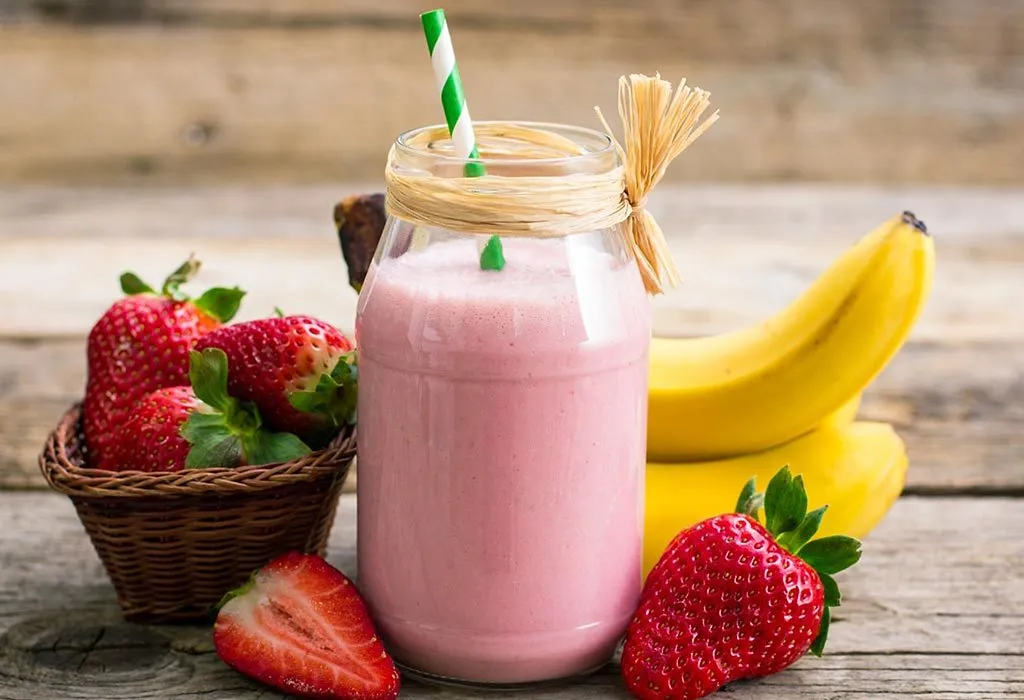
1. Banana Strawberry Smoothie
This one is a great choice to pair with your breakfast and start the day on an energetic note.
Ingredients
- Vanilla yoghurt- 1/2 cup
- Oats- 1/2 cup
- Almond milk- 1/2 cup
- Banana- 1
- Strawberries- 1 cup
Method
- Blend all the ingredients together until you get a smooth consistency.
- Add some more milk and mix if you prefer a thinner consistency.
- Top up with a few strawberry slices or ice cubes, if you like it chilled.
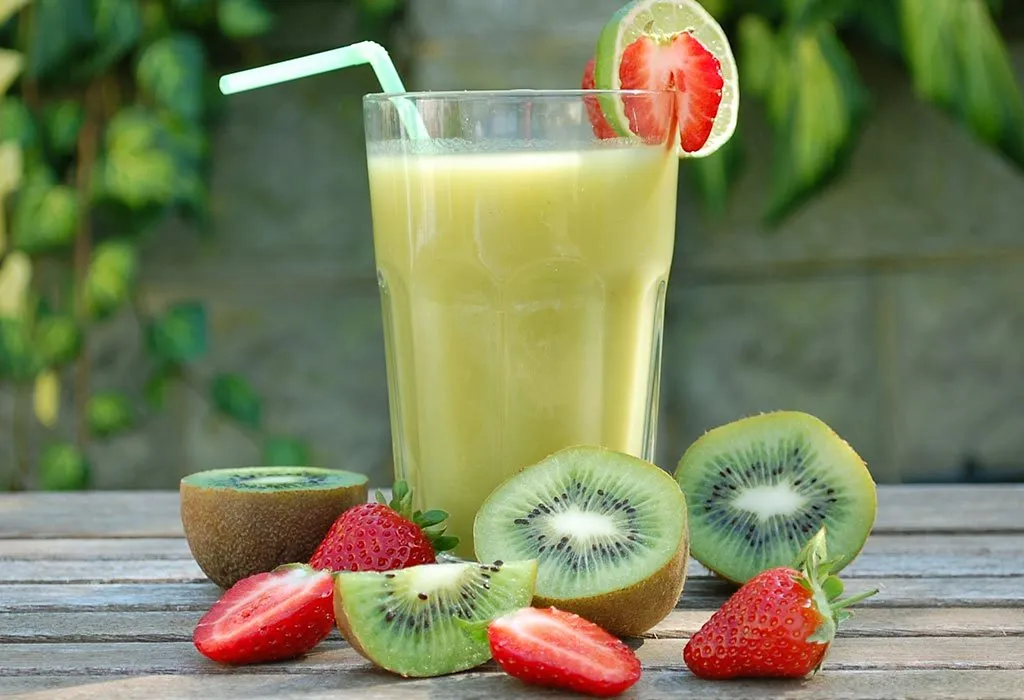
2. Kiwi Strawberry Smoothie
If you like a tangy flavour, along with nutrition, this one should be your choice.
Ingredients
- Lemon juice- 1 tsp
- Milk- 1 cup
- Kiwi chunks- 1/2 cup
- Strawberry chunks- 1 cup
Method
- Blend all the ingredients together until you get a smooth consistency.
- You can adjust the thickness by adding milk.
- Top with a few kiwi and strawberry slices, and ice cubes if you like it chilled.
3. Healthy Strawberry Preserve
This strawberry puree can be made during the strawberry season and preserved for use in the coming months. This is healthy and allows you to enjoy your favourite fruit, no matter the month.
Ingredients
- Strawberries – your preferred quantity
Method
- Blend the strawberries together until you get a smooth puree. You can do this in small batches if you wish to make a large amount of the preserve.
- Freeze the puree in an air-tight ziploc bag, and use when required. Rather than a large bag, you can also divide the puree and store it in smaller bags, which allows you to only defrost the amount you require, without running the risk of the rest of the mixture spoiling.
- Defrost and use this strawberry preserve in smoothies, milkshakes, or strawberry smoothie bowls.
Tip – Ensure that you use only ripe strawberries when making the strawberry preserve, as adding slightly raw ones may make the preserve sour.
Risks Associated With Consuming Strawberries While Pregnant
Although strawberries are usually safe, there are a few scenarios where their consumption might be risky for pregnant women.
- If your family has a history of allergy towards strawberries, chances are you might have them, too. Any allergy during pregnancy could affect the child as well.
- Eating raw fruits and vegetables exposes your body to various bacteria, including E.coli and many other parasites. These infections could reach the baby via the placenta and harm him. Make sure to thoroughly wash strawberries before eating them.
- Although extremely rare, some fruits, including strawberries, could trigger an immune-mediated response affecting platelet’s destruction or production in individuals, which is called Immune thrombocytopenia (ITP), due to an allergic reaction. During pregnancy, the immune system experiences major adaptations, potentially increasing the vulnerability to immunologic disorders (10).
Does It Help to Induce Labour?
No scientific evidence supports the claim that eating strawberries can help induce labour. While strawberries are a healthy food that can provide essential nutrients for pregnant women, they do not contain any specific compounds or properties known to stimulate uterine contractions or labour.
It’s important to note that several natural methods are commonly recommended for inducing labour, such as nipple stimulation, walking, and acupuncture, but these methods should only be tried under the guidance of a healthcare provider, as they can pose risks or complications in some cases. In general, it’s best to focus on maintaining a healthy and balanced diet throughout pregnancy and to follow your healthcare provider’s recommendations for inducing labour or managing any complications that may arise.
Tips to Eat Strawberries
Consuming strawberries is not rocket science. Keeping a few simple tips in mind can help you stay safe and enjoy the taste together.
- Balance strawberries with other fruits and vegetables for proper nutrition.
- Choose to make strawberry smoothies at home with fresh and washed strawberries.
- Avoid strawberry jams or other treats that make use of preserved strawberries.
- Check if you have an allergy to strawberries before you start eating the fruit every day.
Consuming strawberries during early pregnancy can bring in a lot of benefits, but could expose you to specific risks if the right care is not undertaken before consumption. All it takes is adhering to basic hygiene before eating them, getting a medical checkup in place, and you can gorge on your favourite fruit without worry.
FAQs
1. How many strawberries can you eat a day while pregnant?
Pregnant women can safely consume strawberries in moderation as part of a healthy and balanced diet. There is no specific recommended amount, but eating a cup (150 grams) of fresh strawberries daily is considered safe and healthy.
2. Is it safe to drink strawberry juice and tea while pregnant?
Drinking strawberry juice and tea in moderation is considered safe during pregnancy. However, it’s important to note that some commercial fruit juices and teas may contain added sugars, caffeine, or other ingredients that can harm pregnant women, so it’s important to read labels carefully and choose products made from natural and wholesome ingredients. Limiting strawberry tea to one to two cups a day is a wise choice (11).
3. Can you eat strawberries during breastfeeding?
Yes, strawberries can be eaten safely during breastfeeding as part of a healthy and balanced diet. Strawberry in pregnancy is a good source of vitamin C, folate, and antioxidants, which are important for both maternal and infant health. However, some infants may be allergic to strawberries, so it’s important to monitor your baby for signs of an allergic reaction, such as rash, hives, or difficulty breathing, after consuming strawberries or any other new foods. If you suspect that your baby has a food allergy, it’s important to consult with your healthcare provider.
4. Are dry strawberries good for pregnancy?
Dried fruits, including strawberries, are loaded with essential nutrients like vitamin C, vitamin A, and calcium, and can be a part of a healthy pregnancy diet (12). Remember, moderation is the key.
5. Are there any risks of eating strawberries during pregnancy?
For most women, strawberries are safe, but some people may be allergic to them. Also, unwashed strawberries may carry pesticide residues or bacteria. Washing them thoroughly and consuming them in moderation helps reduce these risks.
Strawberries are a rich soucce of vitamin C and other essential nutrients. Thus, these can be safely included in the pregnancy diet.
Also Read:
Pineapple during Pregnancy
Eating Watermelon in Pregnancy
Consuming Muskmelon during Pregnancy
Was This Article Helpful?
Parenting is a huge responsibility, for you as a caregiver, but also for us as a parenting content platform. We understand that and take our responsibility of creating credible content seriously. FirstCry Parenting articles are written and published only after extensive research using factually sound references to deliver quality content that is accurate, validated by experts, and completely reliable. To understand how we go about creating content that is credible, read our editorial policy here.
1. Johs Hopkins Medicine – 5 Snack Foods to Eat While Pregnant
4. National Institutes of Health (NIH) – Vitamin C
5. National Institutes of Health (NIH) – Iron
8. FDA – Raw Produce Selecting and Serving it Safely
9. Center for Ecogenetics & Environmental Health – Fast Facts about Health Risks of Pesticides in Food
10. HAL Open Science – The unsuspected danger of strawberries: Severe thrombocytopenia during pregnancy
11. Pregnancy Birth and Baby – Herbal teas during pregnancy and breastfeeding
- Author
- Expert Reviewer