Does Baby Oil Expire? Shelf Life, Signs, & Storage Tips
Find out how long baby oil lasts, when it expires, and how to keep it safe for your baby's delicate skin.




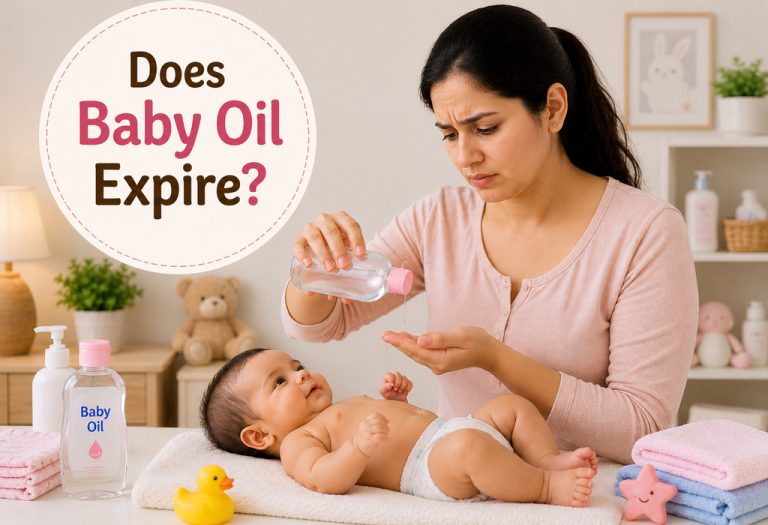
Baby oil is a must-have for many parents, whether it is used for a gentle baby massage, keeping skin soft, or part of your little one’s daily routine. But if you find an old bottle sitting on the shelf, you may start to wonder, when does baby oil expire? While it can last for a long time, baby oil does not stay the same forever. Its quality can change over time, especially if it has been opened or stored the wrong way. In this article, we’ll explain how long baby oil lasts, how to spot signs that it is no longer good to use, and how to store it properly to keep it safe for your baby’s delicate skin.
Can Baby Oil Expire?
Yes, baby oil can expire, although it usually has a long shelf life when stored properly. Most baby oils are made with mineral oil, which is known for being stable and lasting for a long time (1). However, over time, the ingredients can start to change, especially after the bottle has been opened or if it has been exposed to heat, sunlight, or moisture.
How Long Does Baby Oil Last?
Baby oil can usually last for about 3 to 5 years when it is stored properly and kept sealed. The exact shelf life can vary depending on the brand, ingredients, and how the oil is stored. If the bottle is unopened and kept in a cool, dry place away from direct sunlight, it can often stay in good condition until the date mentioned on the label.
What Affects the Shelf Life of Baby Oil?
Baby oil does not expire overnight, but a few everyday factors can affect how long it stays safe and effective. These include (2):
1. Storage Conditions
Keeping baby oil in a cool, dry place helps maintain its quality. Heat and direct sunlight can break down the ingredients and may change the oil’s texture or smell over time.
2. Exposure to Air
Once you open a bottle of baby oil, it comes in contact with air, which can slowly affect its freshness. Always close the cap tightly after each use to reduce exposure.
3. Bottle Hygiene
Dirt, water, or other products getting into the bottle can affect the oil’s quality. Avoid touching the opening with your hands and keep the bottle clean.
4. Ingredients and Formula
Different baby oils may contain different ingredients, such as added fragrances or plant-based oils. These ingredients can have different shelf lives and may affect how long the product stays fresh.
5. Frequency of Use
A bottle that is opened and used often may lose its freshness faster than one that stays sealed. Checking the oil before each use can help you notice any changes early.
Signs That Baby Oil Has Expired
Not sure if your baby oil is still good to use? These common signs can help you tell if it has expired.
1. Unpleasant or Rancid Smell
Fresh baby oil has a mild scent or no scent at all. If it smells sour, stale, or unusual, it has likely gone bad and should not be used.
2. Change in Colour
Baby oil should remain clear and consistent in colour. If it looks cloudy, yellowish, or darker than usual, its quality may have deteriorated.
3. Thicker or Unusual Texture
If the oil feels sticky, thicker than normal, or has developed lumps, it is a sign that the product is no longer in good condition.
4. Separation of Ingredients
Some baby oils may contain added ingredients that can separate over time. If the oil does not return to its normal consistency after gently shaking the bottle, it is best to replace it.
5. Skin Irritation After Use
If your baby develops redness, itching, or irritation after using the oil, stop using it immediately. While the reaction may have another cause, expired baby oil could be a contributing factor.
How to Store Baby Oil the Right Way?
You do not have to do anything complicated to keep baby oil fresh. These simple tips can help keep it in good condition until you’re ready to use it.
1. Store It in a Cool, Dry Place
Keep the bottle away from direct sunlight, heaters, and humid areas. A cupboard or drawer at room temperature is an ideal place to store baby oil.
2. Close the Cap Tightly After Every Use
Always secure the cap immediately after using the oil. This helps prevent air, dust, and moisture from getting inside the bottle.
3. Keep It Away From Water
Avoid storing baby oil near sinks, bathtubs, or other damp areas. Moisture can affect the product over time and may increase the risk of contamination.
4. Use Clean Hands During Application
If you pour the oil directly into your hands, make sure they are clean and dry. This helps prevent dirt or bacteria from entering the bottle.
What Should You Do With Old Baby Oil?
So, you’ve checked the bottle and realised it’s no longer safe to use on your baby. Now what? Before you throw it away, there are a few things you can do with it.
- Use it to remove sticky residue: Old baby oil can help loosen adhesive left behind by stickers or labels on glass, plastic, or other hard surfaces.
- Polish metal items: Apply a small amount to a soft cloth to add shine to stainless steel fixtures, faucets, or other metal surfaces.
- Lubricate squeaky hinges: A few drops can temporarily reduce squeaks on door hinges, locks, or other household items.
- Dispose of it properly: If the oil smells bad, has changed in colour or texture, or is well past its expiration date, seal the bottle and throw it away with your household waste. Avoid pouring baby oil down the sink or toilet, as it can contribute to clogged pipes.
FAQs
1. Can baby oil go bad before its expiration date?
Yes. Improper storage, exposure to high temperatures, frequent contamination, or leaving the bottle open can cause baby oil to deteriorate faster than its labelled shelf life.
2. Does baby oil need to be refrigerated?
No, refrigeration is not necessary. Baby oil is best stored at normal room temperature in a cool, dry place away from direct sunlight.
3. Where can I find the expiration date on baby oil?
The expiration date or manufacturing date is usually printed on the bottom, back, or neck of the bottle. If you can’t find it, check the packaging or contact the manufacturer for guidance.
A quick look at the expiration date and a quick sniff or visual inspection can save you from using a product that’s no longer at its best. And if you’re ever unsure whether it’s still good, it’s always better to replace it than risk using an expired product on your baby’s delicate skin.
Also Read:
Baby Oil for Massage
Does Baby Powder Expire
Is Mineral Oil Safe for Babies?
Do Infants Need Baby Powder?
Was This Article Helpful?
Parenting is a huge responsibility, for you as a caregiver, but also for us as a parenting content platform. We understand that and take our responsibility of creating credible content seriously. FirstCry Parenting articles are written and published only after extensive research using factually sound references to deliver quality content that is accurate, validated by experts, and completely reliable. To understand how we go about creating content that is credible, read our editorial policy here.
- Author


Related Articles
-

Head Lice in a Baby or Child: How to Get Rid of Them?
-
Can Babies Have Vaccinations With a Cold or Cough?
-
Infant Swings and Your Baby - A Complete Guide
-
World Polio Day 2026: Date, Significance, Themes, and More
-
What You Must Check About Your Baby's Diaper Material
-
Types of Car Seats by Age: A Guide to Choosing the Right One






.svg)