

Democratic Parenting Style – What It Is, Benefits, and Practice Tips
Build trust and confidence with the democratic parenting style by balancing warmth, clear rules, and open communication at home.





Parenting doesn’t come with a one-size-fits-all guide, and every family has its own unique way of raising children. Among the many parenting approaches, the democratic parenting style has gained attention for creating a healthy balance between love, discipline, and mutual respect. Instead of relying on strict control or giving children unlimited freedom, this approach encourages parents to set clear boundaries while also listening to their child’s thoughts, feelings, and opinions.
Now, you might be wondering: What does the democratic parenting actually look like in everyday life? Does giving children a voice mean they get to make all the decisions? And how can parents maintain authority without becoming overly controlling?
Don’t worry; we’re here to answer all your questions. In this article, you’ll learn what the democratic parenting is, its benefits, and practical tips to put it into practice.
What Is the Democratic Parenting Style?
The democratic parenting style definition refers to a parenting approach in which parents set clear expectations and boundaries while encouraging children to express their thoughts, opinions, and feelings. Rather than making every decision for their child or giving them complete freedom, parents involve them in age-appropriate discussions about household rules, responsibilities, and consequences (1). While children’s perspectives are valued and respected, parents retain the final say when making important decisions.
Psychologist Diana Baumrind, whose groundbreaking research on parenting styles in the 1960s continues to influence child development studies, identified this approach as one of the most effective for raising confident, capable, and emotionally healthy children.
How Is Democratic Parenting Different From Authoritative Parenting?
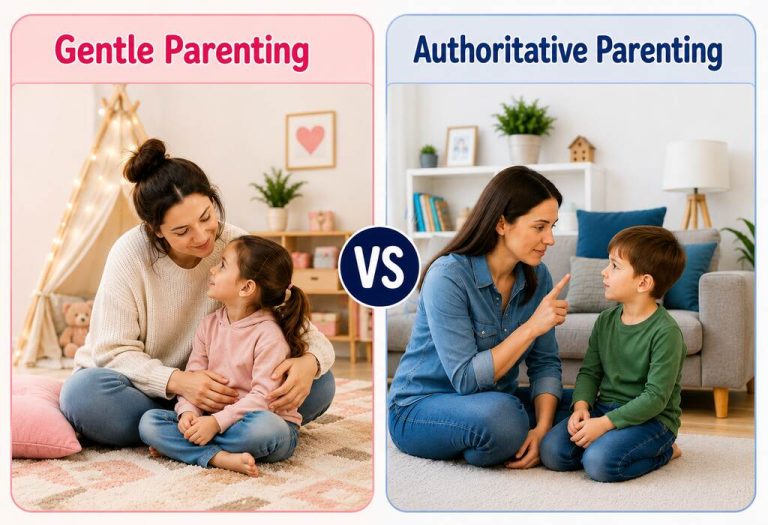
This is one of the most common points of confusion. Authoritative parenting and democratic parenting are closely related, but democratic parenting puts a stronger emphasis on collaborative decision-making. An authoritative parent explains rules and shows warmth (2); a democratic parent takes this further by inviting the child to help create those rules in the first place.
Think of it this way: an authoritative parent says, “Bedtime is 8 PM because you need sleep to grow.” A democratic parent says, “How much sleep do you think you need? Let’s figure out a bedtime together.” Both outcomes may land on 8 PM, but the child in the second household feels a sense of ownership over the rule, which makes them more likely to follow it without a power struggle.
Core Features of a Democratic Household
So, what does a democratic household actually look like? While every family is different, most democratic homes share a few key characteristics that set them apart. Let’s take a look at the qualities that define this parenting style.
1. Open, Two-Way Communication
Children are encouraged to share their feelings, opinions, and concerns without fear of dismissal or punishment. Parents listen actively, validate emotions, and respond thoughtfully. This doesn’t mean every child complaint leads to a rule change. It means children feel genuinely heard.
2. Clear Boundaries With Explanations
Rules in democratic households aren’t arbitrary. When a parent says “No screens after 7 PM,” they explain the reasoning: sleep matters, morning routines go smoother, and tired kids have harder days at school. Understanding the “why” helps children internalise values rather than simply comply out of fear.
3. Shared Decision-Making (Age-Appropriately)
A toddler doesn’t get to vote on family finances. But a six-year-old might help decide what’s for Saturday breakfast, and a nine-year-old might have input on family vacation plans. Democratic parents calibrate how much decision-making power a child gets based on their developmental stage.
4. Consistency and Follow-Through
Democratic parenting doesn’t work if boundaries shift daily. Parents who use this approach commit to enforcing agreed-upon rules even when it’s inconvenient, which builds a child’s sense of security and trust.
5. Natural and Logical Consequences
Rather than punishing children to assert control, democratic parents use consequences that connect naturally to behaviour. If a child leaves their bike outside, it gets locked up for a day. If a child refuses to wear a coat, they feel cold. These experiences teach accountability without shame.
Benefits of the Democratic Parenting Style
Research consistently supports what many parents intuitively sense: children thrive when they feel both loved and guided. Here’s what the evidence shows about the long-term benefits of this approach (3).
1. Stronger Emotional Intelligence
When children are invited to name their feelings and have those feelings taken seriously, they develop the emotional vocabulary and awareness that carry them through life. They learn to manage frustration, empathise with others, and handle disappointment without falling apart.
2. Better Self-Esteem
A child who is listened to feels valuable. Democratic parenting communicates, through daily interactions, that a child’s perspective matters. Over time, this becomes a deep sense of self-worth that isn’t dependent on external validation.
3. Improved Problem-Solving Skills
Children who regularly participate in family discussions learn how to weigh options, consider consequences, and make decisions. By the time they reach adolescence, this isn’t a new skill. It’s a practiced one.
4. Fewer Behavioural Problems
Several studies in developmental psychology have found that children raised with warm, structured parenting show lower rates of defiance, aggression, and anxiety. The reason is partly that they don’t need to act out to be heard. They already have a legitimate channel for their voices.
5. Greater Cooperation at Home
It seems counterintuitive, but children who have more say in family rules often follow those rules more willingly. Ownership breeds buy-in. When a child helped create the “no hitting” rule, they’re more invested in upholding it.
Pros and Cons of Democratic Parenting
Like any parenting style, democratic parenting comes with both advantages and challenges. While it can strengthen parent-child relationships and help children develop valuable life skills, it also requires time, patience, and consistency from parents. Here’s an honest look at both sides.
| Pros | Cons |
| Builds mutual respect between parent and child. | Decision-making can be time-consuming. |
| Encourages emotional intelligence. | Young children may not yet be ready for collaborative input. |
| Develops independence and critical thinking. | Requires significant parental patience and consistency. |
| Reduces power struggles over time. | Can be misapplied as permissiveness if boundaries aren’t firm. |
| Teaches children accountability. | Takes time to see results. |
How to Practice Democratic Parenting: Practical Tips
Understanding the philosophy is one thing. Living it at 7 AM when your five-year-old refuses to put on shoes is another. Here are practical, age-specific strategies to bring democratic parenting to life.
1. Offer Controlled Choices
Instead of “Put your shoes on now,” try “Would you like to wear the sneakers or the boots?” You retain authority over the outcome (shoes are going on), while giving your child a real sense of control. This works especially well for toddlers and preschoolers who are developing their sense of autonomy.
2. Hold Regular Family Meetings
For children aged 5 and up, brief family meetings (even 10-15 minutes over dinner) create a natural space for collaborative problem-solving. If a sibling conflict keeps coming up, bring it to the table. Ask everyone what they think a fair solution looks like. Follow through on what gets agreed upon.
3. Explain the “Why” Behind Every Rule
Children are more likely to follow rules they understand. “We don’t hit because it hurts people, and we don’t want to hurt people we love” lands differently than “Because I said so.” It takes a few extra seconds and builds a foundation for internalised values that last a lifetime.
4. Let Natural Consequences Teach
Resist the urge to rescue your child from every uncomfortable outcome. If your seven-year-old forgets their library book, they pay the small fine. If your nine-year-old doesn’t practice their instrument, they struggle at their lesson. These real-world moments are among the most effective teachers available.
5. Validate Feelings, Then Hold the Boundary
“I can see you’re really disappointed we’re not getting ice cream today, and that’s okay to feel. We still need to head home for dinner.” This response takes a child’s emotion seriously without rewarding a tantrum or abandoning the plan. It communicates: your feelings matter, and this boundary stands.
6. Model the Behaviour You’re Teaching
Children learn how to communicate by watching how their parents communicate. If you want your child to express frustration calmly, show them what that looks like when you’re frustrated. If you want them to admit mistakes, let them hear you apologise.
7. Adjust Your Approach by Age
A democratic approach looks different across developmental stages:
- Ages 1–3: Offer simple binary choices. Keep explanations very short. Consistency is key.
- Ages 4–6: Begin explaining reasons behind rules. Involve them in small family decisions like meal choices or weekend activities.
- Ages 7–10: Include them in family discussions about schedules, responsibilities, and household expectations. Let them experience natural consequences more fully.
Myths About Democratic Parenting
Despite its growing popularity, democratic parenting is often misunderstood. Let’s bust some of the biggest myths and see what democratic parenting is really about.
1. Myth: Democratic parenting means children get an equal vote.
Fact: Democratic parenting still requires parents to be the adults in the room. Kids can help decide which vegetable goes on the dinner plate. They don’t get to decide whether vegetables are served at all. Children get a voice, not a veto.
2. Myth: It’s just permissive parenting with a better name.
Fact: Democratic parenting maintains firm, consistent limits. The difference is that those limits come with explanations and dialogue.
3. Myth: It only works if your child is naturally compliant.
Fact: Democratic parenting is actually particularly effective with strong-willed children, because it channels their need for autonomy into a structured, acceptable outlet.
4. Myth: It takes too much time and energy.
Fact: The upfront investment in explanation and dialogue pays off significantly as children grow. Families who use this approach often report fewer daily battles over time, not more.
Signs You Might Be Drifting Toward Permissiveness
Democratic parenting and permissive parenting can look similar on the surface, especially in moments of exhaustion. Watch for these warning signs:
- You explain rules but rarely enforce consequences when they’re broken.
- Your child’s protests regularly cause you to change the plan.
- You avoid saying “no” because you fear your child’s reaction.
- Rules change based on your child’s mood rather than the situation.
When you notice these patterns, the fix isn’t to swing to strict authoritarianism. It’s to gently reestablish consistent follow-through while keeping communication open.
When to Seek Support?
Democratic parenting is a skill that can be learned and refined. If you find yourself consistently struggling with behavioural challenges, emotional dysregulation in your child, or significant family conflict around boundaries, speaking with a paediatric therapist or a family counsellor can be a helpful next step. There’s no parenting style that eliminates the need for outside support sometimes, and seeking it is a sign of commitment, not failure.
The democratic parenting style isn’t a magic formula, and it doesn’t promise frictionless days. What it does promise is a relationship built on genuine respect, where children feel heard and parents feel confident. When practiced consistently, it raises kids who understand why rules matter, not just that they exist.
Was This Article Helpful?
Parenting is a huge responsibility, for you as a caregiver, but also for us as a parenting content platform. We understand that and take our responsibility of creating credible content seriously. FirstCry Parenting articles are written and published only after extensive research using factually sound references to deliver quality content that is accurate, validated by experts, and completely reliable. To understand how we go about creating content that is credible, read our editorial policy here.
- Author


Related Articles
-

Real Reason Why Children Are Naughtier With Moms, Not Dads
-
Behaviour Modification Techniques for Children
-
Gentle Parenting vs Authoritative Parenting: Which Style Is Better?
-
Manipulative Child Behavior: Signs, Symptoms, & Solutions
-
25 Panchatantra Stories for Kids
-
10 Tips On Personality Development For Kids







.svg)