
Pregnancy Skin Changes – How Are They & How to Cope





Medically Reviewed By
Dr. Sabiha Anjum
(Gynecologist/Obstetrician)

This content has been reviewed by a qualified expert and follows the FirstCry Parenting editorial policy to ensure accuracy and reliability.
Pregnancy and skin changes are a commonly seen thing as your body adjusts to the hormonal and physical changes during pregnancy. While some women may get the most anticipated “pregnancy glow,” others might experience acne, stretch marks, dryness, and skin sensitivity. All these physiological changes in the body related to appearance make women wonder if they are going to be permanent or just the course of the ride. Let us give you good news: most of the early pregnancy skin changes are usually temporary and gradually improve over time as you progress into your pregnancy or after childbirth. Knowing what is normal and what needs proper medical attention can help mamas lose a ton of worry and follow a gentle skincare routine.
Hop on as we discuss everything from stretch marks during pregnancy to how a woman’s skin changes during pregnancy.
How Skin Changes During Pregnancy?
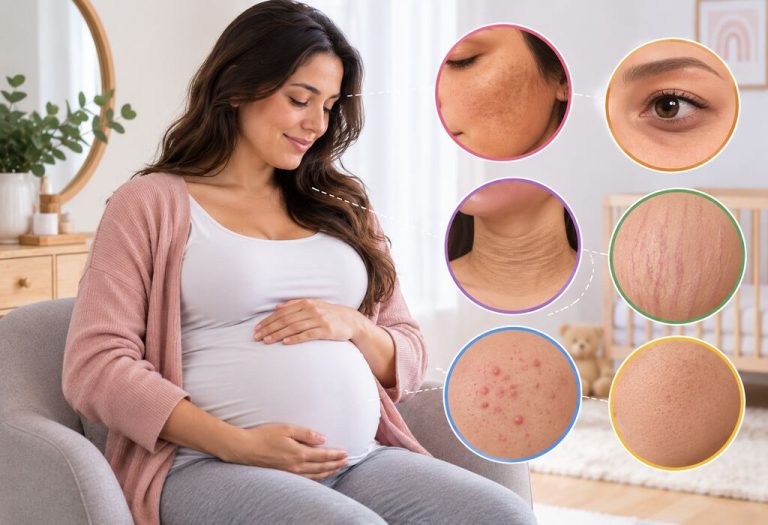
A woman’s body is susceptible to many changes during pregnancy. Due to immense changes internally and externally, the skin can experience various visible changes. There are numerous types of changes that happen to the skin during pregnancy, such as:
- Stretch marks
- Rashes
- Change in skin pigmentation (skin colour)
- Spots
The changes in the skin, however, are not limited to these; depending on the person’s constitutional makeup, their body can be affected in many ways. Talking to your primary care physician about changes you notice on your skin during different stages of pregnancy can help alleviate your fears. They can also provide more in-depth information about what skin conditions during pregnancy are expected and what is normal and abnormal. Most skin conditions that are caused by pregnancy are normal and will disappear once the baby is delivered.
Causes of Skin Changes While Pregnant
According to the American College of Obstetricians & Gynecologists, the body experiences physiological changes frequently during pregnancy due to changes in hormones and immunity (1). Face skin changes in early pregnancy are primarily driven by increased blood flow and hormonal fluctuations, which cause a mix of chemicals in the body, resulting in a multitude of changes, from pimples to shiny hair. When pregnant, a woman’s body begins to prepare to play host to another organism, one that will soon develop its own organs, hormones, and immune system.
When a foetus begins to take shape, the mother’s body evolves to make the womb a hospitable atmosphere for the baby to grow into a healthy baby. This requires the hormones to be redistributed, causing an imbalance in the woman’s regular bodily functions. When an imbalance in hormones occurs, changes take place throughout the body, and the most visible changes are to the skin. Some changes to the skin can be due to genetics. If there is a history of skin problems during pregnancy in your family, chances are you will be susceptible to similar problems as well. Talk to your primary care physician to better understand what skin problems during pregnancy can look like.
Are Pregnancy Skin Changes a Problem?
Skin changes that are of a common nature, such as stretch marks, pose no problems when pregnant. But if the changes seem unnatural, then it is best to visit a specialist and get a thorough diagnosis. If there is a burning or itching sensation that does not go away or if the skin has a lot of blisters or is inflamed, then you should visit your primary care physician, as these changes are not common in pregnancy.
Pregnancy can also severely exacerbate pre-existing skin conditions like psoriasis and eczema. If you have pre-existing conditions, it is best to inform your doctors. They can help guide you through how to manage the condition. It is also recommended that you inform the caregivers around you so they understand what kind of support is required to help prevent or relieve the condition.

It is also important to note that not all skin changes during pregnancy are caused by the pregnancy itself. Skin infections and allergic reactions can still occur regardless of pregnancy. Your skin’s colour may also change for reasons that may be completely unrelated to the baby or the hormonal imbalance. Keeping an eye on any change in colour or moles is essential; if the pigmentation changes are accompanied by pain, redness or burning, it can be a sign of an infection. If moles on your body begin to change size, then it could be a sign of a tumour.
Common Skin Changes During Pregnancy and Their Solutions
Not all skin changes during pregnancy are bad. The term ‘pregnancy glow’ is a term commonly used to describe a positive change in the skin during pregnancy. This ‘glow’ is due to the excess moisture the skin absorbs during pregnancy. This is also a way skin colour changes during pregnancy. Due to the absorption of excess moisture, the complexion changes as well; when there is excess moisture, the skin looks and feels healthier. Moisture also pushes out excess toxins from the body and opens more pores around the face. The pregnancy glow is a great example of facial skin changes when pregnant. Also, changes to the skin on the face are the most visible and recognisable.
Positive changes aside, it is important to know there can be negative changes to the skin too. You have to understand the changes in your skin, where they come from, and how to treat them effectively. Here are some of the most common skin changes you may face when you’re pregnant.
1. Stretch Marks
As the foetus grows, the uterus needs to expand to make room for the baby. This causes the skin of the abdomen, breasts, hips, and thighs to stretch resulting in reddish-purple, linear atrophic bands that develop perpendicular to the skin’s tension lines, basically stretch marks in pregnancy (2).
Most stretch marks are red or pink in colour. According to a recent study, nearly 90% of women get stretch marks during pregnancy (3). Stretch marks do not cause harm to your general health and are not considered dangerous in any manner.
Stretch marks can become an eyesore for some mothers. There are ways to get rid of them, such as cosmetic surgery. However, the least medical way to treat stretch marks would be constant exercise. It is also assumed that lotions rich in Vitamin E have properties that can get rid of stretch marks. But there is no medical evidence of this to date. Stretch marks, if left alone, will fade into streaks of faint silver lines after the baby is delivered. They become barely noticeable. Stretch marks have absolutely no adverse effect on your body.
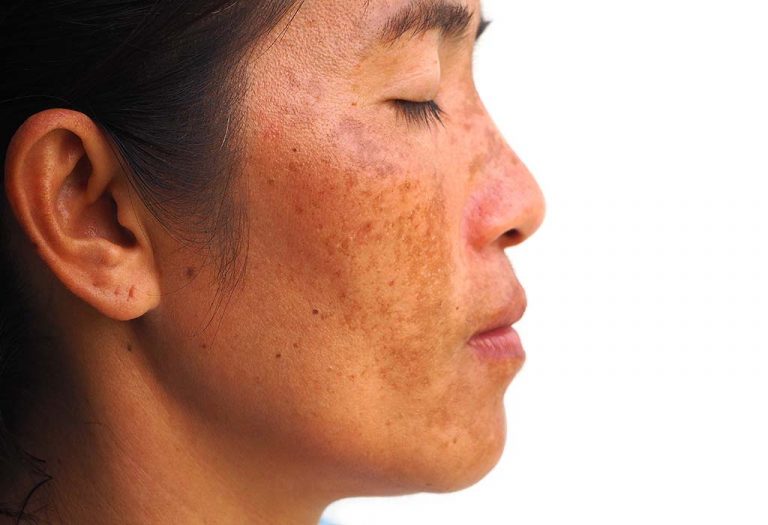
2. Melasma or Chloasma
Melasma or chloasma is commonly referred to as the ‘mask of pregnancy’. This condition manifests as dark, splotchy spots on the face and is a sign of negative facial skin changes during pregnancy. These pregnancy skin colour changes
are almost always located on the cheeks and forehead. As per the Johns Hopkins Medicine, they are a sign of an increase in pigmentation due to the increase in the melanin production. These hormones can impact skin pigmentation and cause the mask of pregnancy to appear (4). According to a study on skin changes during pregnancy, it is estimated that close to half the women who are pregnant are affected by melasma (5).
Melasma usually fades away after the baby is delivered. The best way to treat this would be to prevent it. When you’re pregnant, the skin is extremely sensitive. To prevent conditions like these, you should use a good sunscreen when you go outside. Ensure it is at least an SPF 15 sunscreen. Wear caps to cover sun rays from directly hitting the face. Remember, exposure to the sun increases the likelihood of manifestation of dark spots like the mask of pregnancy.
3. Acne and Pimples
Women who already had problems with acne can experience an aggravated condition when pregnant due to the increase in hormones. This increase in hormones will cause glands in your body that secrete oil to increase the quantity of oil they secrete into the body. This can cause massive breakouts.
The way to help contain the acne would be to develop a face cleansing routine. The first step would be washing your face first thing in the morning with a face wash that has a neutral fragrance. You should also wash your face every night. Don’t wash your face more than this as it will cause your skin to become extremely dry. The second step should be to use an astringent to remove the excess oil left on the face. Be sure to avoid acne-medicated astringents as these may contain chemicals that can cause harm during pregnancy. Finally, use a moisturizer, preferably an oil-free one. If the breakouts are severe, seek medical advice immediately.
4. Varicose Veins
These inflamed blue veins manifest when the body tries to compensate for the circulation of extra blood that goes to the baby during pregnancy. They mostly appear on the legs. Varicose veins can be painful and uncomfortable. You can be prone to varicose veins during pregnancy if there is a family history of the condition.
Although there isn’t a cure for varicose veins during pregnancy, the American Pregnancy Association suggests some steps that you can take to help manage, prevent, and decrease the severity (6).
- Stay physically active. Move around as much as possible to improve blood circulation.
- Try not to stand still for prolonged periods. Standing still can slow down blood circulation in and around the varicose veins due to the inflammation.
- Avoid being sedentary.
- Elevate your feet as much as possible when sitting.
- Keep your veins healthy by consuming foods rich in Vitamin C.
- Consult your doctor and get the condition examined to understand if you need your doctor to prescribe stockings.
5. Spider Veins
These reddish blood vessels that branch outward are known as spider veins. They are caused by problems with circulation in the body during pregnancy and usually appear on the neck, upper chest, arms, and face. These spider veins are more common in Caucasian women, although women of all races can be afflicted by them. They can be hereditary.
To treat spider veins, ensure you consume a good amount of Vitamin C every day through your foods. These veins are not painful and usually disappear by themselves after the baby is delivered. There are procedures like laser surgery available to treat spider veins.
6. Linea Nigra
The linea nigra is a line that runs along the navel down to the pubic region. While this line is always present, it becomes very visible during pregnancy due to an increase in hormones. It usually begins to manifest during the fourth month of pregnancy.
According to the American Family Physician, there is no way to treat the change in pigmentation that causes the visibility of the linea nigra, but it does disappear after the baby is delivered (7).
7. Skin Tags
Skin tags or soft-tissue fibromas are very loose and small growths of skin that manifest on the face, neck, upper chest, and beneath the breasts during late pregnancy (8). They are extremely common and harmless. Skin tags usually disappear soon after the child has been delivered. If they do not, you can have them removed by visiting a dermatologist.
8. Darker Freckles and Moles
They are caused by an extreme increase in hormones. The complexion can become much darker due to the increase in pigmentation. This imbalance in hormones can make moles, as well as areas around the skin that have moles and freckles, darker too (9). Other areas where the pigmentation will make the skin noticeably darker are:
- The nipples
- The labia
- The areolas
The change in pigmentation can be noticeable but is not considered extremely drastic. There is virtually nothing you can do to prevent this condition. There are chances that the pigmentation will return to normal soon after the baby is born. But the change may also remain for a while after pregnancy.
When to Consult a Doctor?
Consult a doctor if you experience any of the following symptoms:
- Intense itching, especially on the palms of your hands and soles of your feet
- Moles that grow, change colour, bleed, or itch
- A widespread rash
- Rashes that turn into painful blisters
- Raised hives that do not go away with home remedies
FAQs
1. Is it normal to have acne during pregnancy?
Yes. It is normal to get pimples or acne during pregnancy due to hormonal changes that increase oil production and trigger or worsen acne. Your doctor may advise you to use gentle skincare and, in persistent cases, may recommend some acne medications.
2. Why is my skin getting darker during pregnancy?
Hyperpigmentation during pregnancy, or increased pigmentation, is common and can cause darkening of nipples, melasma (facial pigmentation), or linea nigra (formation of a darker line on the abdomen). Sun exposure can worsen melasma, so sun protection is recommended.
3. Are stretch marks during pregnancy preventable?
Although they occur more often than not, stretch marks are common, particularly appearing during the second and third trimesters. They cannot always be prevented, but keeping the skin moisturised can help with dryness and discomfort that come with stretch marks. In many cases, stretch marks gradually become less noticeable after delivery.
4. Can I continue using my usual skincare products while pregnant?
Certain skincare products and cosmetics may sit well during pregnancy due to their chemical composition. For instance, certain retinoids, should be avoided. Thus, it is important to review the prescription and over-the-counter skincare products with your obstetrician or dermatologist before continuing or starting treatment.
The conditions mentioned above are only a few of the skin changes that can occur during pregnancy. Take precautions during this time by using the right kind of moisturisers, soaps, and oils. Consult your physician for the right kind of changes to make in your lifestyle to help prevent and manage skin conditions during your pregnancy journey.
Also Read:
Dry Skin in Pregnancy
Skin Care during Pregnancy
Skin Darkening while Pregnant
Was This Article Helpful?
Parenting is a huge responsibility, for you as a caregiver, but also for us as a parenting content platform. We understand that and take our responsibility of creating credible content seriously. FirstCry Parenting articles are written and published only after extensive research using factually sound references to deliver quality content that is accurate, validated by experts, and completely reliable. To understand how we go about creating content that is credible, read our editorial policy here.
1. American College of Obstetricians & Gynecologists – Skin Conditions During Pregnancy
2. National Library of Medicine – Cutaneous Changes During Pregnancy: A Comprehensive Review
3. DermNet – Skin changes in pregnancy
4. Johns Hopkins Medicine – Pregnancy and Skin Changes
6. American Pregnancy Association – Skin Changes During Pregnancy
7. American Family Physician – Common Skin Conditions During Pregnancy
- Author
- Expert Reviewer


Related Articles
-
Acyclovir During Pregnancy - Is It Safe
-

Pregnancy Fears - Causes and How to Handle Them
-

12 Important Pregnancy Care Tips During Monsoon
-
How to Remove Hair From Private Parts During Pregnancy
-
6 Weeks Ultrasound: Procedure, Abnormalities and more
-
Melasma (Mask of Pregnancy) – Causes, Signs & Prevention